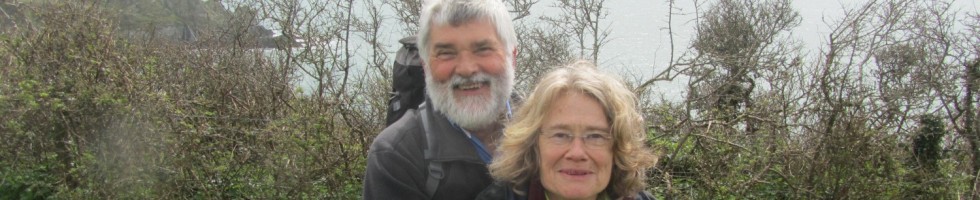
2022 Our Spring Break Portugal, Spain and France
Thursday 10th March – Home to Portsmouth
We are up early and have packed the van plus bikes by 9am. When we stop at Bessie Beneath to check the tyres Graham reverses the van into a wall damaging the cycle rack but apart from a dented cycle rack all appears in order.
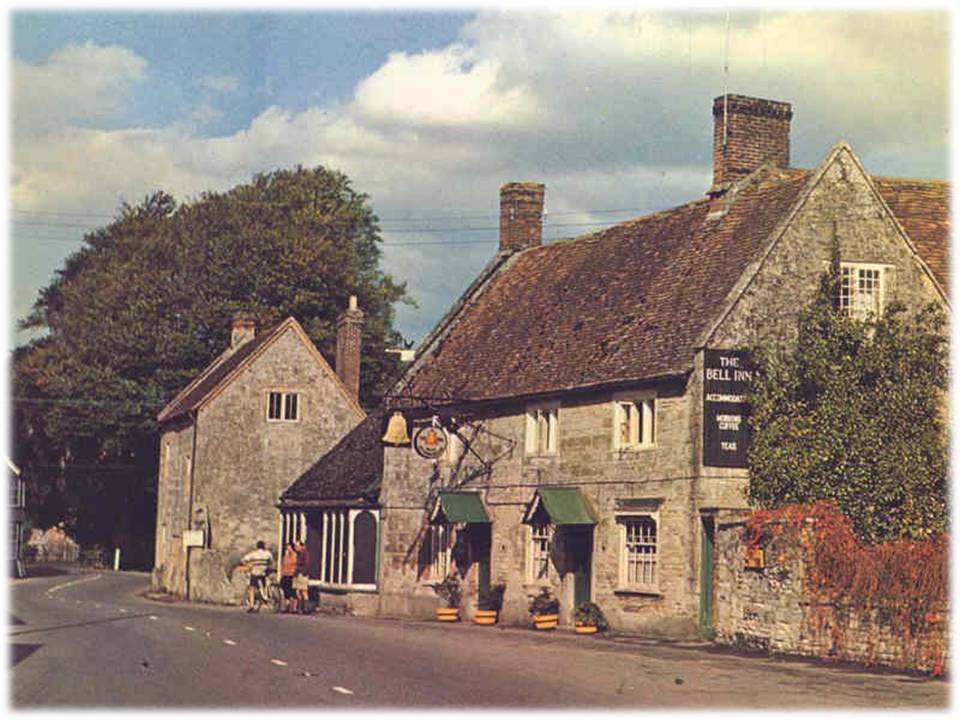
We make good progress up the A30 and on to the A303 and Bell Inn at Wylye near where we leave the A303.
Here we have a light lunch surrounded by older couples!, with their raised voices and idiosyncrasies.
After lunch we follow the A36 to Salisbury and on to Jeff’s at Sherfield English where Sally is just leaving for Bristol and Jeff is going off to work transporting school children. It is lovely just to have a cup of tea and catch up and generally chat about their family and future plans before we all go our separate ways.
We return to a National Trust Open Space called Pepperpot Hill and do a nice circular walk down to the plain and back along the ridge. We sort out the van in preparation for the journey ahead and make our way to Portchester across the water from Portsmouth.

We are amazed by the size of the fort that historically guarded the harbour, huge!
We walk around it in the gathering dusk, seeing the lights of the city, the dockyards and the port across the water.
At the nearby, large and buzzy, Cormorant Pub, we have a meal. A real contrast to our lunchtime experience with lots of different aged people drinking, eating, playing darts etc. The specials were home cooked and tasty and provided a good start to our foreign travels. Fifteen minutes after leaving we are queuing at the port.
Somehow we are lucky to get on the Brittany Ferries Galicia after only a short wait, and settle into our 4 berth, outside cabin. At 10.15 pm, after wandering around for a bit, the boat departs and we settle down for the night.
Friday 11th March – Portsmouth to Santander
We sleep well and laze in bed until 9.30 before getting our free breakfast and going up on deck.
Although cold and windy on top we managed to get seats in the sun inside the lounge at the front of the boat which gave us a wide, warm view of our progress across the Bay of Biscay.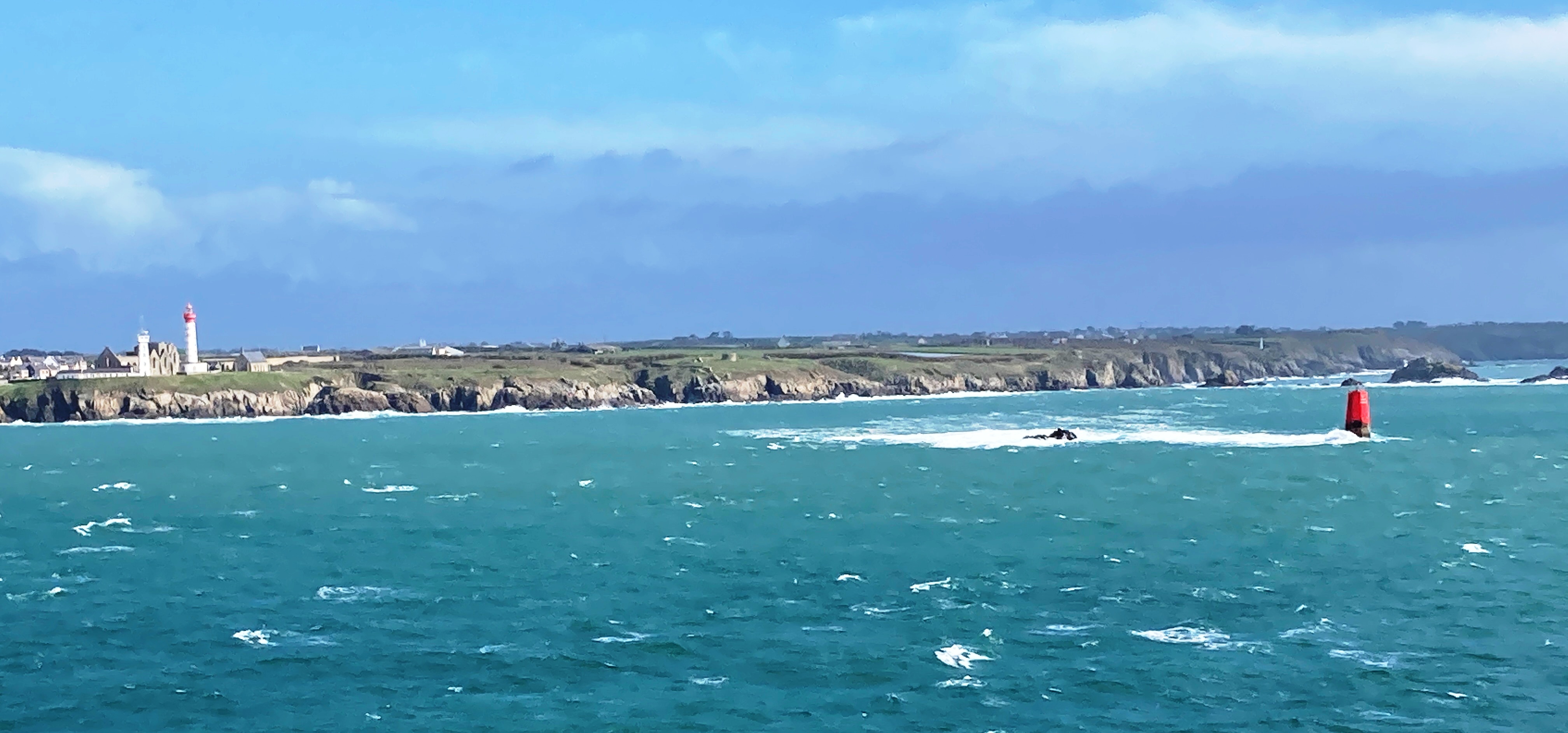
We marvel at the view as we travel between the Brest Peninsular and the Ushant Island and then further south between the Quimper peninsular and the Ile de Seine, before heading south through the Bay of Biscay and into the rain.
In the evening we queue for our free meal slot and enjoy the ambiance even if the food is ordinary. We return to the cabin exhausted by our busy day and sleep alright considering we have done so little!
Saturday 12th March – Santander to Gijon
We are both awake early in anticipation of disembarking. However we need not have worried, some soothing music a feature of Brittany Ferries, heralds the start of the day at 5.45. We eat some breakfast and are off the boat by 8.30am., travelling west.
We decide for old time’s sake to visit Cangas de Onis on the western end of the Picos Mountains.
We have been here before after the van had burnt out.
We were travelling in a car with a tent with Peter and Sarah 29 years ago!
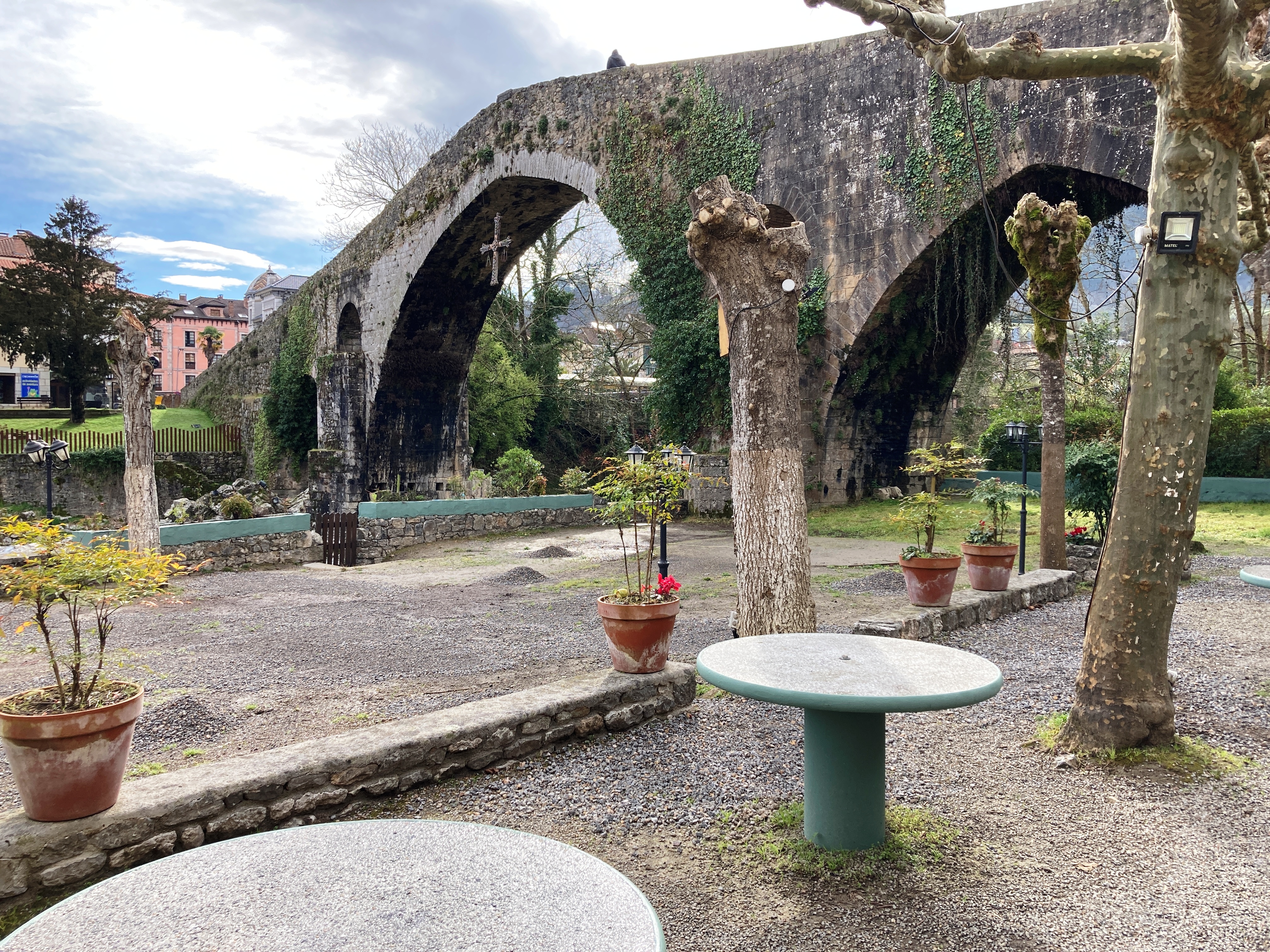
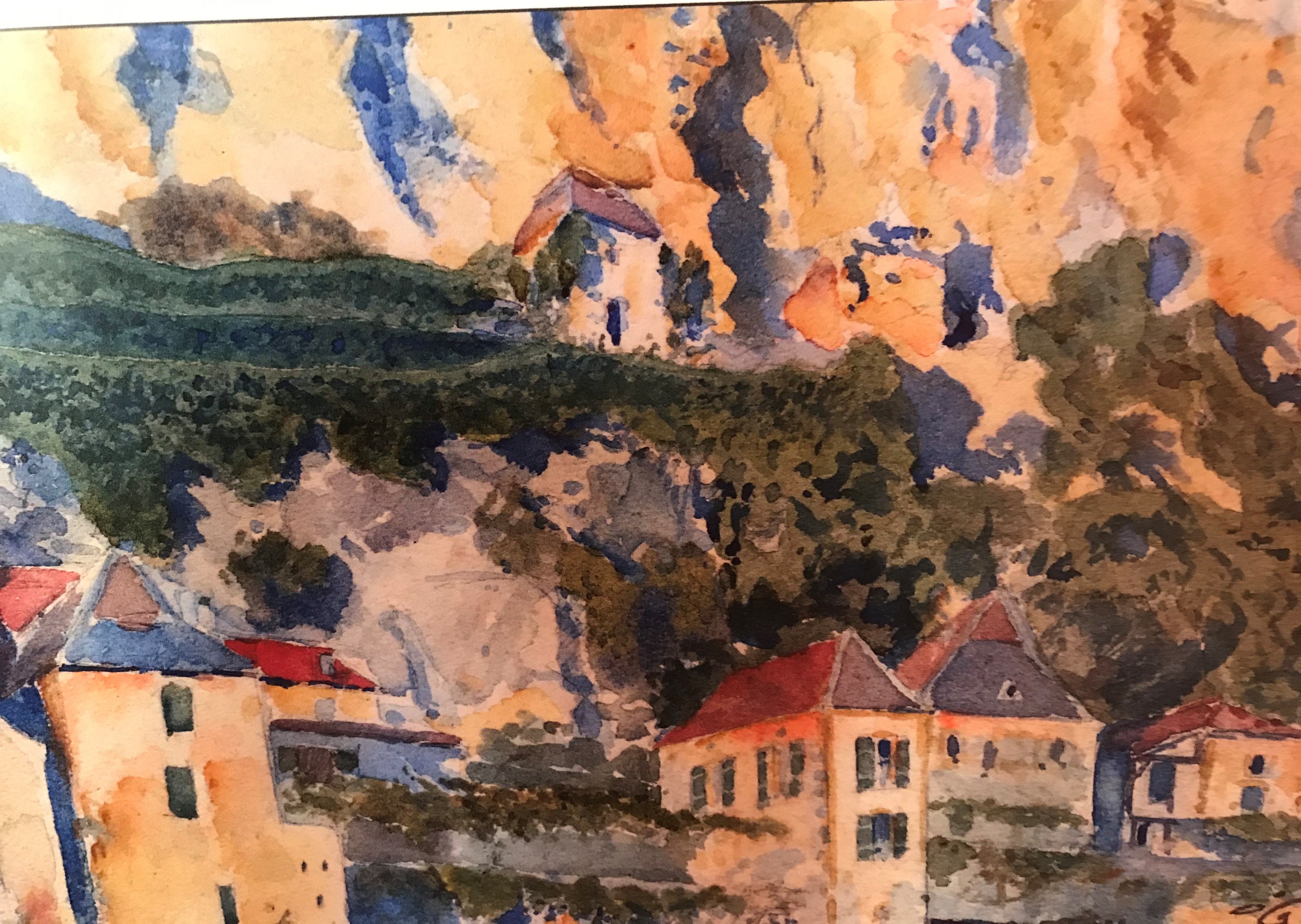
The image we had of the town is from a painting Graham did of Sarah and Peter sitting outside a cafe by an amazing Roman bridge.
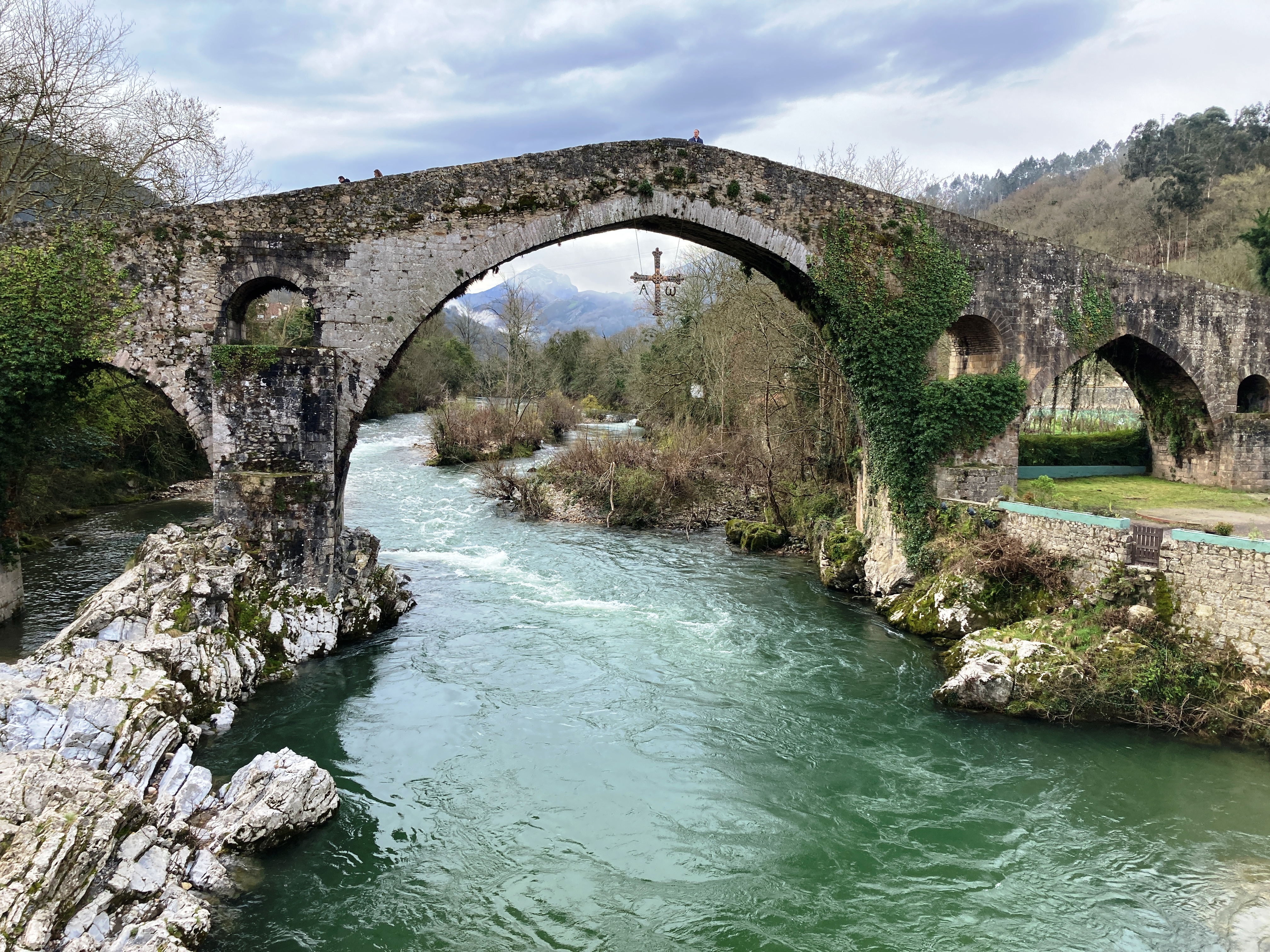
As we drive up the valley the mist engulfs us and we question why we wanted to leave the sun on the coast to visit mountains we couldn’t see!
However by the time we reach the town it is starting to clear.
Feeling rather disorientated initially by the size of this large town we eventually find the bridge which is much more impressive than we remember.
The cafe is closed for renovations but we take some photos at the same spot as we had done in 1993 and wander back through the town to buy some food and have a coffee.
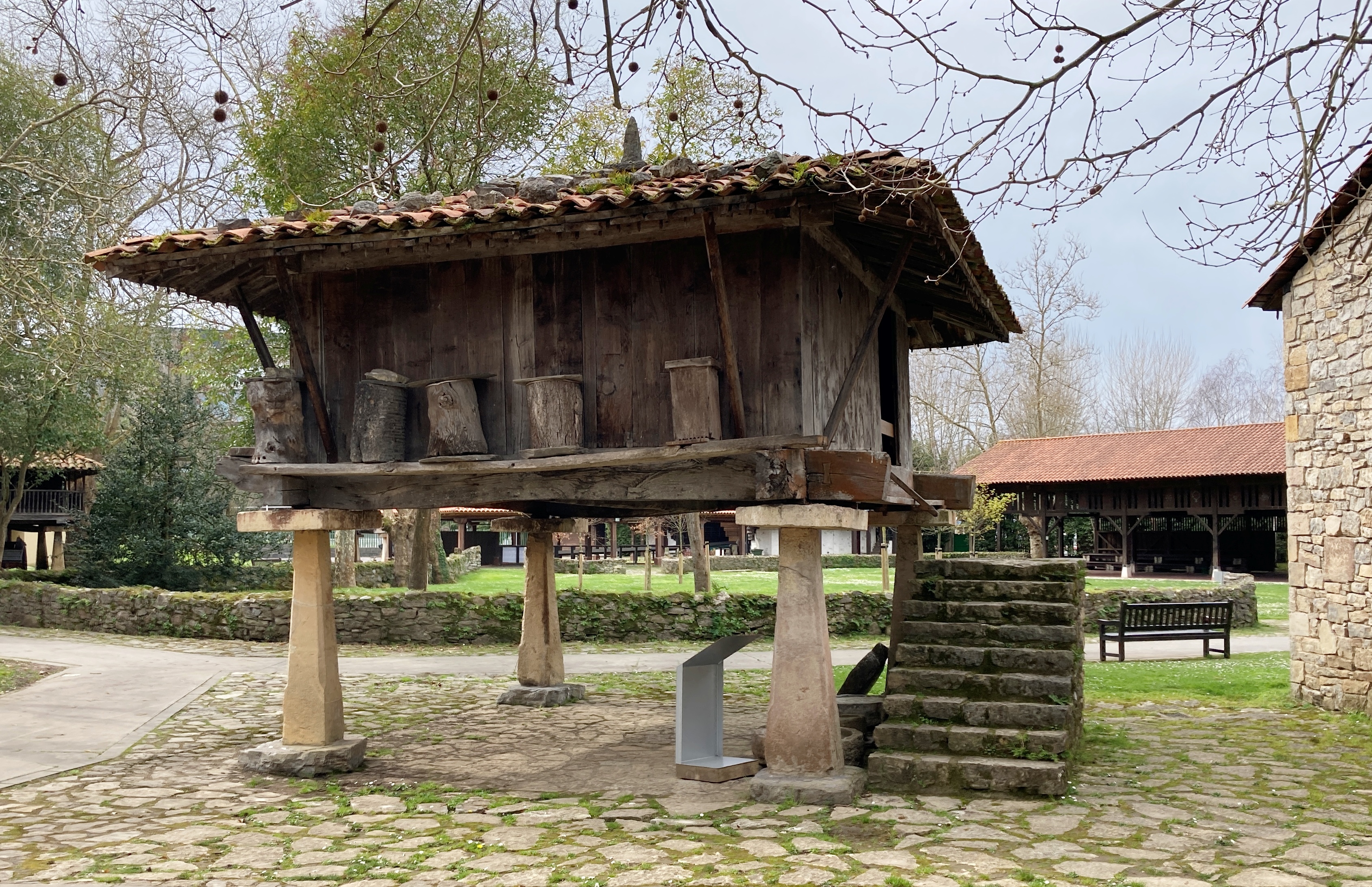
From Cangas we drive on through the mountains to Gijon and find the destination of the day the Museu del Puebla d’ Asturias.
This is an open folk type museum of the history of the people of the area and their buildings.

Our first stop is the house of Gonzalez de la Vega 1757 which now houses the Museo de Gaita or Piping Museum.
This is fascinating showing all the old pipes and their development plus clips of people making, playing and singing.
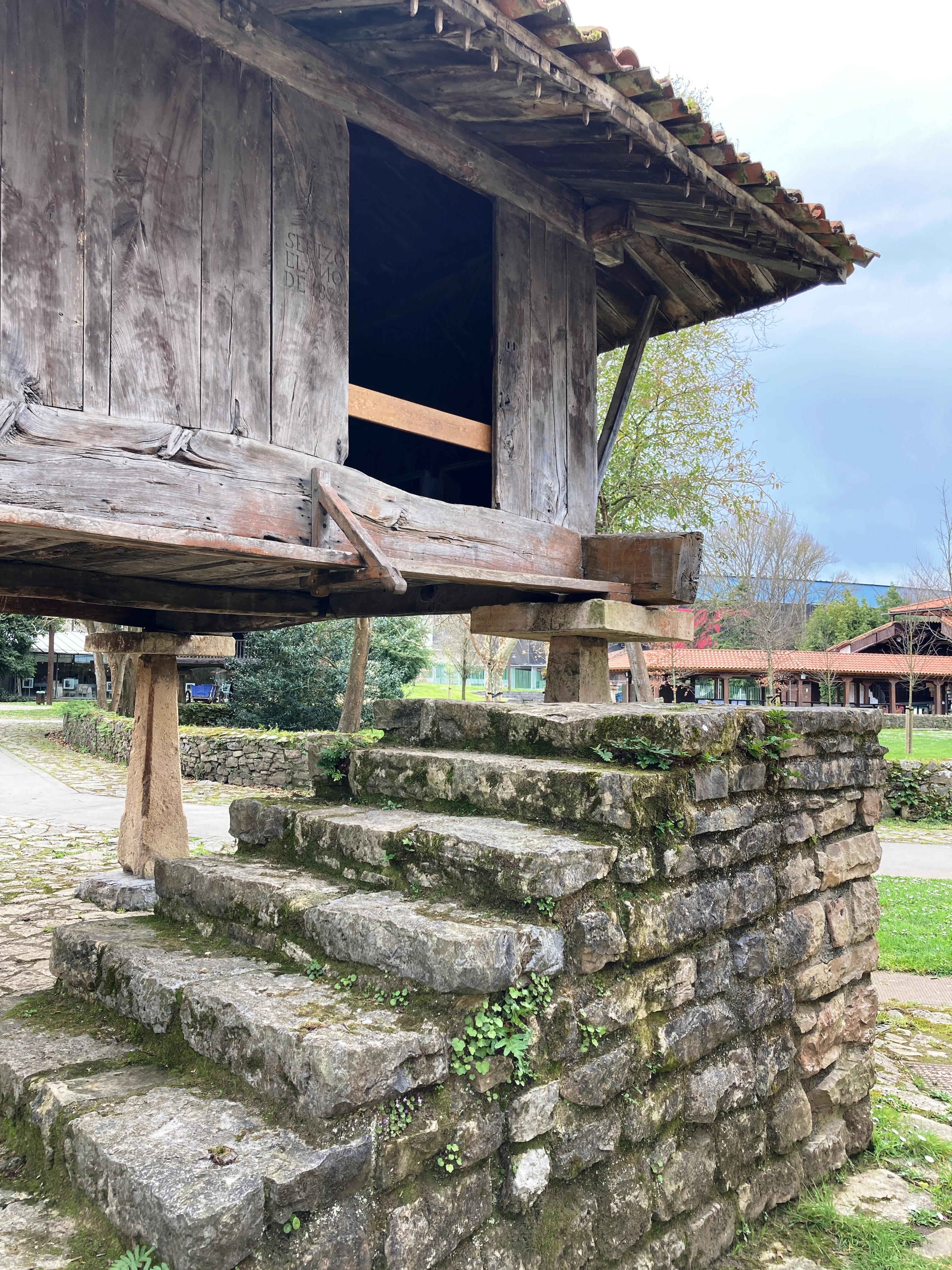
We follow on by visiting the outdoor rural buildings of the Galicia area reminding us of St Fagans and Bunratty Castle.

We walk to the sea front grabbing a tortilla and roll in the park and then go along the wide sweeping promenade to the old part of the city and port.
Returning on a more direct route the temperature rises to over 20o, a pleasant change!
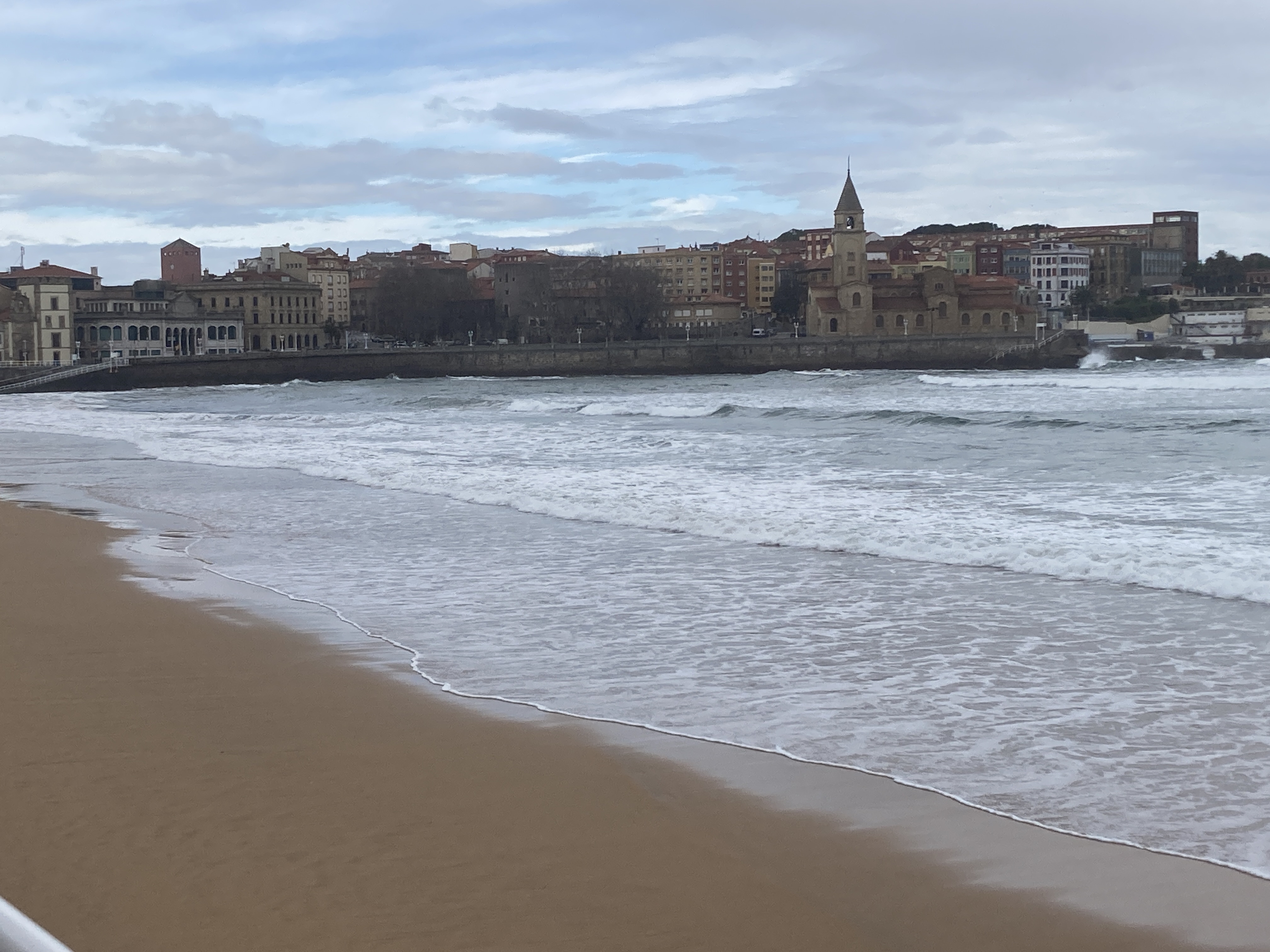
Camping Deva to the North East of the city is a large complex of cabins, bungalows, terraces for tents and vans, pool, cafe etc. Good in that we have a view and the facilities were near and clean.
We cook our first ratatouille and feel we are back into van mode.
Sunday 13th March – Gijon to Lugo
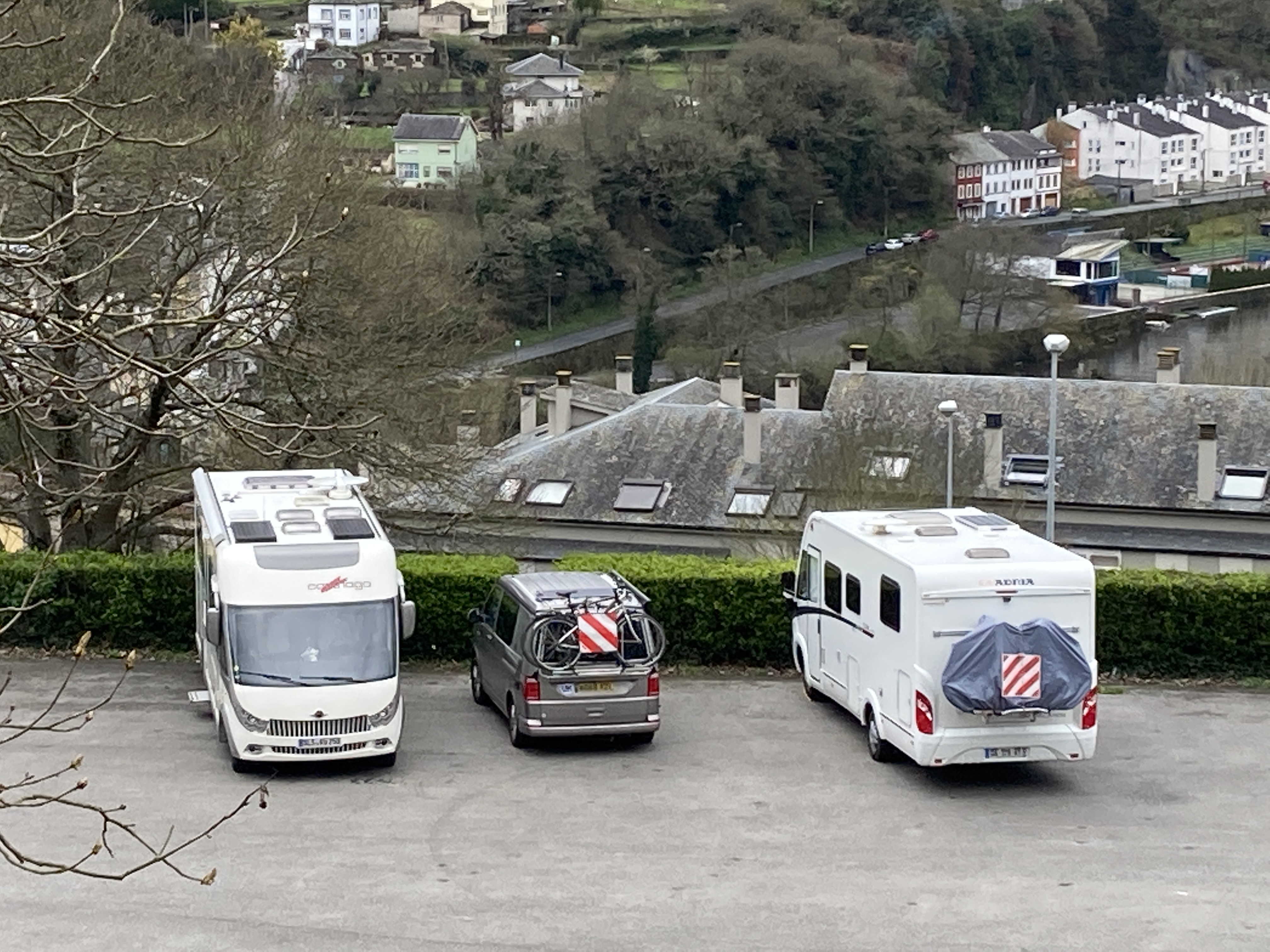
We sleep well and eat breakfast in the sun before heading west to Lugo. We find a car park on the city walls which allows Motorhomes to stay overnight.
We park in amongst them before going out in a cool breeze to explore the amazing walled town.
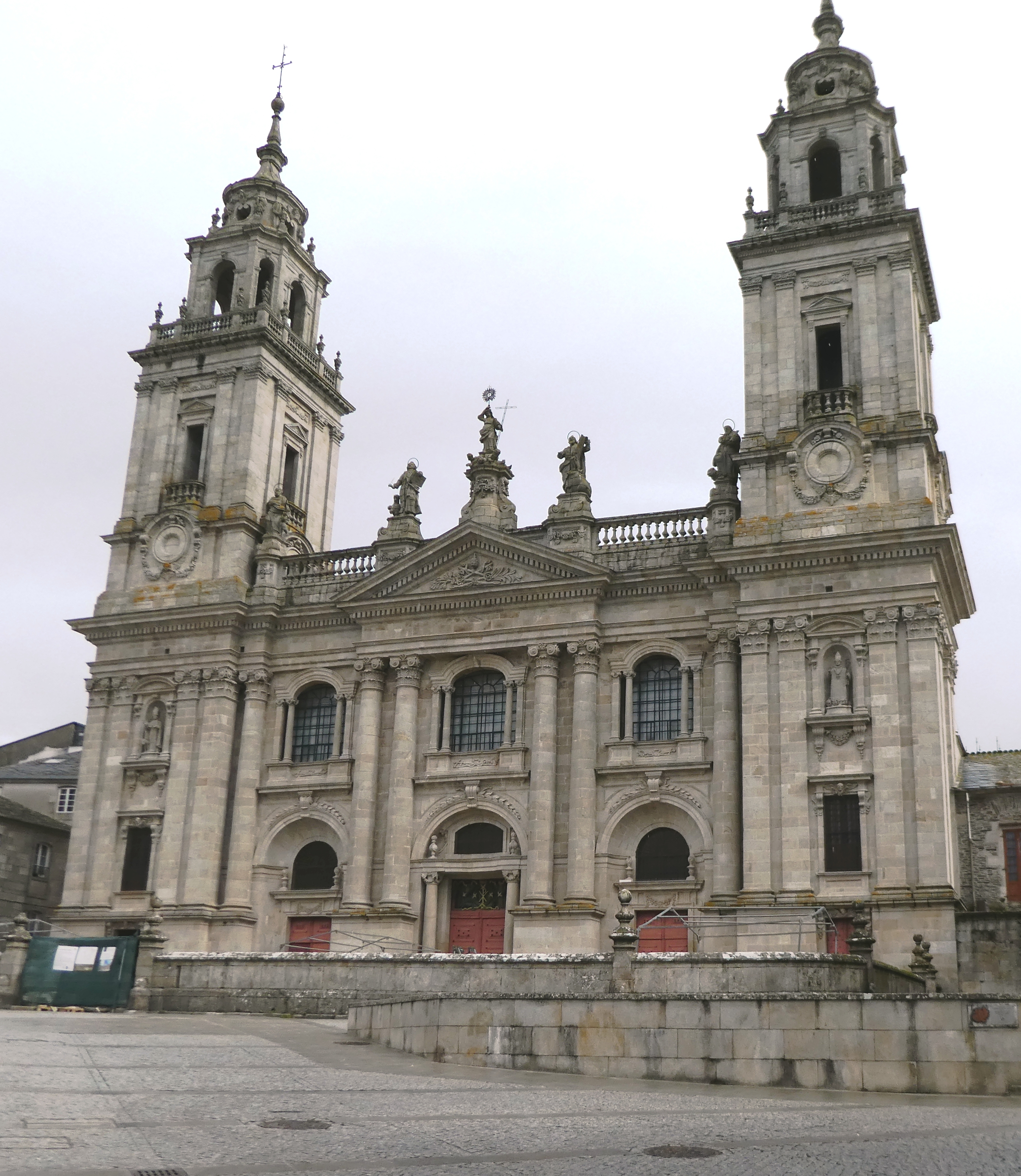
Our first stop is the cathedral, there is a service going on but we manage to get a feel of it.
A lot of the buildings are closed until four o’clock so we eat lunch in a small restaurant before returning to the van via the magnificent walls to sit out of the rain for an hour or so.
When the rain clears we walk up through the old formal park to the city and visit the mosaic museum, the archaeological museum and a display about the walls being created.

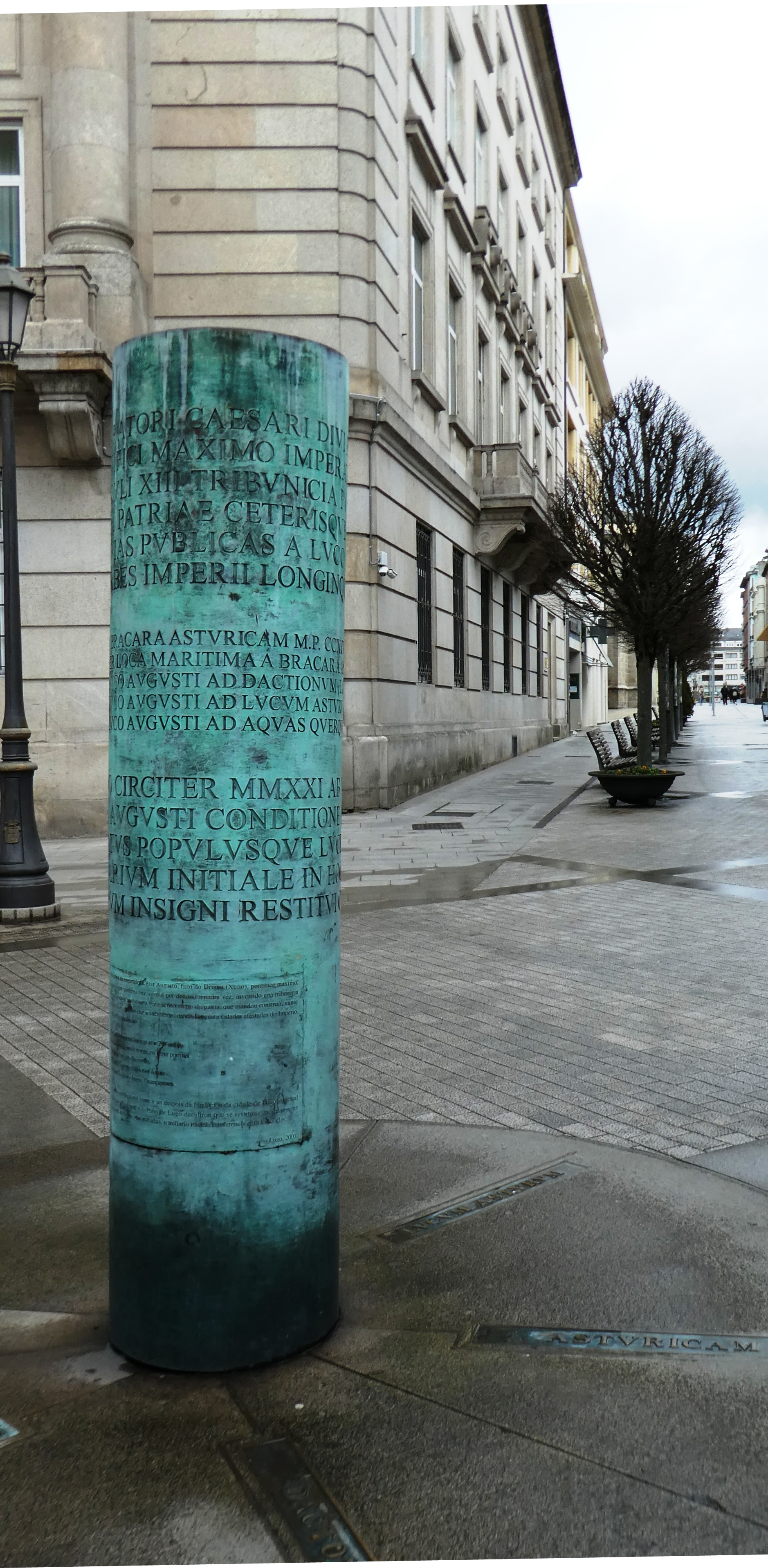
In the centre of the town find a Roman column, similar to ones we found three years ago by the lake in the Parque National da Peneda-Geres in Northern Portugal.
We return to the van after 7pm and try out our new Monkey Ridge pan with eggs and bacon.
We settle down to a noisy night in the car park with, of course, the portable loo in the van! Actually it isn’t too noisy and we slept but woke early.
Monday 14th March – Lugo to Santiago de Compostella
Up early we drive to Santiago de Compostella arriving at a car park near a school just when all the kids are being dropped off.
We make our way up into the old town via a lovely old fresh produce market and stop in a cafe for much needed croissants and coffee before wandering around the twisty up and down streets to the cathedral.
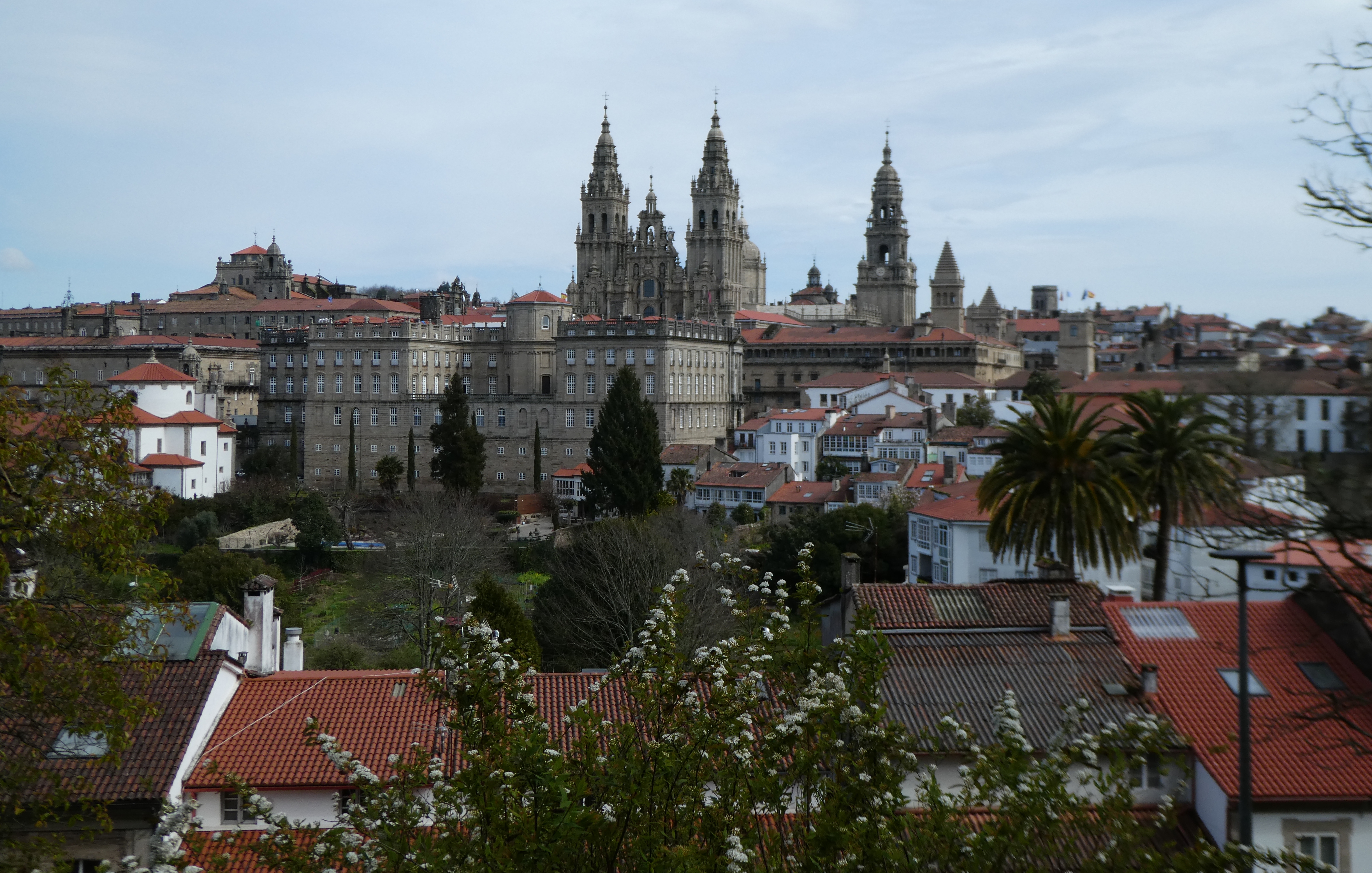
Because it is part of a conglomeration of enormous buildings, plazas, statues all set on the side of the hill the cathedral looks amazing from the outside,. Unfortunately it does not live up to expectations inside.
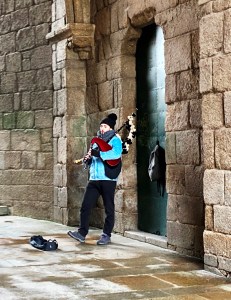
As we come out Graham hears live music and we track down a young guy playing a Gaita, Galician bagpipes, and on chatting to him he has spent time in Dublin as a lad. Graham is well chuffed.
We then explore the main Praza do Obradoiro where the Compostella pilgrims aim for and go into the Museo Seminario Maior. This was based around the church of San Martino Pinairo, seminary

We walk through to the nave and old wooden choir stalls and then up into the museum which has various collections of ecclesiastical items!
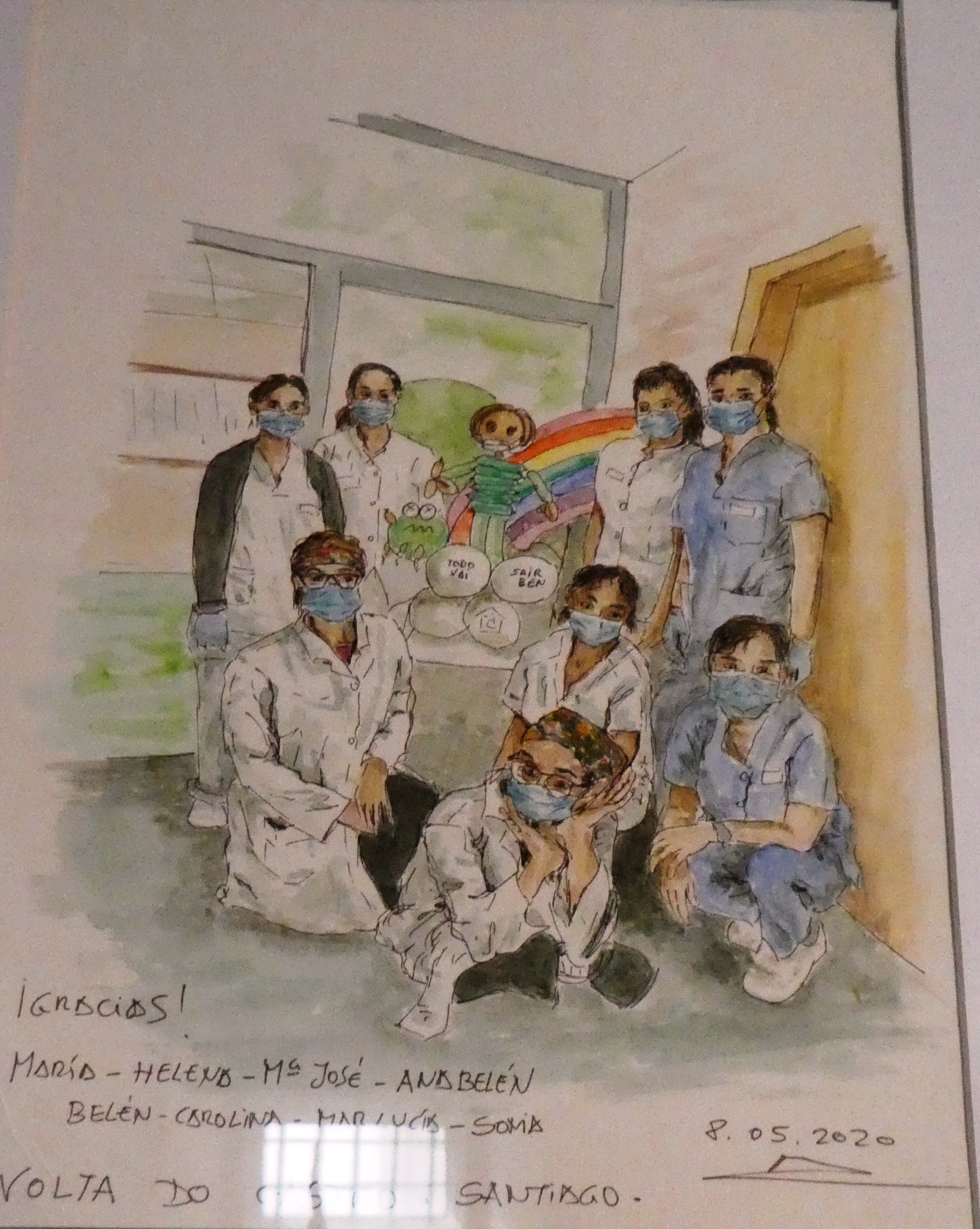
Interestingly there are also, some more recent portraits of nurses, doctors, carers and other people in the pandemic.
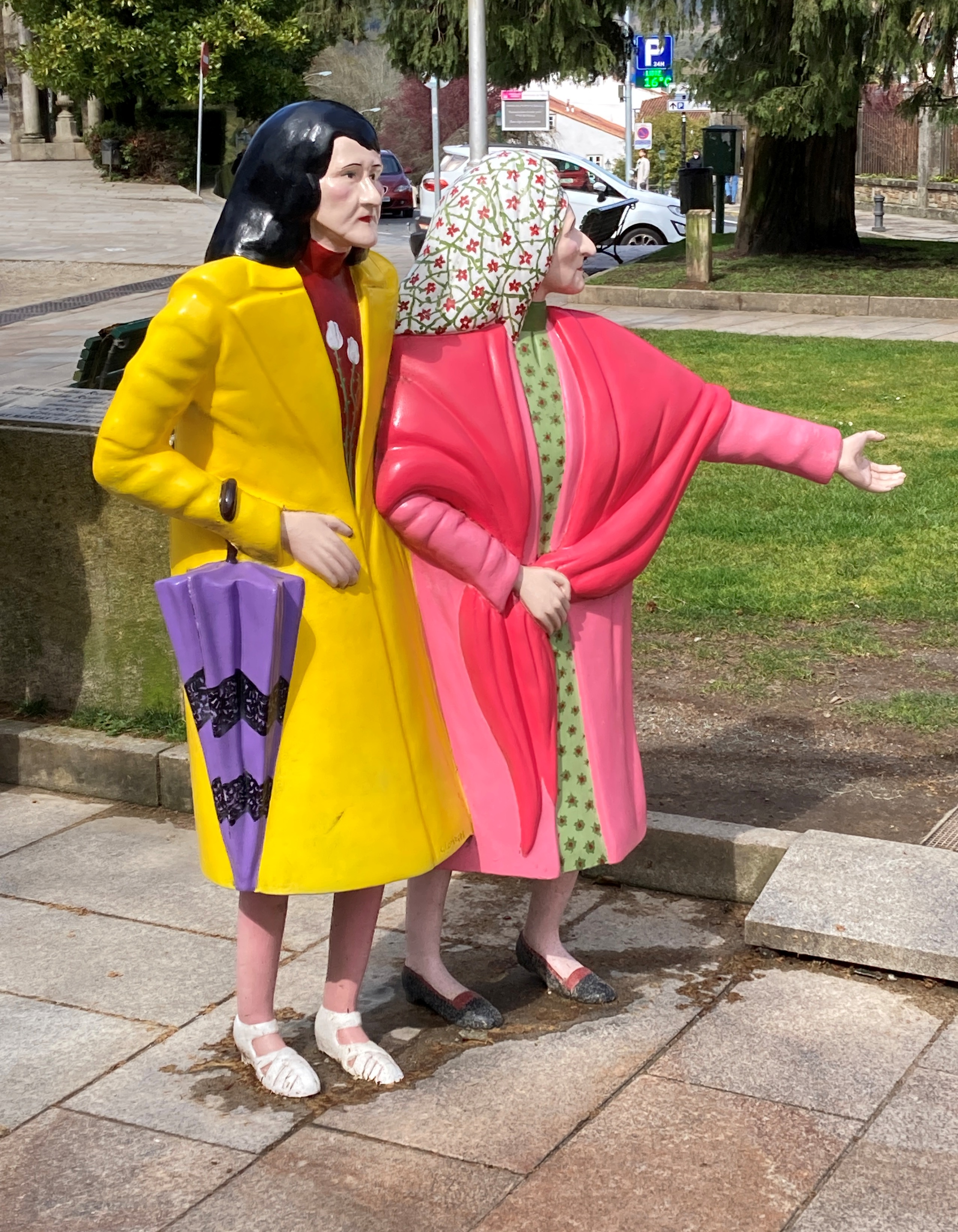
We then drift around enjoying the street art and buying odd things such as water bottles before walking through the Alameda Park on a low hill below the town.

Finding lunch other than tapas was a challenge and we end up in a very expensive restaurant.
We choose one of the least pricey foods, a tortilla Espanola, a basic salad and beer, it was lovely!
We wander some more before driving 10 minutes to the City’s lovely wooded/ terraced campsite.
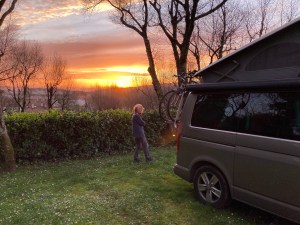
We take a short walk around the area before eating by the van as the sun sets.
Tuesday 15th March – Santiago de Compostella
We sleep well, have a shower and breakfast. It is chilly but we are able to sit out.
We walk into the city from the camp site skirting around to the south so, we can enter by one of the pilgrim routes. The way takes us through a large park and recreation area with modern cultural buildings overlooking the old town.
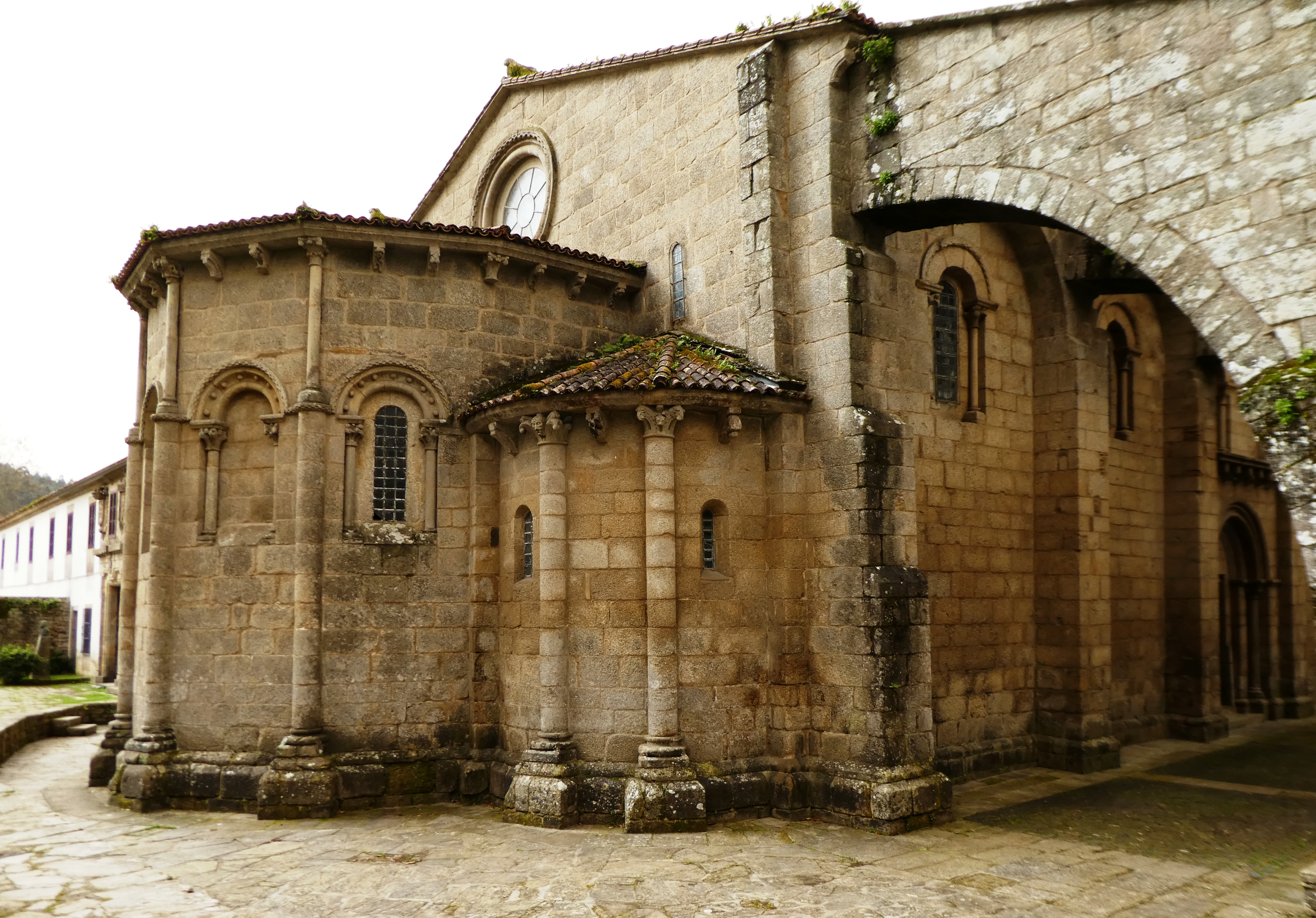
We enter through the gate taking the southern route to the cathedral past the church Santa Maria do Sar.
This fascinating, C12th Romanesque church, lies just outside the old town.
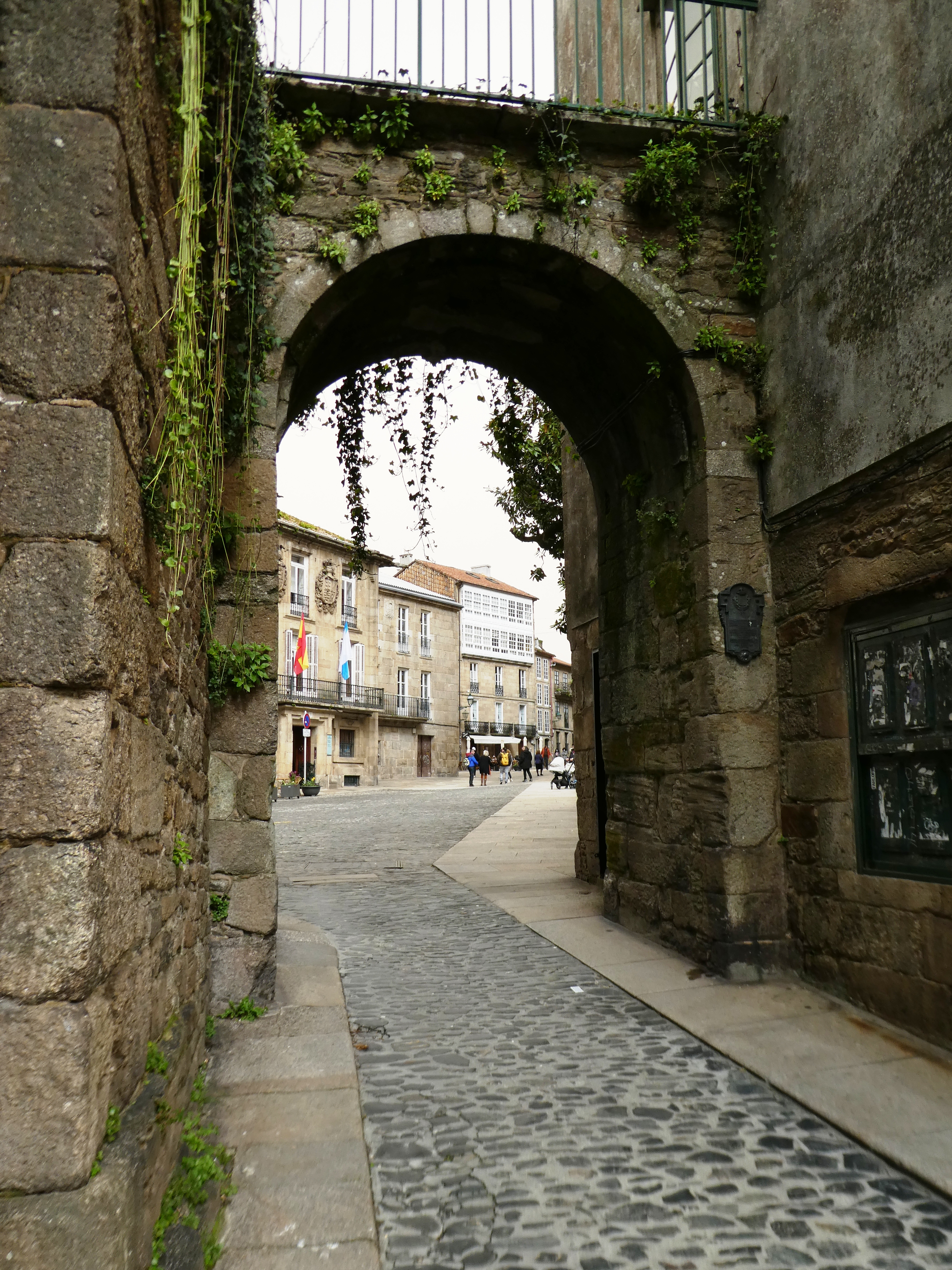
Climbing up to the old city we pass through the only remaining arched gateway before making our way to the Museo de las Peregrinaciones y Santiago.
This museum is modern, well laid out and covers the different religious pilgrimages of the world and why such pilgrimages are important.
It then concentrated on Santiago and the importance of the apostle James. It told the story of his martyrdom in Jerusalem and the bringing of his body to Spain where it was buried in an unknown location, until found in the woodland at Santiago in the C9th.
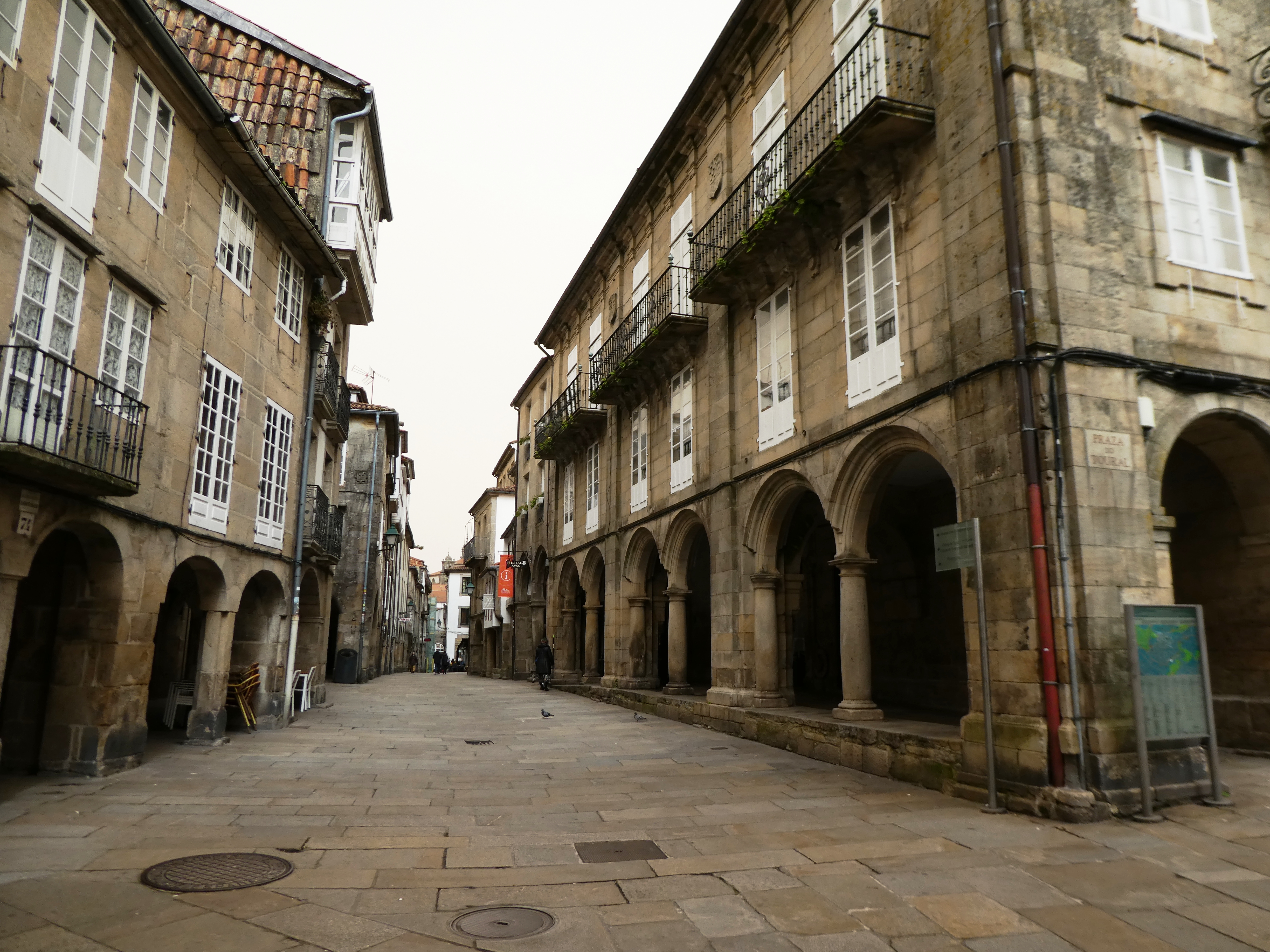
It explains the different pilgrim routes through Europe and objects related to the pilgrims and the traditions they followed. It then shows how the old city developed and its status in Galicia. The visit very enjoyable a definite highlight.
We have a light lunch in the cafe where we had breakfast the previous day before wandering back through the main square to the road out along the of the City to the camp site.
Unfortunately it is not warm enough to sit out when we get back, so lots of layers of clothing are the order of the day!
Wednesday 16th March – Santiago to National Parque de Pineda-Geres
We leave Santiago in cloud with light rain, having shopped in the Carrefour near the camp site.
We head south on the minor roads to Ourense and then over the border into Portugal and the small town of Melgaco. We stop and visit the tourist office to find out about the Parque National da Peneda-Geres.
We wander around the small town in the freezing wind before we go to the local tourist office to find out about local restaurants and get a town guide.
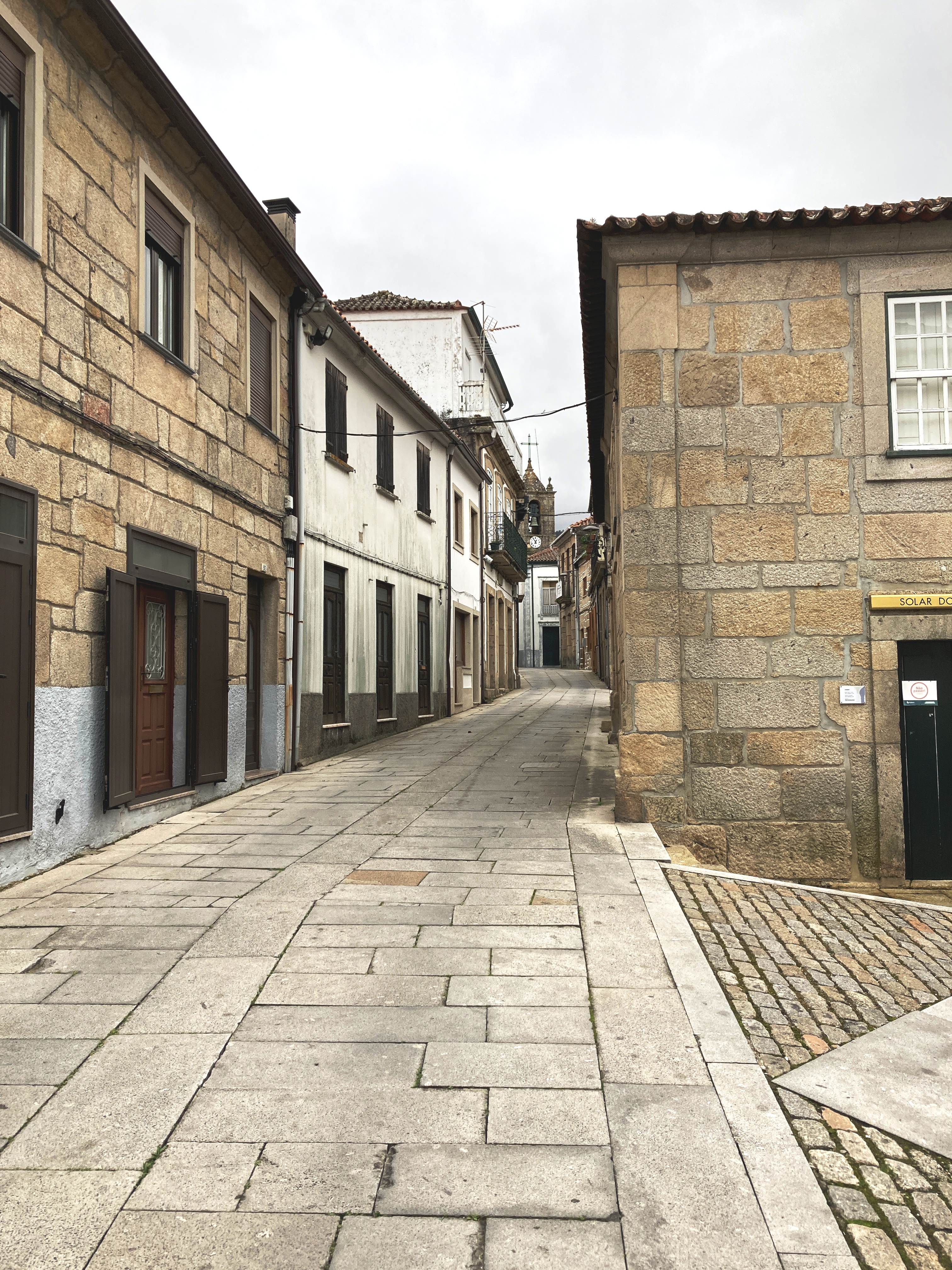

Before lunch we visit the old church and castle and then lunch at a busy restaurant where we have a substantial three course meal , soup, chicken and desert plus a bottle of wine for 14€ !
Journeying on we come to Lamas de Mouro and the National Parque centre where we get a set walking trail maps and photo the Parque map. The camp site just down the road is open and set in undulating woodland.

Nobody else is camping here but there are some stored caravans. On unloading the bikes we realise that Janet’s bike has a buckled back wheel a result no doubt of the bump in the garage at Bessie Beneath when we left.
We pick a spot by the stream and walk around the local area on a trail.
Unfortunately we couldn’t see long distance because of the mist but we like what we see. We pass through one of the local villages which have a lot of newer houses and a new church.
On returning to the camp site we find that the lights are working in the toilets and there is no hot water for the showers. We get it fixed but only to provide hot water and light for the men’s block. It is still cool as we make ourselves some tea before settling down for the night.
Thursday 17th March – National Parque de Pineda-Geres
We shower in the men’s block as we are the only campers and they only want to put one boiler on which is fair enough. Both toilet blocks are dirty with broken seats, shower heads etc. sadly looking back at reviews this has been the situation for a number of years, a lovely site but terrible facilities.
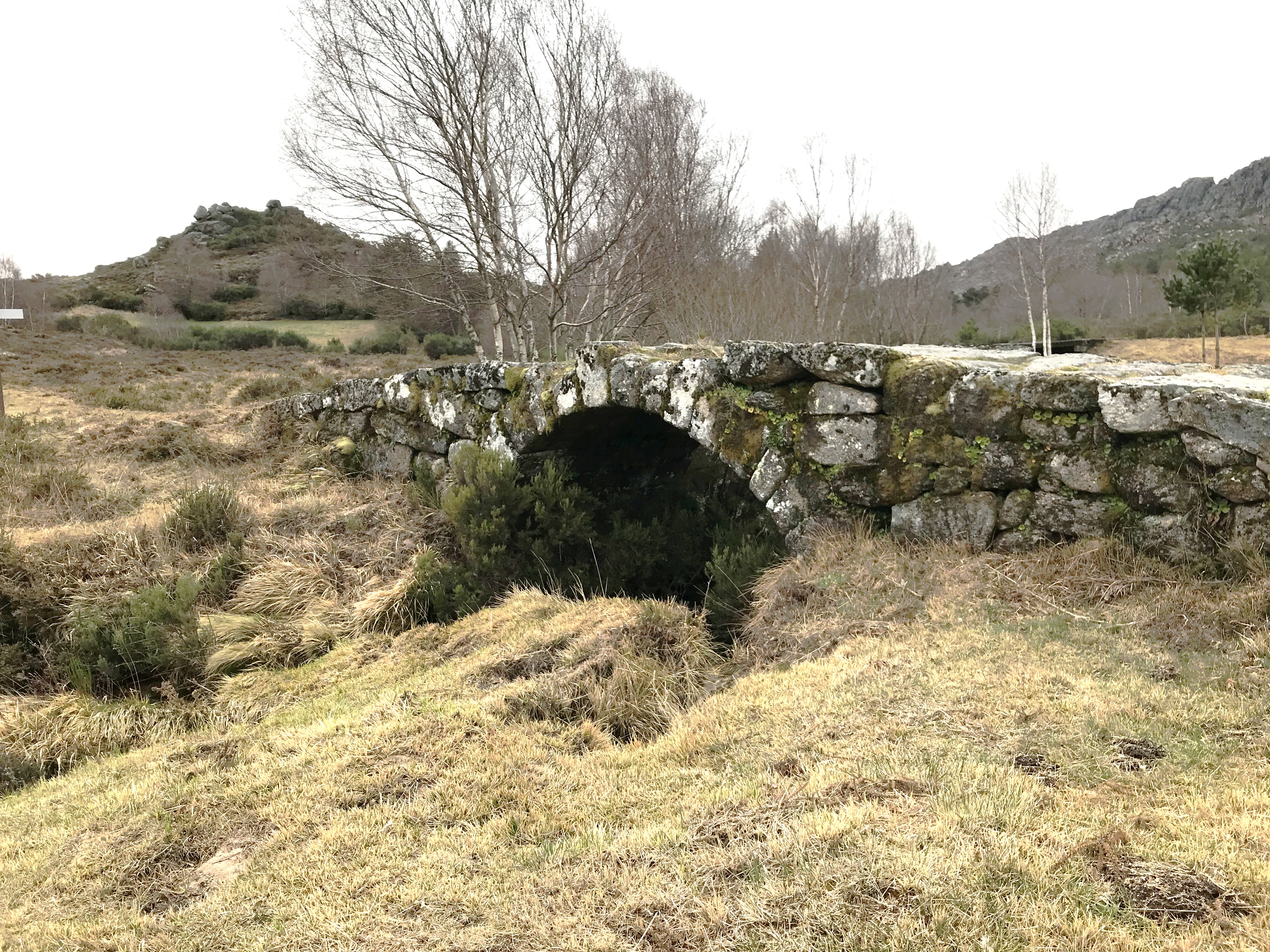
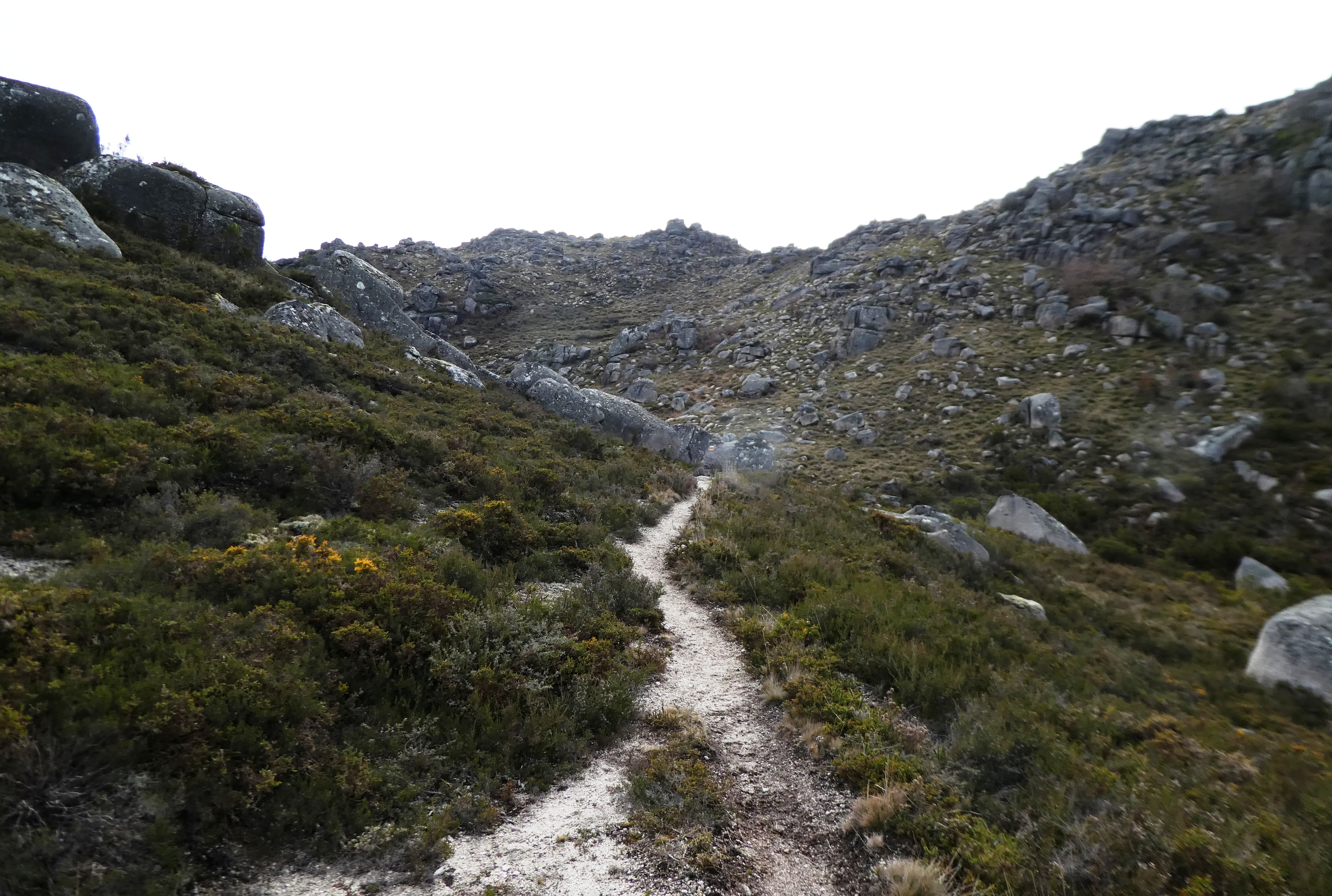
It is very cold and we put on six layers of clothing and our walking boots. Then with packs on our backs we head off over the mountains on the signed route from the camp site to the village of Castro Laboreiro, about eight kilometres away. The climb is steep but well marked across scrub and broken rock.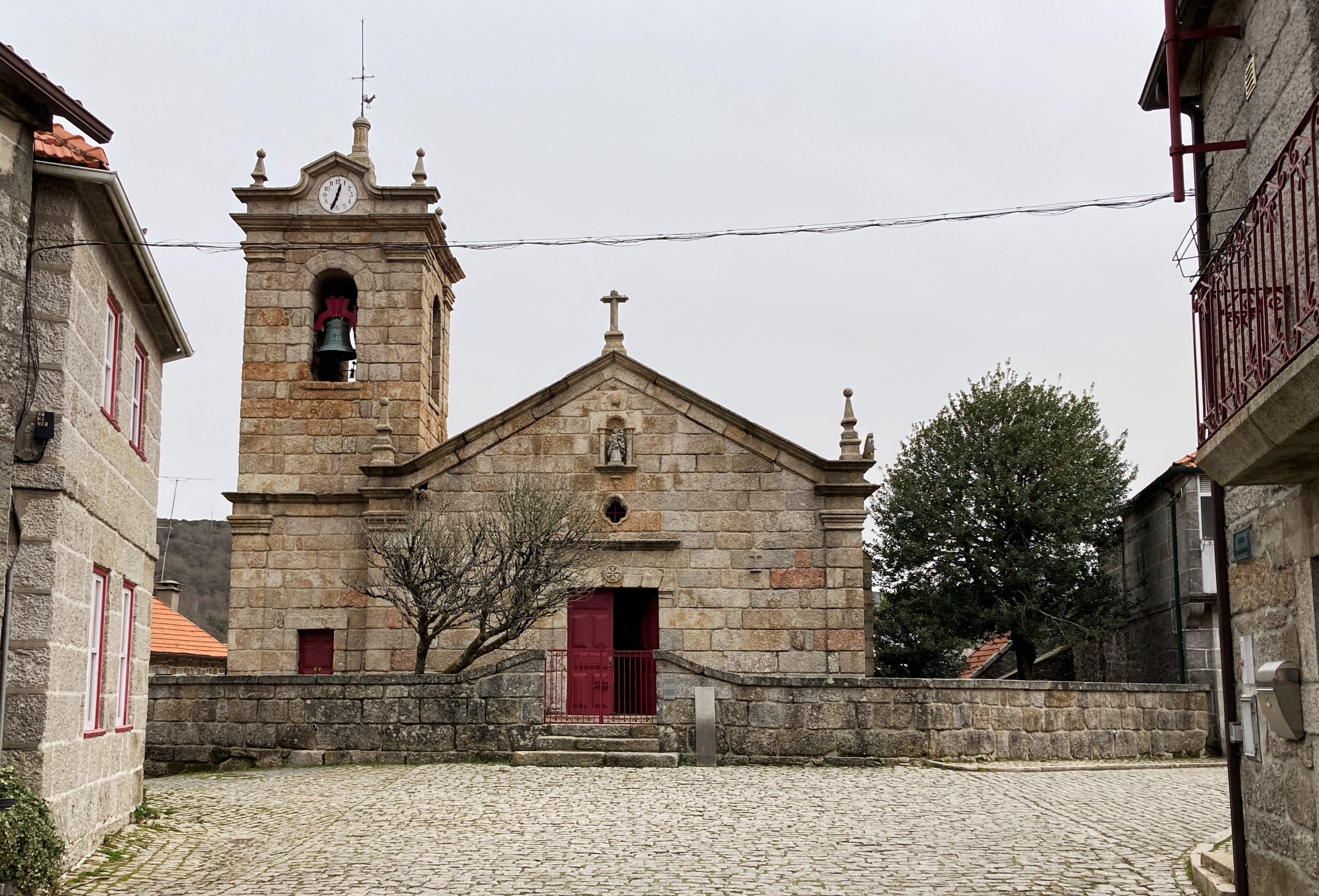
We pass through a gap in the mountain ridge and descend to the village set in an open valley.
We walk through the small village and make our way past the local museum onto a rocky ridge looking south down into the valley.
On a steep ridge to the south of the village find the castle high above the valleys.

As we approach we find it is much larger than we thought with walls, stairways, gateways and the remains of rooms. We eat lunch sheltered from the cold wind by the walls and admire its strategic location.
We then return to the newer part of the village which has a patisserie with the famous Portuguese custard tarts, these we sample with coffee before returning over the top.
Mmmm!
It is a nice walk with good views through a mix of rocky outcrops, pines and heathland.
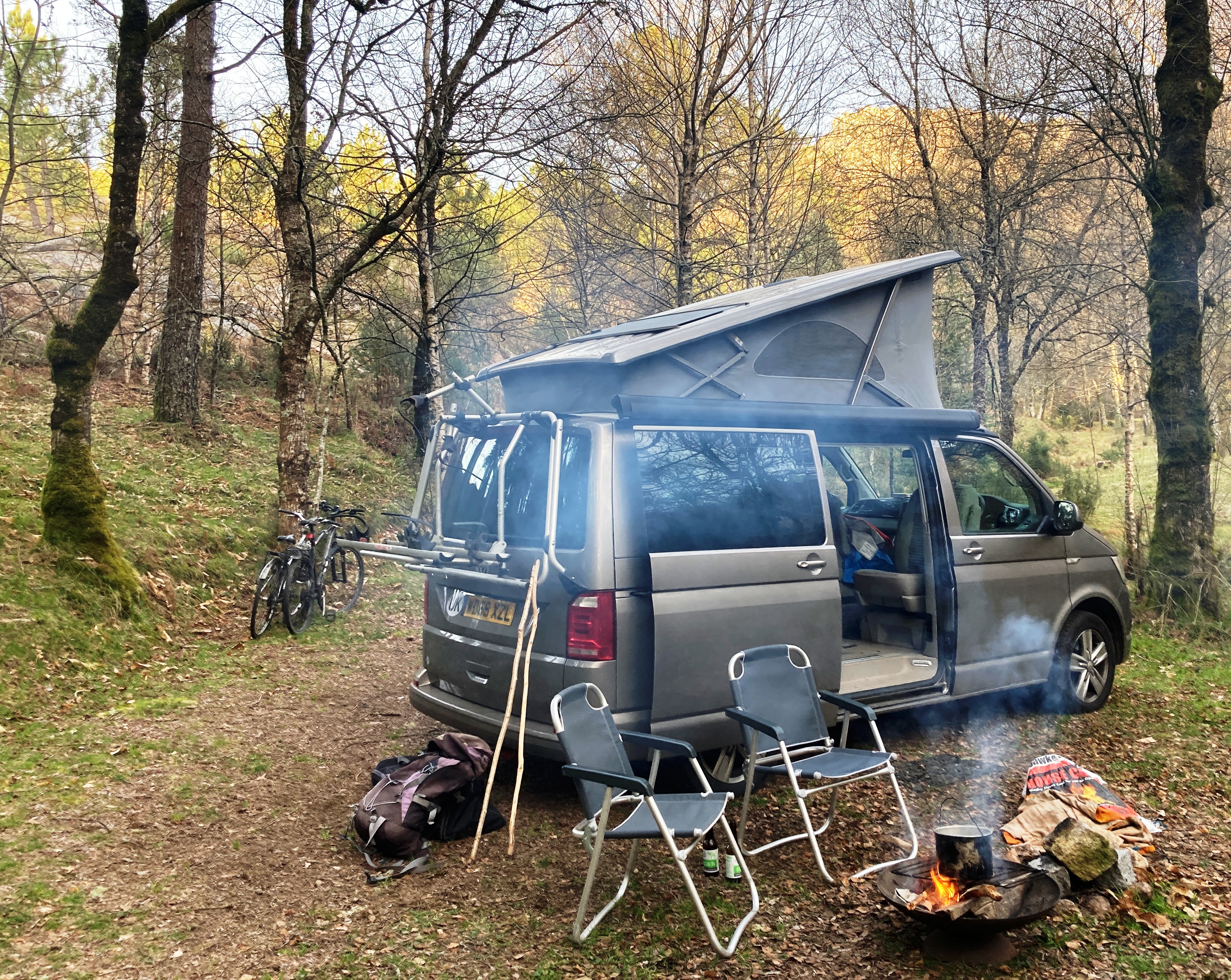
We have warmed up as the day progressed and eventually it allows us to remove one layer!
We light a fire when we return which was nice and cook tea. It is not that warm to sit pout around it all evening though. No others seem to have joined us
Friday 18th March – National Parque de Peneda-Geres

We wake to a temperature of only five degrees but there are blue skies above us!
We leave the campsite and head south to the village of Peneda where we plan to do a short walk.
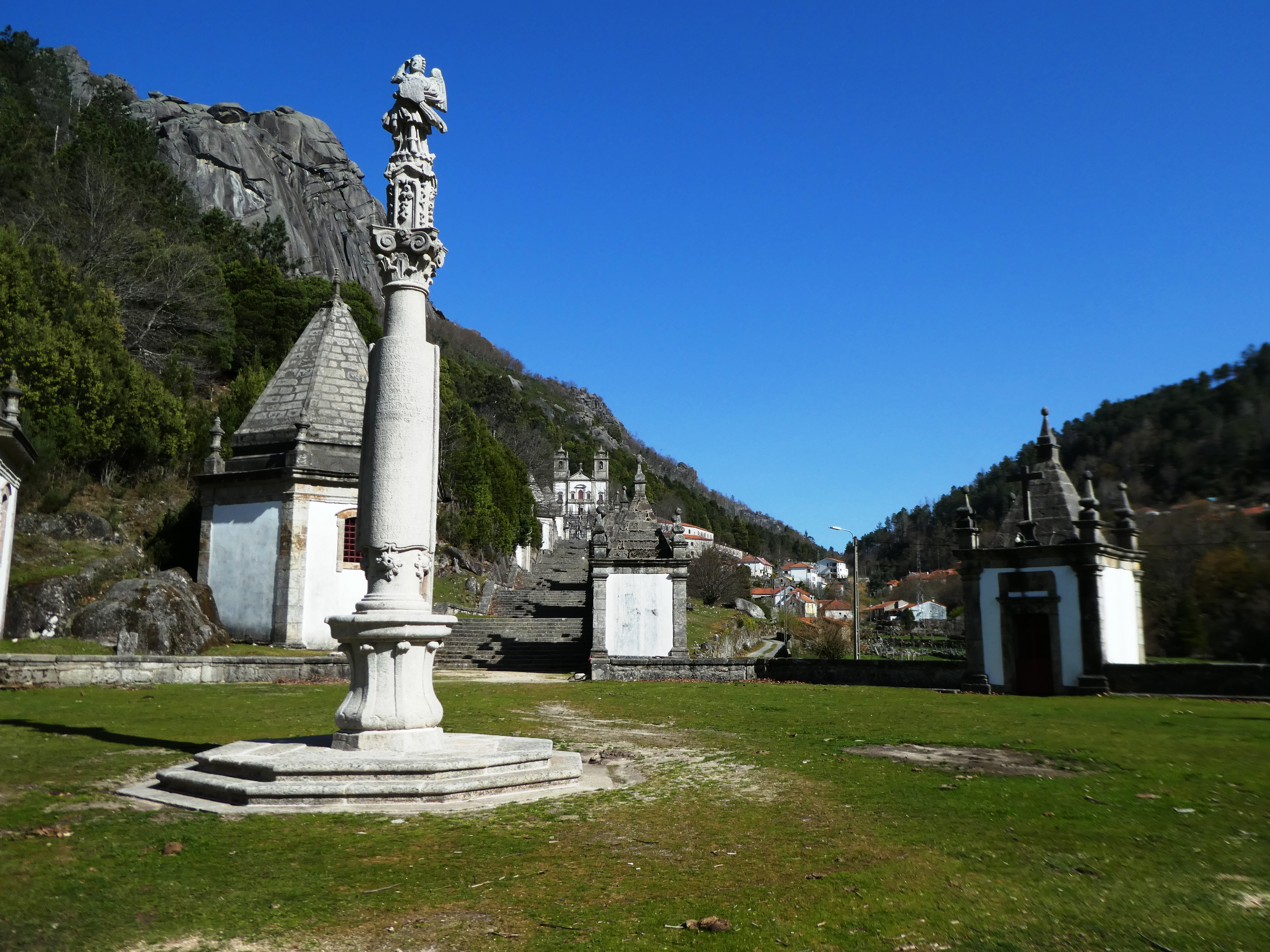
On arrival in the main square we are amazed by the massive church of our Lady of the Snows, Igreja Senhora.
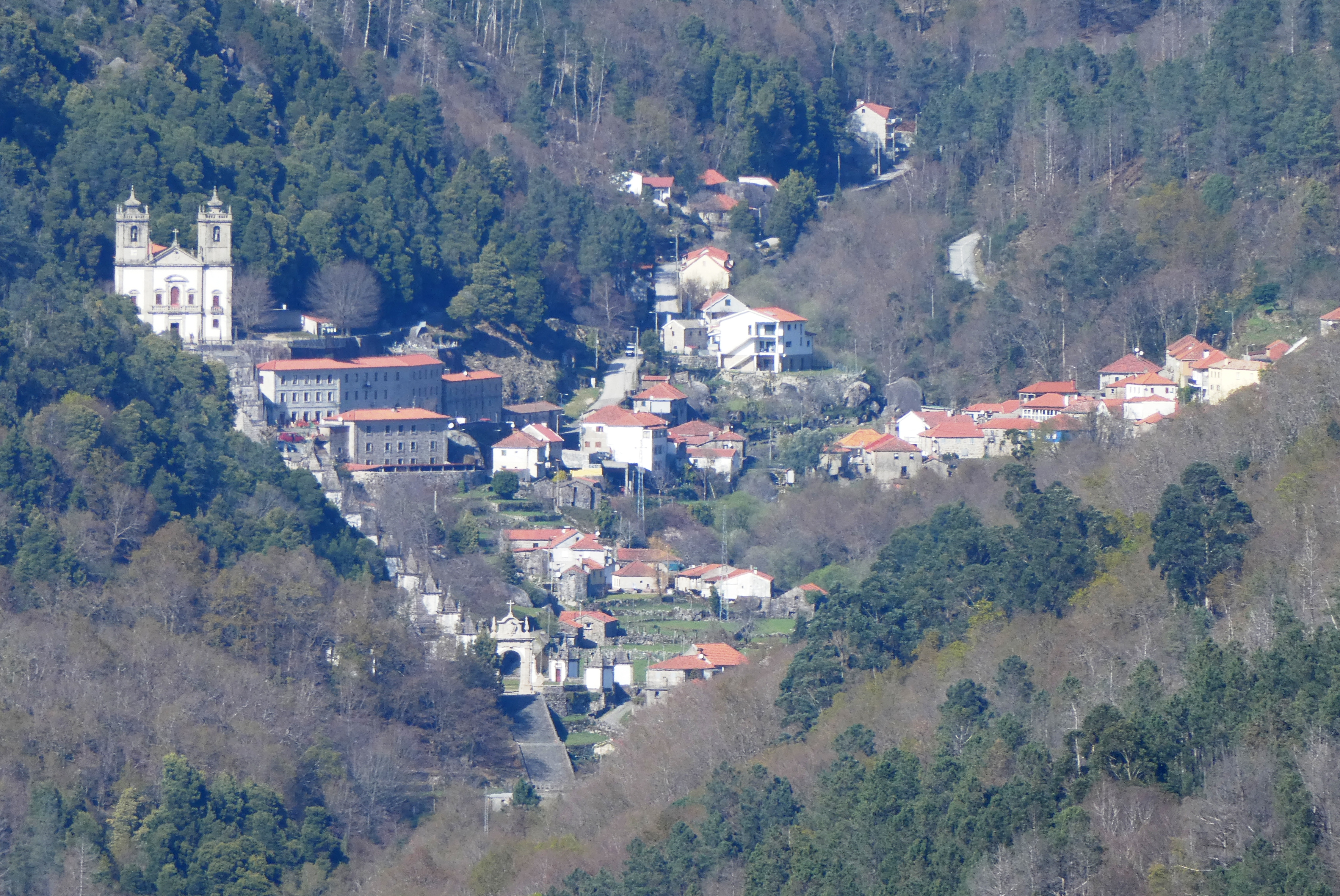
It has a set of ornate steps leading from the church across different terraces flanked on both sides by small chapels. These chapels contain life size models depicting the different stages of the cross with the bottom terrace leading through a gateway down the valley below. It is stunning.
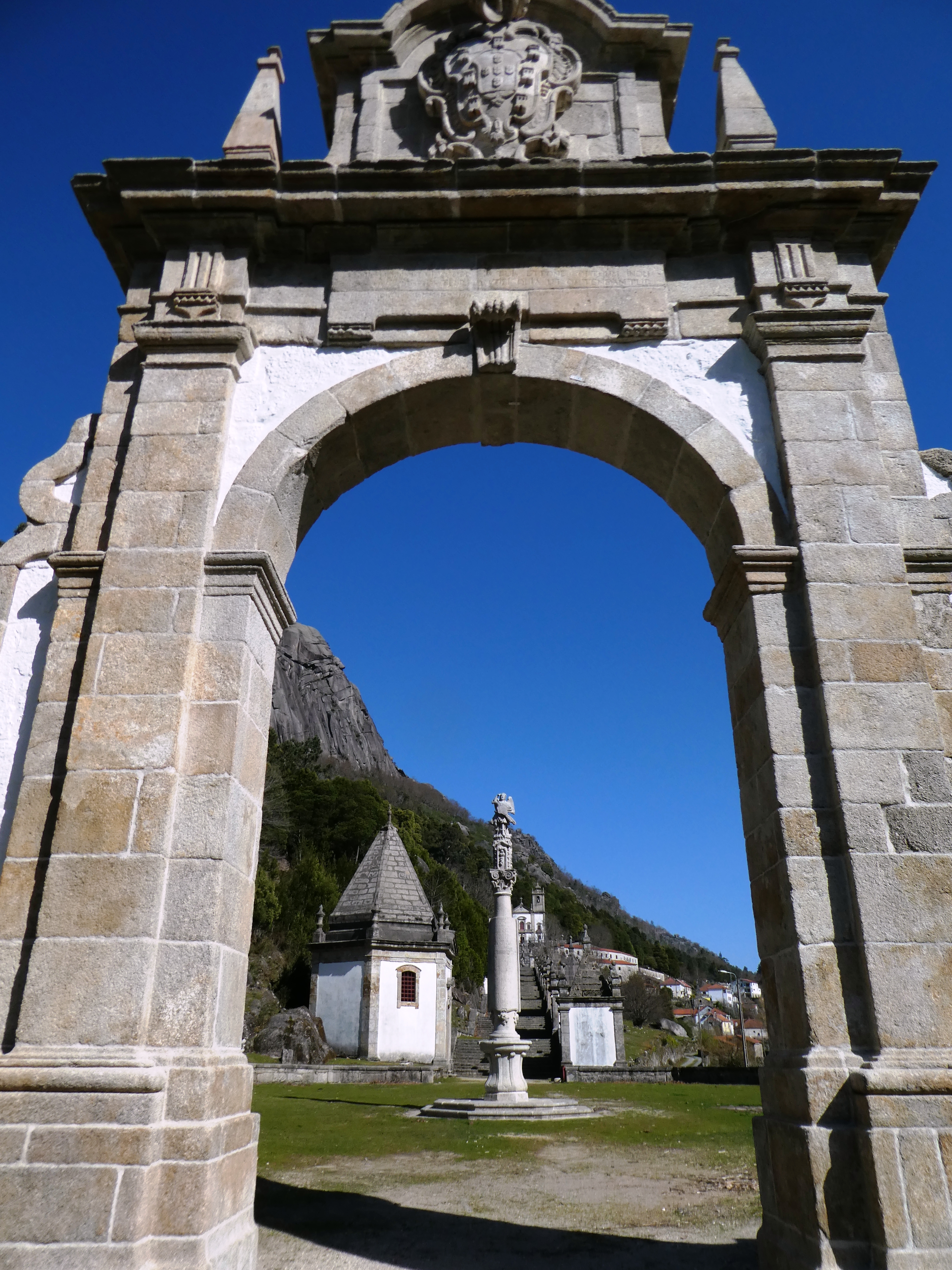
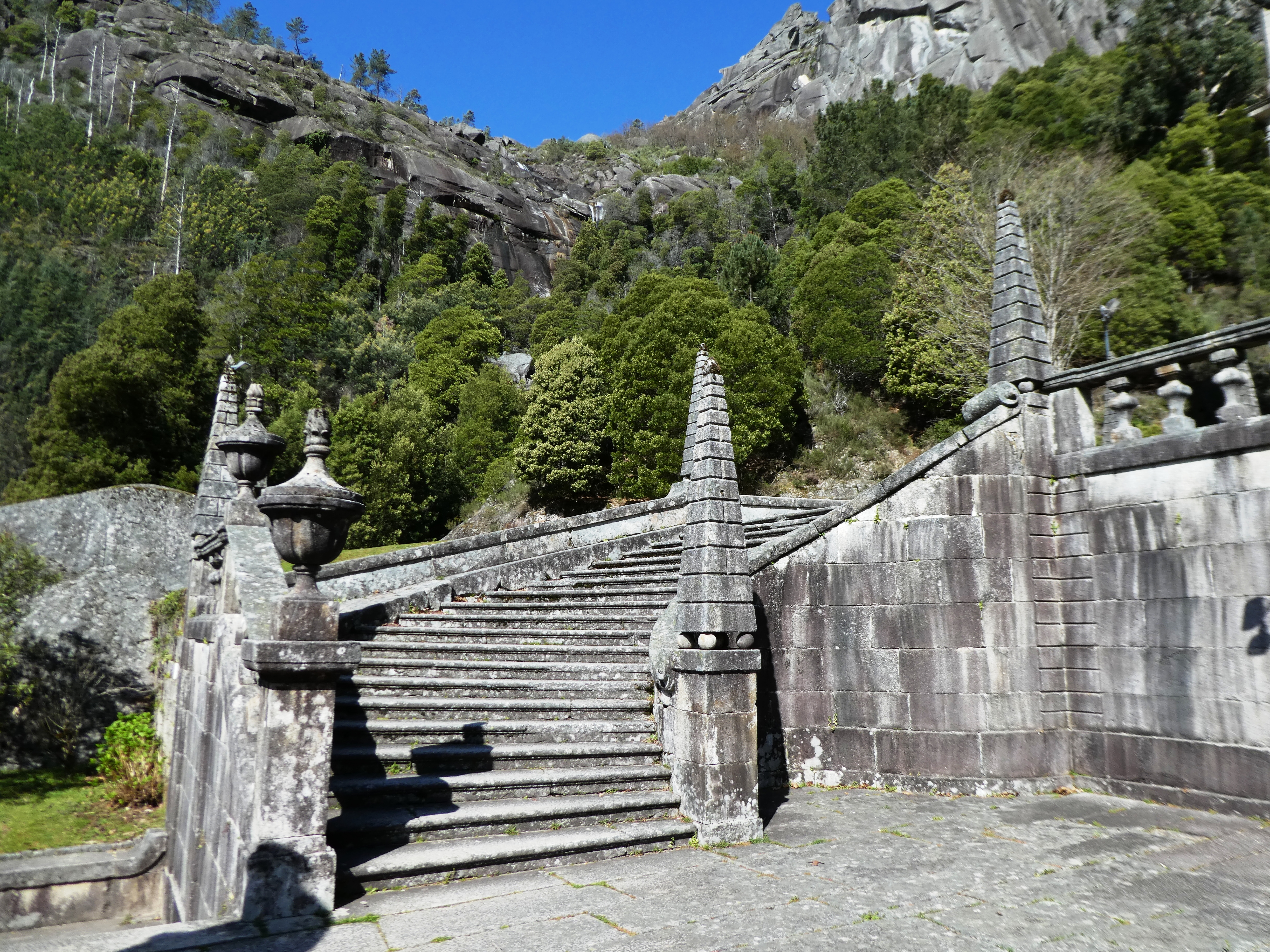
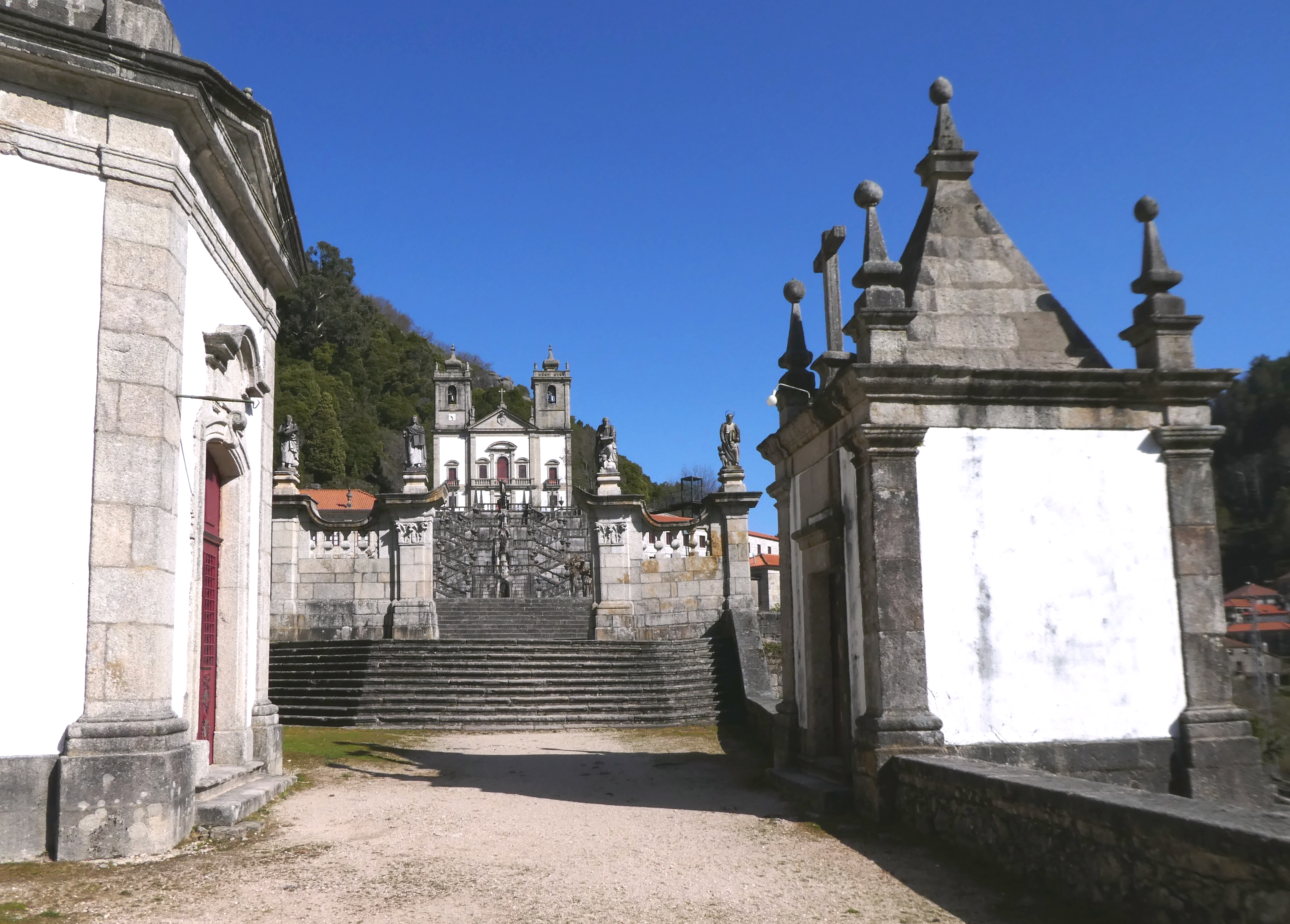
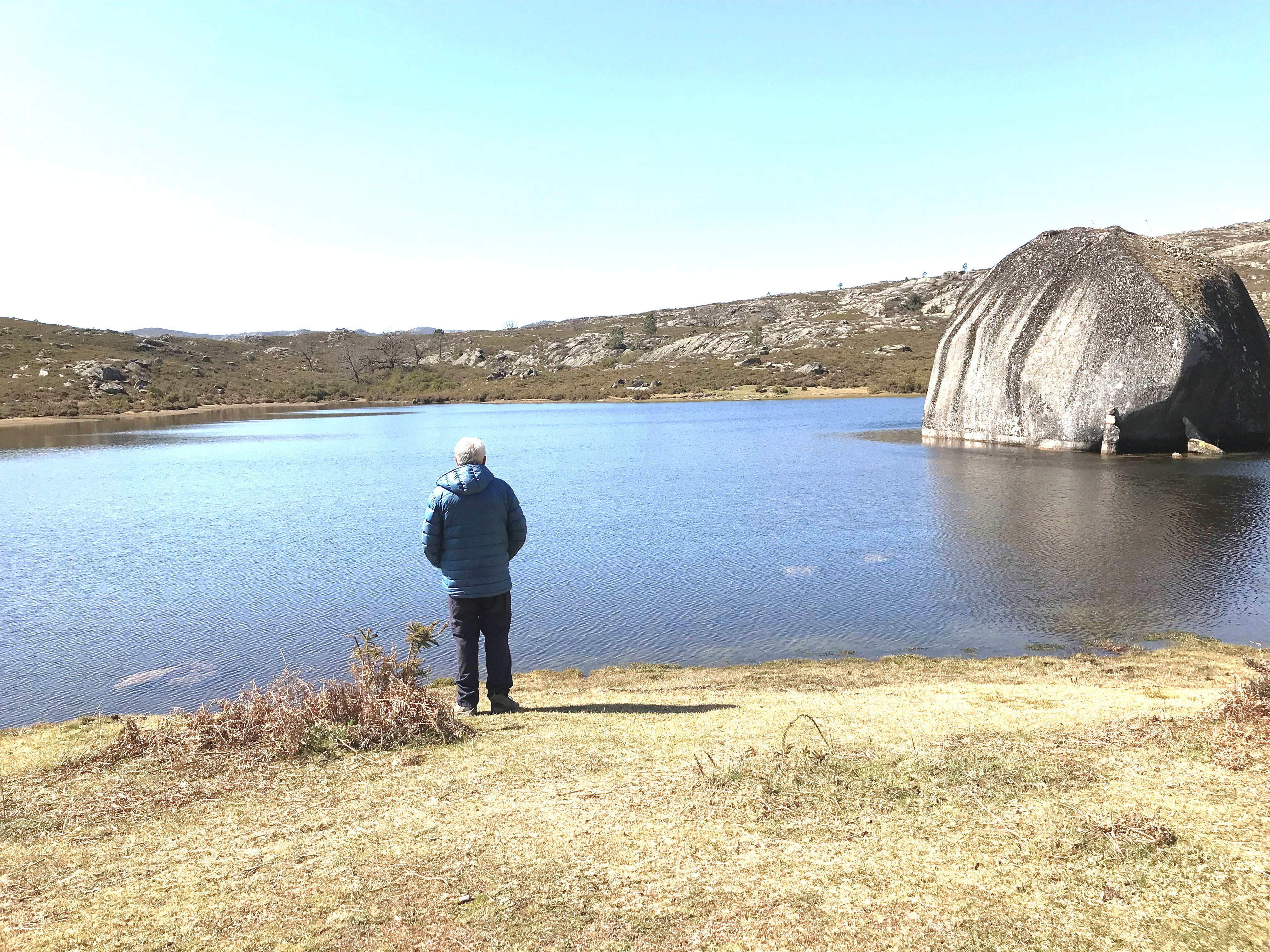
When we have visited the church, we put on our boots and take the very steep cobbled path up and over Peneda’s domed peak to a small lake.
The sun shone and for the first time in the holiday we could laze around and even considered a skinny dip in the lake!
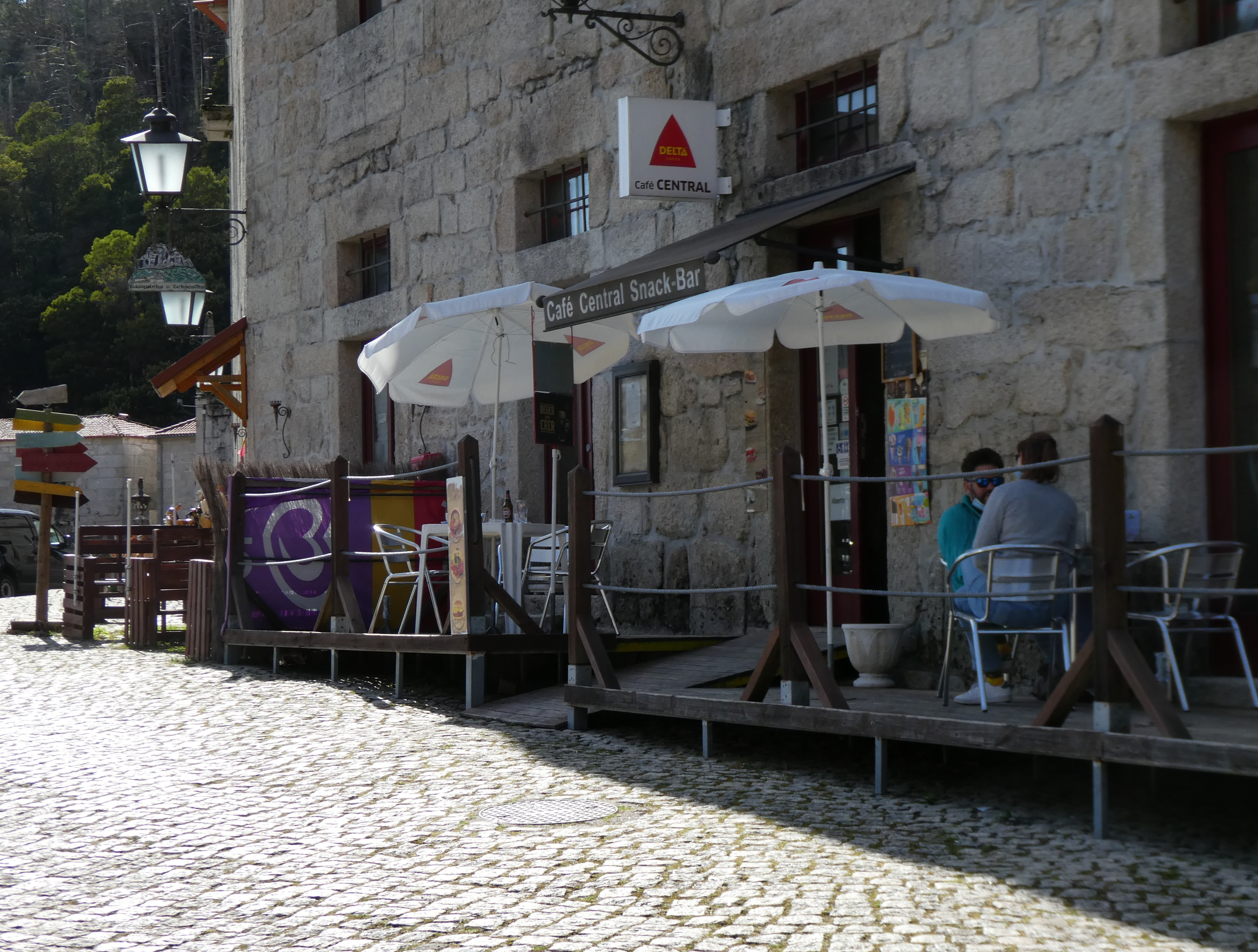
Back down in the village after being admonished at the local bar for entering without masks we have a pleasant lunch.
After lunch we head south through twisting windy roads with amazing views over the granite area to Mezia where we are hoping to camp.

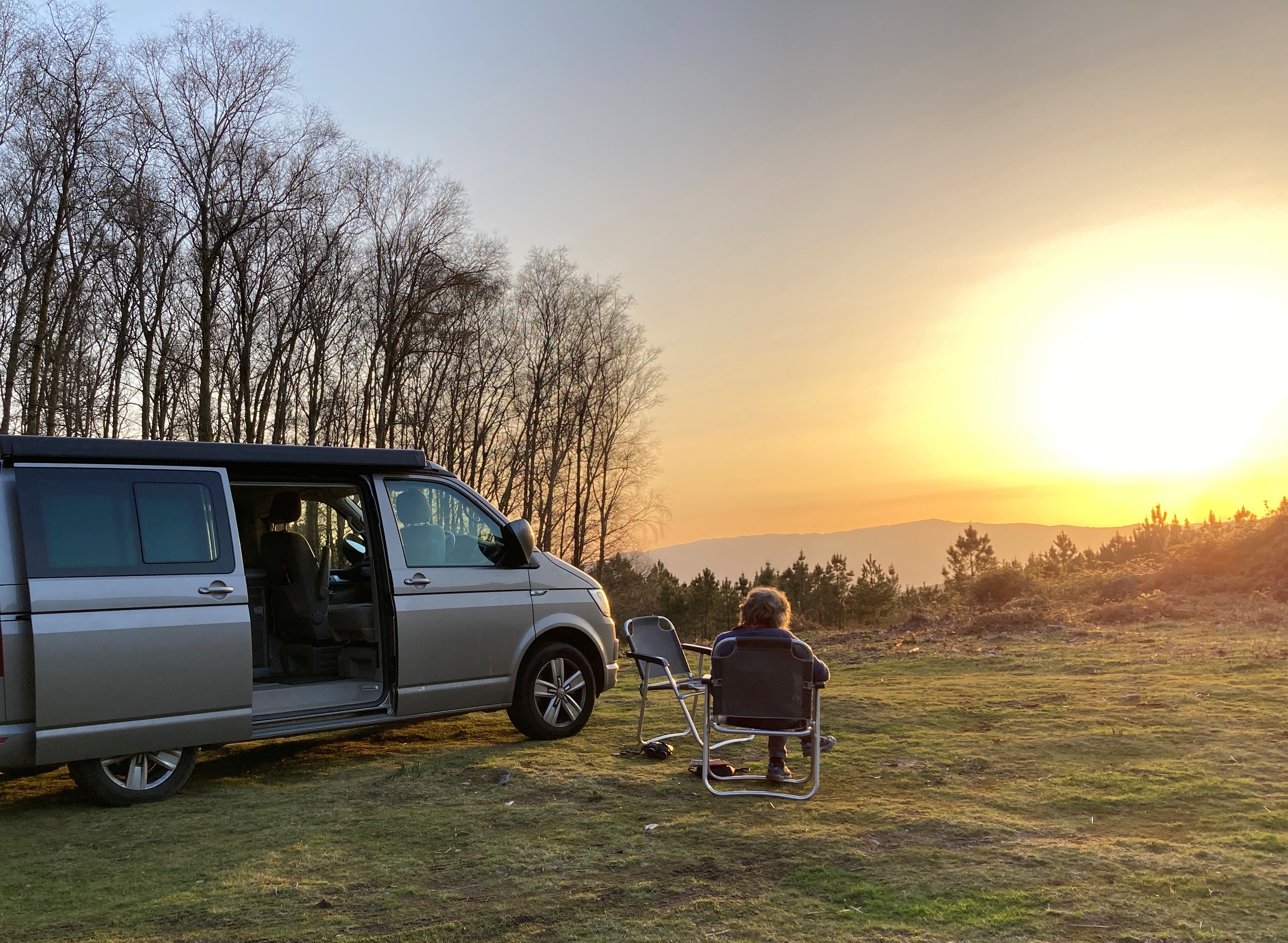
Unfortunately the campsite is closed but just below it, is a small grassy plateau where we decide to spend the night.
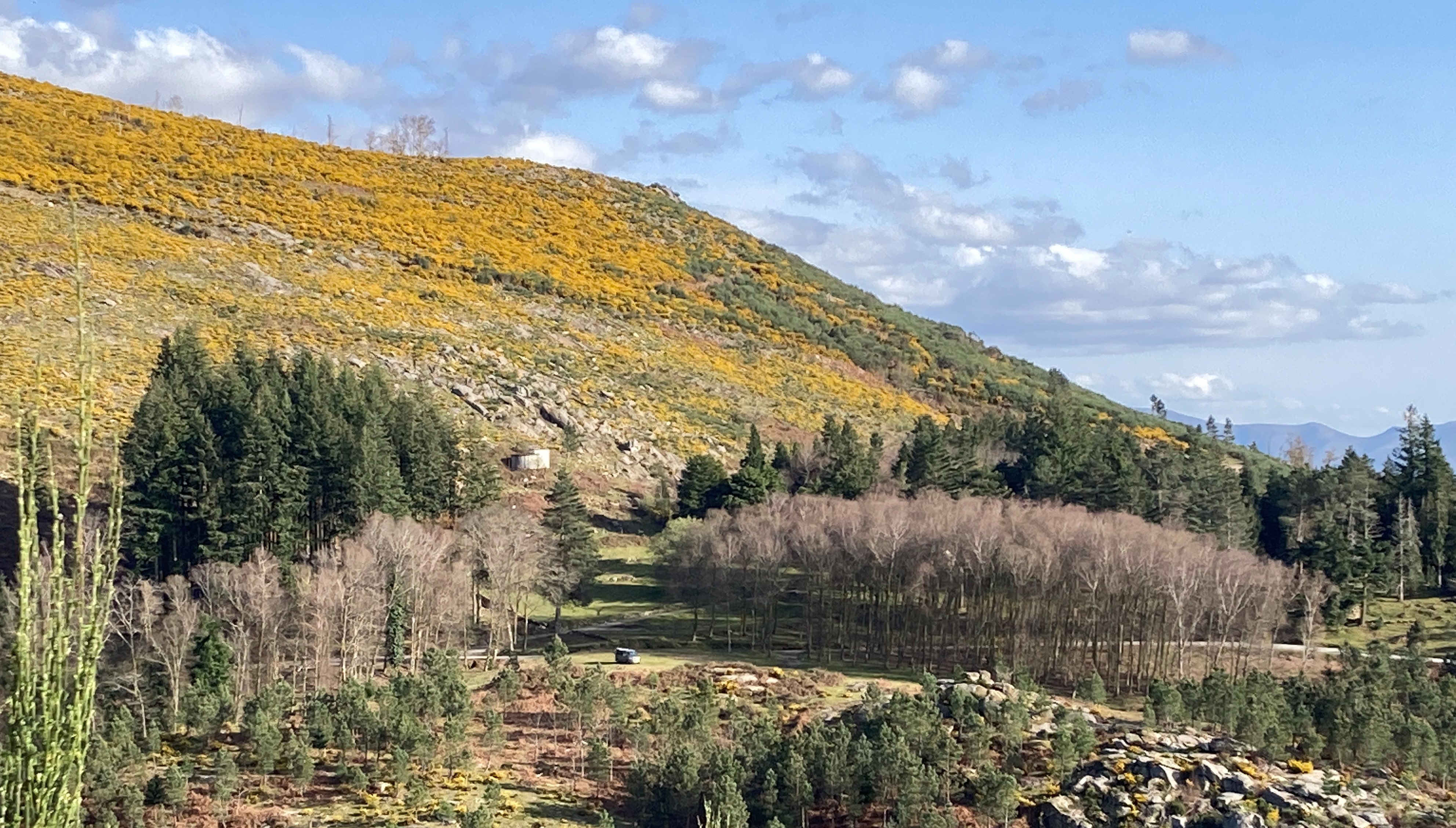
We go for a short walk up along the track to orientate ourselves before enjoying a beautiful sunset which completes perfectly our first warm day.
Saturday 19th March – National Parque de Pineda-Geres to Porto

We start the cool bright sunny day with warm eggy bread before following a track, initially in shadow, in the early sun, towards the Pernada Mountain.
It was lovely reaching the pass the sun is now higher and the pass is warm.
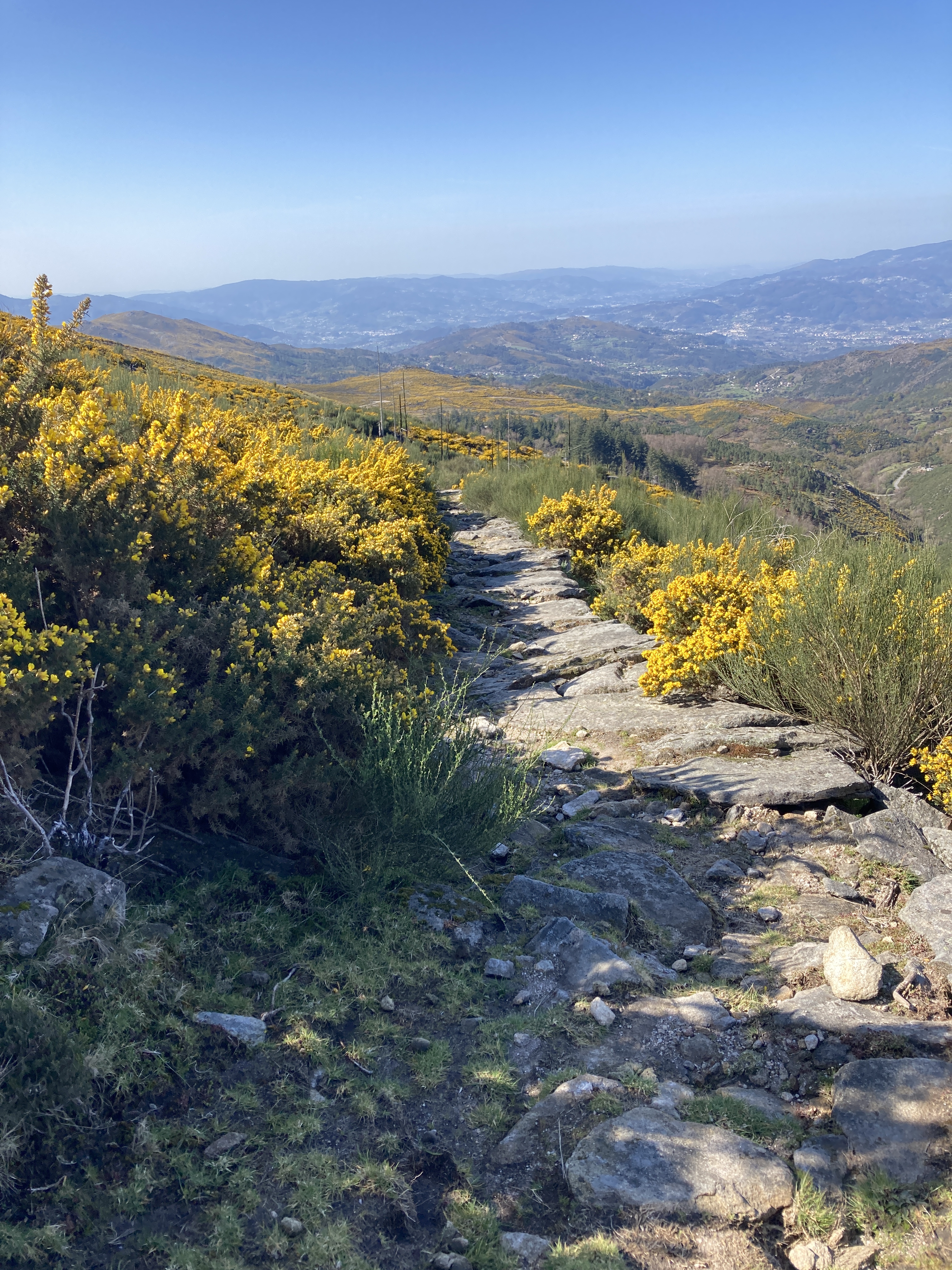
You can see the wilder mountains to the north that we had driven through the previous day.
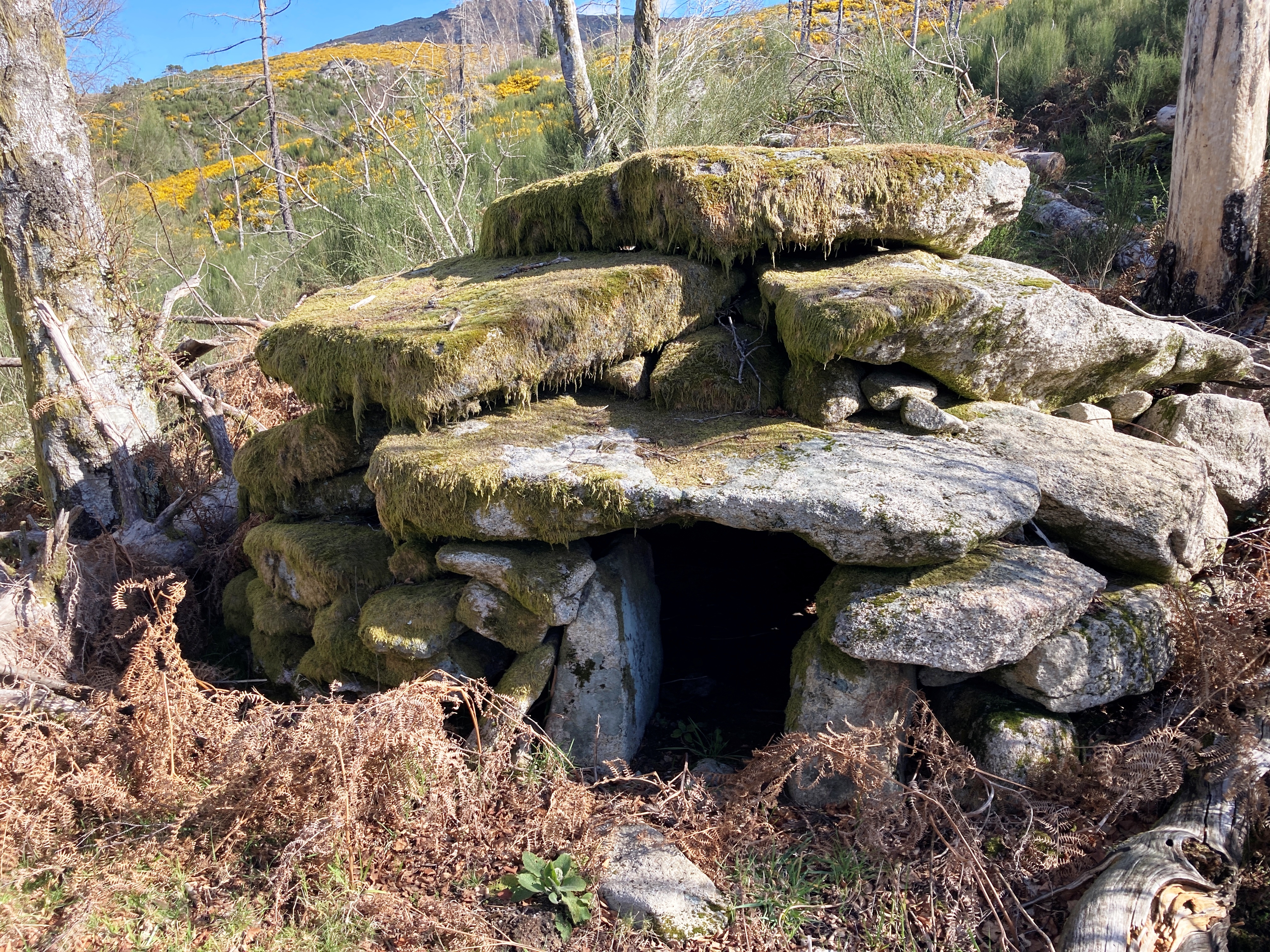
From the pass we descend through the shallow valley to find a lovely stone slab path that turns into an attractive old track through the valley and down to the van.
After a leisurely brunch we head via the auto routes to Salgueiros on the coast south of Porto where we find the municipal campsite we were aiming for.
It is still quite early when we arrive and find a pleasant plot that just has a view of the sea.
We go on a quick orientating walk before lunch and then laundry. This is not much fun as there is no hot water at the big concrete square washing tubs!
We then reinvigorate ourselves by cycling south along the coastal strip, which is monotonously more and more of the same built up sea front but it is good for Janet to get a feel for her wonky bike!
Sunday 20th March – Porto
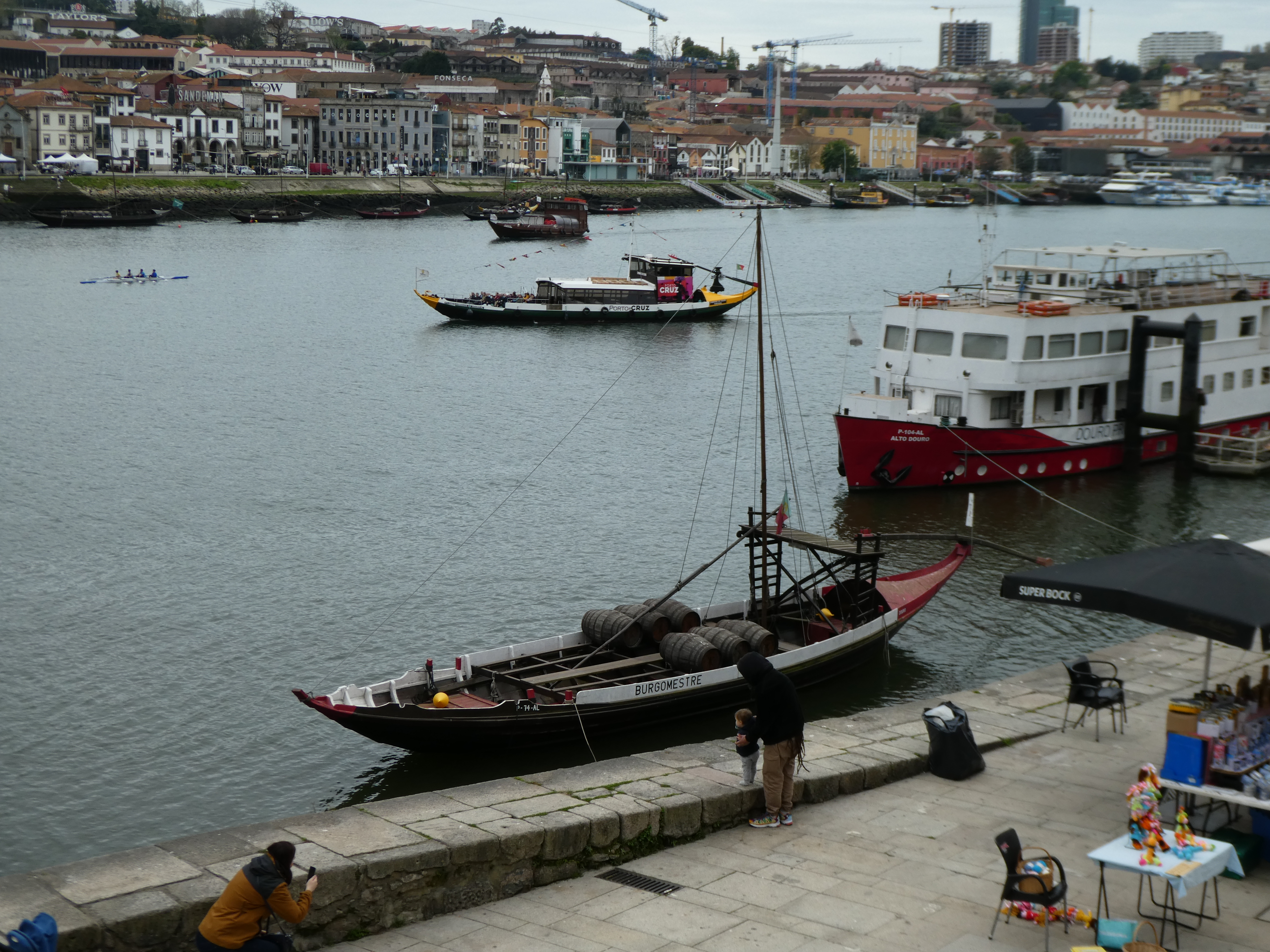
We are up and away by nine o’clock cycling along the coast and up the River Duro to the Ponte Luis 1 the iconic steel girder bridge that crosses the Douro in the centre of the city.
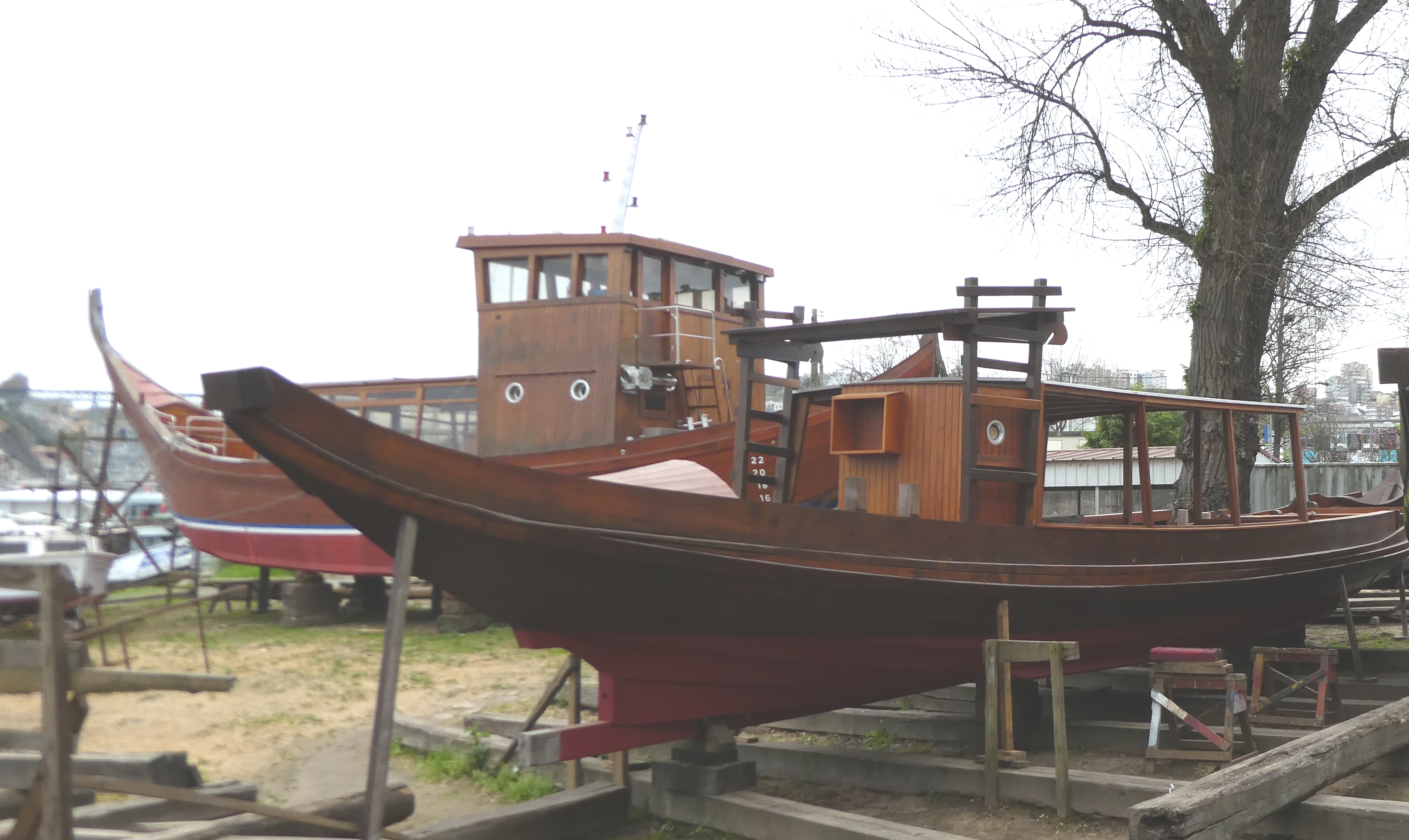
The ride along the sea front and up the river into the city is exhilarating. We pass boatyards making the traditional barges that used to and still do ply their trade carrying barrels of wine up and down the river. The warehouses of the many famous sherry houses such as Cockburn, Sandeman and of course Graham, stand on the low hills above the river.
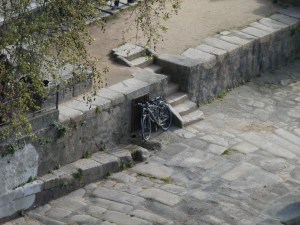
We leave our bikes by the side of the river just below the Ponte Luis I bridge and explore the city on foot.
The only downside was the hundreds of very noisy motor bikes that were gathering on the riverside in a new cafe area before the bridge.
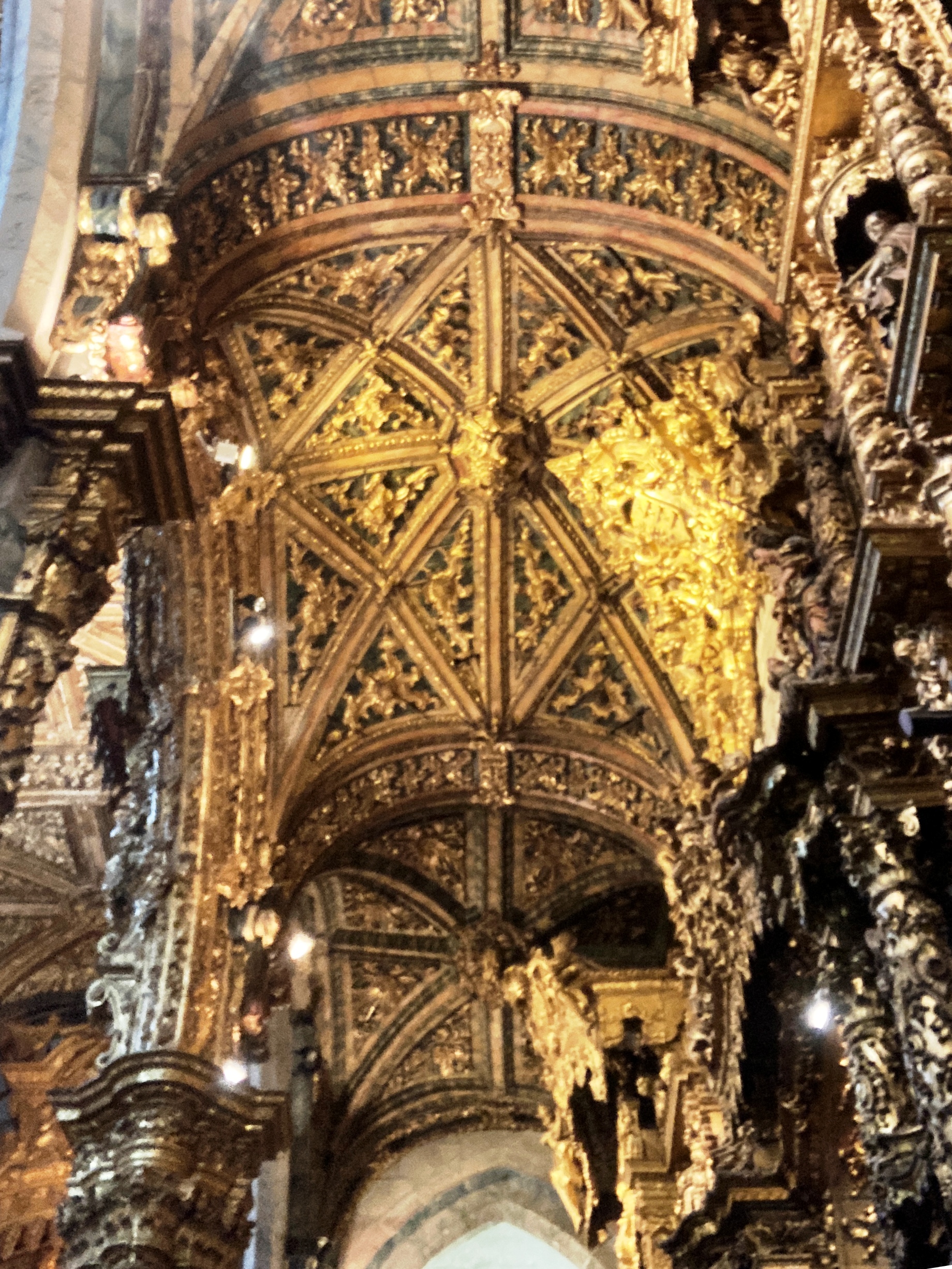
We cross the river on the lower level of the bridge and follow the waterfront into the city centre to the Igreja de Sao Francisco. This is said to be the best church to see because of all the gold used in its decoration. Whilst very golden we are under whelmed by this and its museum.
As with most cities it is the outside of buildings, the public spaces and the activities of people that make it interesting.

We have coffee on the Rua da Flores then make our way up to the cathedral and its square where a lot is happening.

We then go down to Sao Bento Train station who’s had big hand painted tiles and reminded us of the station in Valencia.
From here we go up to Livraria Lello an art Nouveau bookshop where they charge you for the privilege of wandering around admiring the art nouveau features. There is an enormous queue so we wander around the area admiring the many tiled buildings, Roman remains and orange tiled roofscapes.


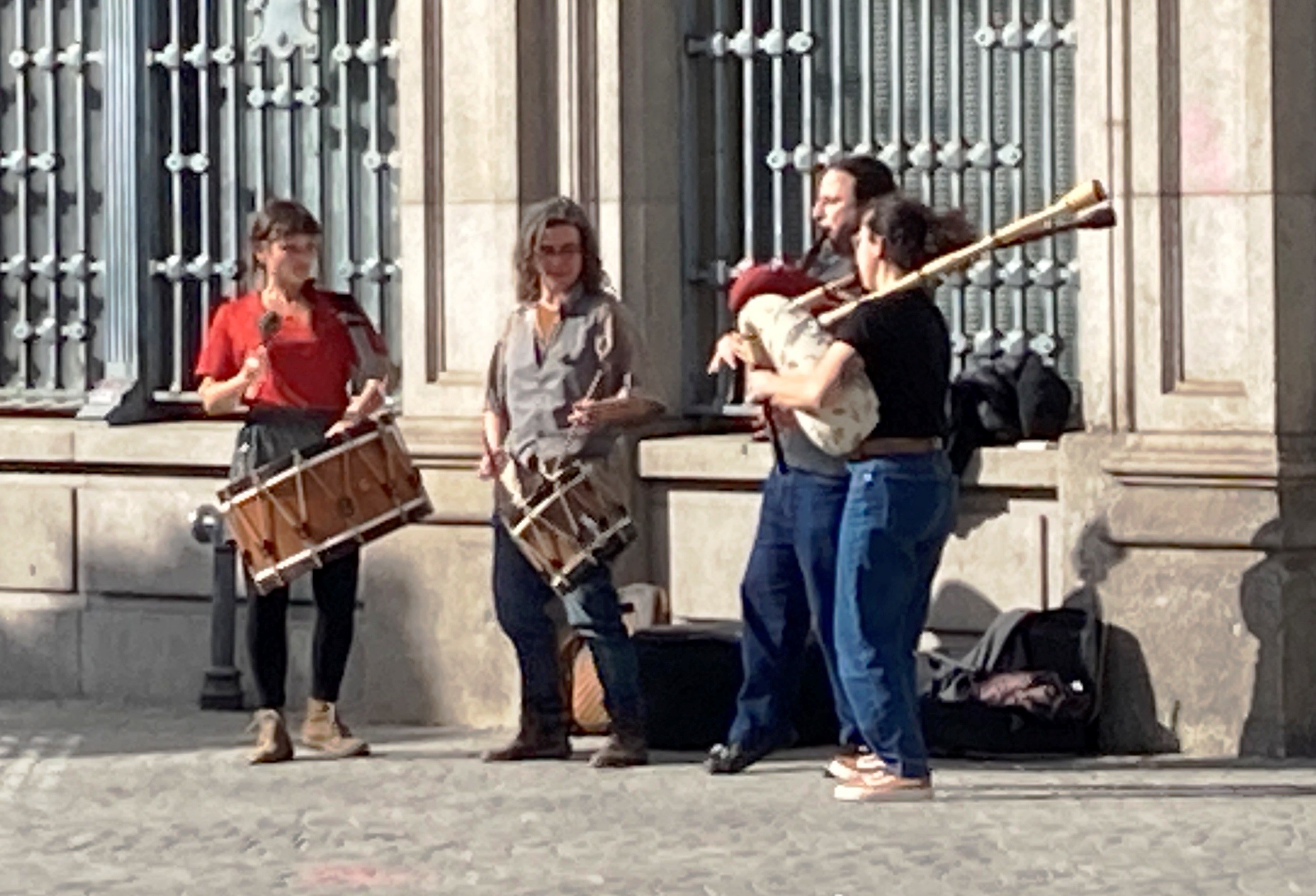

As we wander on through the city we come across street musicians and Roman pavements uncovered as part of road improvements.
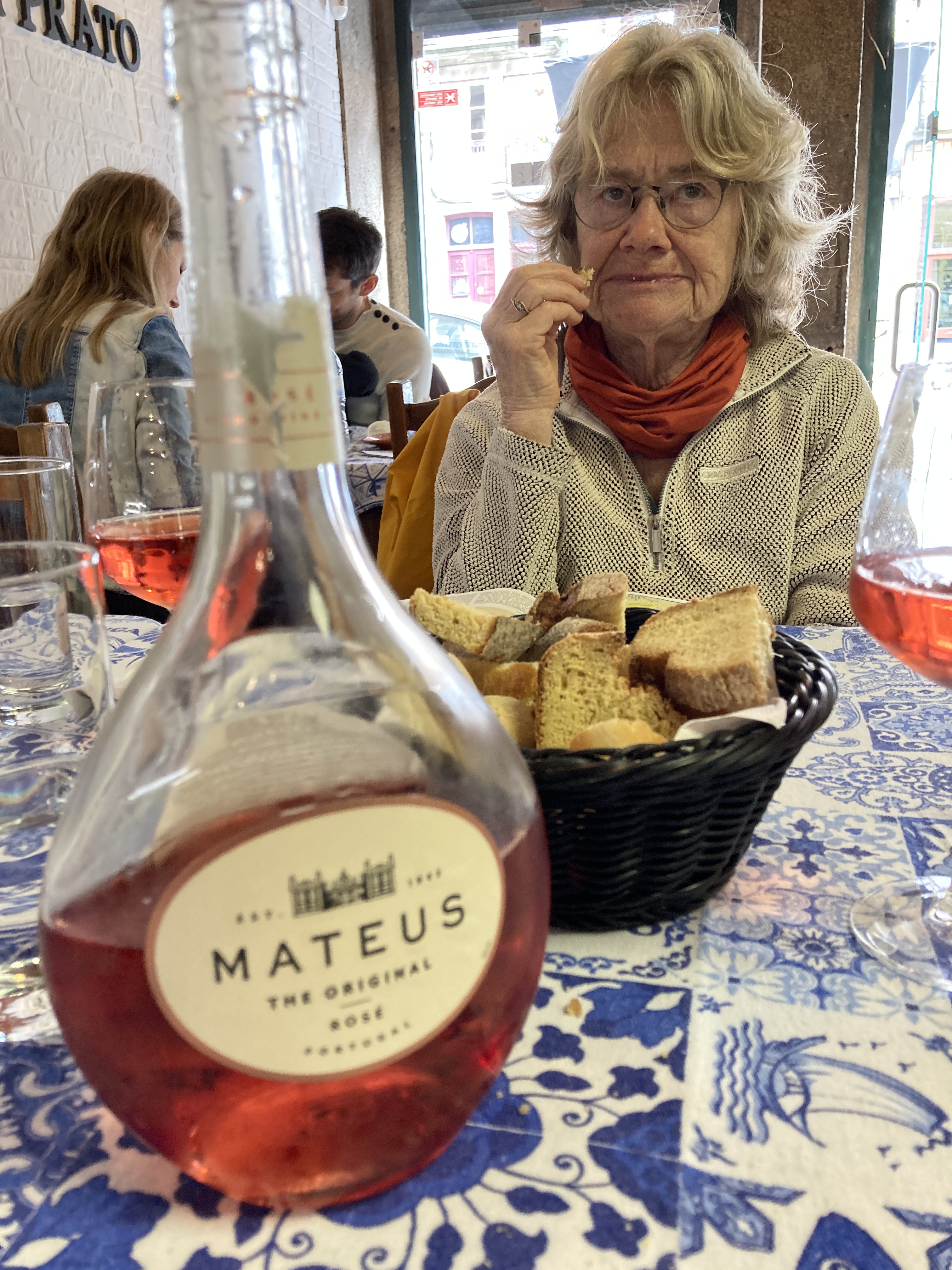
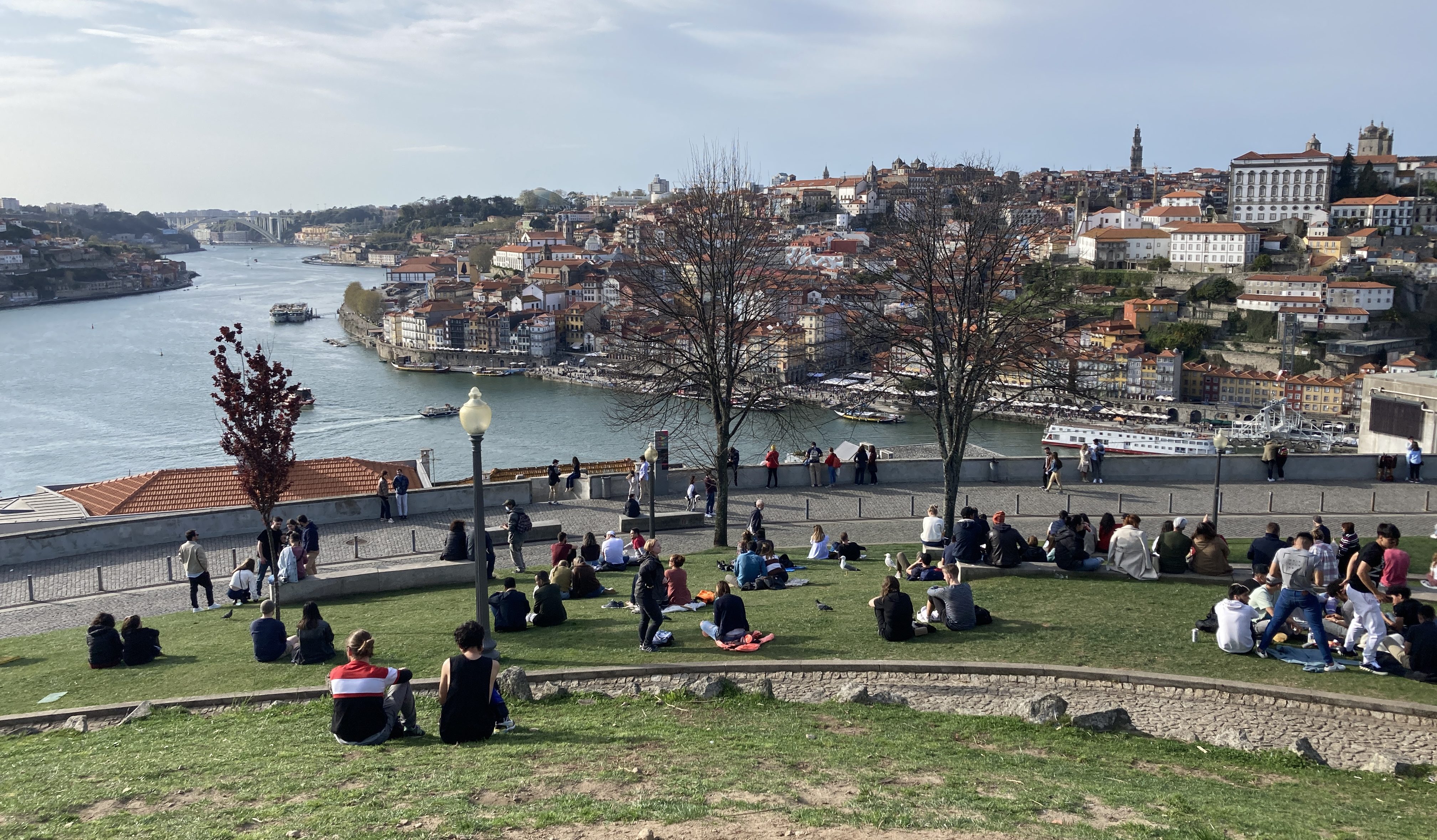
We find a quiet cafe where we have some traditional salt cod stew for lunch before wandering back across the top of the bridge to Jardim do Morro.
The Jardim do Morro is an oasis of fresh air high above the city with stunning views across Porto and the river. In the garden there are lots of groups of people relaxing, eating ice creams and sun bathing.
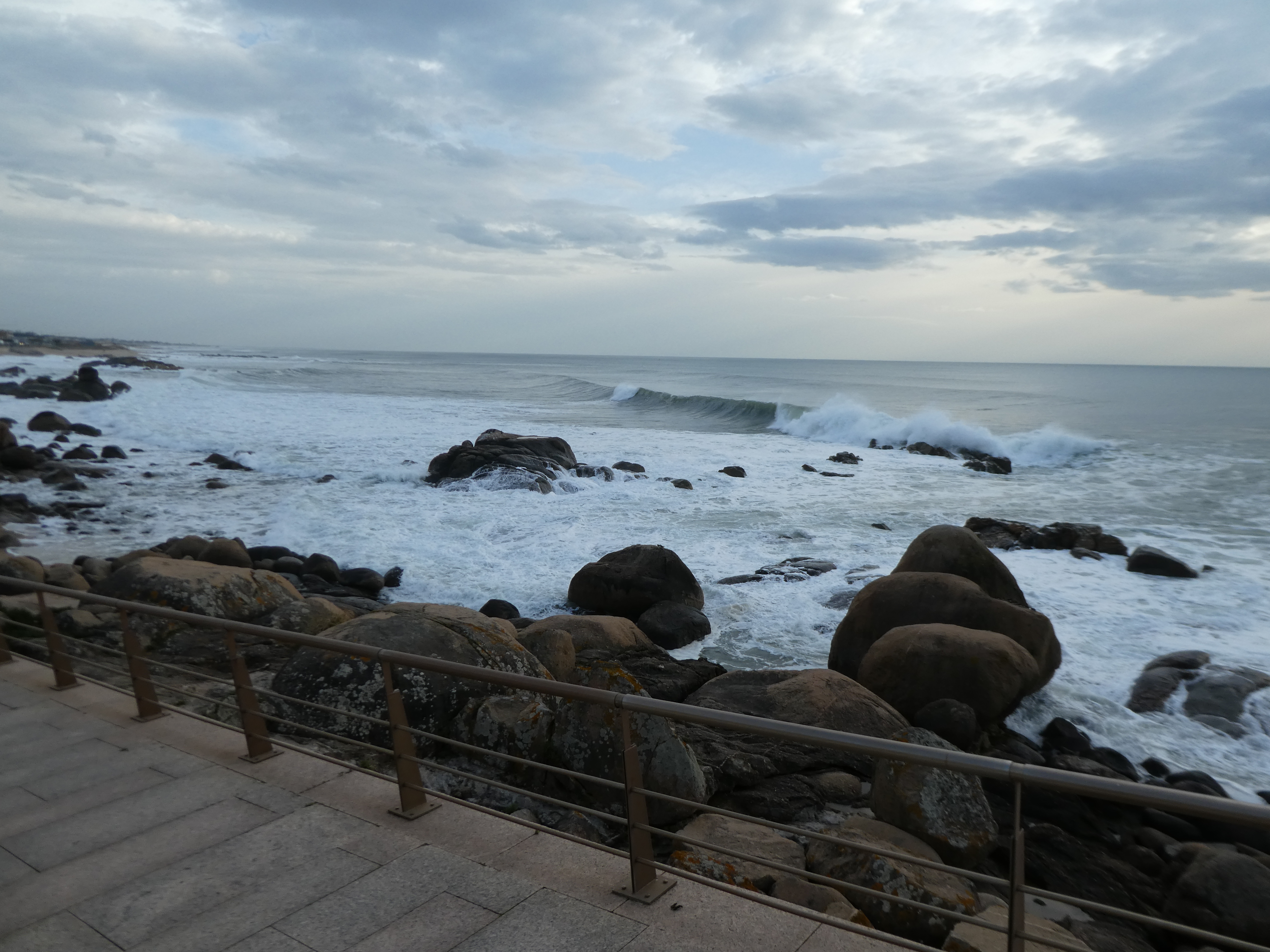
We make our way back to the bikes taking advantage of a bar nearby where we have a coffee and use of their loo.
We cycle back the way we came past the marinas and as we come to the estuary and turn the headland we are greeted with a full sea with huge rollers was magnificent.
Monday 21st March – Porto to Salamanca
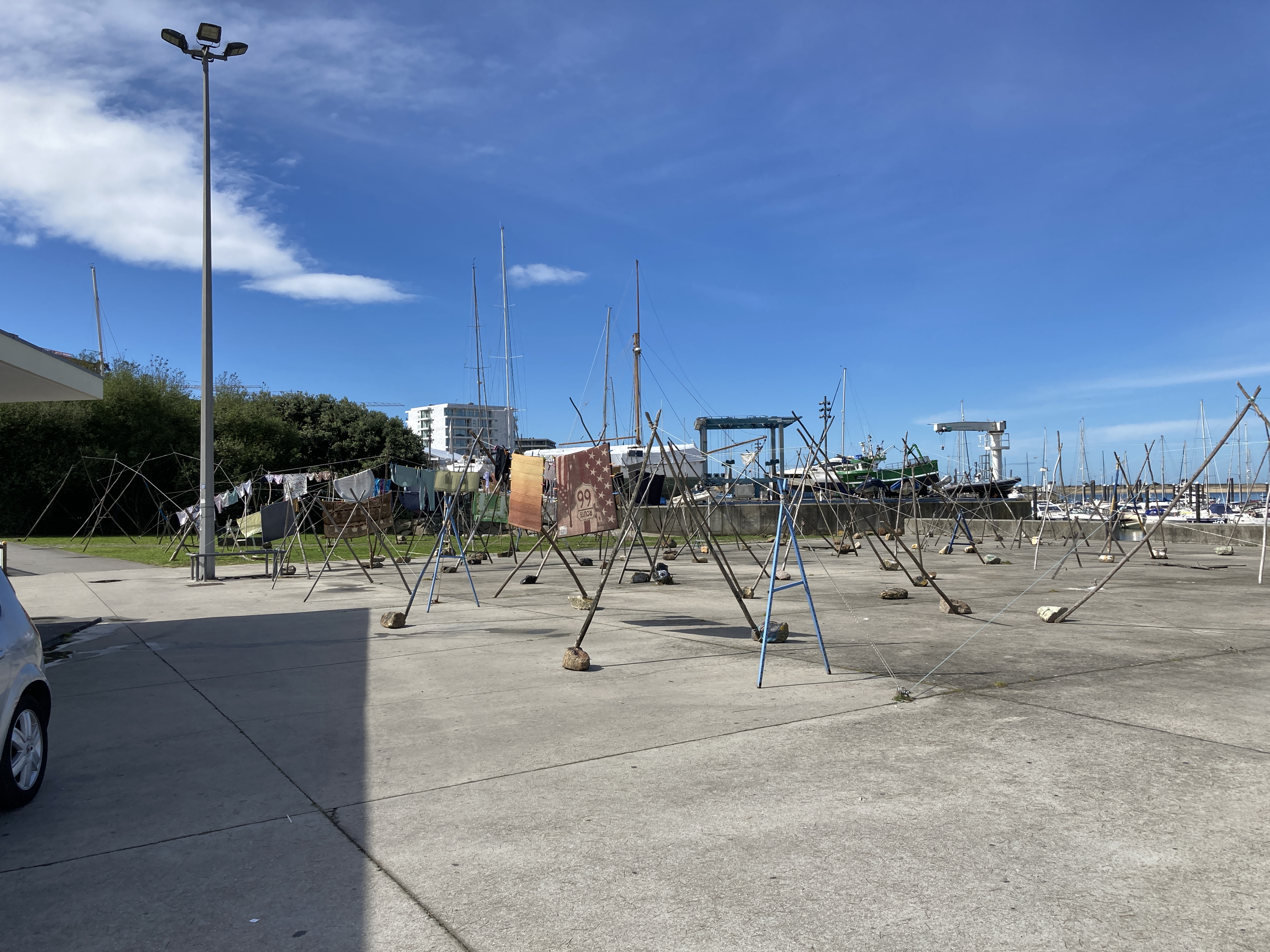
The day starts sunny so we are up early. We cycle into Porto leaving the bikes in the same place as yesterday. We pass some quirky public art which on closer inspection are washing lines.
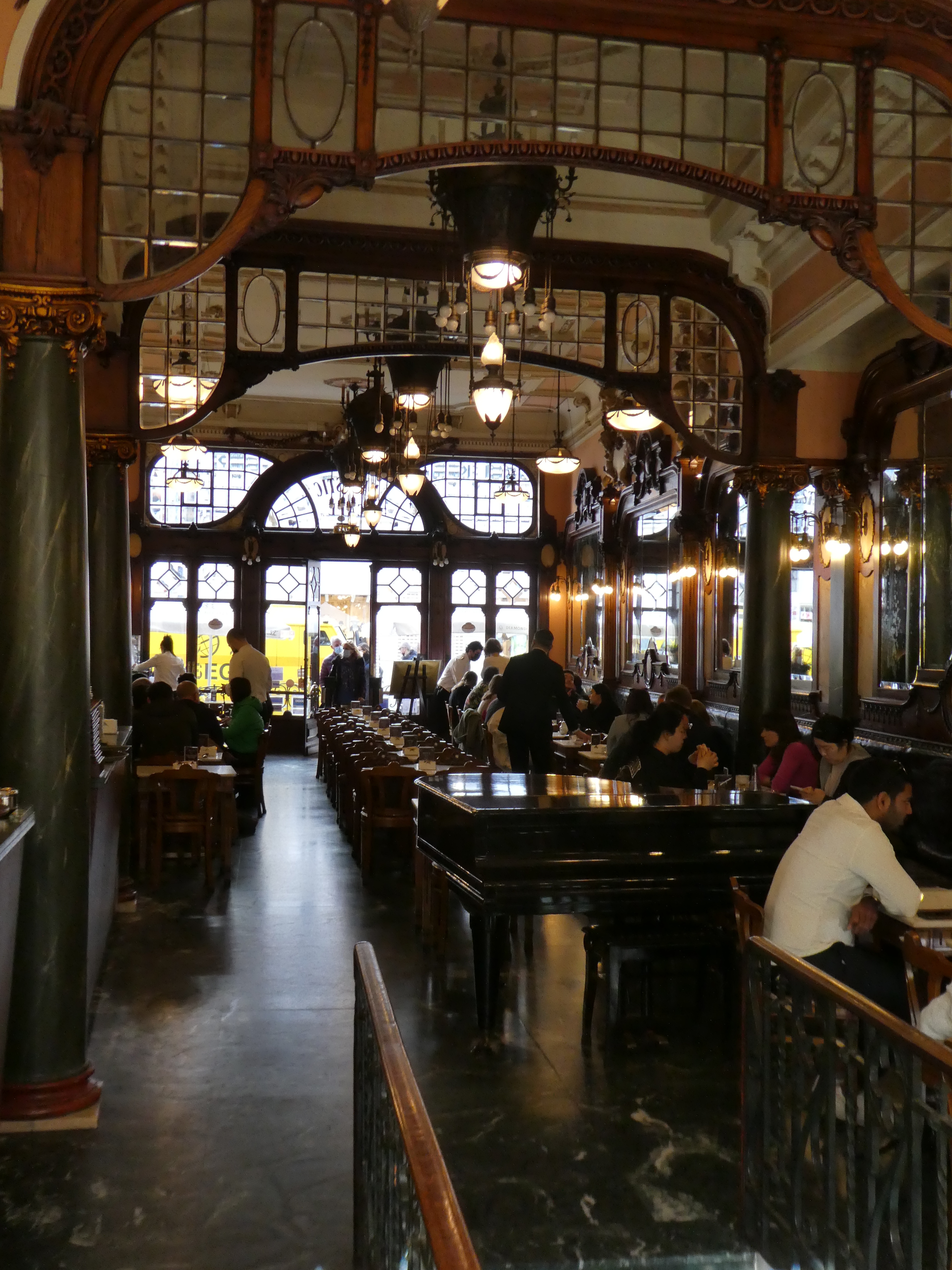
For breakfast we look for Cafe Majestic an Art Nouveau cafe with ornate interior featuring carved wood, mirrors and chandeliers.
We enjoy orange juice, coffee and a pastel dulata tart surrounded by amazing Art Deco interior and ‘proper waiters’. We then return to Livraria Lello to again find a queue and it has only been open half an hour!
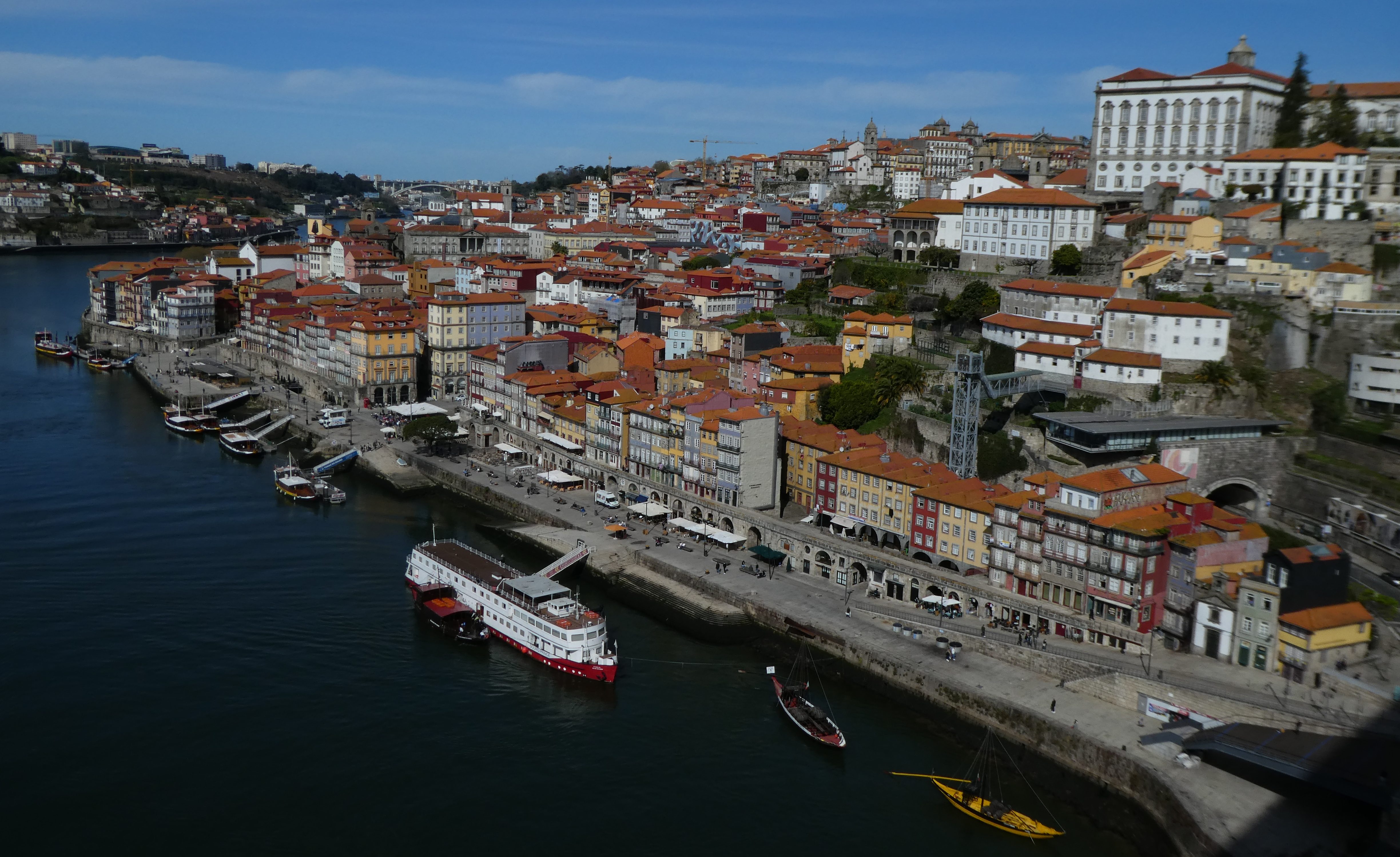
So we give up on that and wander back over the bridge enjoying the city in the sunshine before cycling back to the camp site.
We leave the campsite, get petrol and join the Auto Estrada travelling south before turning east over the mountains to Salamanca. The journey across the mountainous border is through ever increasing amounts of rain.
We arrive at Camping Don Quijote around five o’clock establishing ourselves on a campsite beside the river, a bit taken aback by the number of Brits in motor homes but its OK.
Tuesday 22nd March – Salamanca

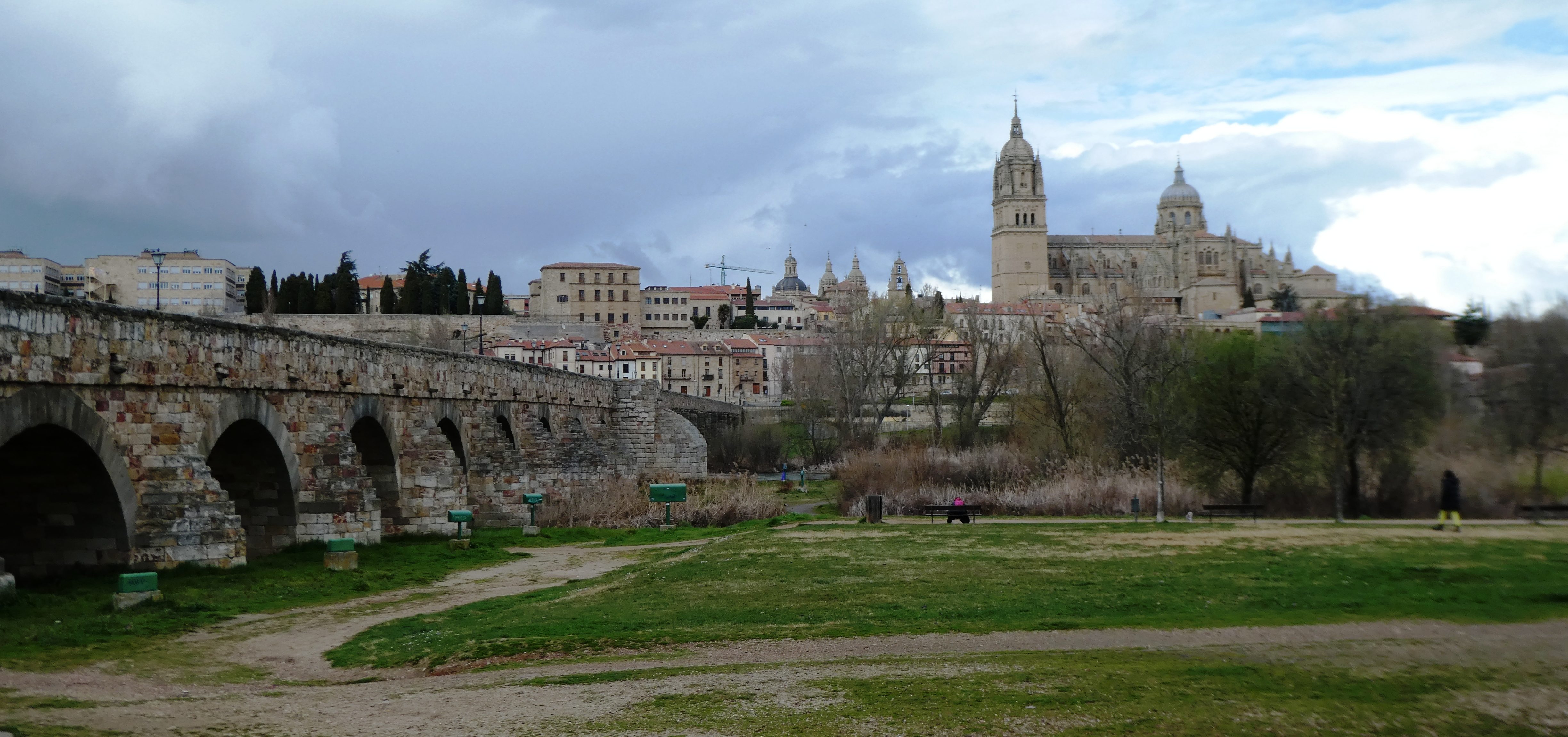
It is cloudy as we cycle along the river to the city. The way from the camp site is level and passes through new housing estates and fields. We arrive to the south of the city at a Roman bridge which crosses the River Tormes.
We leave the bikes at one end of the bridge under cover as it was threatening to rain.
We wander up into the city getting our bearings. We find ourselves walking past Casa de Las Conchas, a large gothic building built by Maldonado with a facade of conch shells signifying the love for his wife.

Next the 18th century Plaza Mayor, an amazing large baroque style square perfectly symmetrical, with arched arcades. The spandrels of the arches decorated with medallions of famous people including the Duke of Wellington!

After a very strong double espresso in the square we continue our wandering around the University buildings and came across a wonderful sielo, a painted ceiling, a quarter sphere vault of a starry sky depicted with gods and symbols.
As it spots with rain we go to the Casa Lis the Museo Art Nouveau Art Deco. Apart from the art deco glass the building itself is stunning and the displays of various collections were uncluttered and simple.
The collections include porcelain, African and modernist styles of bronzes (Karl Kauba, Hagenhauer) figurines and chryselephantine. These were made at the end of 19th century and are a combination of ivory and bronze (Chiarus, Preiss, Poertzel, Paris, Lorenzo, Claire Colinet. The movement and simplicity of lines in some of these is stunning.
There are other things including fans, dolls, toys, glass, furniture and jewellery of the period. There is also an exhibition of Dali’s illustrations of Dante’s Divine Comedy, a real contrast to the beauty of the exhibits we have seen before.
We find a small restaurant near the university that is alive with young couples and students and which serves us a nice set menu lunch.
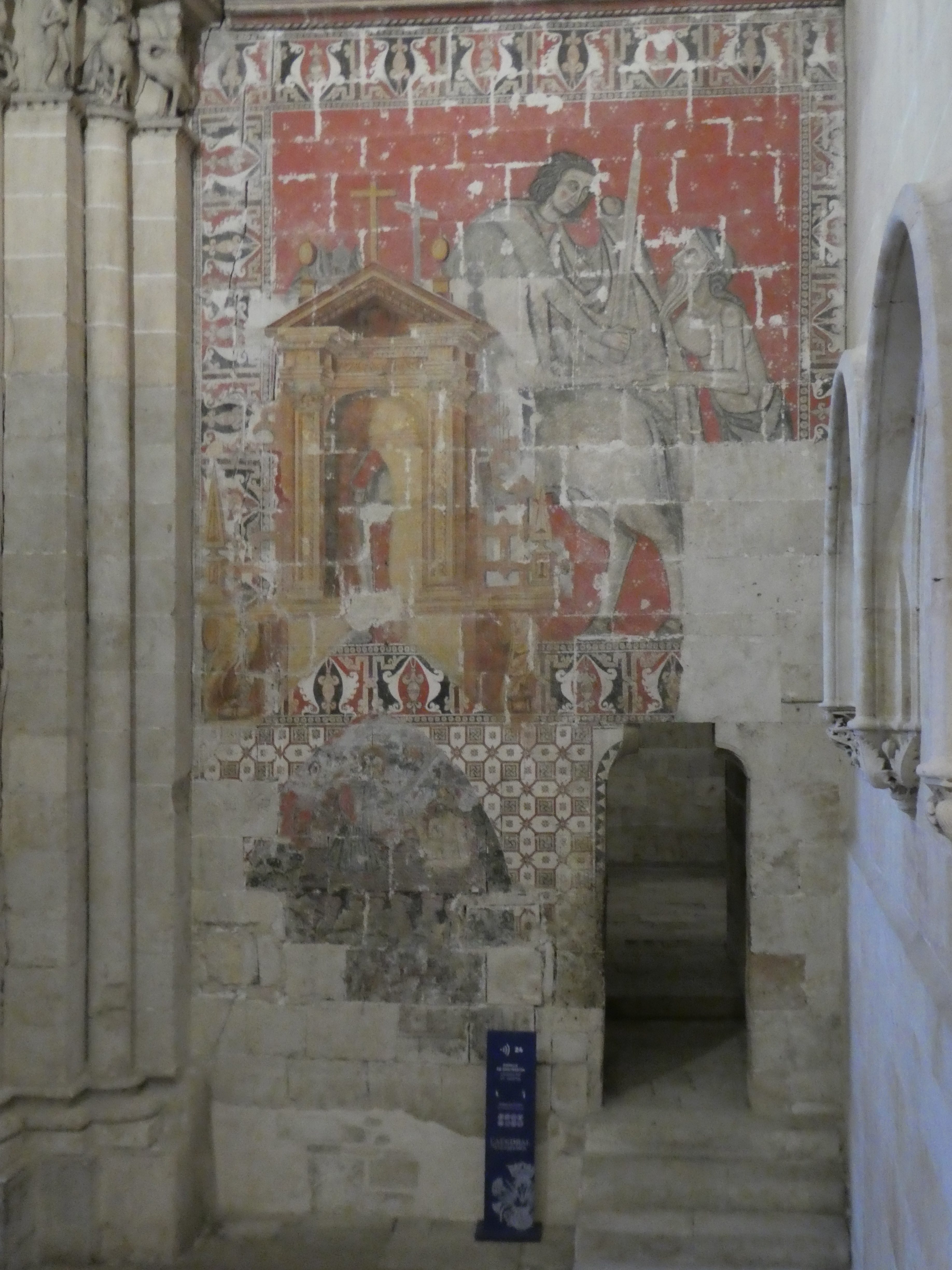

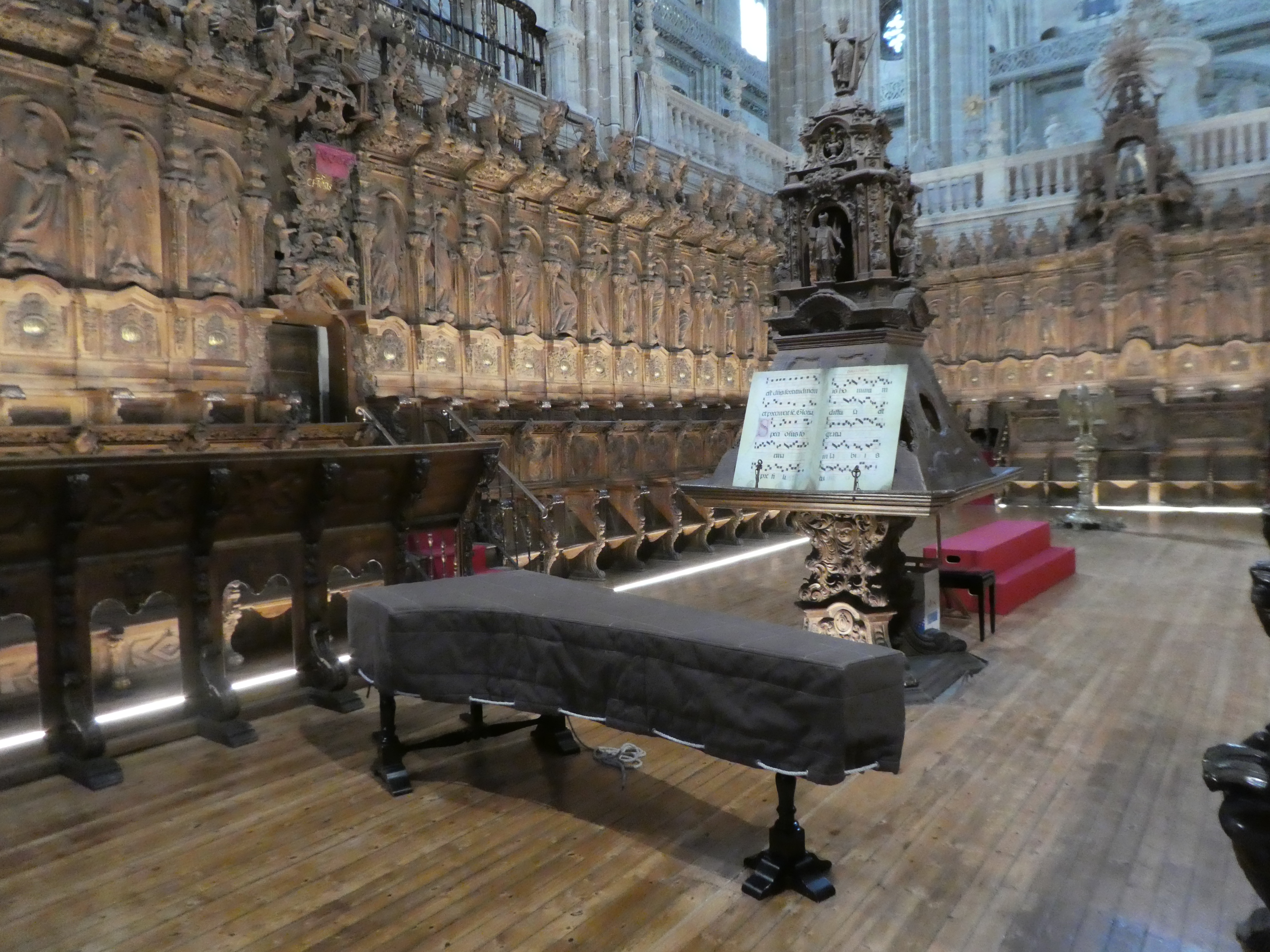
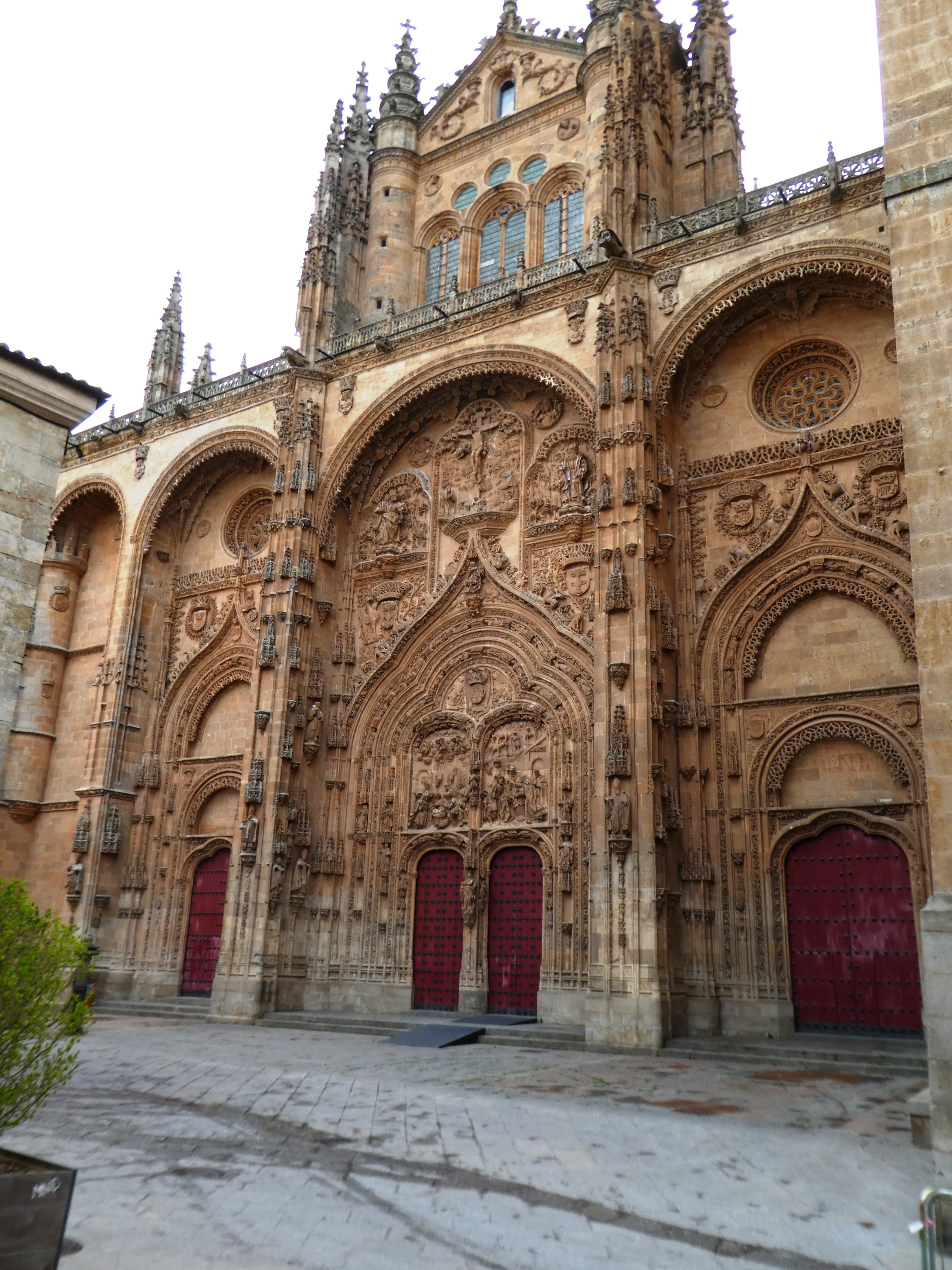
The new and old cathedrals are linked together and have both been maintained over the years in good order as functioning places of worship.
This was because the younger monks when building the new cathedral did not want to upset the older generation by closing the original.
After walking across the Roman Bridge we cycle back to the campsite.

On the way we are entertained by budding toreadors and matadors practising their skills in the local park.
Wednesday 23rd March – Salamanca to St Jean de Luz
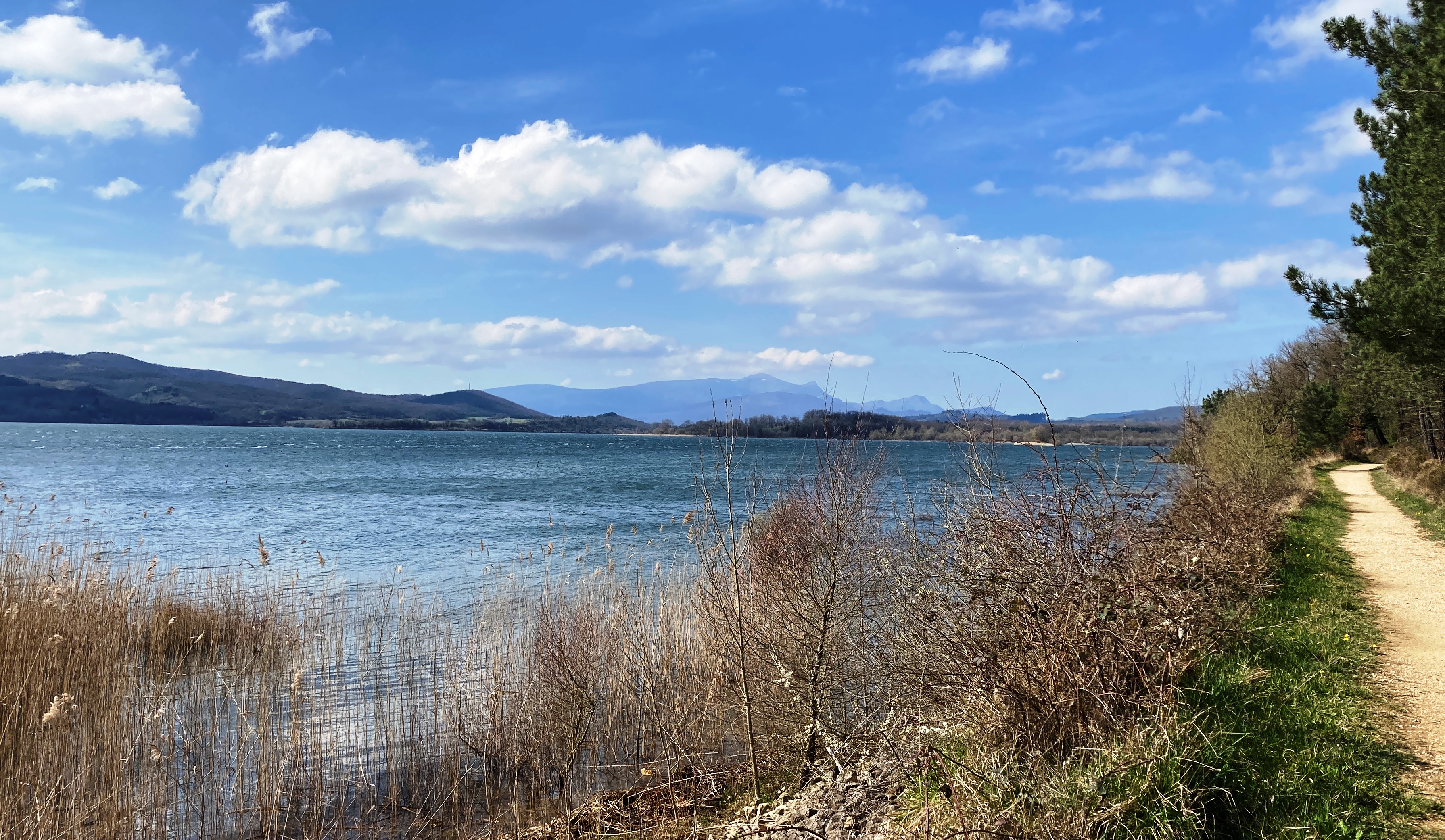
After breakfast we are up and off the campsite by nine o’ clock. We leave Salamanca and join the Autovista driving via Valladolid, Burgos to Vitoria Gasteiz before we turned off and head to an enormous lake, Ullibarrie Gamboa, where we have lunch in the van.
We go for a walk on the path around the lake for three kilometres before returning the same way. Although windy the sun shone, there are loads, ducks, geese other birds and even an orange tip butterfly.
Back on the Autovista we make our way on the fast, twisty, busy road north to San Sebastián and on into France.
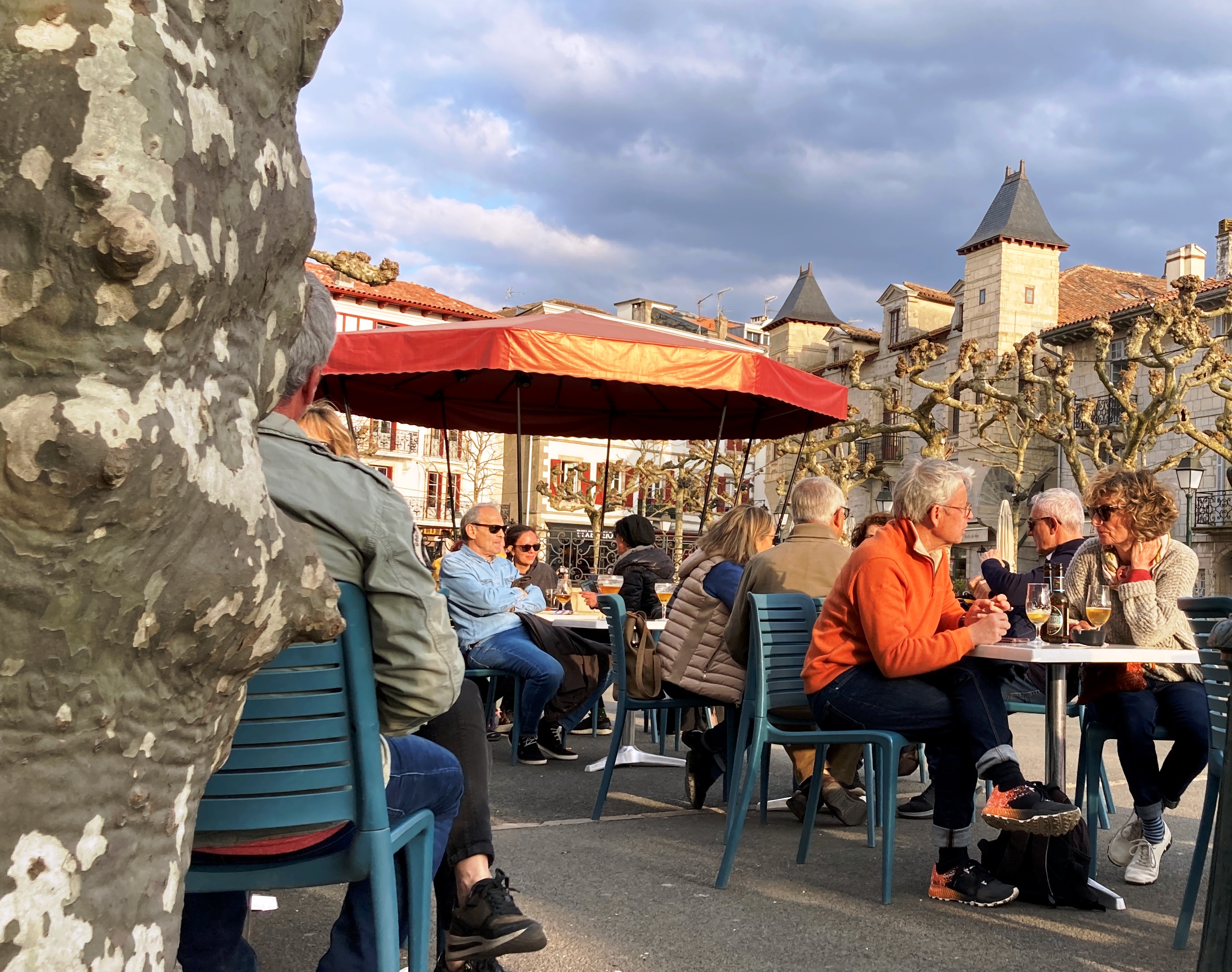
We then drive into St Jean de Luz, where we had camped with the children thirty five years ago, have a beer and wander along the esplanade on the edge of the sea.
We go to a restaurant on the front with a view of the bay and have something to eat just as the sun was setting.

The stunning view helps mitigate the meal which left a lot to be desired. We then walk back through the town as the sun is setting.
As it gets dark we return via a devious route to the Aire de Urrugne to sleep for the night. It’s nice to be back and we settle down easily.
Thursday 24th March – St Jean de Luz to La Roche-Gageac
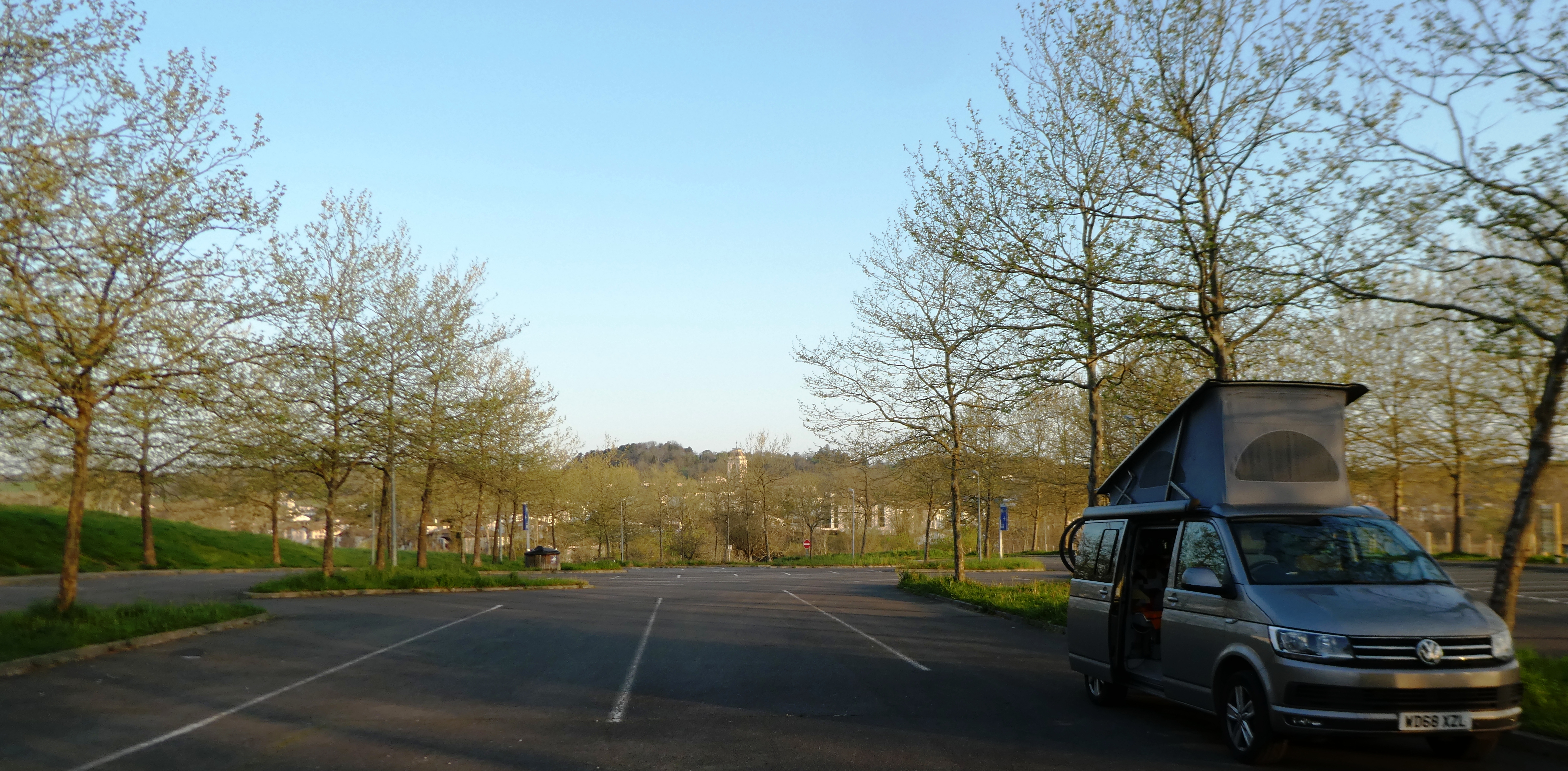

Nobody joins us at Aire D’ Urrugne and we sleep peacefully down below. We tidy up the van and are on the road by eight o’ clock and stop for breakfast at Mont de Marsan an interesting old town built on the confluence of two rivers.
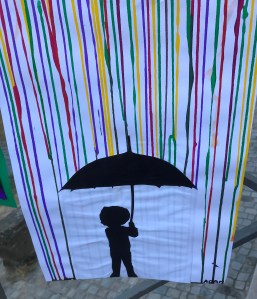
When we arrive a local school was setting out its art exhibition by the river which is fun, wander around the town and visit the tourist office before breakfasting on croissants, pain aux raisin and double expressos.

We make our way across lovely undulating countryside to Castillonnes a small Bastide town high up on a hillside which we look around before eating our bread and cheese.
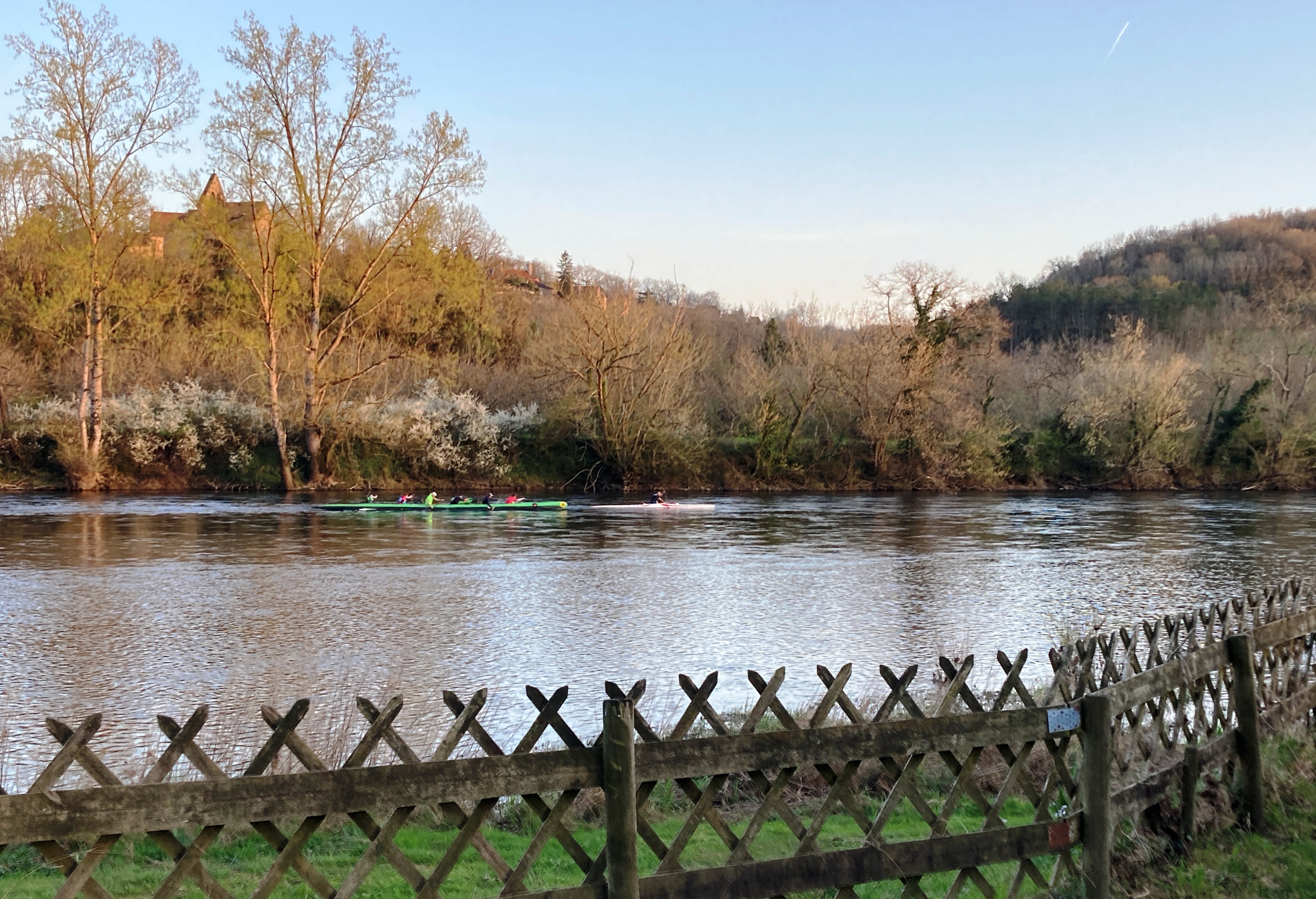
After lunch we travel to Cyprien where we look without luck for a walking map of the area before going to Camping la Plage on the Dordogne near La Roche-Gageac.
On arrival the site looked crowded but we manage to get a plot beside the river and feel very good about it.

The view in the sunshine of the honey coloured rivers cliffs is great and walking east to the village of Le Roche-Gageac we discover potential walking routes that encourage us.
Friday 25th March – La Roque-Gageac
We sleep well and it is lovely to wake up to sun, birds singing and river sparkling by us. Shorts and cut-offs are the order of the day revealing our rather white legs! We set out to cycle to the village of Domme, to the east, hoping to find a shop that will sell us a map.
As we pass the Tourist Office in La Roche-Gageac they are stocking up for the coming season. We spy the maps we want, but the lady at the shop is adamant that the shop is not really open but if we have the exact money she would sell us something. Unfortunately we only had a €50 note and some change so we have to buy a T-shirt and a light to get the maps that we want to do the most exploring in our time there.
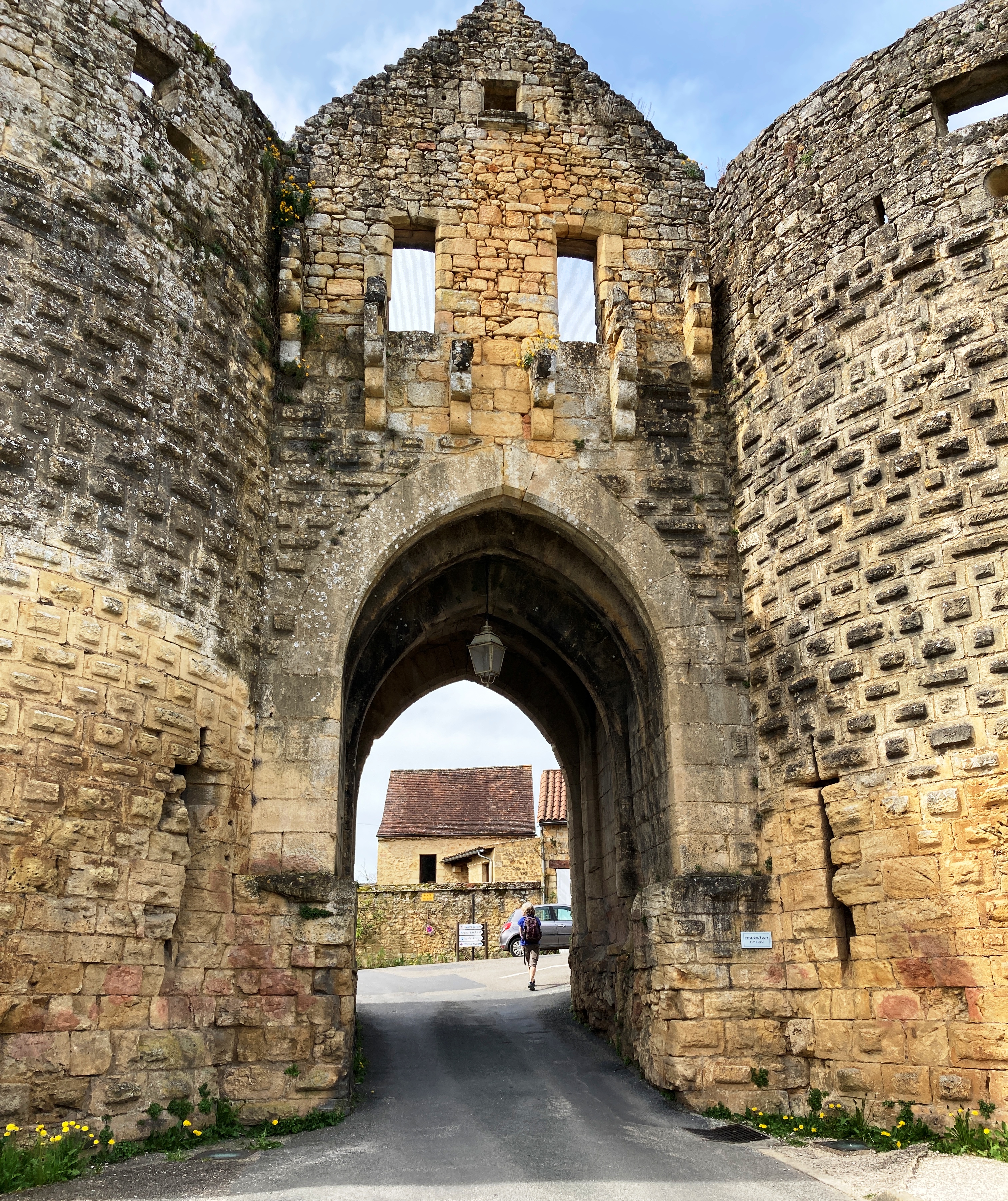
Feeling rather pleased with our purchases we continue on to Domme and park our bikes below the town at the far end and walk up the wooded path into walled village.
There are magnificent views from the top looking both ways along the Dordogne.

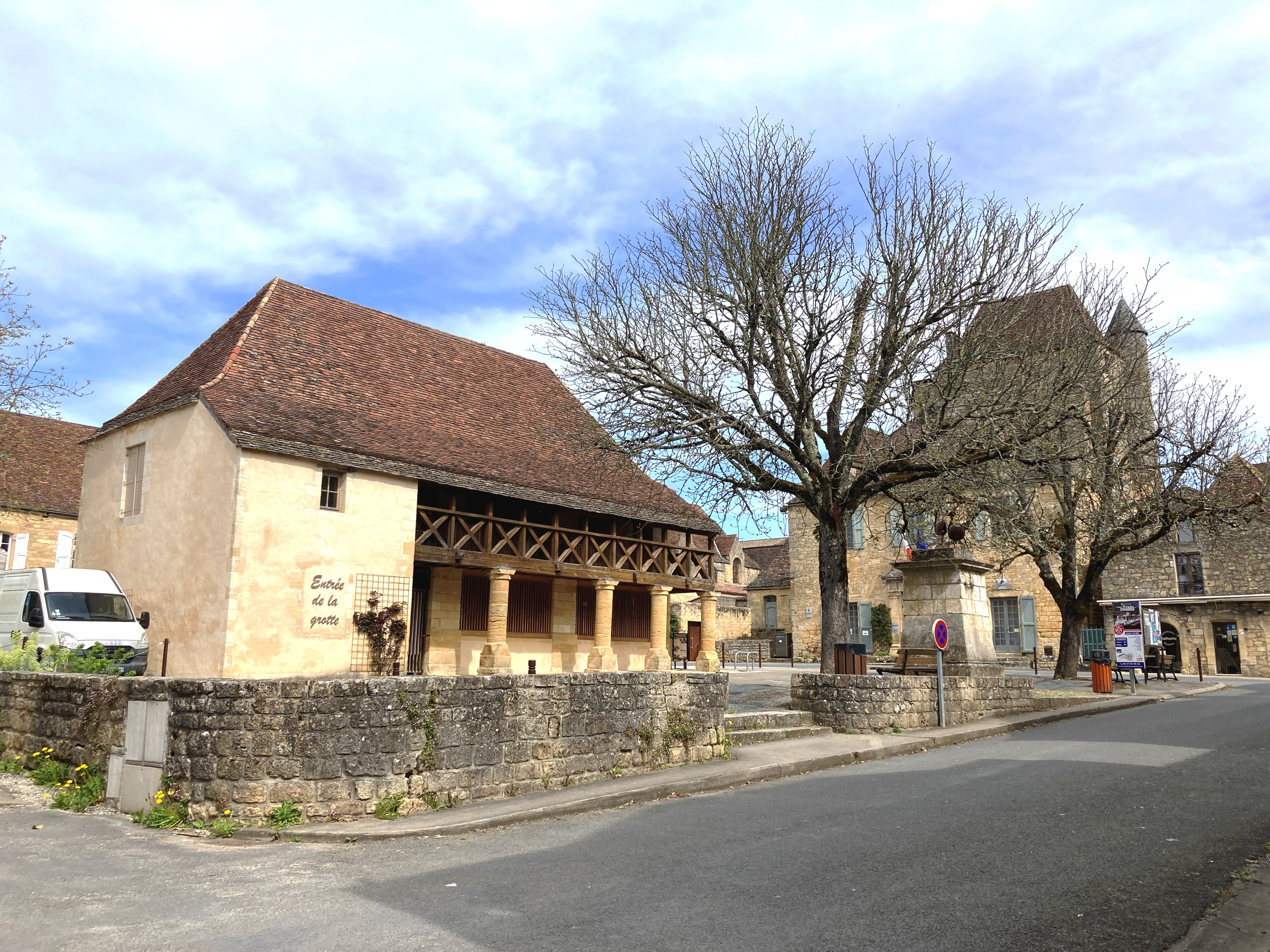
It is nice, but quite twee, and we can imagine it being crowded in the summer. Whilst lunch time has started we just have a drink before exploring the small village, which has a shop which sells maps!!
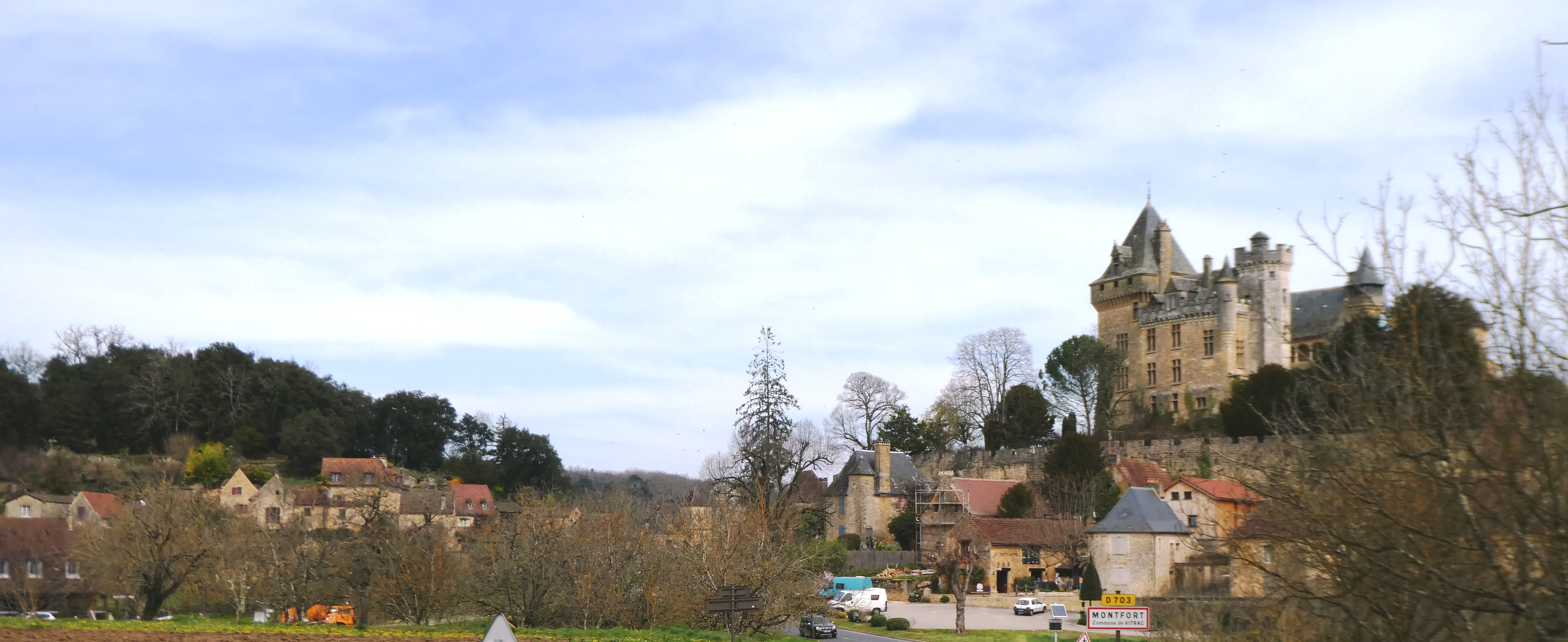
Retrieving our bikes we cycle on upstream and find, on a bend of the river before Montfort, the camp site Peter and Kelly had been staying the previous summer.
We then take a detour along a narrow uphill path ‘definitely not meant for bikes’ to the chateau at Montfort.
From Montfort we cycle back to the campsite and have a very nice late salad lunch and potter happily in the warm but not too sunny afternoon/evening.
Saturday 26th March – La Roque-Gageac
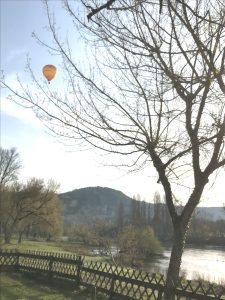
It is a very cold night with lots of amazing stars. When we wake the sun is shining as we watch two air balloons going overhead.
After breakfast we pack some lunch and walk up to Les Jardins de Marqueyssac on the cliff top behind where we are camping.
The climb up to the Chateau in the open sunshine is hot, and we are glad to start our visit in the cool of the old chateau, admiring some of the art on display there.
We are amazed that ordinary box hedging cut by hand can create such a diverse, interesting landscape that is used to its full potential.
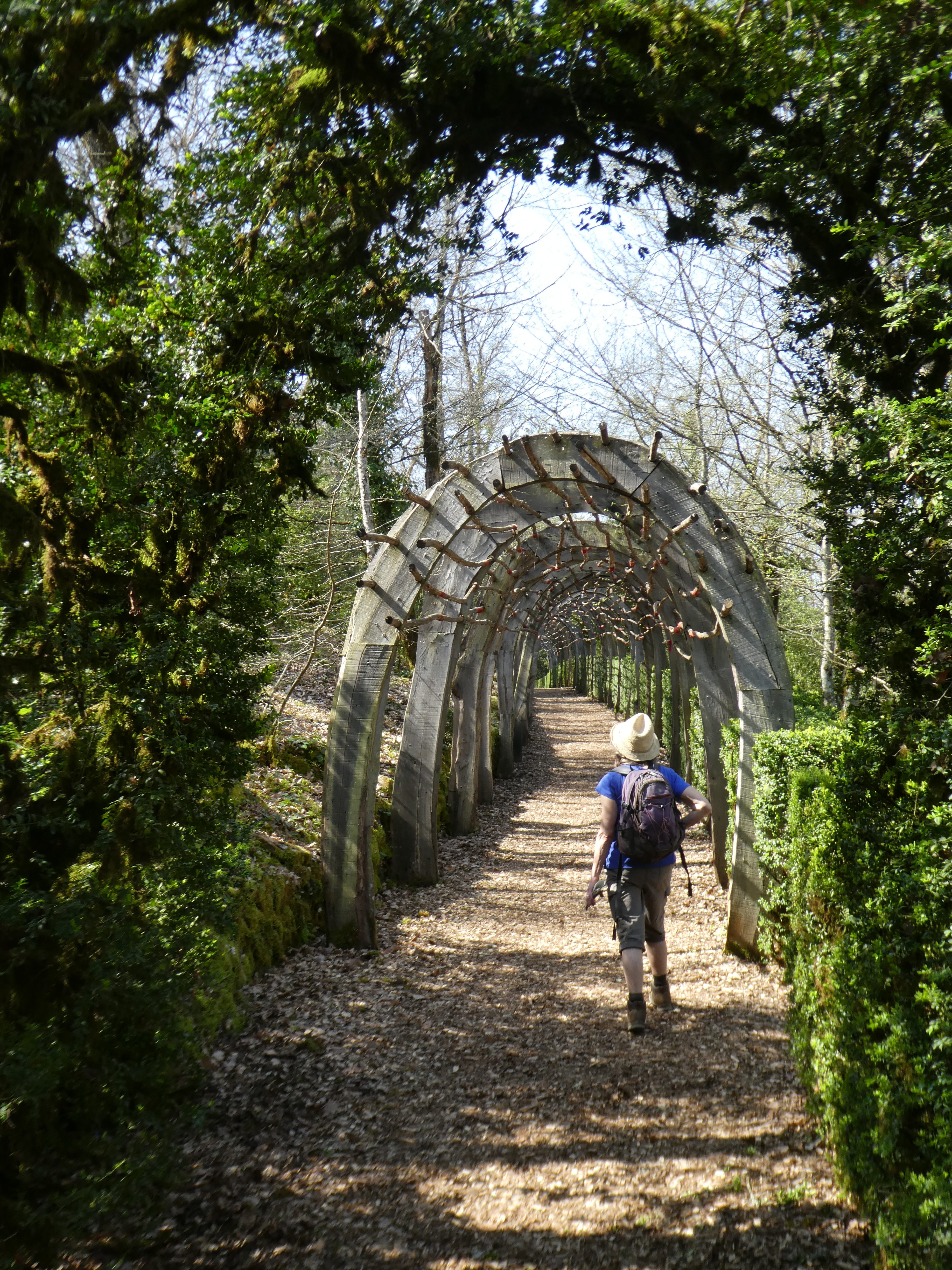
Visitors both young and old are encouraged to explore and enjoy the different features whether it be seating at different levels, angular sculptures, play equipment or vistas.
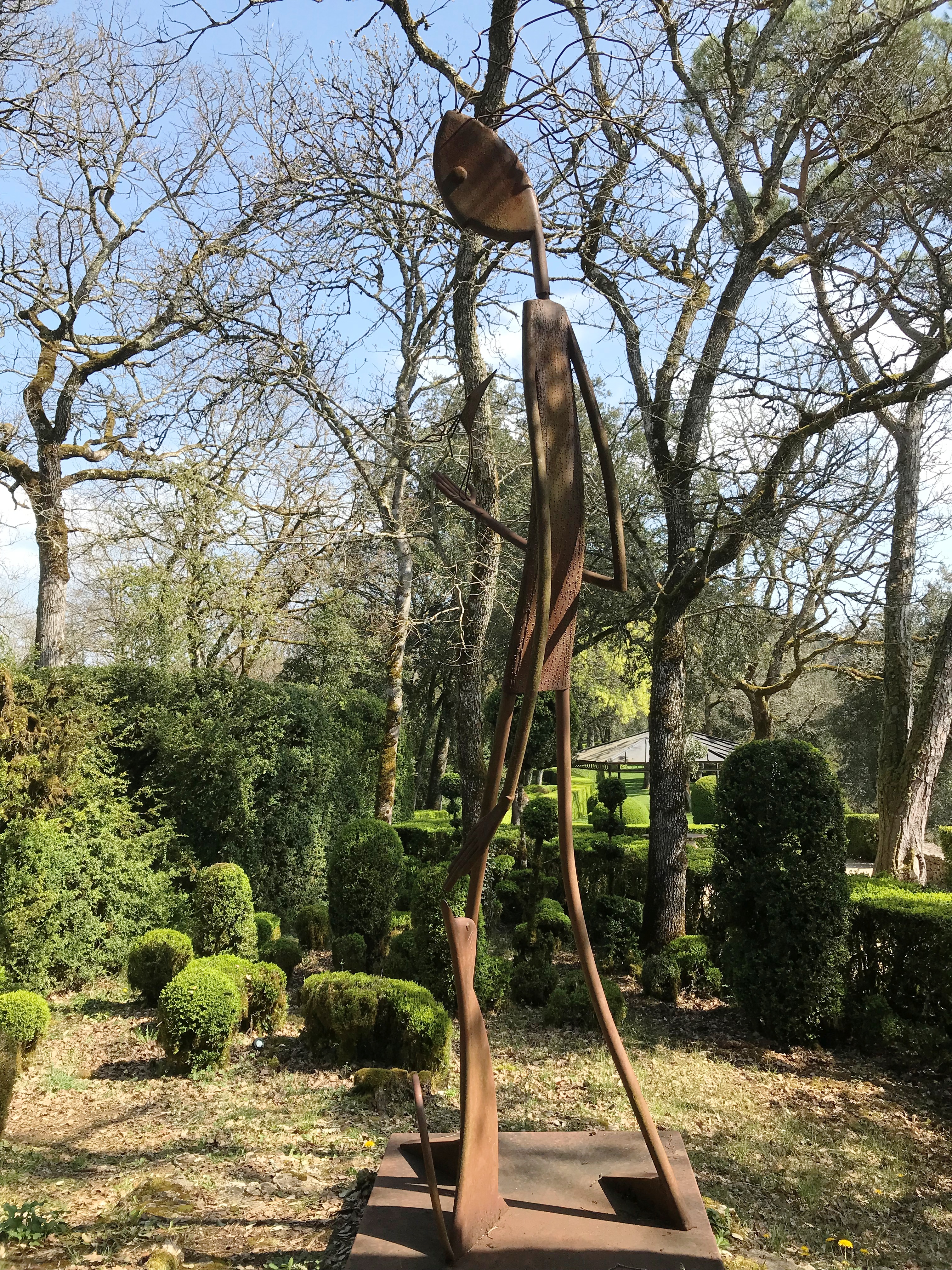

We eat our lunch in the woods amid the butterflies and have coffee at the tea rooms.
Not wanting to leave the gardens and walk all around the hill to get back to the camp site, we leave sneakily through the back by the poet’s house to join the footpath that leads down a wooded valley to La Roche-Gageac and back the camp site.
Sunday 27th March – La Roque-Gageac
It’s Mothering Sunday and the clocks go forward so we lose an hour.


We walk downstream to Castelnaud-la-Chapelle and check out a cycle shop to see if we can get the wobble in Janet’s wheel straightened out, but the cycle shop is closed.
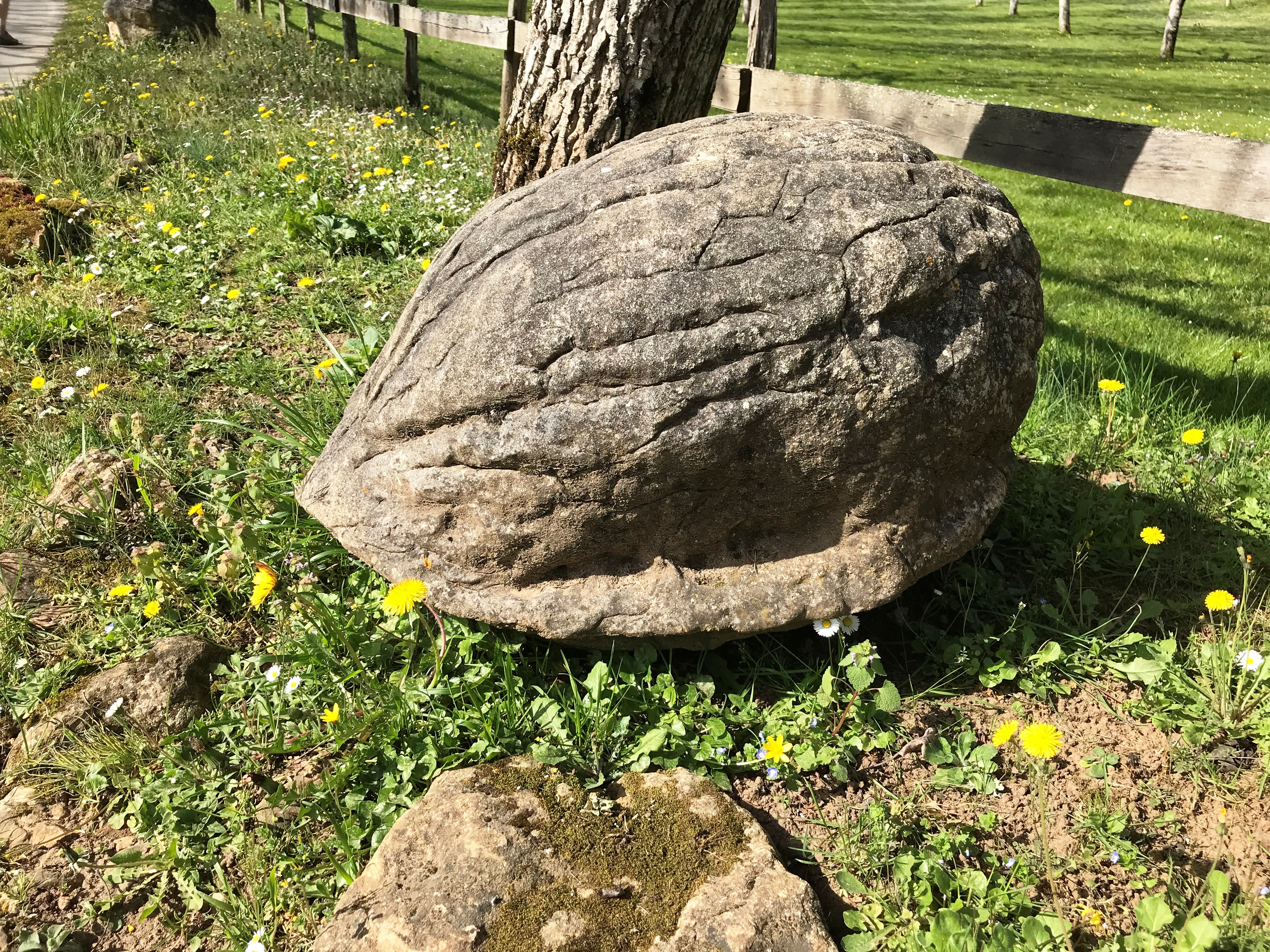
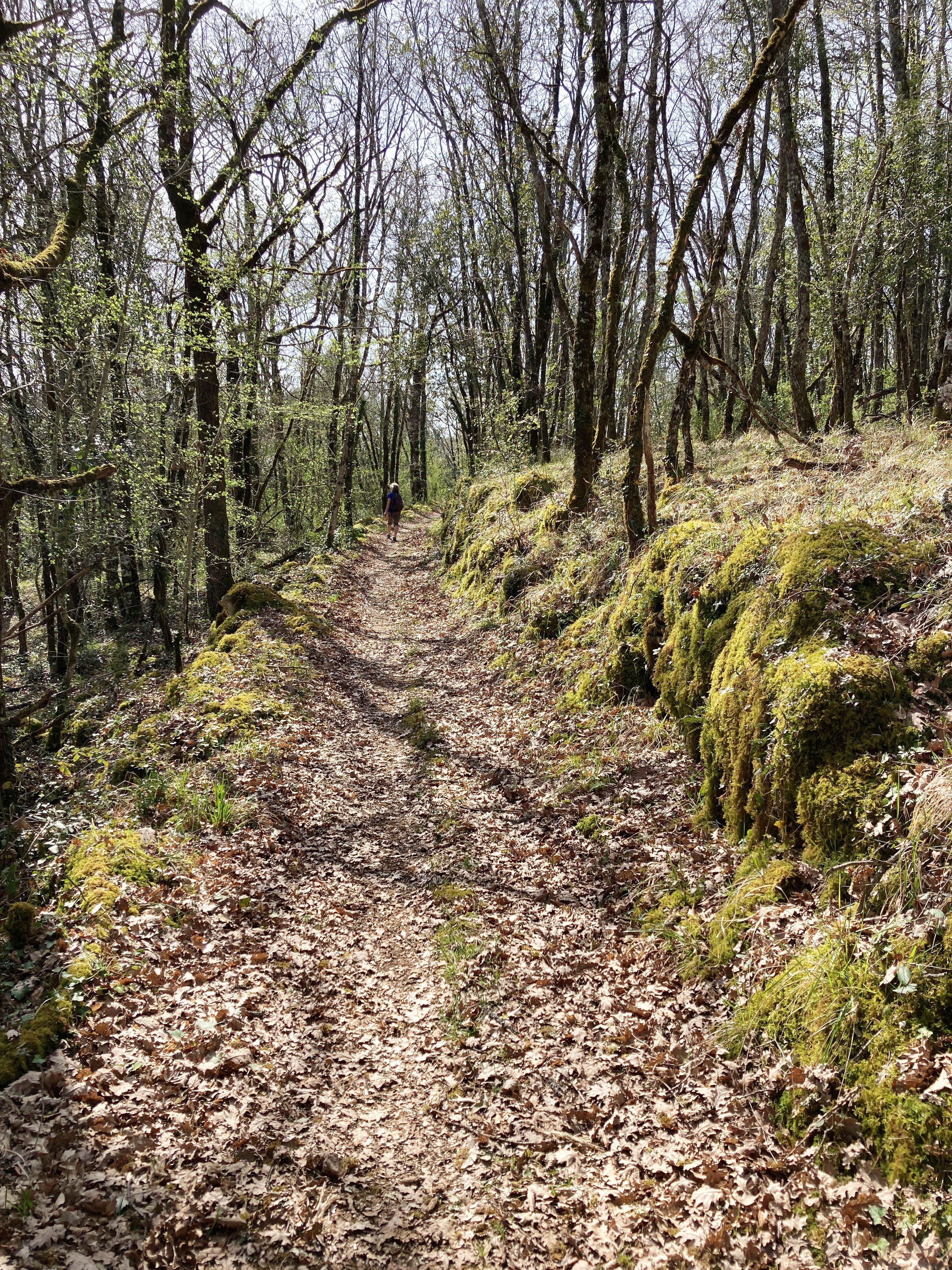 We walk up into the hills follow via yellow marks a lovely circular route through Walnut producing country.
The track follows old lanes, through beautiful woods, around small fields, past a few homes, seeing lots of butterflies, early wild flowers. It is lovely!

The walk takes us past old field barns, stone buildings and eventually back in to Castelnuad-la-Chapelle coming in on a track above the castle.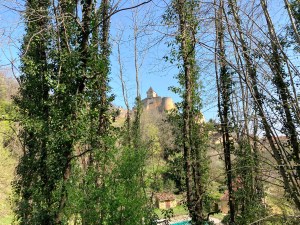

We end up back in the village below the castle and have a beer before returning to the van feeling a bit sunned, which was nice.
Monday 28th March – La Roque-Gageac
The day starts very cold and windy. We cycle back to Castelnaud – la – Chapelle to see if the cycle repair shop is open, but it isn’t, so we cycle east along the valley to Vitrac and then north on the D46 to Sarlat.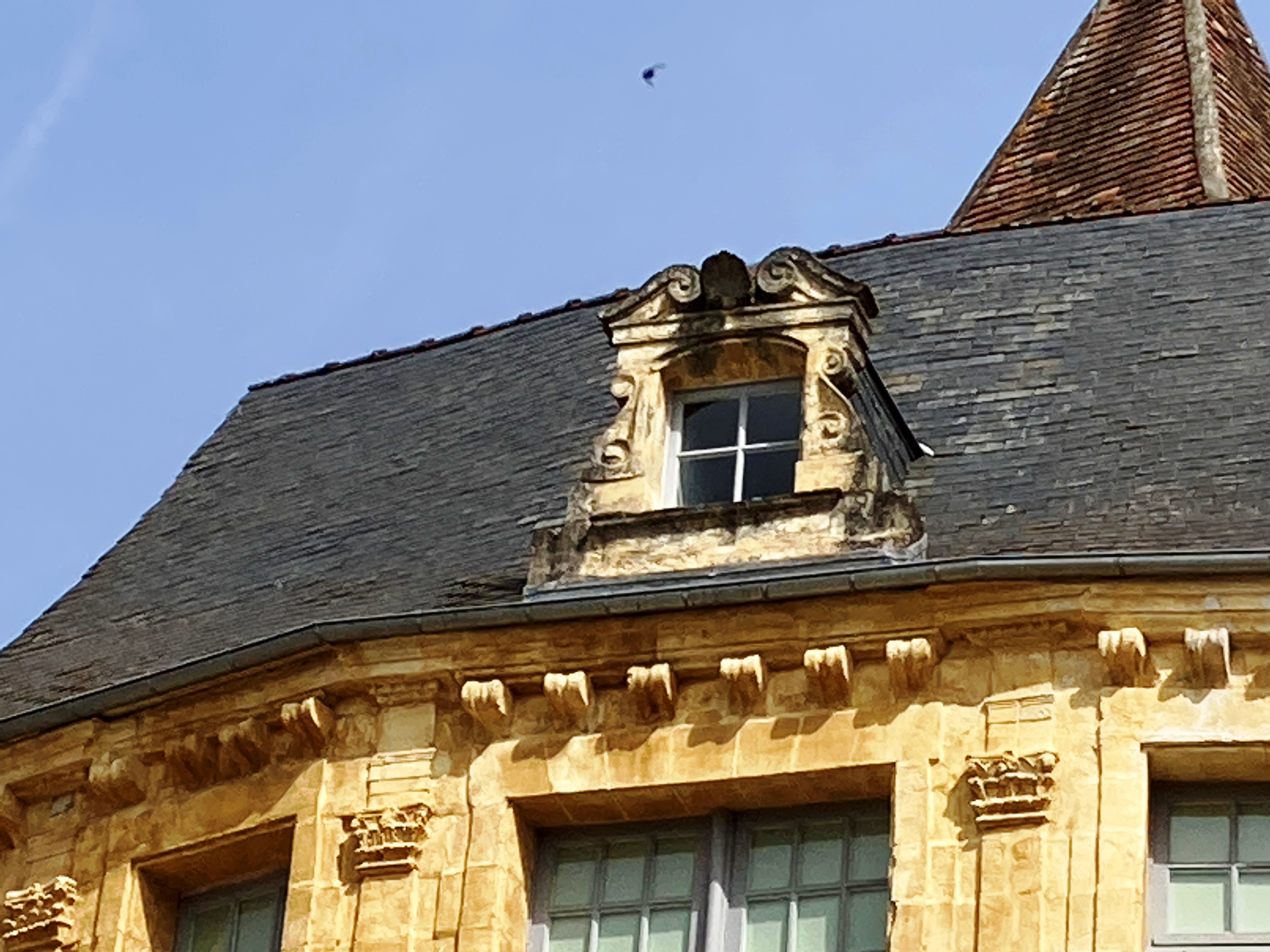
The road is good although a steady climb. We park the bikes at a supermarket and wander through the town and discover that Monday is not a good day for cycle shops to be open!
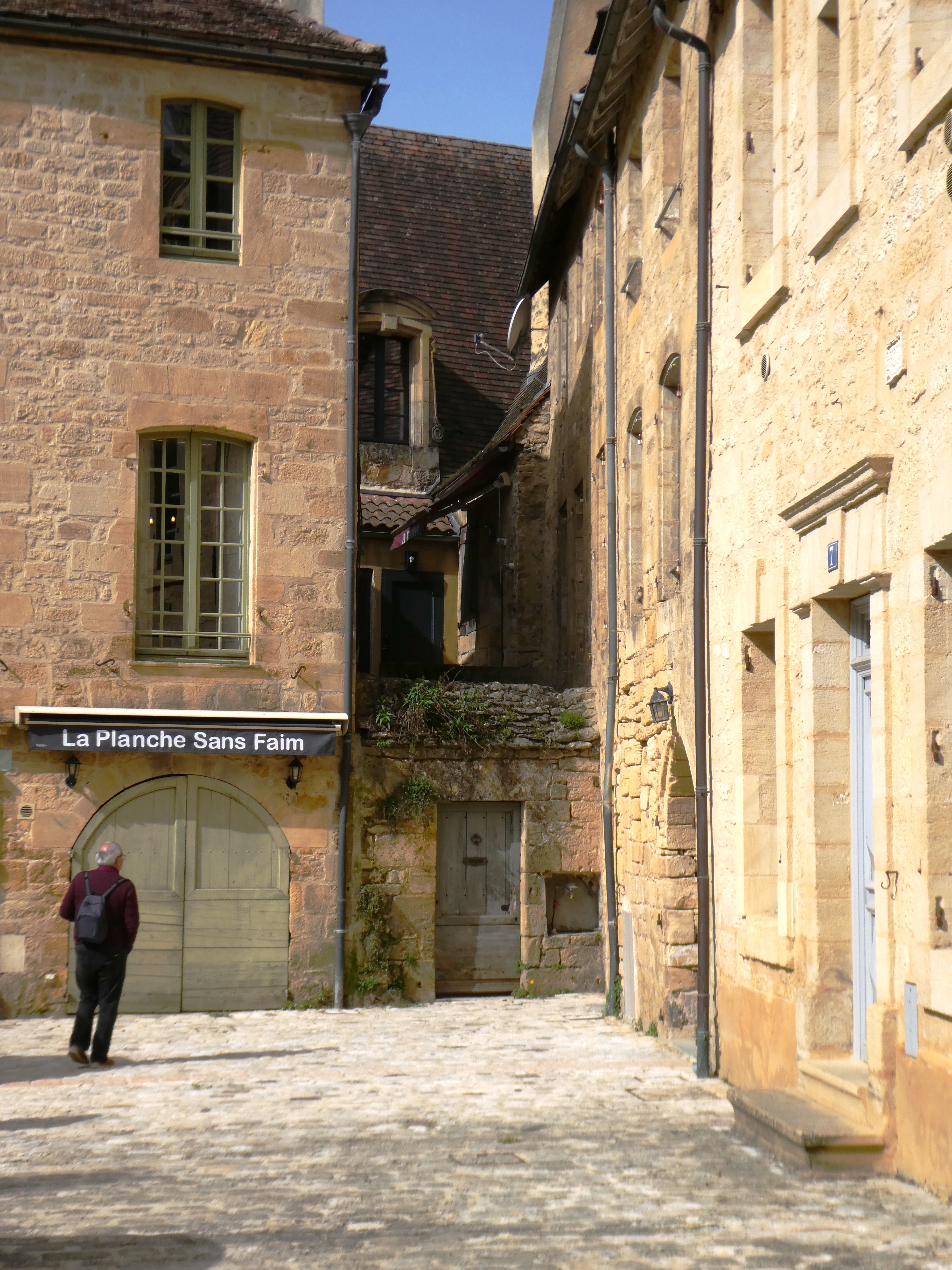
The old cream-coloured stone buildings and narrow streets however are attractive with interesting roofscapes and we spend a couple of hours just wandering through the town before having coffee in the main square.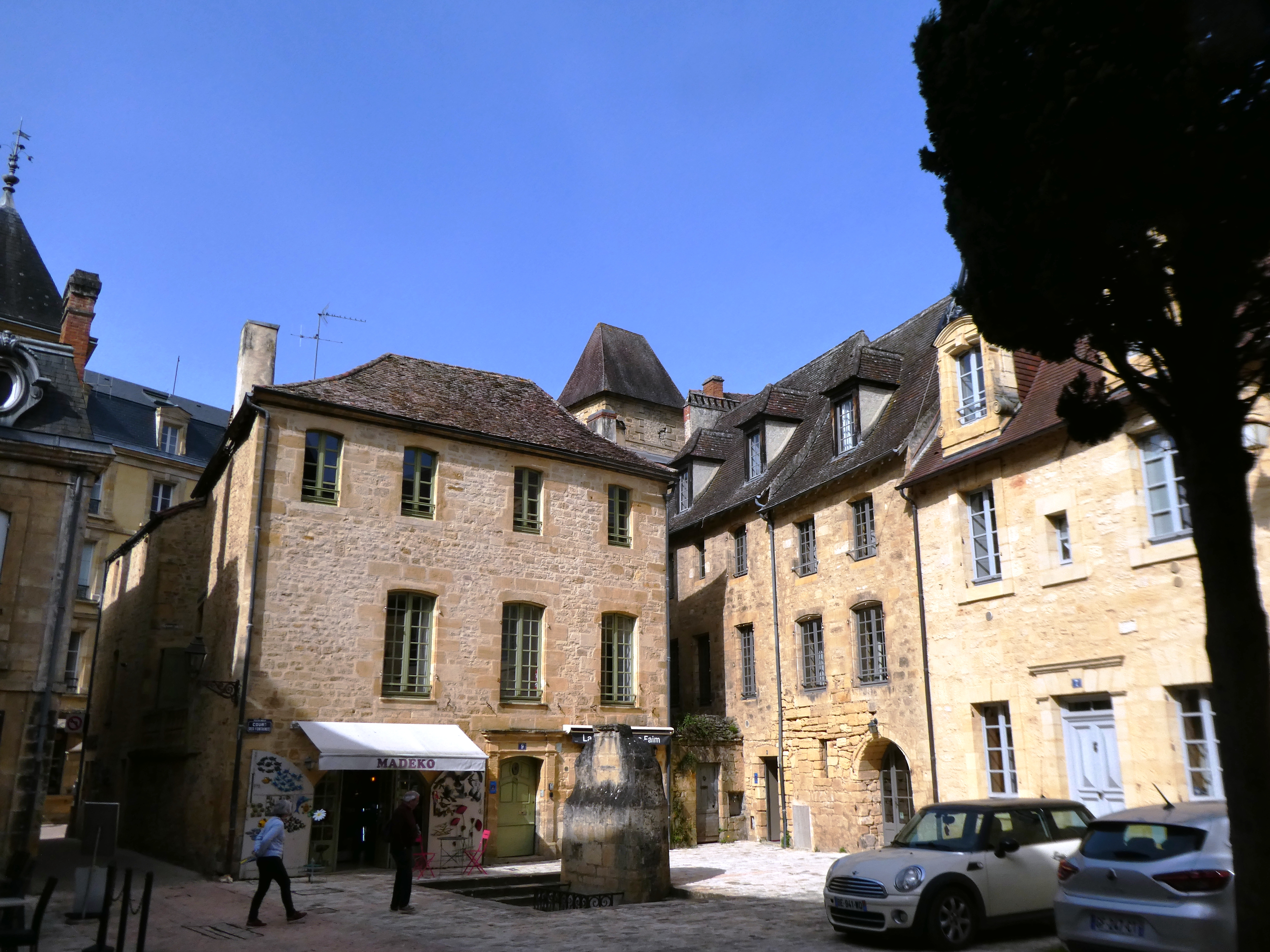
We have a wander around the main church which is a former monastery or convent with several annex buildings.
Interestingly it does not dominate the town as many other Roman Catholic churches do.
We struggle to find a lunch time restaurant we like, but then come across the Restaurant Medieval tucked away in a small square where we have a nice salad lunch sheltered from the wind and sitting in the sunshine.
The day is warming up as we leave the town past the railway station and cycle down an old railway track to La Tavernerie back in the Dordogne valley.
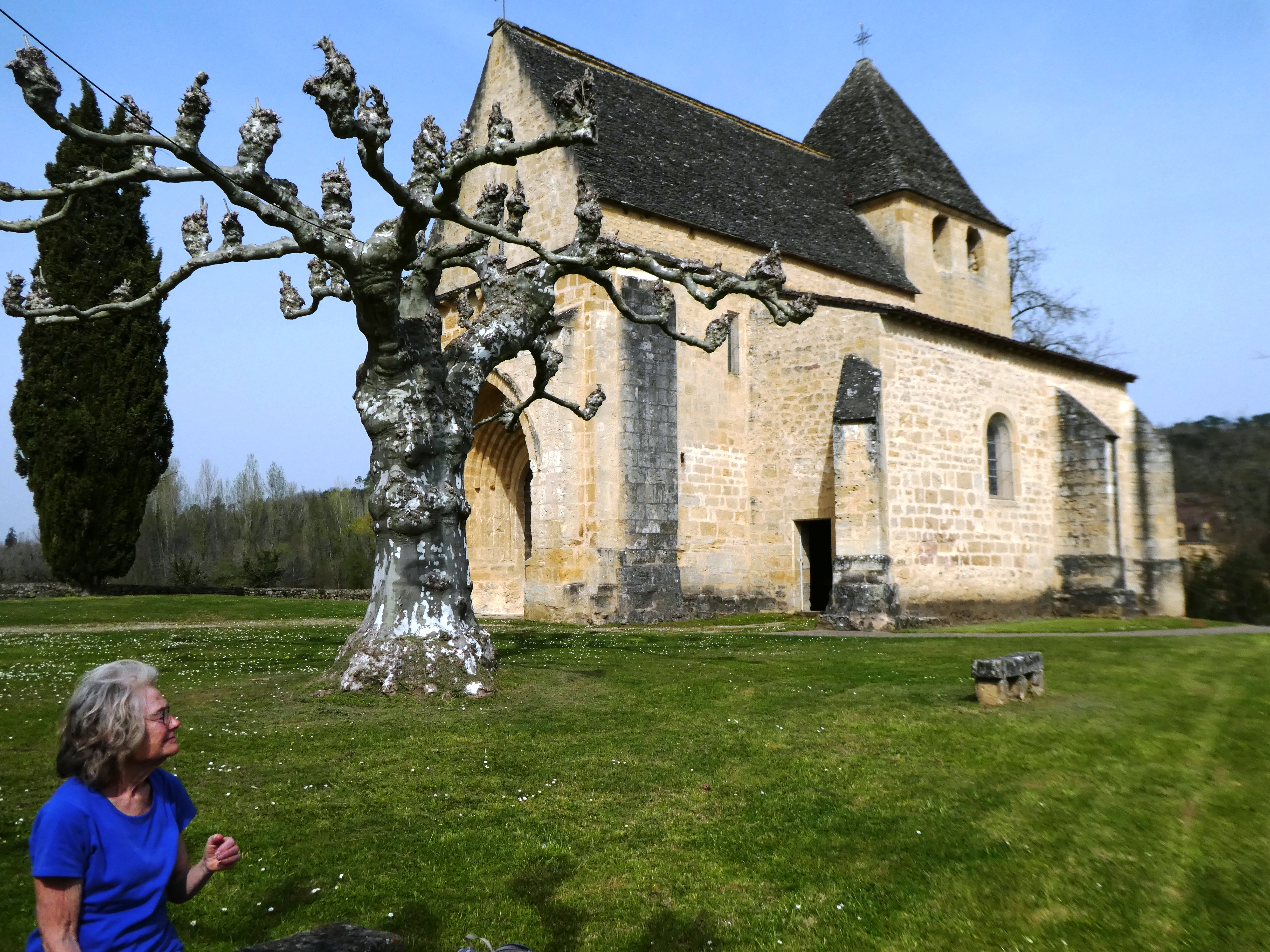
We take a break at La Tavernerie near an old Romanesque church before cycling back along the river to Montfort and back to the camp site.
The evening is hot and sunny and so we spend our last evening sipping beer and eating grilled duck as the cloud thickens and our holiday comes to an end.
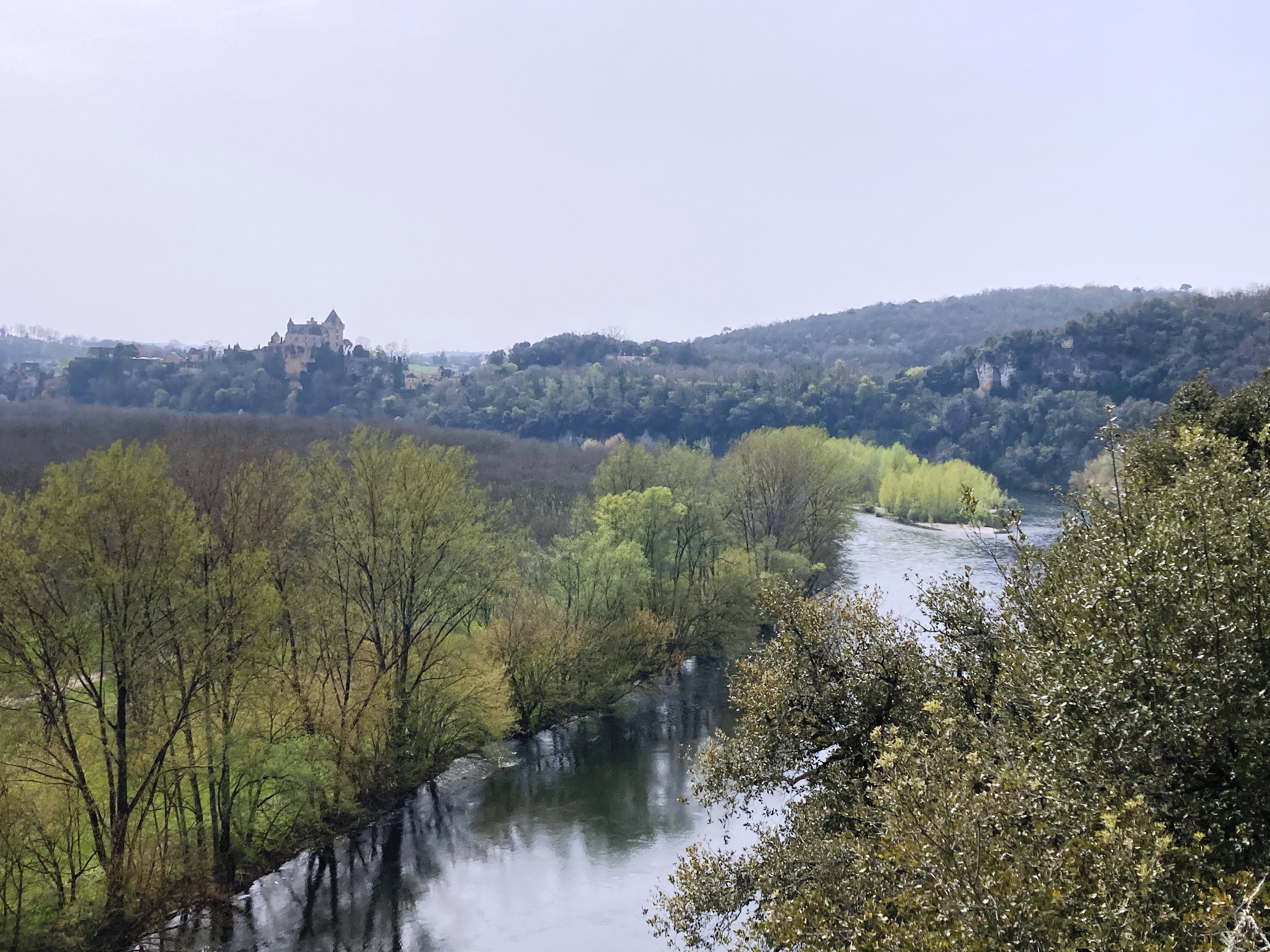
Tuesday 29th March – La Roque-Gageac to Col de Roc’h Tredudon
We have breakfast and are off the site by nine o’clock travelling north to Perigueux where we stop and buy some wine.
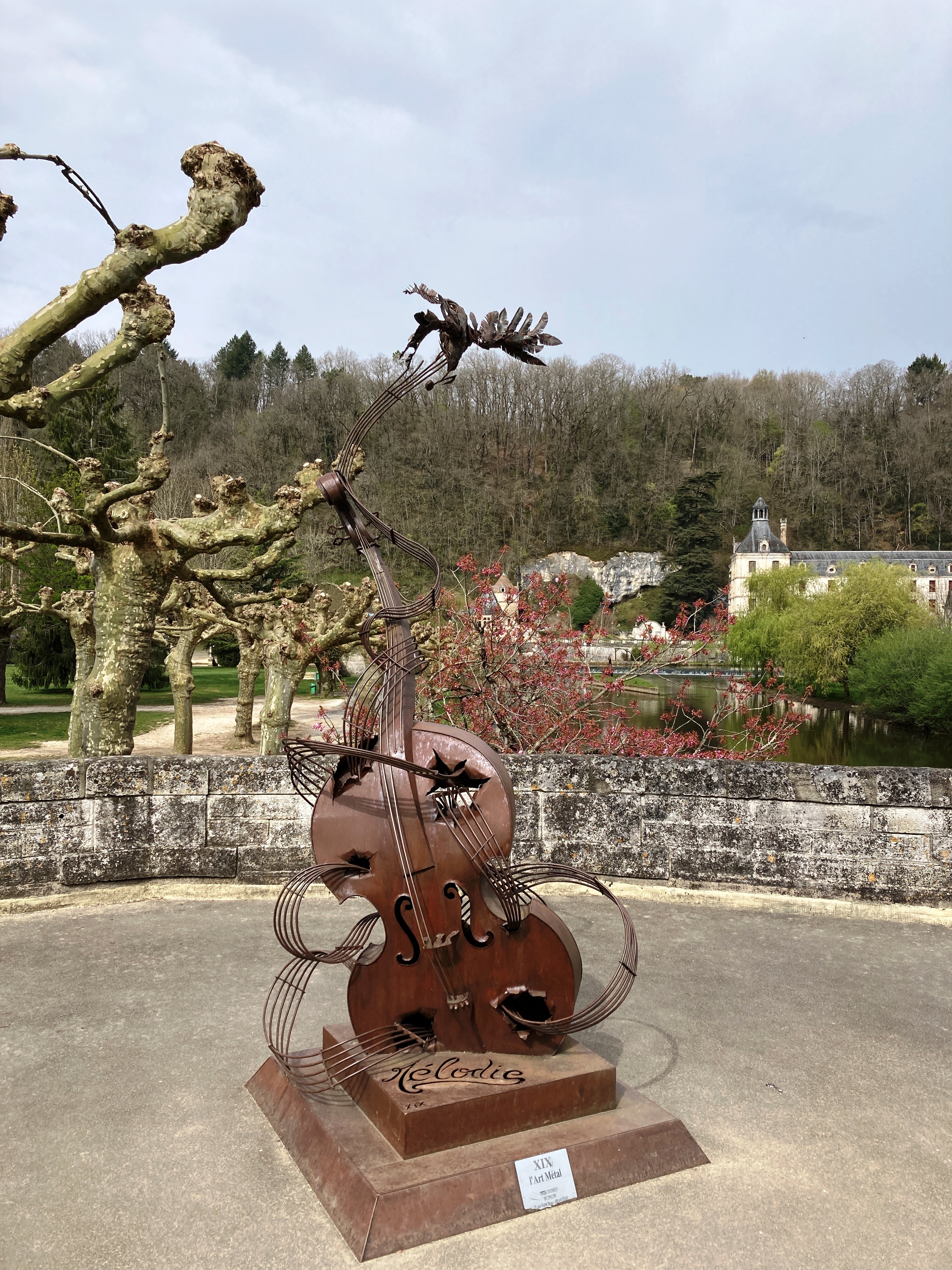
We then drive on to Brantome where we spend an hour wandering around and having a coffee by the side of the river.
We continue north on D roads Angloueme, Ruffec.
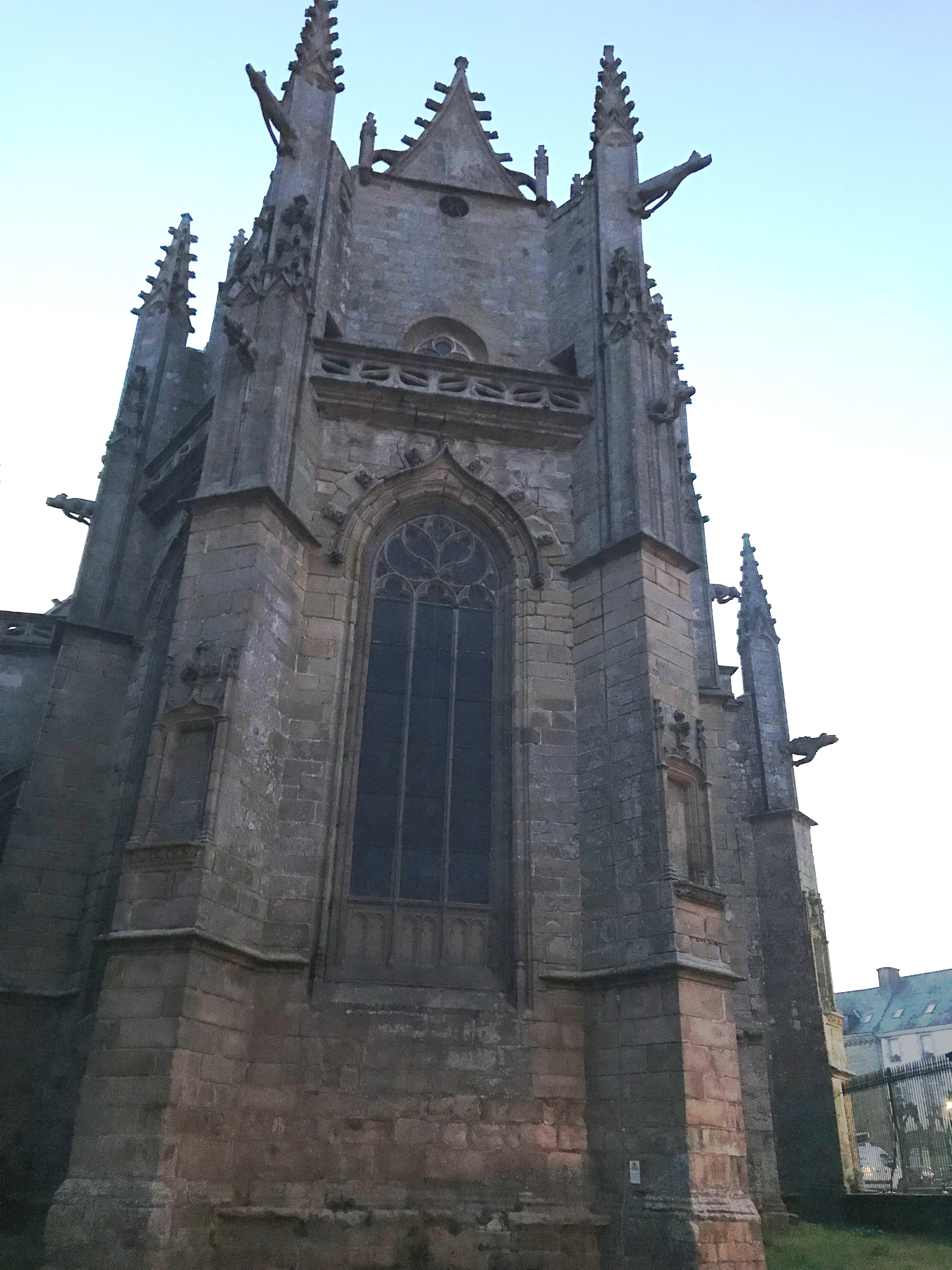
The Chat Boite restaurant we visited in September is open and we go and have another nice meal there before wandering around the town and finding interesting fortifications and churches.
We then drive north to Col de Roc’h Treredon above Pleyber-Christ.
Not a pleasant drive as it is misty with lots of poorly marked roundabouts and speed cameras! Not surprisingly nobody is at the Col. It is very dark so we soon settle down.
Wednesday 30th March – Col de Roc’h Treredon to Home
Up with the alarm at half past six and drive to Roscoff and board the boat without delay.
Good journey to Plymouth stopping in St Austell on the way back to leave Janet’s bike to be mended at Cranked. It is lovely to get home but seems very strange with so much room!
 World Wide Webbs