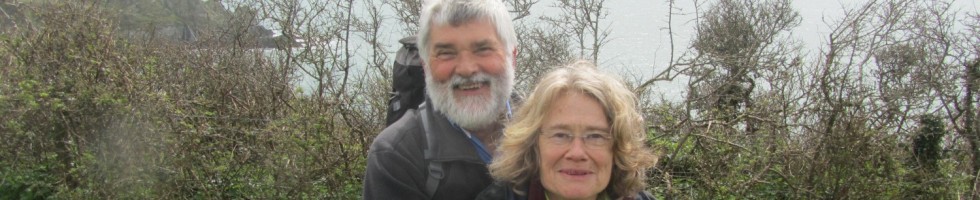
2024 Romanian Ramble
Friday 28th June
Left Penzance 5pm Friday to drive up to Norwich for Chris and Eleanor’s wedding. Sleep overnight in Gloucester Services on the M5 arriving just after midnight for a very quiet night.
Saturday 29th June – Departure

We get up and are away at 8am. to the wedding at Hockering arriving just after midday.
We leave the wedding at 7pm to drive to the Ferry port at Harwich.
Driving to Harwich on the sunny evening was lovely. We decided to go the long way around, as we had time, and spent a quarter of an hour waiting for three trains at the crossing at Manningtree.
We went straight onto the Stena Ferry, found our cabin and went and watched the sunset over the water, before retiring to our cabin as the boat sailed at eleven, and slept soundly.
Sunday 30th June – Crossing Germany
Awoke at 6.30 and off the ferry and on our way by 8.30. We make our way eastwards towards Berlin. It was very busy, even though there were no lorries. It rained and there was lots of spray from the roads and various hold ups.
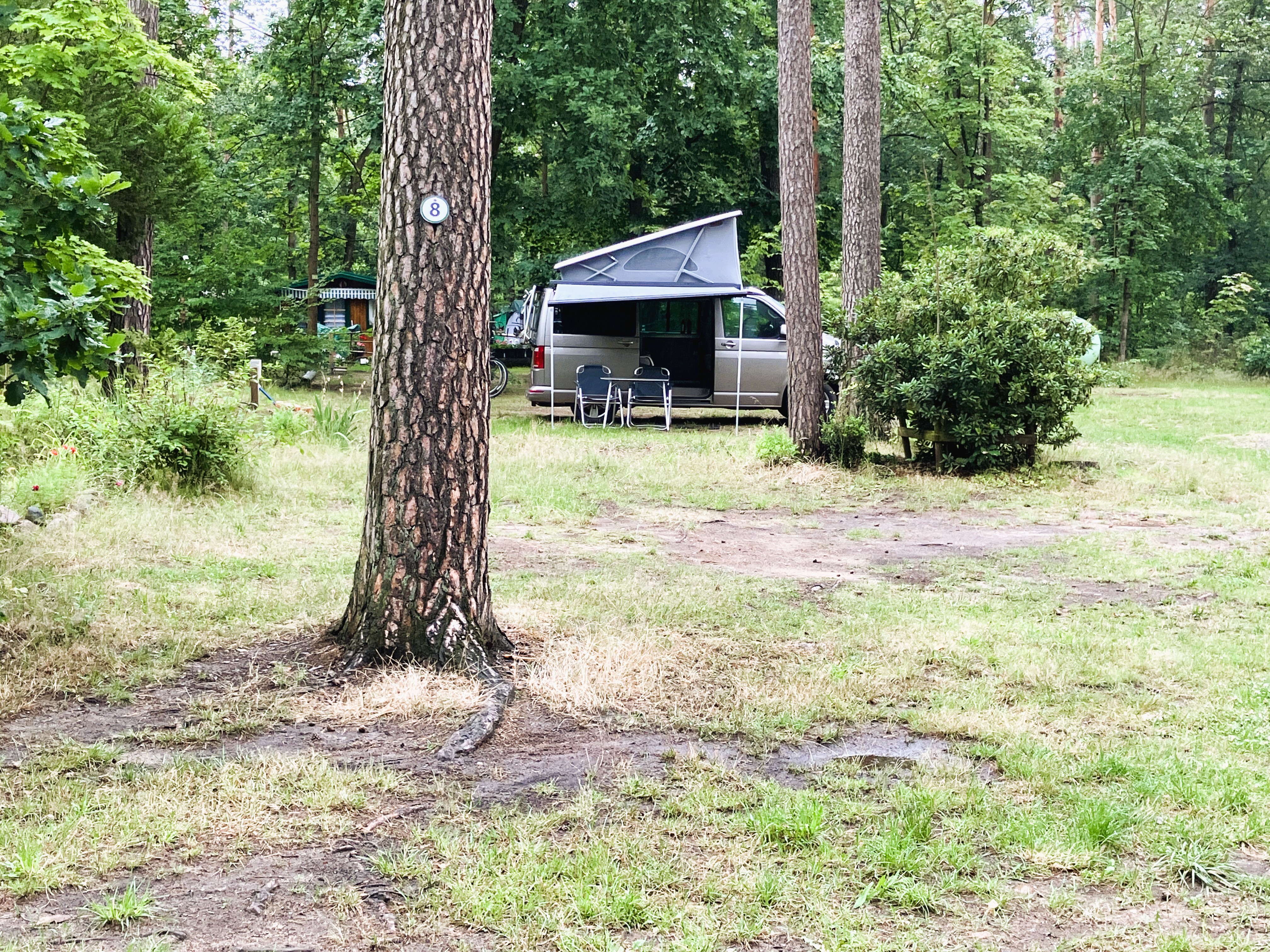
Eventually, after Hannover at Braunschweig, we turned south and took a diverse route through little villages and found the back road to Campingplatze Olympiasee.
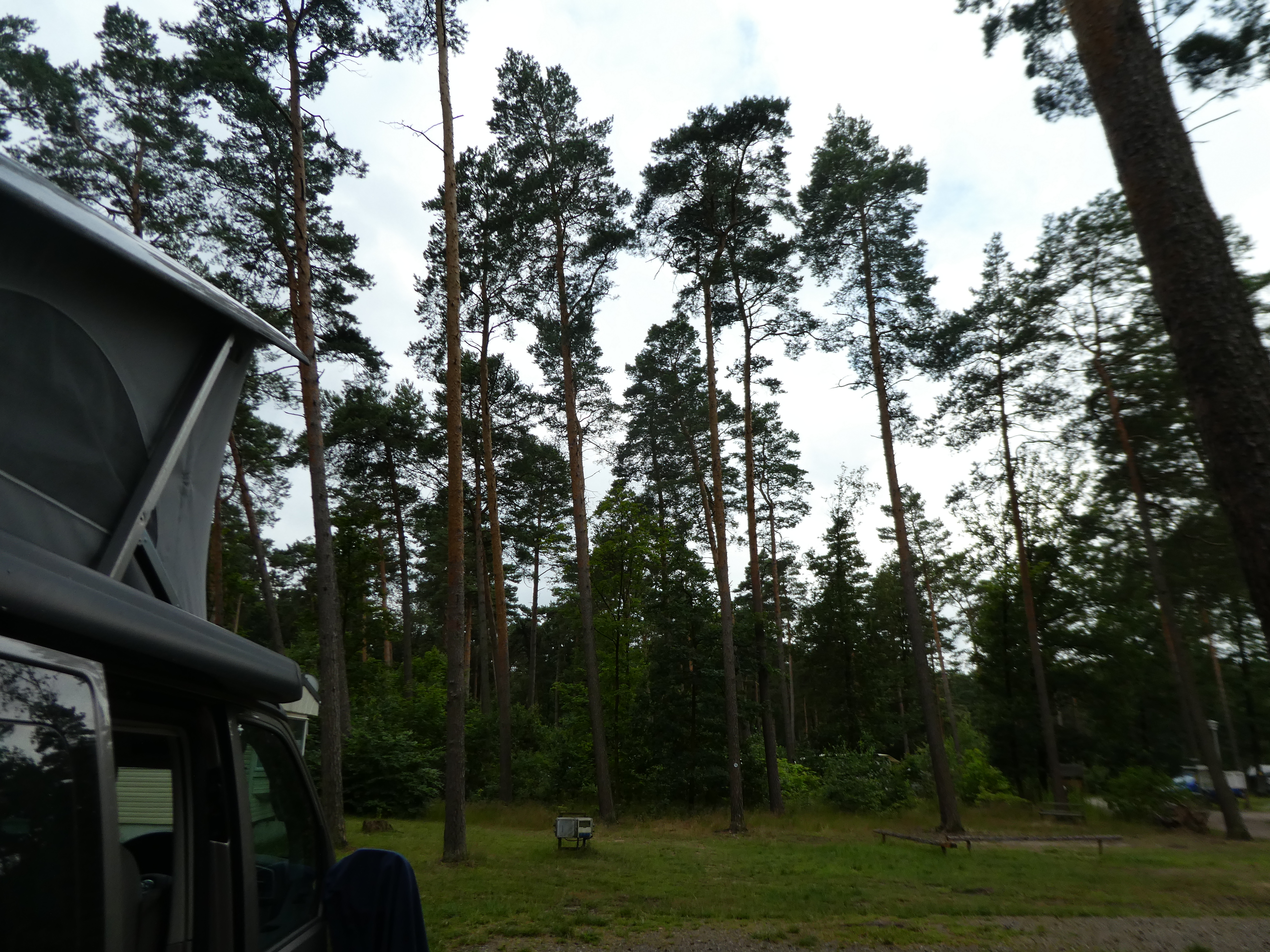
It was a lovely site, set out in pine woods with a lake and big plots.
The back road is reminiscent of our Bosnia Forest detour last year. We bump along a forest road and eventually come out at the camp site at around 5pm.
We don’t feel like cooking but fortunately the little restaurant on the camp site was open. We managed to get a table and have some much needed hot food. We then explored the site and as it started to rain we bedded down, shattered.
Monday 1st July – Wittenberg
Although wet it was lovely to just be on the camp site in the forest. A Black woodpecker graced us with his presence, pecking away for grubs on logs in a wood pile. On the trees Nuthatch and Tree Creepers scurried up the trunks.
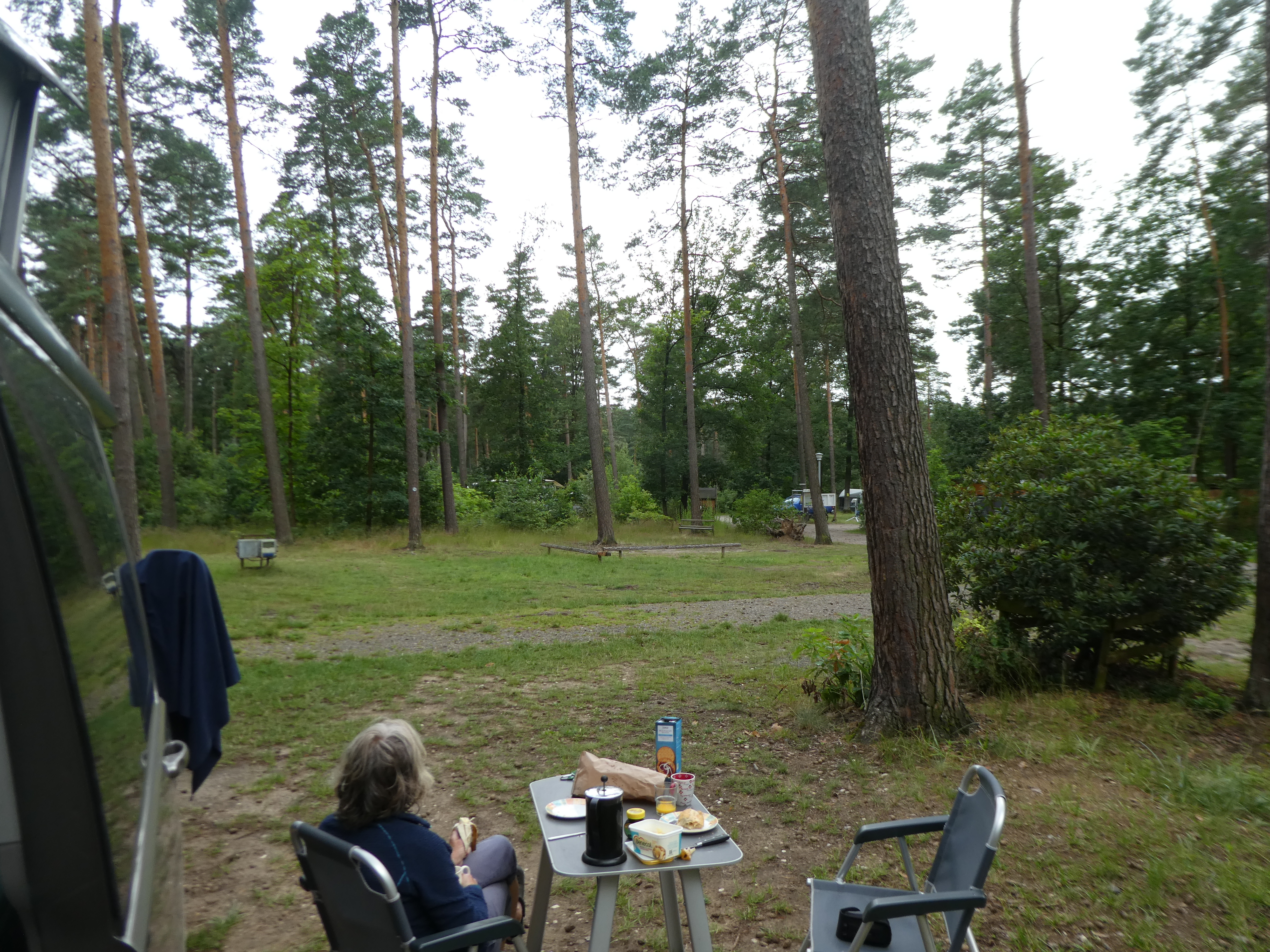
We pottered around having some breakfast and wandering around the site waiting for the weather to improve for our cycle ride into Wittenberg.
We cycled into Coswig, the nearest town, from where we head east along a cycle path beside the main road to Wittenberg. We arrive in a heavy rain shower and equip ourselves with a map from the tourist office. In the sun we have a drink and bought a map.
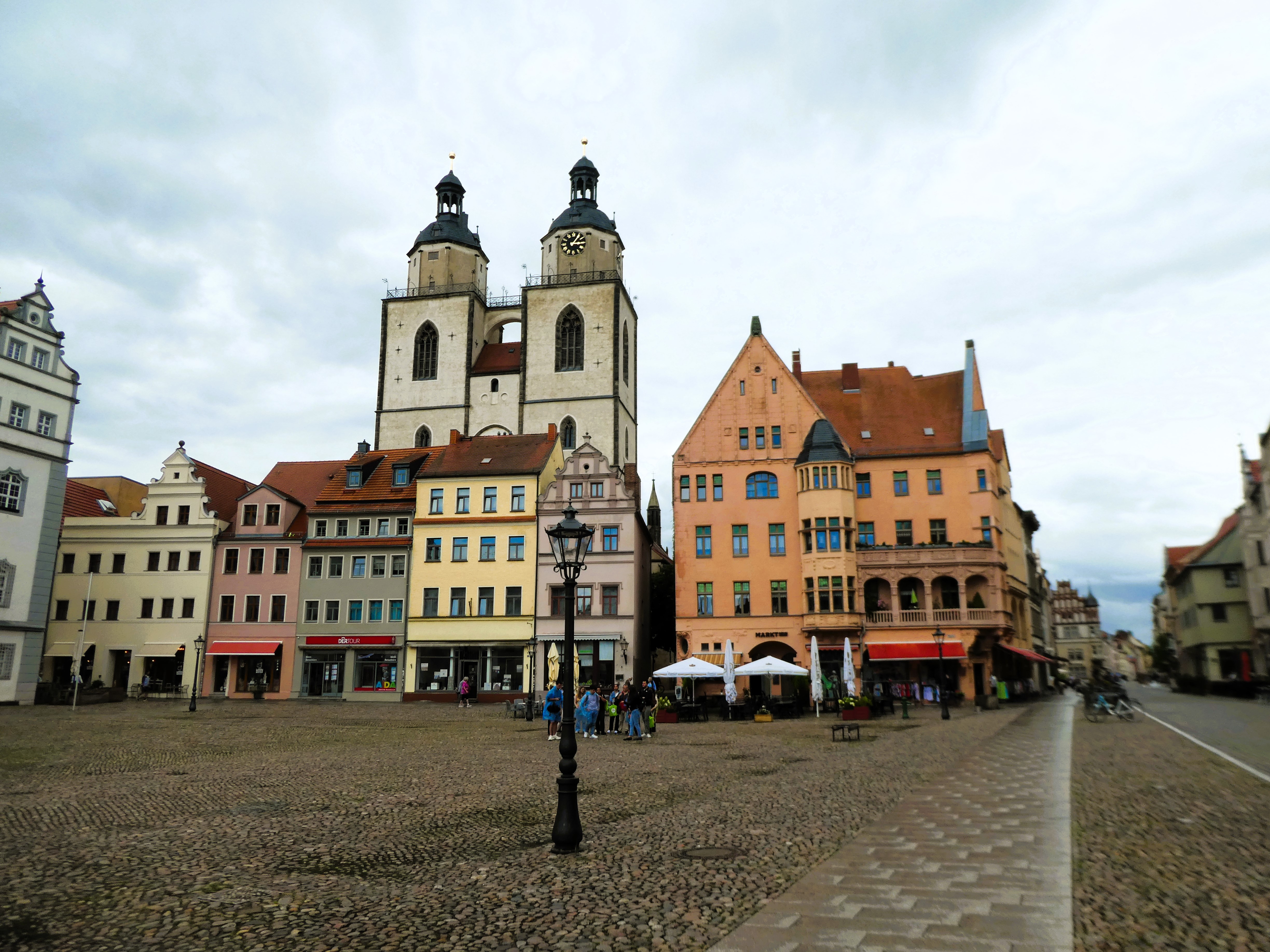

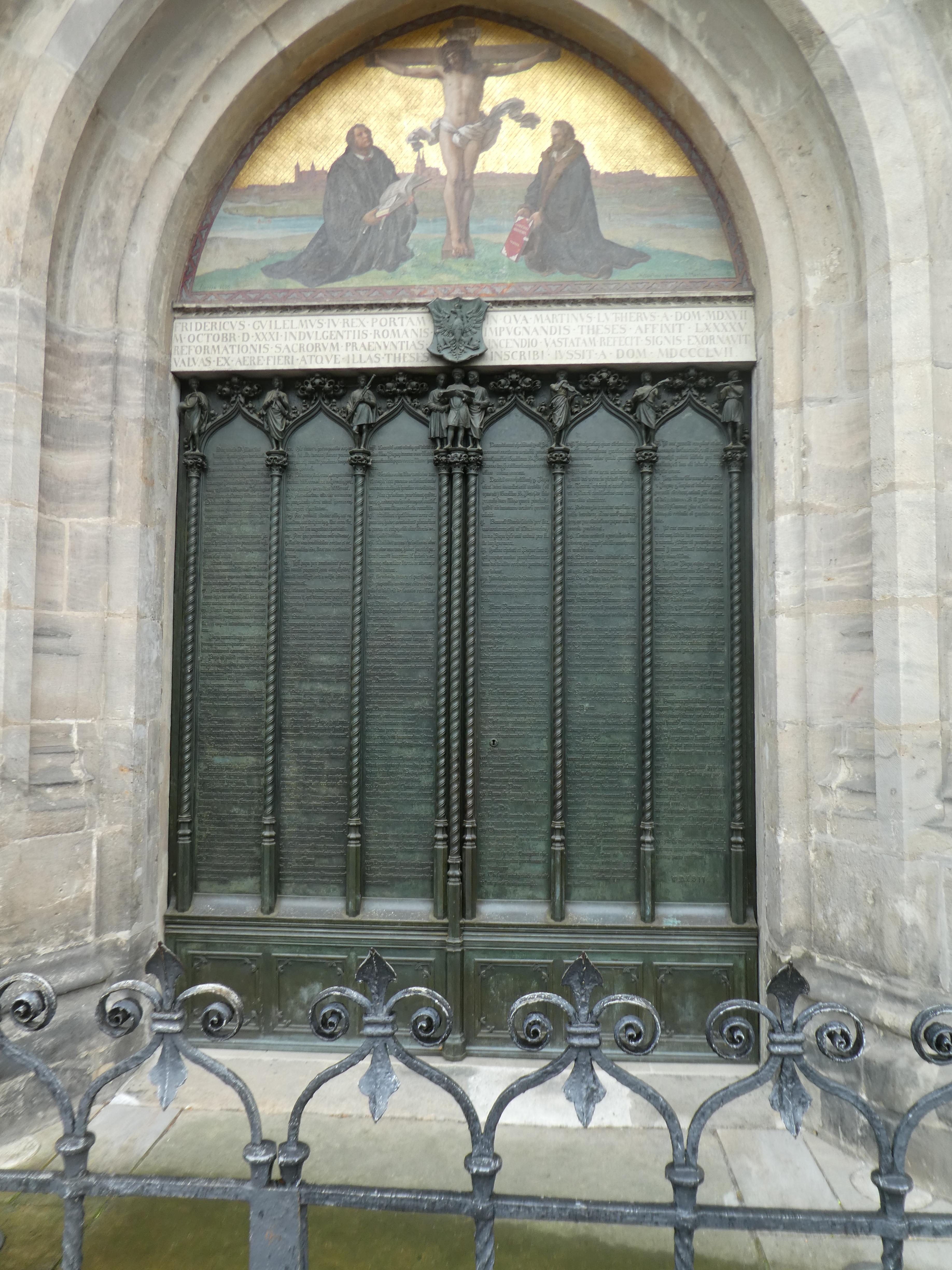
Wittenberg is the home of Martin Luther, the reformist who challenged the greed of the Catholic Church, through their use of indulgences.
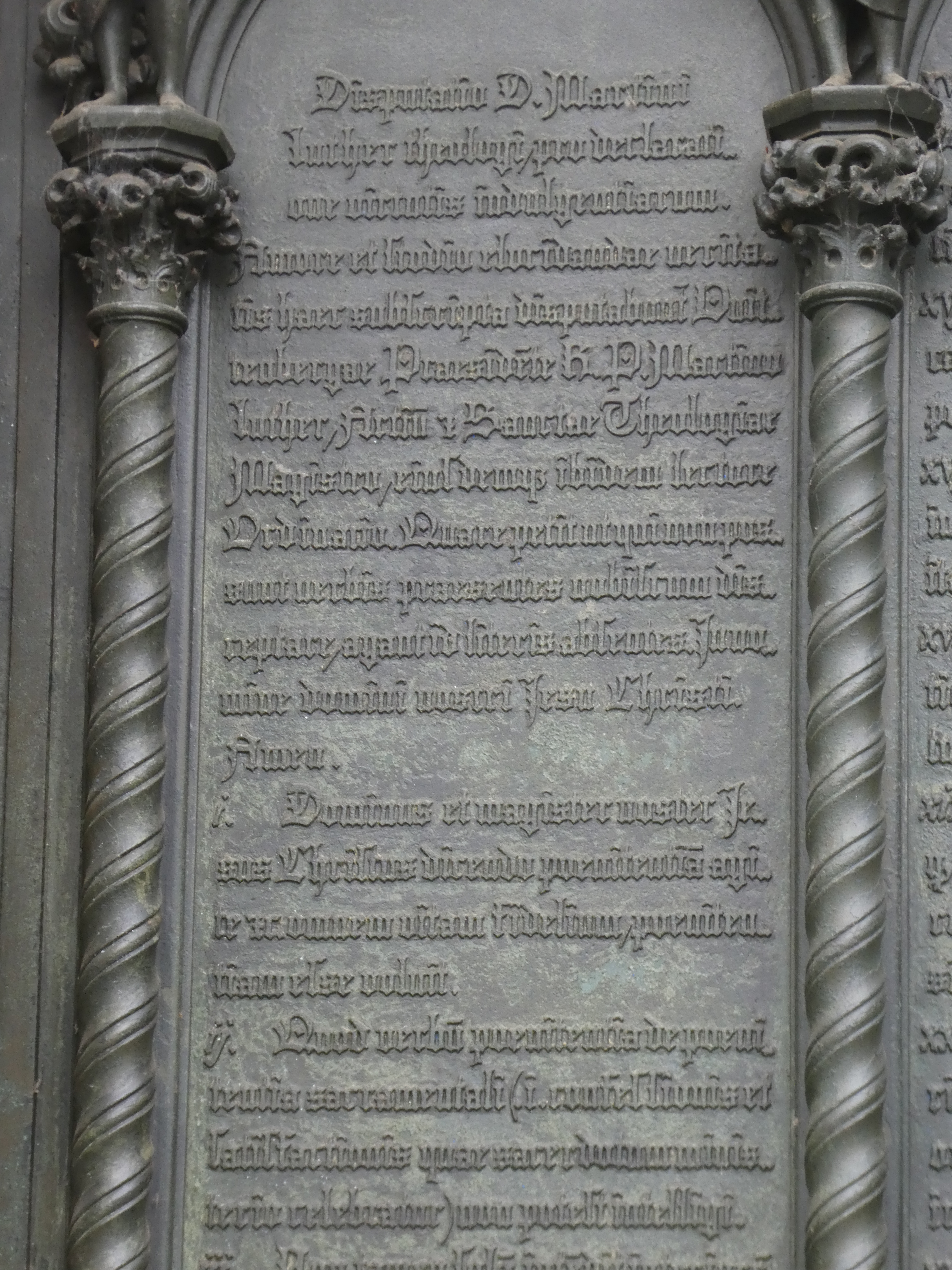
We went to the Church where he had nailed his ninety-five theses on the doctrine he proclaimed as a challenge to the Catholic Church. He was seeking change to the use of indulgences.
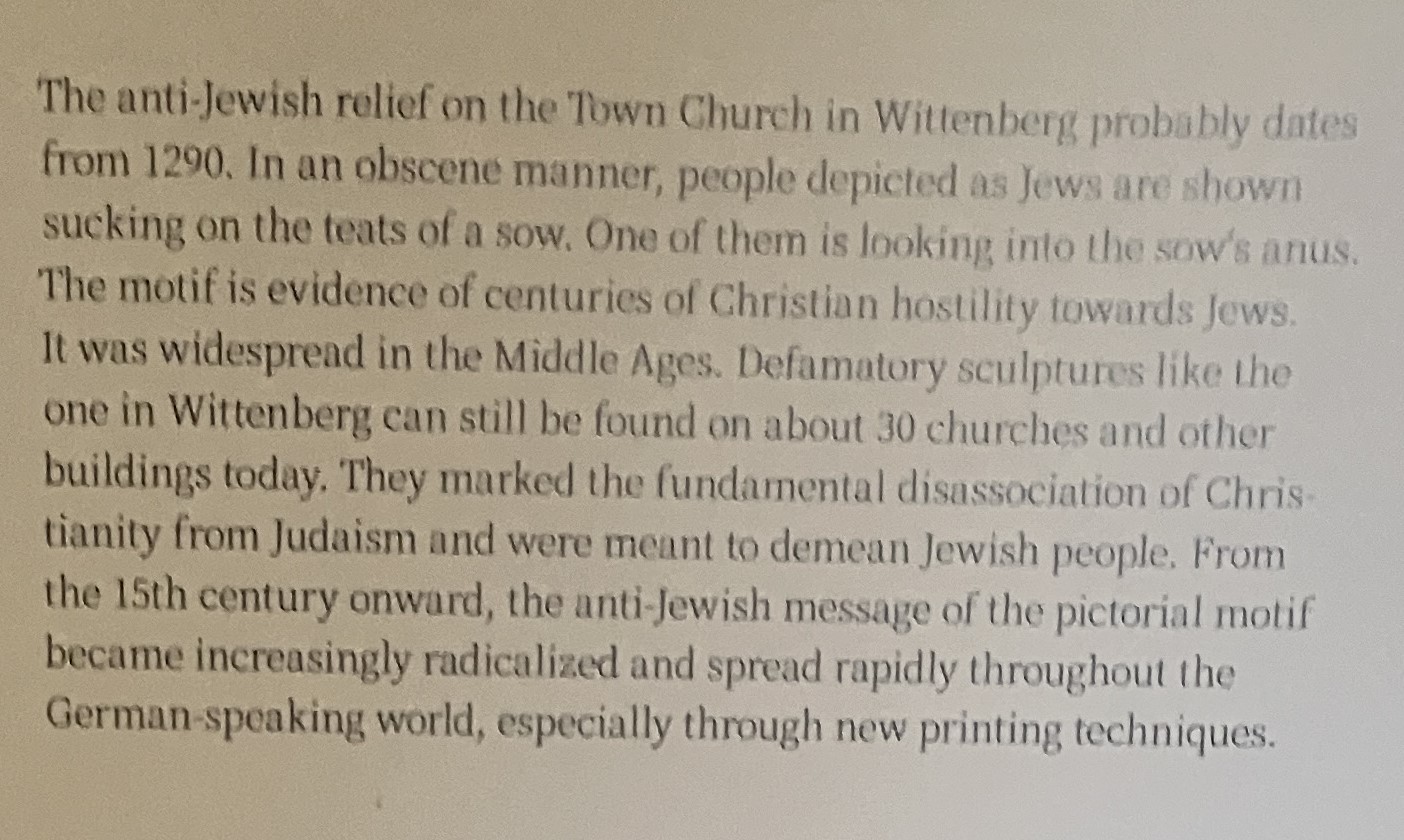
We were fascinated to find his articles challenging to the use of indulgences by the Catholic Church were not his only publications. He wrote a treatise On the Jews and Their Lies raising hatred against the Jews.
The portrayal of the Jews suckling on pigs as a relief on the walls of churches was a result of the expression of his views. We had previously found such relief on the walls of the Church in Regensburg. (Our Balkan Trip 2023)
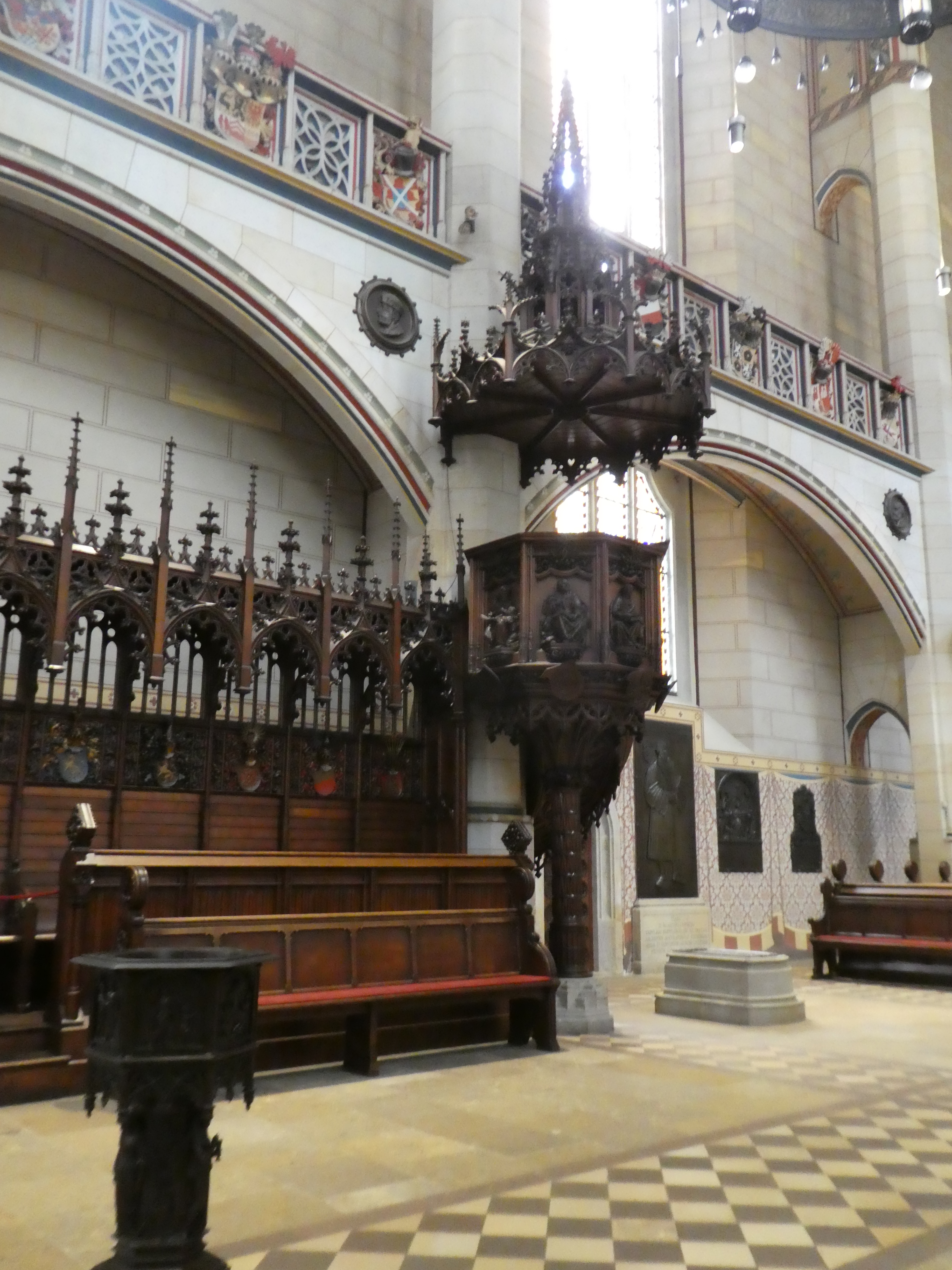
We wandered around reading all the signs, visited both churches and decided that he really wasn’t a very nice man as apart from everything else he was a vicious anti-Semite.
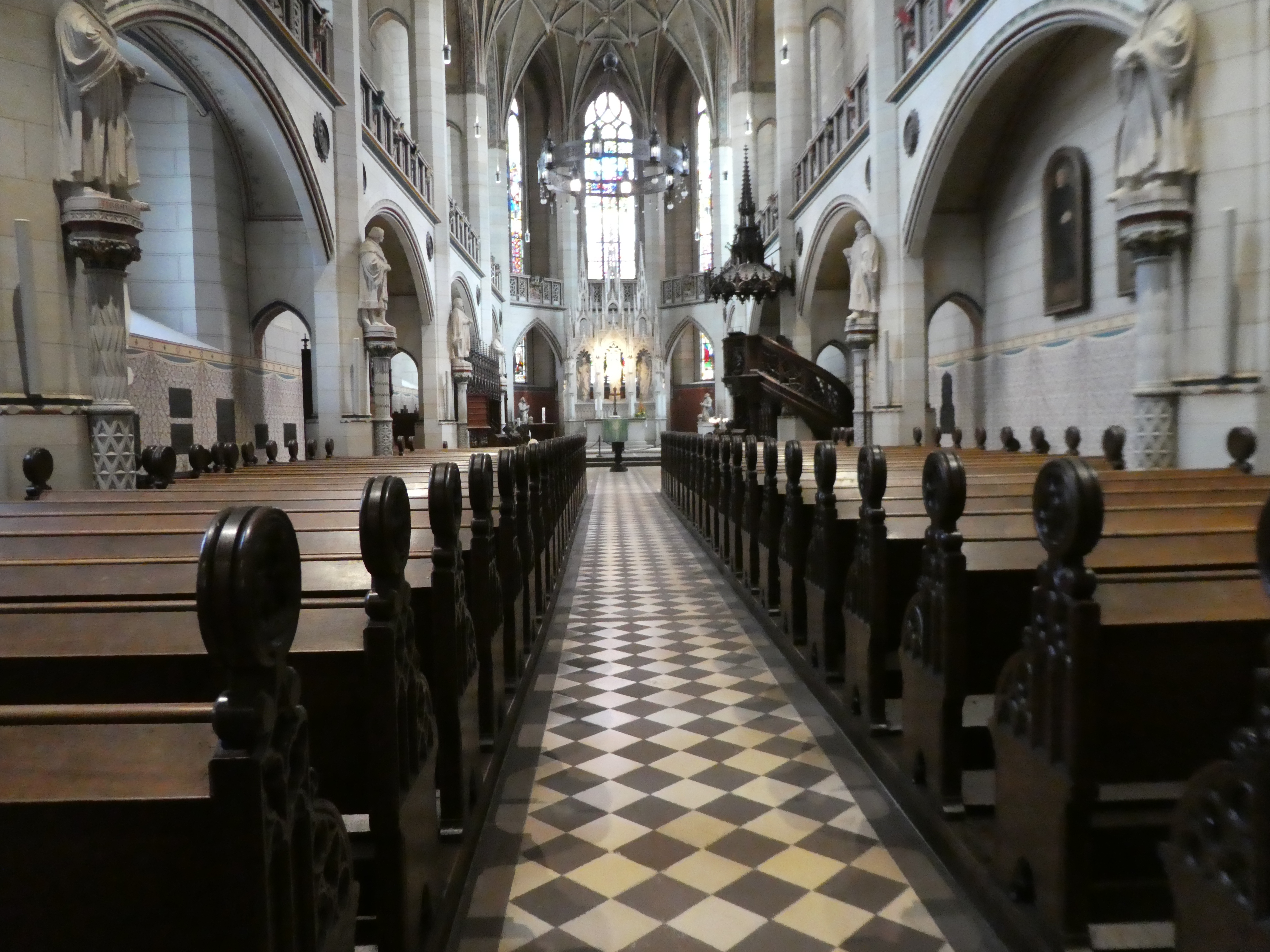
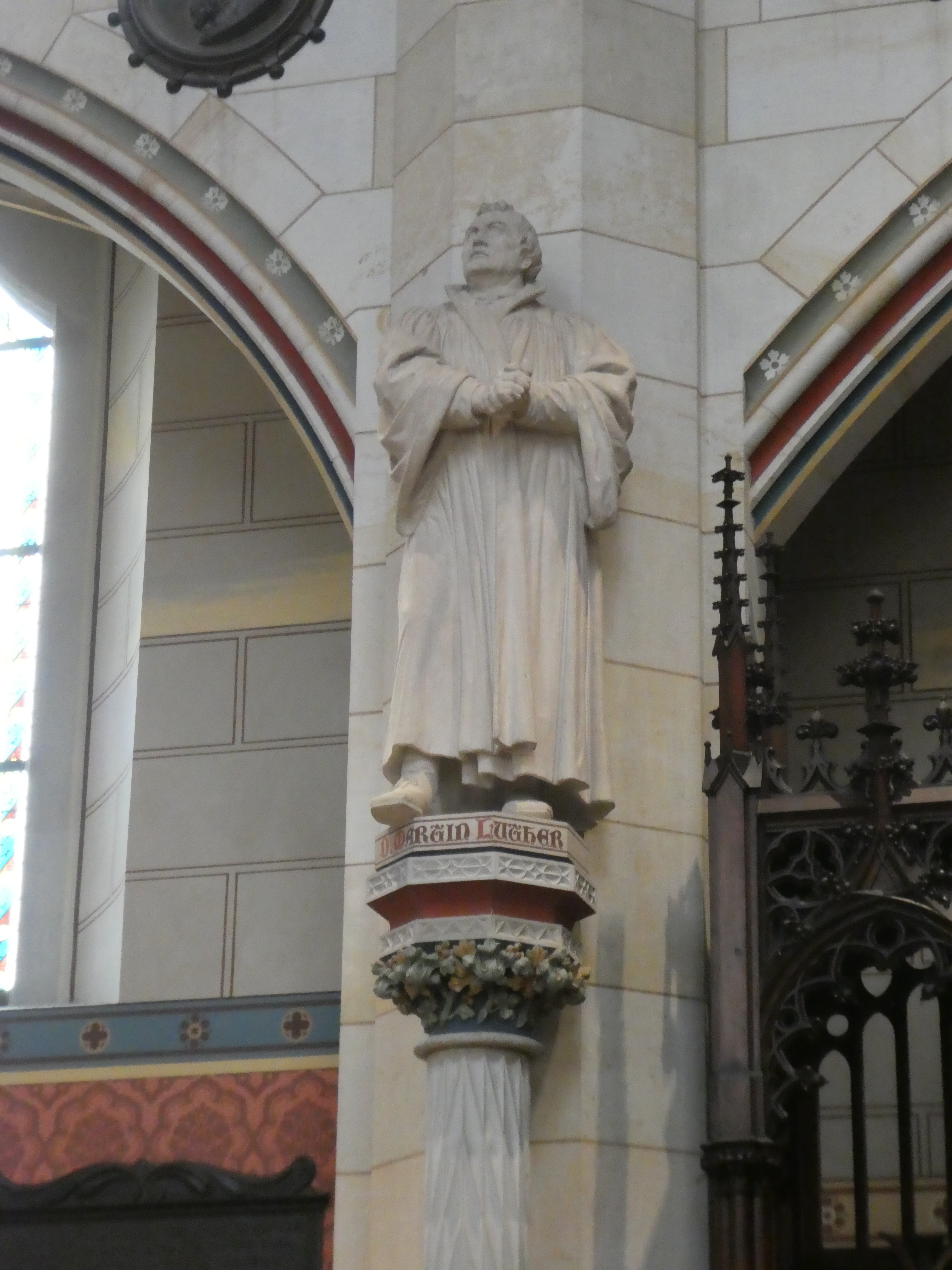


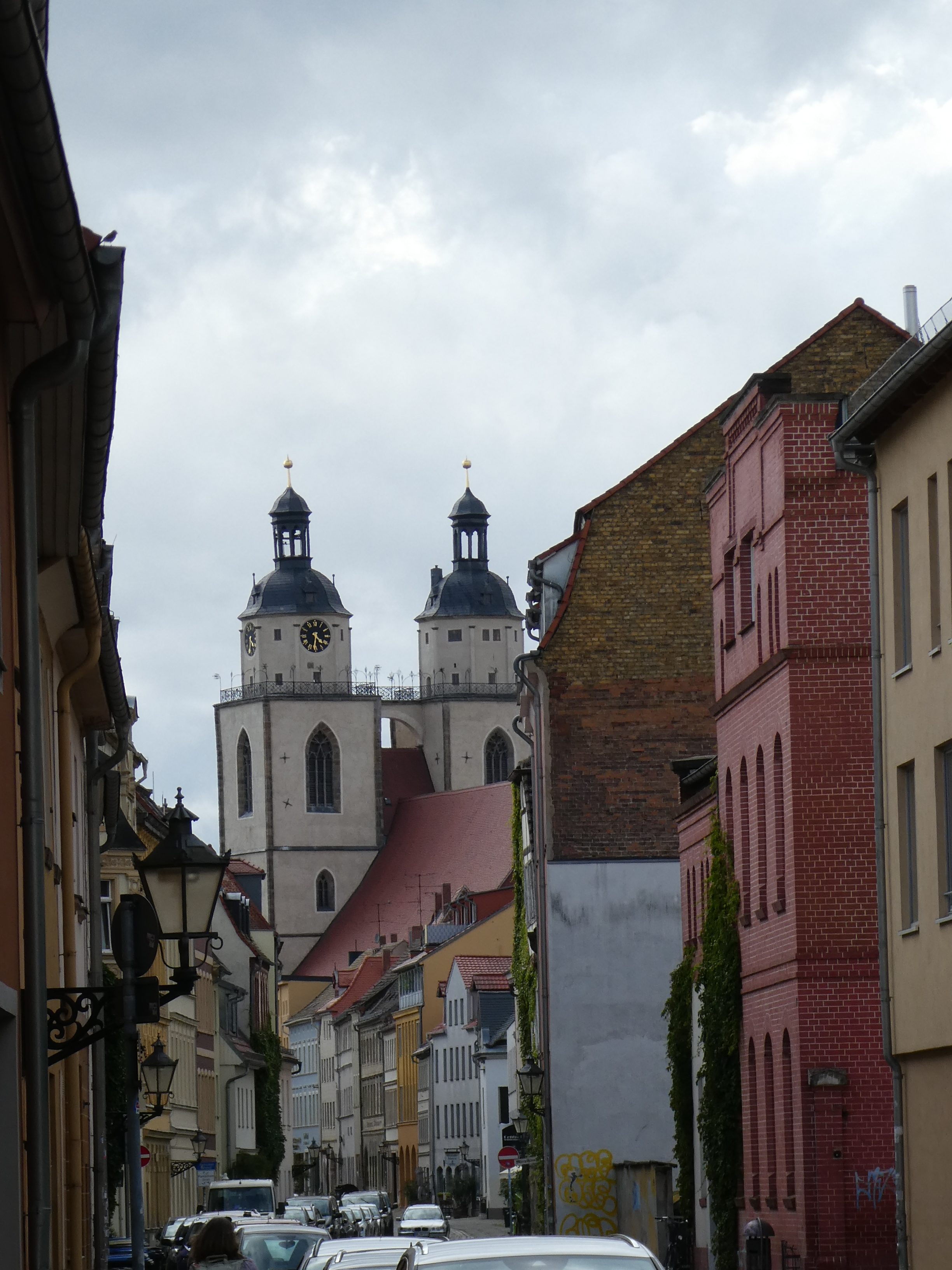
We followed the guided walk from the tourist office into the town taking in the castle, market place and old town hall and several town houses all of the 16th century.
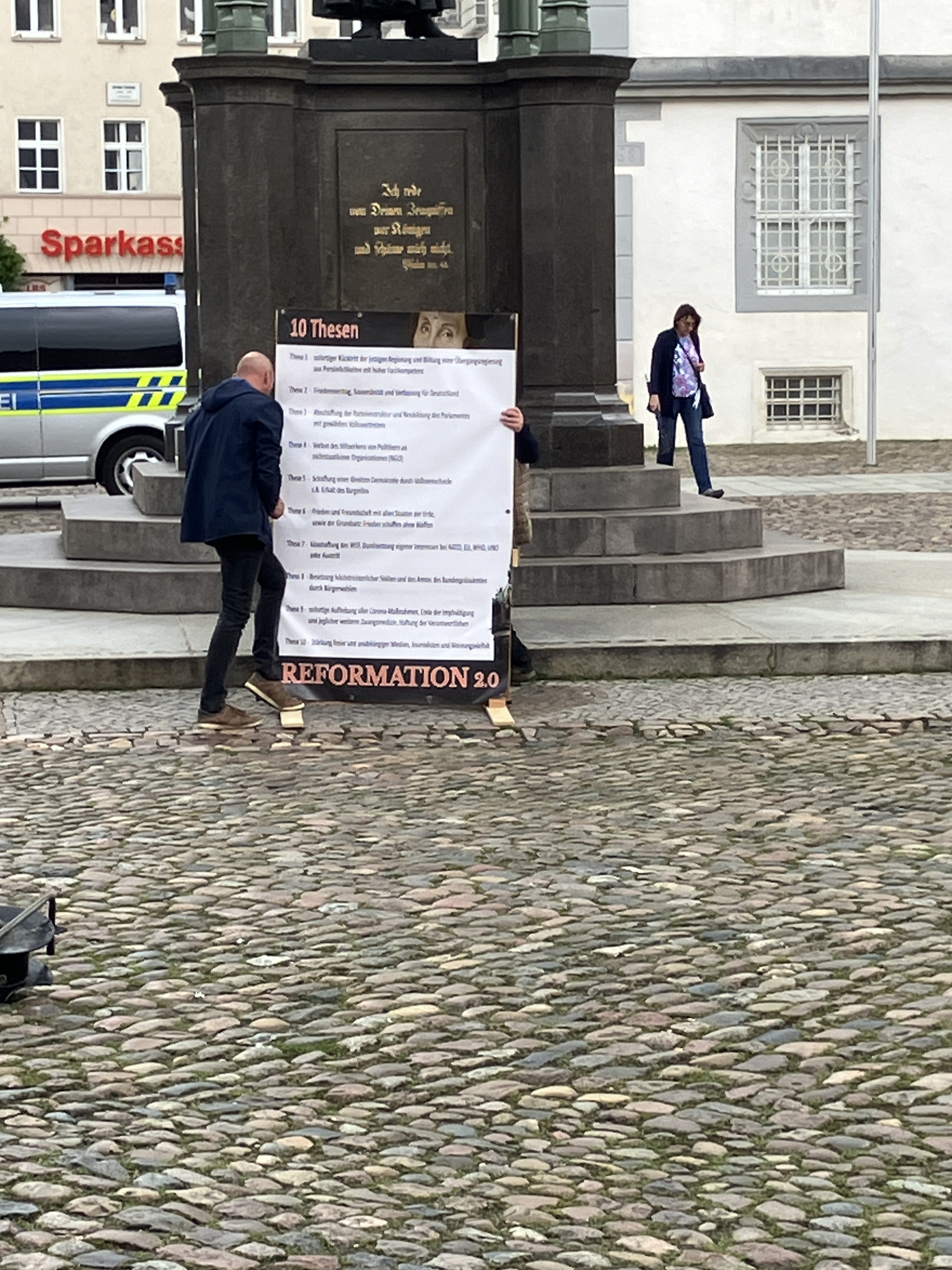
As we were leaving a demonstration was taking place in the square and a new set of theses were being displayed by protesters.
We watched the gathering crowd and a gathering police presence before leaving the town and cycling the 19 kilometres back to campsite.
Tuesday 2nd July – on to Brno
We packed and had left the site by nine travelling south east past Leipzig, Dresden then into Czech Republic, where we knew we had to buy a vignette so stopped at the first services. We realised we had to buy three vignettes, one for Czech, one for Slovakia and one for Hungry. Unfortunately we just didn’t have enough euros so had to use an ATM to get some Krona and ended up getting far too many!
The weather was showery with some bright periods as we made our way along. Surprisingly the roads around Prague were good and apart from one hold up we reached Veverska Bityska, shopped in a small Potroviny, grocers., We travelled the two kilometres on to the Hana camp site.
It was busy with children and campers. We pitch in the warm sunshine next to an English couple, retired teachers in a camper van, who had been touring Europe for several weeks.
We enjoyed a meal from the ingredients we had bought fin town before exploring options for our trip to Brno with the guy at reception.
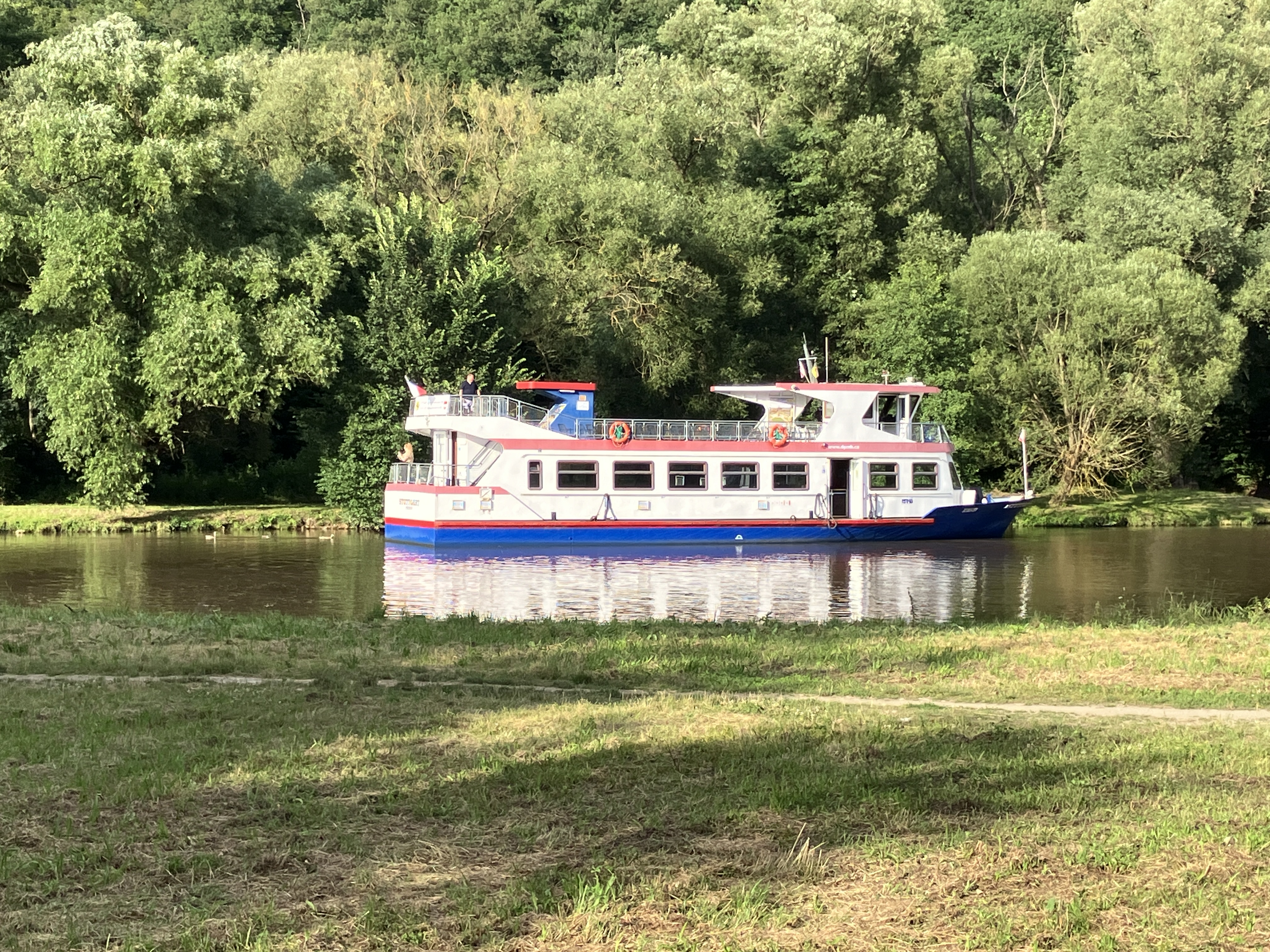
He tells us that there is a ferry boat that operates nearby on the dammed River Svratka. It goes as far as the outskirts of Brno and and there is a stop Cyklisticka by a cycle track that leads into Brno. We go down to the river and see the ferry boat and feel very positive about tomorrow. We have travelled 1400 miles so far.
Wednesday 3rd July Brno
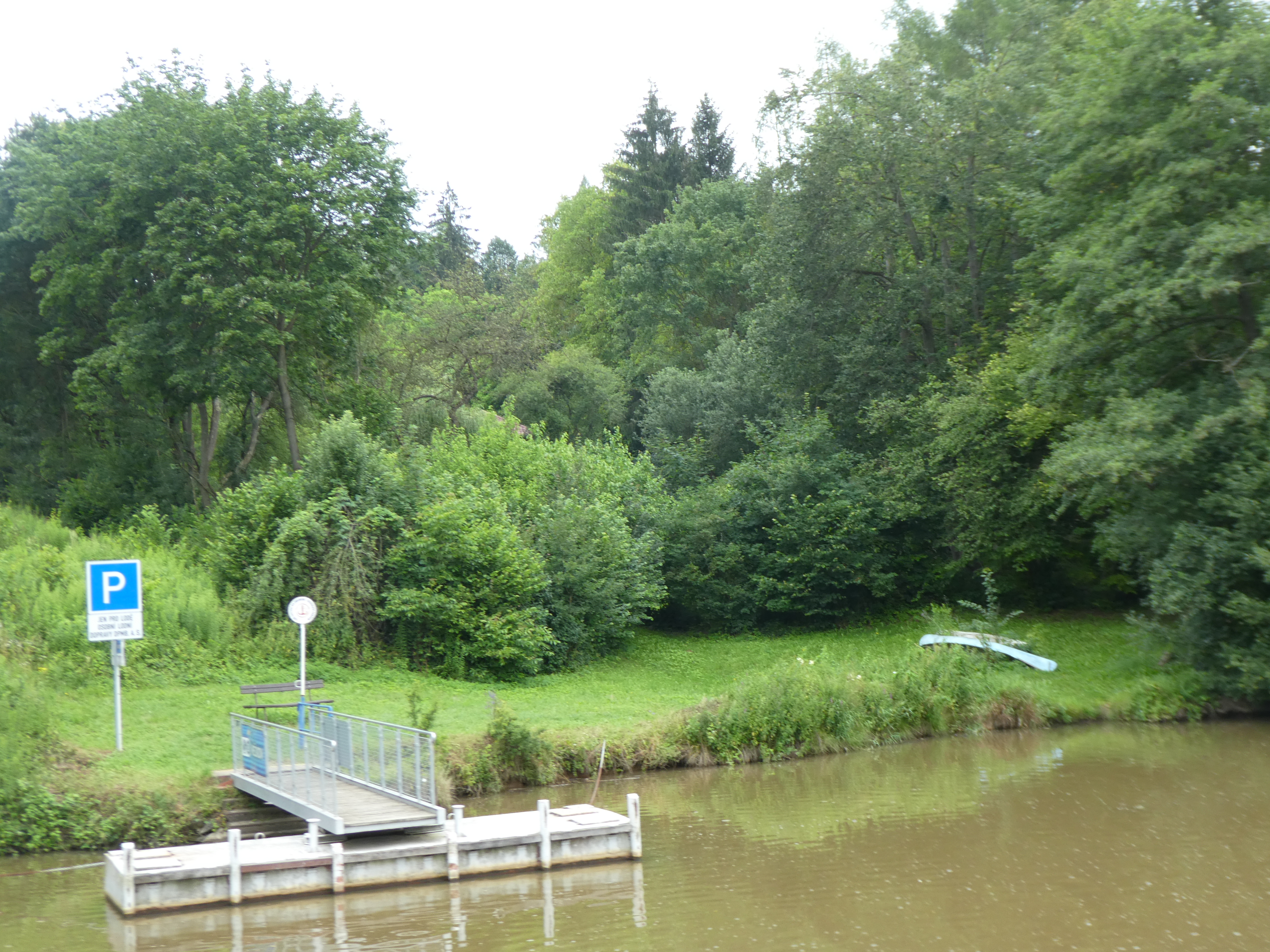
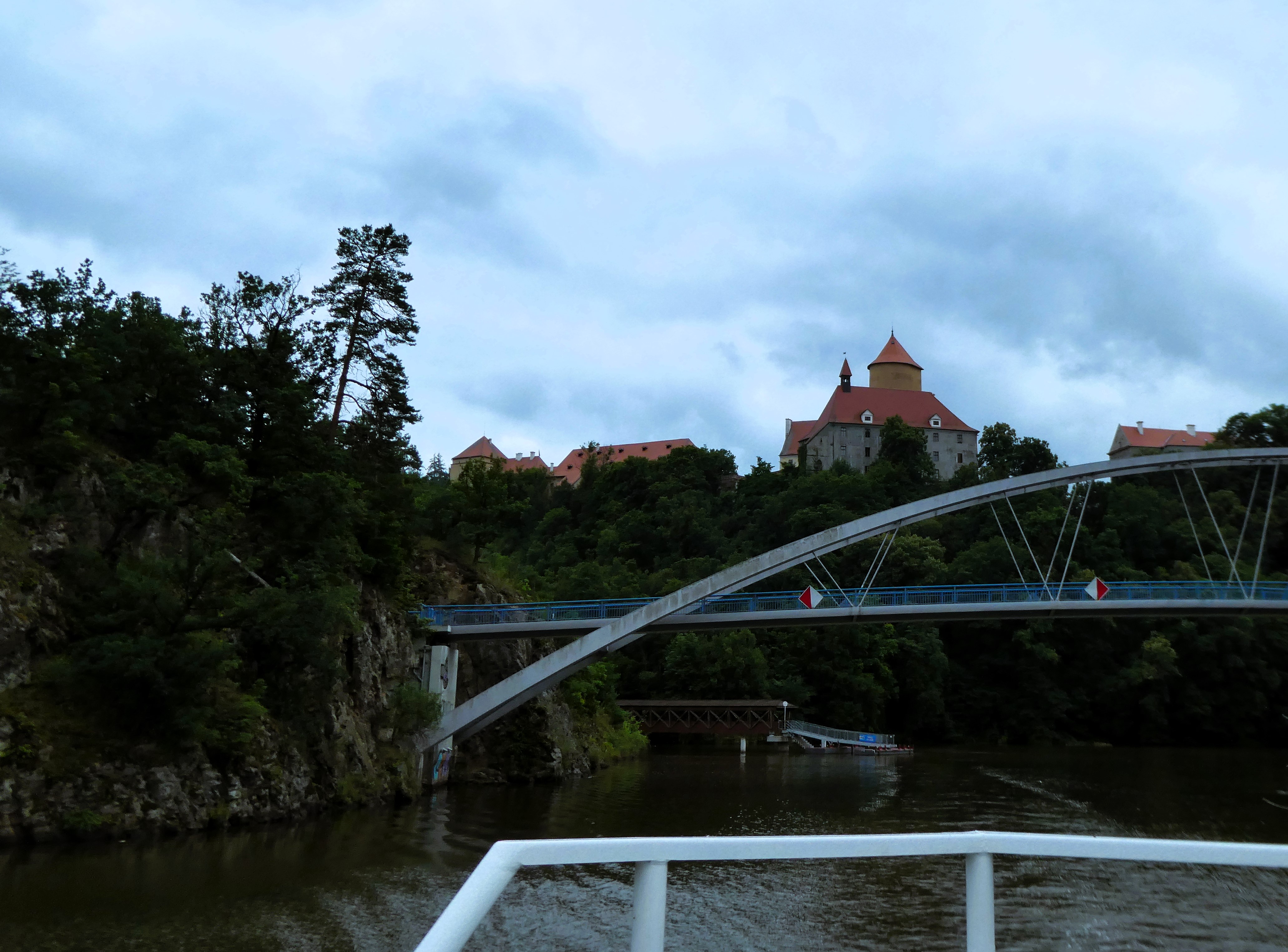
We caught the 10.30. ferry which had cycle racks for the bikes with a crowd of other tourists mainly families from the camp site. It was lovely going through the narrow part of the lake seeing small deer at the water’s edge. Most people got off after a couple of stops to see the local Castle. We carried on to the stop Cyklisticka from where we cycled along the side of the lake mainly on a cycle track, which was lovely.

It was not so nice cycling to the centre of Brno however, along with the trams and the trolley buses. We made our way to the city centre where we left the bikes whilst walked around the centre. In the main square we stopped for a coffee and decided to have lunch also.


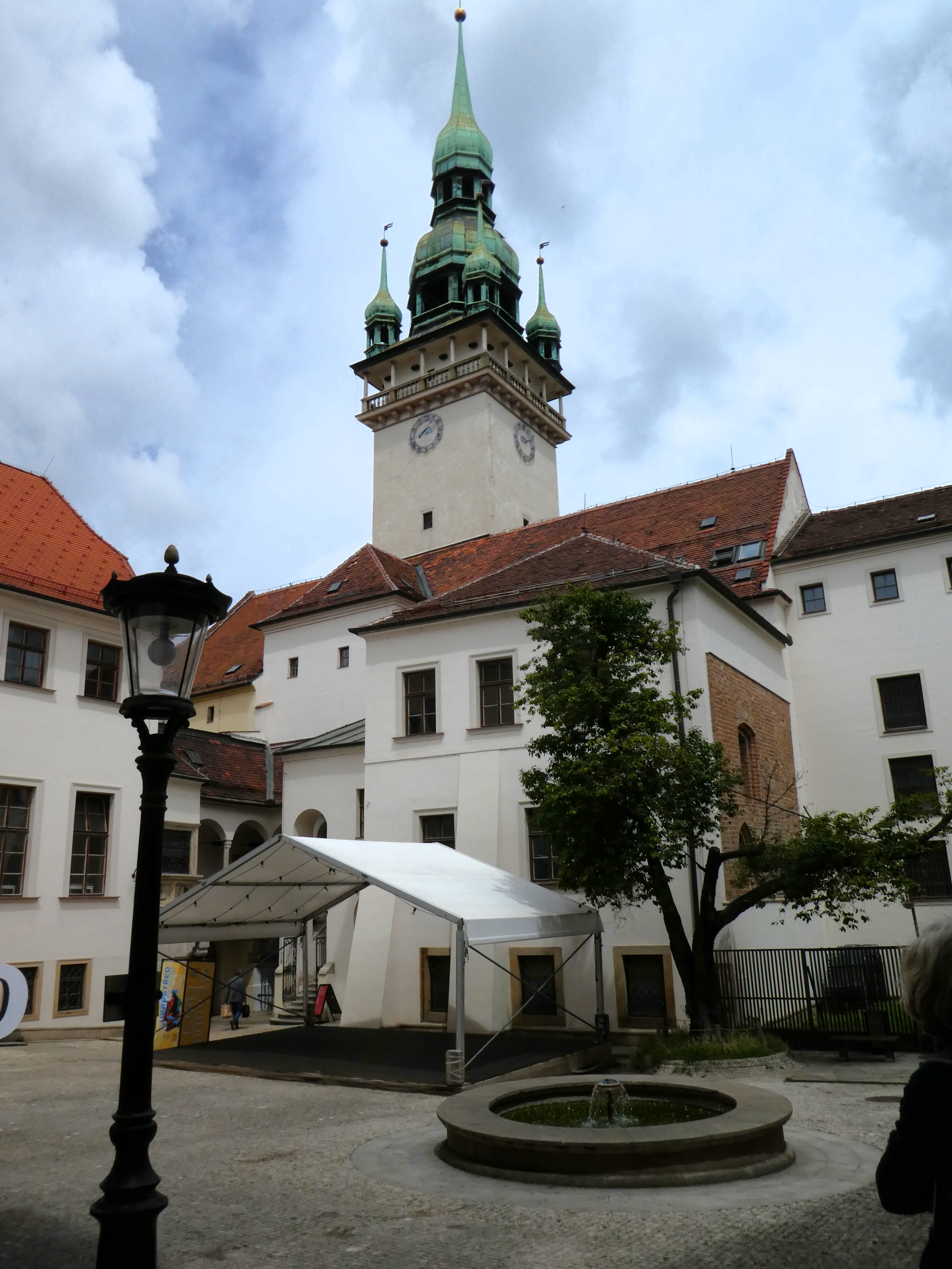

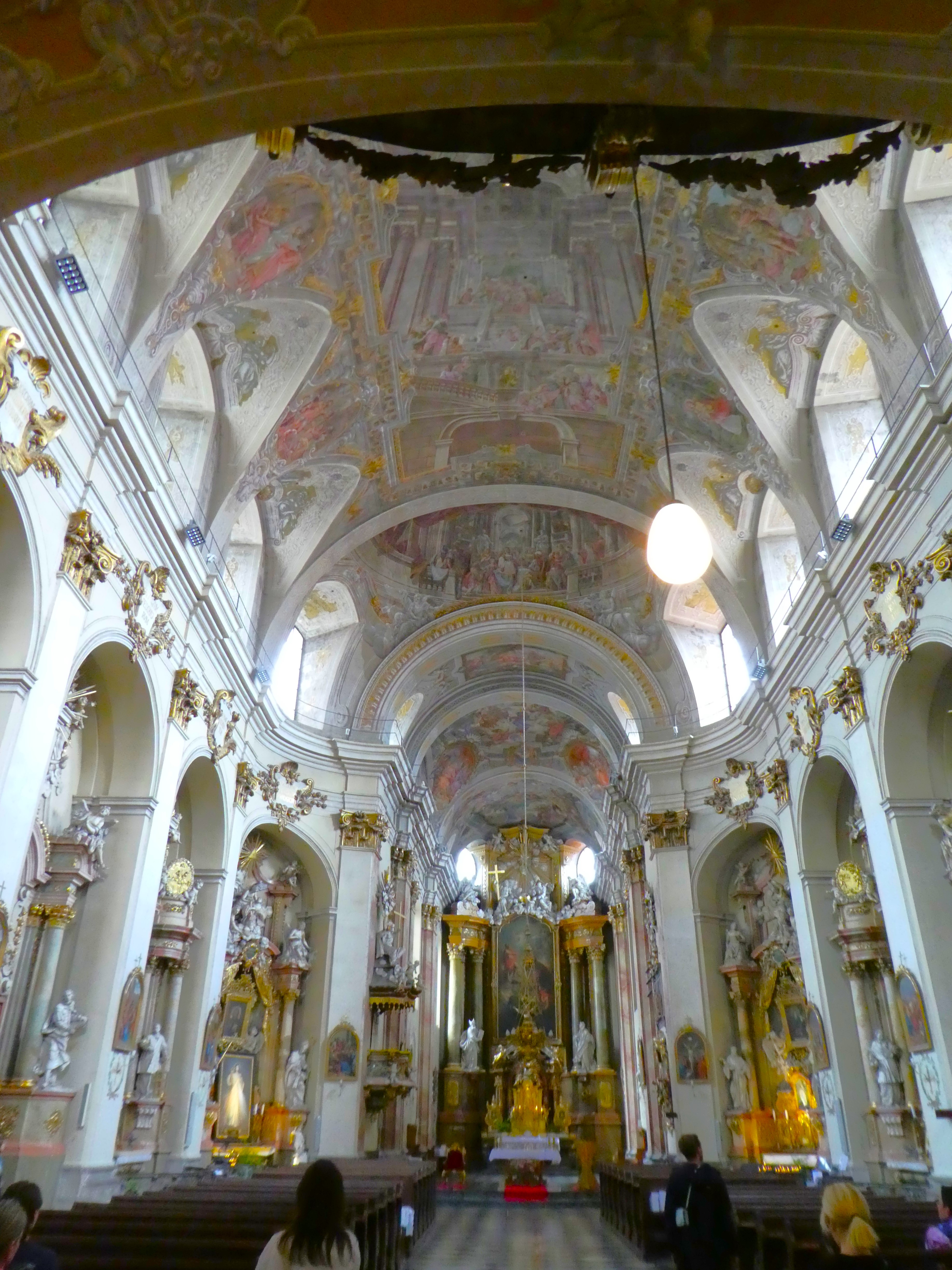
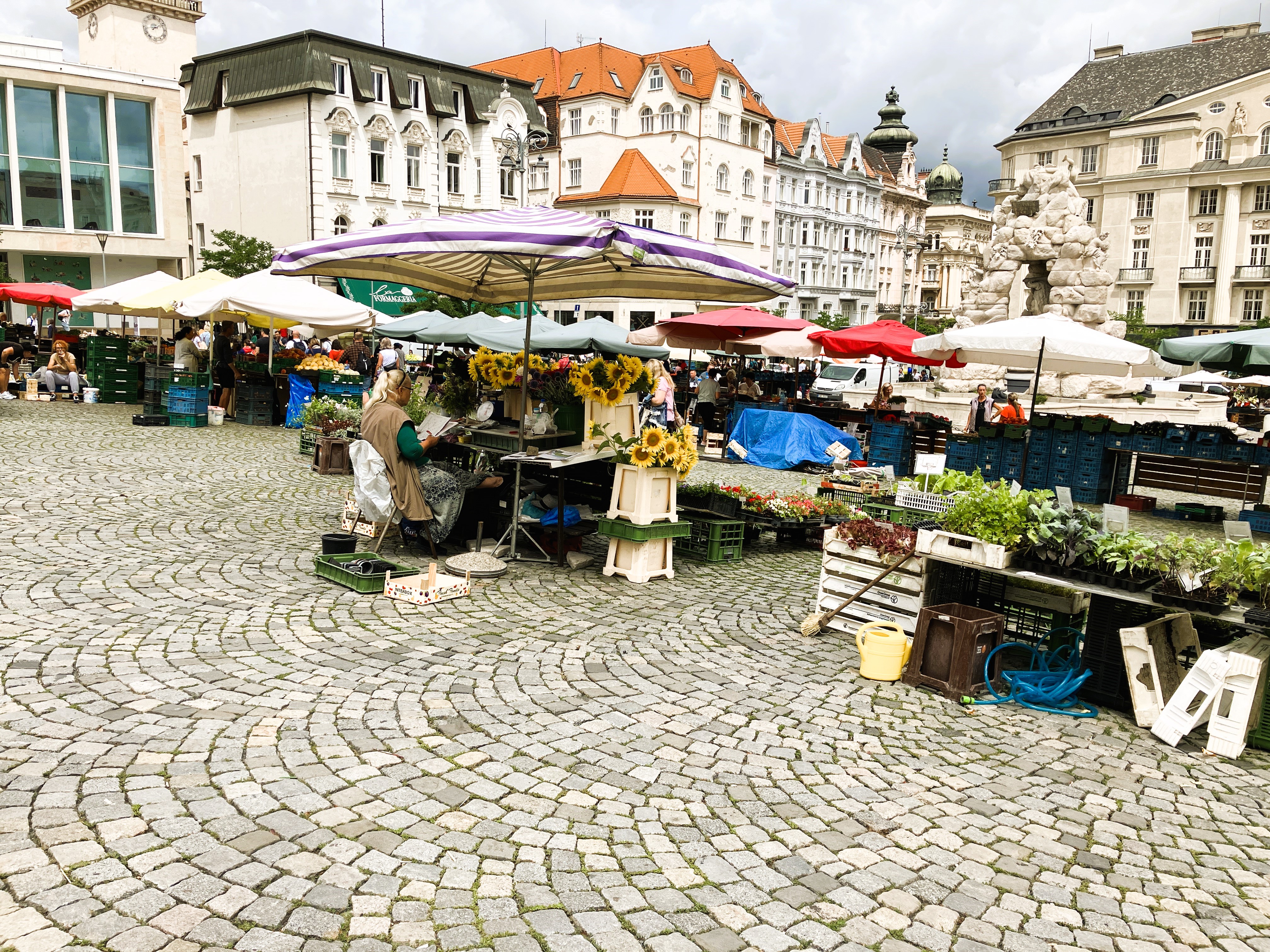
We wandered around the fruit and veg market and on to the Church of St John, a well maintained baroque style with amazing painted ceiling.
We then made our way to Tugendhat House where we had pre- booked a tour of a modernist house built in 1929 by the architect Ludwig Meis van der Rohe. This was something we had wanted to visit ever since reading the book by Simon Mawer, The Glass Room.

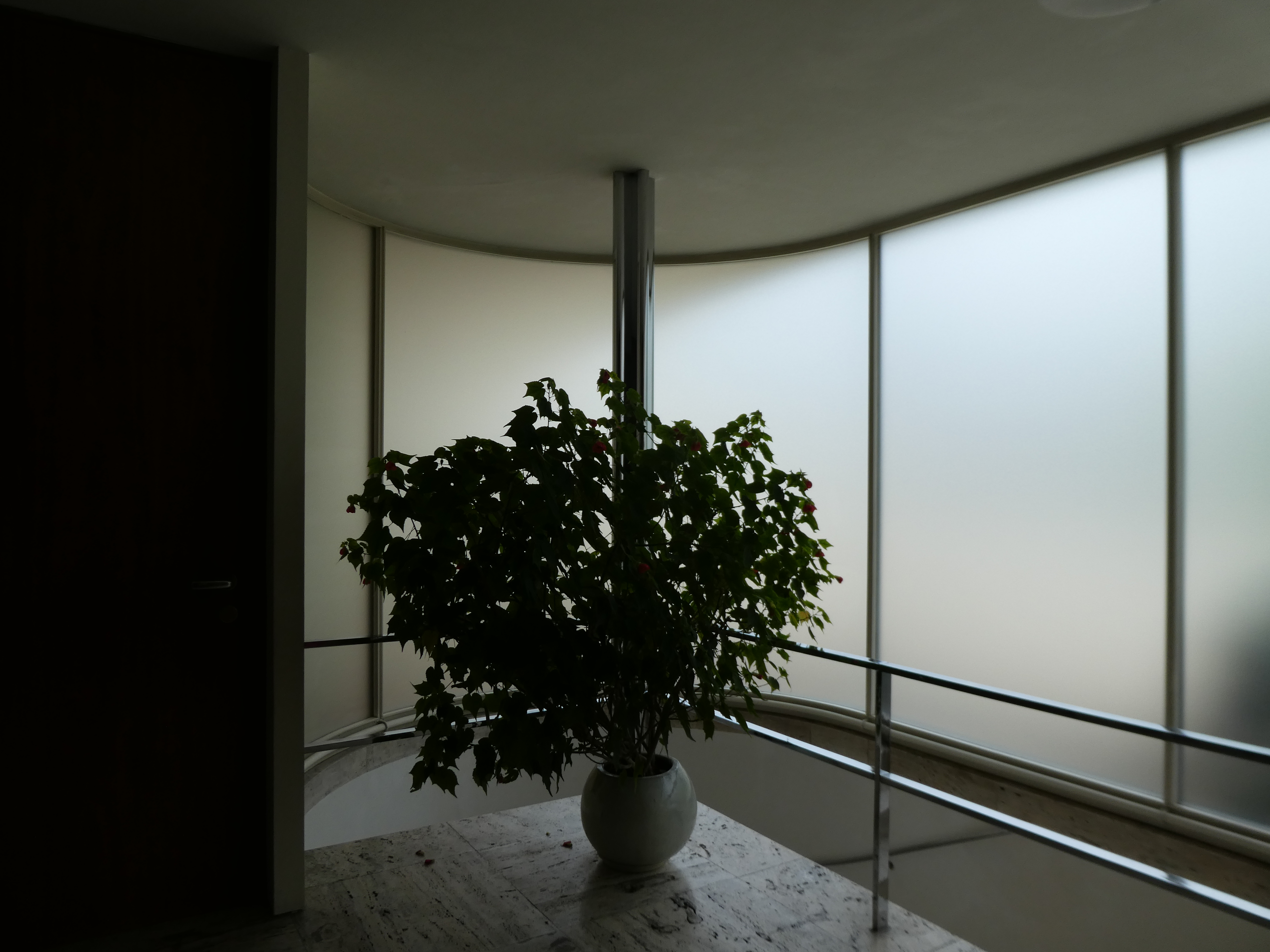
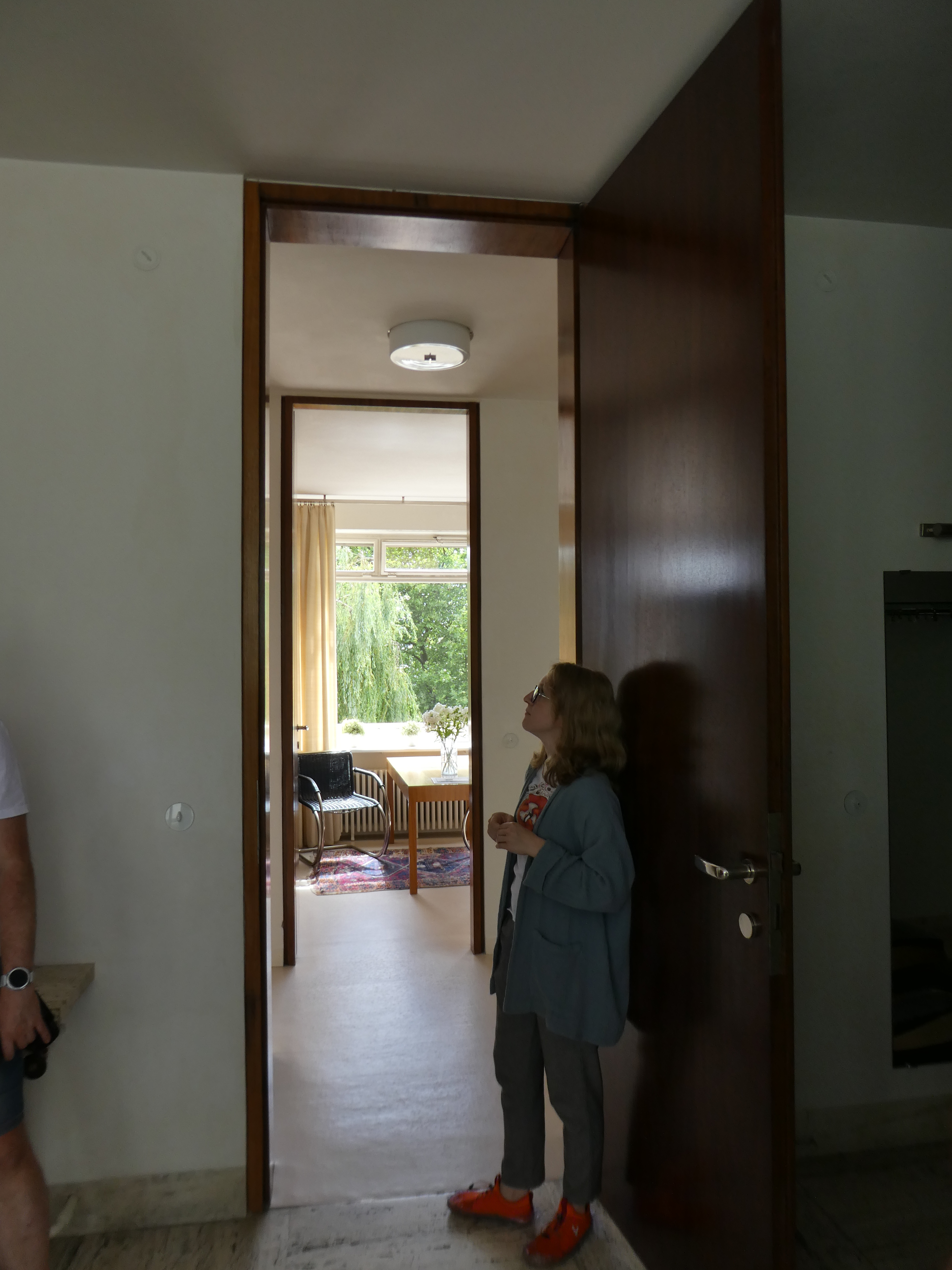
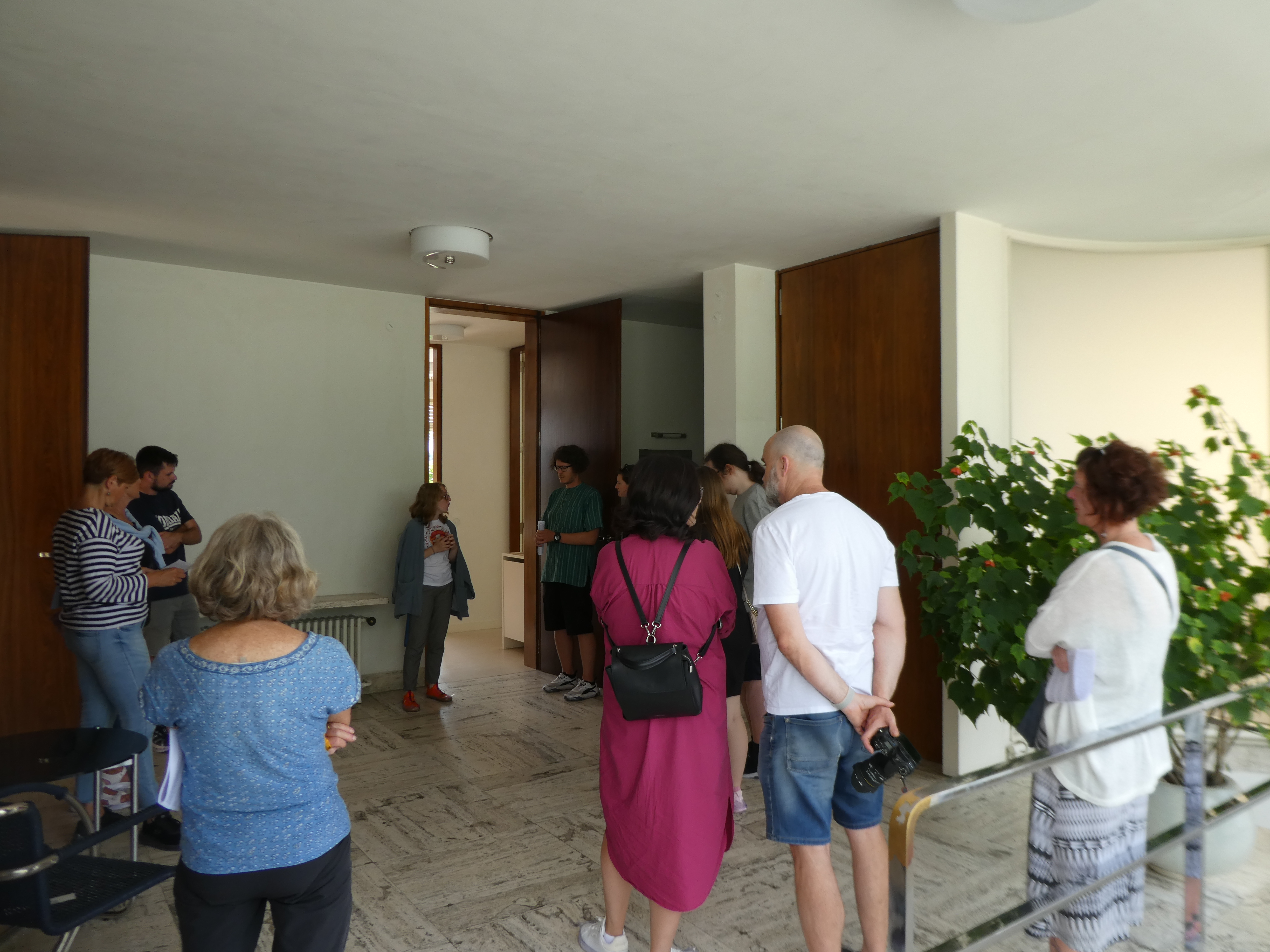
Although we had booked a tour in English most of the tour group turned out to be Czech and the tour guide explained that the tour would be in English but they could ask questions in Czech. The house lived up to expectation and was so good to go around only the pictures d it justice.


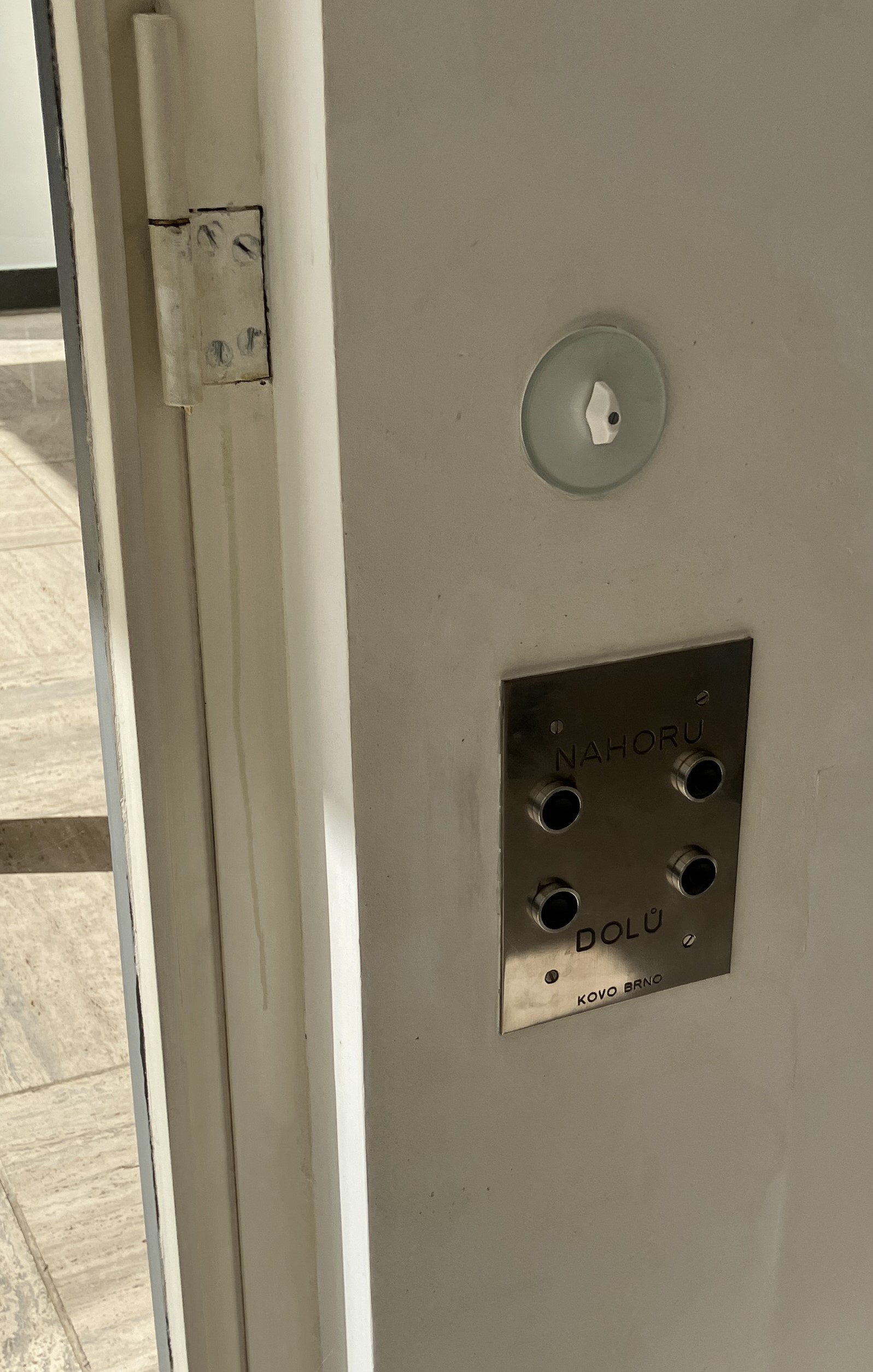
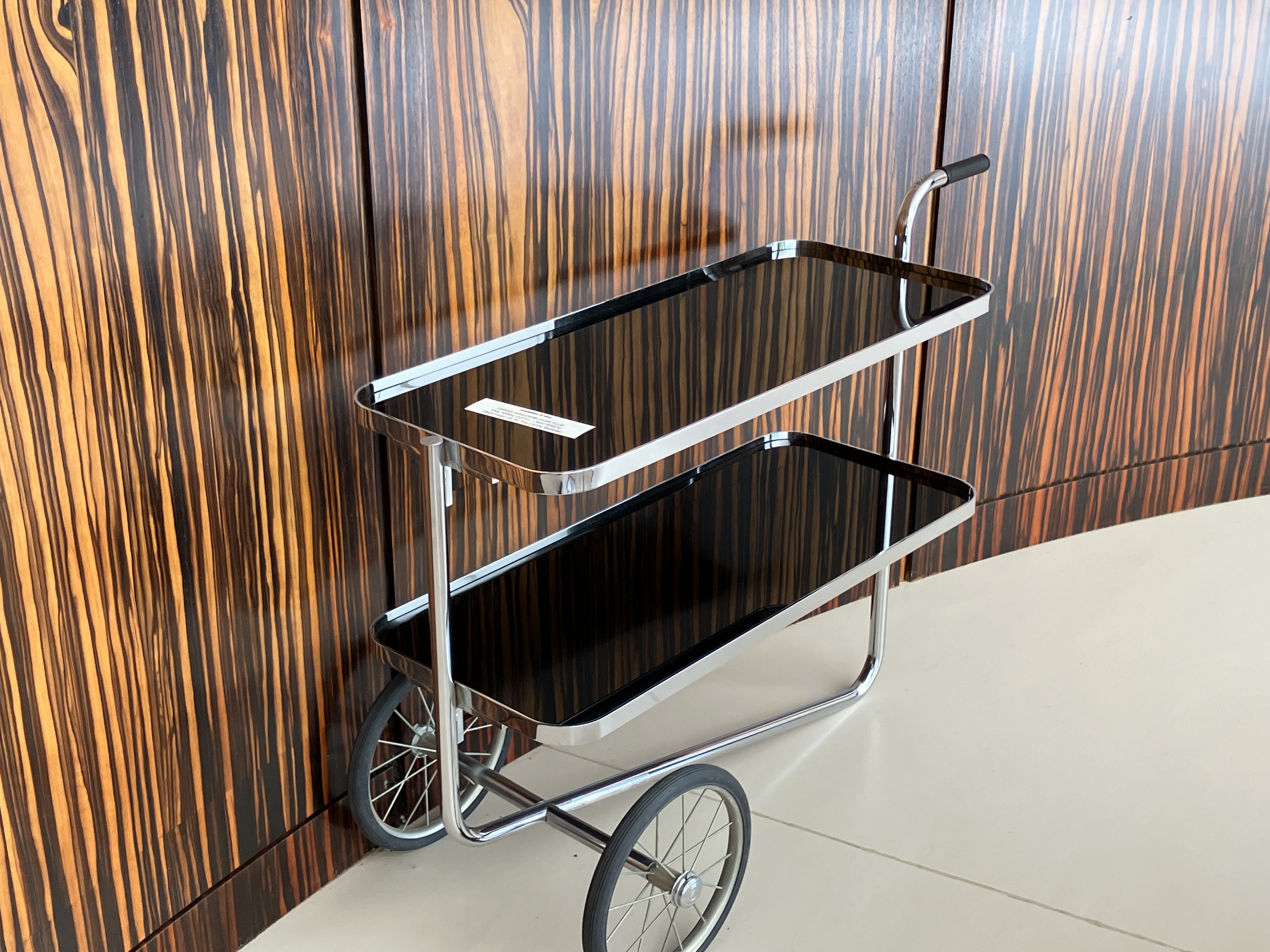
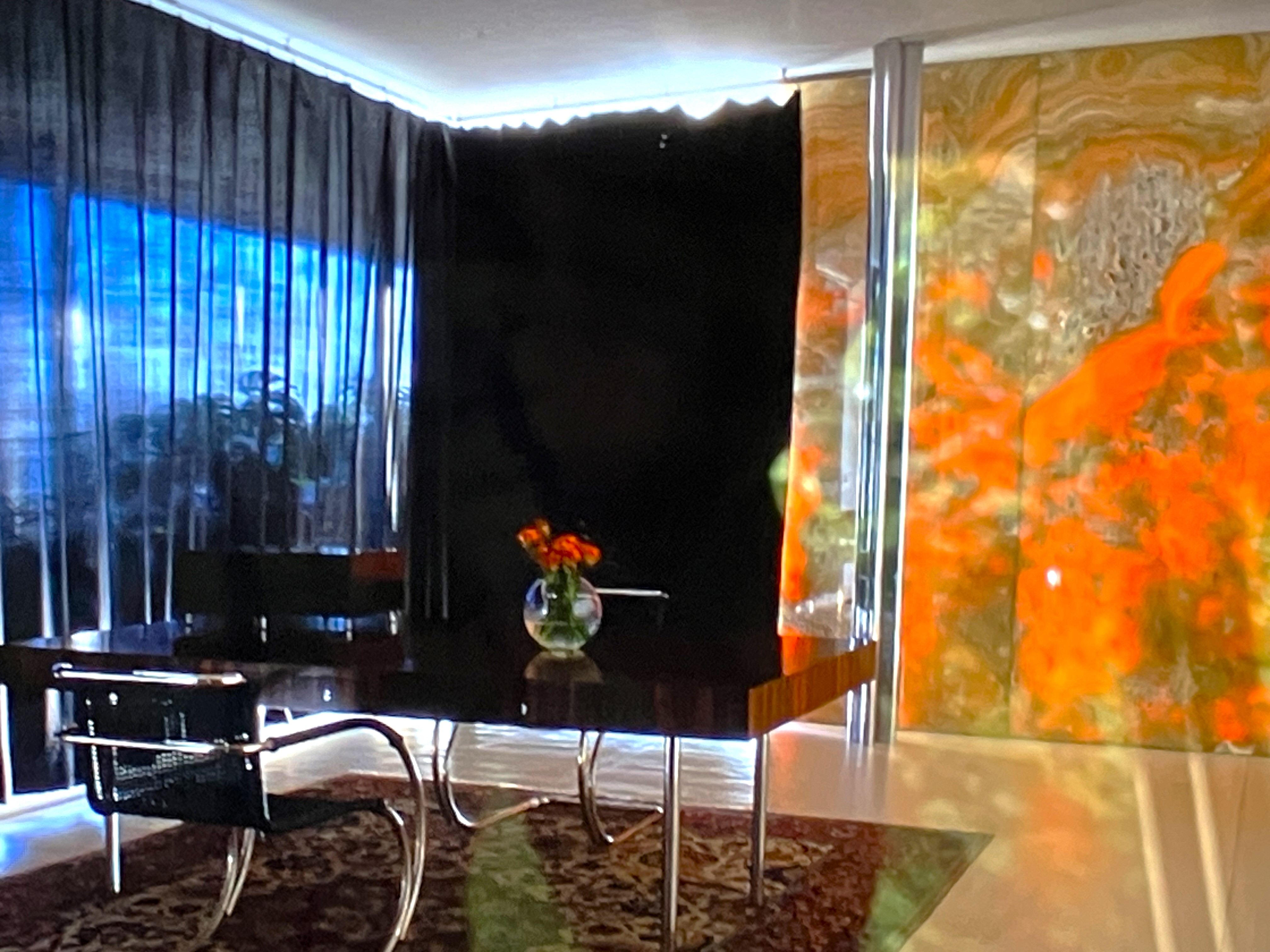
The detailed level of design in the glass, metal, stone and wood even down to light switches hinges and door catches was amazing. Full size windows could be lowered into basement area and the central heating system and steel girder building design was way ahead of is time.
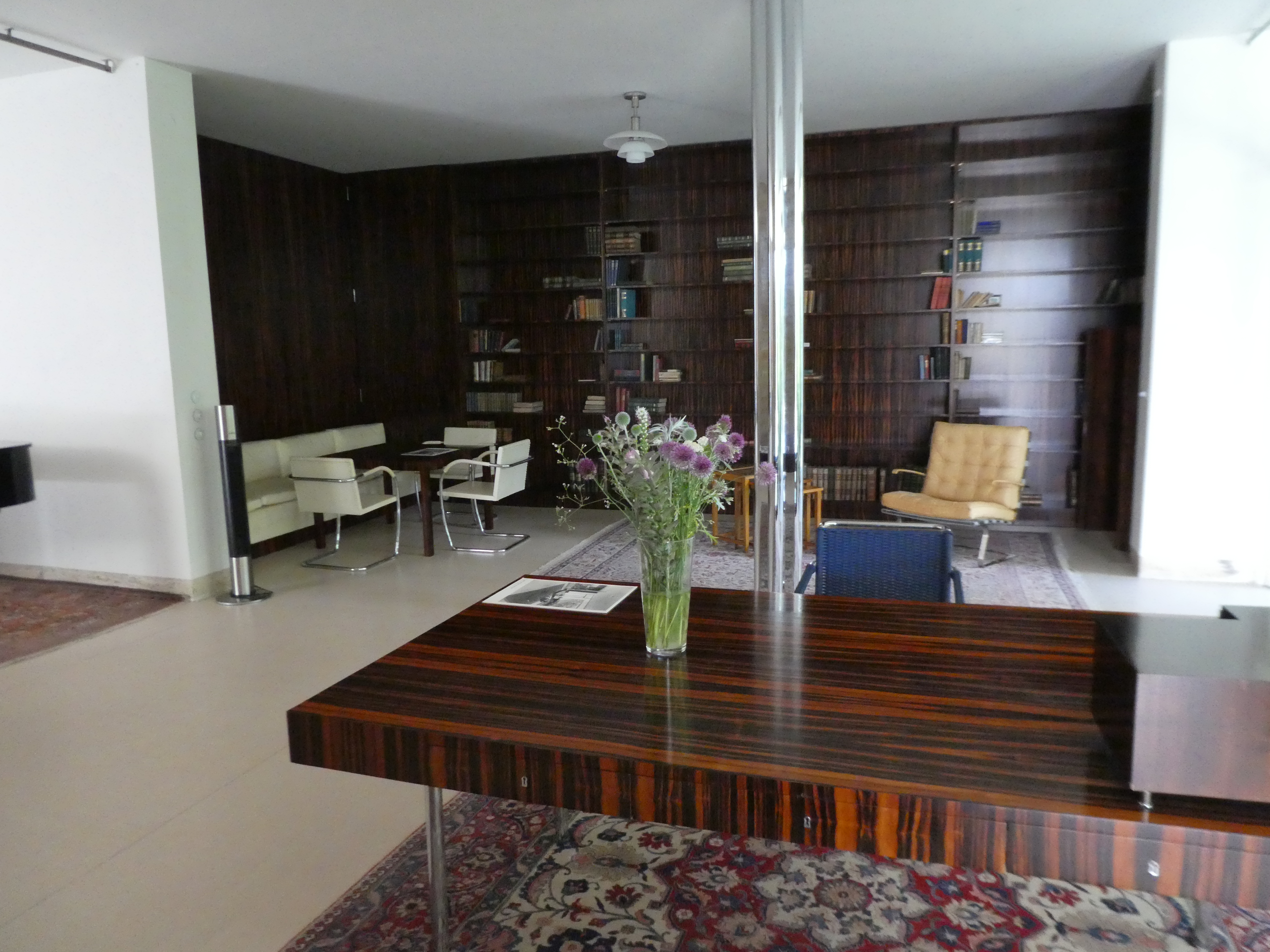

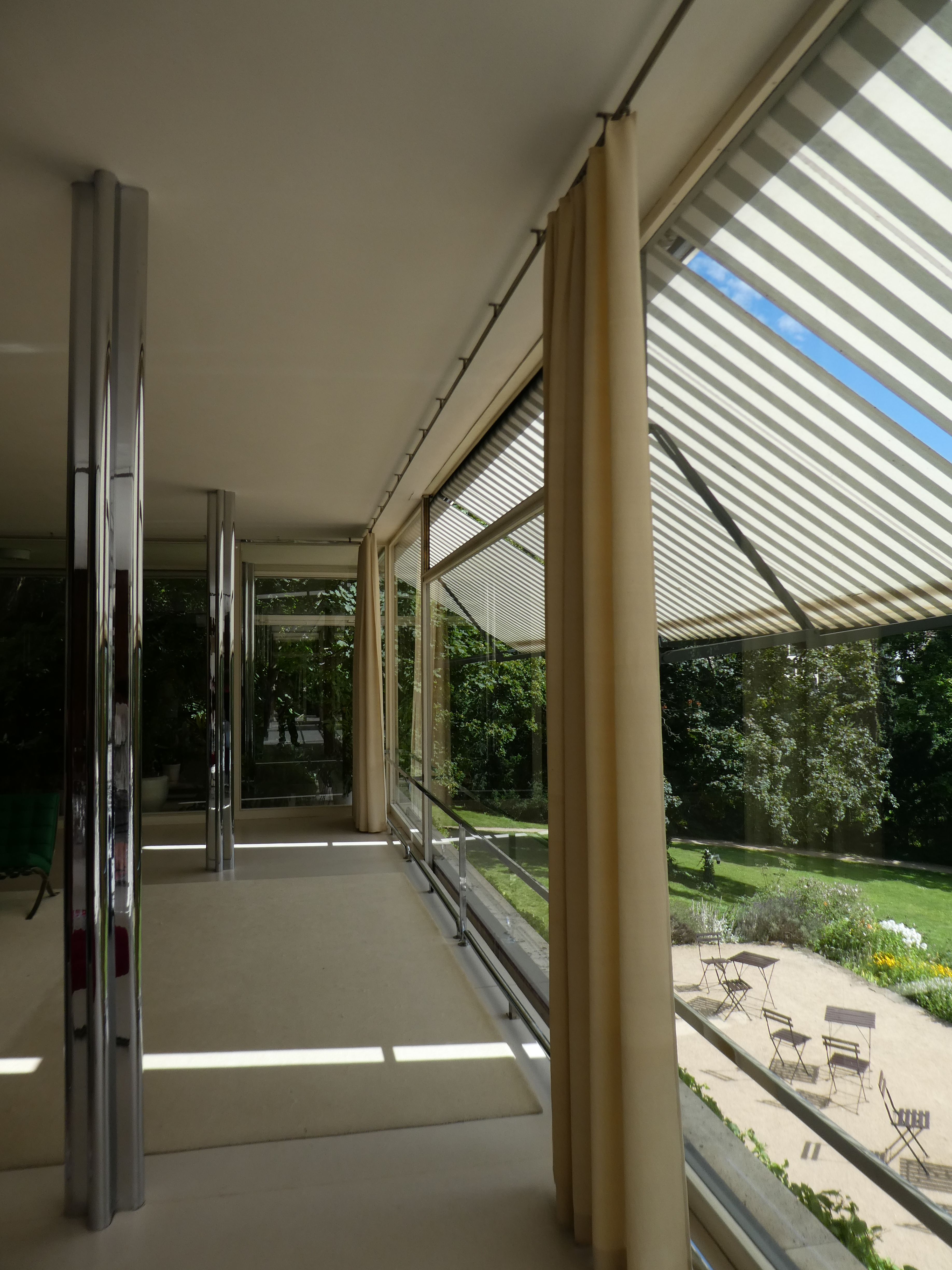


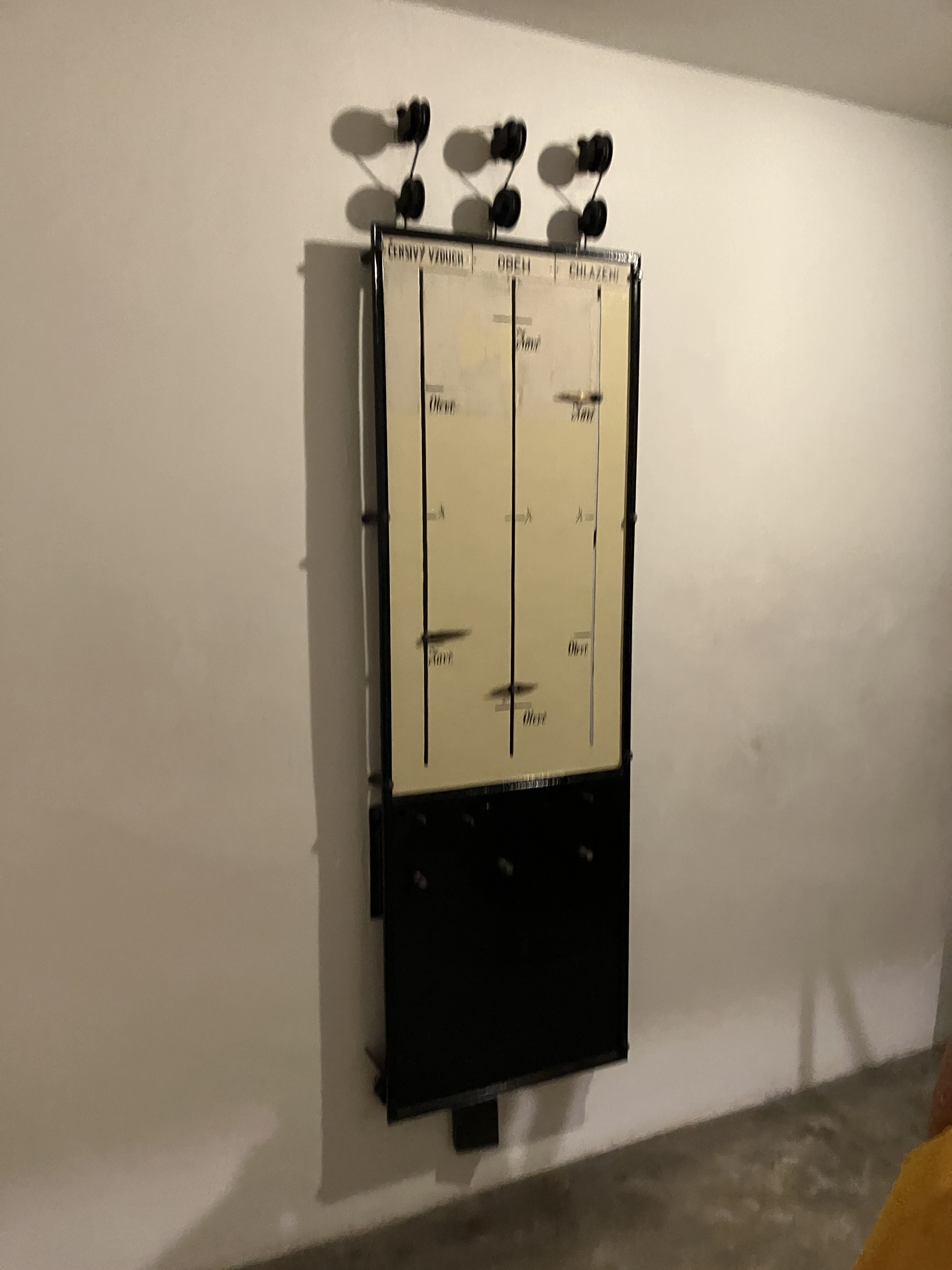


We were told that when the German Gestapo occupied the building during the second world war important features of the building were screened off to prevent damage. When the Russians came in afterwards the use of the house by Russian Cavalry led to windows and doors being damaged. The patching up particularly of the woodwork is evident.

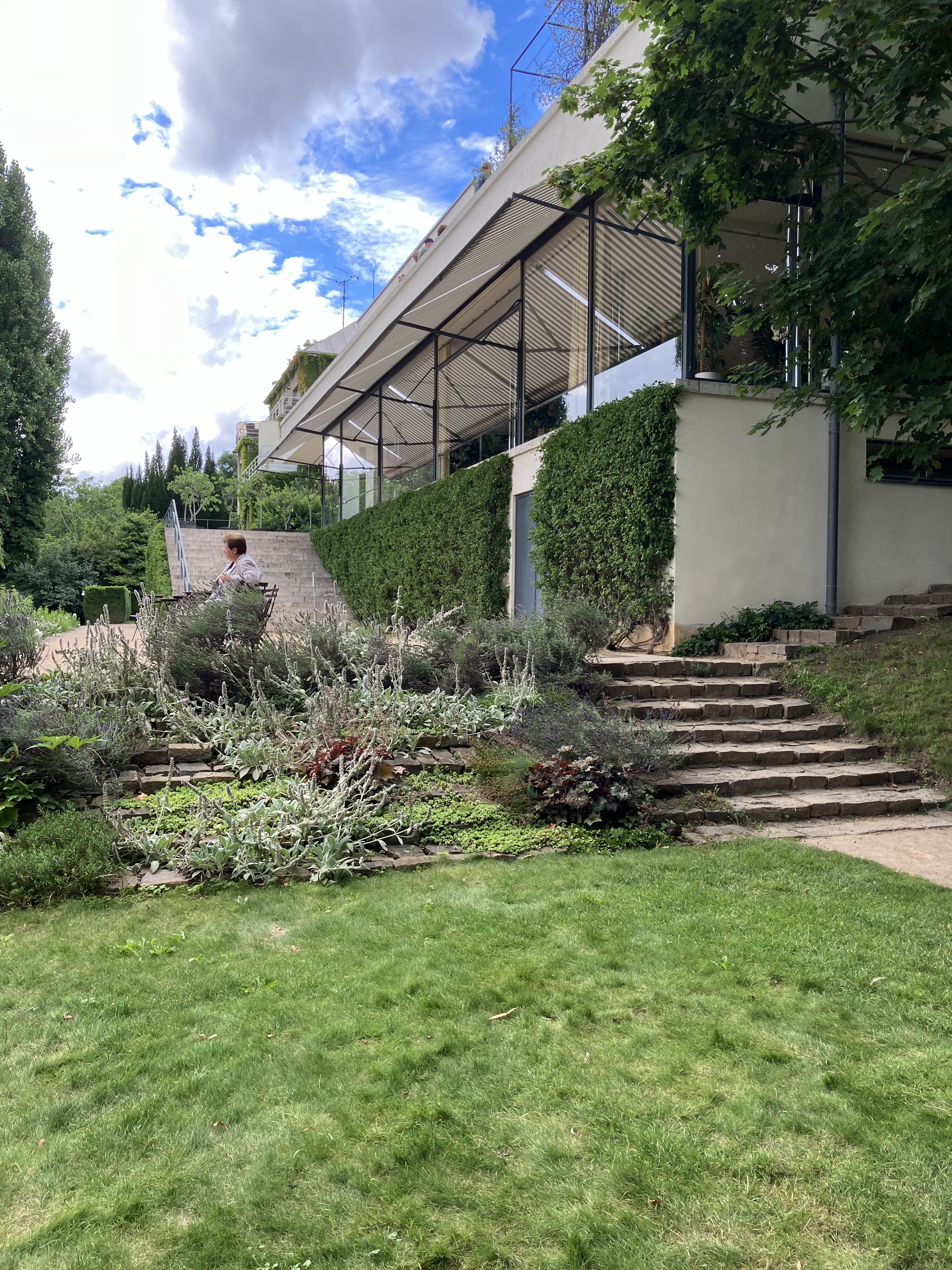
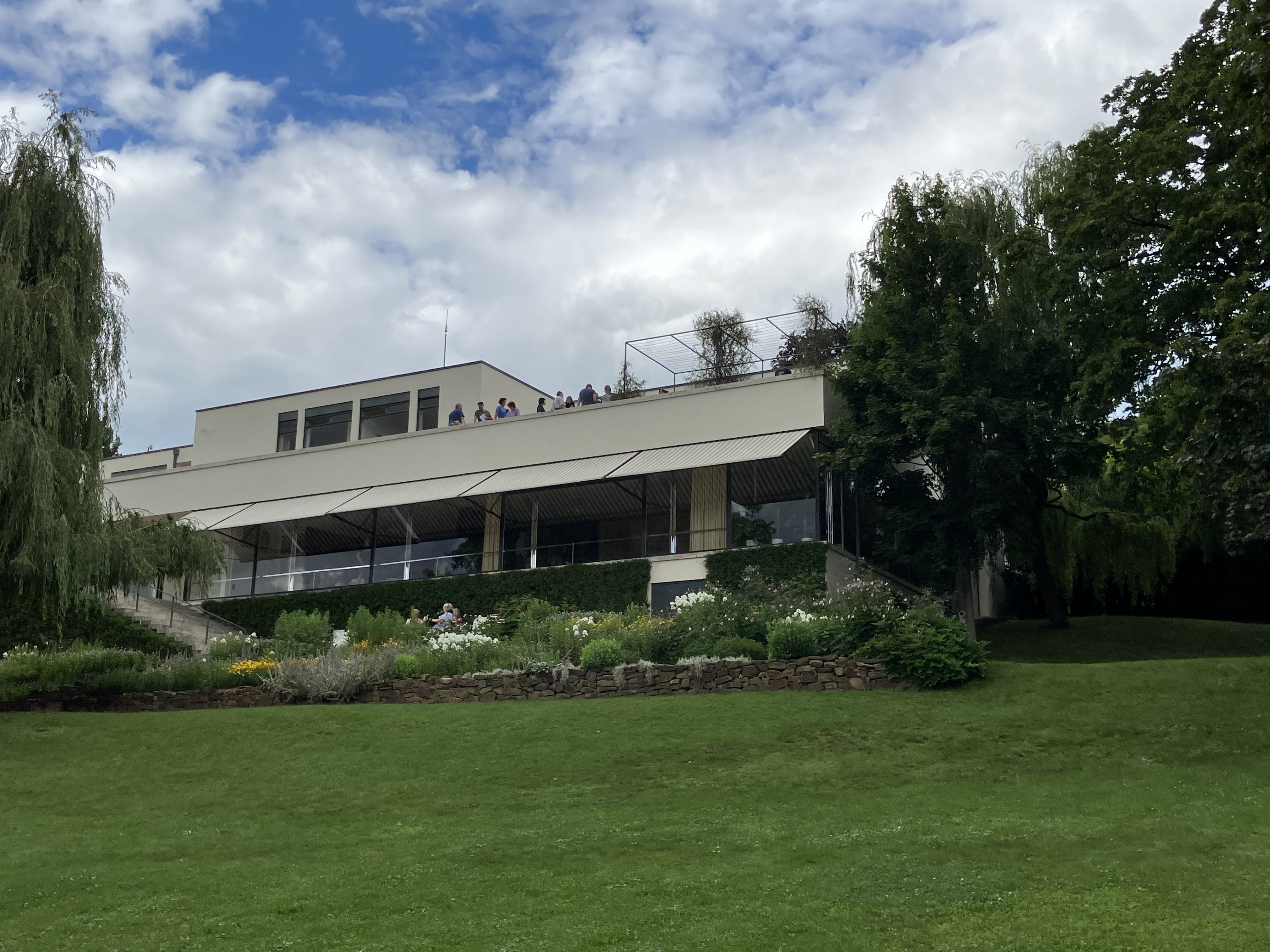
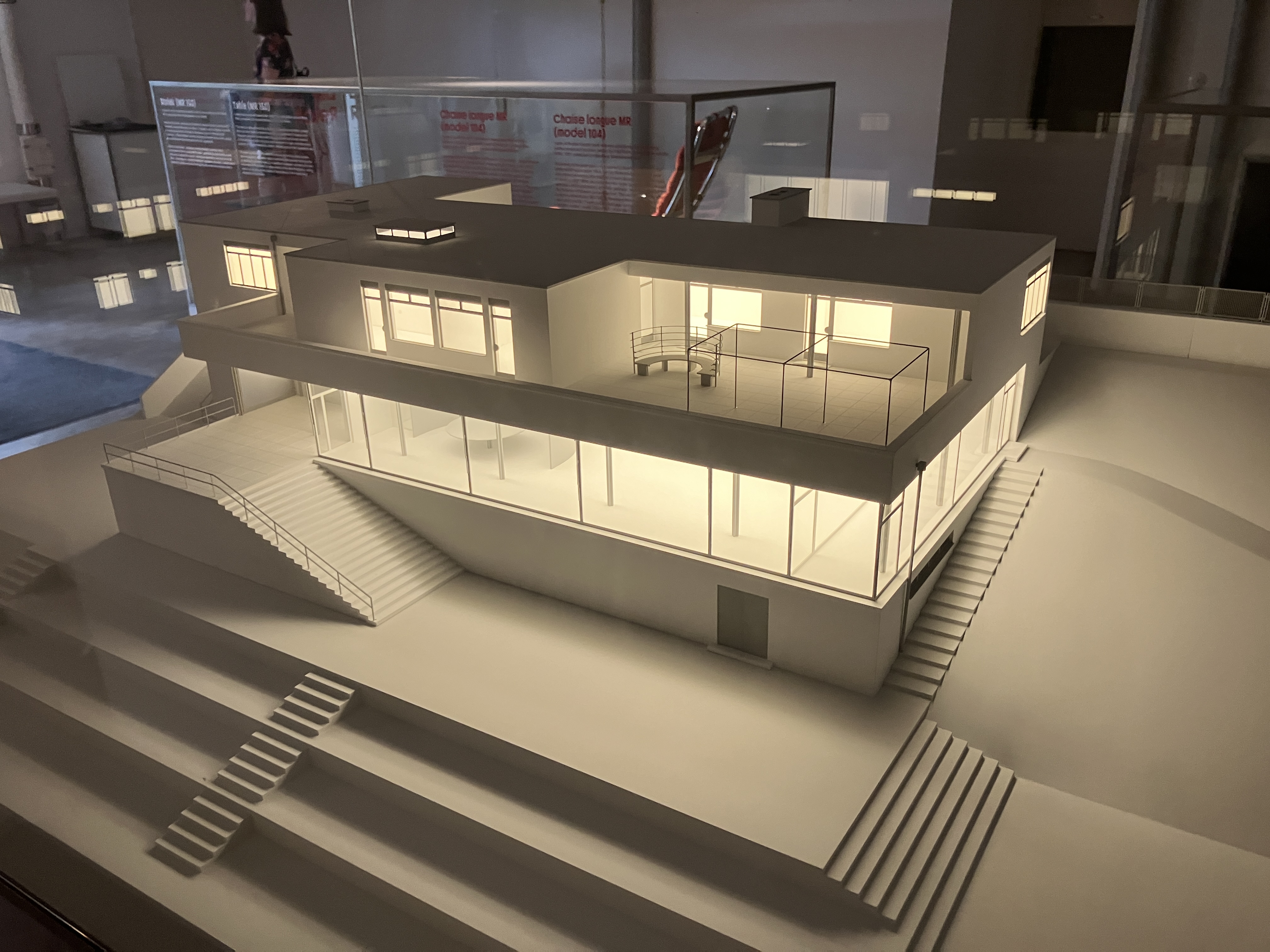
Afterwards we walked around the garden and then made our way to our bikes and cycled back through the city.
Unfortunately, it poured with rain and we got soaked as we cycled through Brno and down to the lake five miles away. We manage to just get there for the 6.15 ferry and enjoyed our damp hour boat ride back. We arrived at a by then soggy campsite, but the sun had come out and the rain had stopped. A hot shower was welcomed.
Thursday 4th July – Brno to Slovakia Liptovsky Kokova
The Camp site was still very wet when we left around 0900 and shopped in Brno at Penny Wise before refuelling and heading east over the border to Slovakia.
Around Trenton and Zilina there were lots of road improvement works that led to delays. At Zilina we inadvertently followed a new piece of motorway that went out of town westwards before turning back on itself and leaving us in the suburban streets of downtown Zilina.
Once we got clear of Zilina the traffic cleared and the mountains loomed ahead of us. We became more excited and checked out walks for tomorrow before settling in to our camp site.

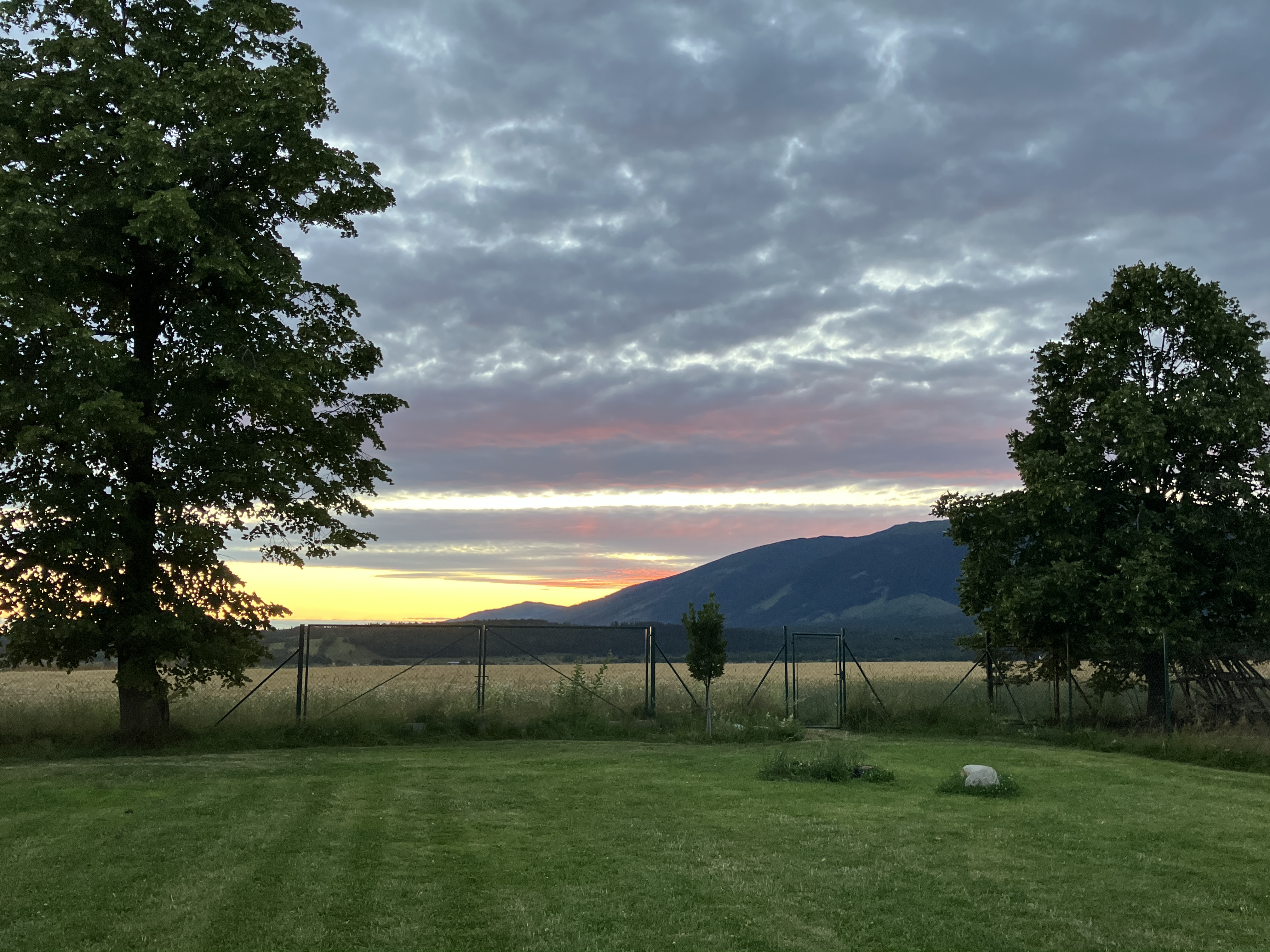
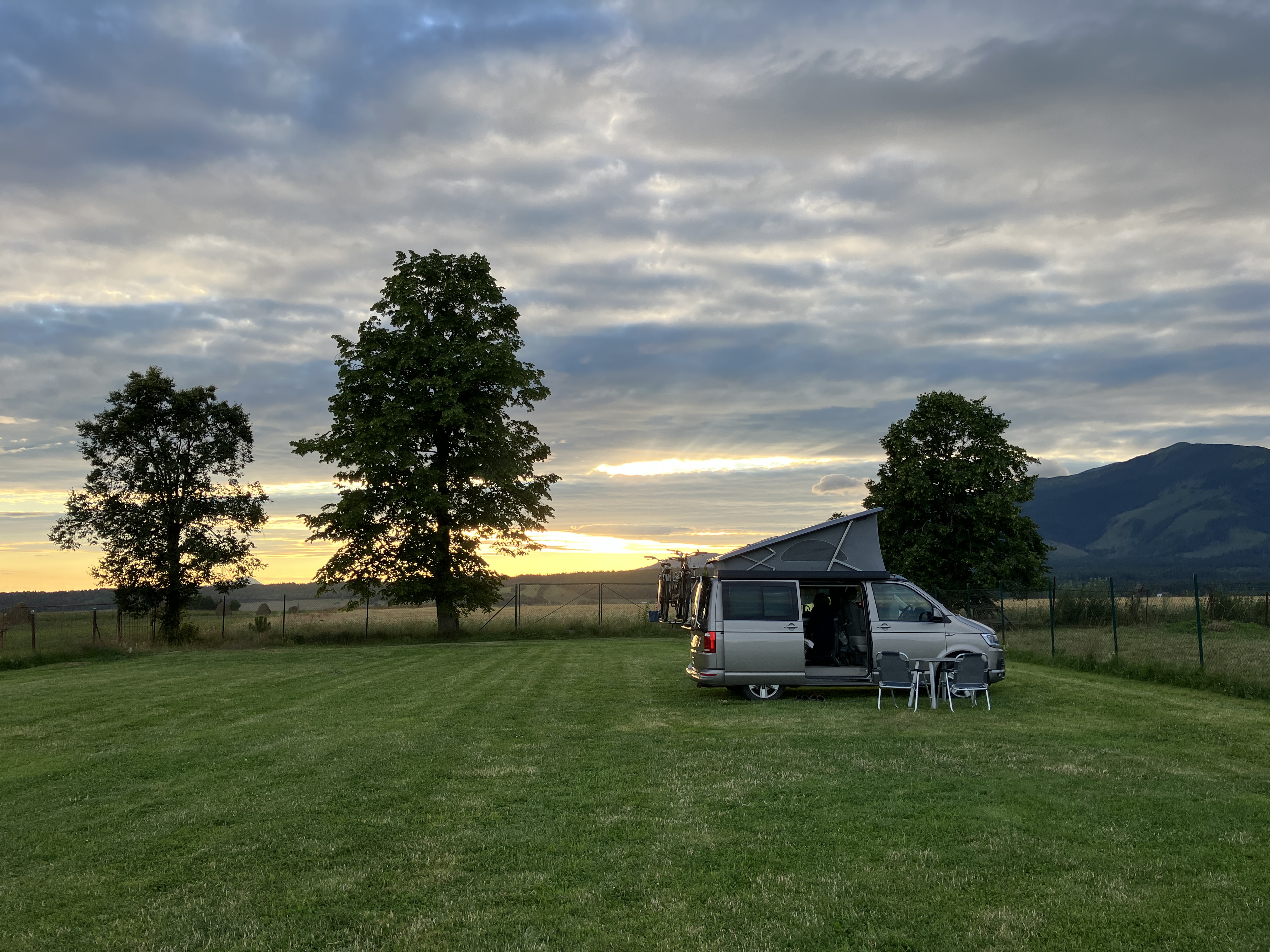
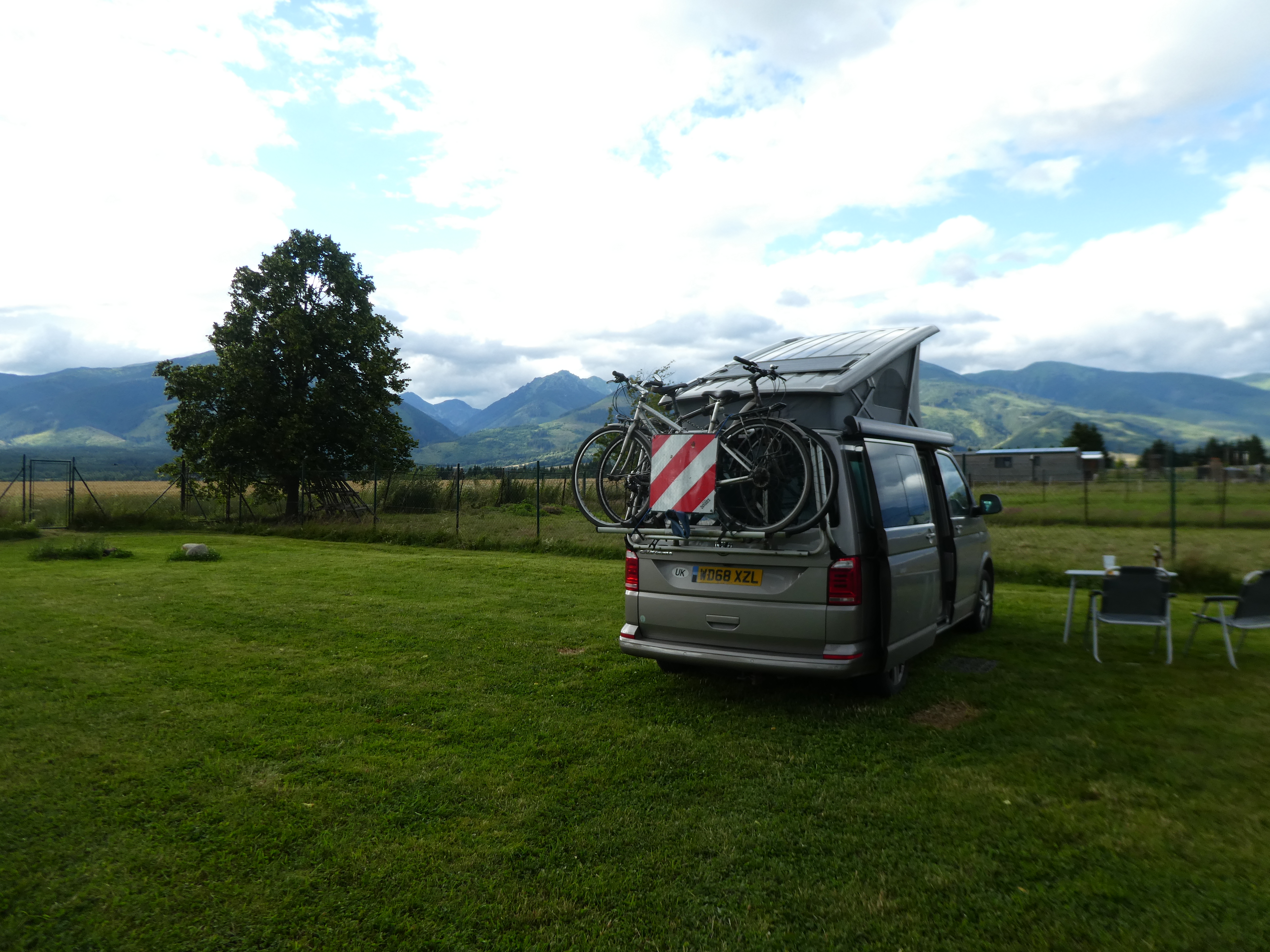
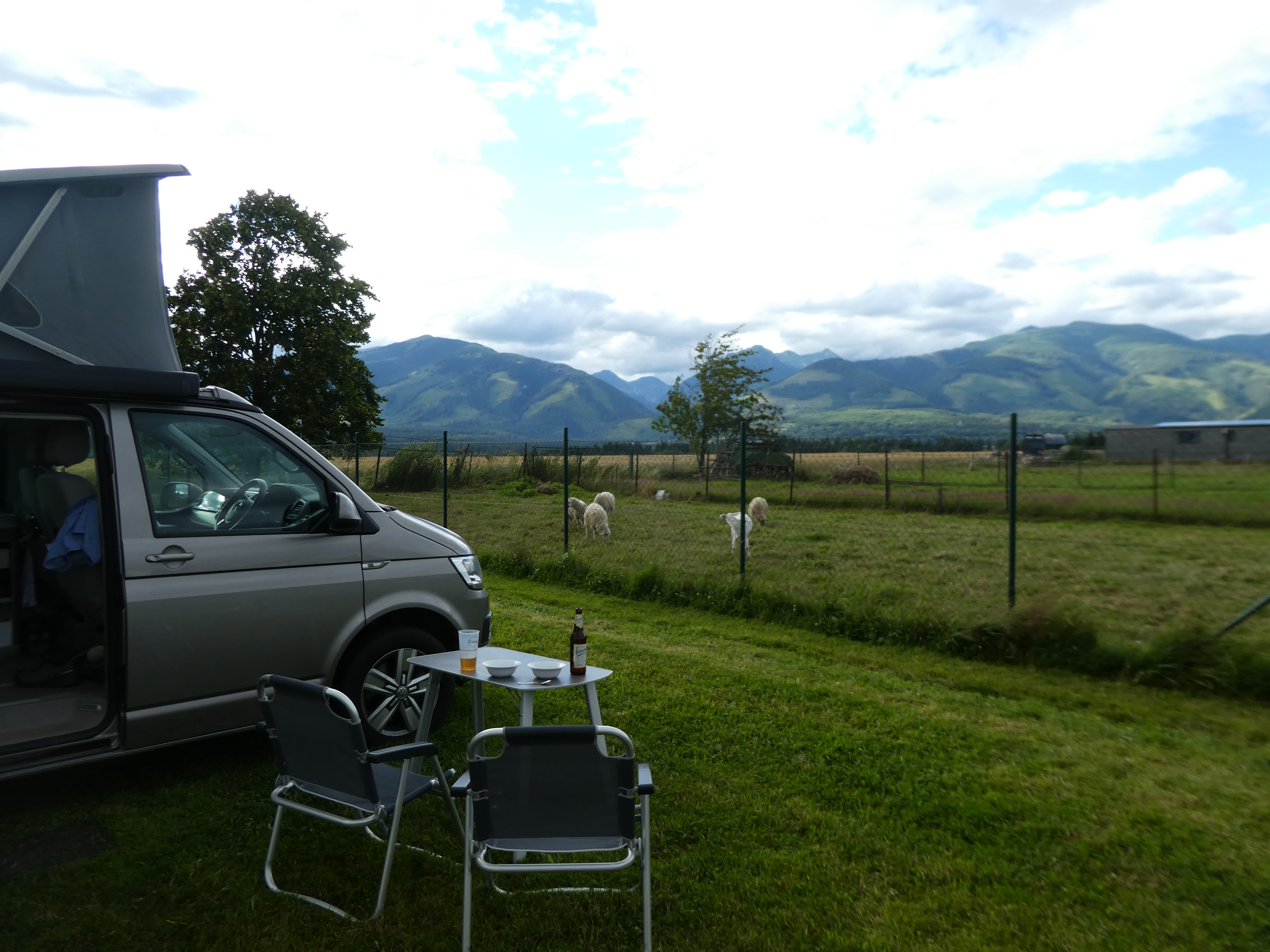
Our campsite in Liptovaska Kokava with just one other tent and amenities to match a B&B plus 360 degree views of mountains. Jana the owner wanted to speak German so we were introduced to the site and the area in German being shown maps and give directions about anything we wanted to know. It was lovely.
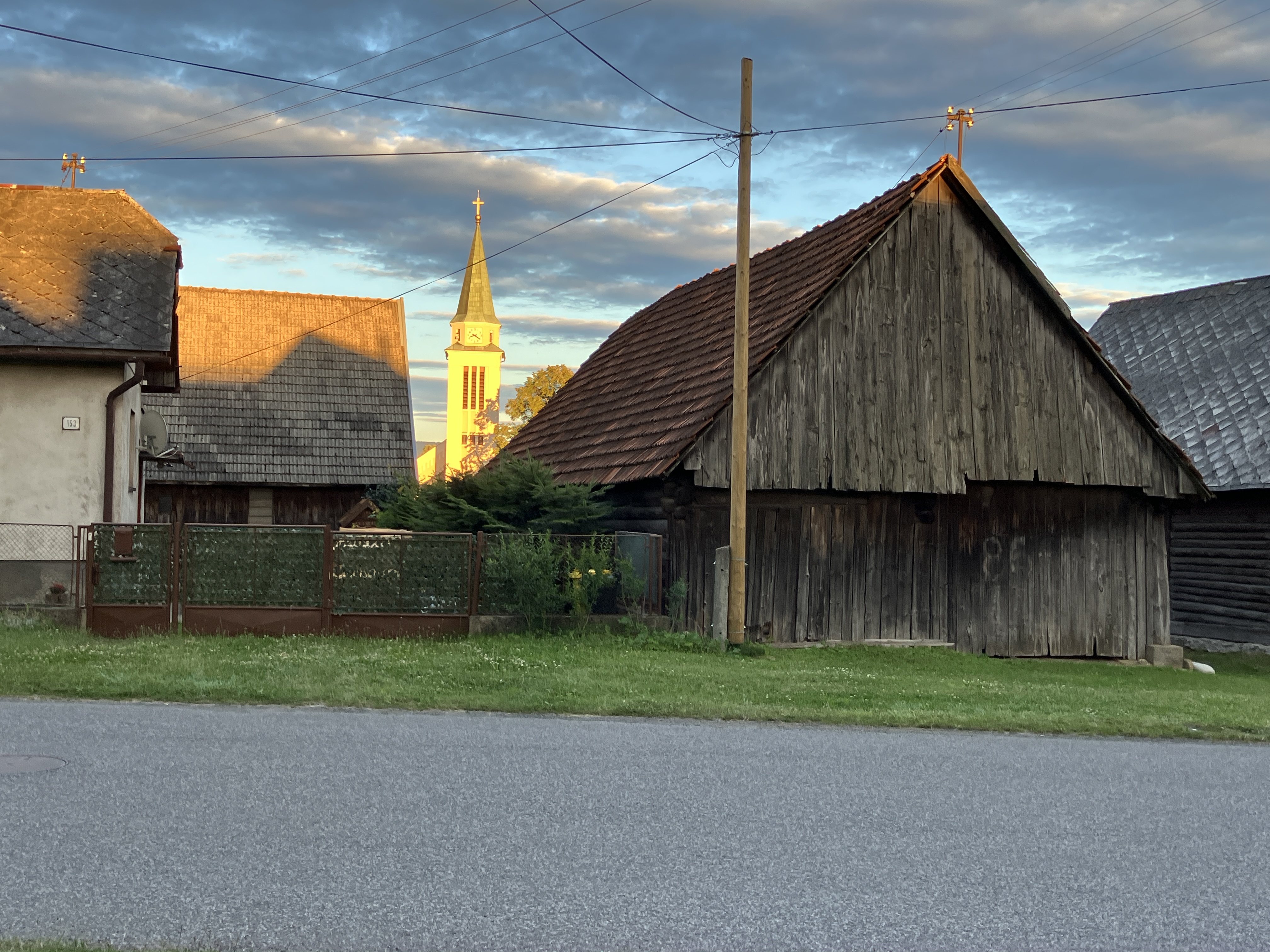
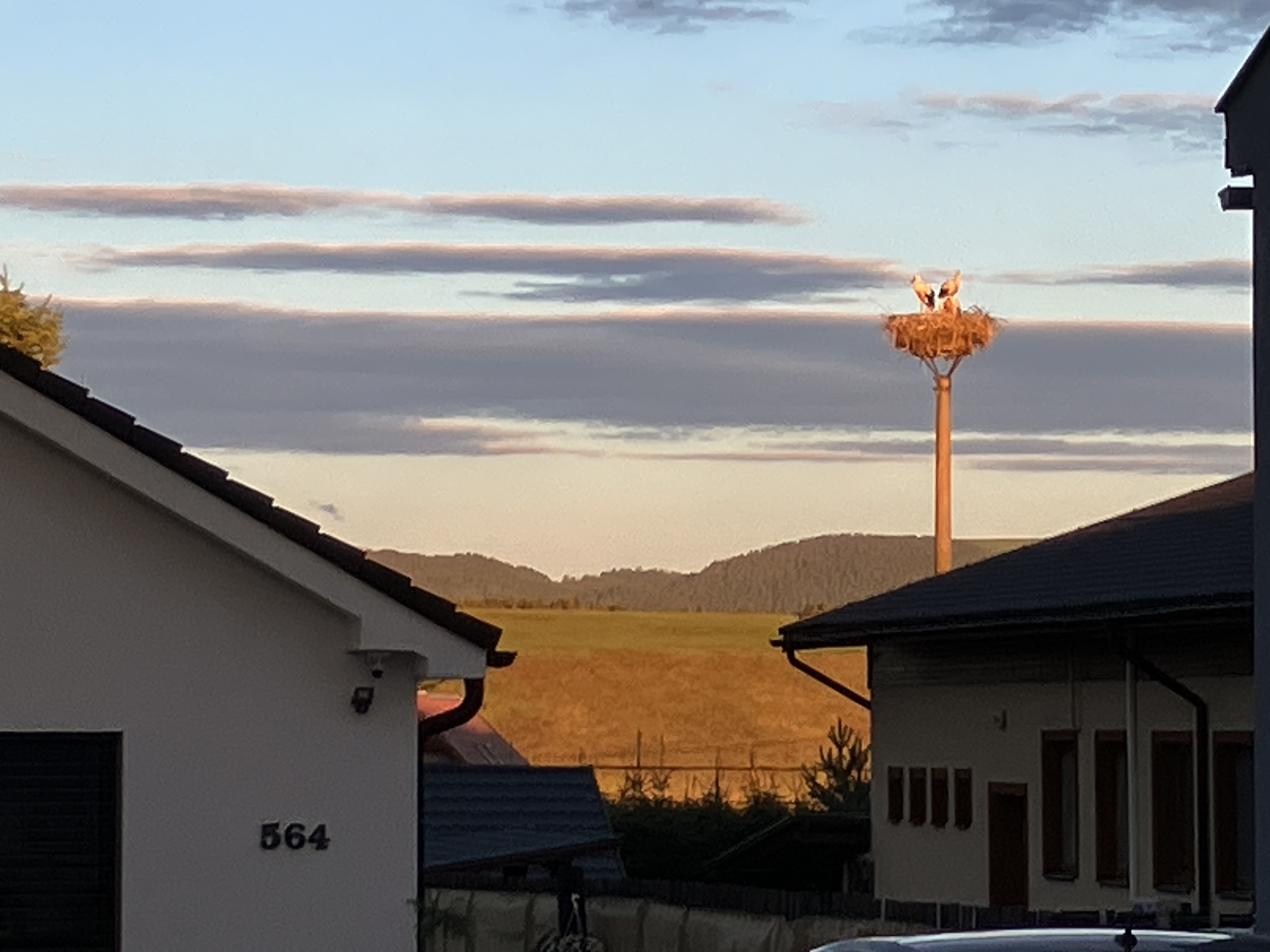

After settling in we went for a stroll around the town finding the shops and bars. The sunset was stunning.
We went to clean our teeth only to find that our German neighbours who had had the site to themselves until we showed up were occupying both showers their tooth brushes one In a pink glass and one in a blue glass at the two sinks. They themselves showering in the two showers.
There was a silence, hands reached out from behind shower curtains each retrieving a towel hanging up outside and then a dressing gown, before they scurried off to the dining room next door to get dressed in the dressing gowns and slippers. They sheepishly came back and retrieved their his and her toothbrushes and water glasses before leaving us to clean our teeth and trying not to laugh out loud.
Friday 5th July – Tatra Mountains
We woke to a cool sunny day.
Jana came around the site enthusiastically telling us about an international folk festival taking place in a nearby village.
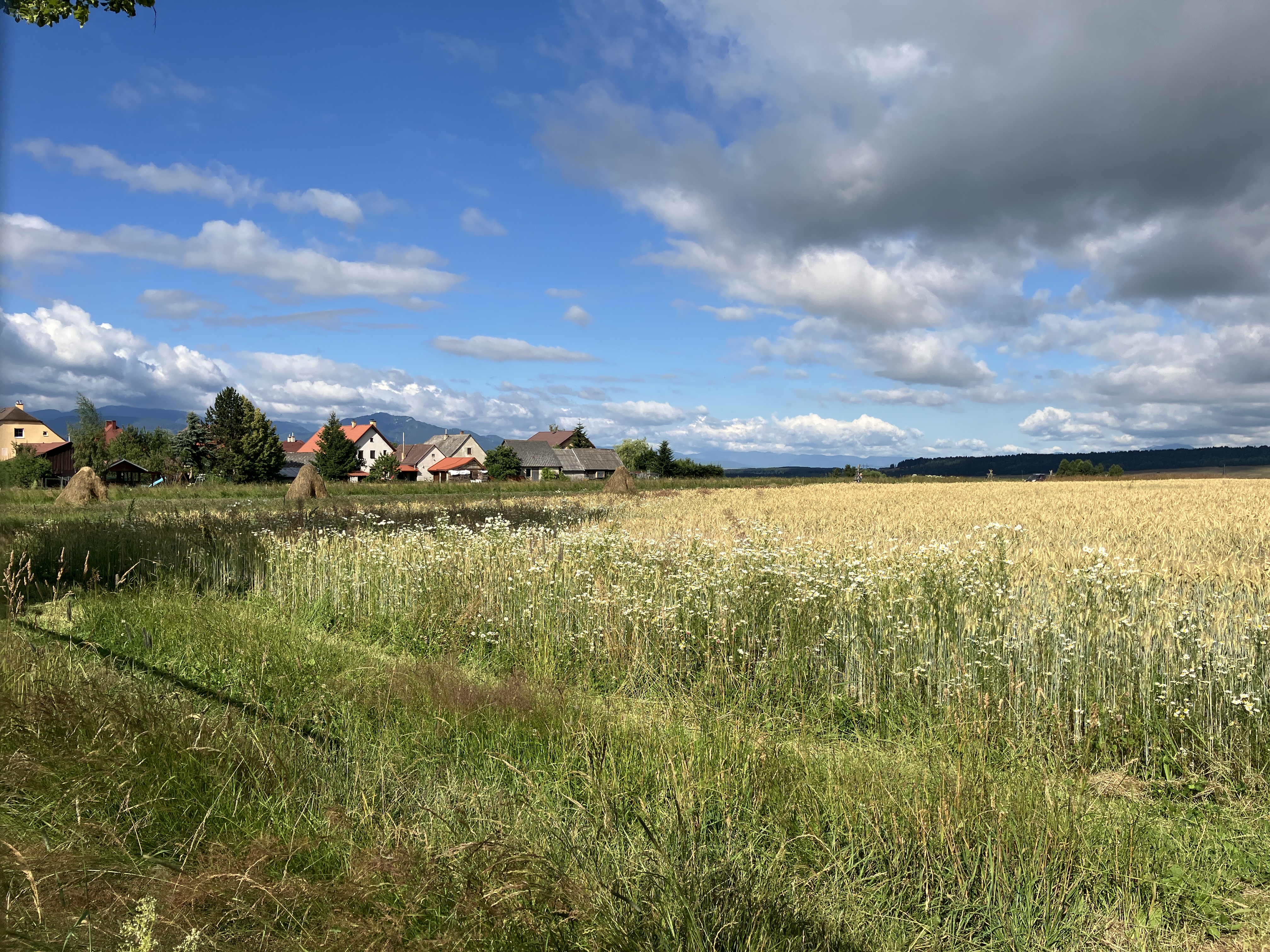

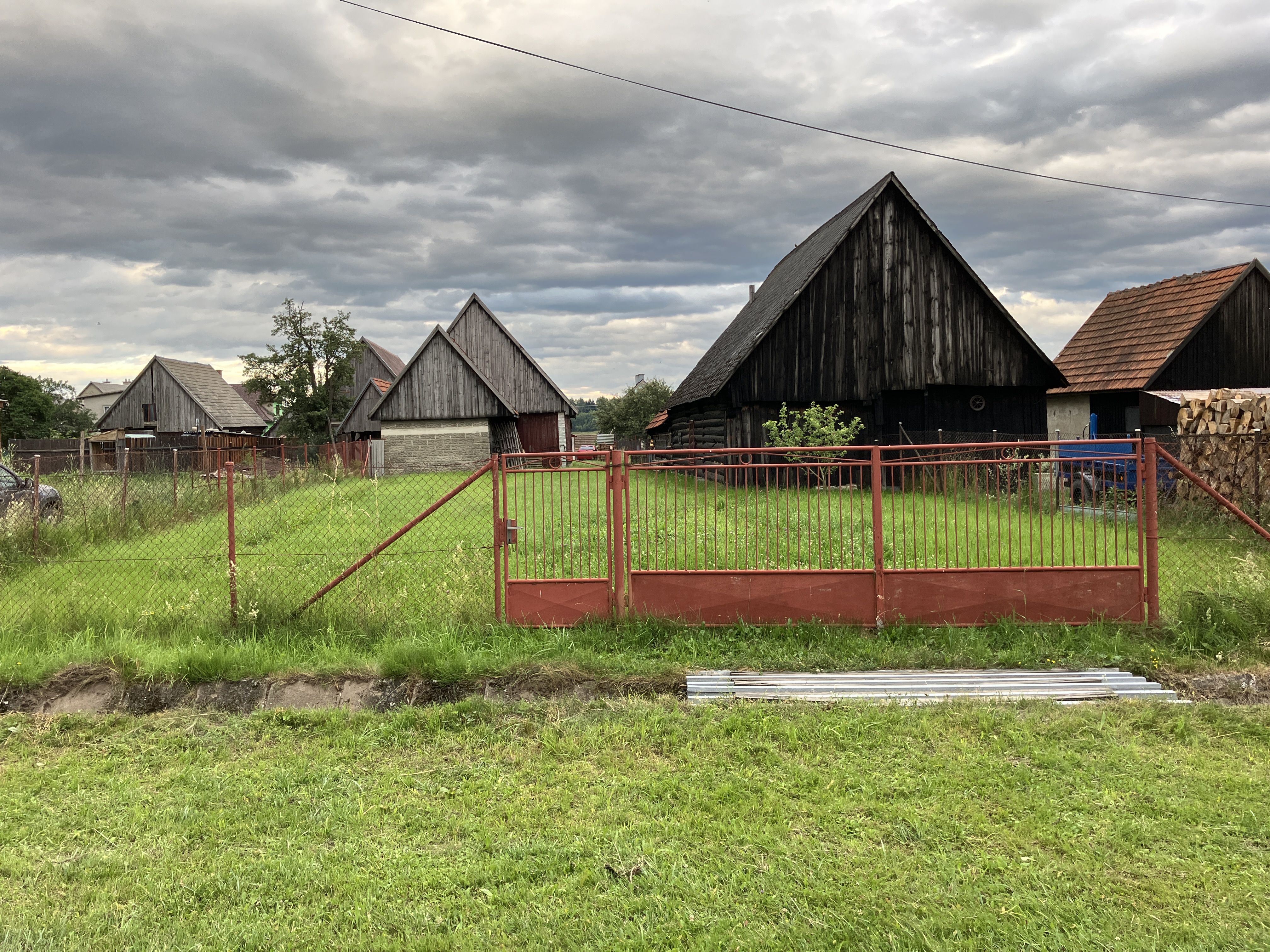
We knew we wanted to walk in the mountains and the starting point was too far away, so we decided to move the van and drive to the beginning of our walk in the Mountains at Racover.
From here we walked for four hours up the mountain valley to some lakes. It was hard going but the steep stony track turning into a steeper stony path leading up into the high alp was lovely.

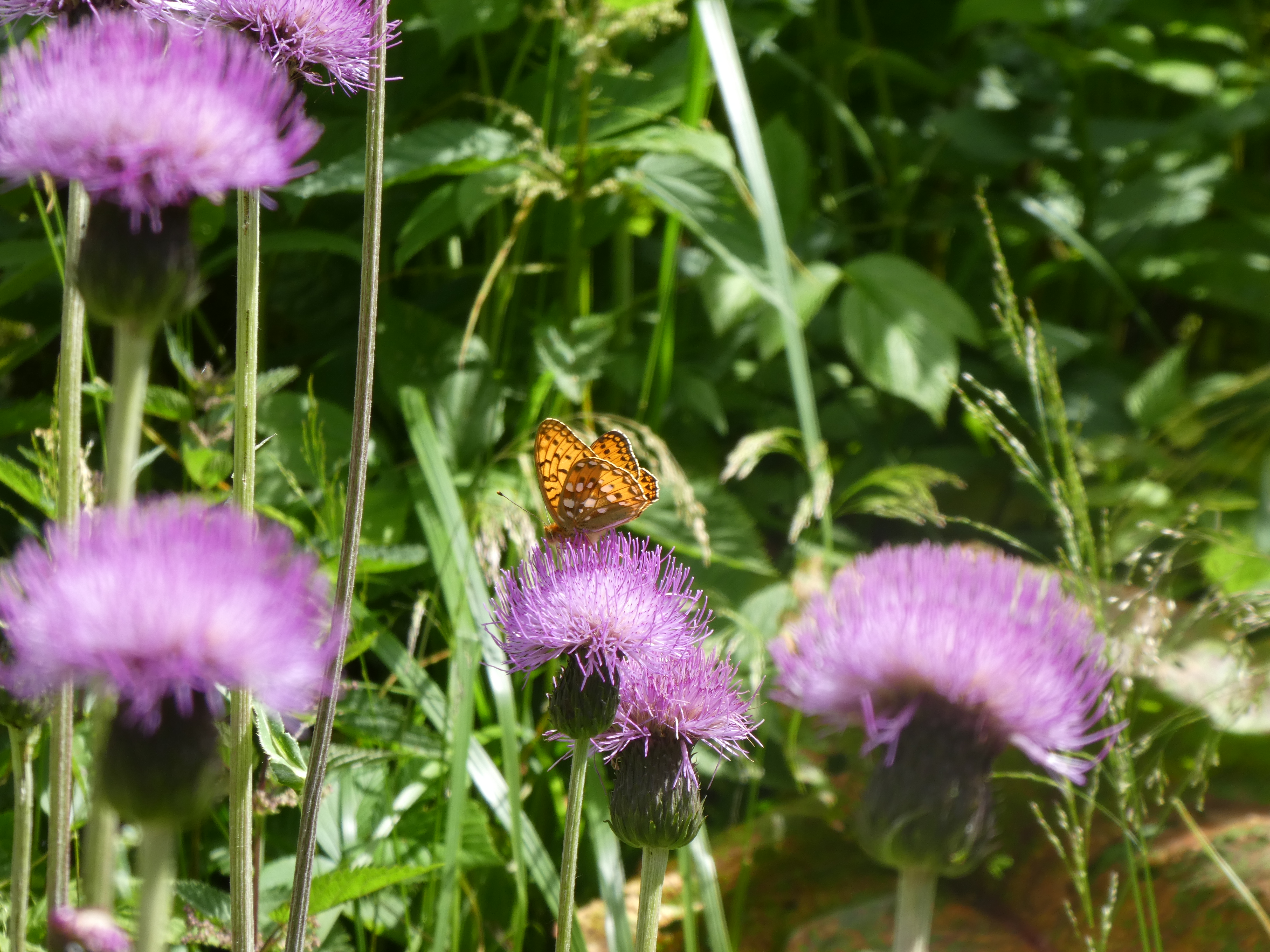
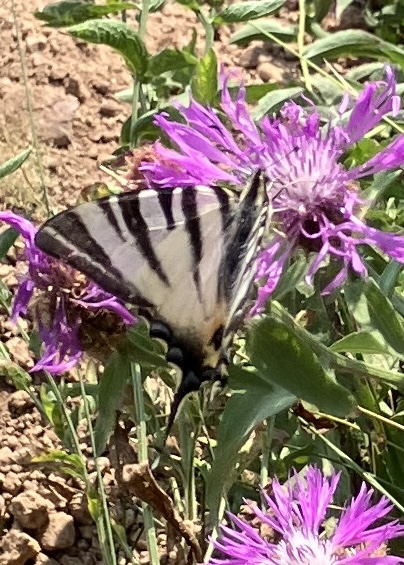
There were loads of butterflies which seemed to be newly hatched, lovely flowers and few people.
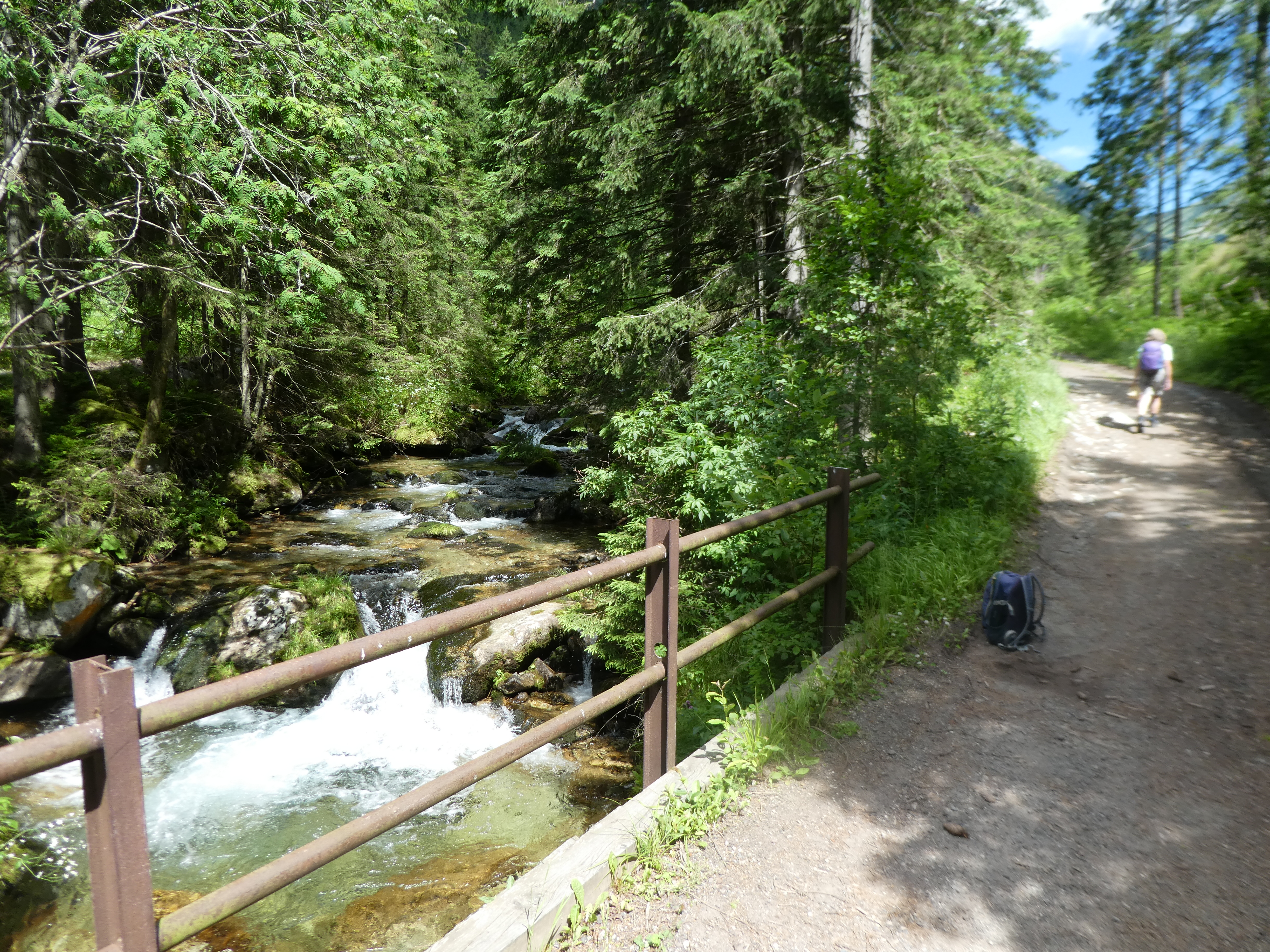
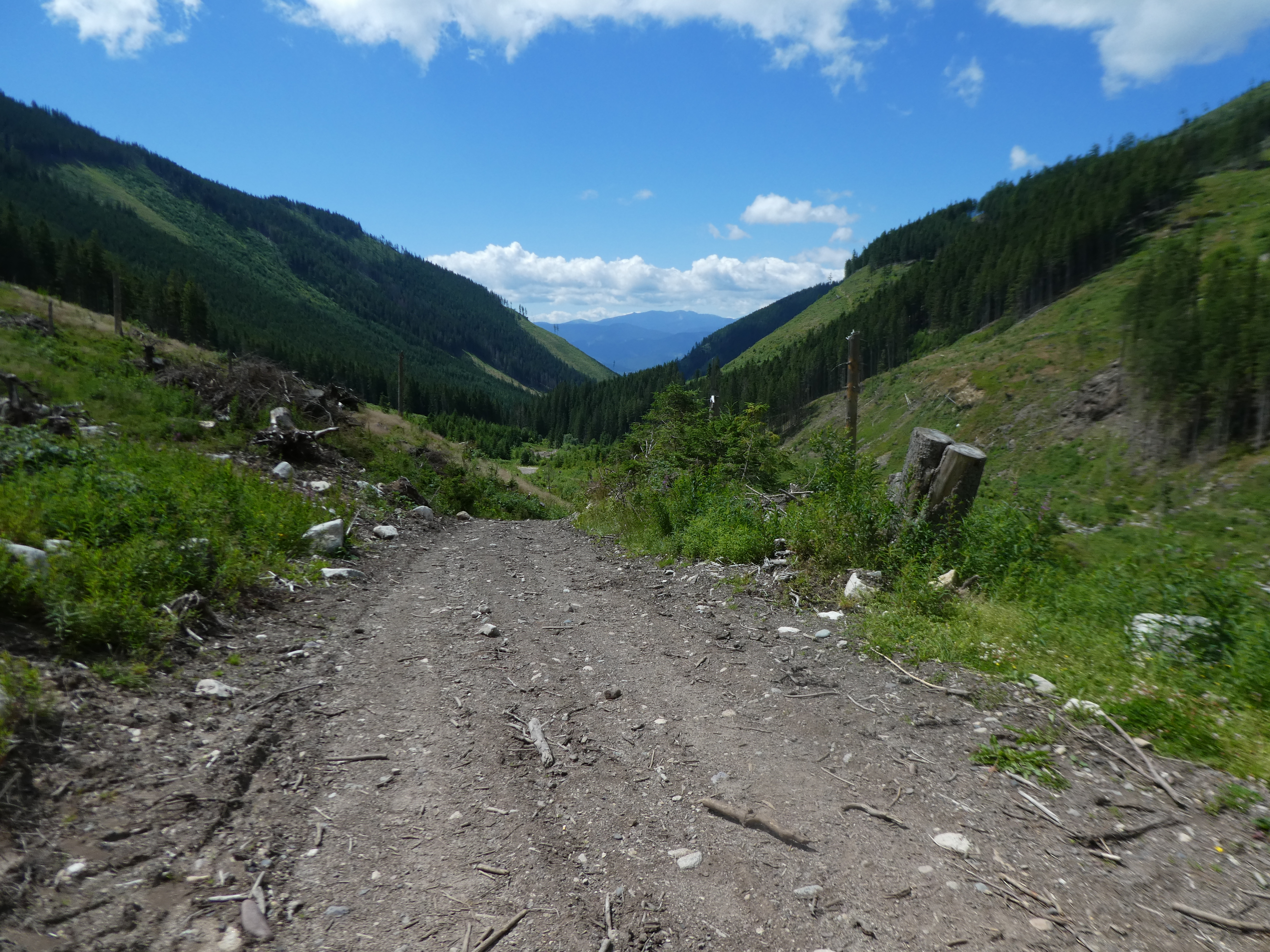
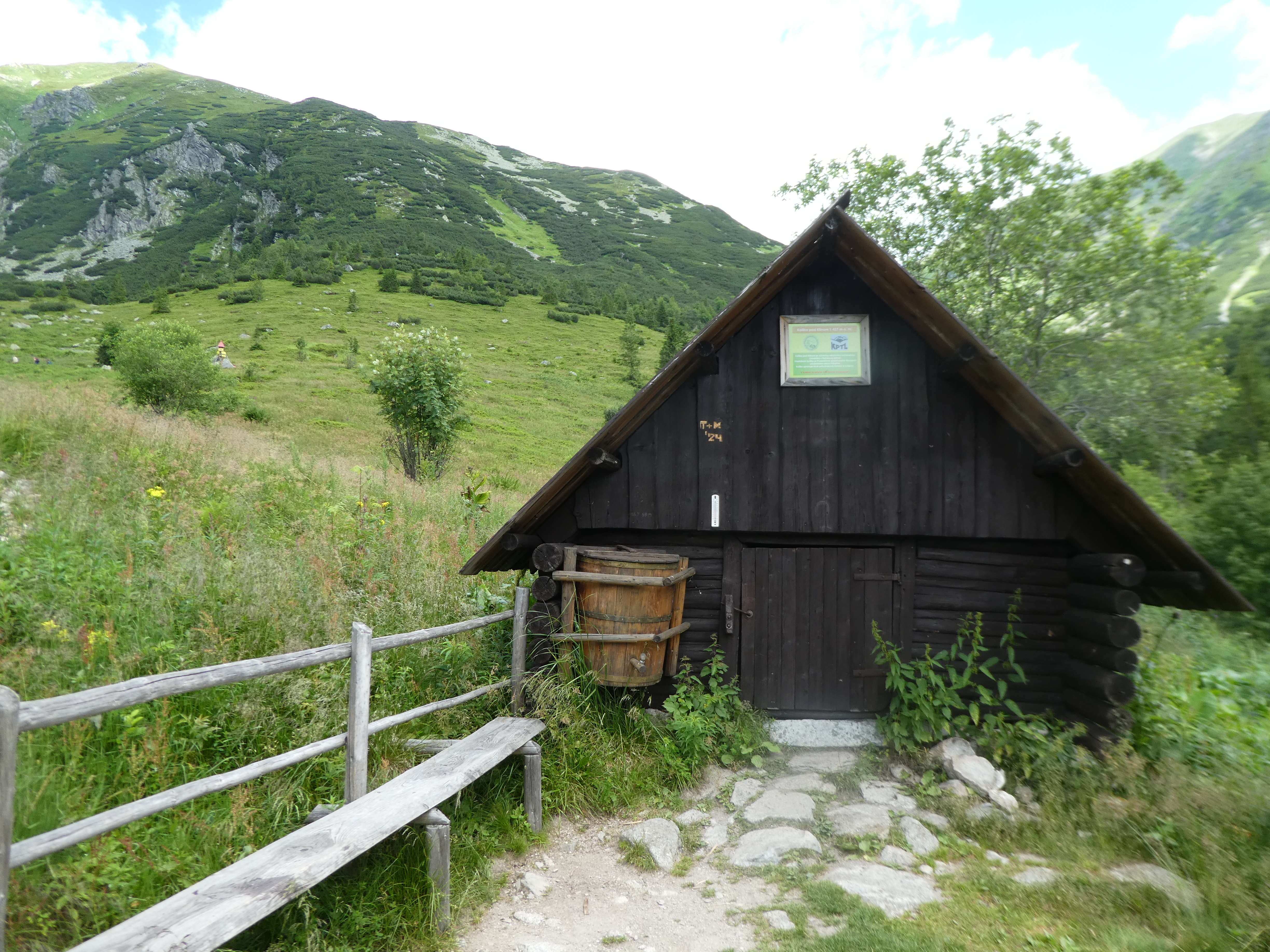
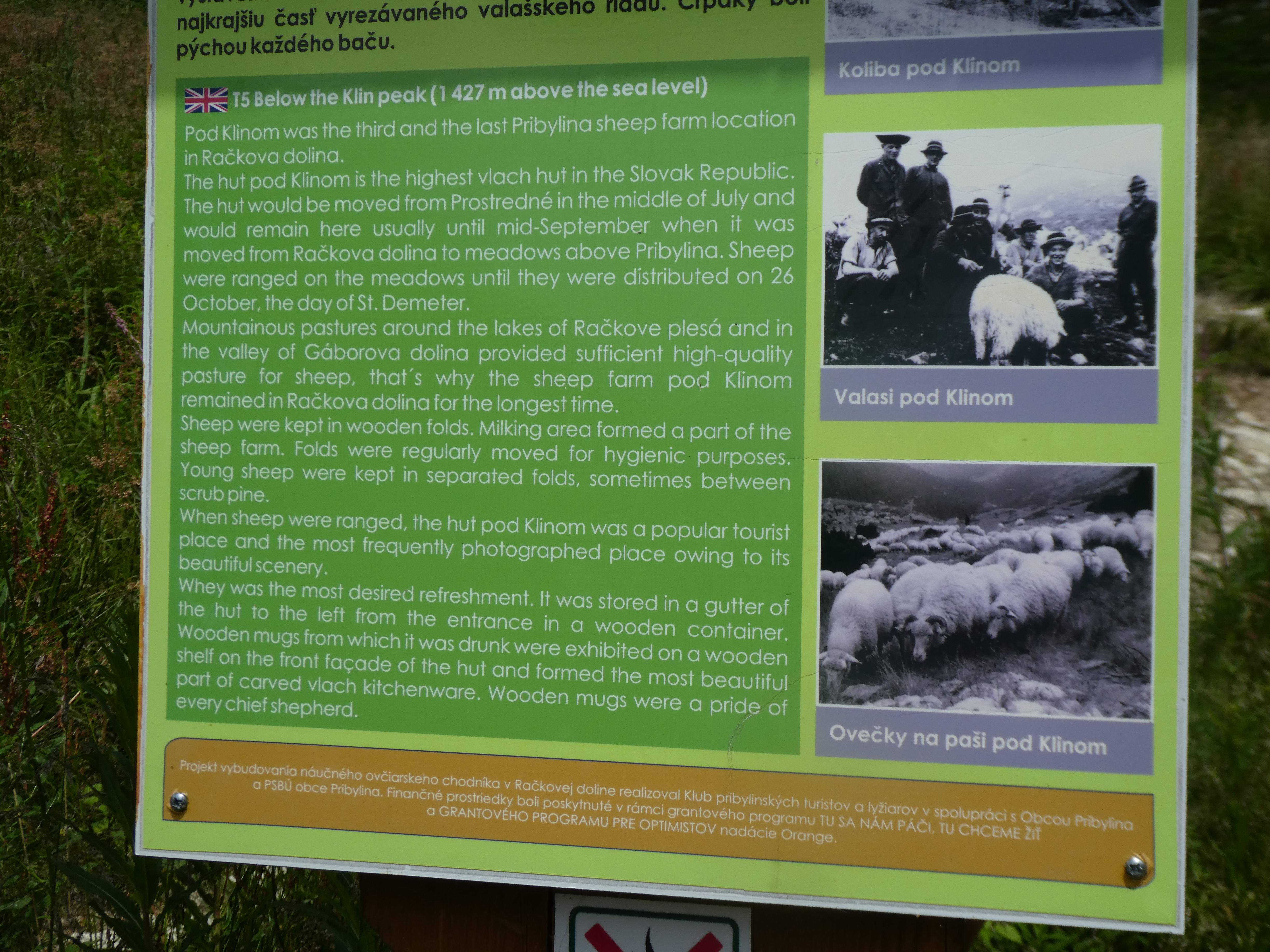

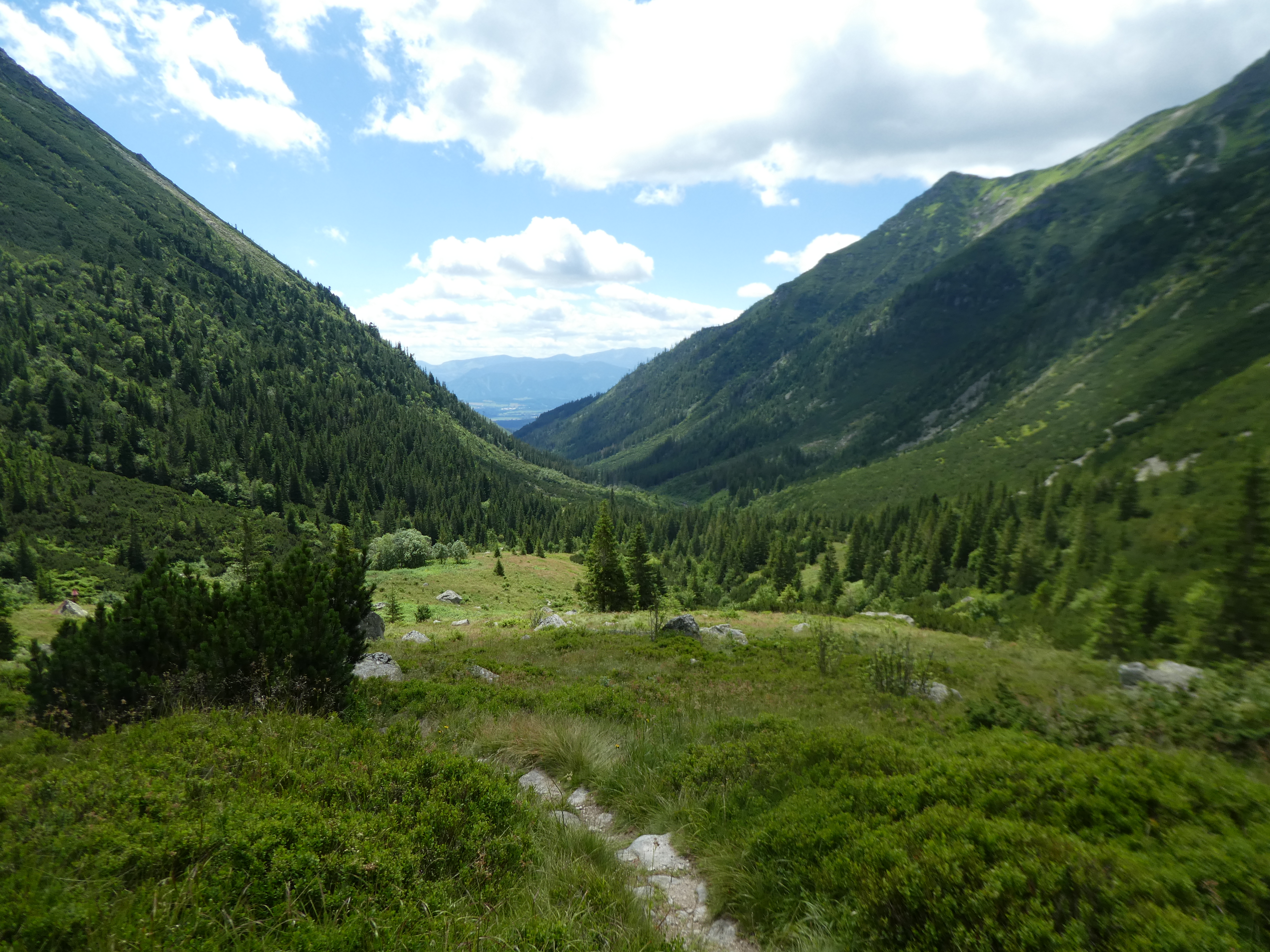

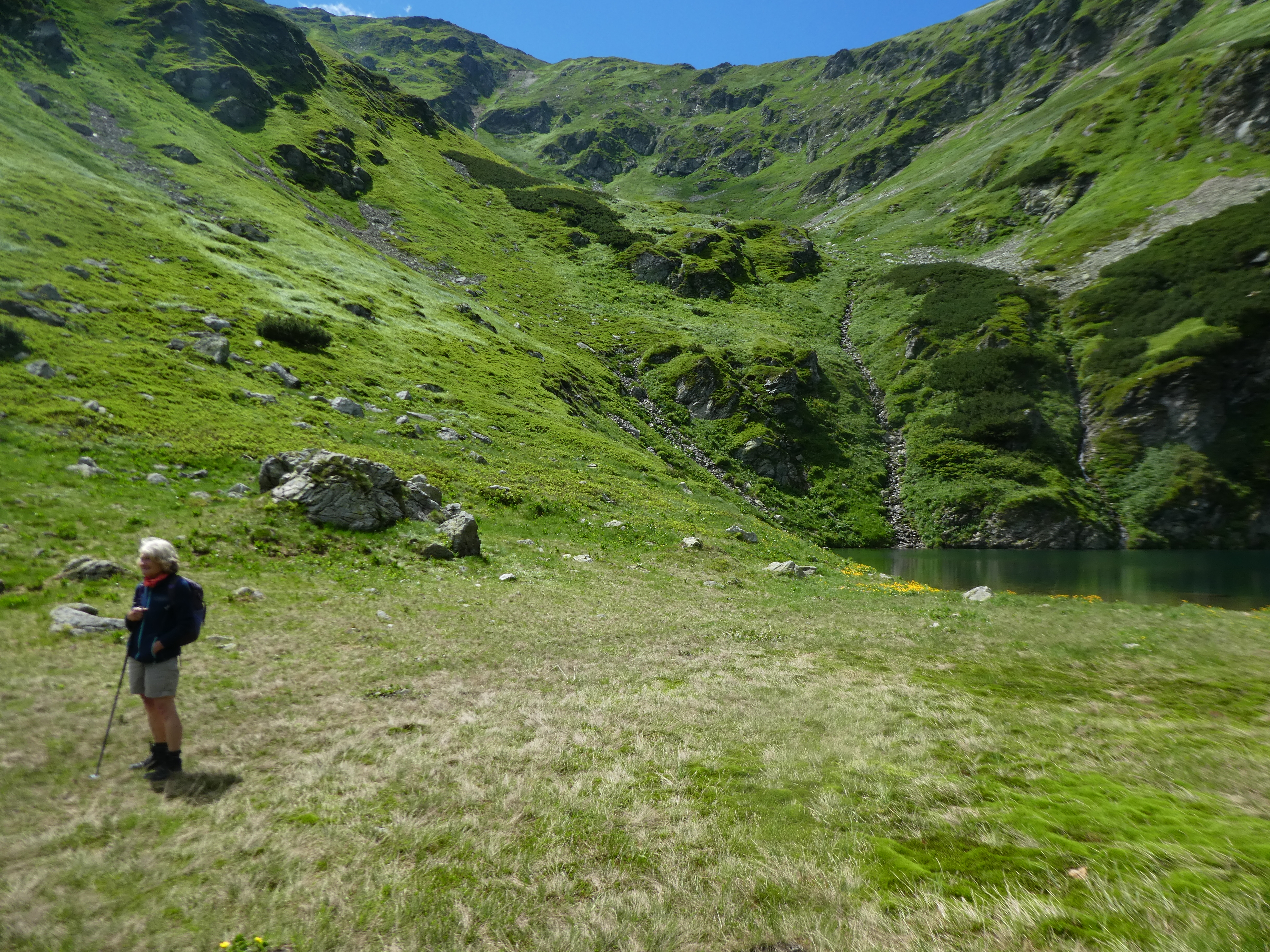
We would like to have gone up onto the ridge but it was another two hour climb and we didn’t have the energy. We had lunch by the lake and went for a paddle and as the air cooled we joined others in going back down.
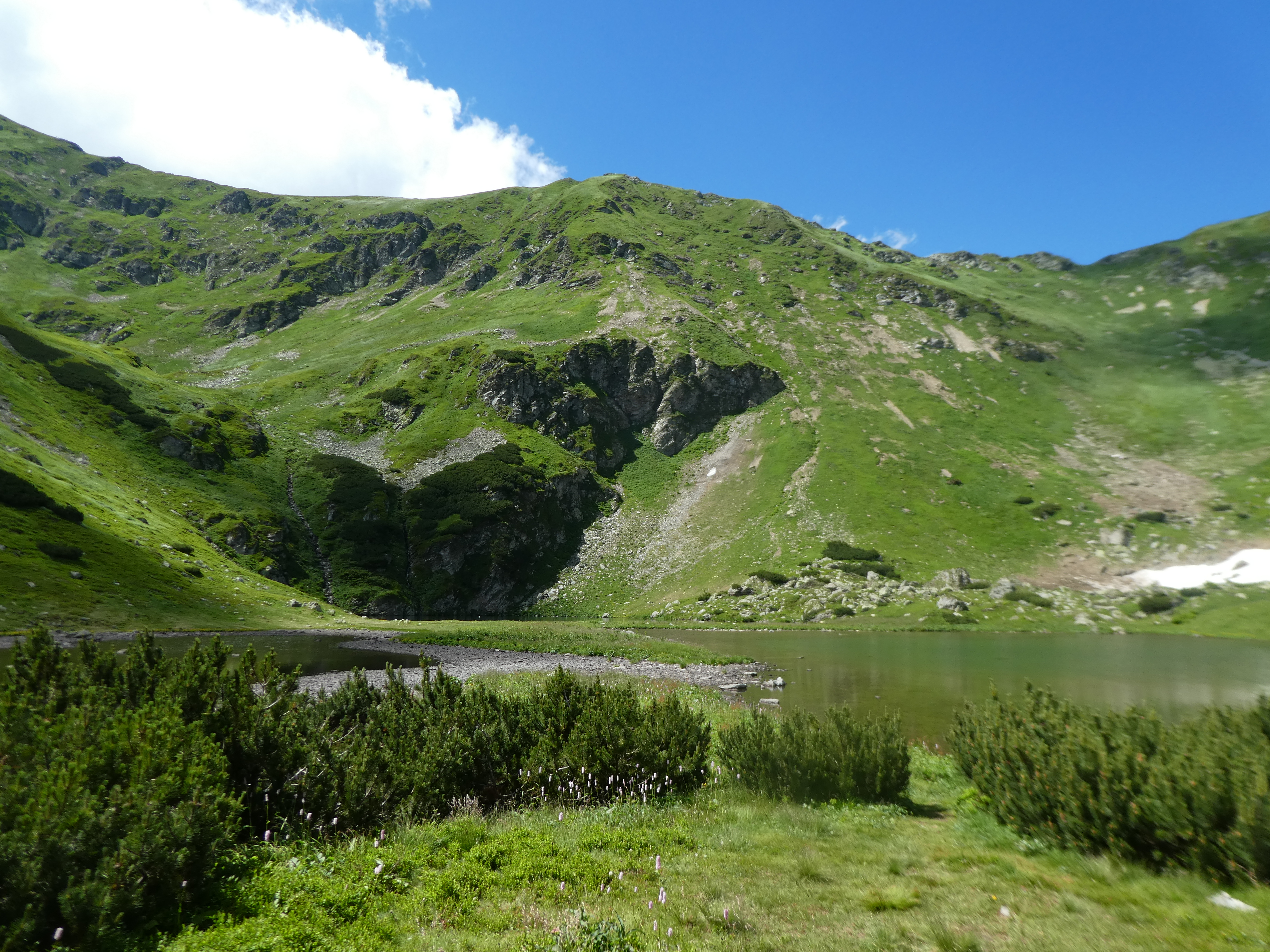
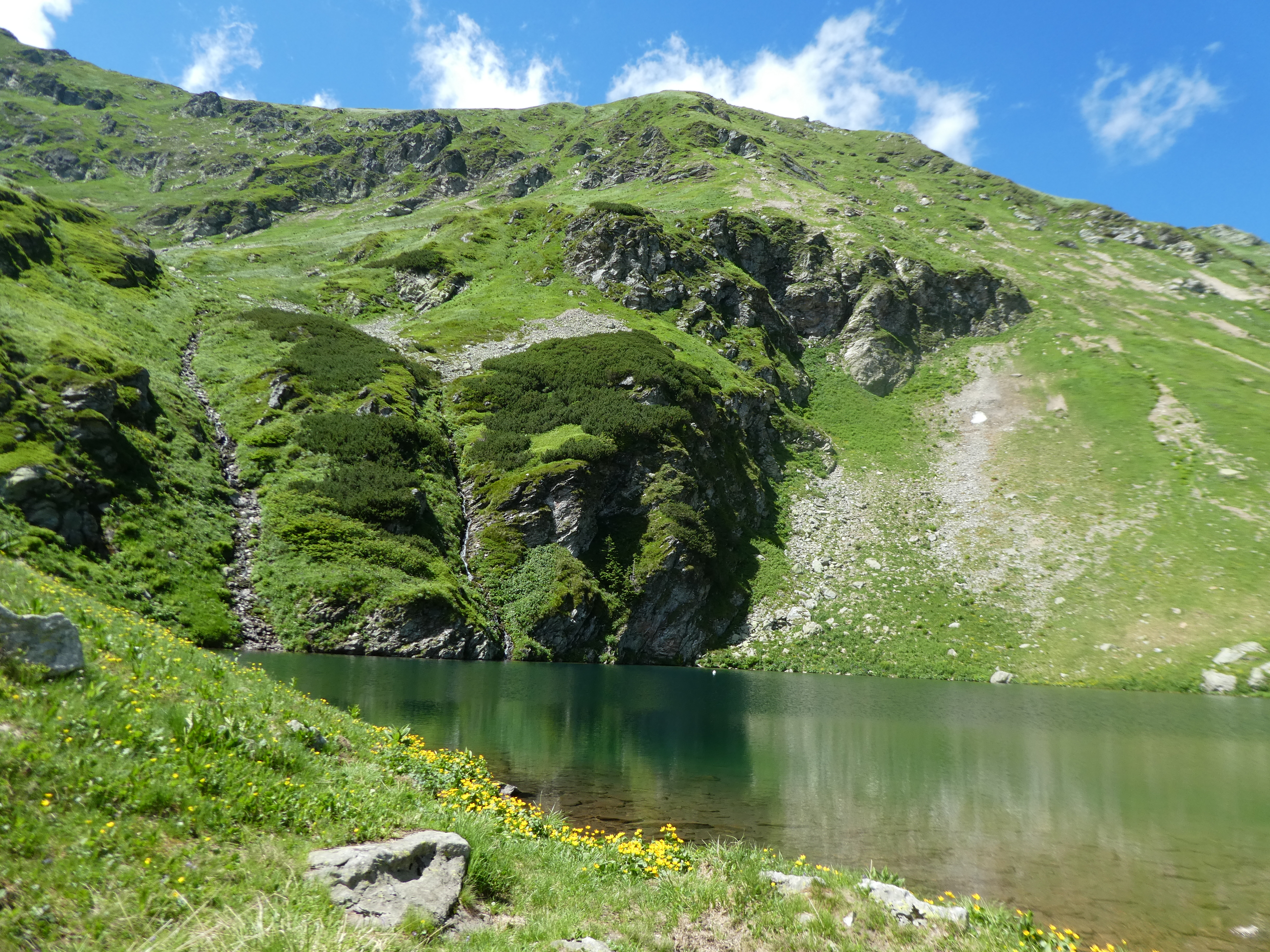
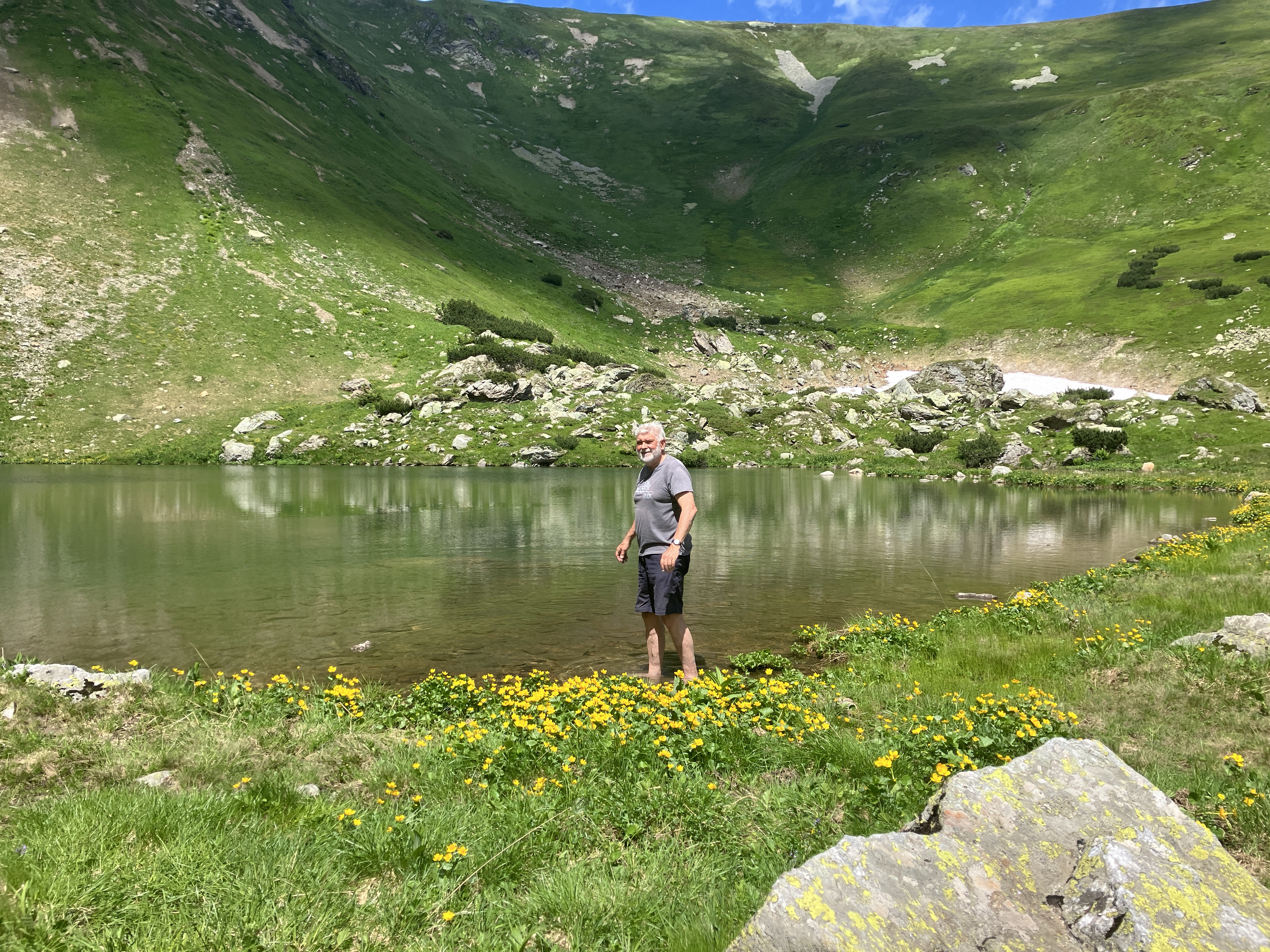
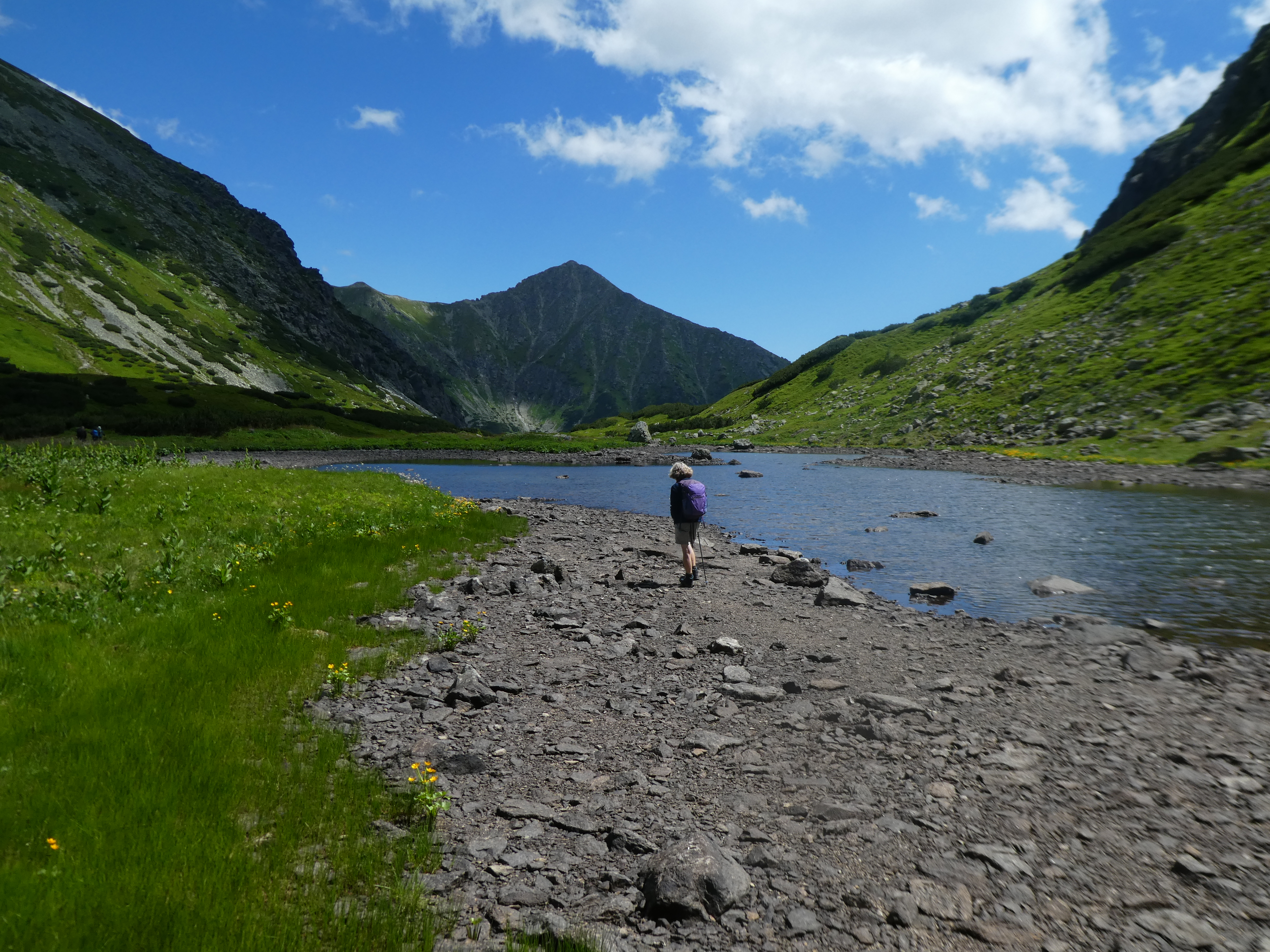
By the time we had descended back to the van we were tired and stiff, but happy.

Back at the camp site there were three more vans on the field, which we thought should make interesting times in the shower room!
We showered and walked down to the bar/restaurant where the German v Spain Euro Cup football game was on. We ordered some food and sat enjoying the pleasant atmosphere with a few people all enjoying the football or chatting. The food, pork, was pub like but ok.
We wandered back through the village looking for possible routes to cycle t the International Folk Festival the next day. We returned to a quiet camp site as it grew dark and so to bed.
Saturday 6th July – Vychodna International Folk Festival
We pottered around in the warm sunshine and booked the nine o clock slot for the washing machine with Jana and got a machine load of washing done which we hung out on the washing line already full from the previous wash of a young German couple.
We then went to the local shop before taking our bikes to the folk festival in Vychodna. We had looked at some potential routes that would avoid a forty mile road trip. We left the village on a rough stony track that followed a the walking route south over the hills.

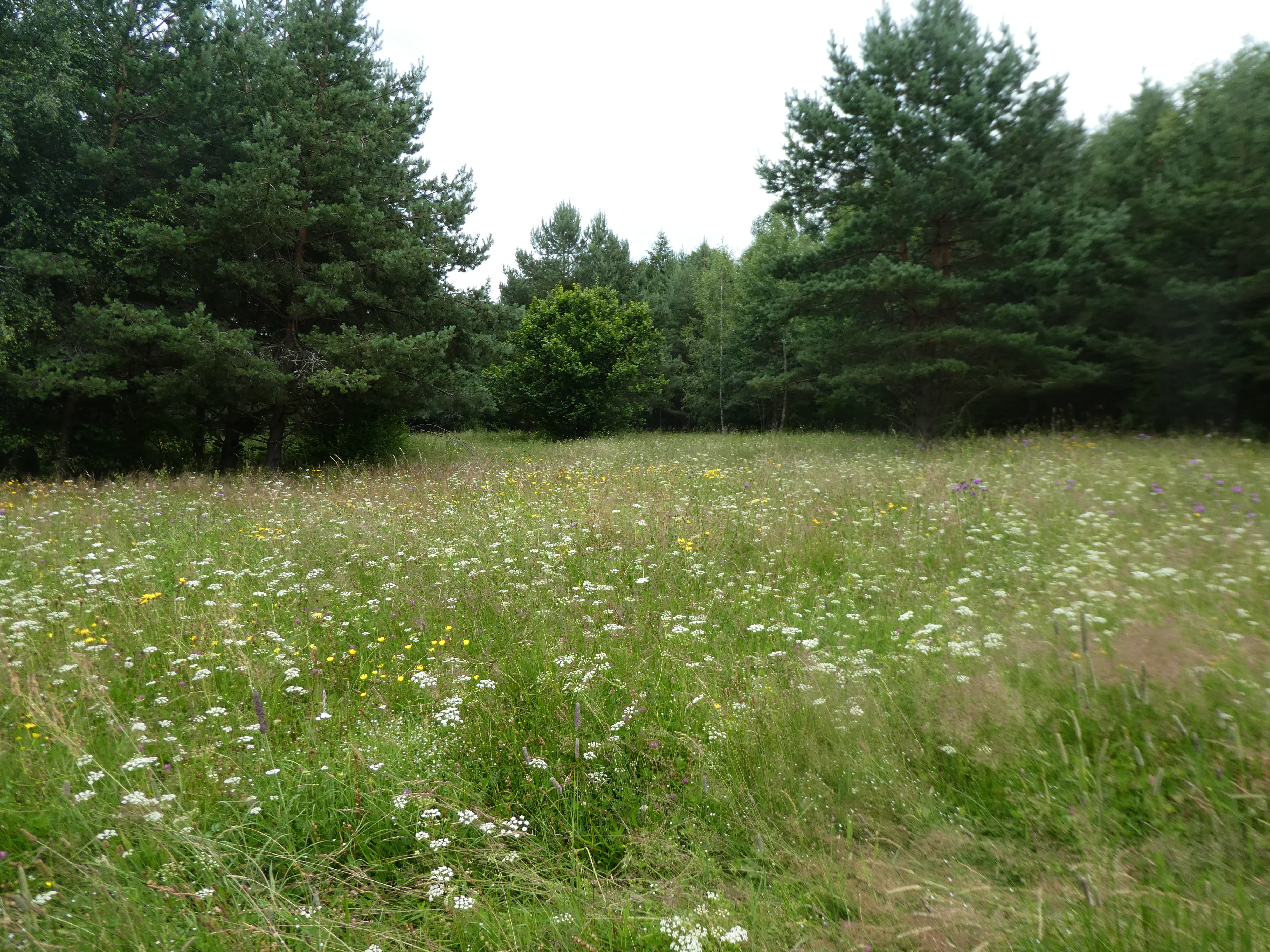
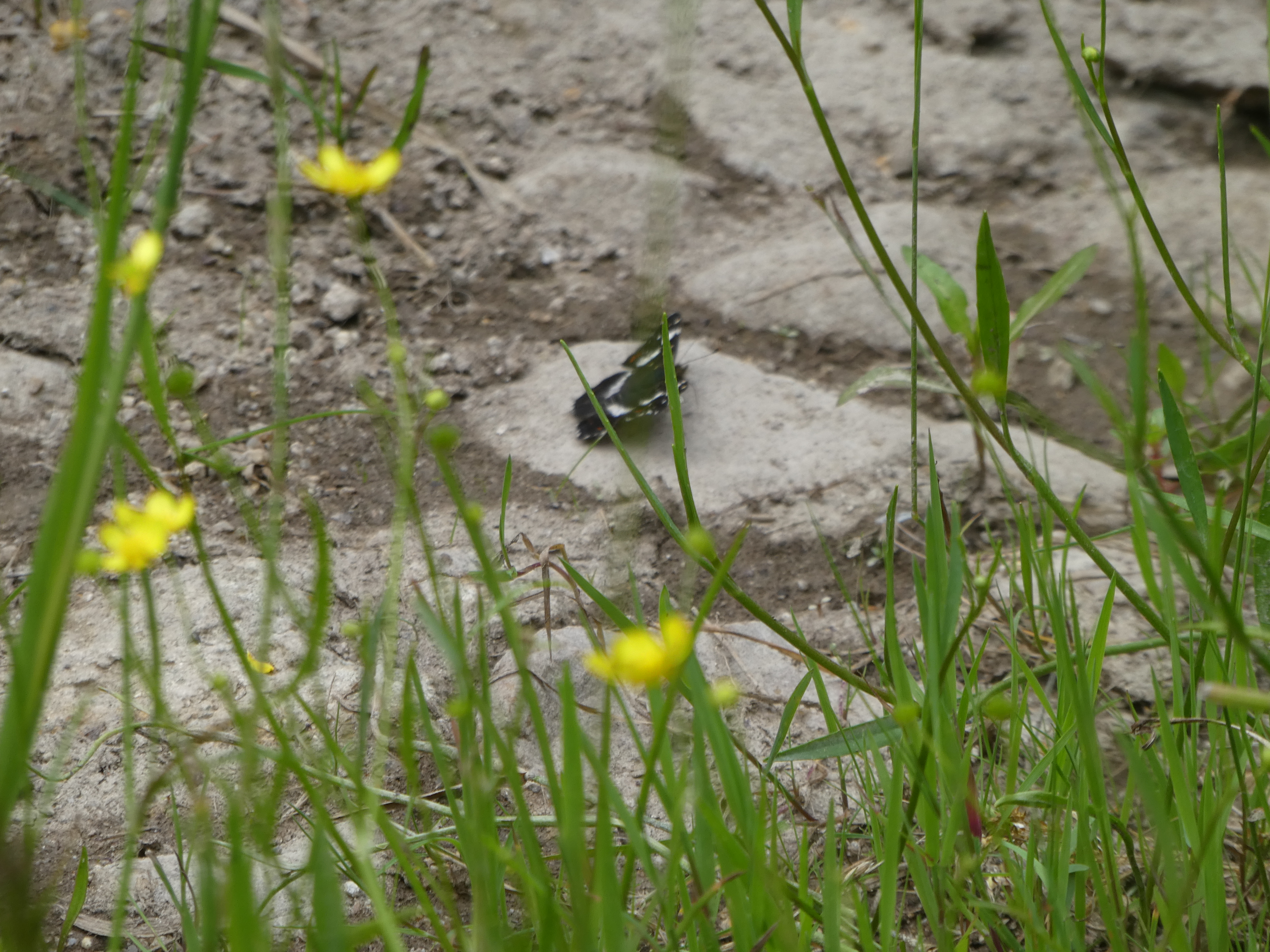
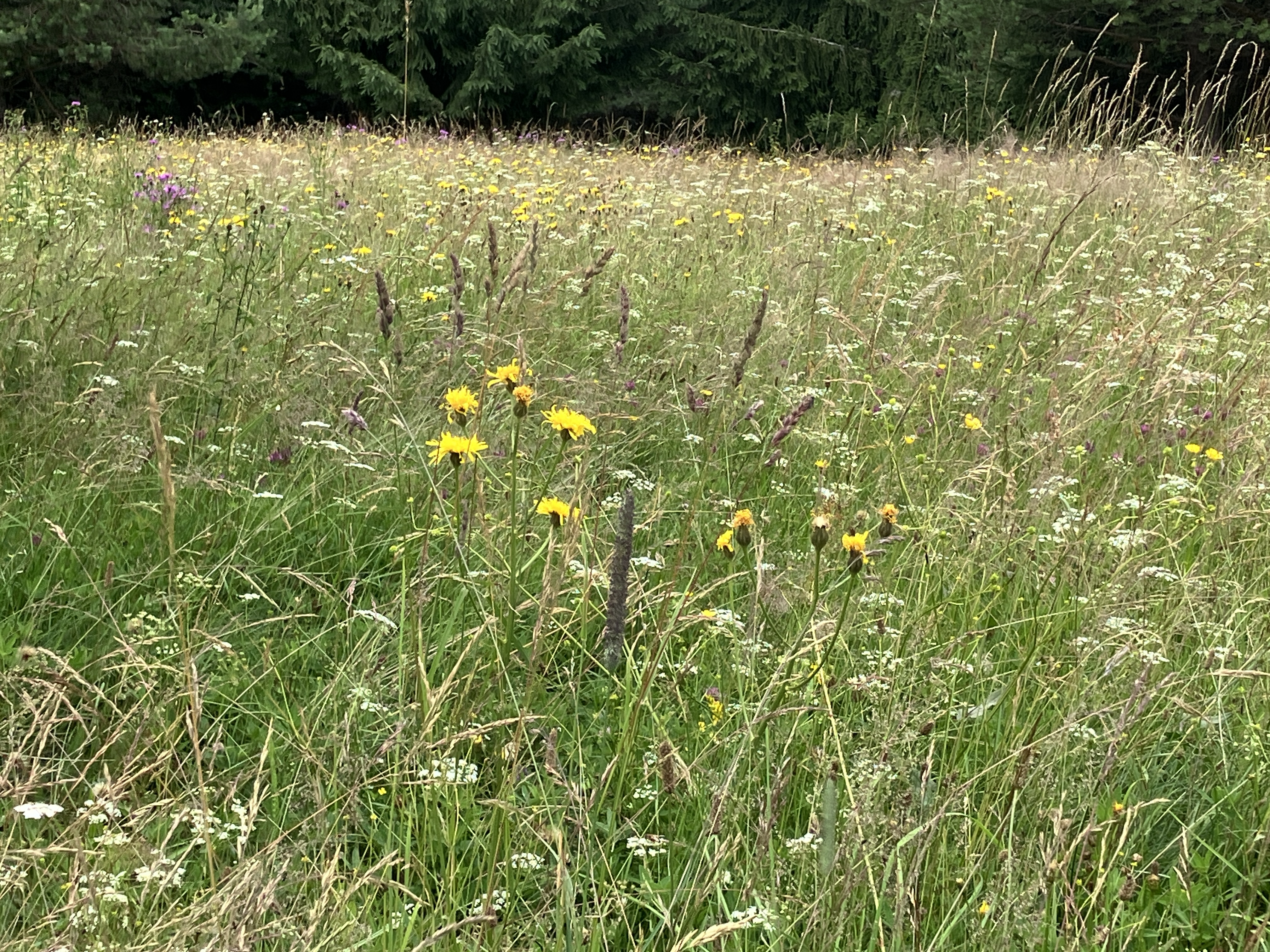
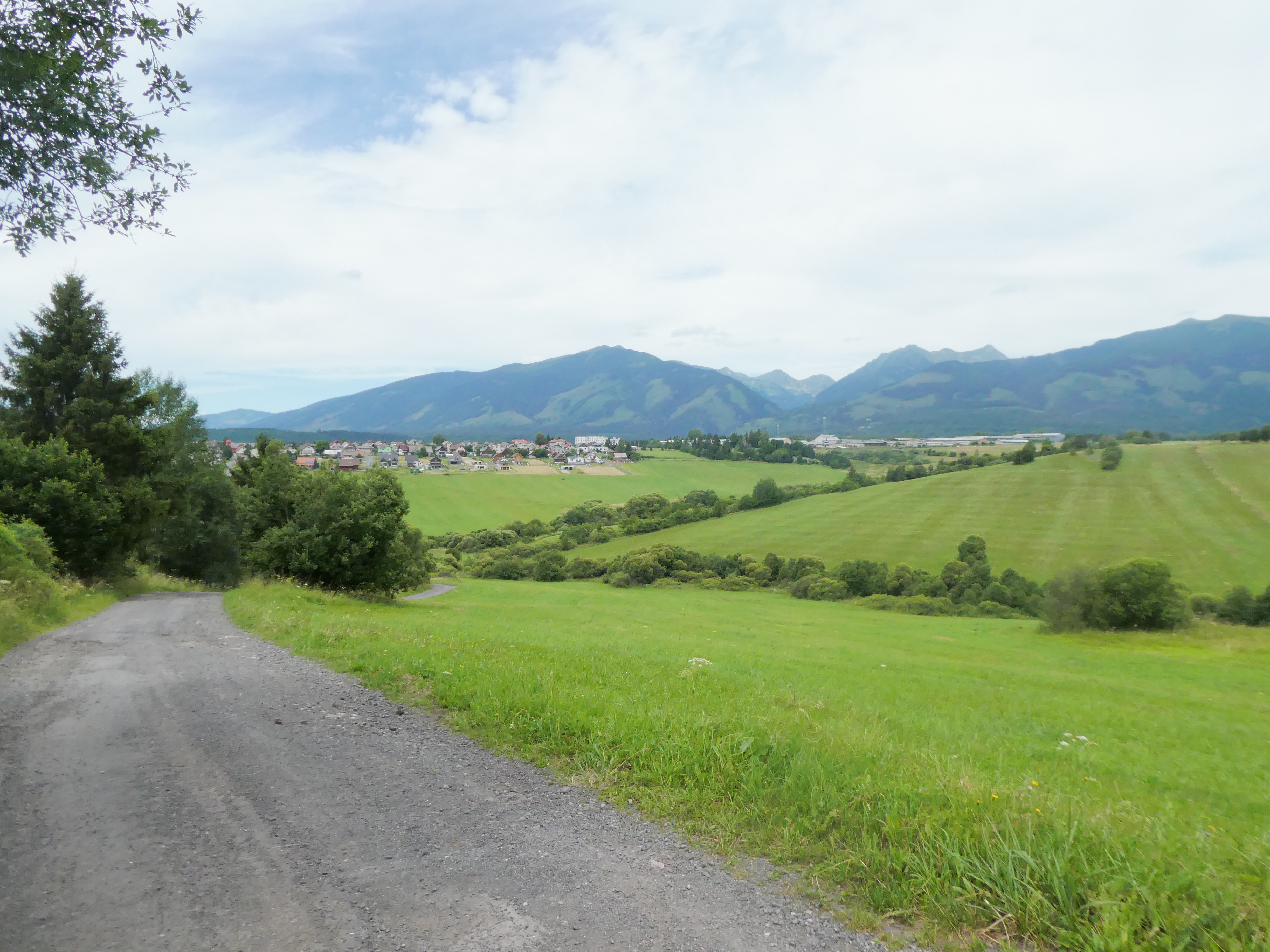
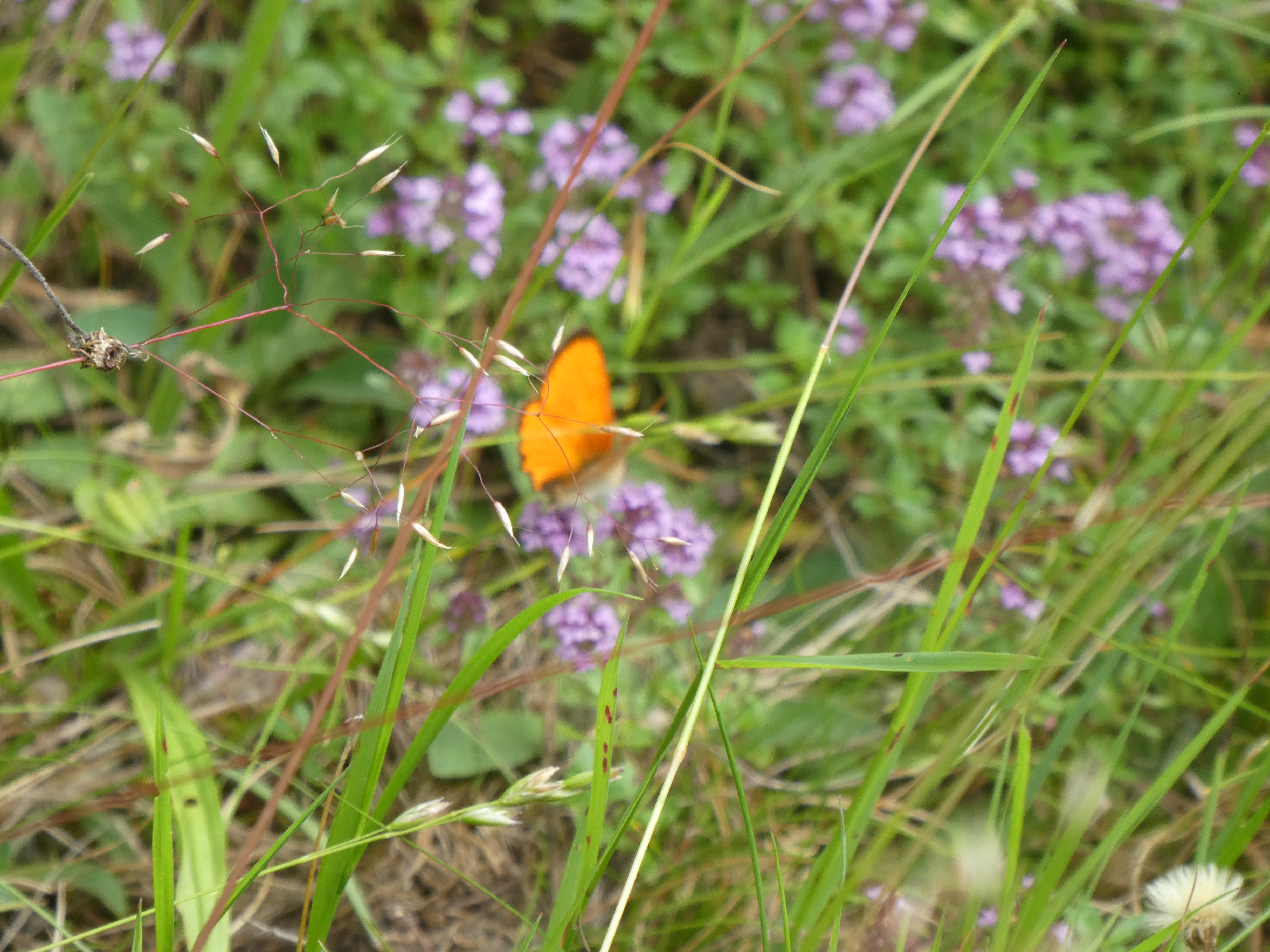
It was not clear or marked but we eventually reached the festival going through some lovely flower meadows, along some very gravelly tracks and a mile or so of road.
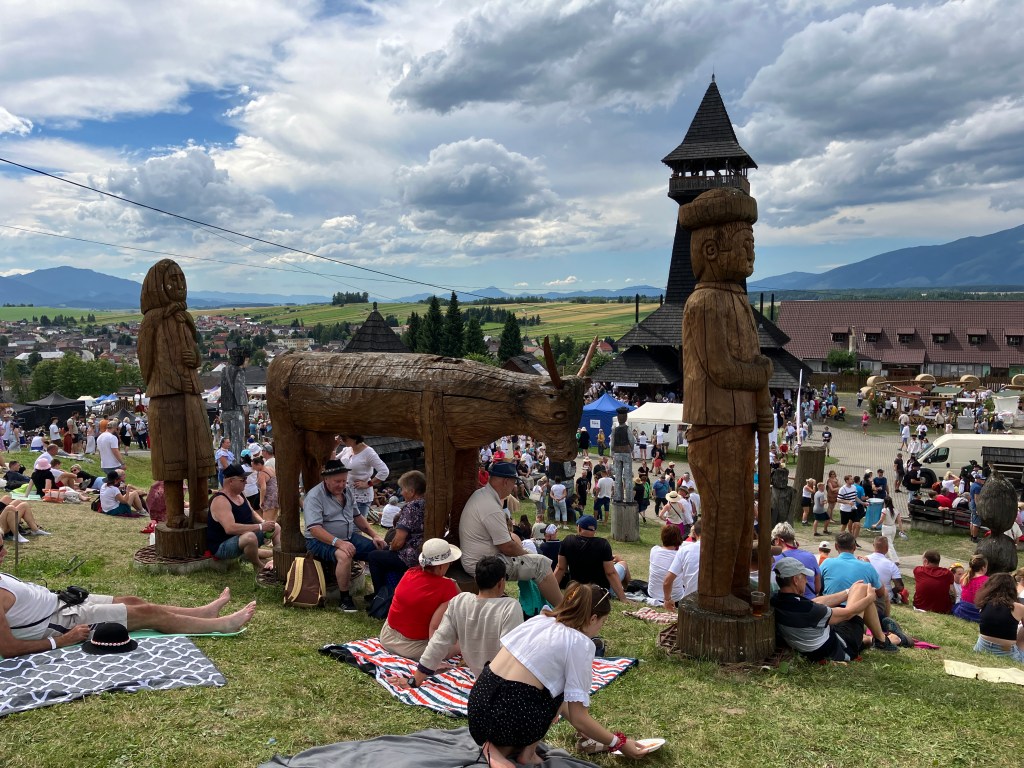
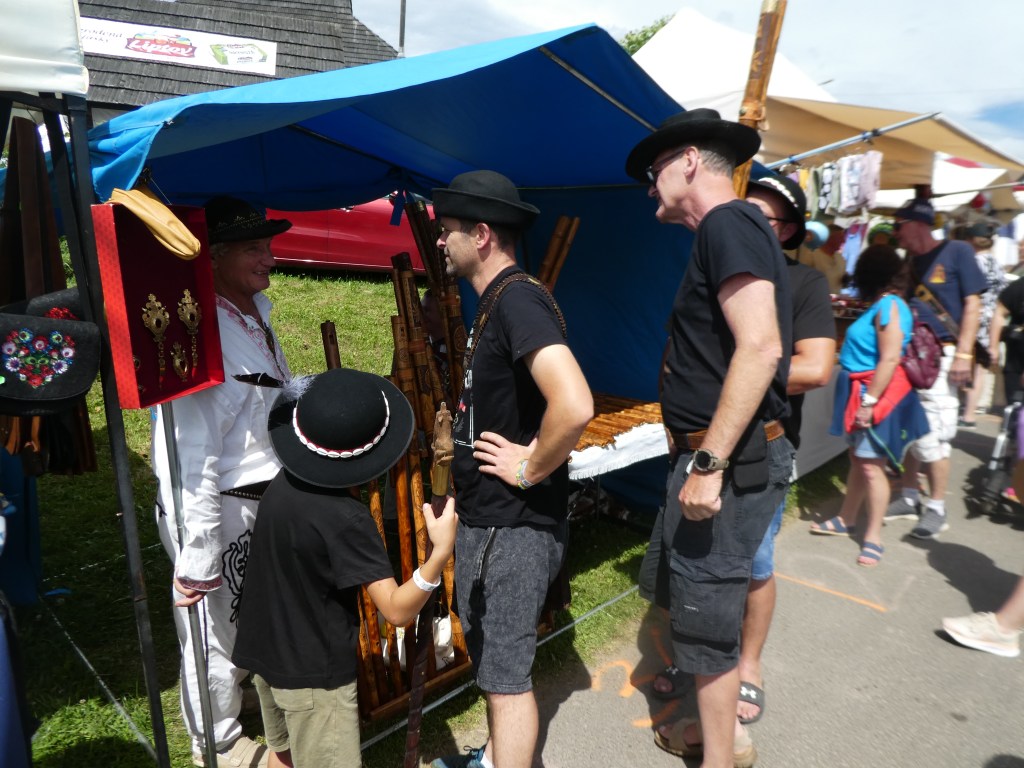
There was a real buzz about at the festival. We entered with a Slovakian couple who were now living in Prague. The girl was from this village and her mum was with them. Their English was good and it was nice to talk to people. There were lots of craft and food stalls and stalls selling pipes that were interesting but at over a hundred Euros each, not cheap.
There were outside stages where forty five minute displays of dance and songs were being performed. We understood nothing but got the humour of many of the acts including hunting drinking songs, mostly accompanied by traditional bands.
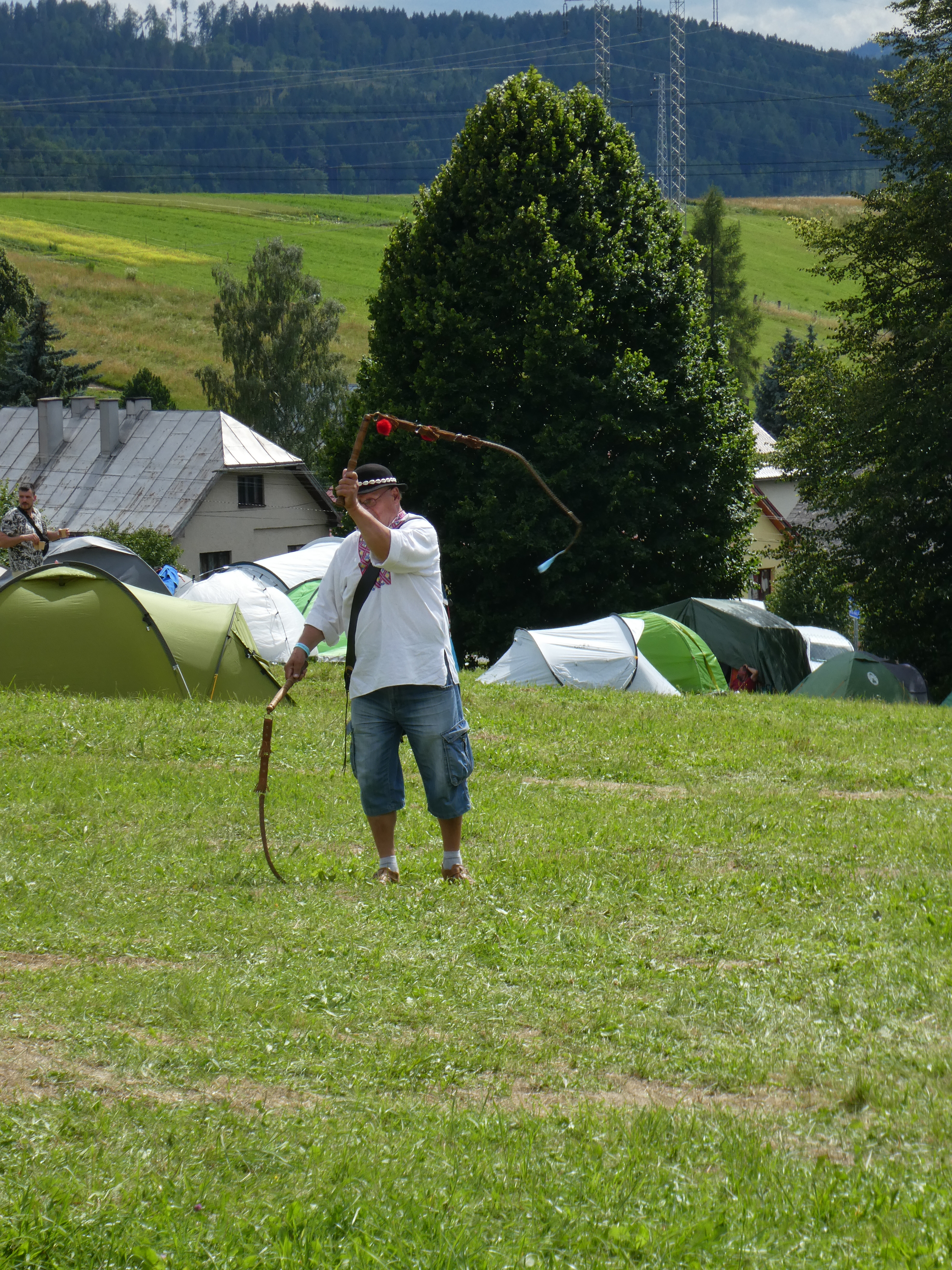
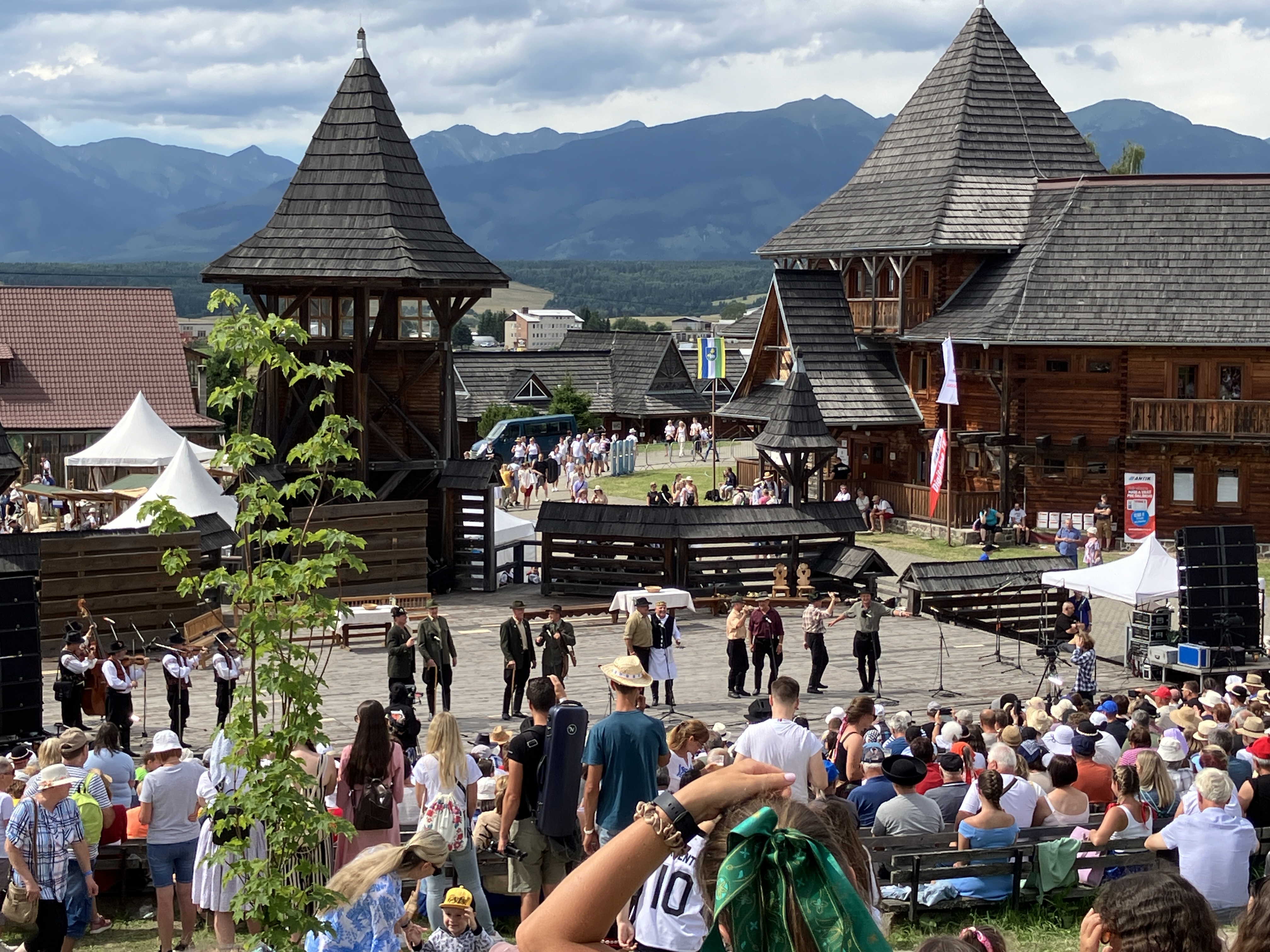
Food stalls were offering street food and fruit juice. The street food consisted of greasy potato cakes, salted sweet corn cobs and Longos, a greasy pizza with a sour cream and garlic mushroom topping, which we were to see lots of in the days to come. After some corn cobs and a greasy potato cake we were full, if a little heavy, so at around five we decided to leave.
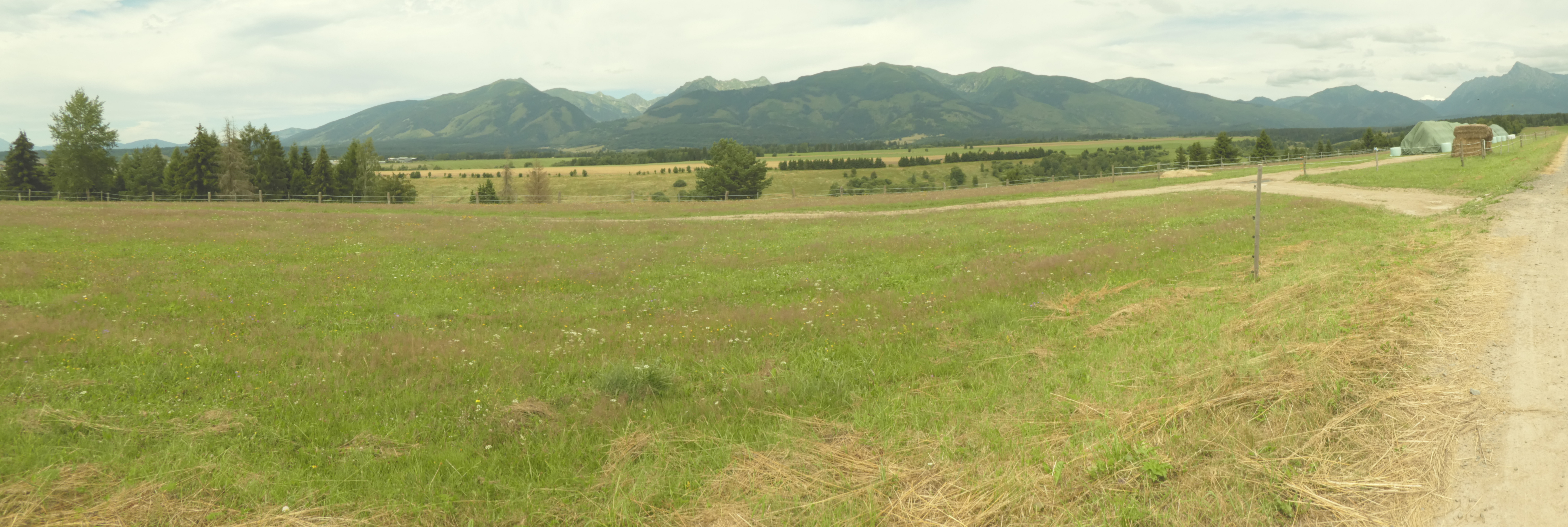

We made our way home a different way trying to find the route we meant to come in on. This involved going through a field full of large horned cows, across a rough meadow, along a lovely road and up a field track before faithfully following a non-existent woodland ride (bear country?) and somehow finding our original path, phew!
Back at the site we collected in our now dry washing and listened to the end of the England v Switzerland match which was somehow won by England. We ate a tin of Mackerel, never to be repeated…. but was!
Sunday 7th July Spissky Castle and Borsa Hungary
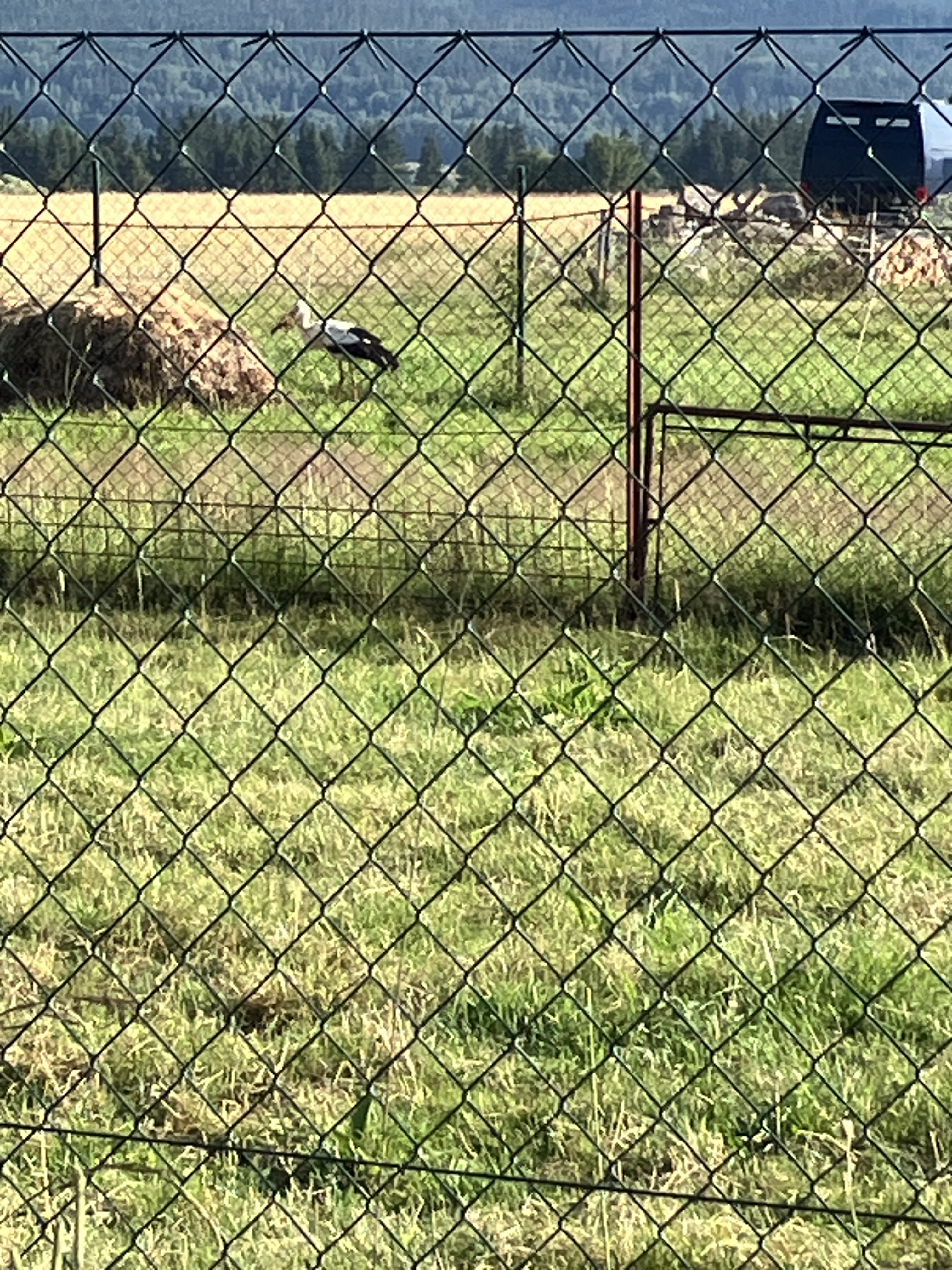
The day started warm with sun and clouds. Disaster had struck ! Janet’s black bat wing top was not to be found anywhere. It seemed likely to have been accidently picked up by the German couple which upon enquiring with them, in passable German!, turned out to be the case.

We packed up and drove east hoping to stop at Levoca a planned 18th century town listed as a World Heritage site.
Unfortunately, there seemed to be something on in the town that day and we were unable to park.
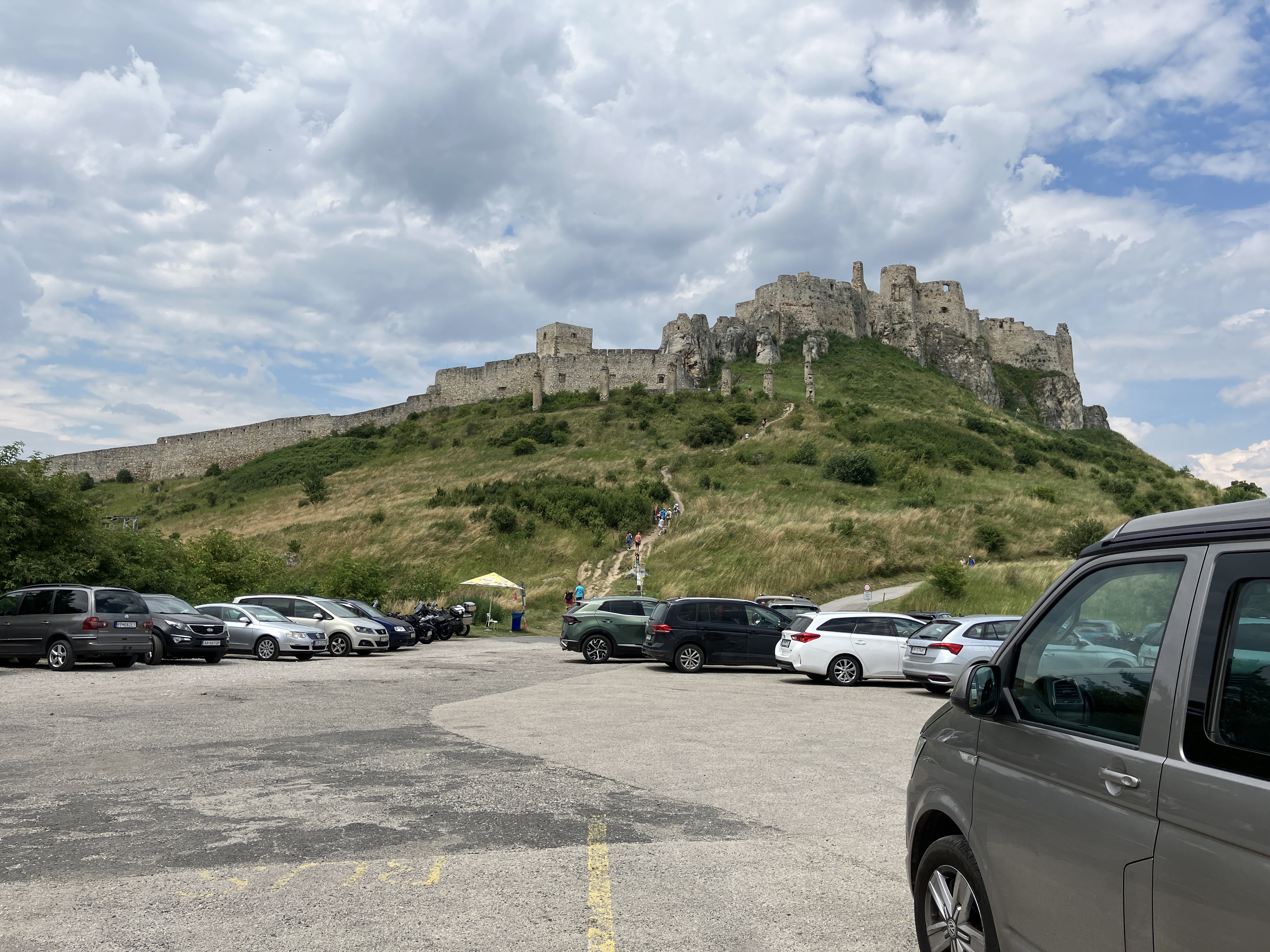
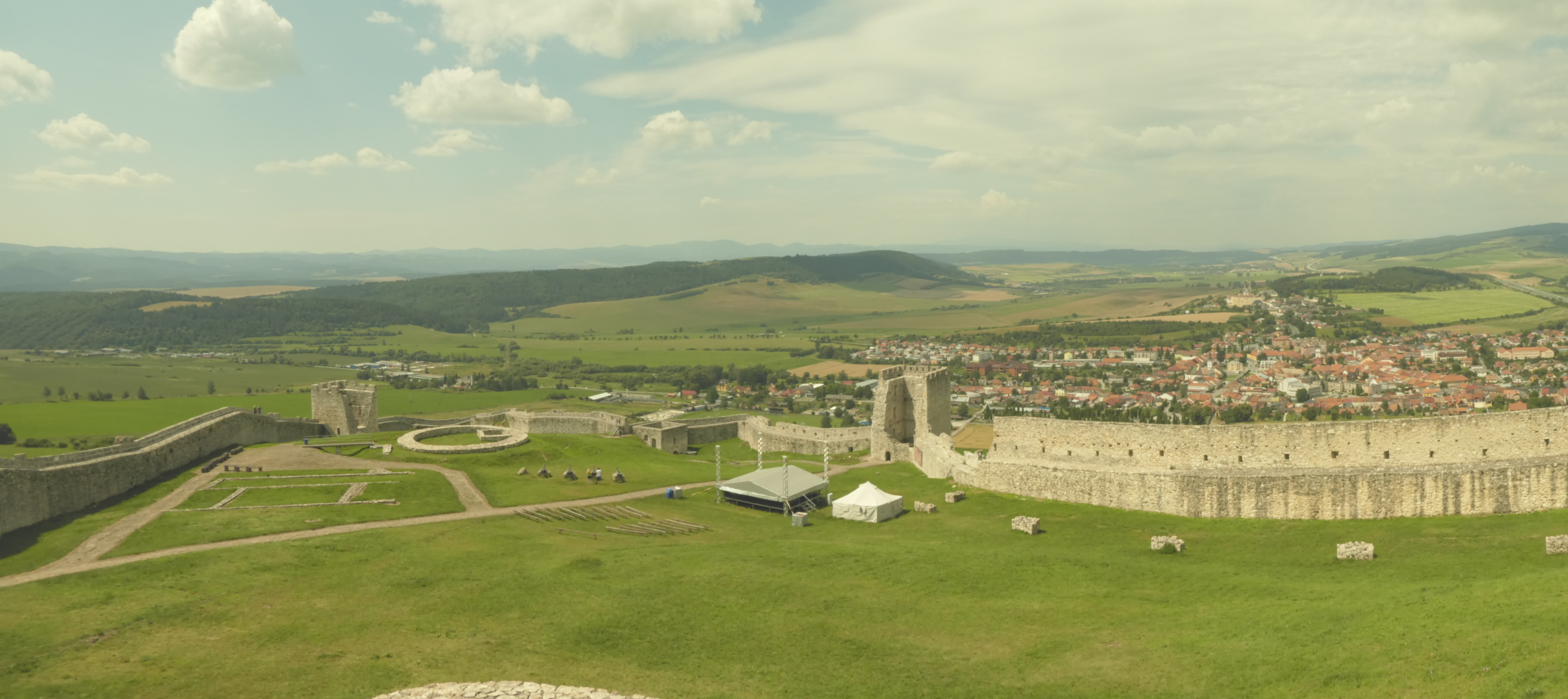
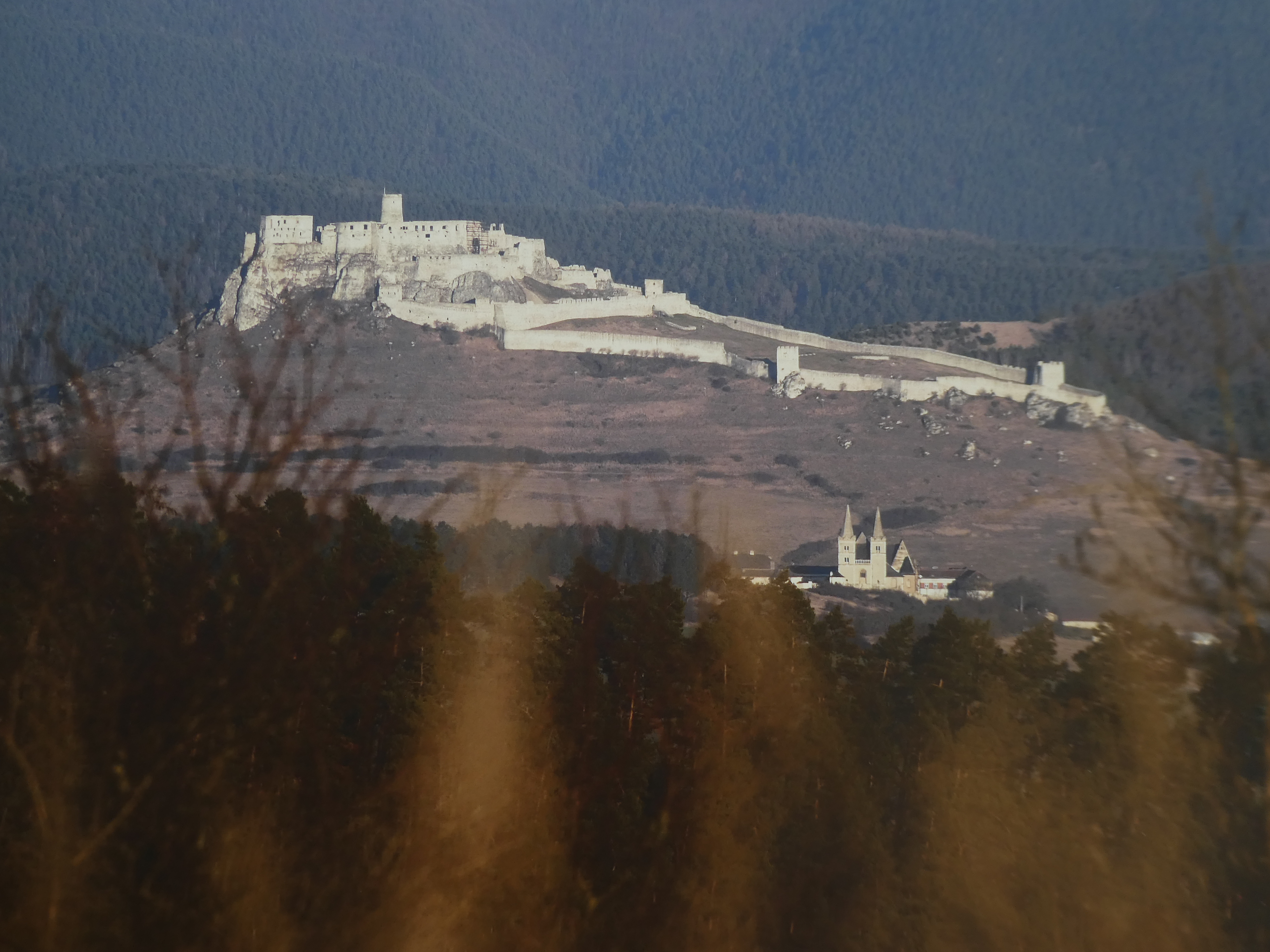


So we continued on to Spissky castle claiming to be the largest medieval castle in central Europe. There were a lot of people there and luckily we were able to park in the car park at the end of the track to the castle We climbed up the track and wandered around.
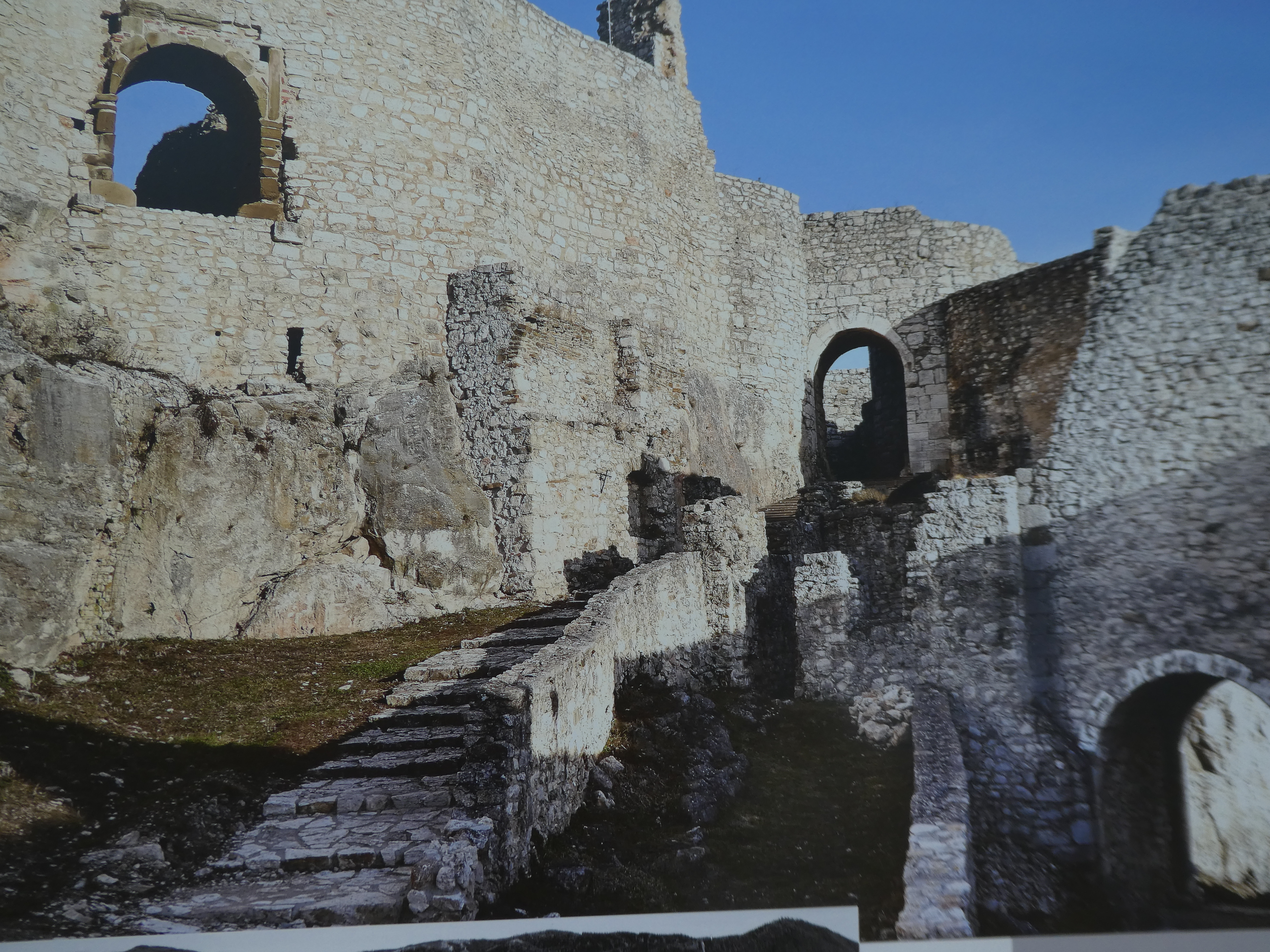


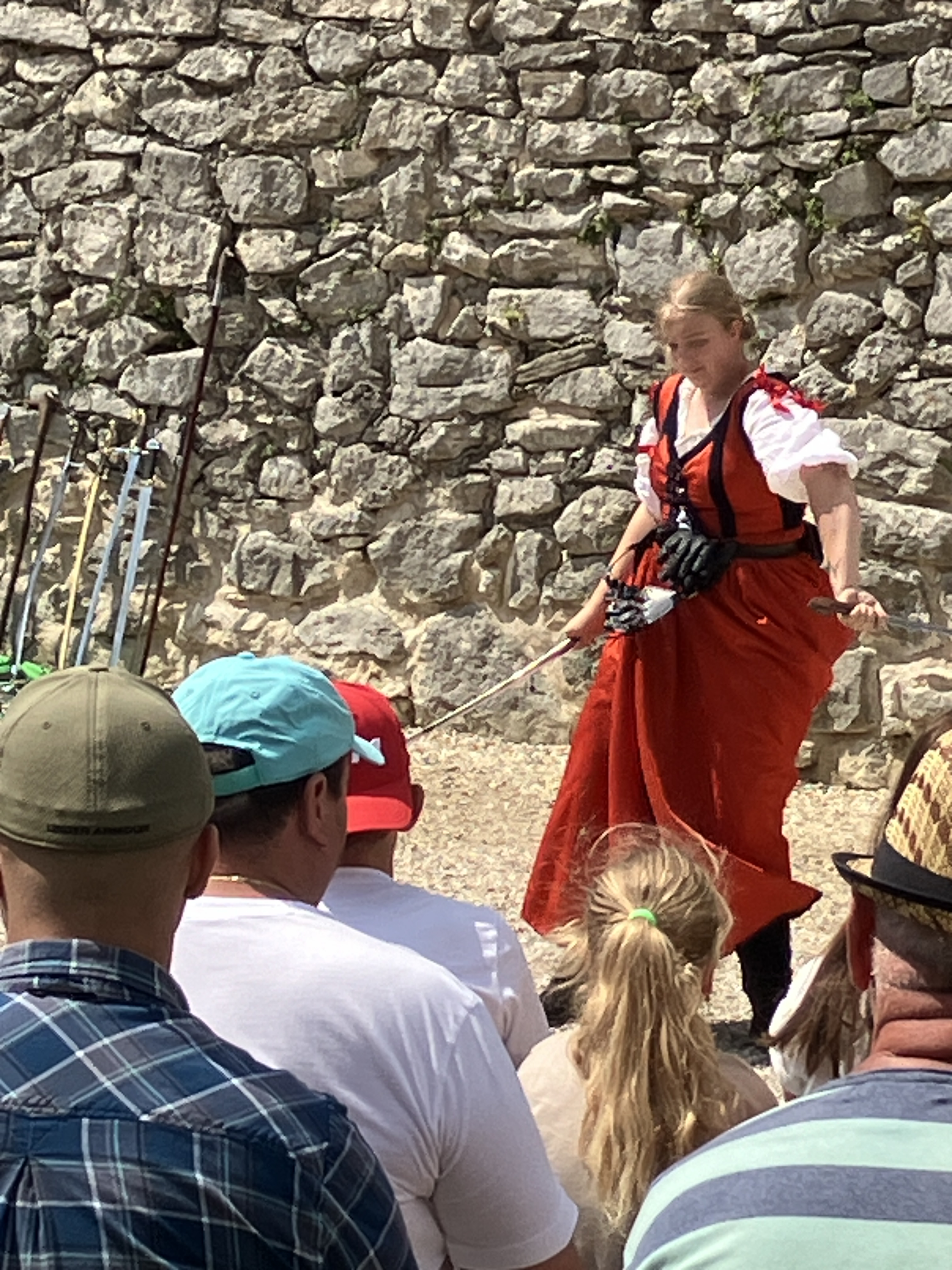


We were entertained a group of costumed fight actors ,performing duals and fencing with a range of different weapons; knives, swords and daggers.
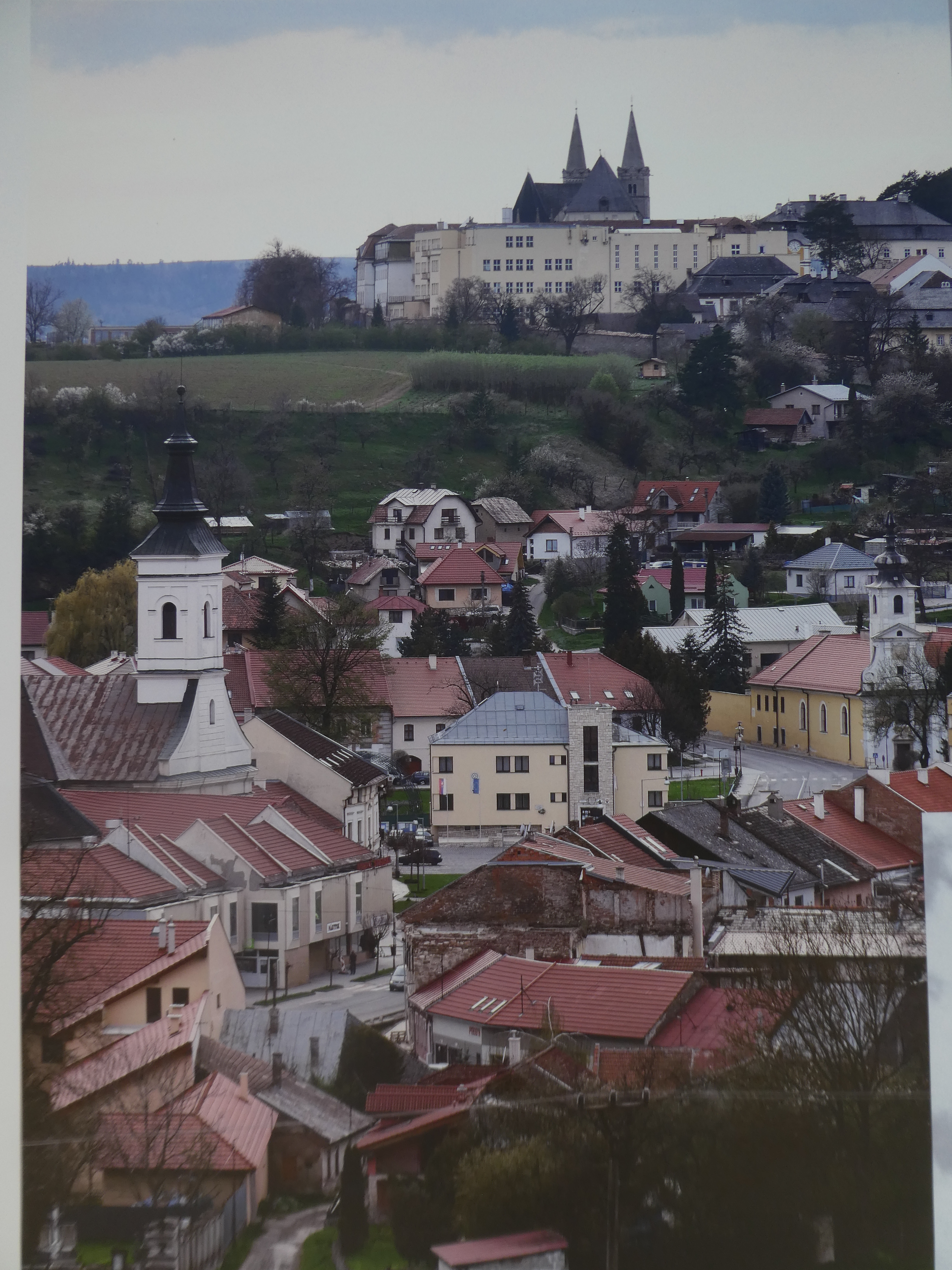
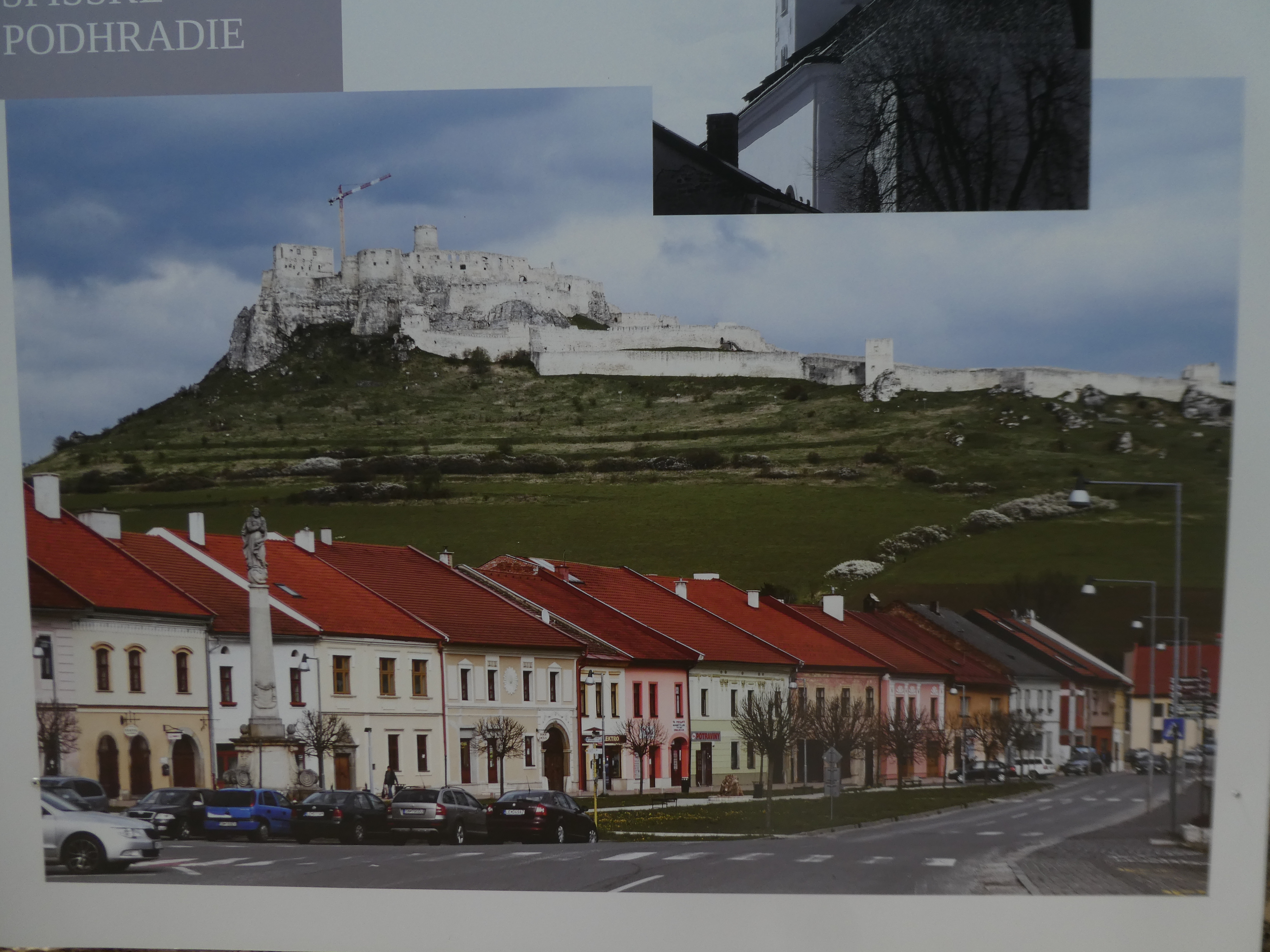
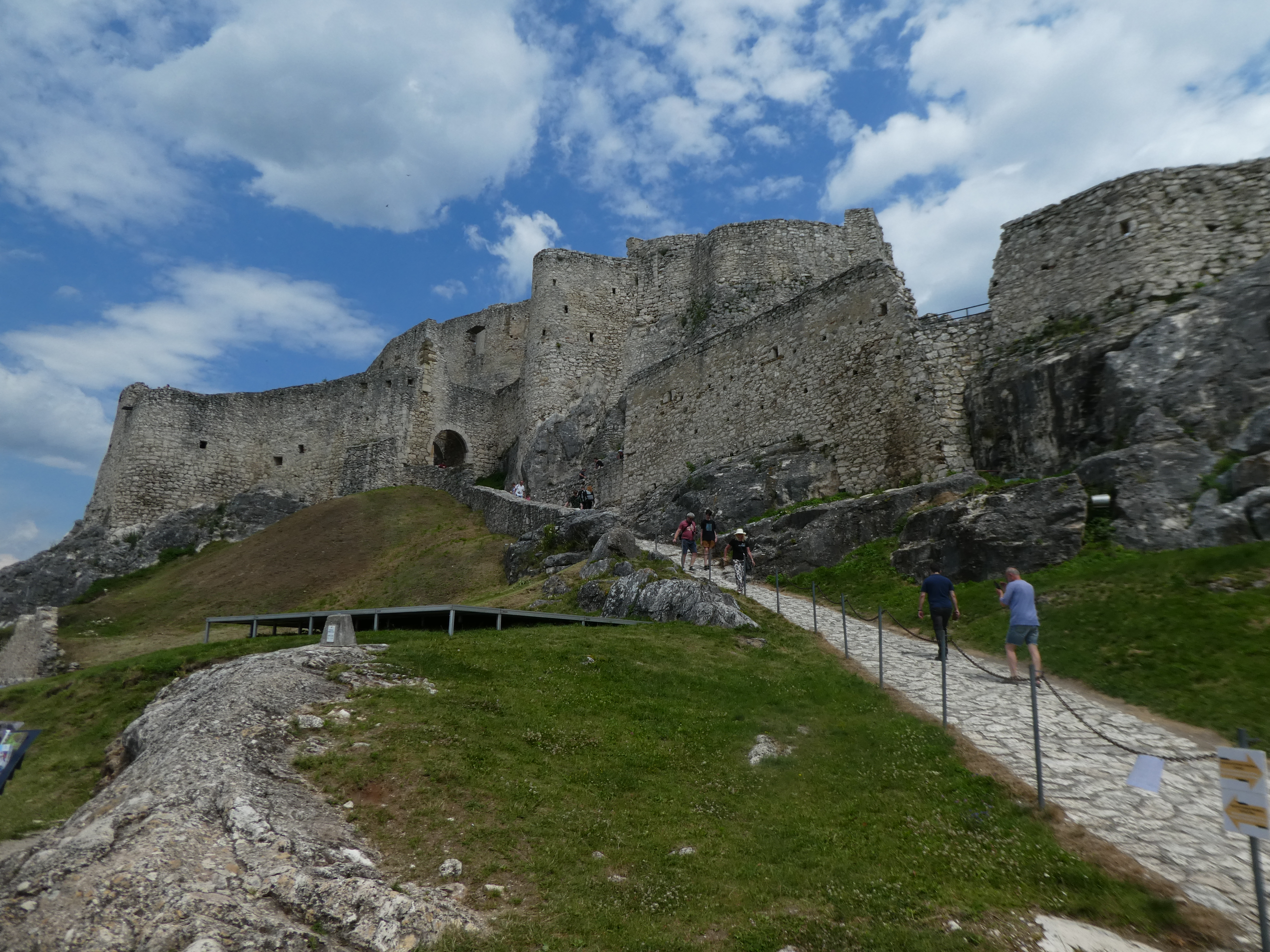
We had lunch in the van before continuing on to Tree Tops Camping Malá Bara north of Borsa on the border with Hungary.
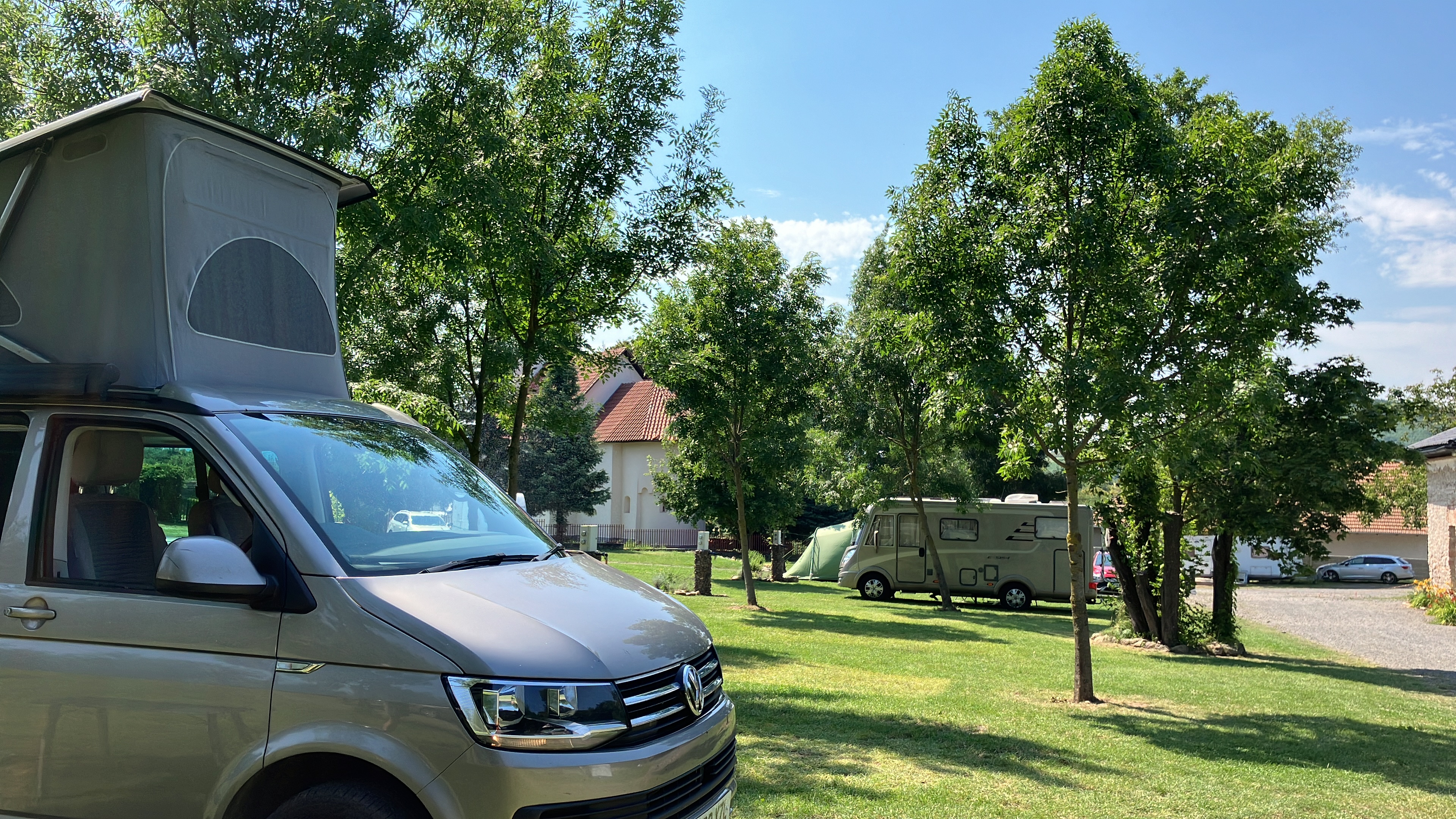
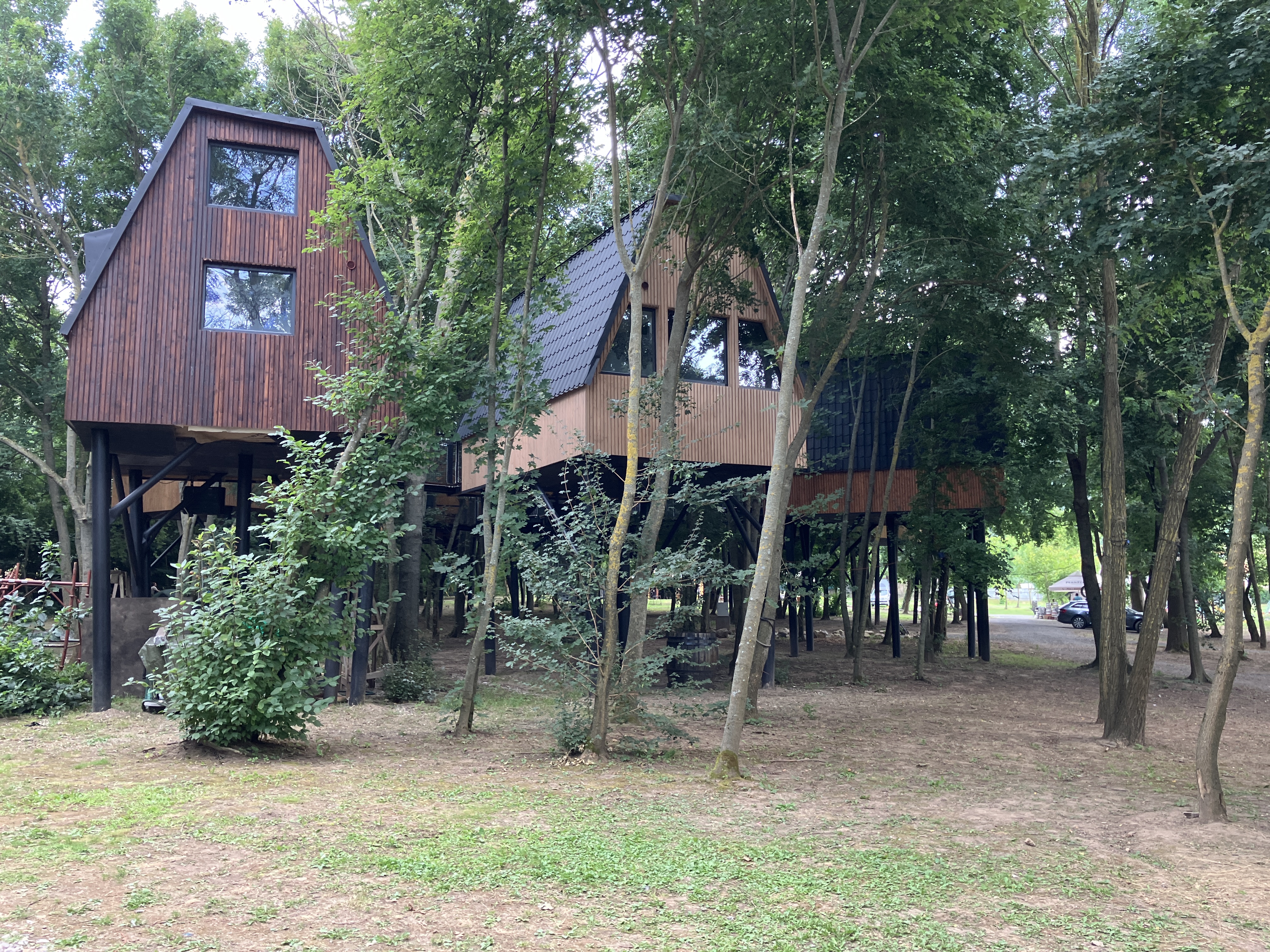
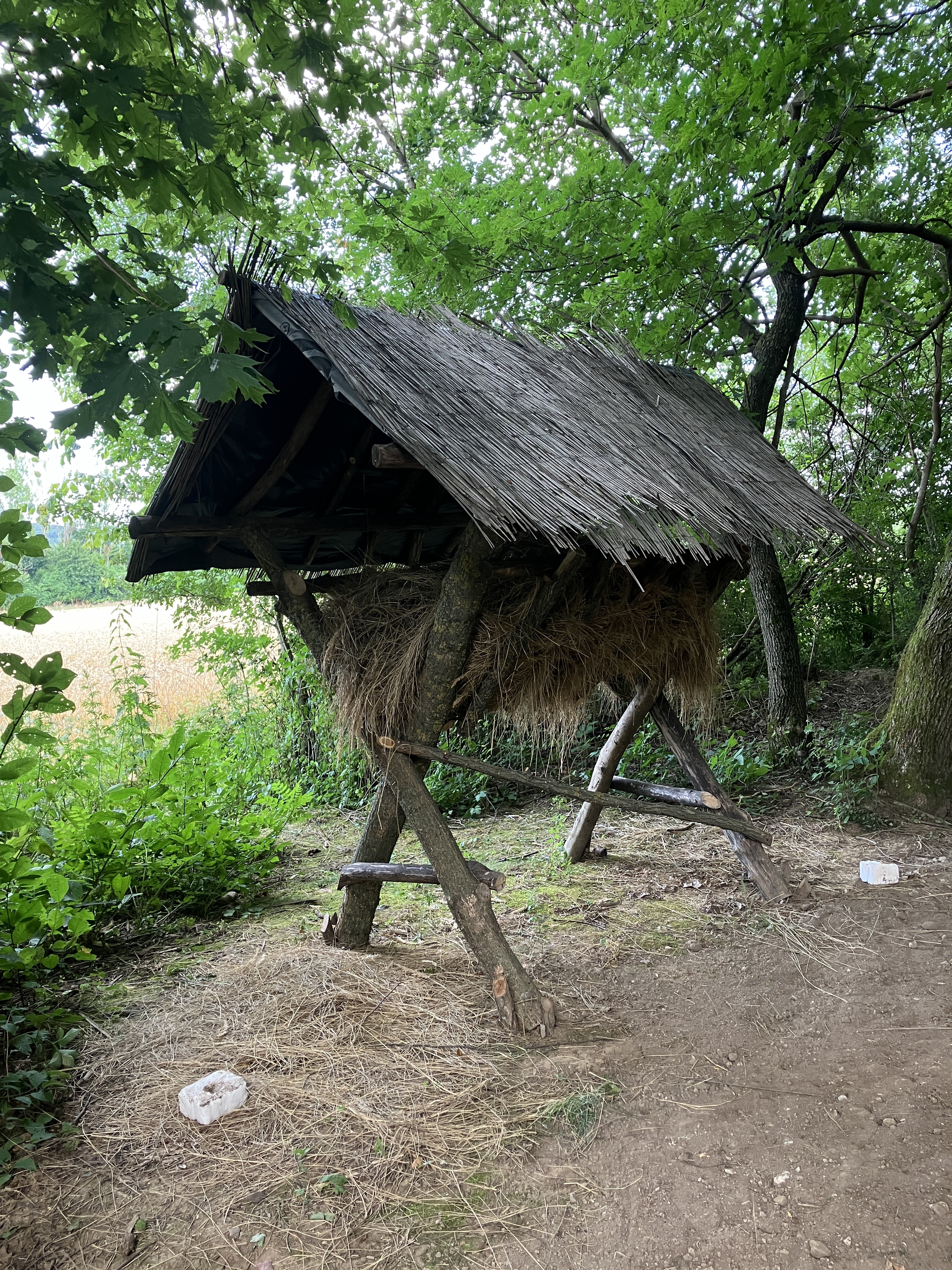
We arrive early afternoon at this nice site with cool sprinklers running and lovely facilities. We enjoy a cold beer much needed in temperatures 34o +
Monday 8th July – Across Hungary to Romania
The day starts and continues hot. Golden Orioles flight in the tress around the site.
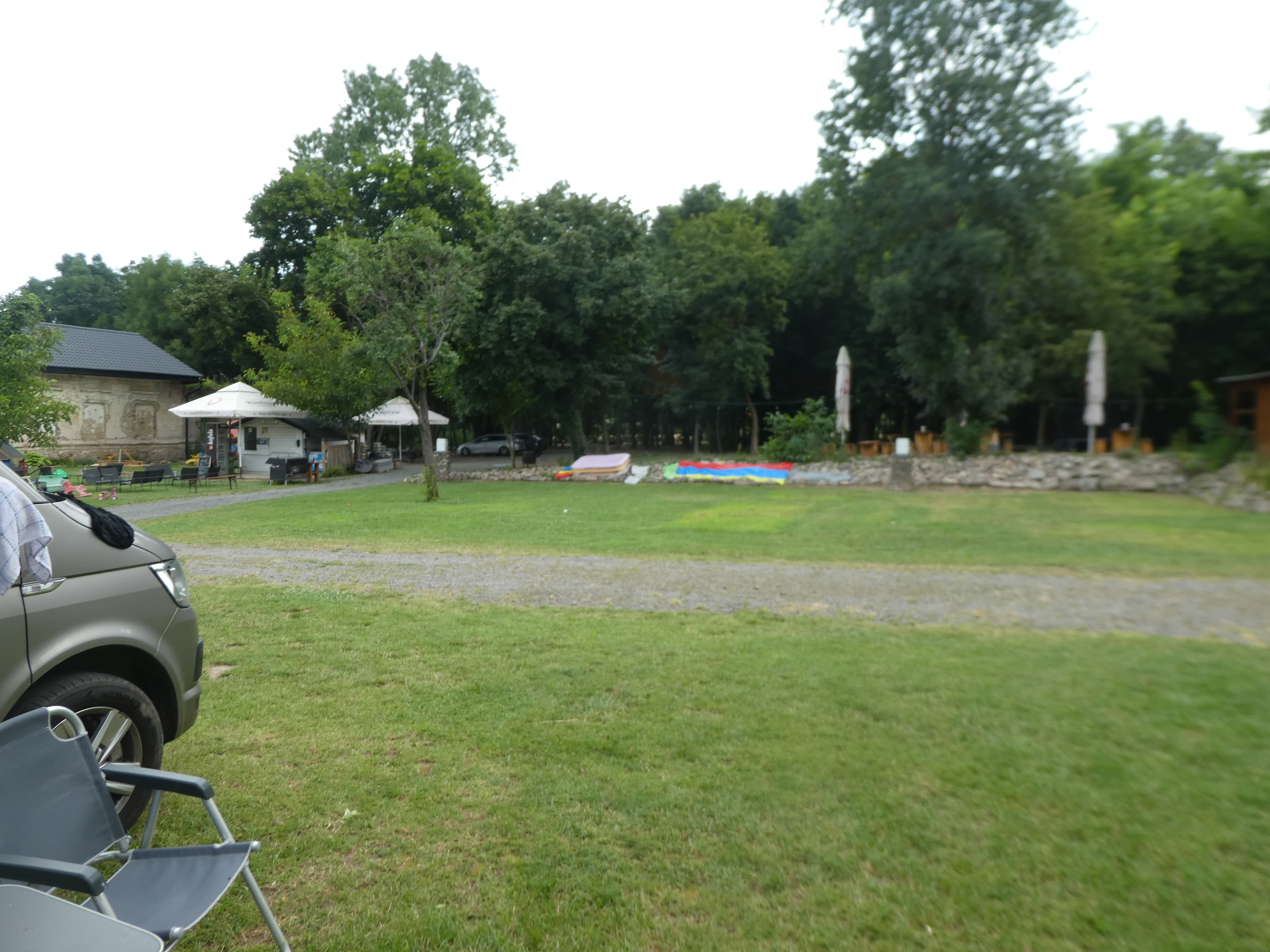
We leave the site around nine and are soon over the Hungarian border and travelling east across the rural north.
You couldn’t drive fast as there were so many pot holes and uneven surfaces on all roads as well as 25kph speed limit through built up areas.
There are lots of people around, many on bikes. The police stopped us at Vasarosnameny and checked our documents. All in order so we drive on.
As we reached the Romanian border on a main-ish road there were more lorries and cars and we queued for quite a while before the authorities realised we were British. We were waved over to a parking lot and went through customs on foot the Hungarian and then the Romania control which were in conjoined offices in the same hut.
We were in Romania at last. We stopped in the large town of Bala Mare and went into the shopping mall and found a supermarket and an ATM drawing out 1,000 Ron or leu in local currency.
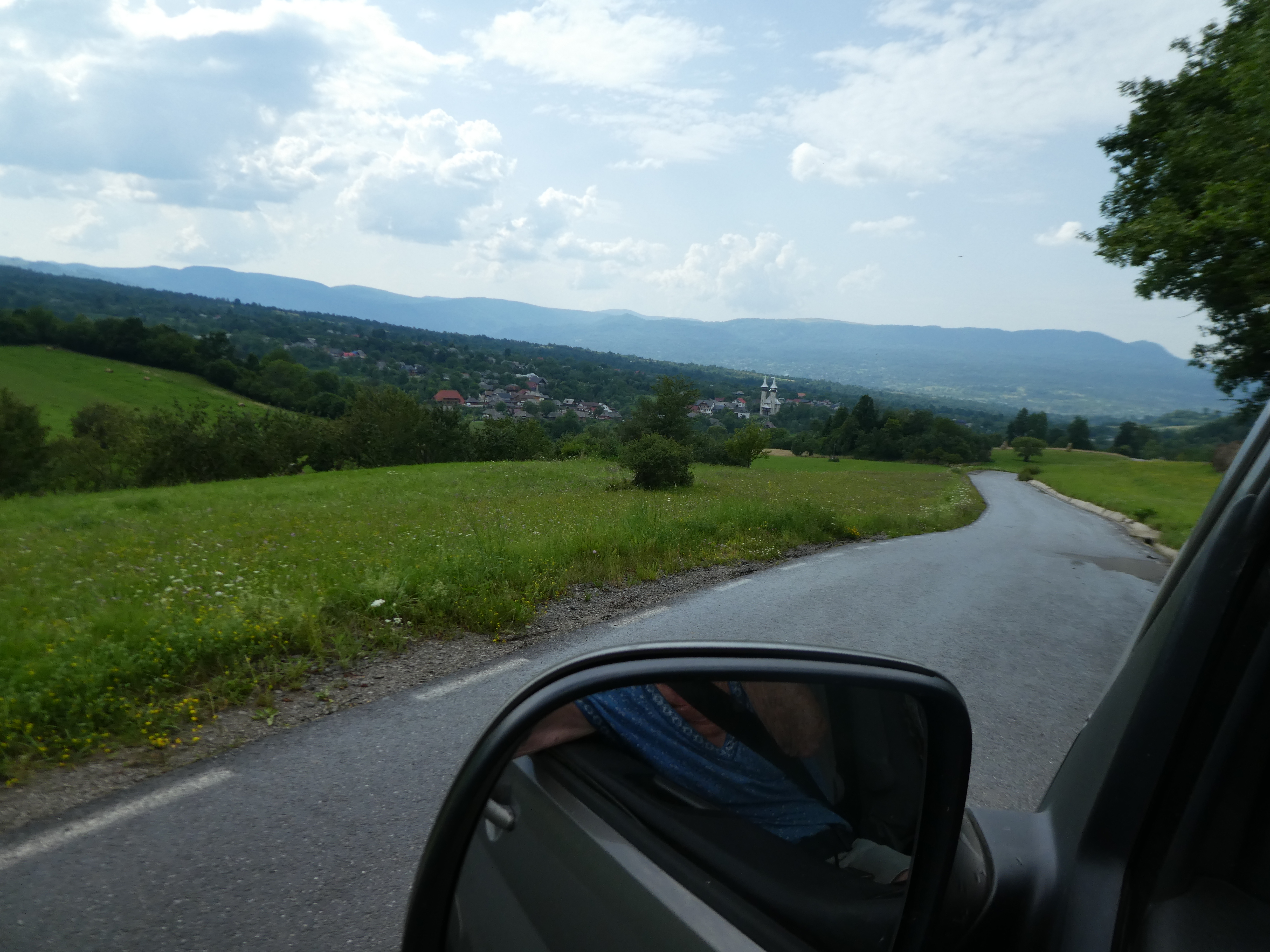
We did a bit of shopping and treated ourselves to a Starbucks coffee and pastry before driving north through the mountains to around five hundred metres.
We descended in a summer storm of thunder and light rain to Breb an EU funded tourist village of a traditional appearance. The tarmac roads soon became stone tracks and then rutted tracks until we came to Camping Babou Marames run by a Dutchman with whom we had been communicating on Whatsapp.

The camp site was simple but adequate the atmosphere was good as we booked in and got some cold beers. We were shown various maps and guides of the area, offered fresh sour dough bread for the morning and made to feel welcome. We took a pitch overlooking the mountains and chilled for a bit before using the map provided at the site to walk around the village. As usual we went off-piste and had to take out sandals off and wade through a muddy stream that didn’t seem to be marked on the map!
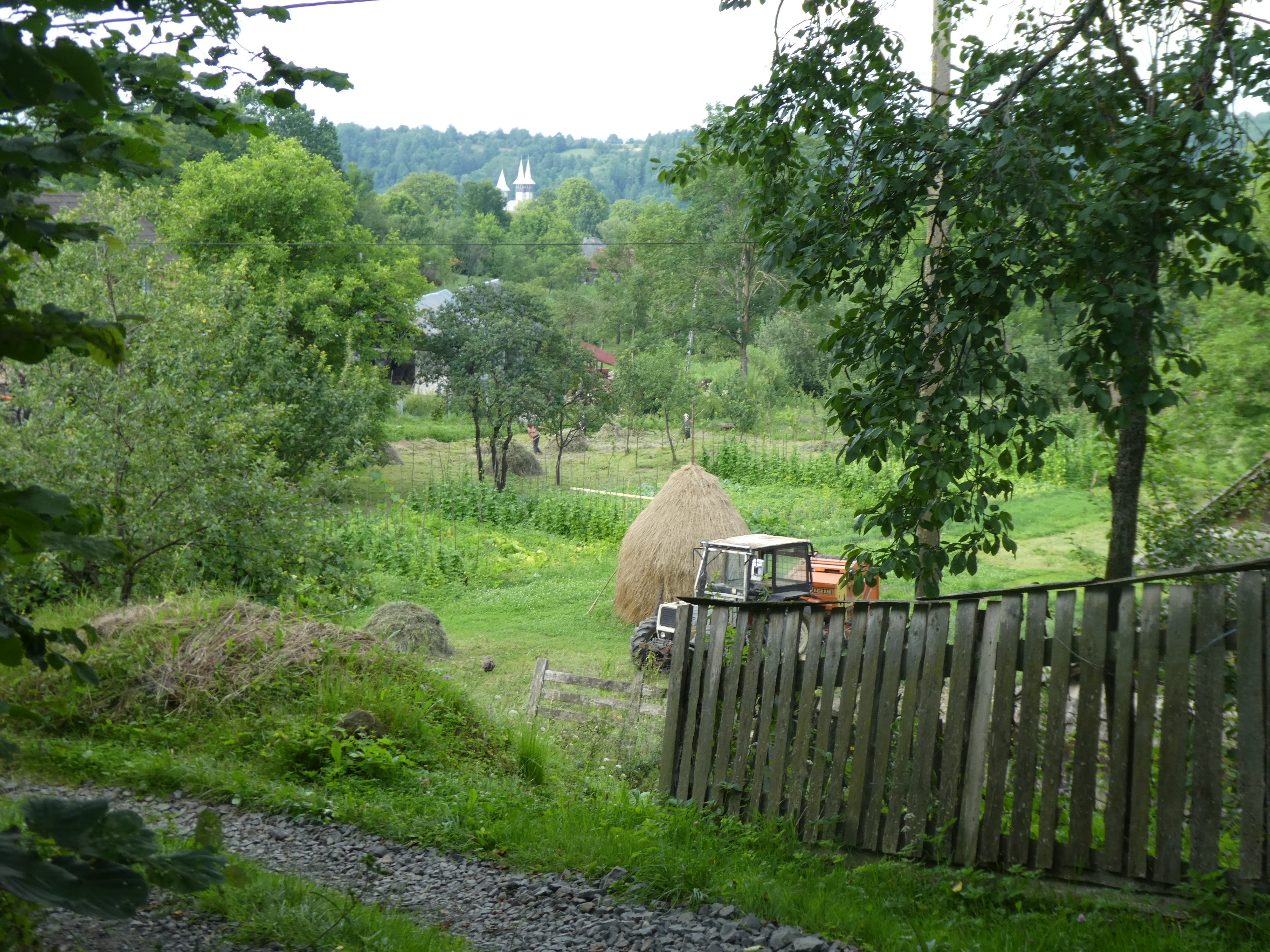
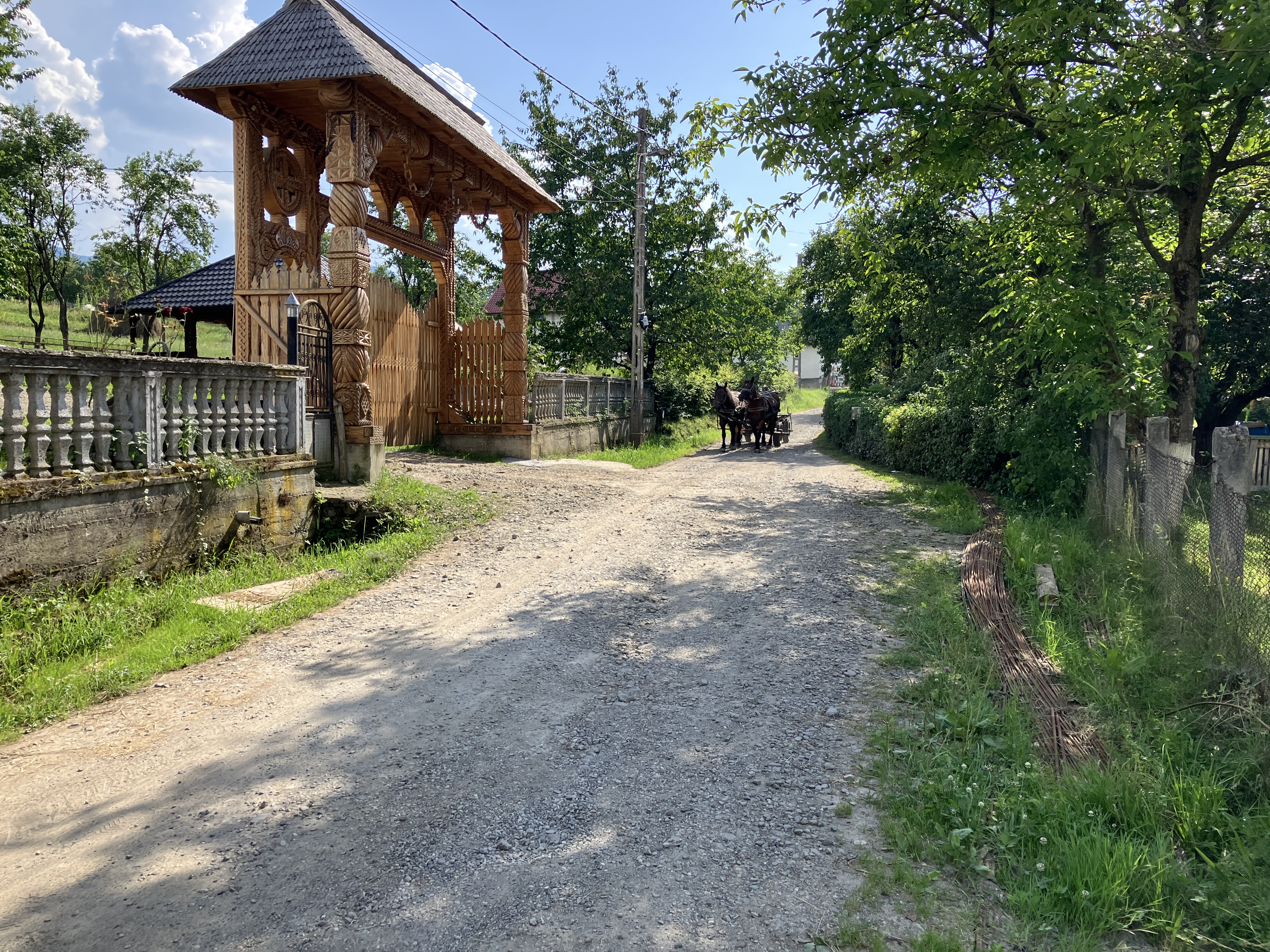


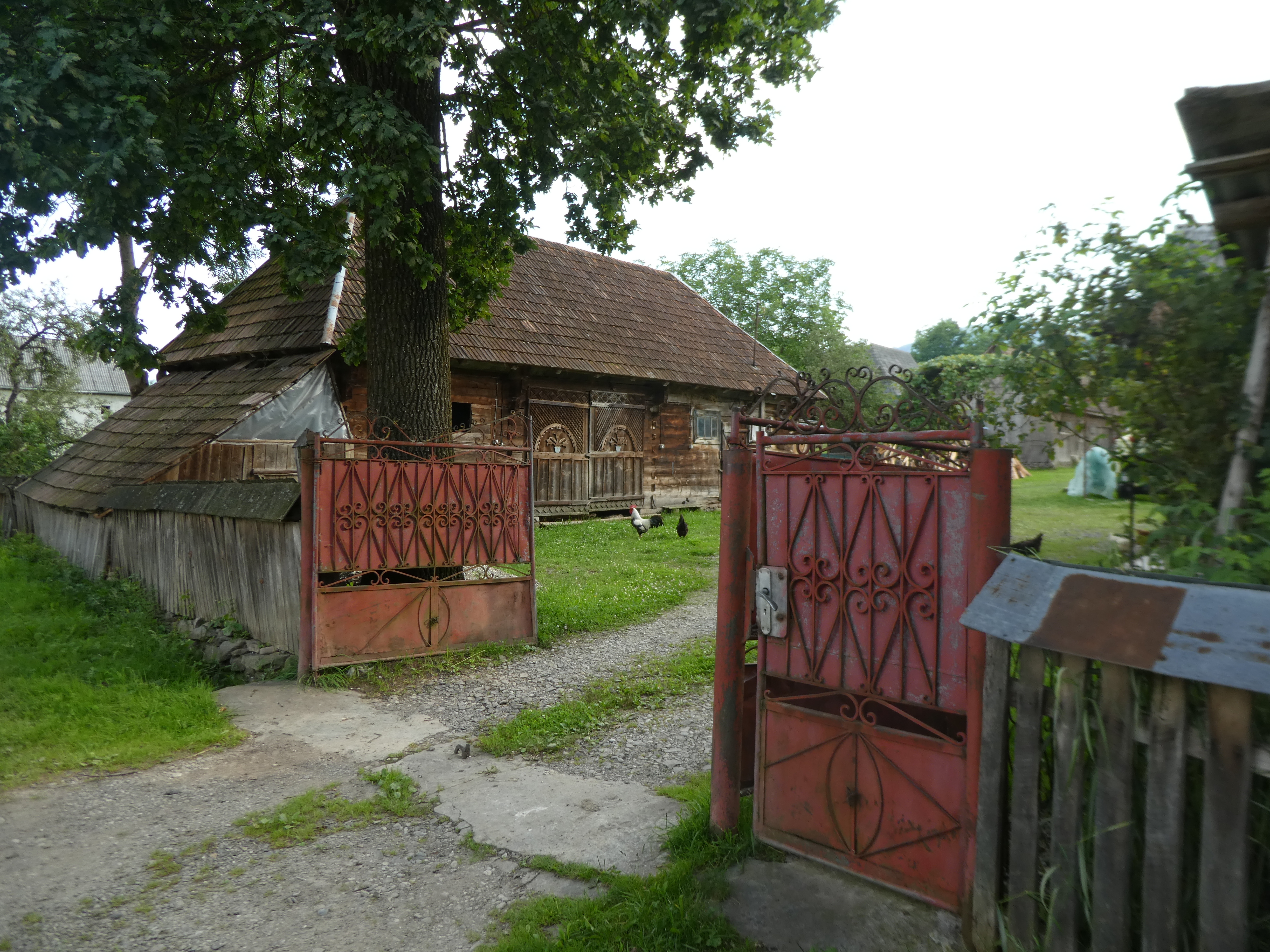
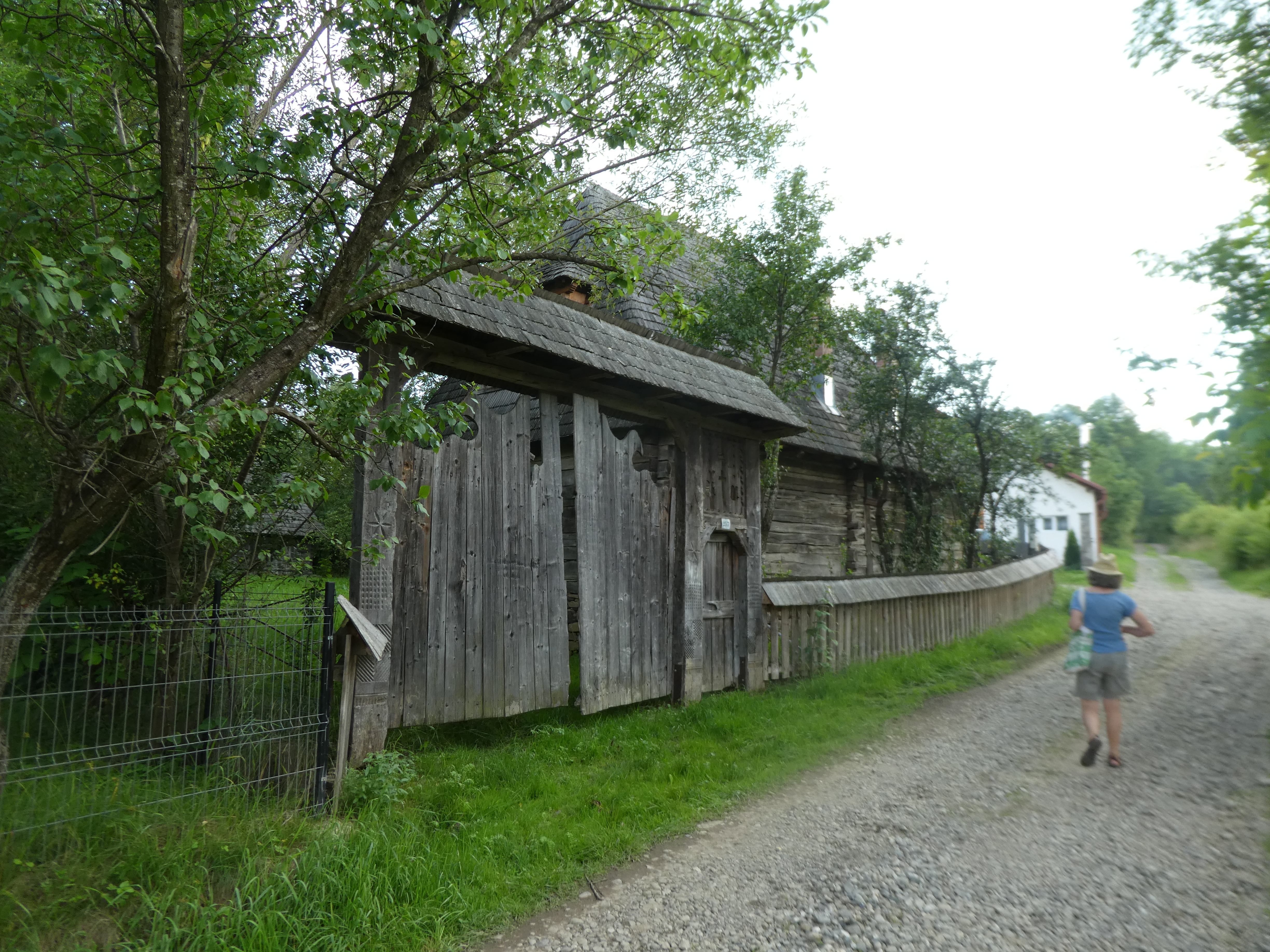
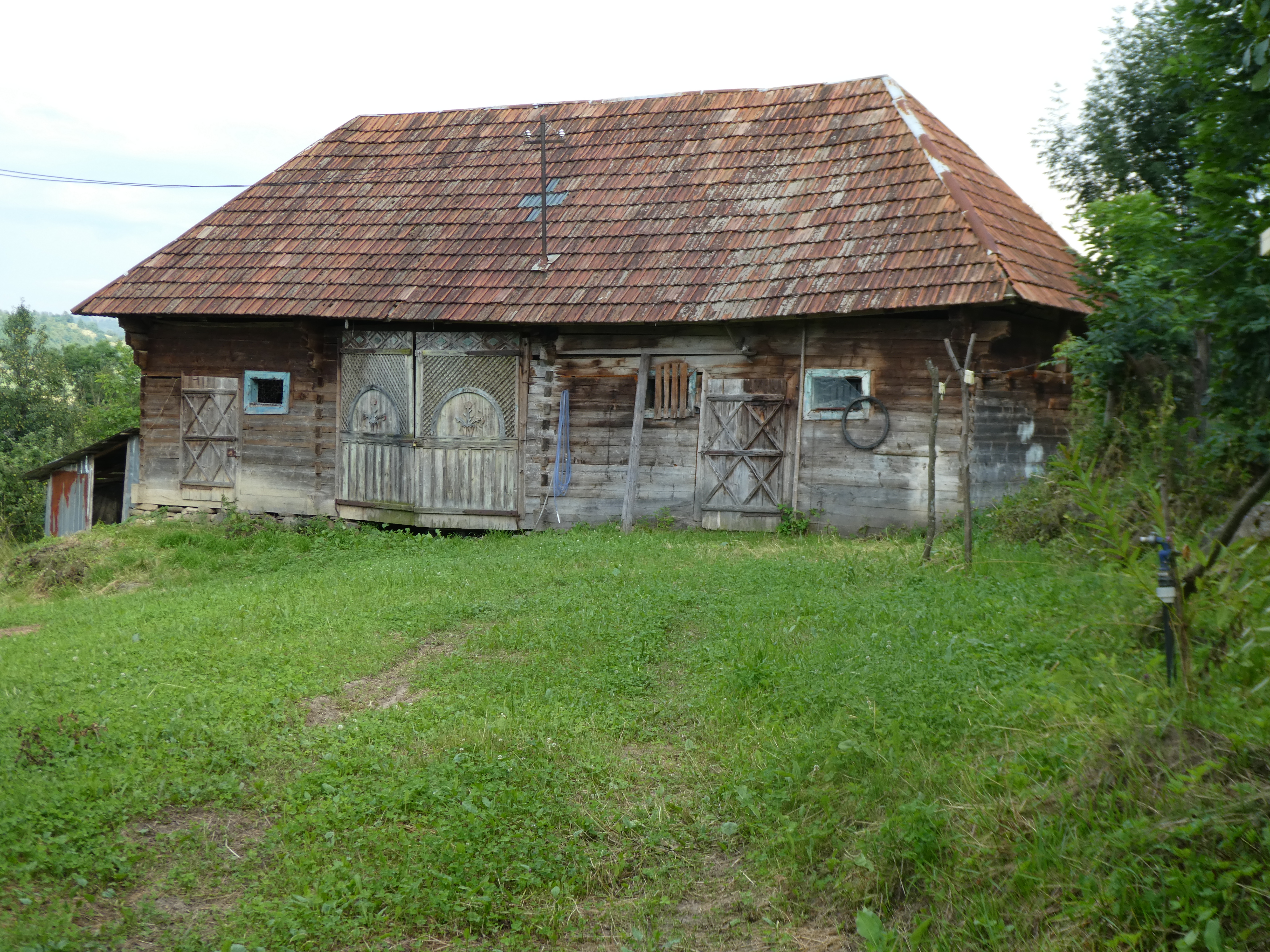
The ornate wooden gateways to the houses and some of the houses were fascinating. Every plot of land had a hay rick and there was grass being cut and stooked all around.

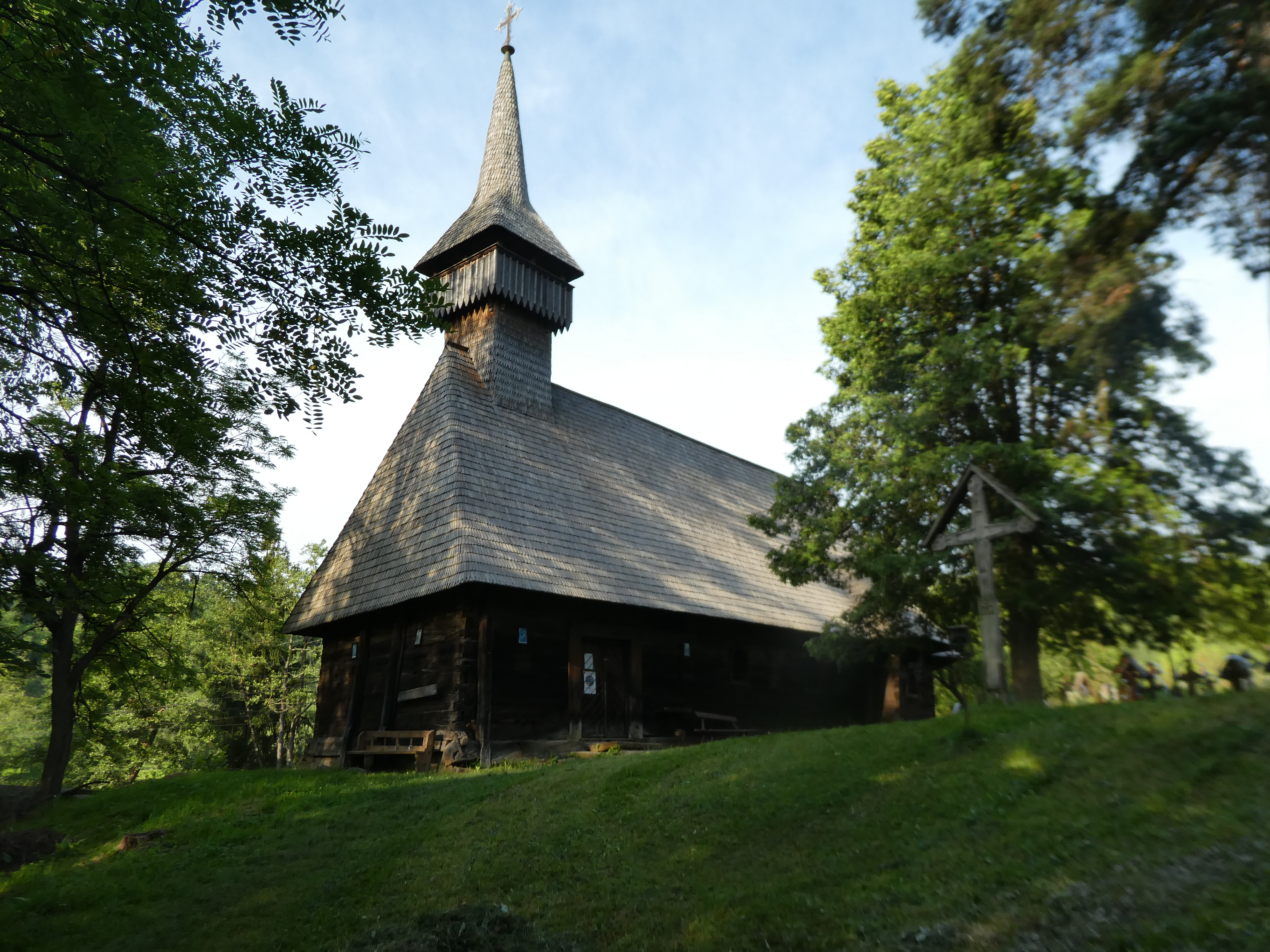
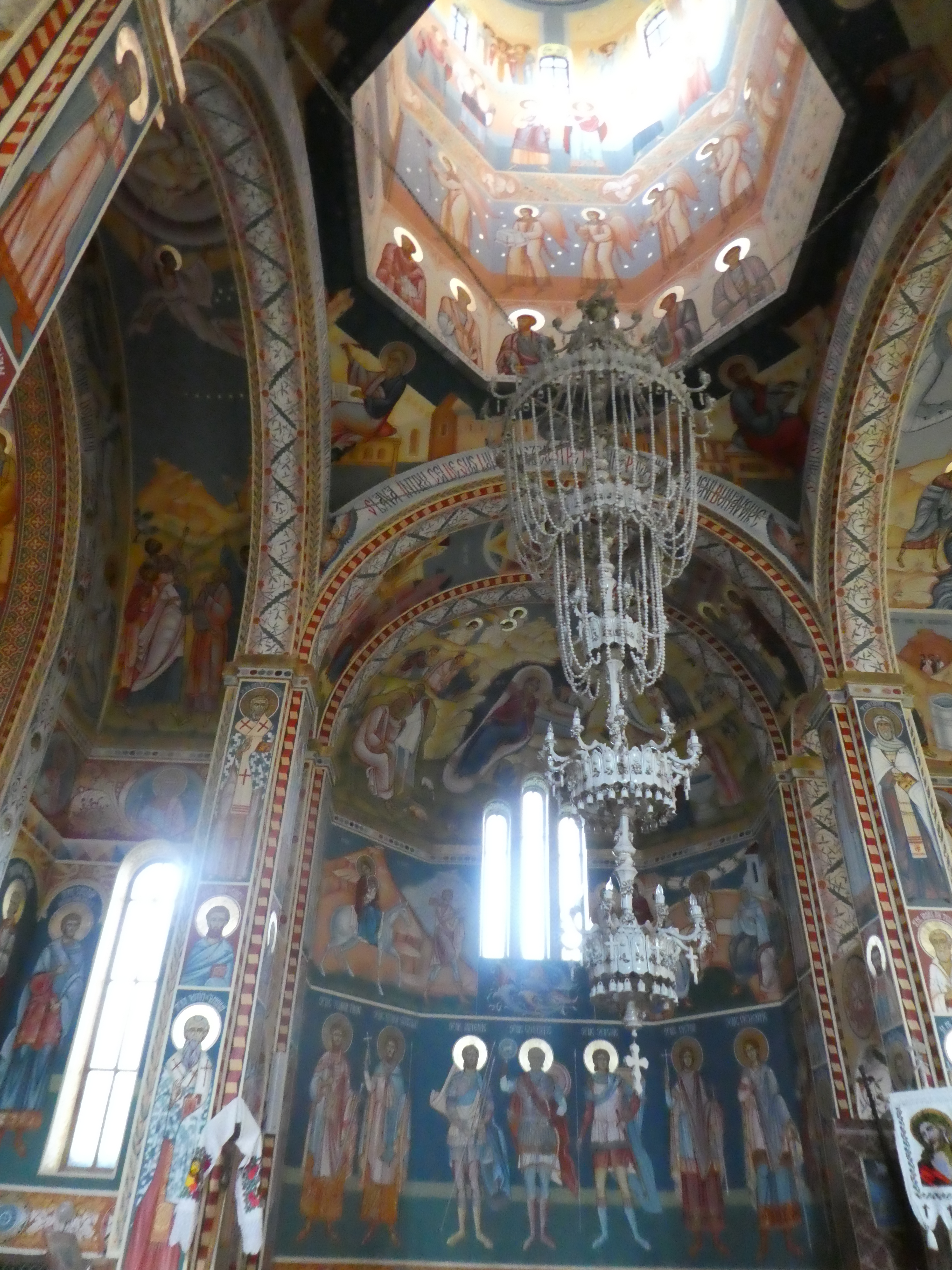


We tried to see inside the new and old wooden churches but they were locked, the enormous stone and zinc church was open and with the walls all painted colourfully and just benches covered in rustic blankets all around. In the church was a book in Romanian and English written by children from the local school about their village. We didn’t have the change to buy it but were determined to come back and get a copy the next day.
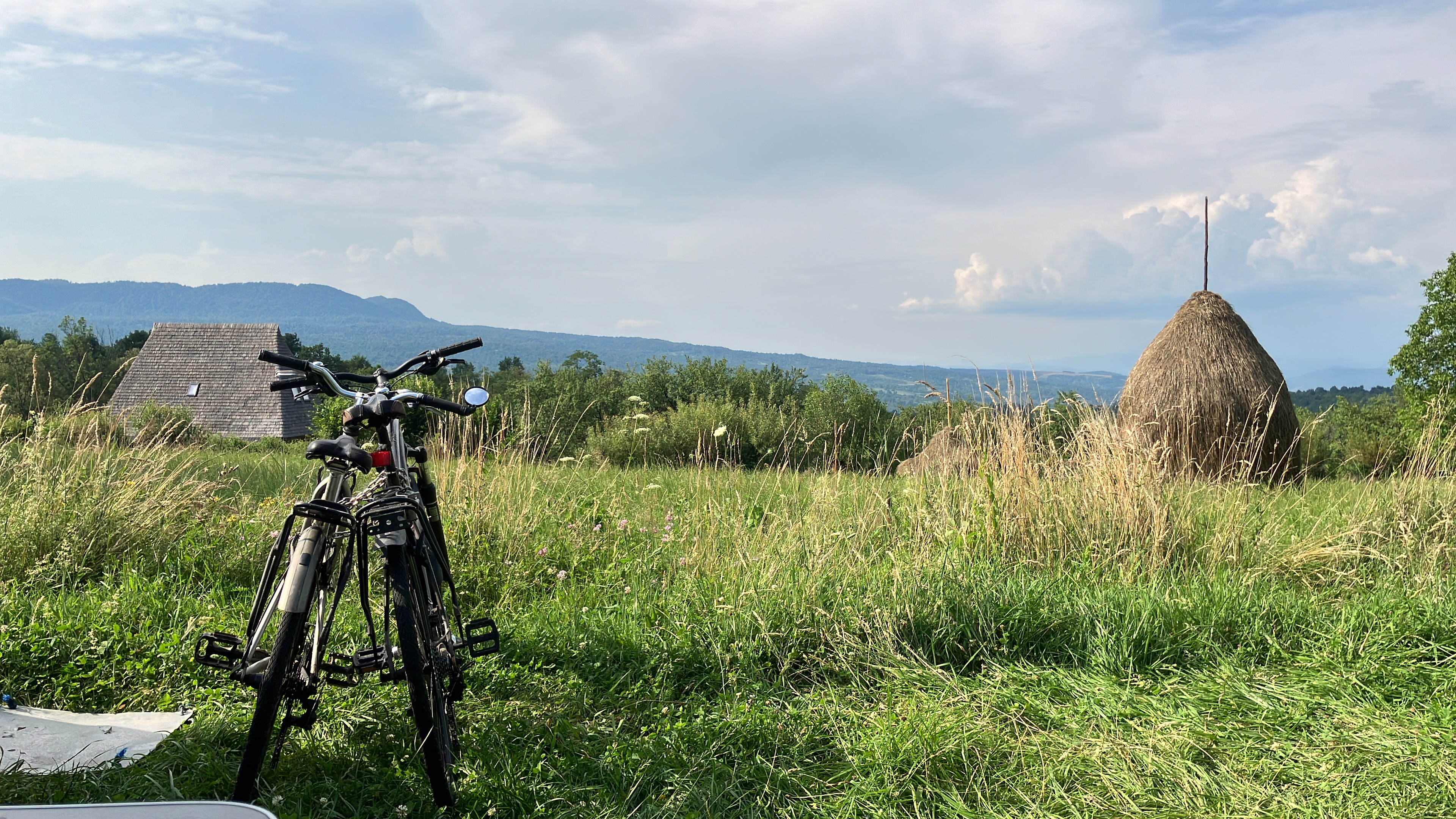
By eight o clock the campsite was full and we ate overlooking the mountains with the hay being cut around us in the cool of the evening. We have travelled 1932 miles since leaving home
Tuesday 9th July – Breb
The sun woke us early even though we had gained an hour and were now two hours ahead of UK time..

The owner brought us a newly baked loaf of bread in time for breakfast which we savoured as it was hot. There was enough left over to make sandwiches for lunch, quite solid but ok.
We walked up a track from the camp site through the village and towards the distinctive Roosters Crest mountain ahead of us.

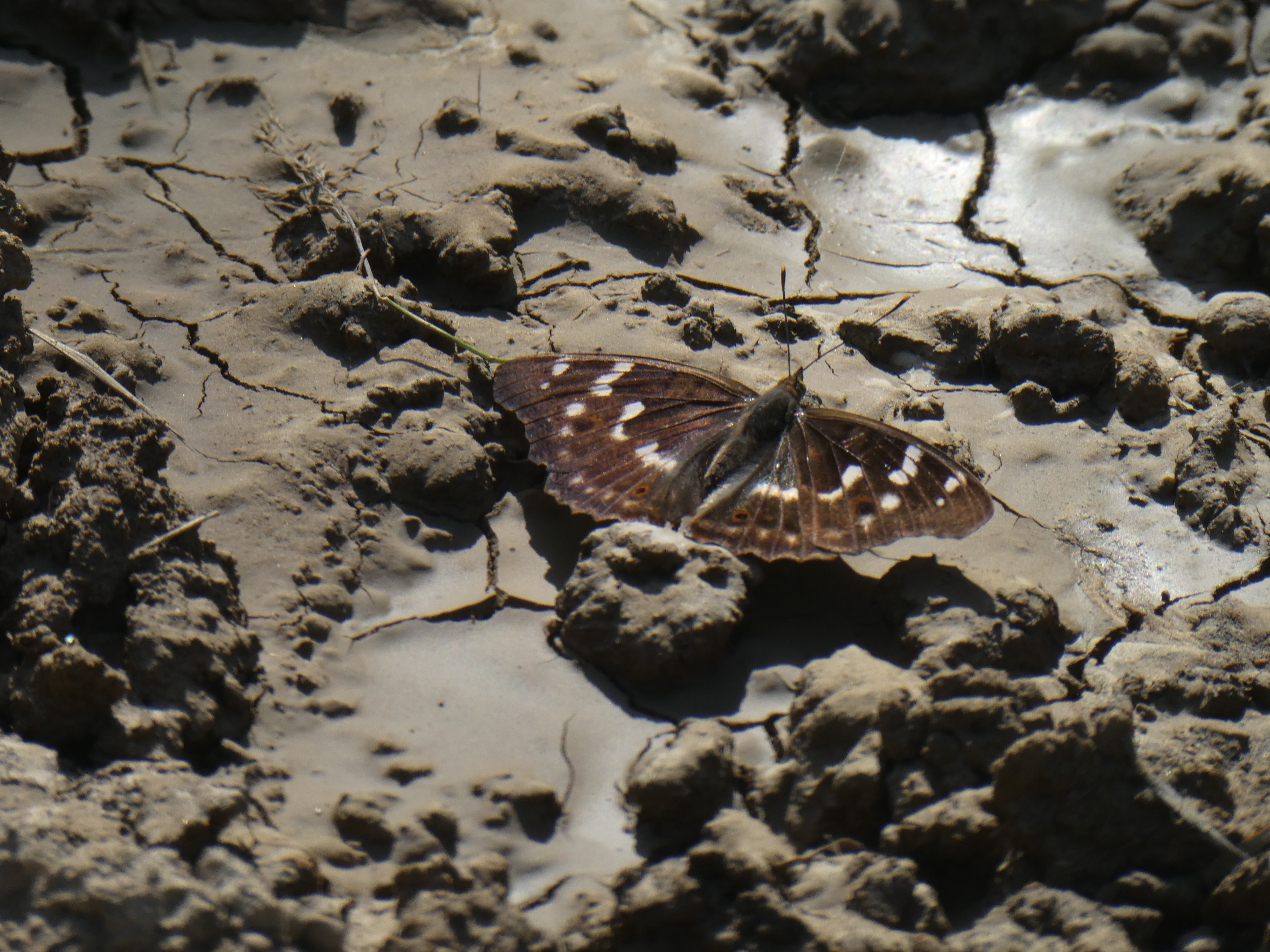

The track passed through some lovely woods and with hundreds of butterflies marbled whites, meadow browns, blues, coppers, skipper and some purple emperors. We also saw a deer and evidence of boars having scuffed up the turf of the forest floor.
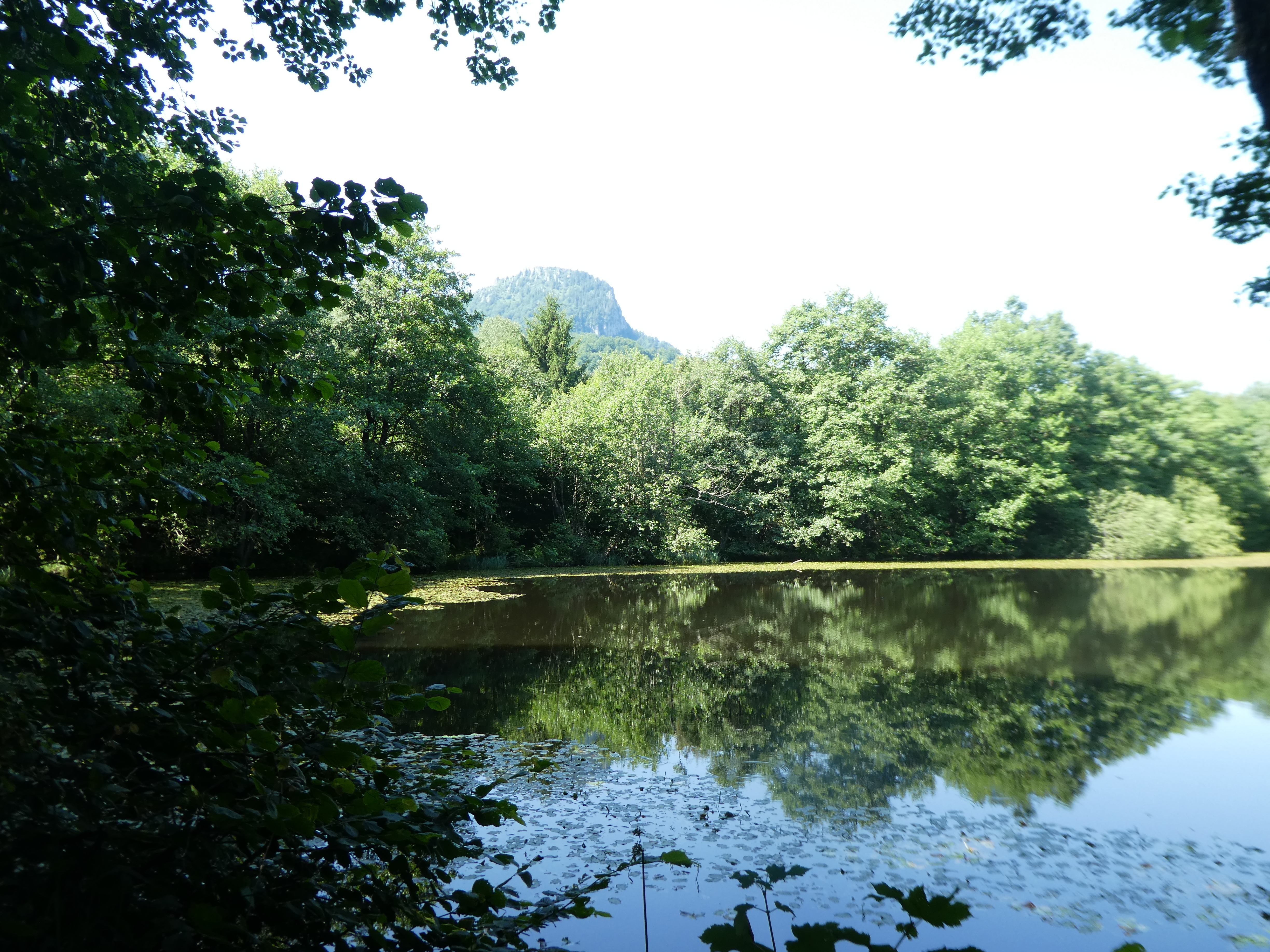
We walked to Lake Morarenilor.
It wasn’t what we expected, shady no access but a small path. It was pleasant enough and we spent about 30 minutes watching the dragonflies and occasional bird flit across the water.
We decided to descend and met a family who were keen to share good places to visit in the area.
The man and his daughter, who had fallen in the mud, were walking back down to the village where they were staying. He was Romanian and lived in the city of Cluj further south and was with his brother and wife who were visiting for America.
He walked down with us, keen to tell us about the history of Romania as well as the best places to go if we liked mountains.
It was good to hear and we made notes as we walked until we parted company at the edge of the village. When we eventually found our way back to the camp site after wandering through fields until we came in the back of the site. We spent the rest of day planning our itinerary for the next few days.
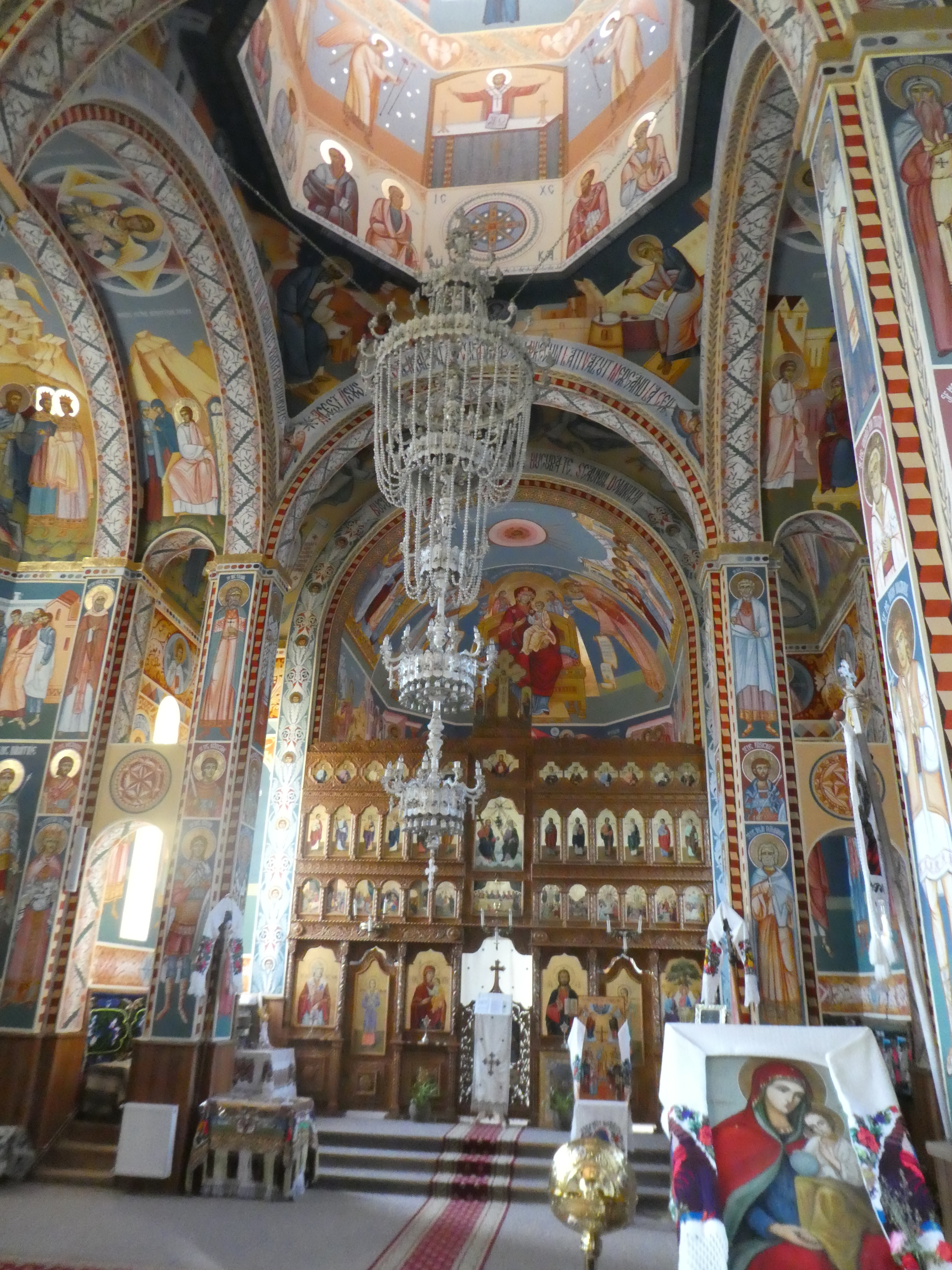
It was very hot and, having got some change for some smaller currency from the camp site owner, we walked to the church and got a booklet about the village. It was cool to sit in the church and spend time looking at all the figures on the painted walls and we were in no rush to leave.
Later we went to the restaurant just next to the camp site and with a lot of others enjoyed a nice meal before returning and chilling in the cool of the evening.
Later the owner put his TV on outside so Graham with others, and a beer, was able to watch the Spanish win against France in the European football.
Wednesday 10th July – Breb to the Blue Churches
It was sunny and hot when we awoke. There was someone out in the fields driving a long pole into the ground to create another hayrick.
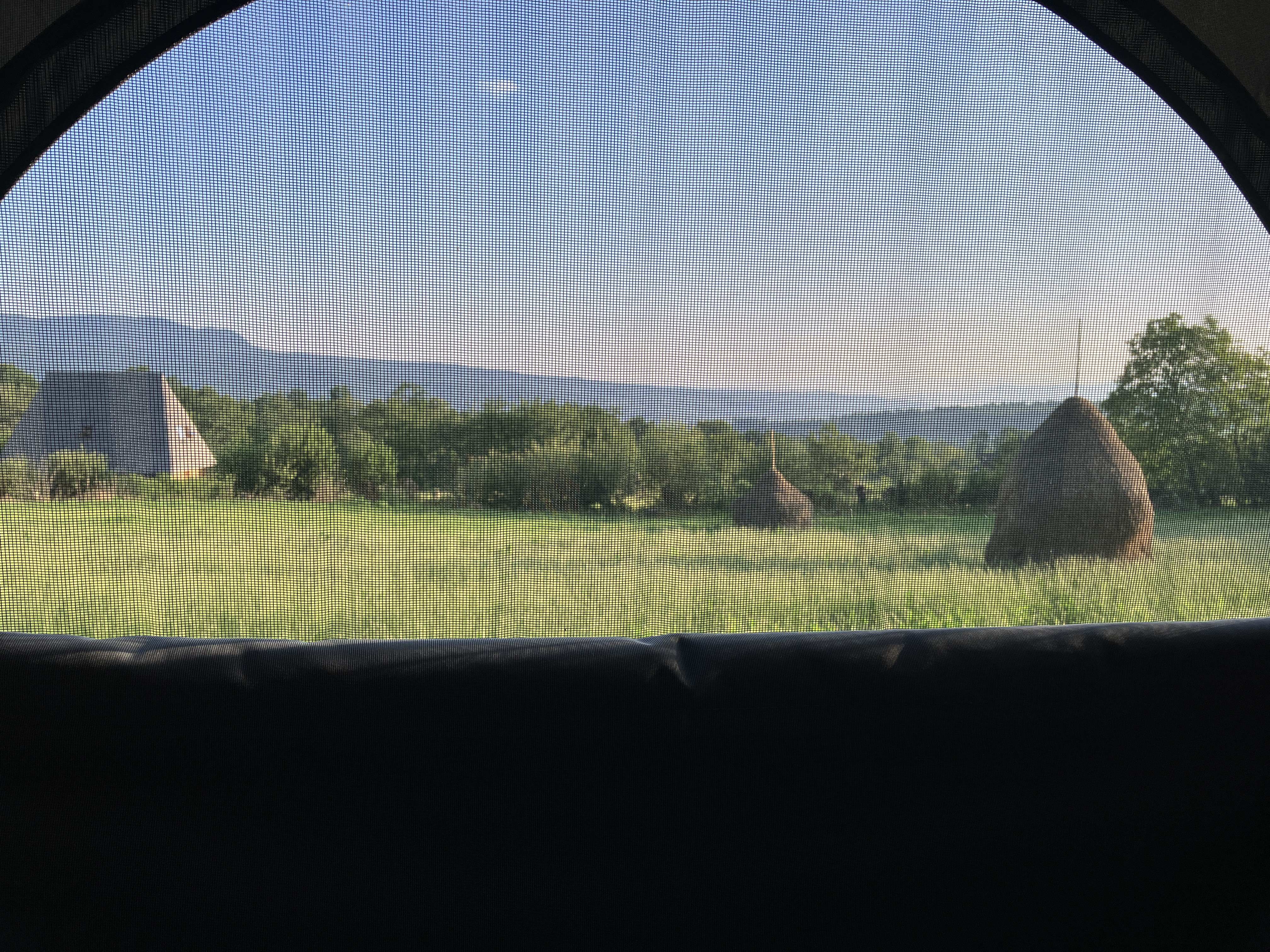

After two great days at Camping Babou we left the campsite at half past eight with a fresh loaf of bread. We travelled north to the Ukraine border then east through lovely mountains and forests to Borsa.


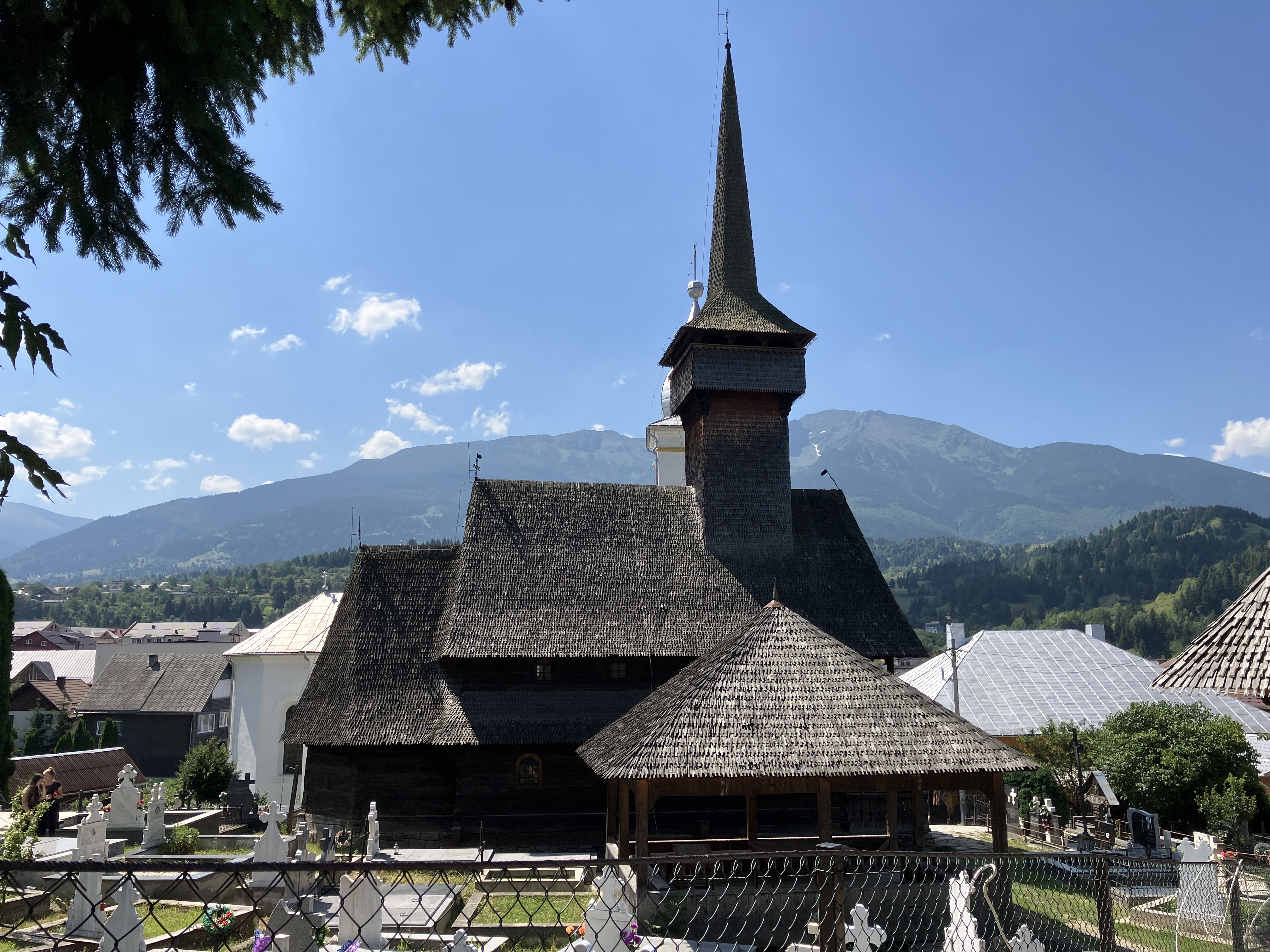


We shopped in Borsa and looked at a couple of churches in the town before stopping for food on a high pass, the Prislop Pass, where we could wander up onto the grassy col.
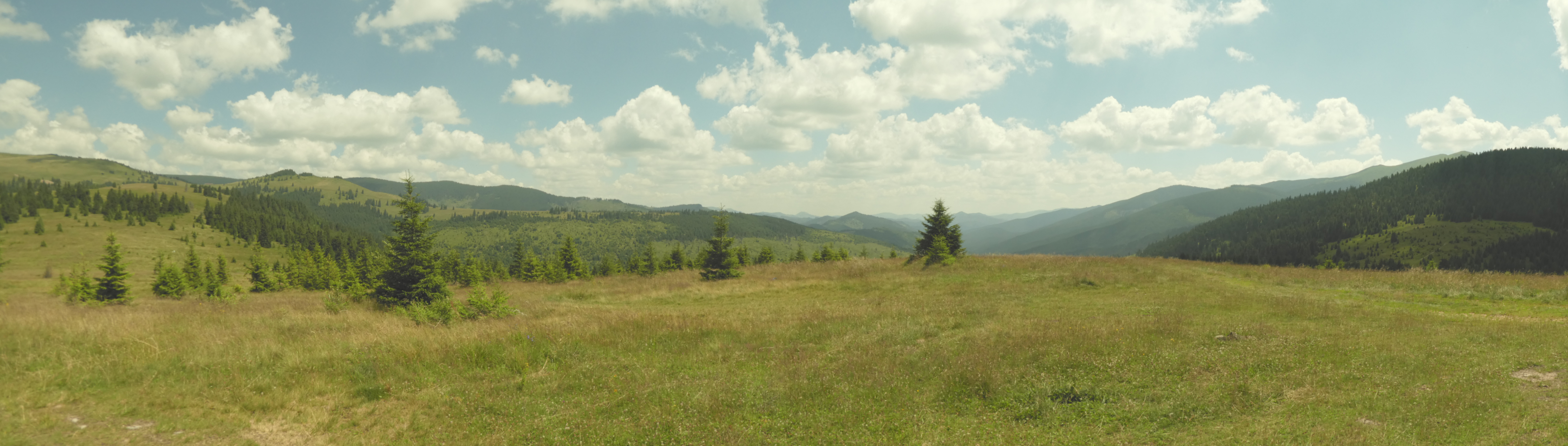

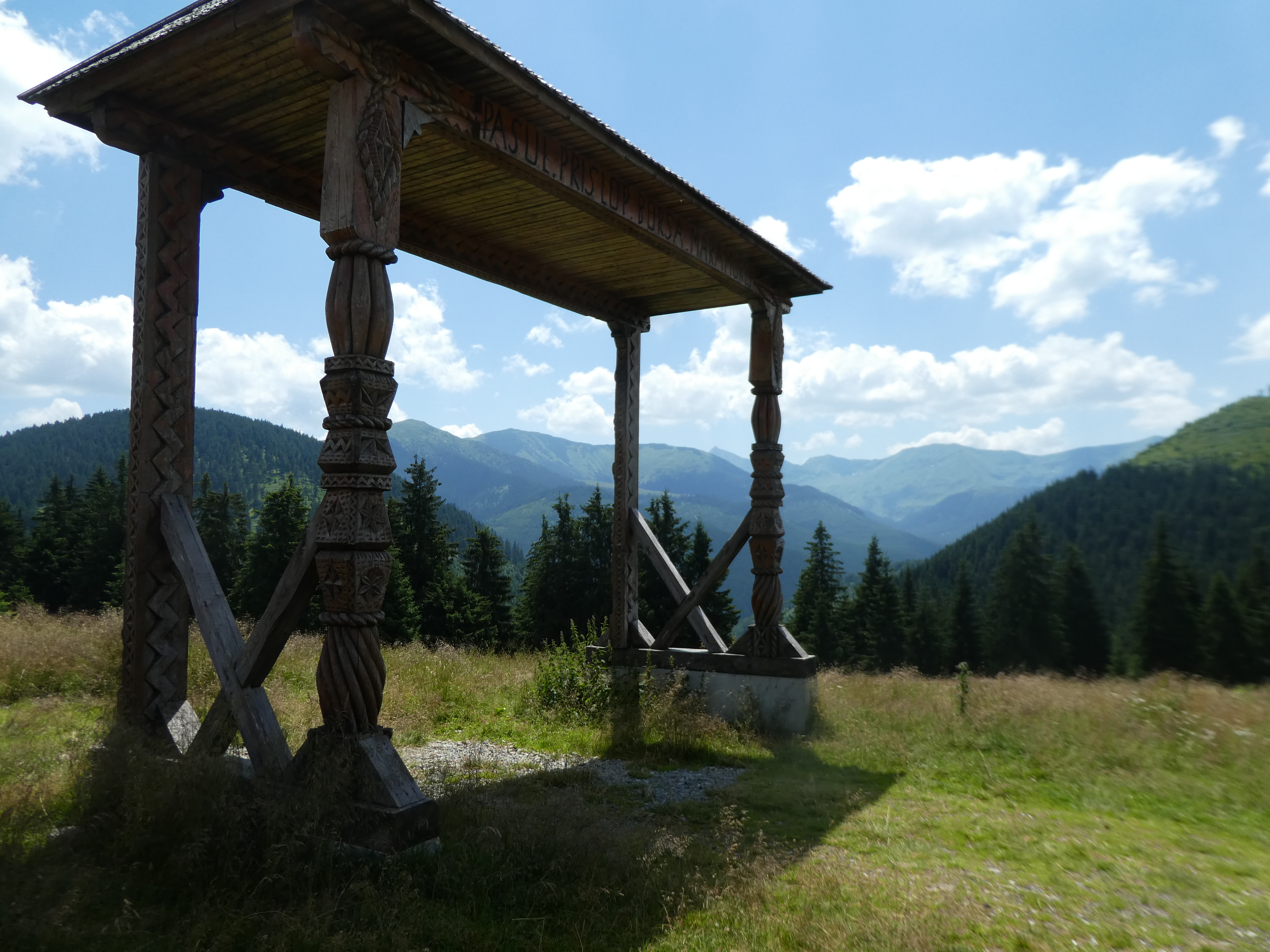
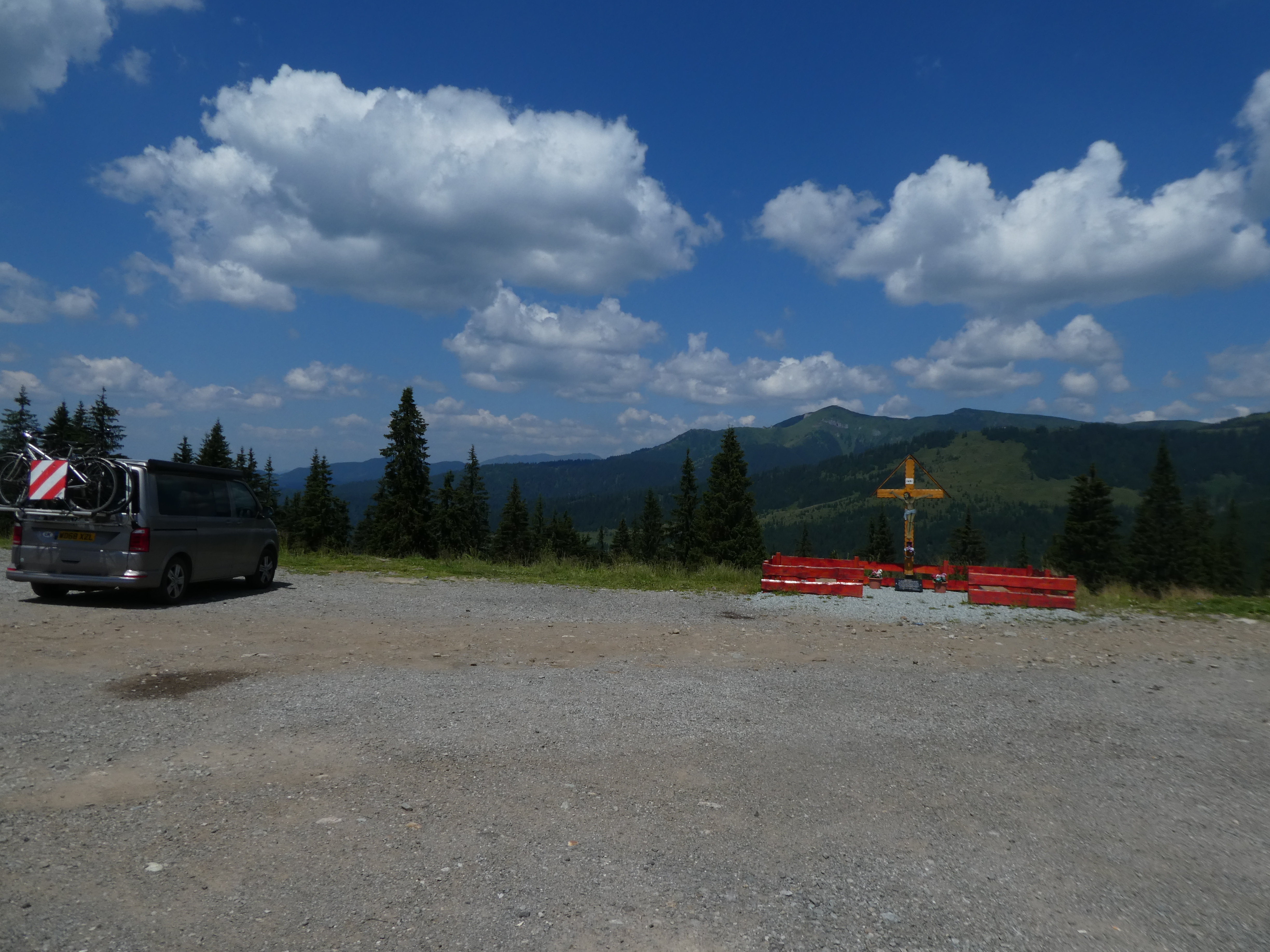
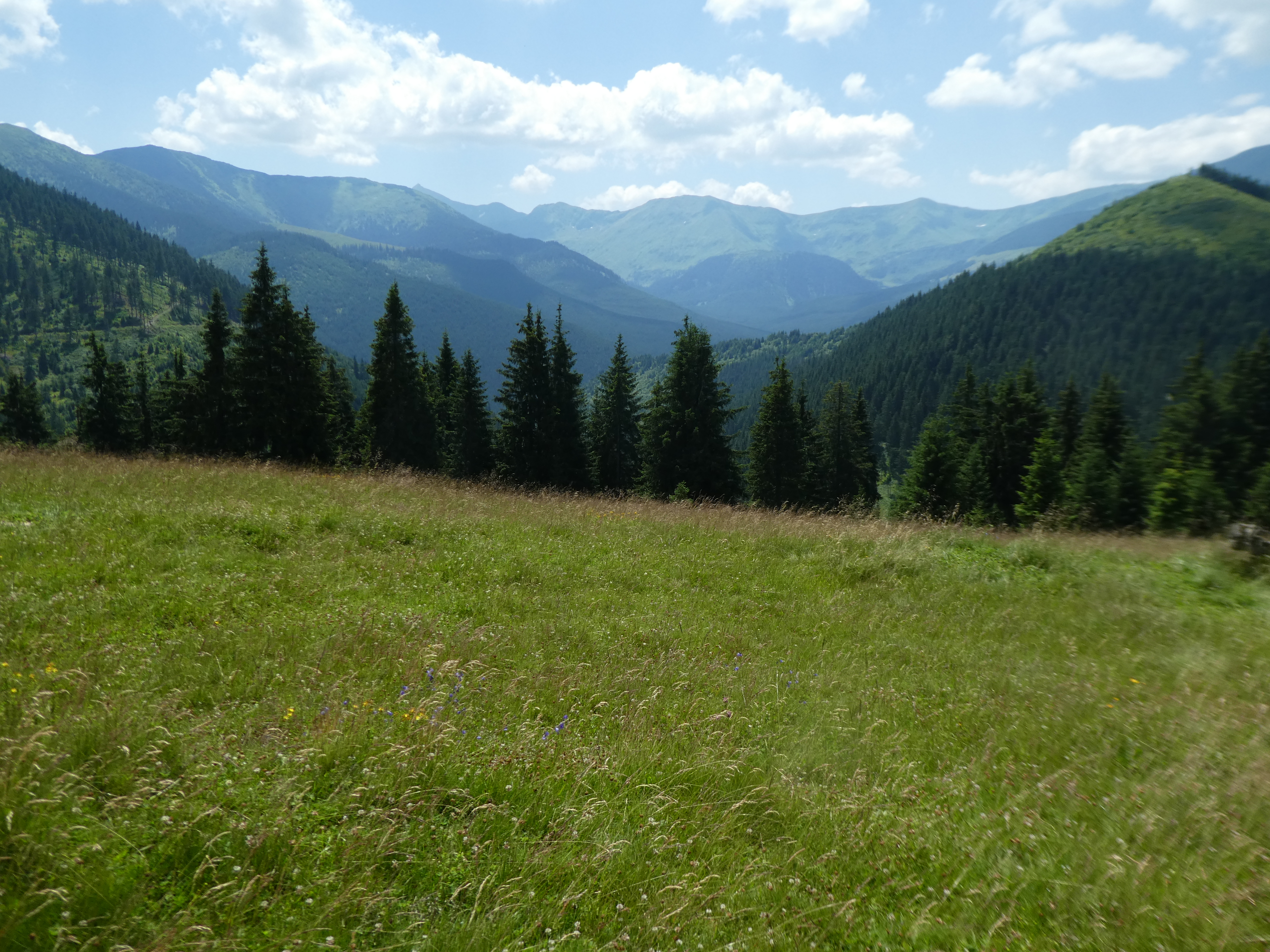
Here we had a look at a monastery Prislop where we met a Romanian lady who lived in New York but came back every year to holiday in her home land. We looked inside the church where a monk was chopping up sisal to mix with plaster to repair the frescoes in the nave.
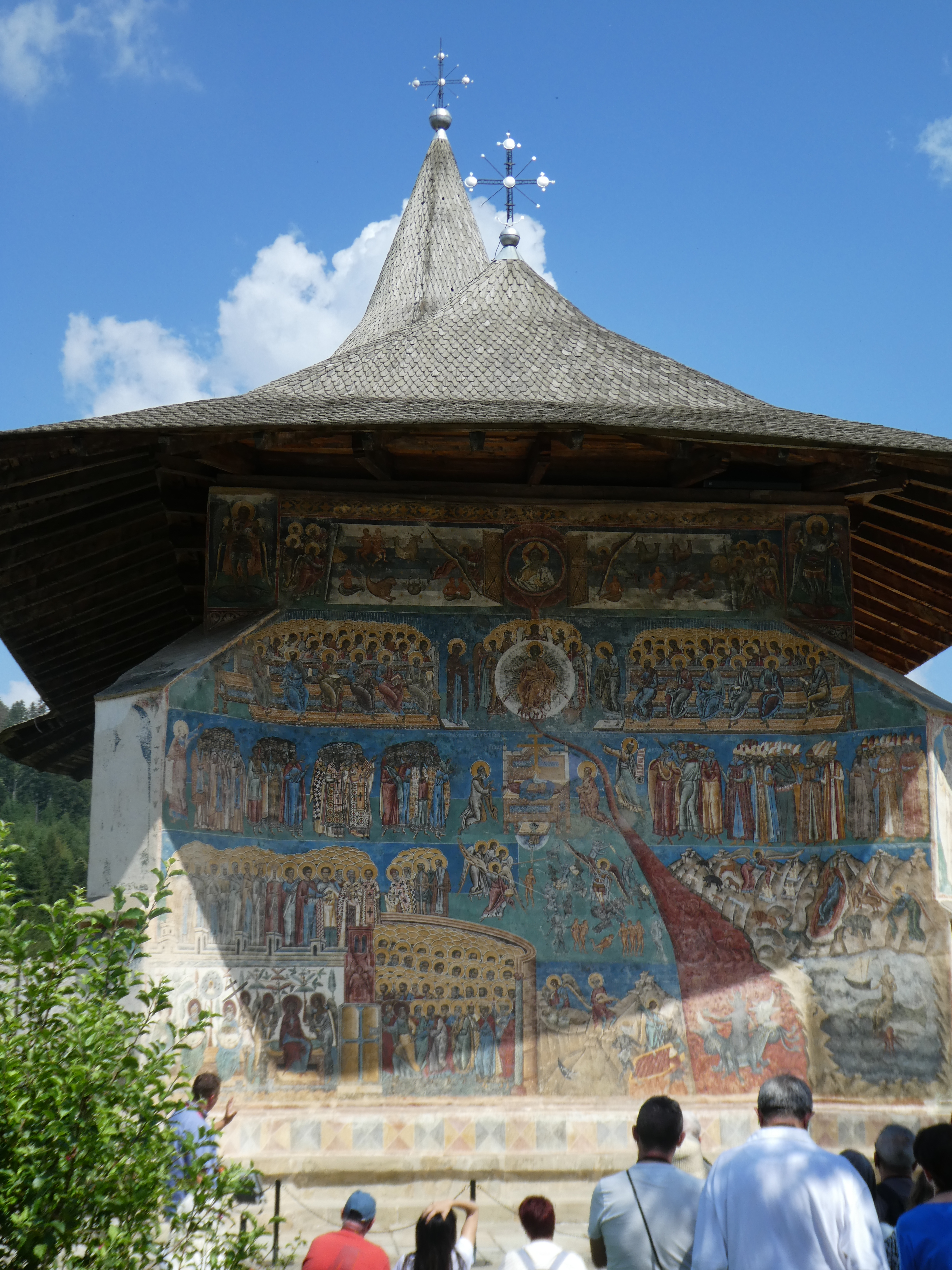
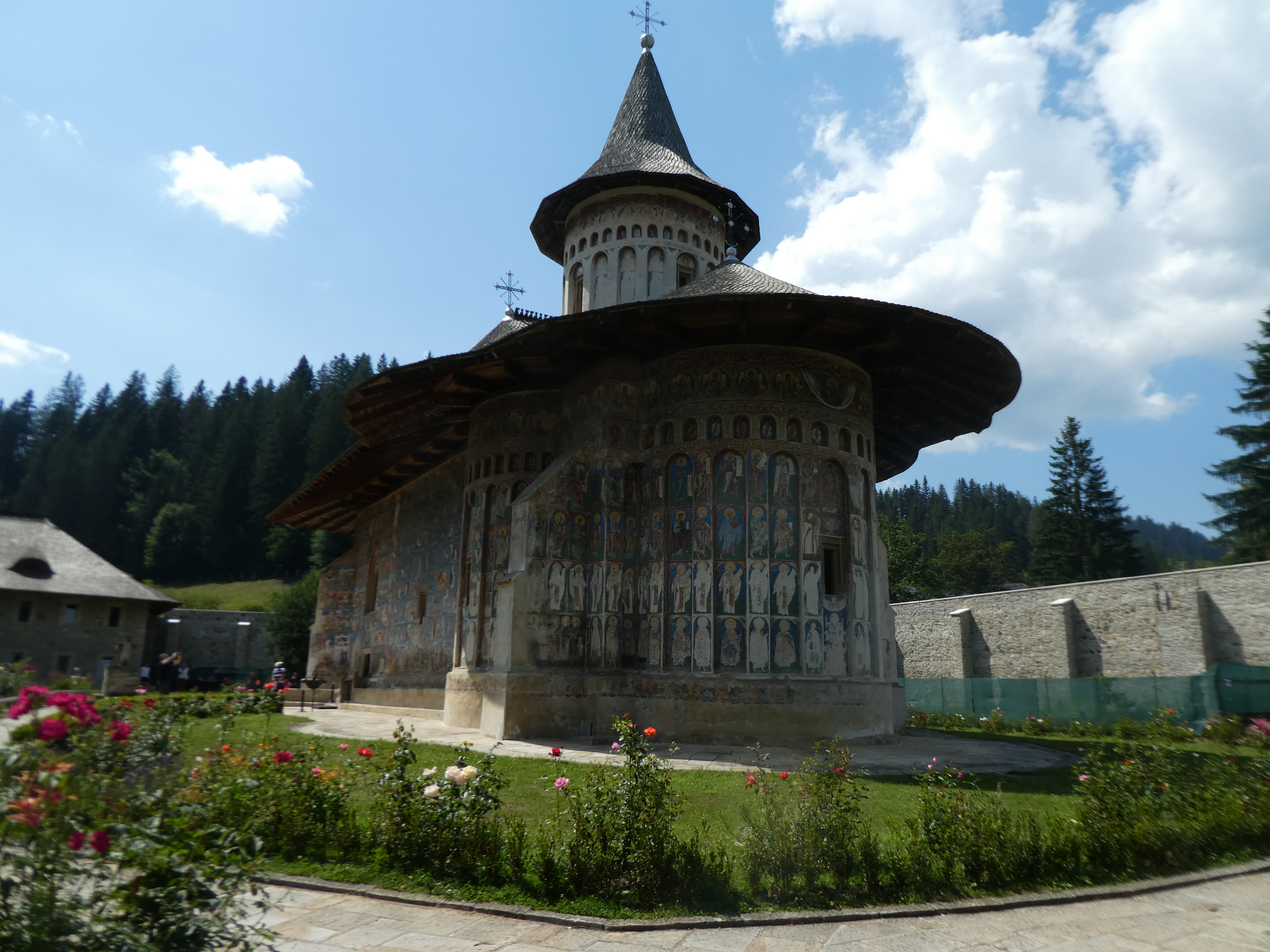
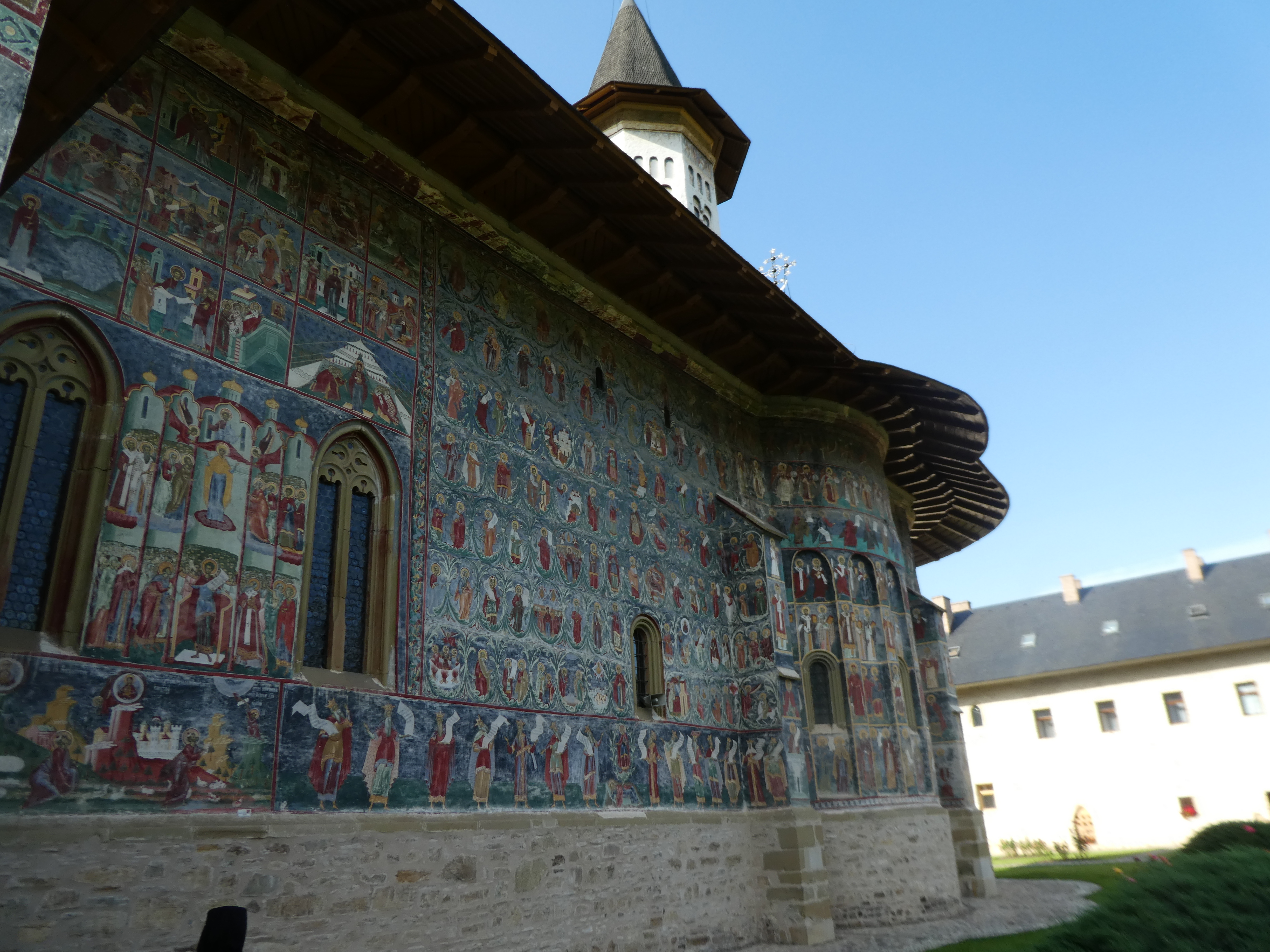
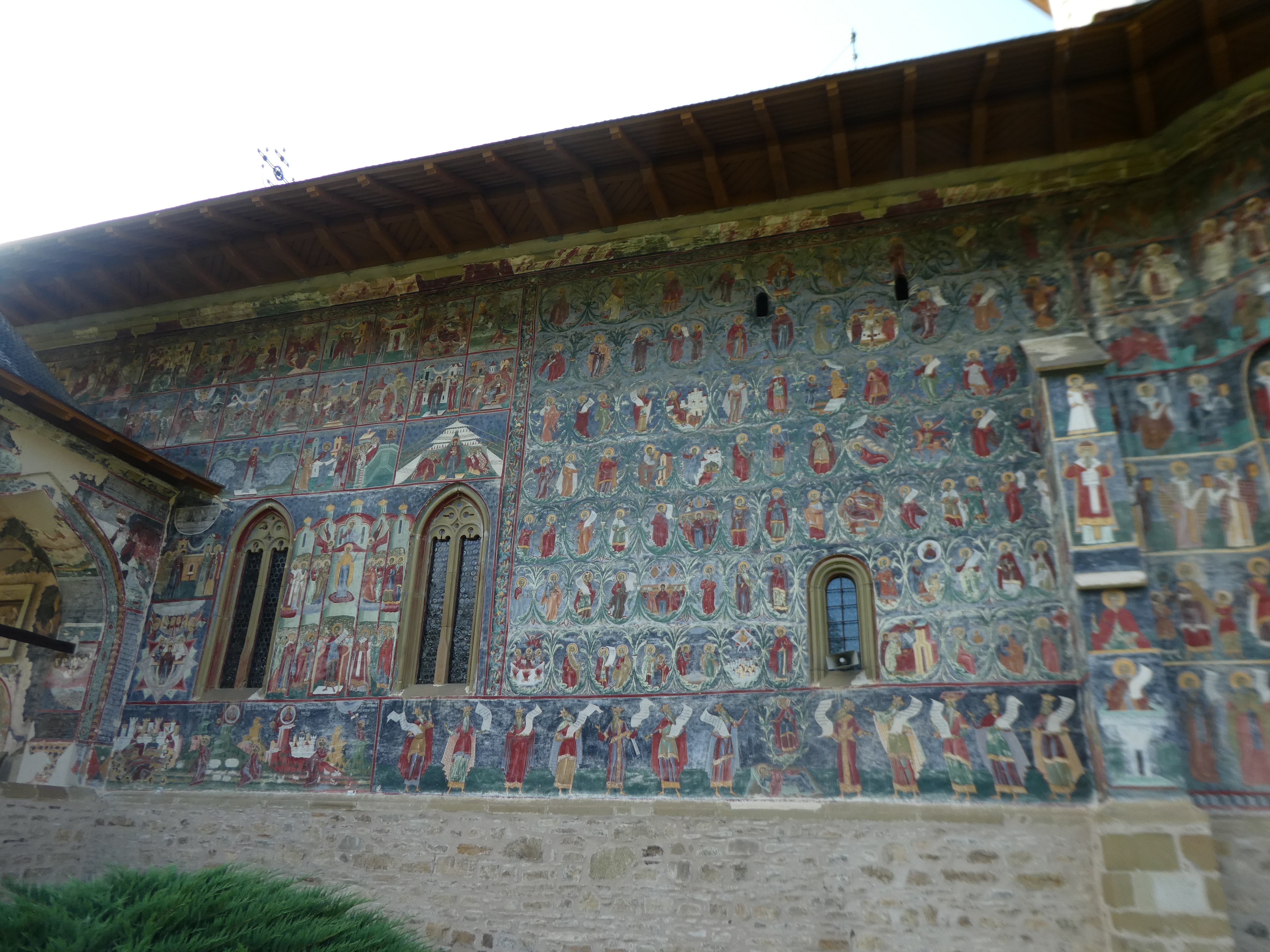
We drove on through Pojorata to the Voronet Monastery famed for its use of a unique shade of blue named Voroneti Blue The outside walls and the inside had hundreds of paintings which had been there for 500 years without needing to be touched up. The paintings inside were ferociously protected by nuns not allowing the taking of photographs.
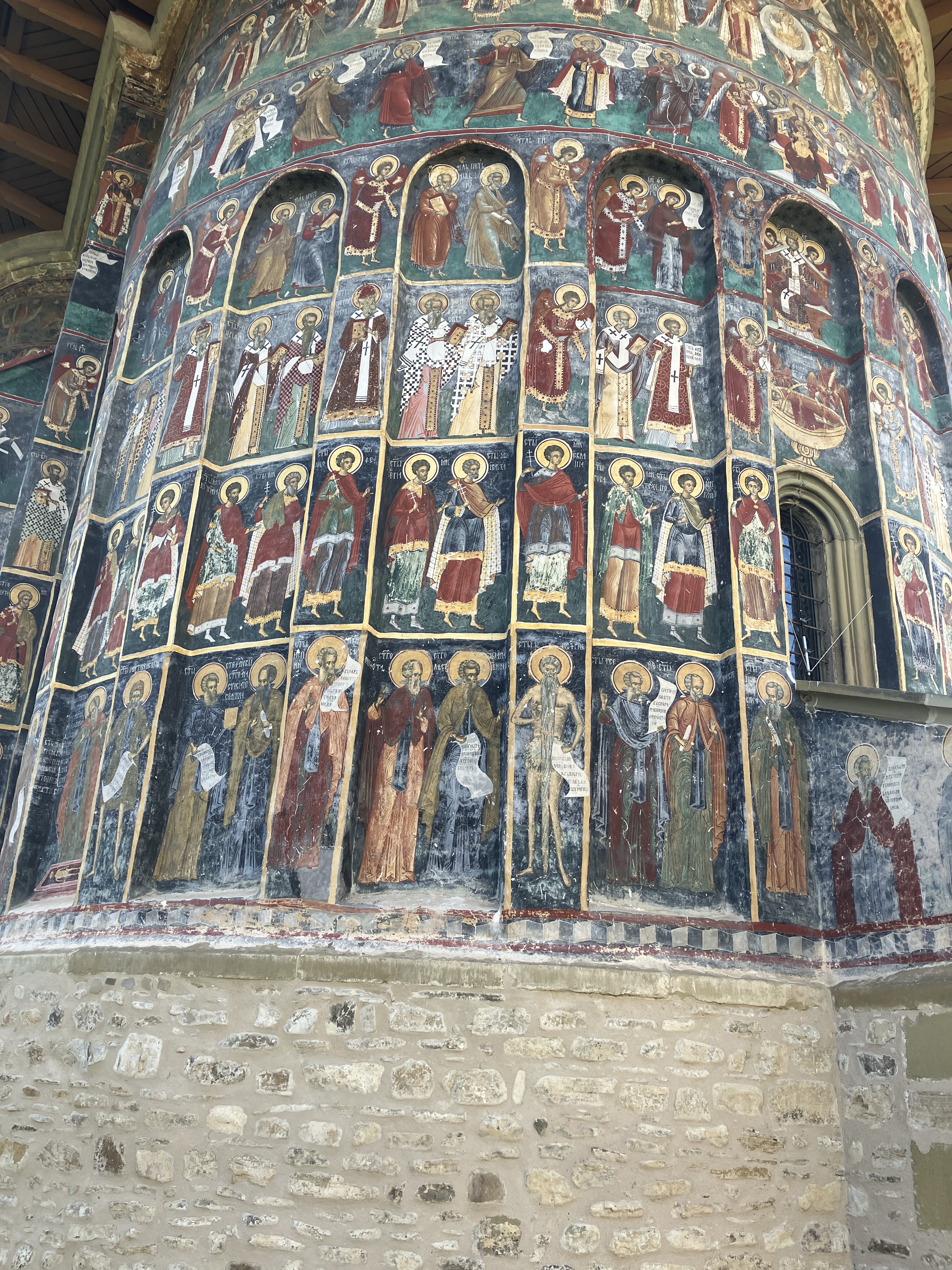
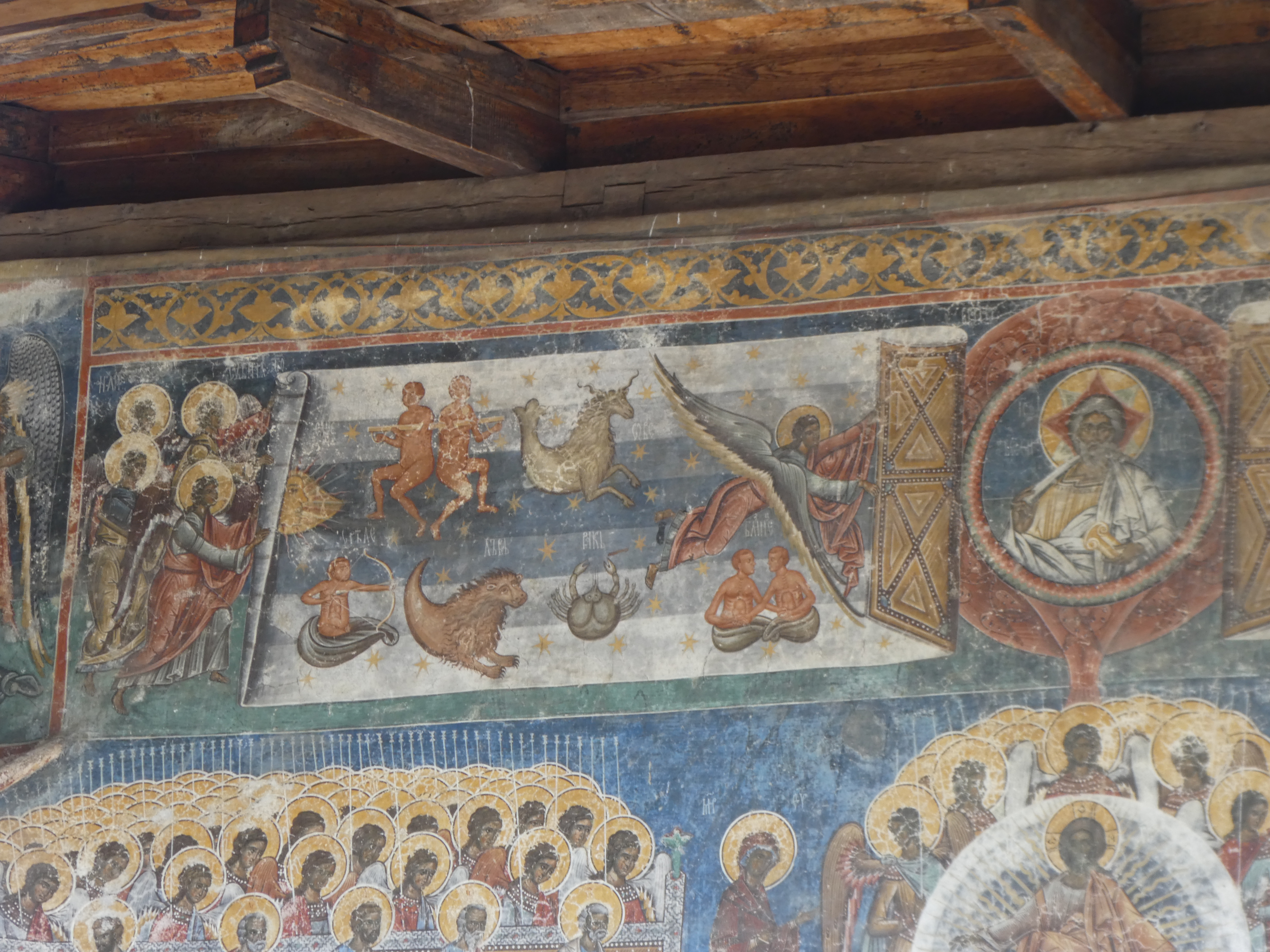
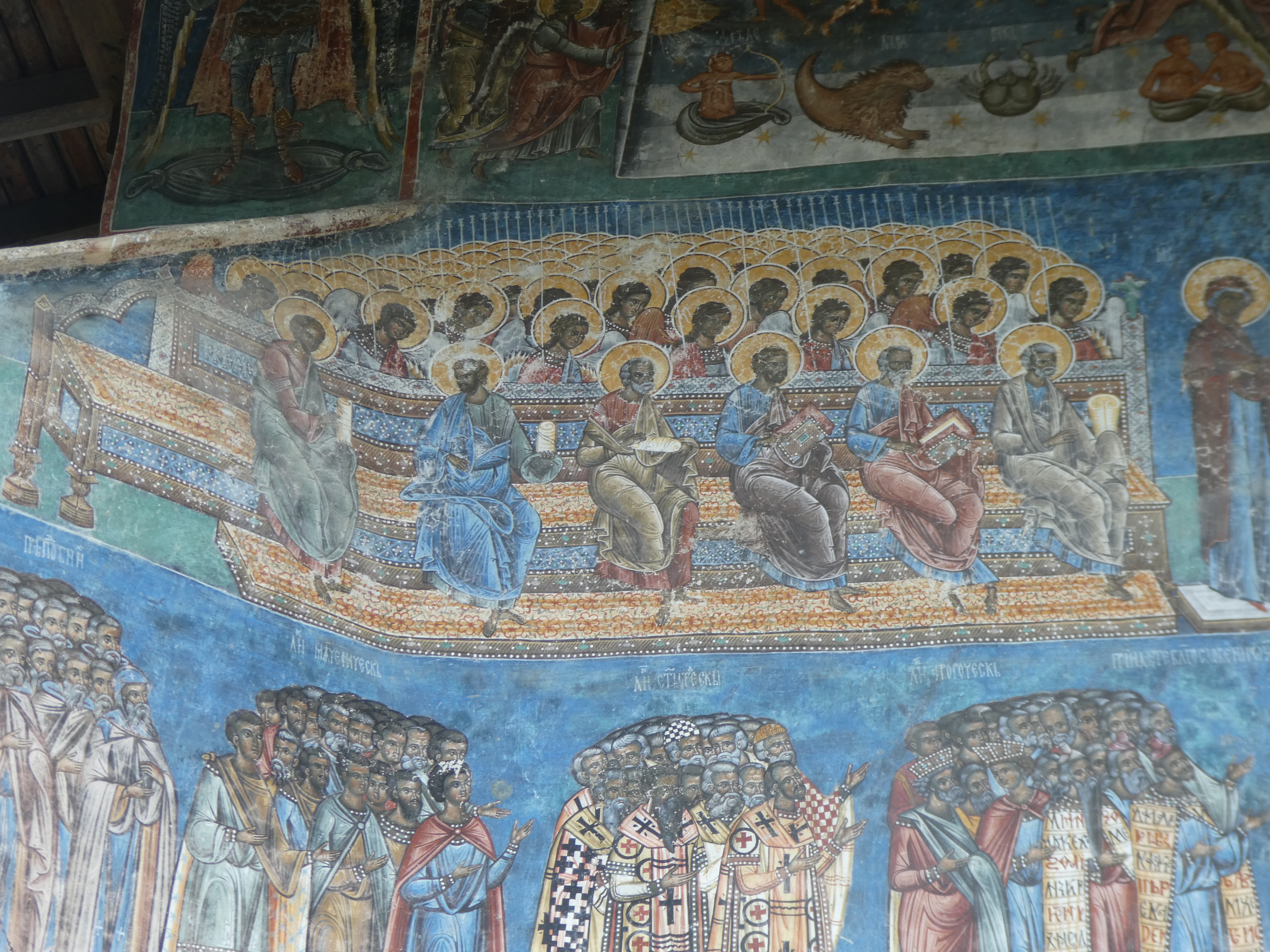
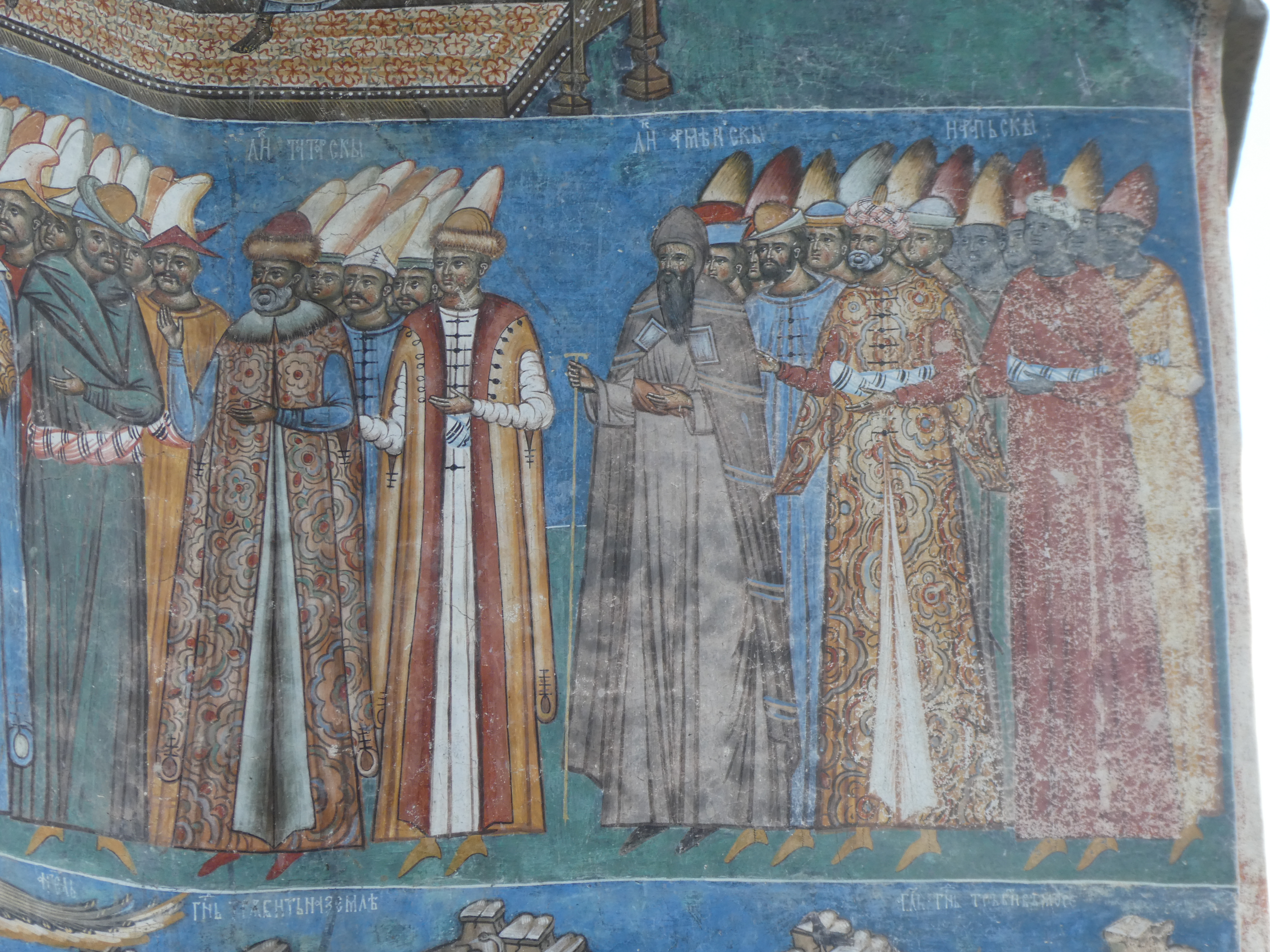

The deep voronet blue was spectacular.
From here we decided to camp near Radauti to the north. Unfortunately, after many more miles we found the site was just a playing field and not what we were hoping for!
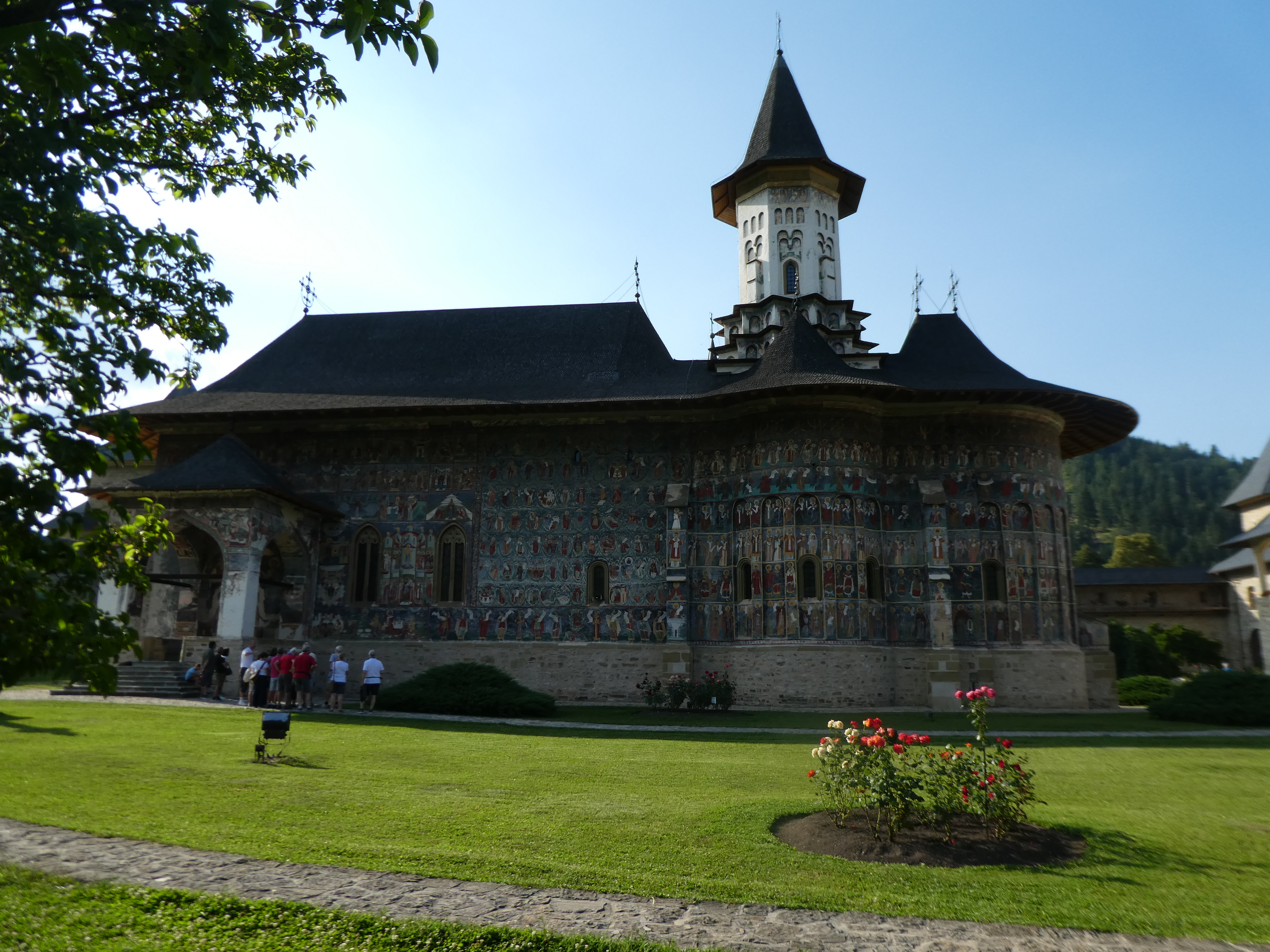
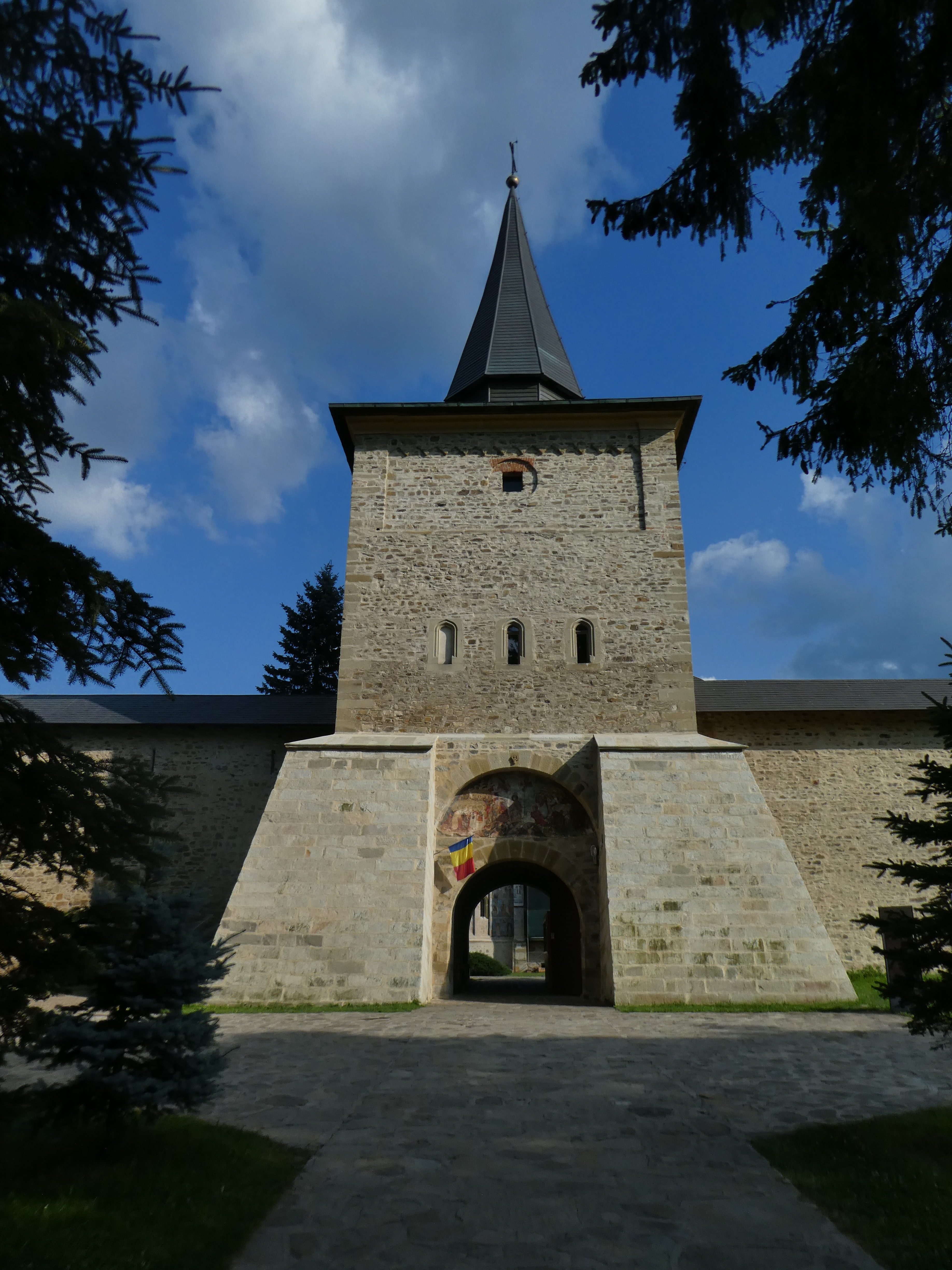
We then turned south west to travel back towards Pojorata where we hoped to find a campsite we had seen signs for earlier.. We came upon the Sucevita Monastery which is still open and has a fair number of visitors. An impressive walled monastery having its walls painted inside and out with hundreds of paintings of saints, biblical scenes.
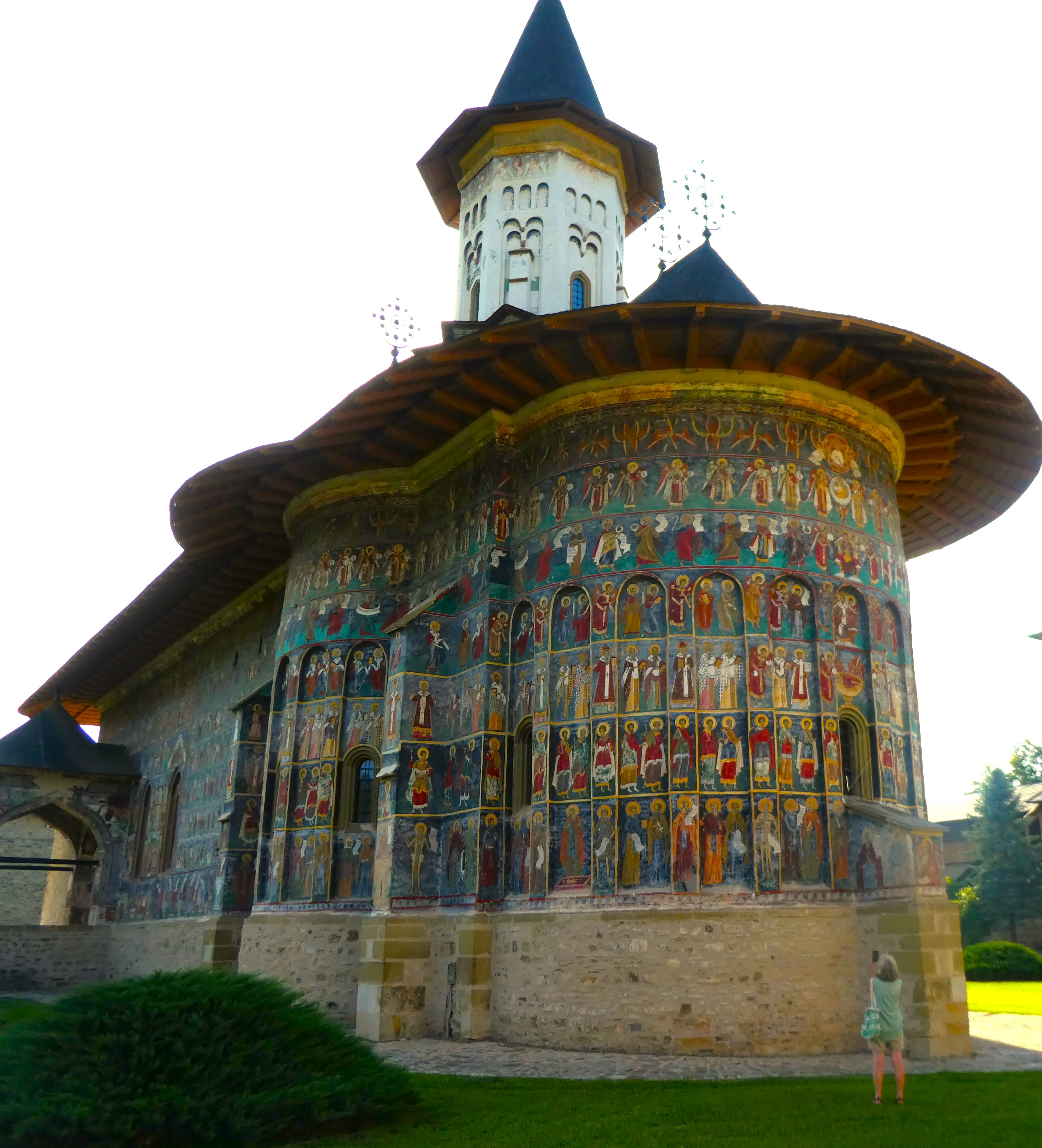
After driving along high woodland passes we descend back to Pojorata and on up the Moldova valley to until we reach Camping Vuurplatts just before it closes at 8pm.


A nice site with views of mountains in all directions.
Thursday 11th July -Bicaz Gorge to Sighisoara
Very hot, clouding briefly midday
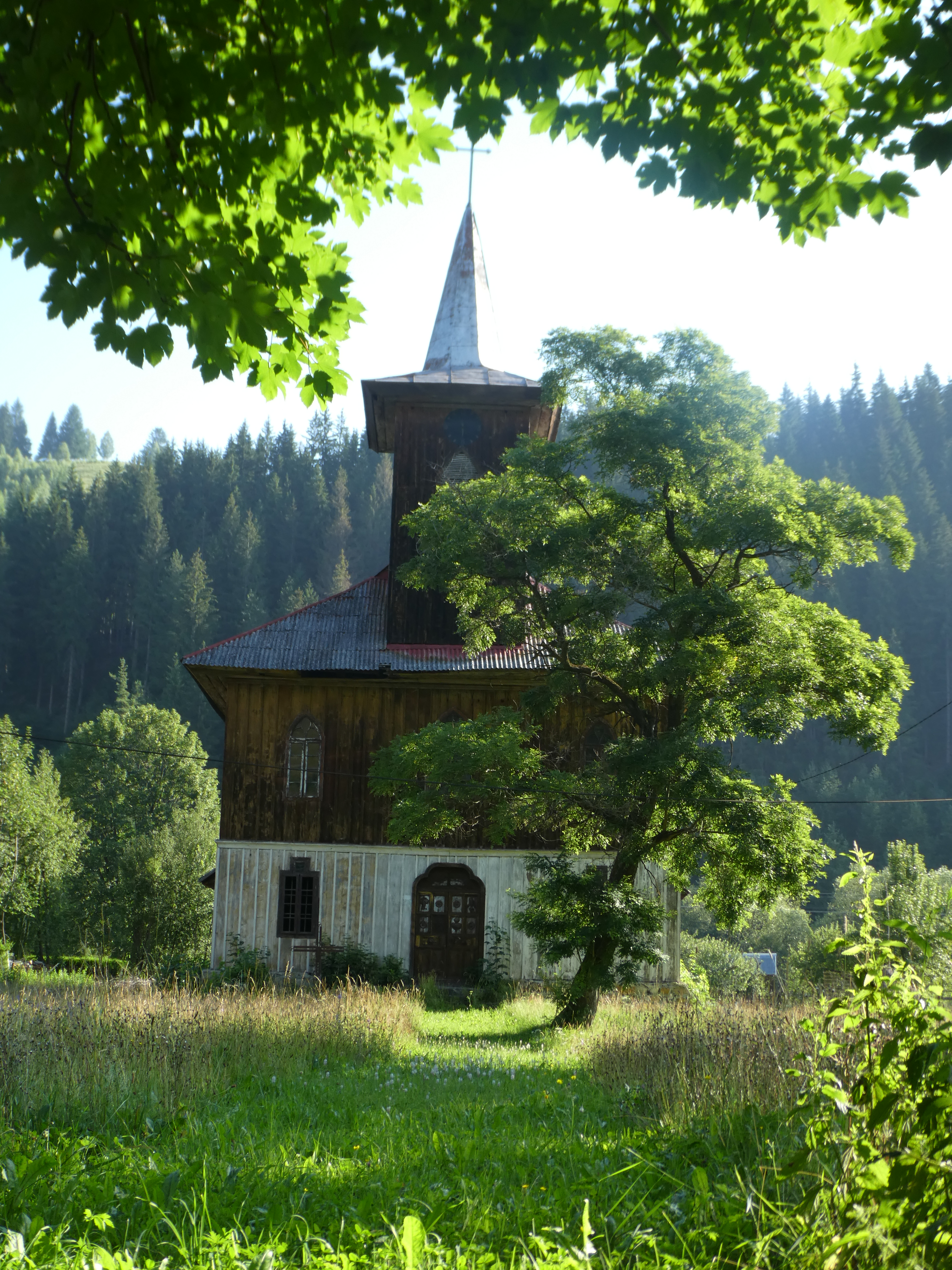
After breakfast we go outside the camp site to explore the village of Fundu Moldovei. We went to look at the church by the site but it was closed. We walked along the busy main road to the shop and bought some sliced bread and then walked down to the river by the site..
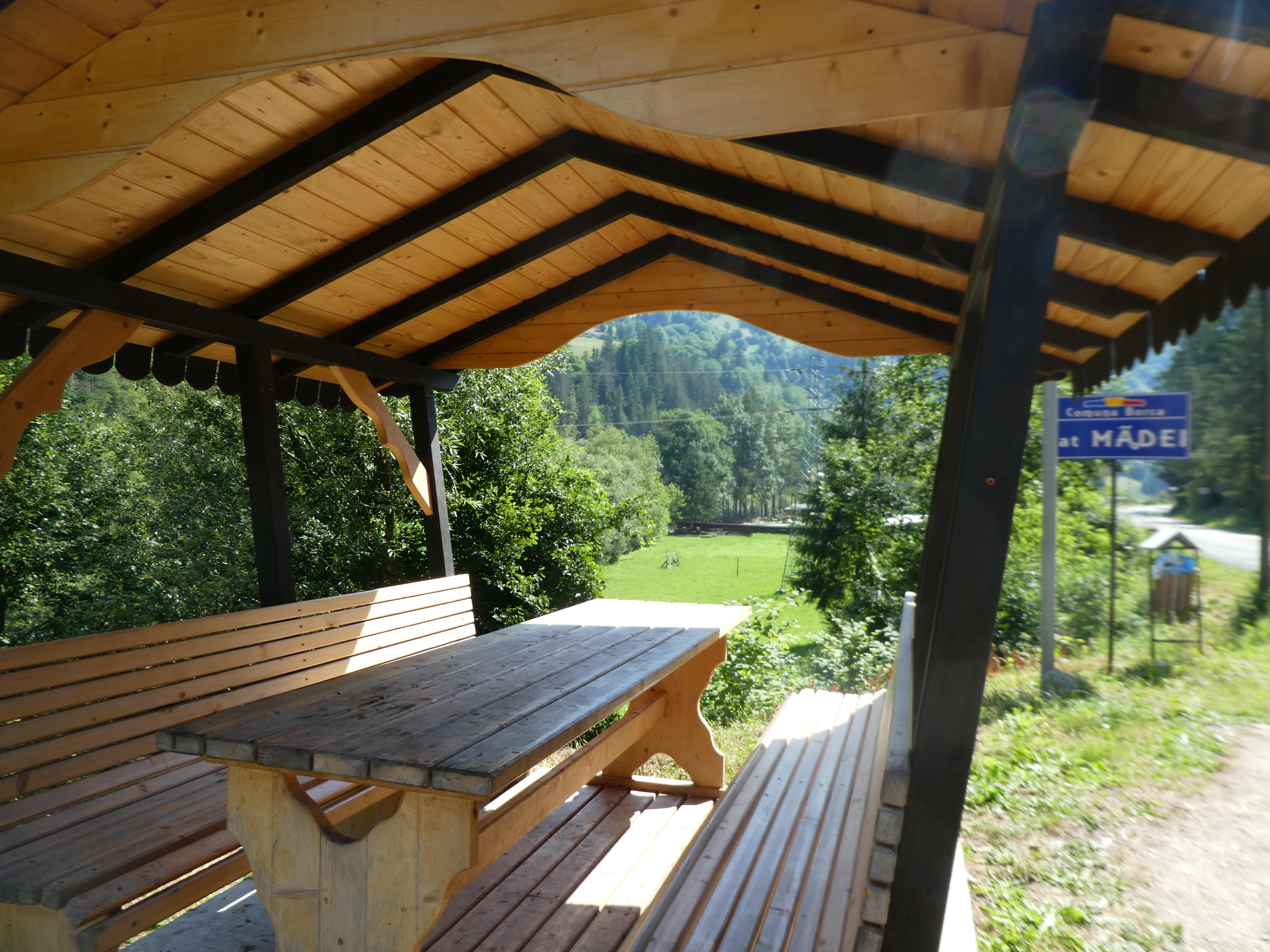
We travelled south in bright sunshine over the mountains through the Alpine Rarau region along narrow roads with a 25kph speed limit . We then joined the main road and followed the wide Bisistra river which had a dam which formed an enormous lake. The road didn’t go near the shore line but we managed to stop above and have a good coffee from a kiosk overlooking Lake Bicaz.


We travelled on to Bicaz up through the spectacular Bicaz Gorge to the Red Lake. This is a popular tourist attraction and by the lake there were lots of souvenirs, food and photo opportunities. The lake as a legend told is meant to have a red tinge which we couldn’t see but there lots of tree stumps showing through the water.


We drove up to the pass at. Pangarati busy, with restaurants and lots of building work taking place.. We made some sandwiches and started walking up the hill to have lunch in peace when a man and a woman started shouting at us that there are bears in the area. We stopped and came down to nearer the car park to eat.
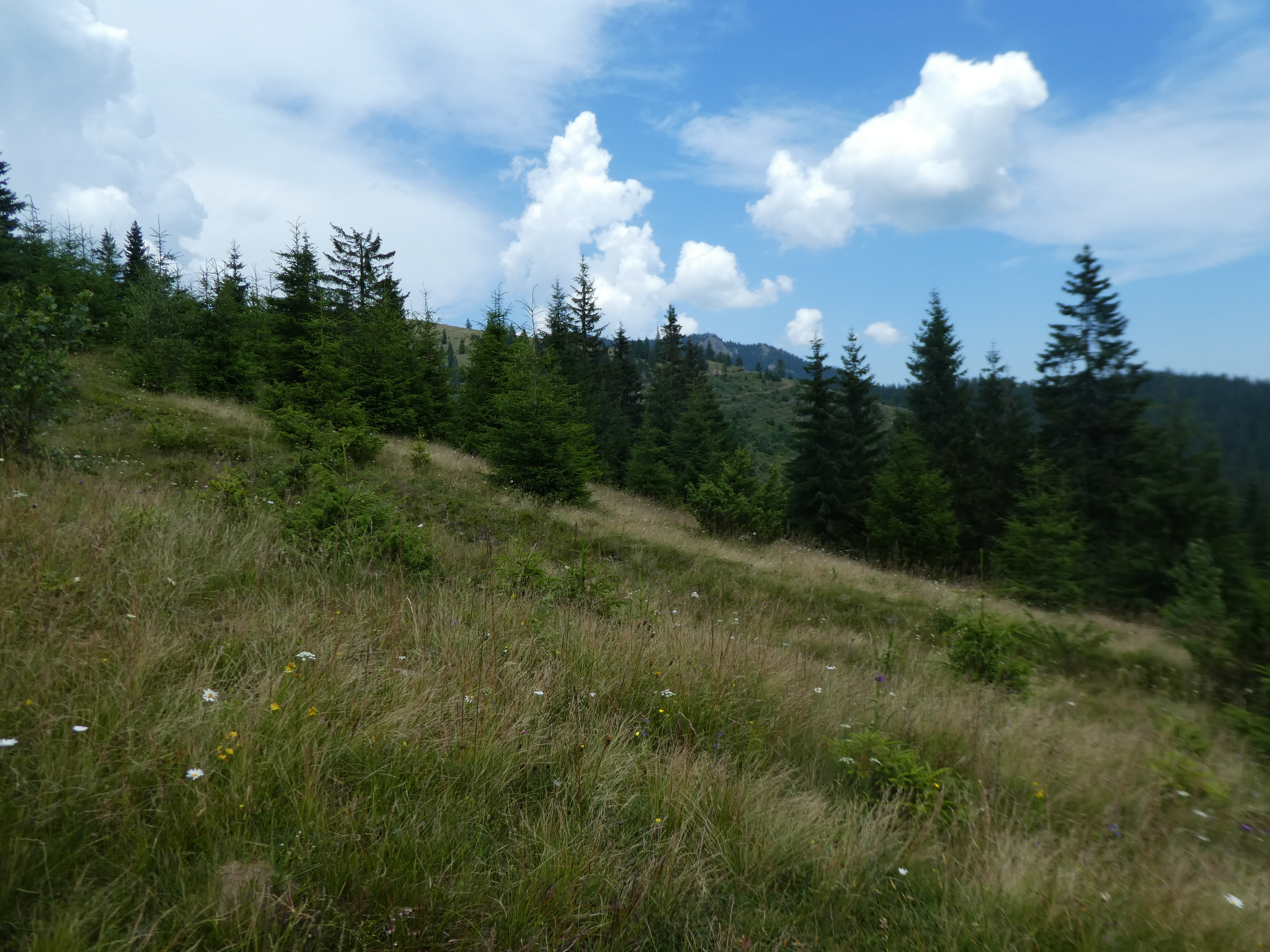
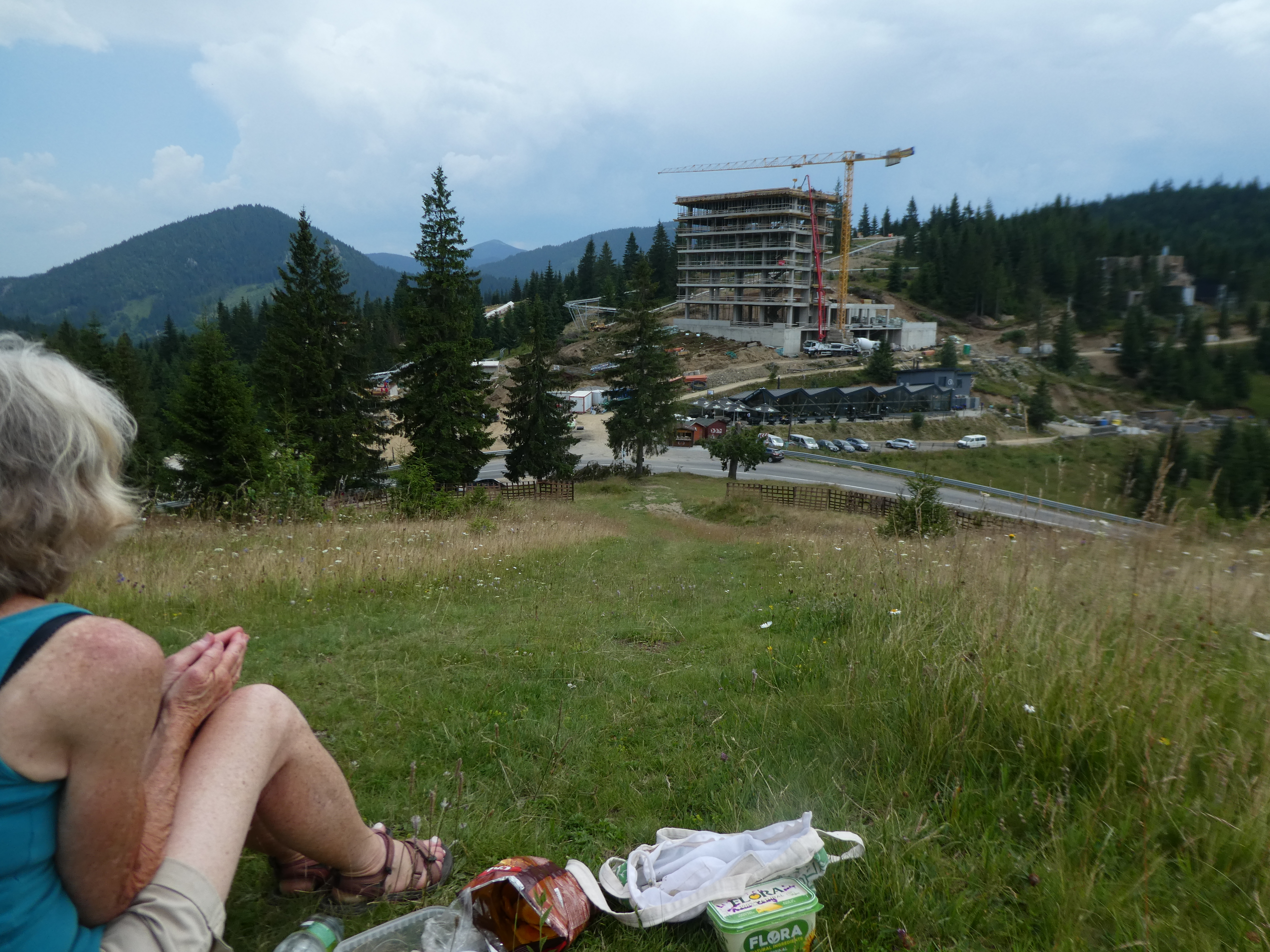
We then talked to the couple who said there had been attacks in the area in the previous few days, A bit of a wake up call!
On 9 July, Diana Cazacu, a 19-year-old hiker, was mauled to death by a young female bear in the Bucegi mountains north of Bucharest. In response, the government overturned a 2016 moratorium on bear hunting – and reignited a fierce debate about what to do with Romania’s growing bear population, the largest in Europe outside Russia. The staff at the Salvamont headquarters, Romania’s mountain rescue service, radiate calm and efficiency.
When Diana and her boyfriend rang the emergency number, 112, in panic at 15:00 on 9 July, the call was transferred here. Sergiu Frusinoiu, in charge that day, set out immediately with two teams. One approached the incident spot from above, the other from below. Bears rarely attack humans, except in self-defence – so Sergiu assumed this would be a simple rescue mission.
At the scene they found the woman’s distraught boyfriend. The bear had grabbed Diana, and thrown her down the ravine. They descended by rope, and found the bear standing over the victim. The bear attacked the rescue team, who defended themselves with pepper spray, firecrackers and rocks, until a hunter arrived and shot the bear. It was too late for Diana, lying on her stomach, her head in the stream.
He said Diana’s mistake had been to run away when faced with the bear. Sergiu grew up in these mountains, and has had hundreds of encounters with bears, without incident, he said. The standard advice is to make noise in bear territory as you walk. If you encounter a bear, stand quiet and still, then back slowly away. As with a dog, the worst thing you can do is run away, as it is sure to follow.
At the base of the footpath which Diana climbed that day, it becomes clear why the bear was on the path. Three large municipal waste bins, the remains of a cage around one, stand open to the sky. One has been tipped over, and there is rotting food, tins and plastic strewn over a wide area.
We then continued down to the plain at Gheorgi and on to Sovata where we found the campsite we had been aiming at was full, it wasn’t particularly nice but we then had to find another one that was accessible.
There are not many around so we continued on to Sighisoara and checking up by phoning ahead to campsites in the town. Eventually ten kilometres beyond Sighisoara we found camping Curtea Largar which had been on Graham’s list! It was a camp site set in a walled garden with at least some views.
It was very hot and after a meal we cycled two kilometres down the road to the village of Schass. We cycled around back streets past church and through residential areas where young people were sitting around in the cool of the evening their radios blaring out their favourite music! The church was closed but it was good to get out in the cool of the evening.
We have now travelled 2373 miles
Friday 12th July – Sighisoara
We opt not to cycle into Sighisoara which was a good decision as the temperature during the day rose to 38o
Instead we drove the twenty one kilometres to Biertan a village with an impressive Saxon fortified Church with 2 fortified walls around it.


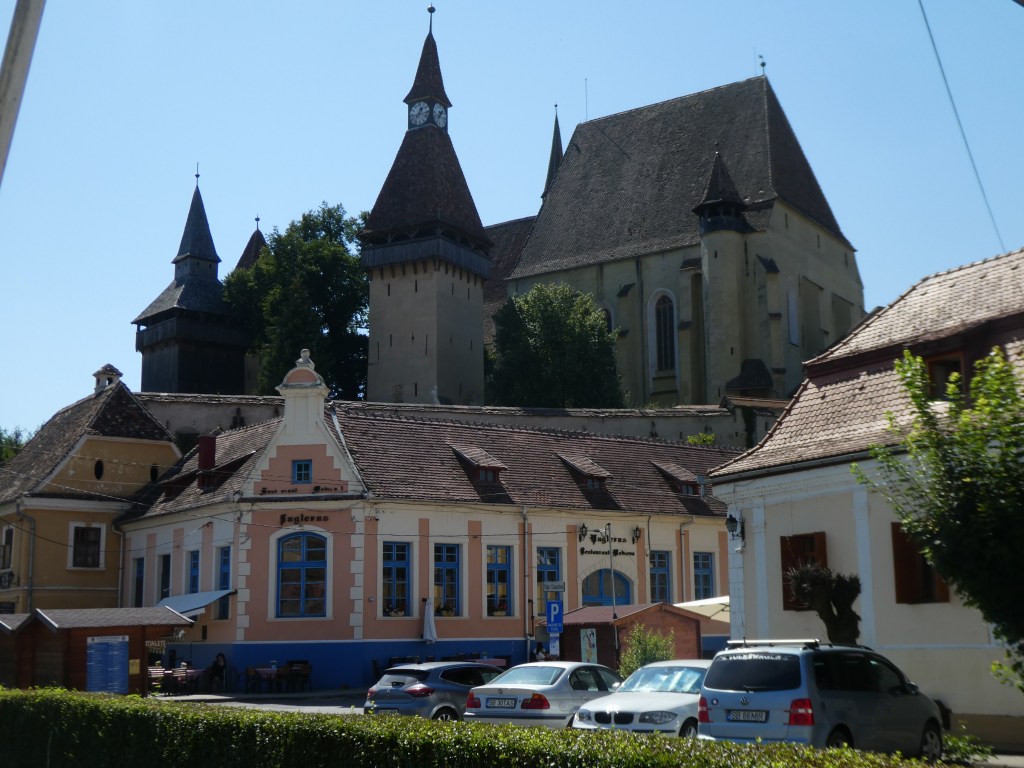
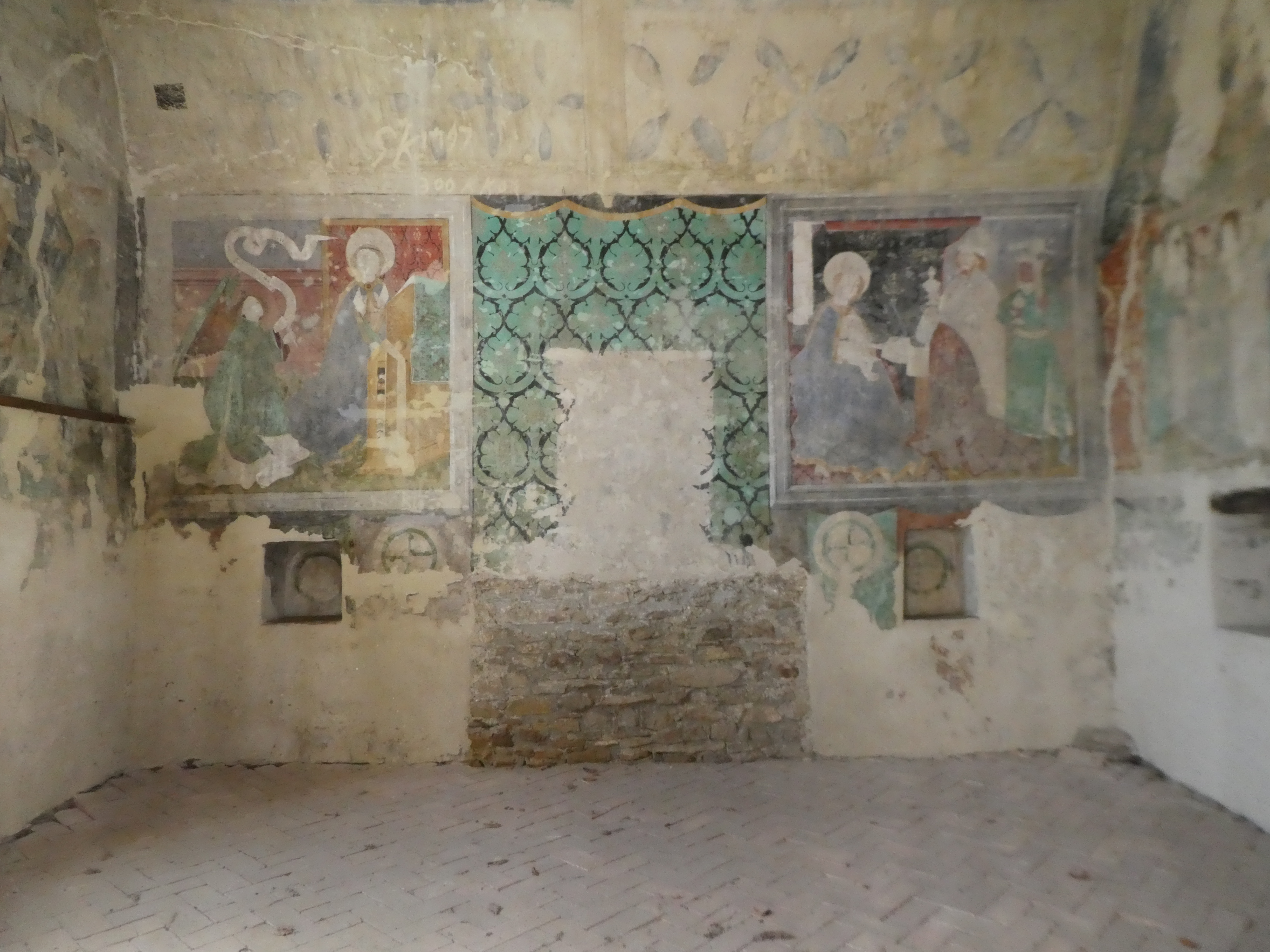
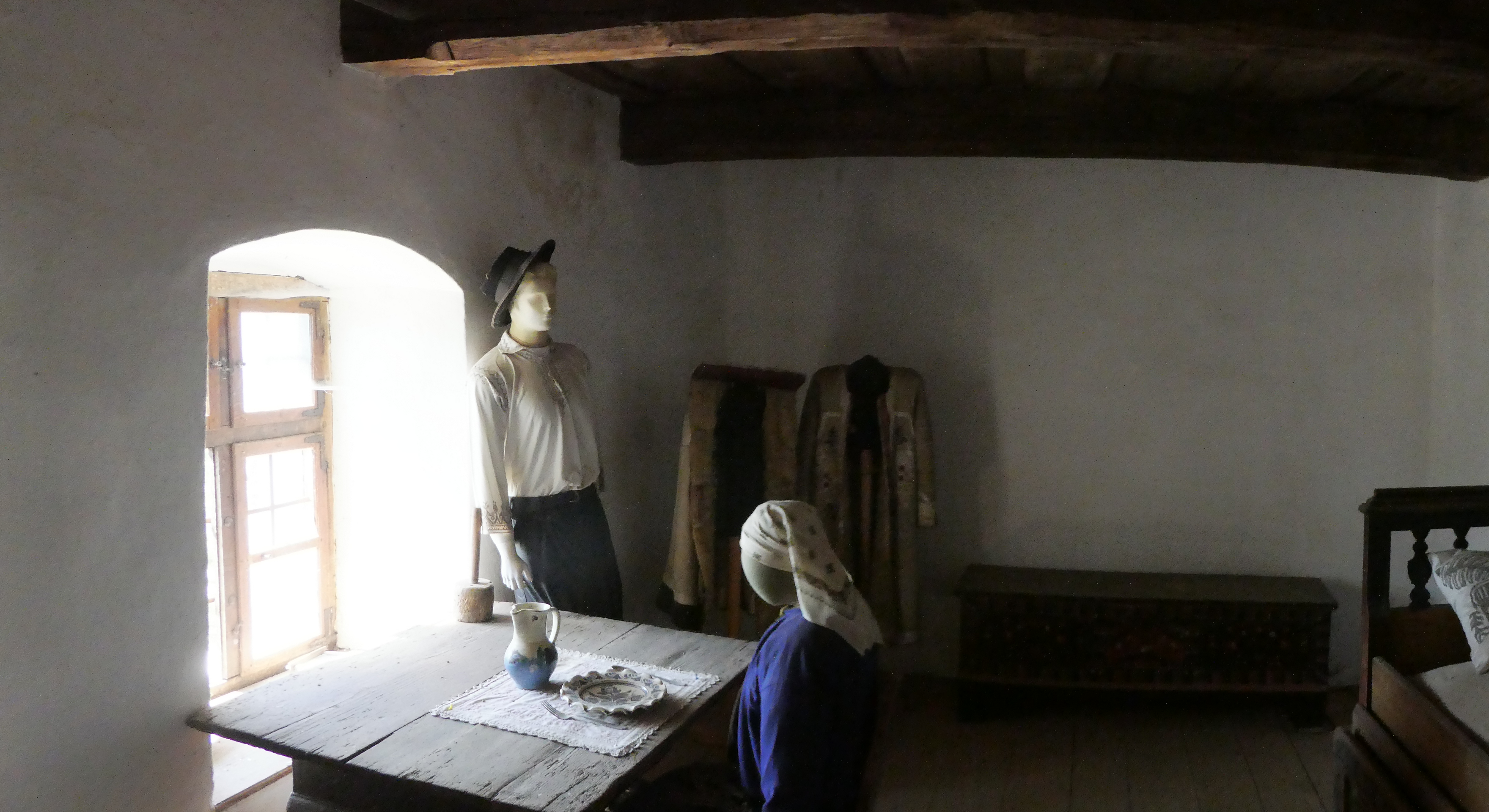

The church at the top is surrounded by buildings one of which it is said quarrelling couples were locked together with a single bed, one plate, one set of cutlery a last ditch attempt to see whether they could get on! It was interesting and preserved in a very natural way.
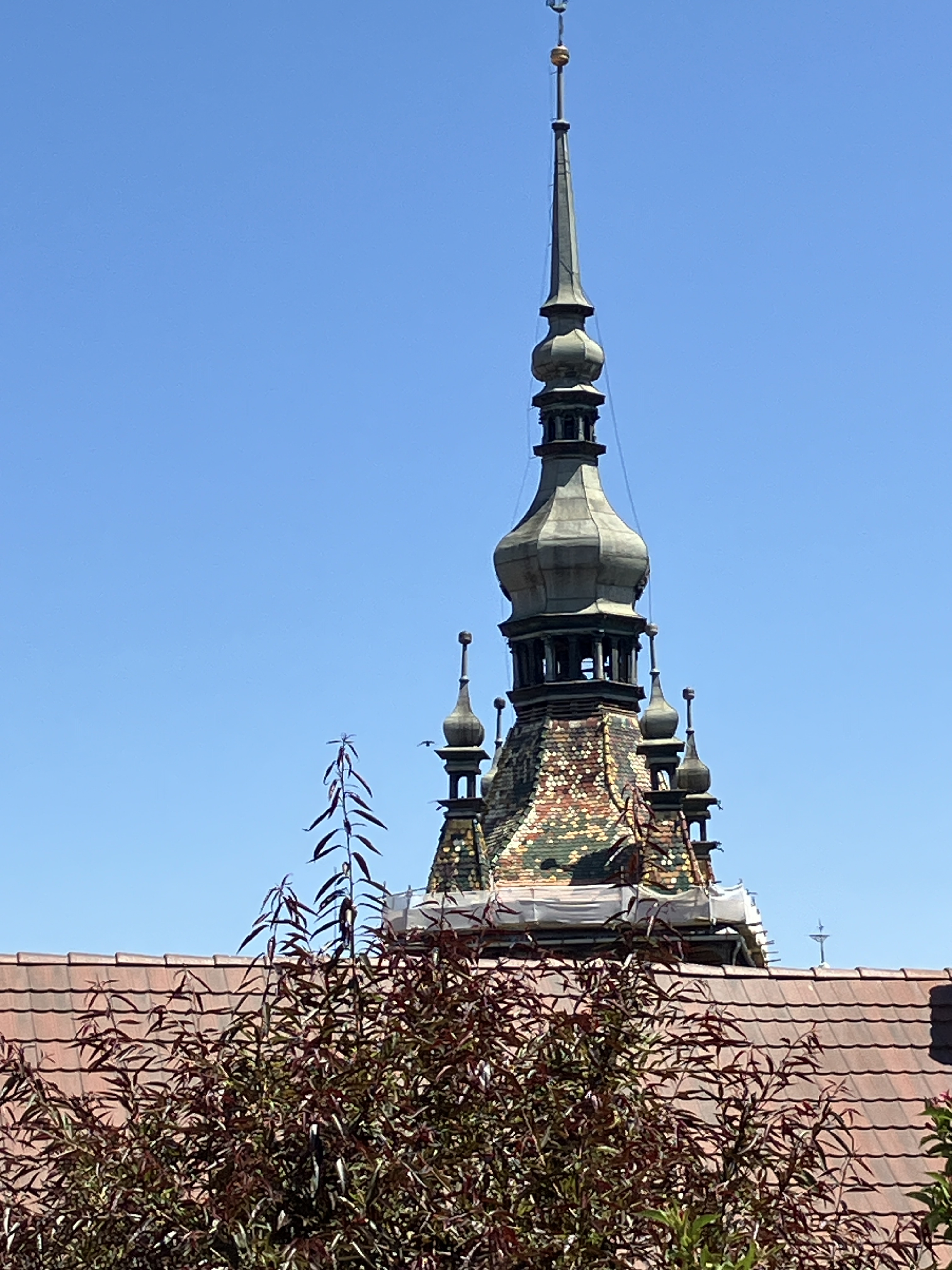
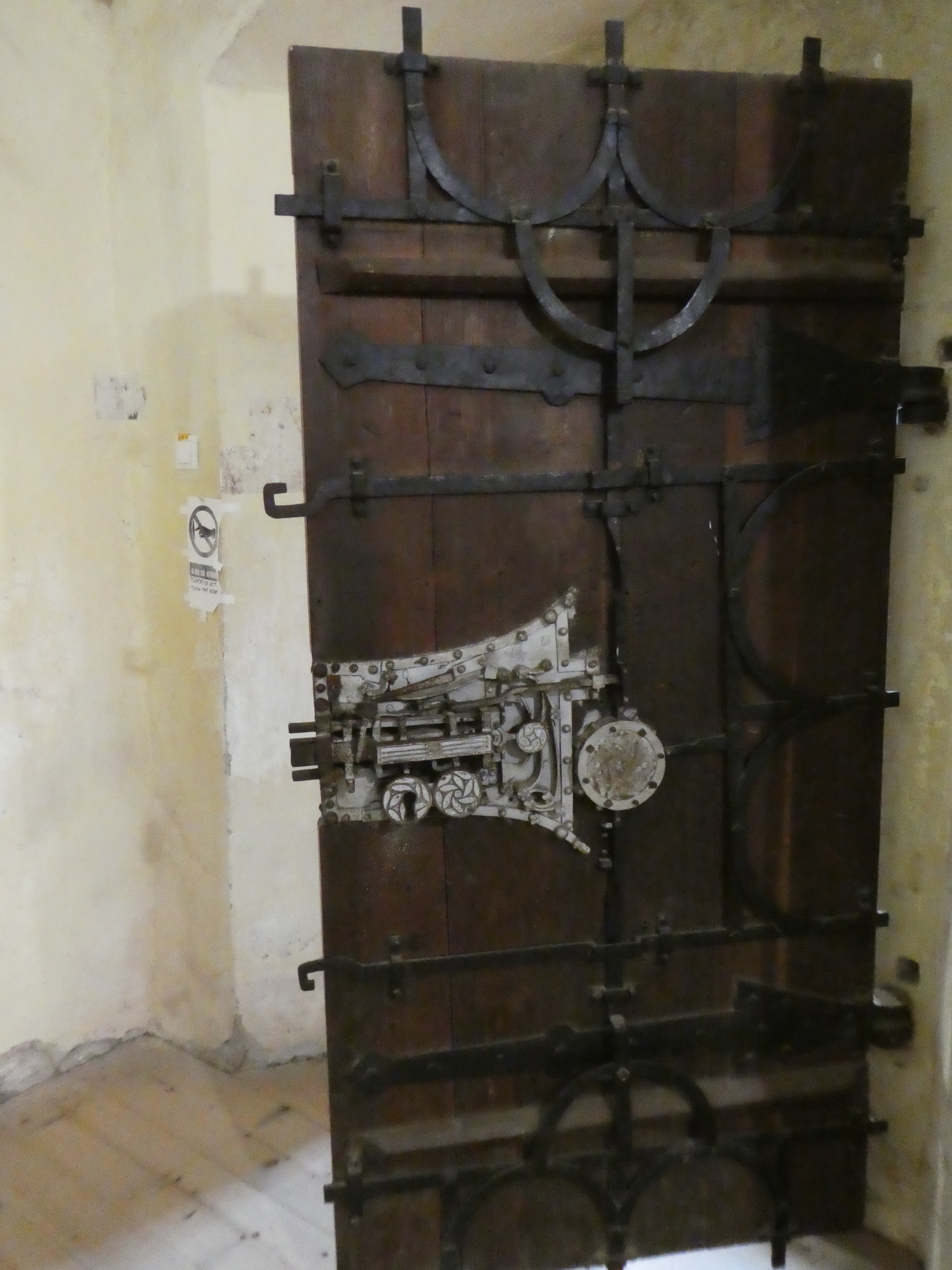
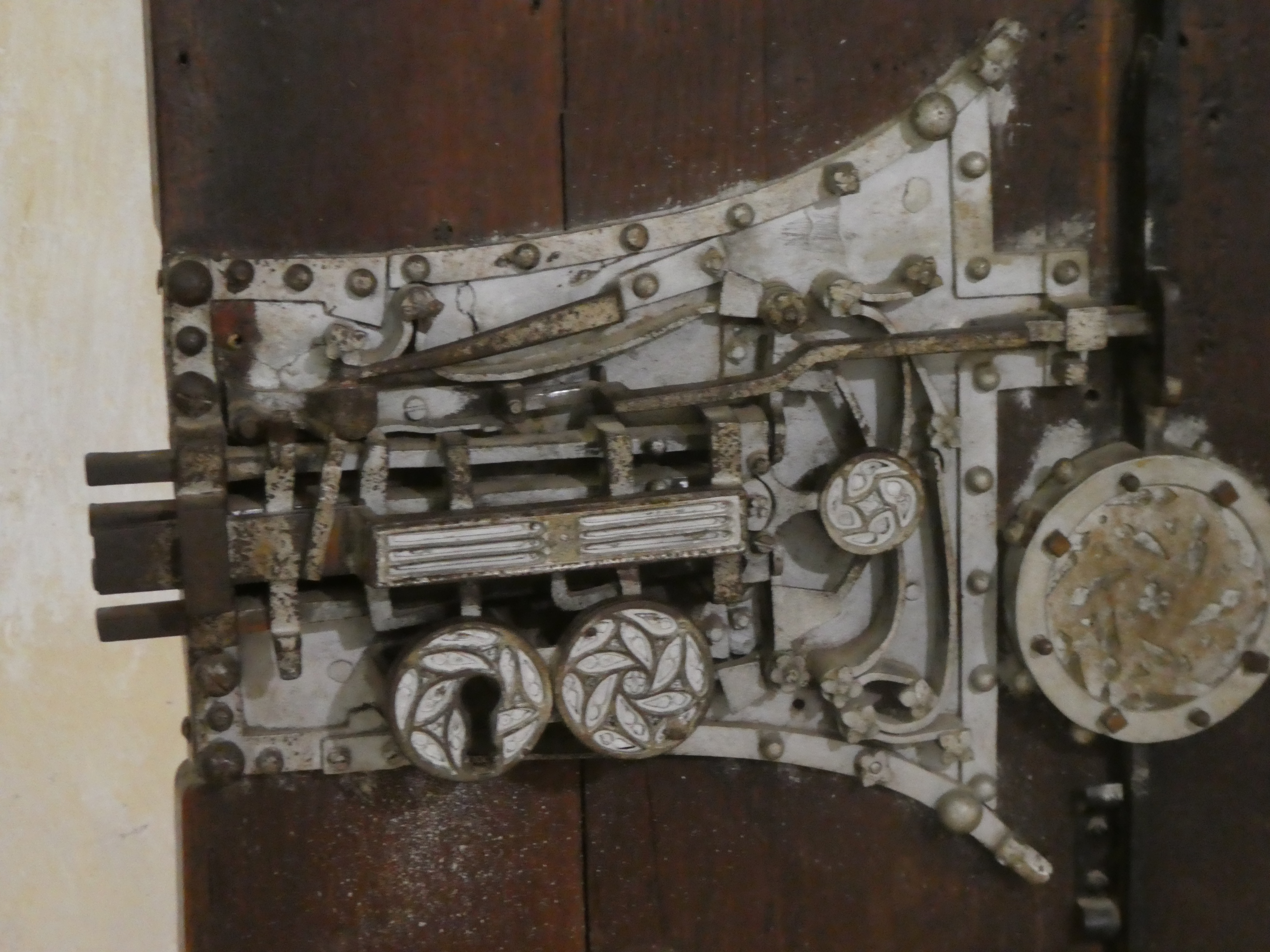
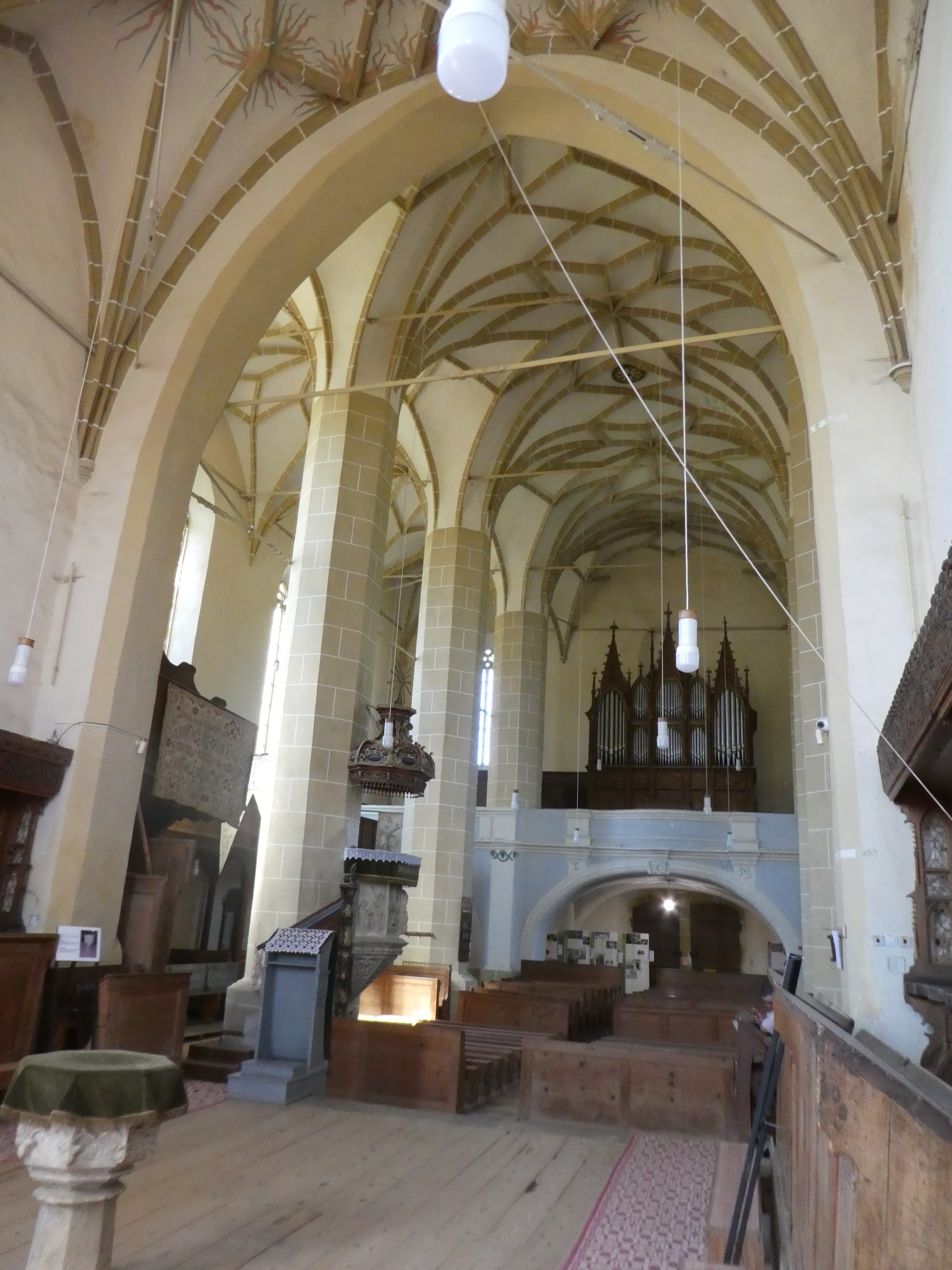
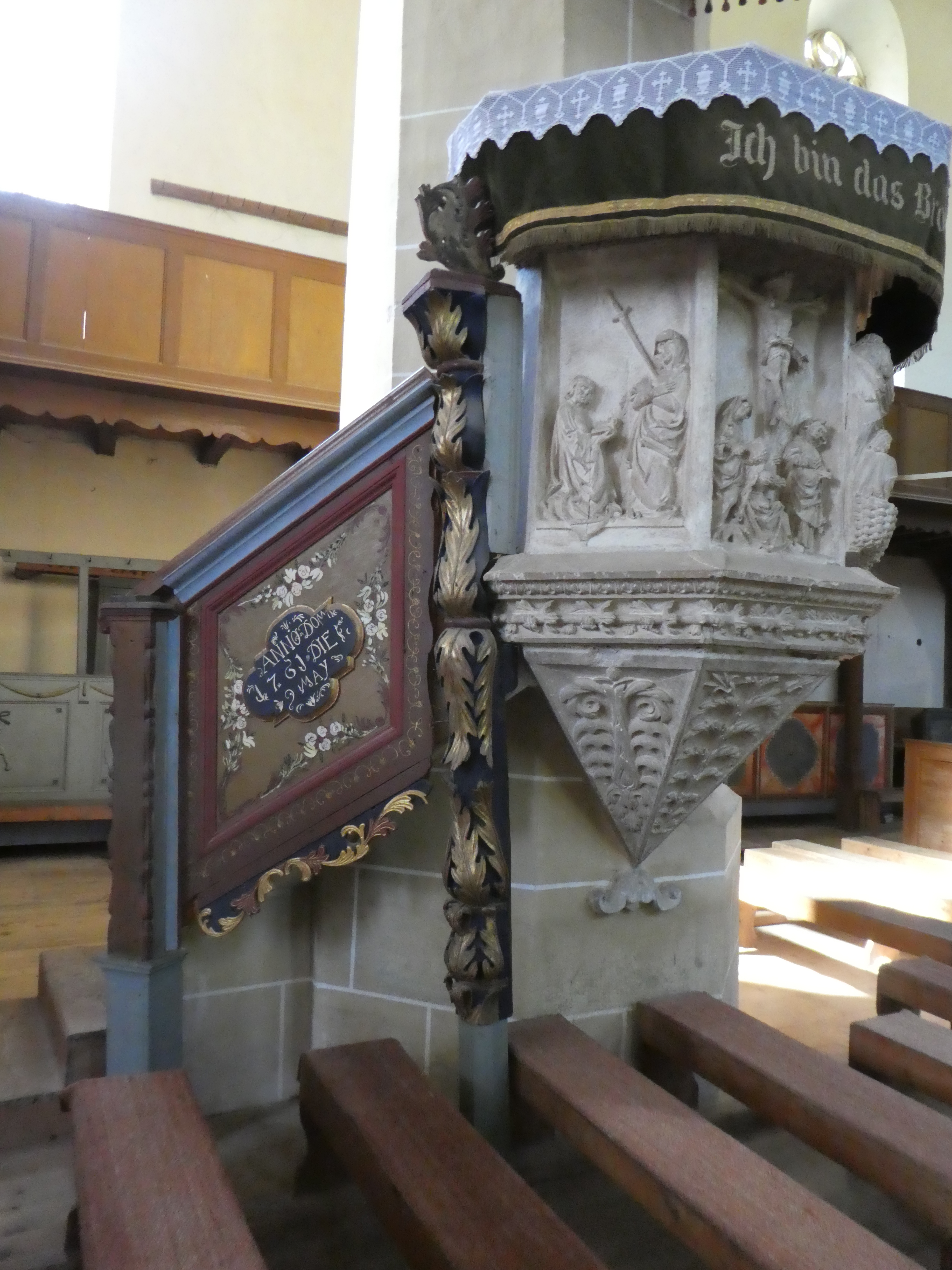

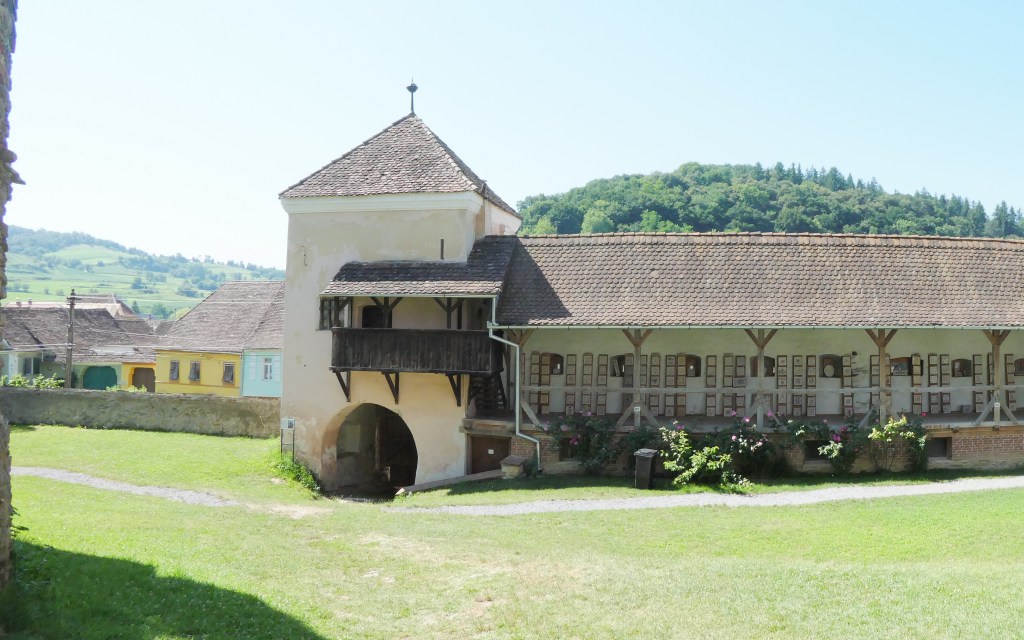
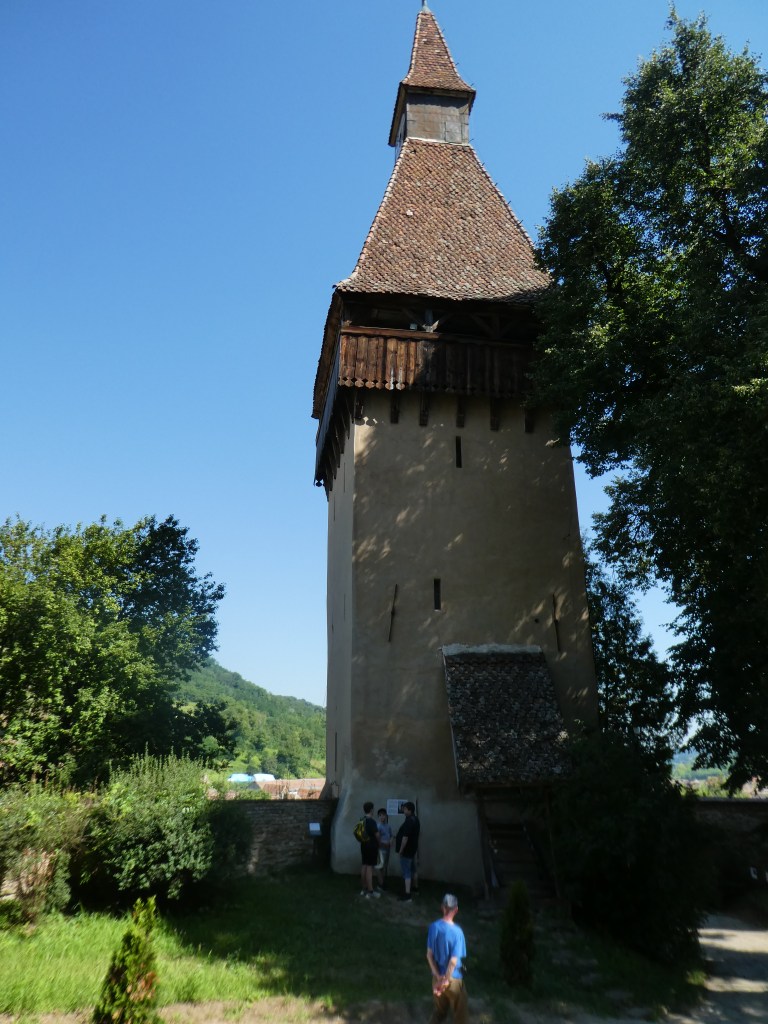


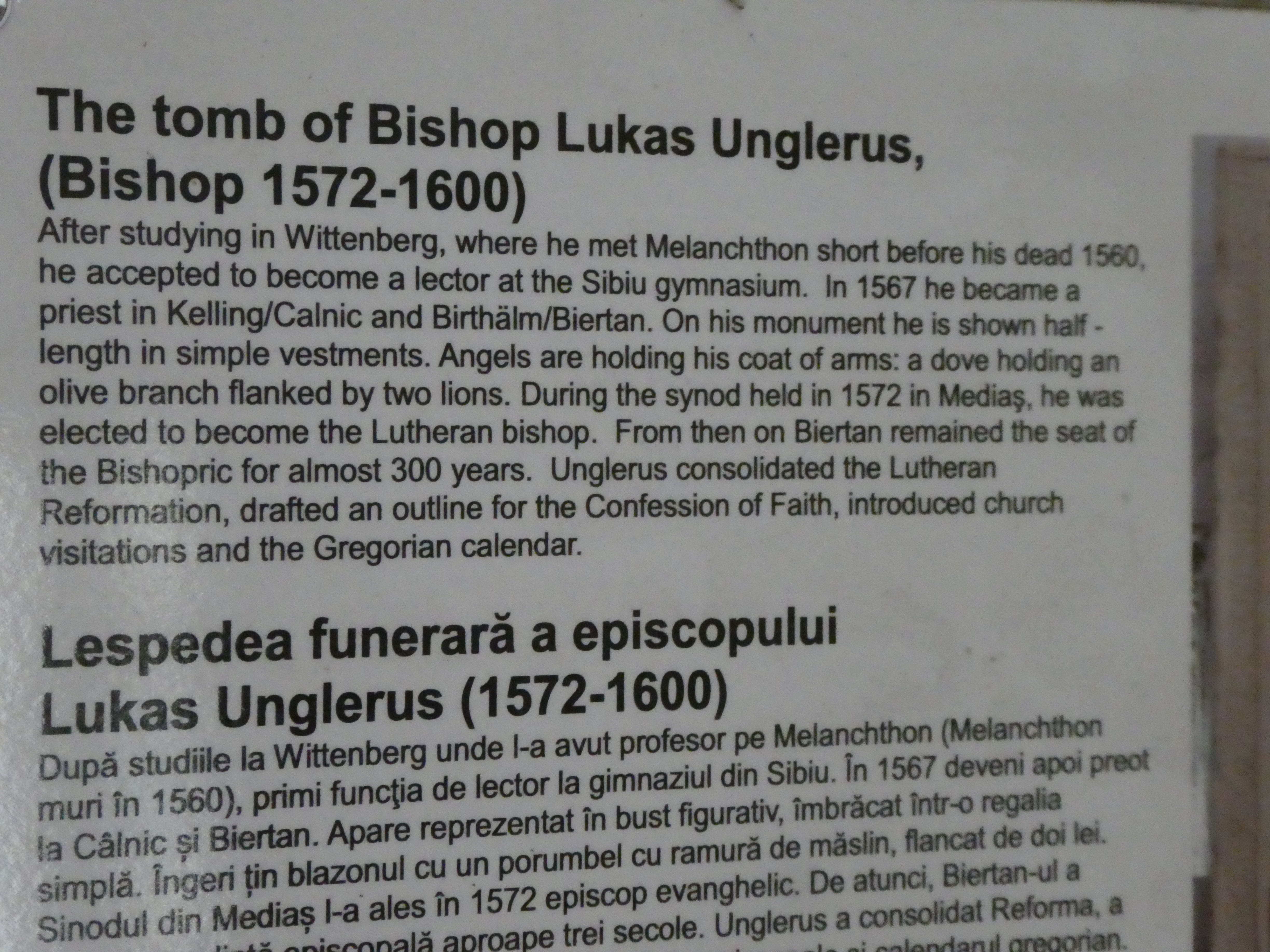
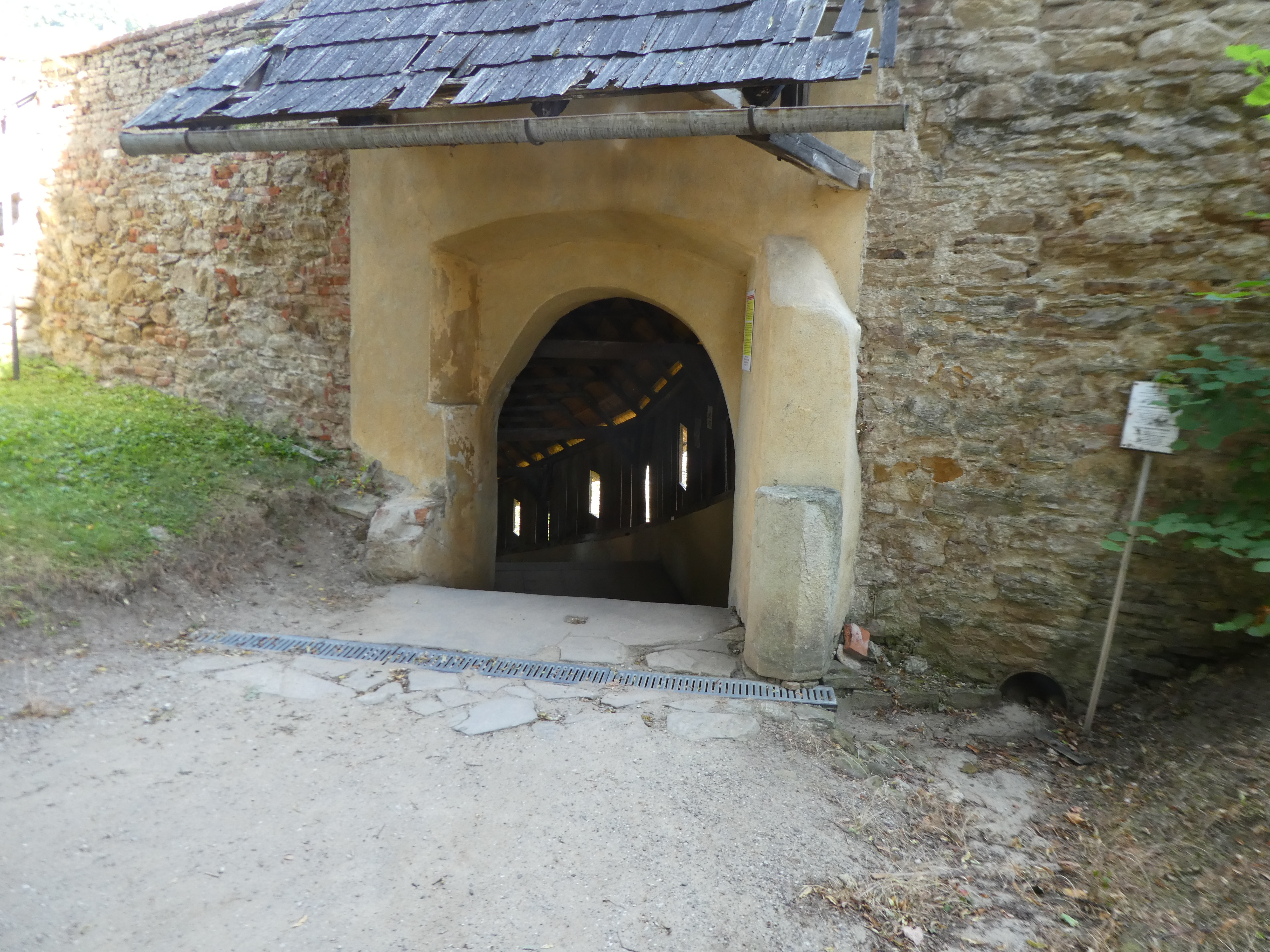
The entire complex was fascinating and we even found links back to Wittenberg.
We then retraced our journey to Sighisoara. Here we parked and picked up a few things in Lidl then leaving van we walked to the old 12th century Saxon citadel town. We were finding that parking at a supermarket was an easy option when visiting a town.

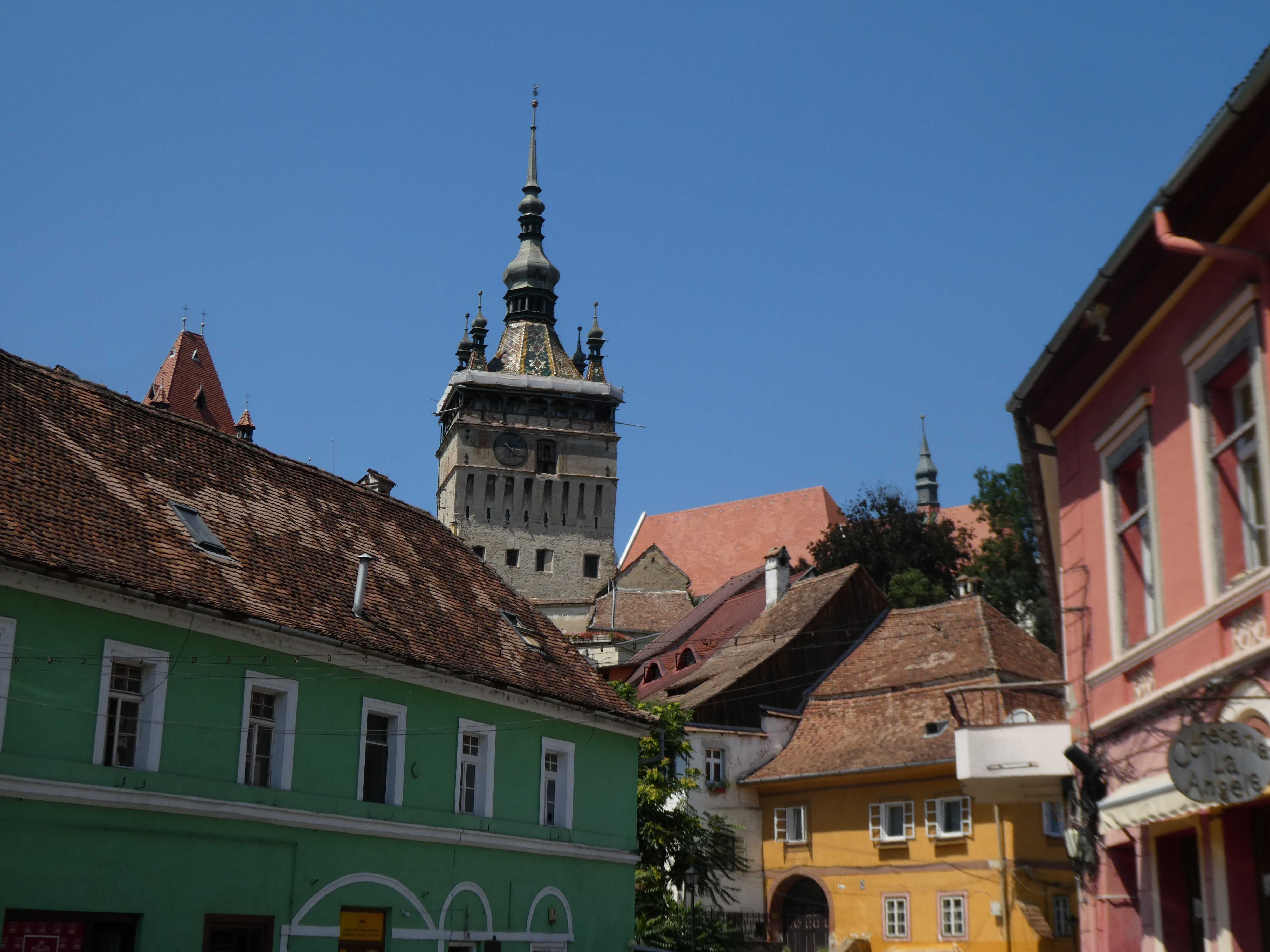

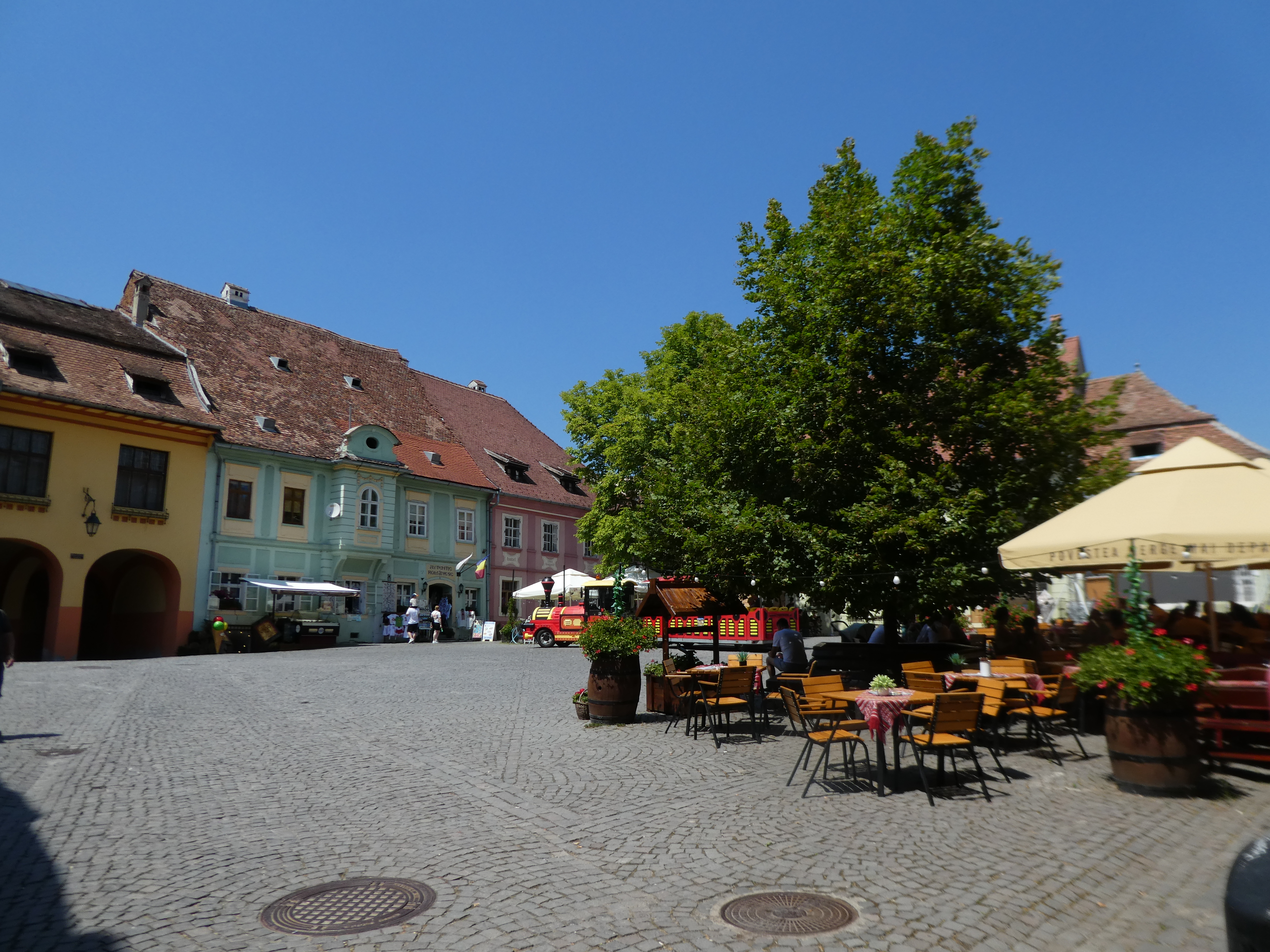
We walked into the town and found the tourist office situated just below the old town so we got a town map and after a coffee walked up the steps through the Clocktower into the old walled town.
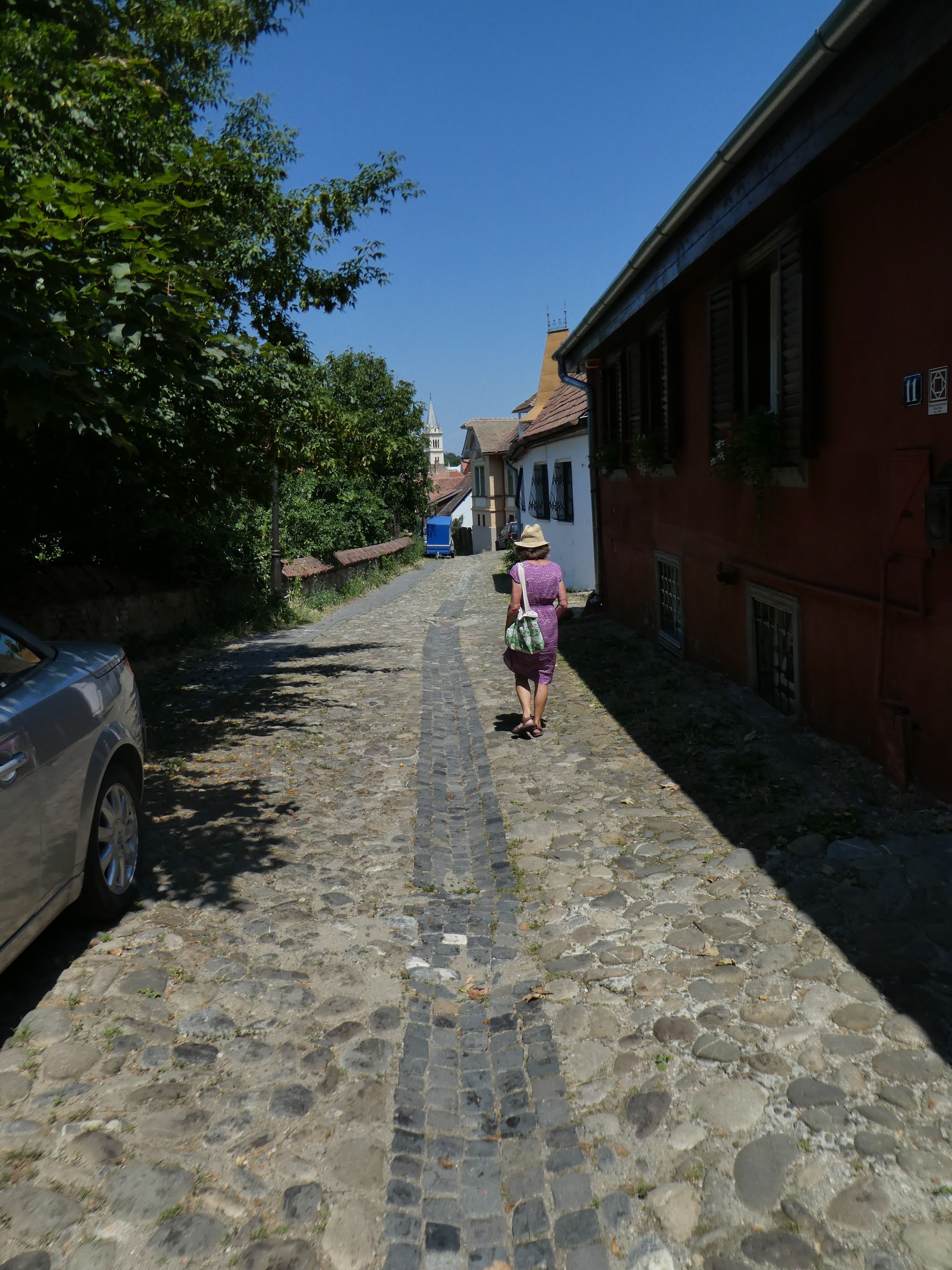
We followed an arcade of steep wooden stairs up to the Church on the Hill where we resisted the temptation to pay to go in. We rested in the shade and looked at the Ropemakers Tower before returning along the cobbled path to the road where we found a cool restaurant where we had lunch.
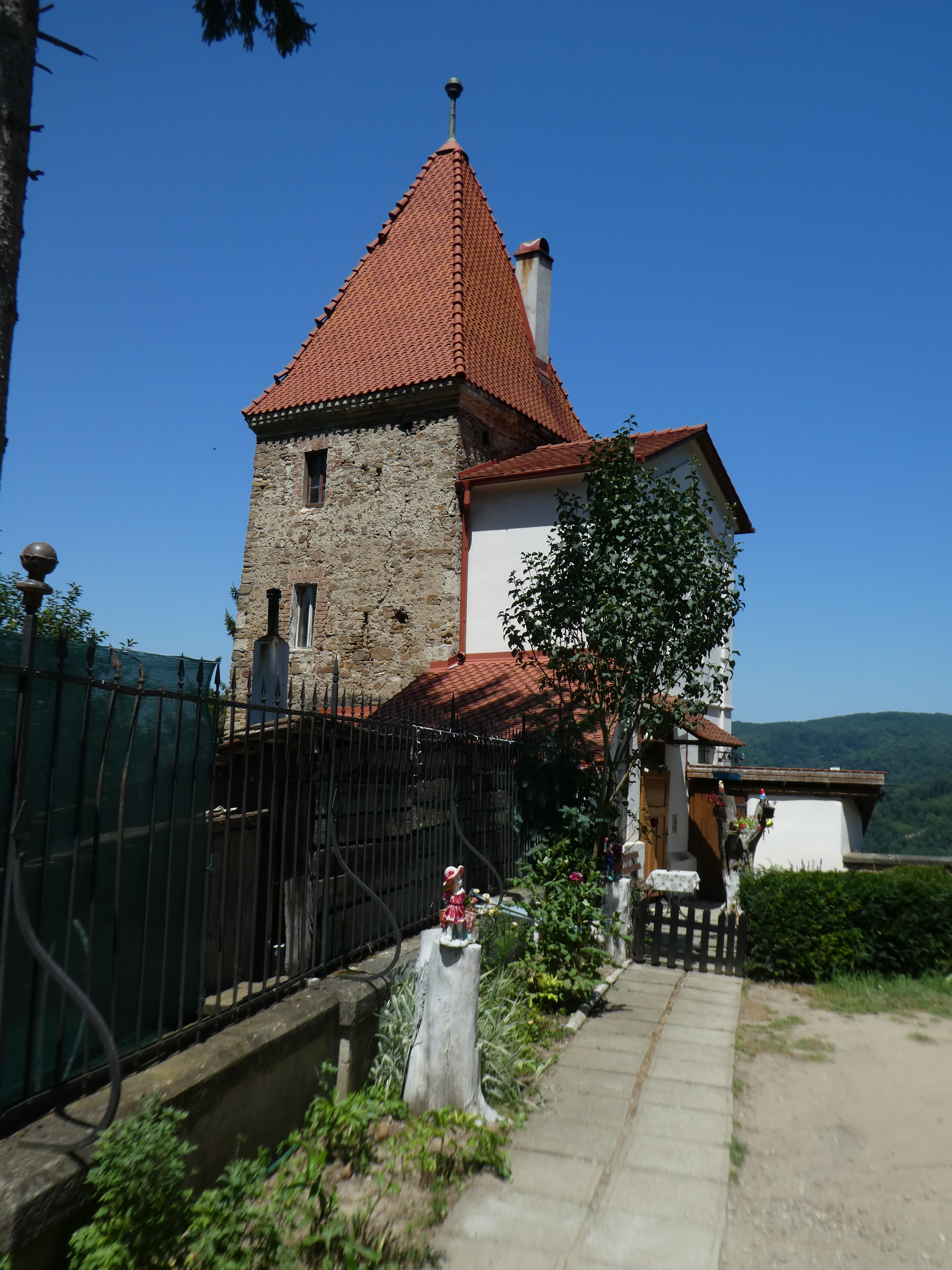
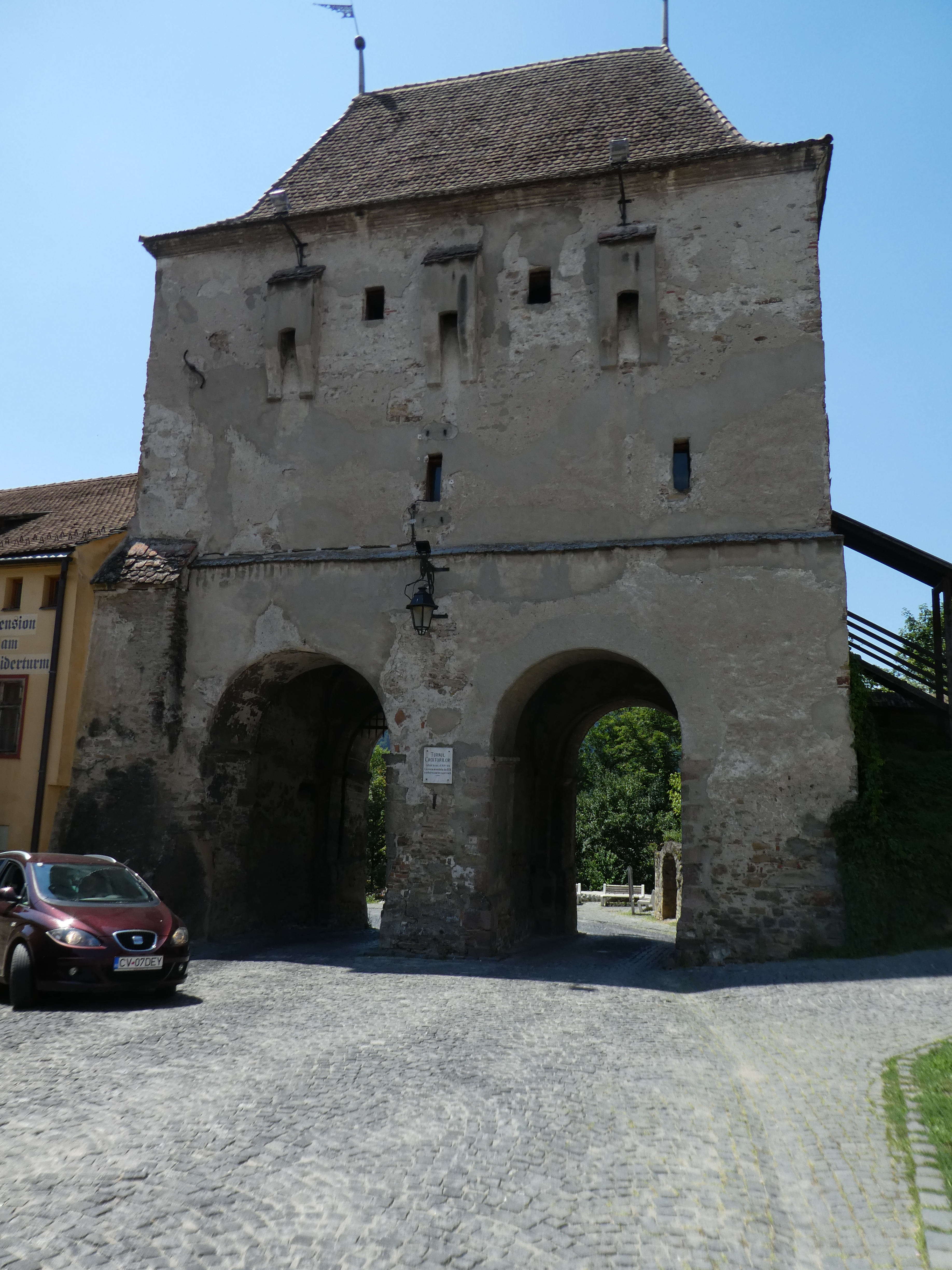

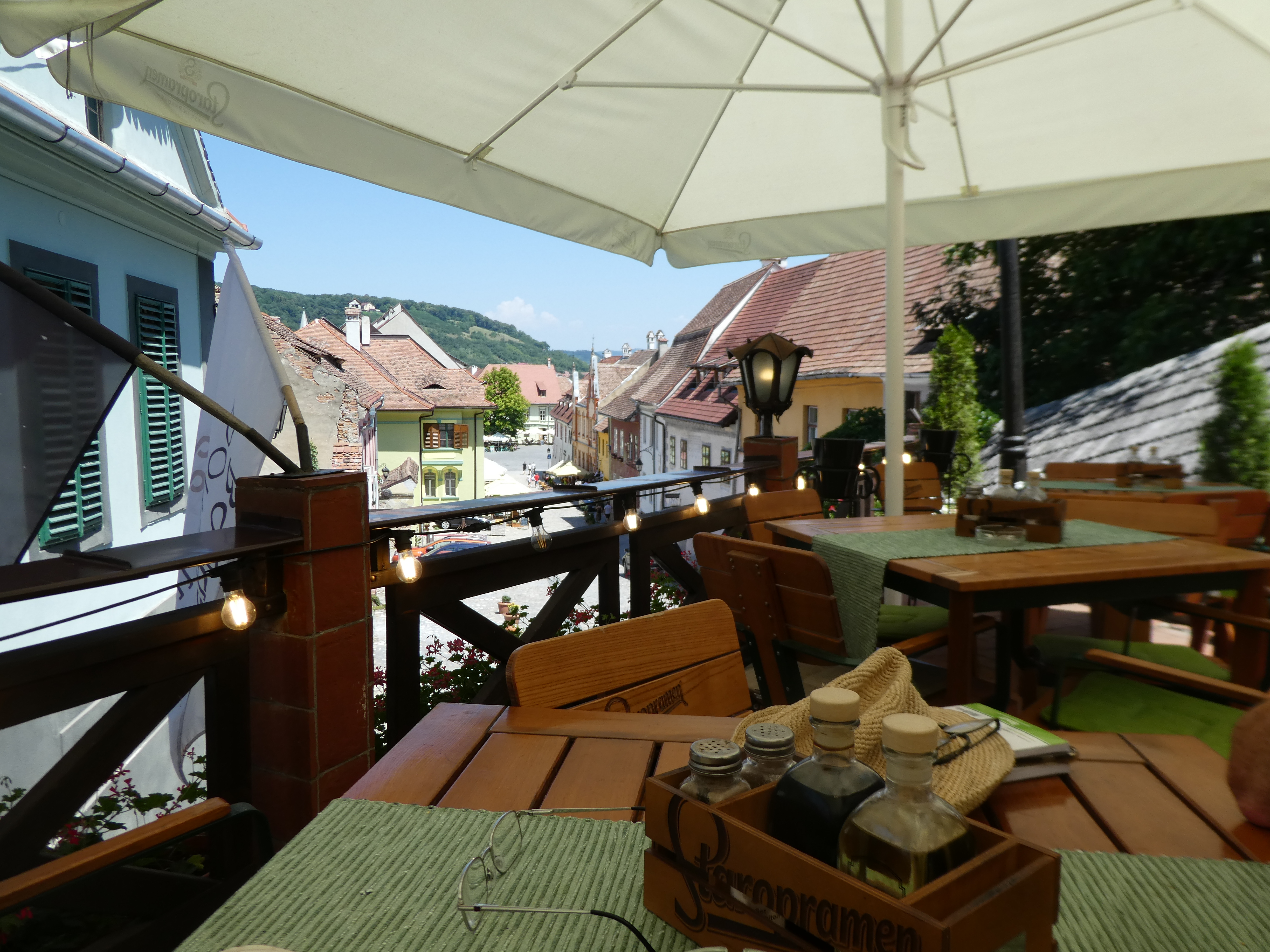

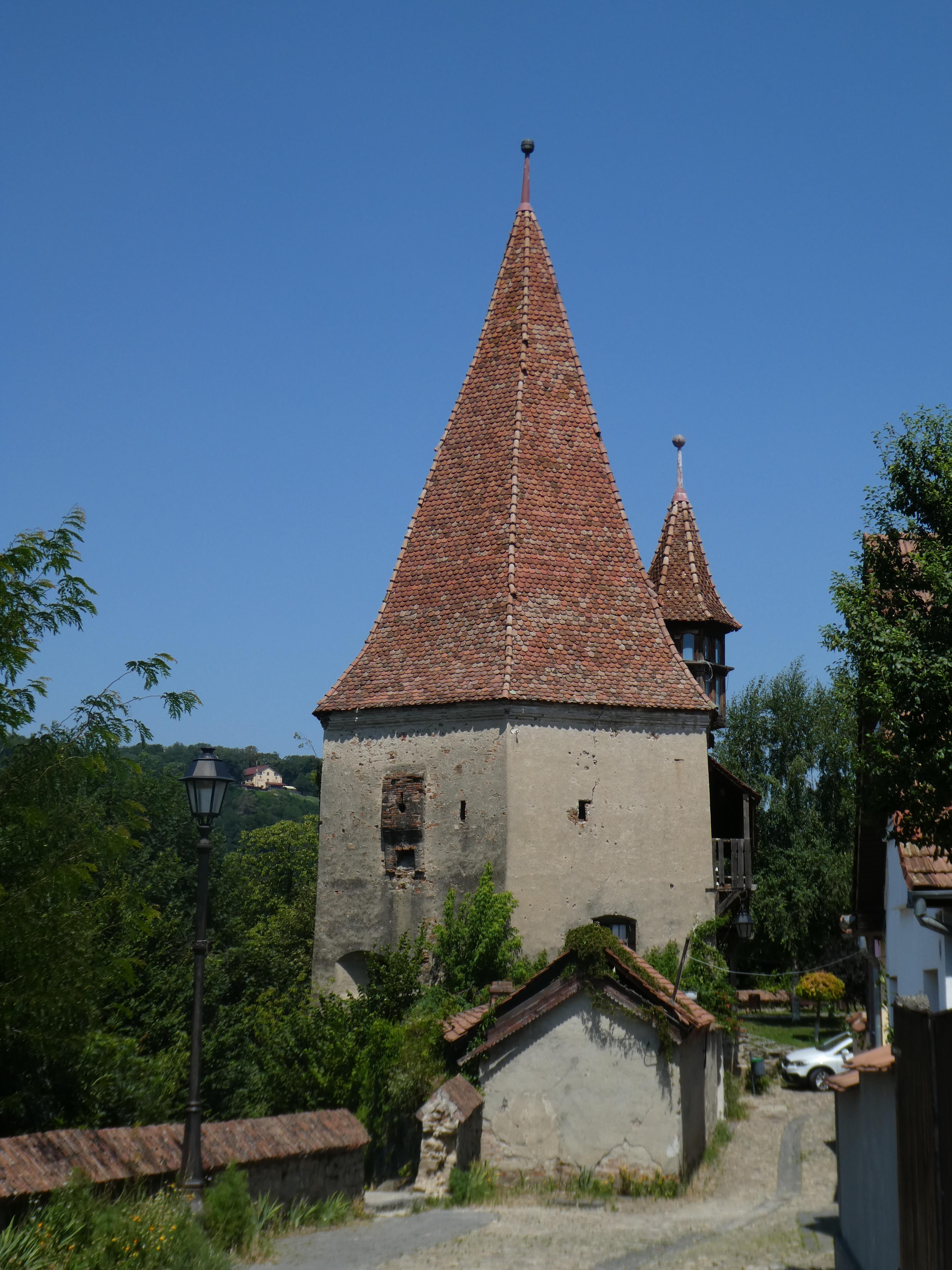
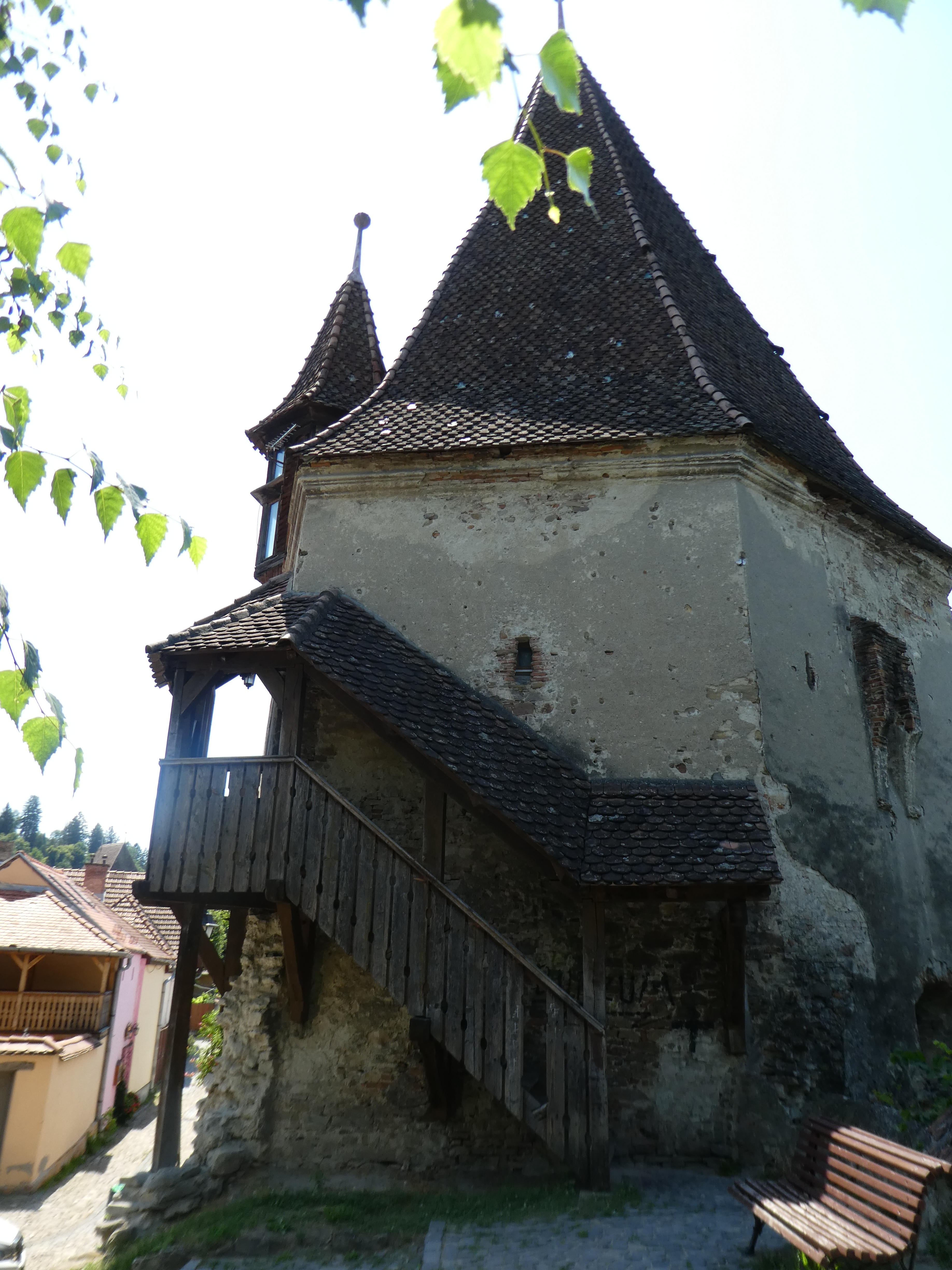
Back on the cobbled roads we followed the walls past the surviving towers each built by a different trade burghers or craftspeople. So clockwise we saw the Tanner’s Tower, the Butchers, Furriers and Tailors Towers. The Shoemakers and Blacksmiths led us to St Joseph’s Church before working our way back to the impressive Clocktower we had come in through.


We returned to the campsite and chilled under the weeping willow, watching the antics of a small hedgehog.
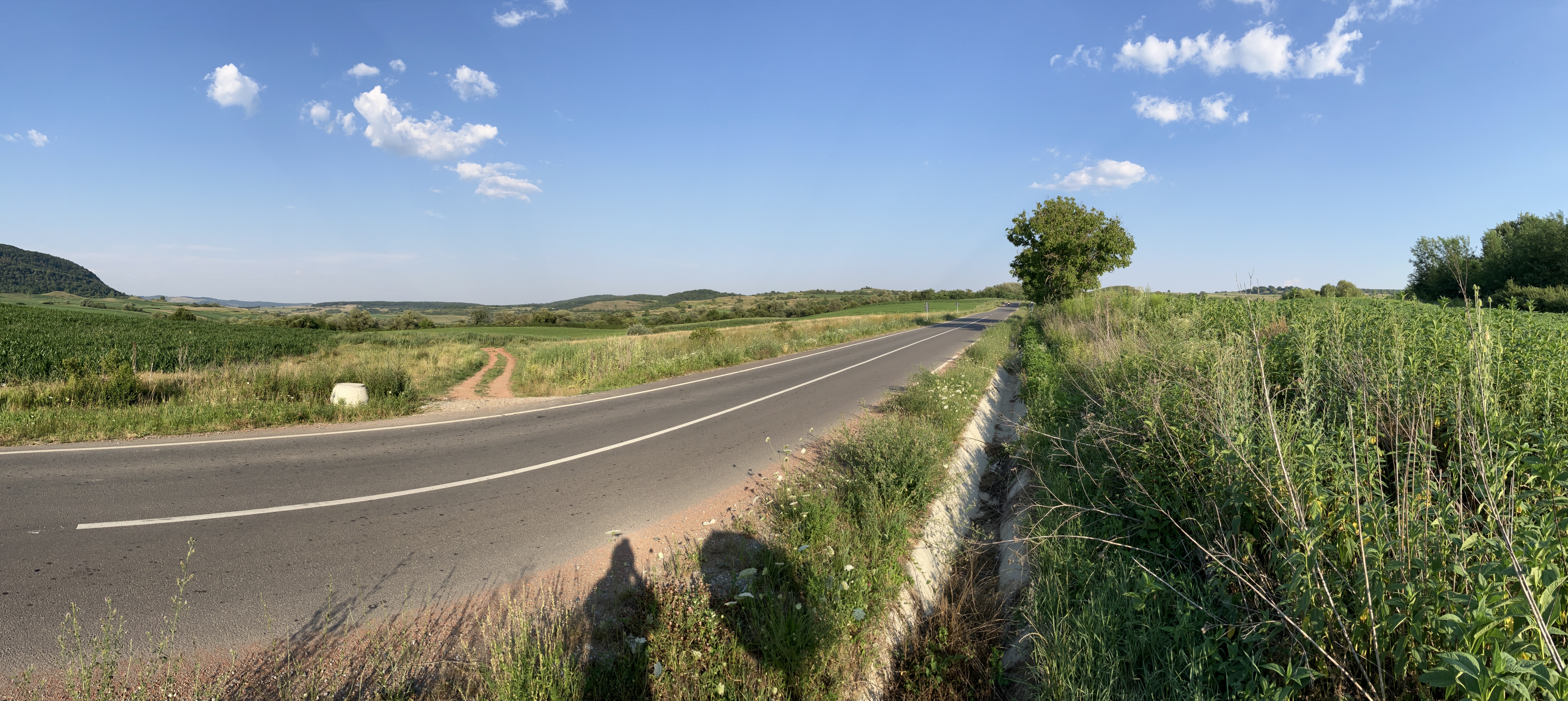

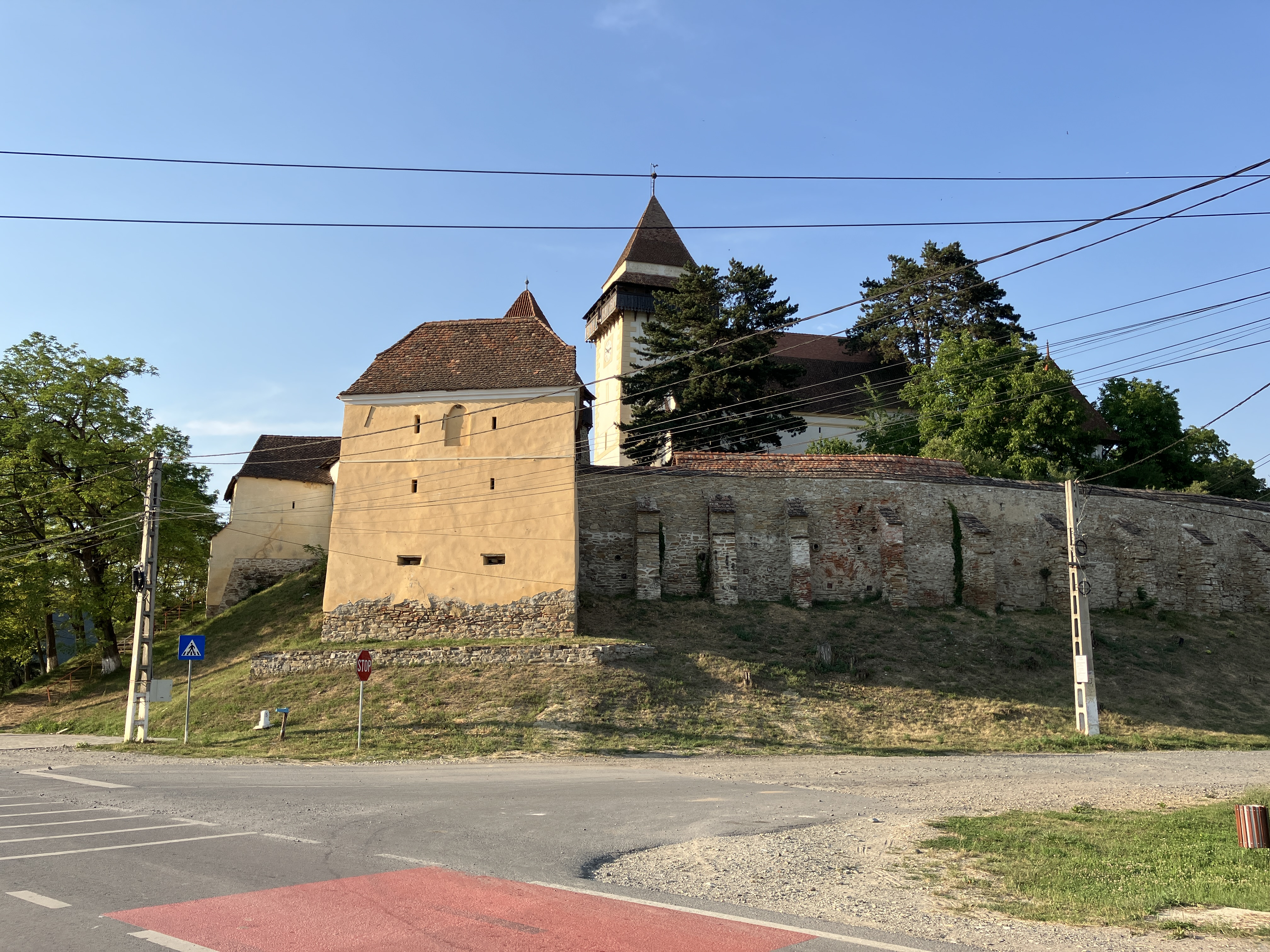
After tea we cycled right along road to beyond Apold where there were some interesting hummocks called the Dinosaur’s backbone. Back through Apold where there was a large fortified church.
At the campsite we sat out late a cool dark blue sky and small moon.
Saturday 13th July – Brasov
Up and away by nine o clock and heading south in a rapidly heating day.
We stopped at Saschiz where the fortified church and tower were interesting especially the tower which had really good information about the reformation set out on every floor. We could climb right up to the bell at level 5.


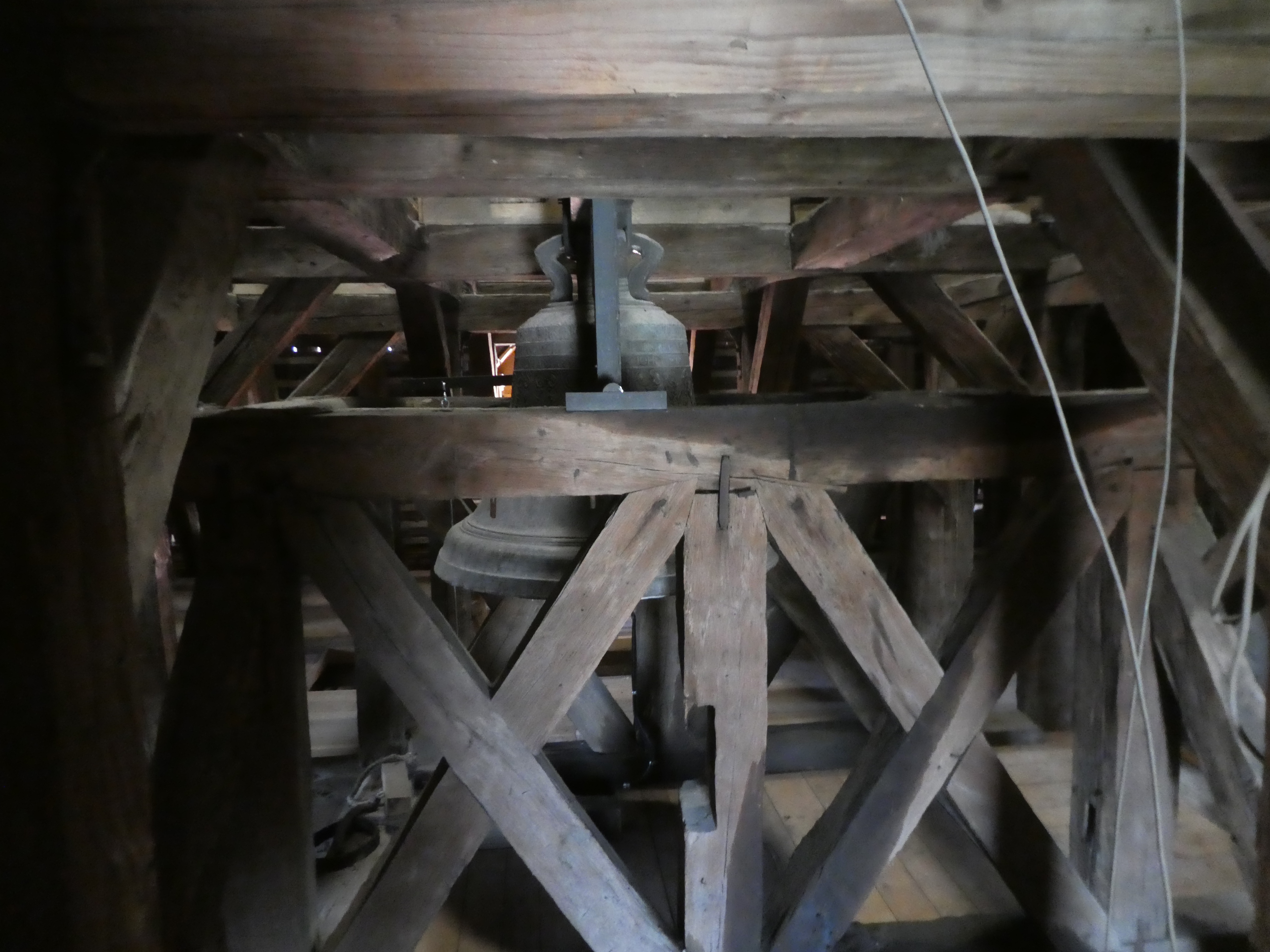

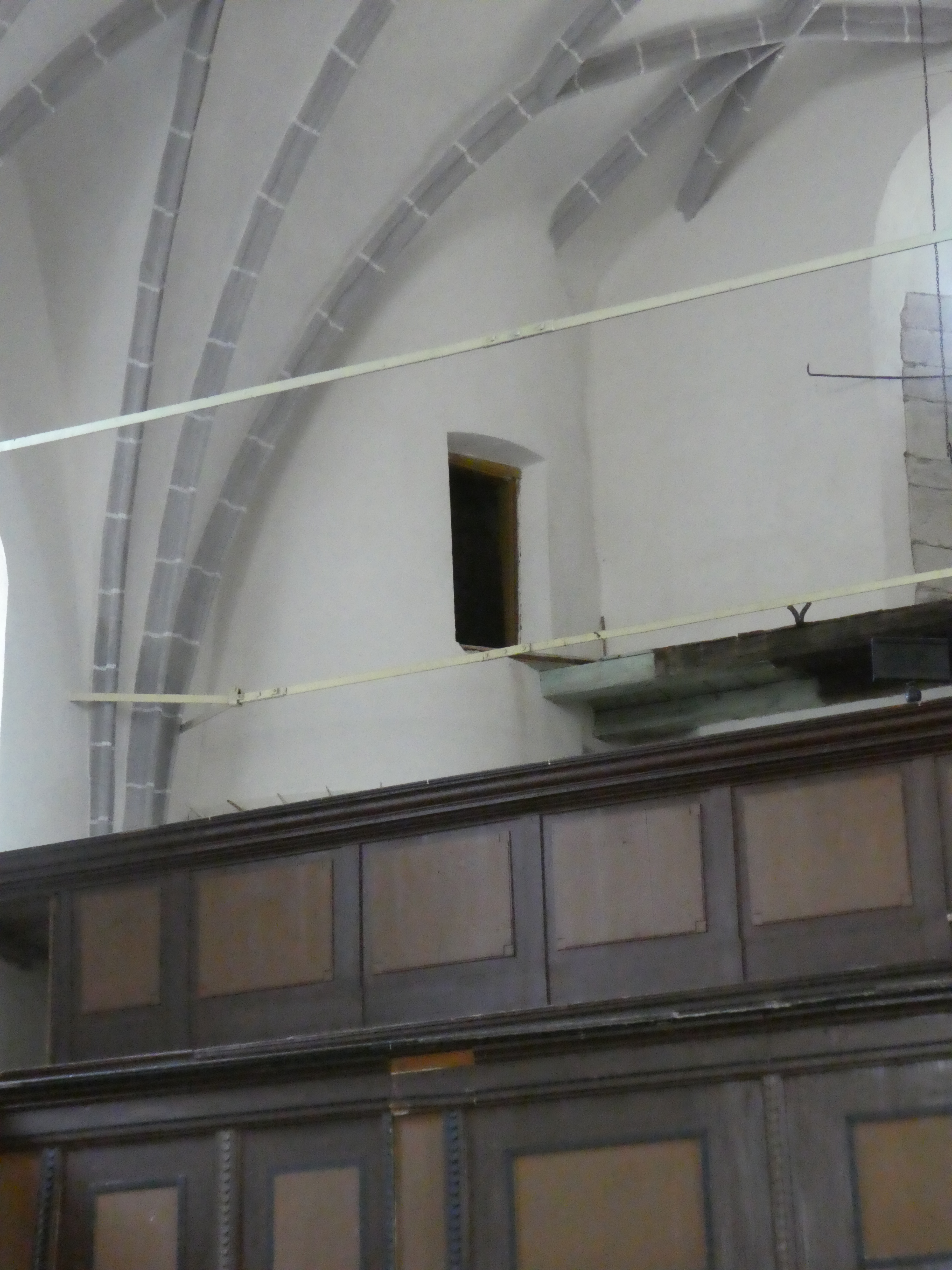
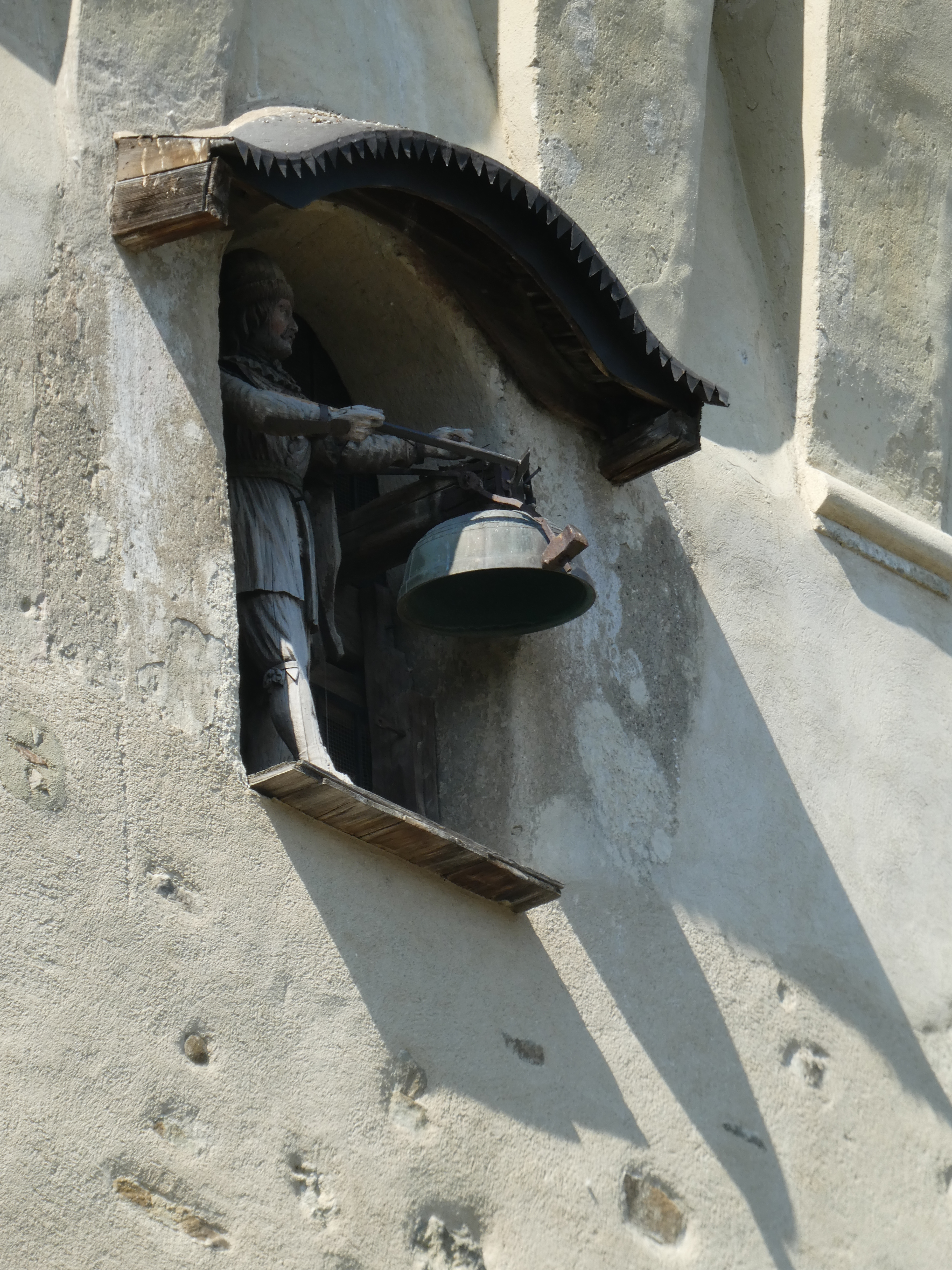
The church had no wall around it, but windows above the nave that villagers sheltered in in time of attack not wanting to climb up to the Castle.
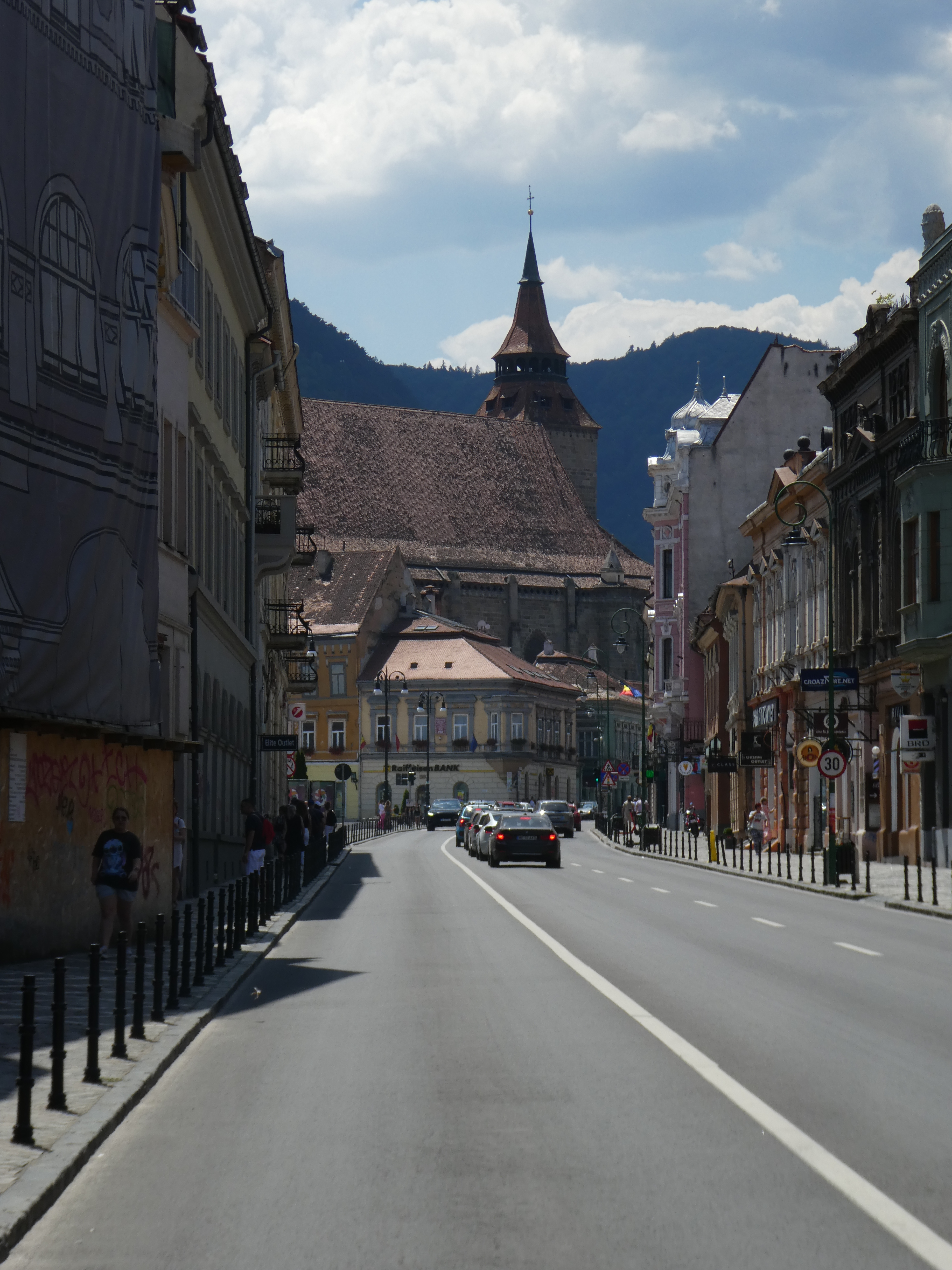
We continued to Brasov, parked in Lidl and wandered into the centre through the main square stopping for an iced coffee and light lunch before visiting the Black Church, it was odd entering the back and be faced with everyone listening to the concert facing you!


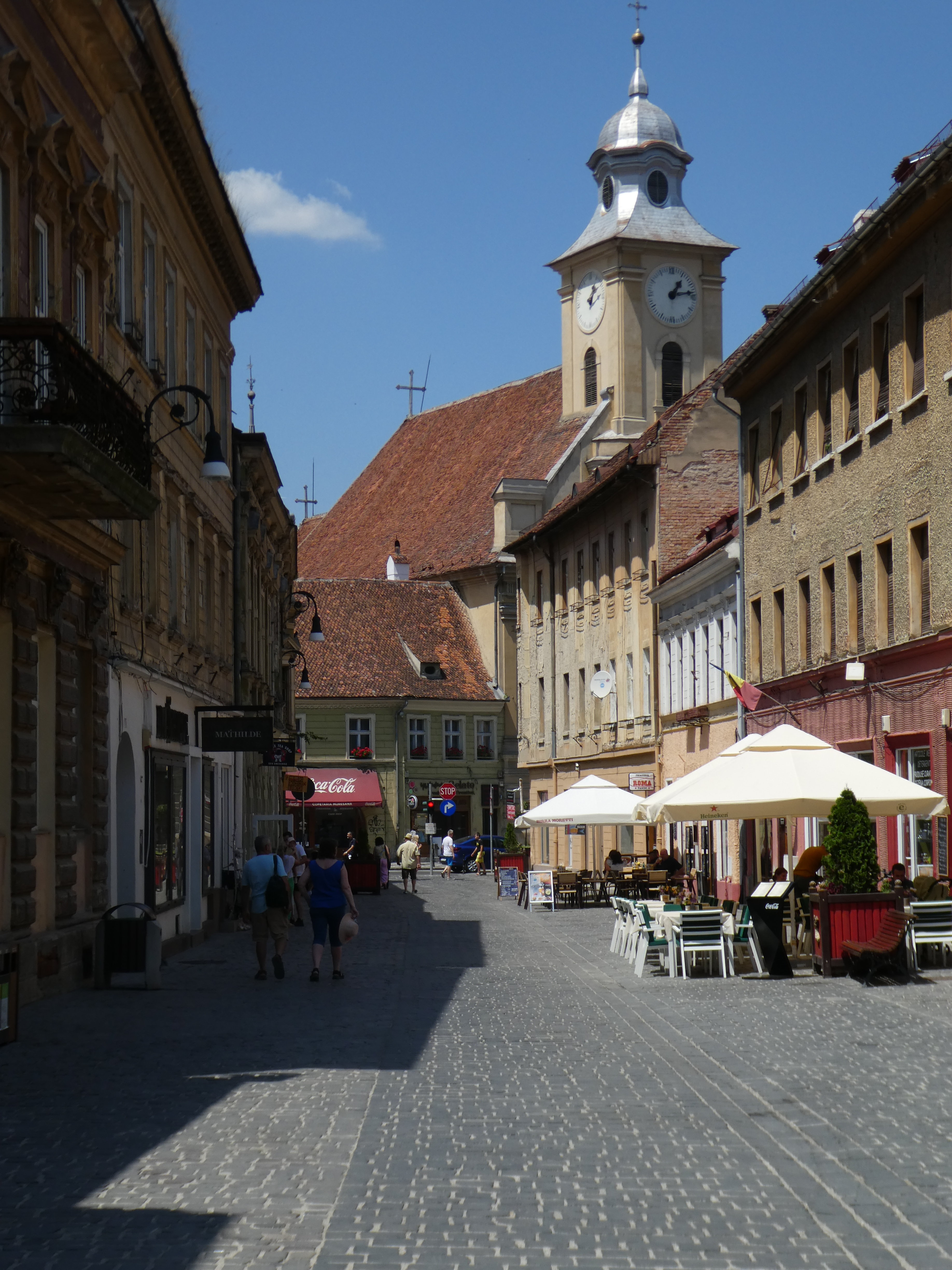
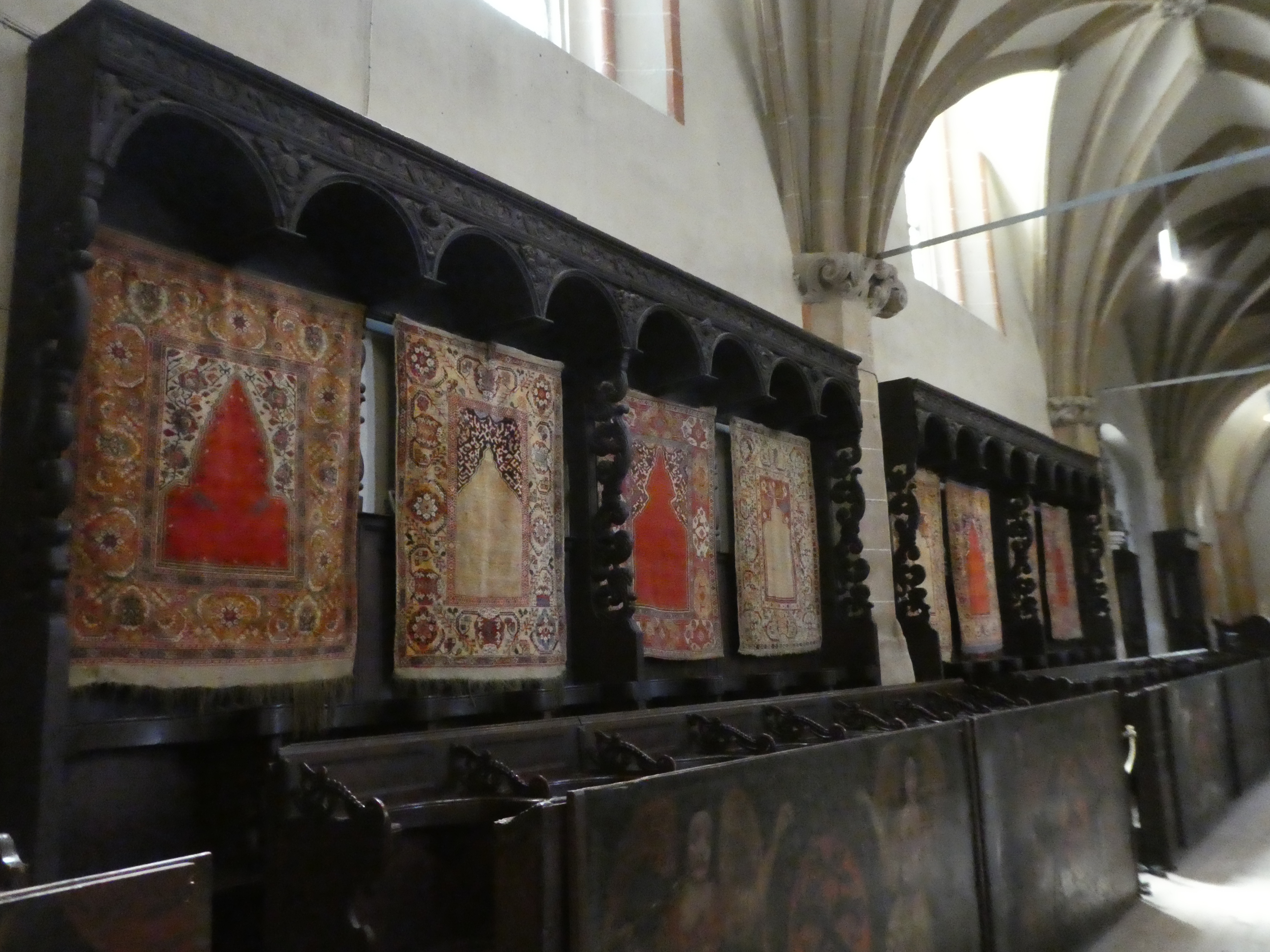
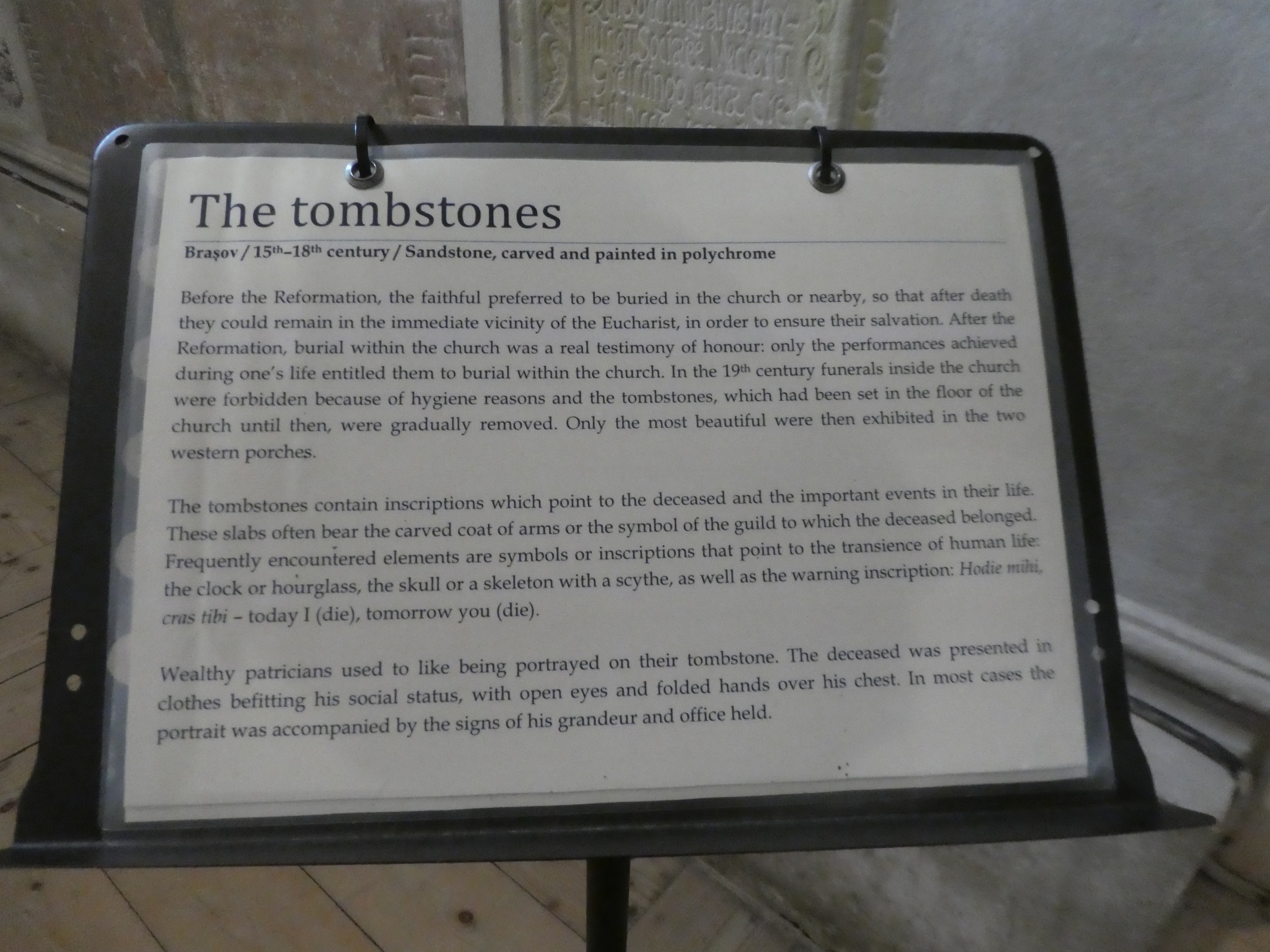
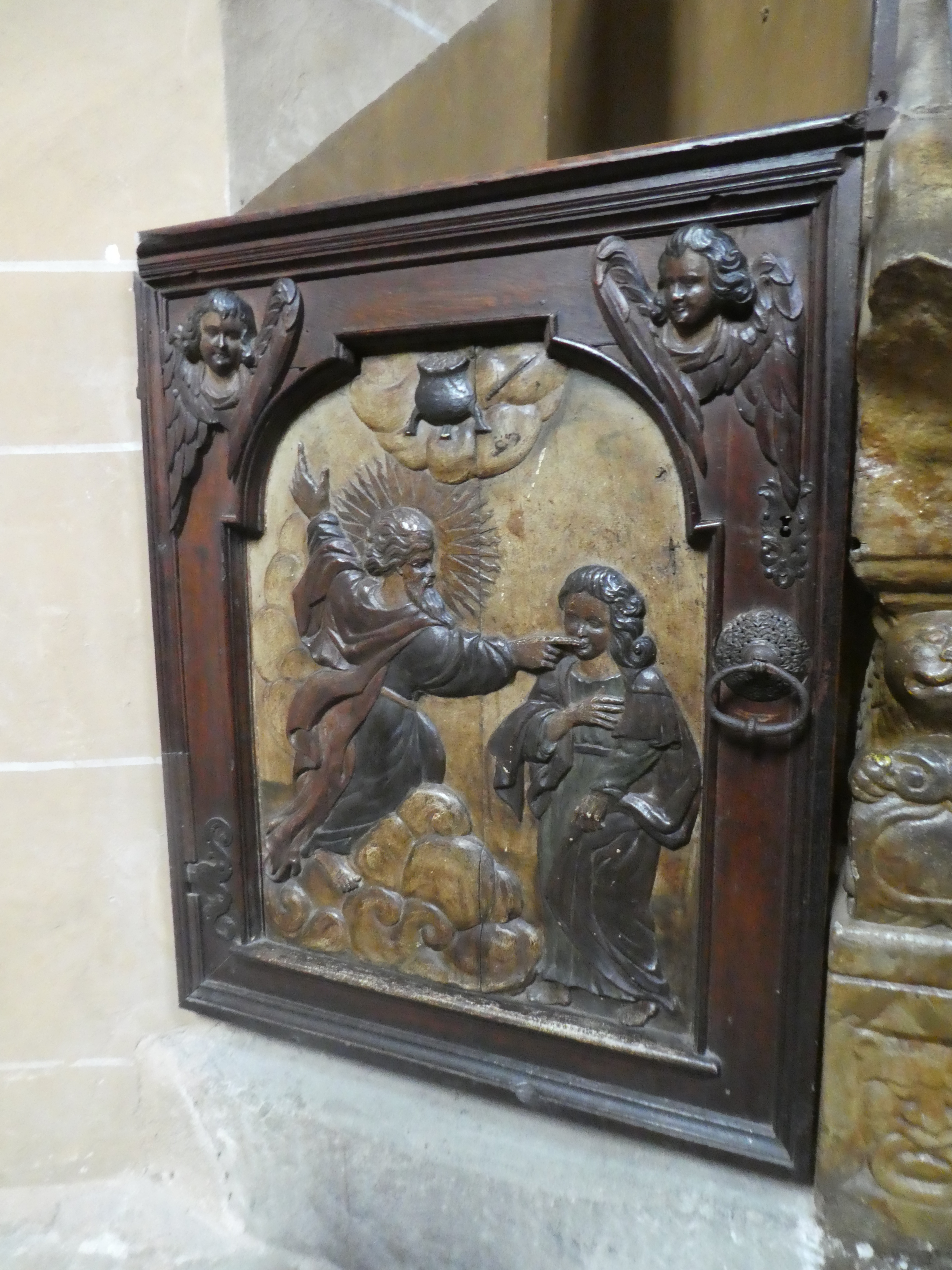
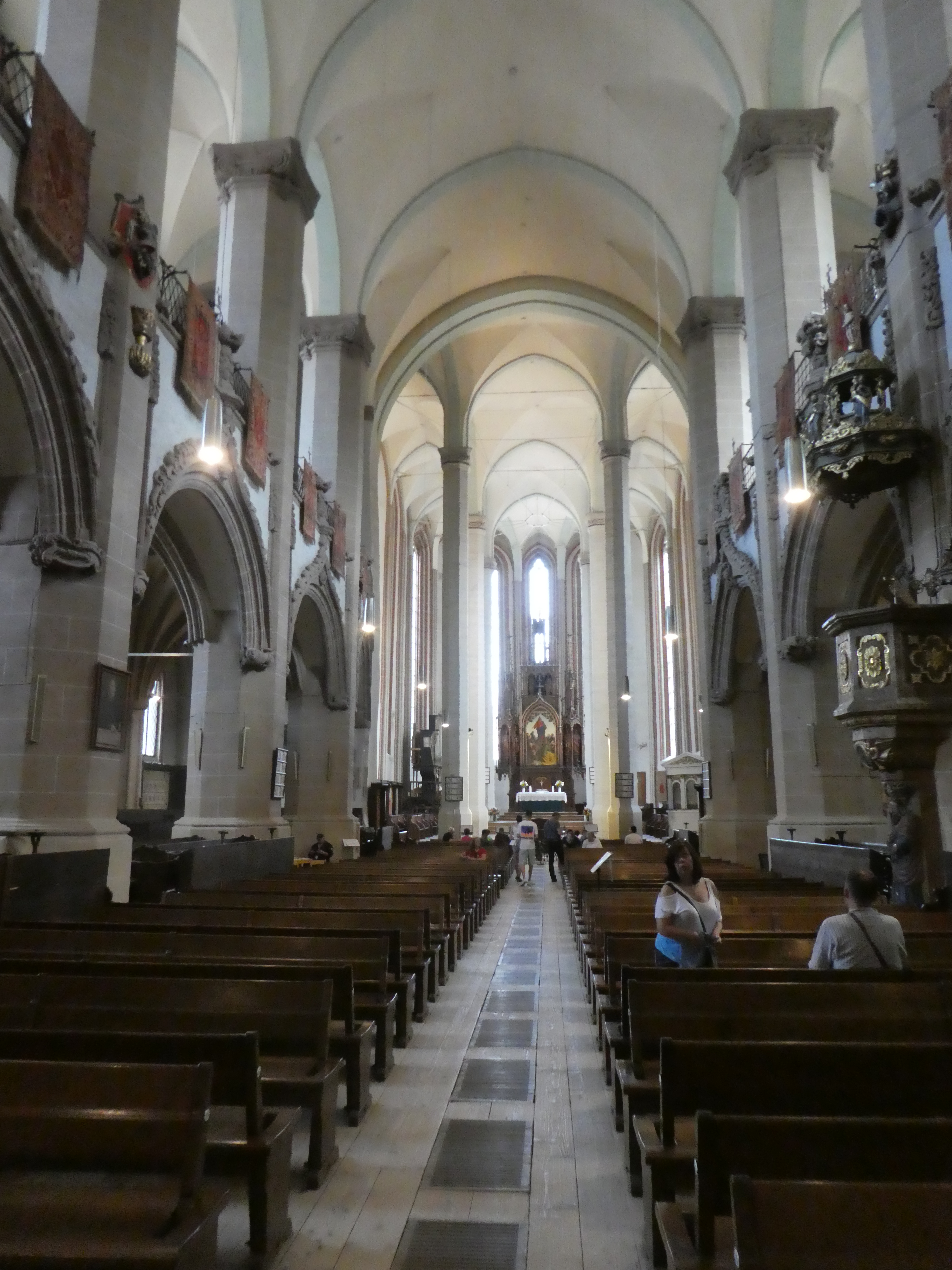
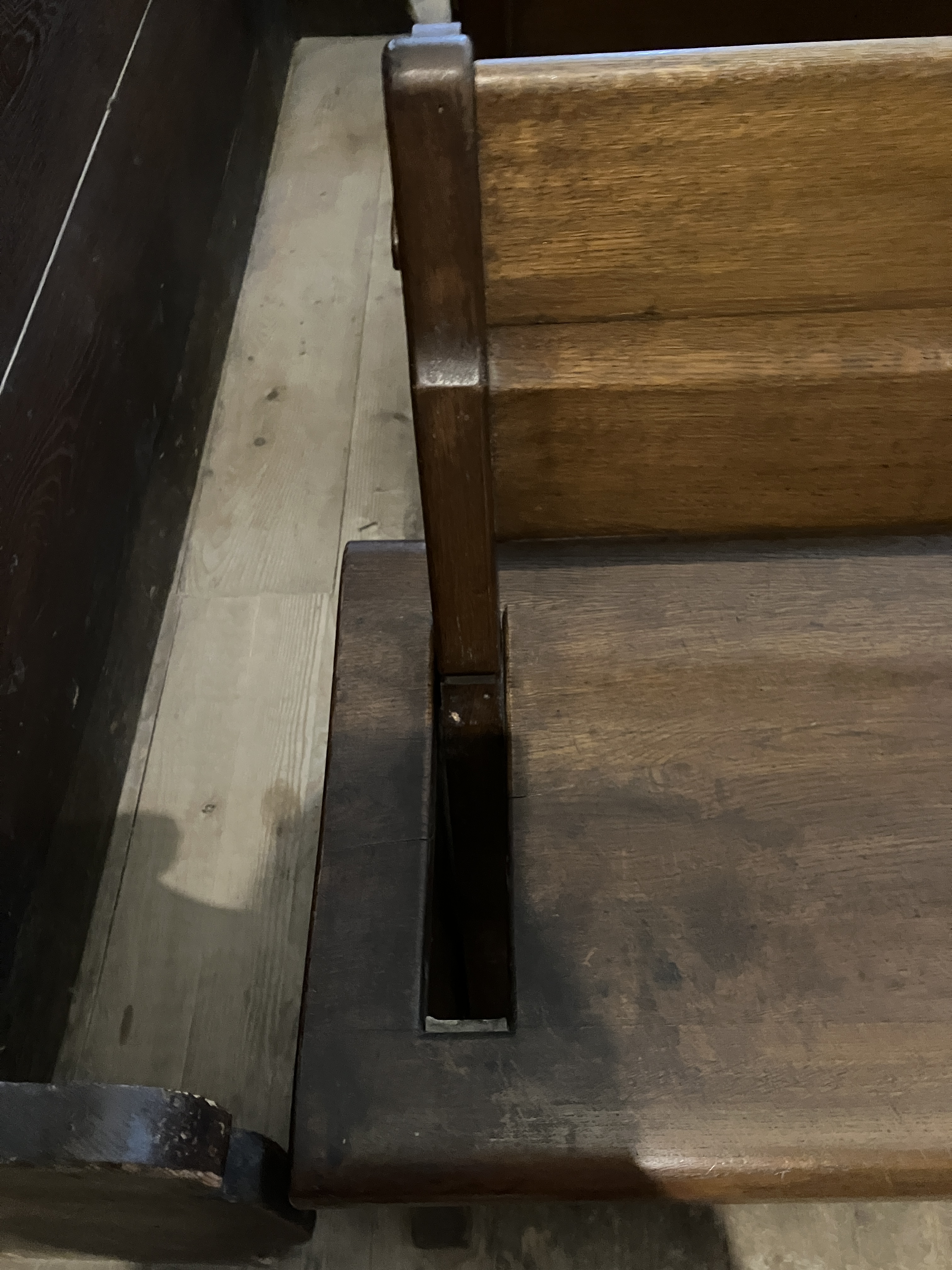
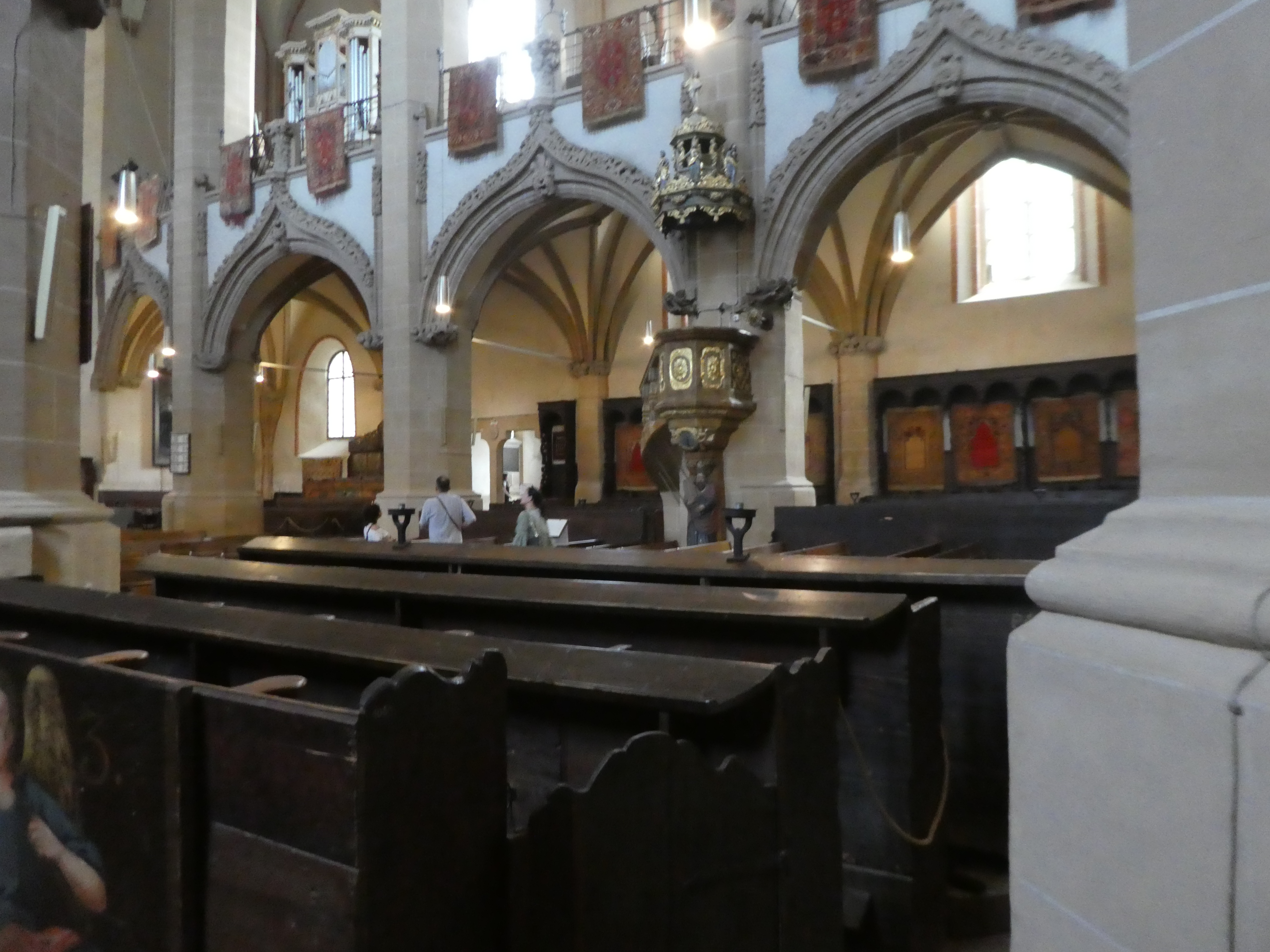

Soon that finished and we realised the pews slotted either way! It was grey and plain except for rugs hung around, again the saving grace was that explanations were in English.
We were rather under whelmed and with the gateways and towers not existing just their names. However we did find Rope Street, the longest, narrowest street in Europe!
We wandered into the large open square that had few people out in it as most were tucked away under umbrellas in cafe’s to escape the very hot sun.

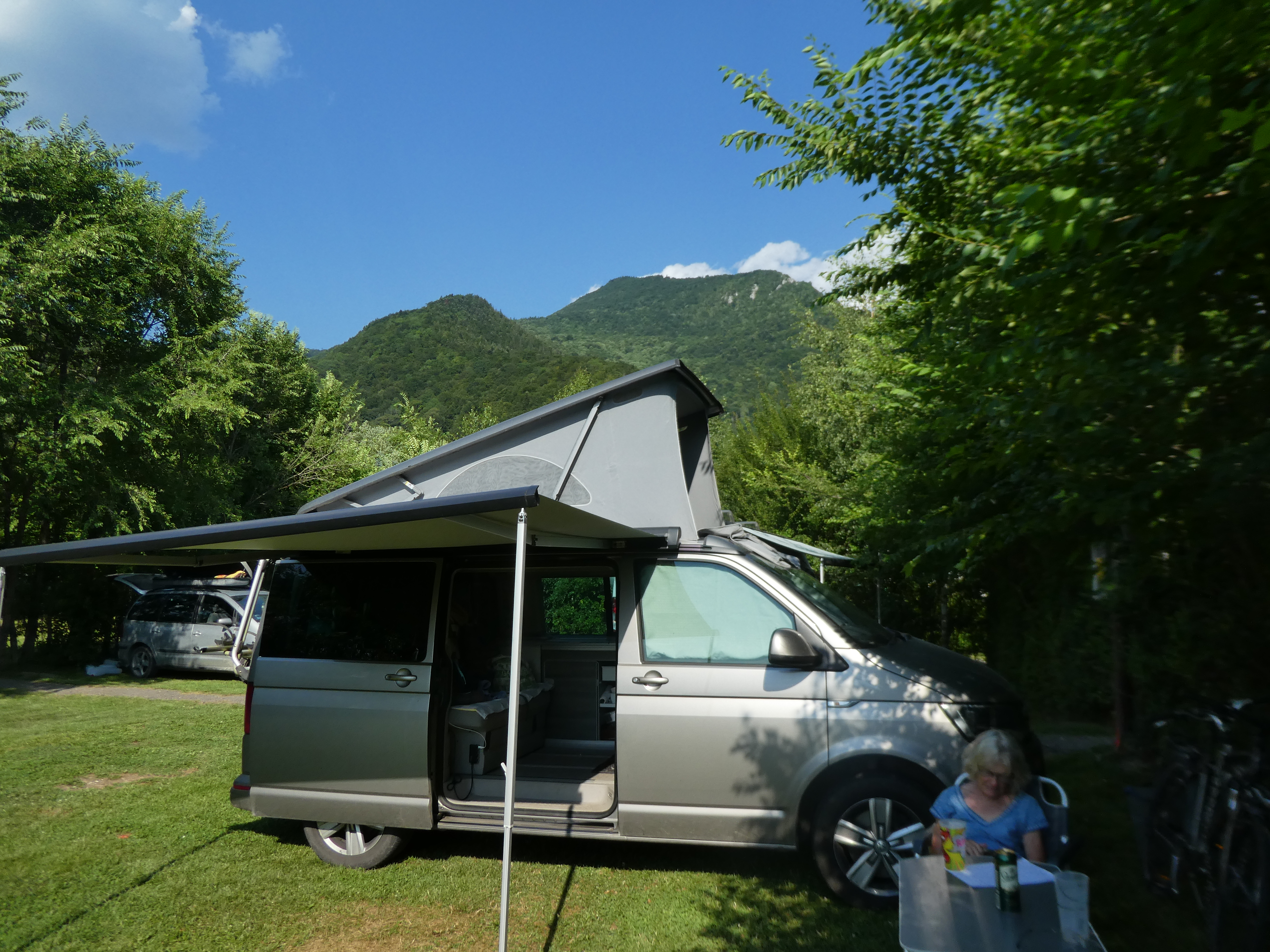
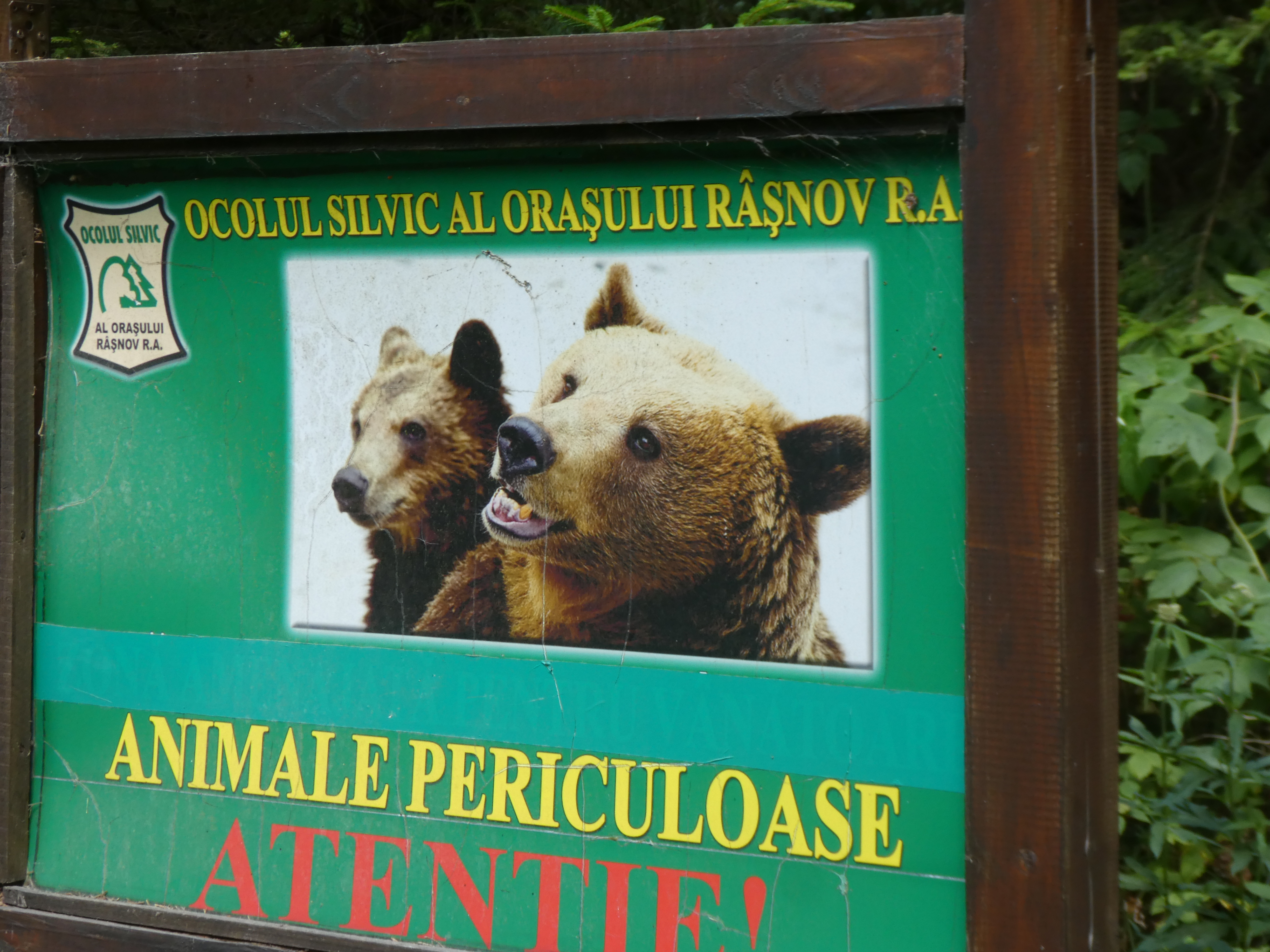
Temperatures in the forties we quickly retreated to camping Cheile Rasonovei, near Predesl in the hills to the south. The camp site had several large dogs which were kept there to keep the bears at bay.
Very hot after tea we cycled up the valley into the gorge for about 3k. There were families all the way along sitting by the river having barbeques and settling down to stay the night, bears or no bears. At the end of the track we saw Beware of the Bears notices, so we decided to return to the camp site.

As the evening drew in there was a magnificent sunset at the far end of the site.
Sunday 14th July – Bears and Beers
We were up early to make our way to the meet the bears at the Libearty Bear Sanctuary in nearby Zarnesti. We had booked for ten o clock but as we were there early at Janet’s suggestion we took a tour at 930am
We had a good guide a lad who had only just started at the sanctuary but was passionate about bears.
We started our tour with a ten minute film about the circumstances that had led to bears being taken away from their owners and the need for a sanctuary to take them.

The sanctuary was set up to give a place of safety for bears who were taken away from owners who mistreated them or who had finished their working lives in circuses and orphaned cubs. It is located amongst 69 hectares of oak forest.
He explained the issues of bears in Romania and was a bit unprepared to respond to the comments people were making about the incident involving the death of a tourist the week before.
Apparently the best thing to do if you meet a bear is to take off some clothing and leave for the bear and back away slowly until the bear is distracted by the clothing and then run! Not quite what we had heard days before but is there any safe way really.
He showed us an average sized cage that performing bears were kept in for years on end. It was small and offered no room for movement.
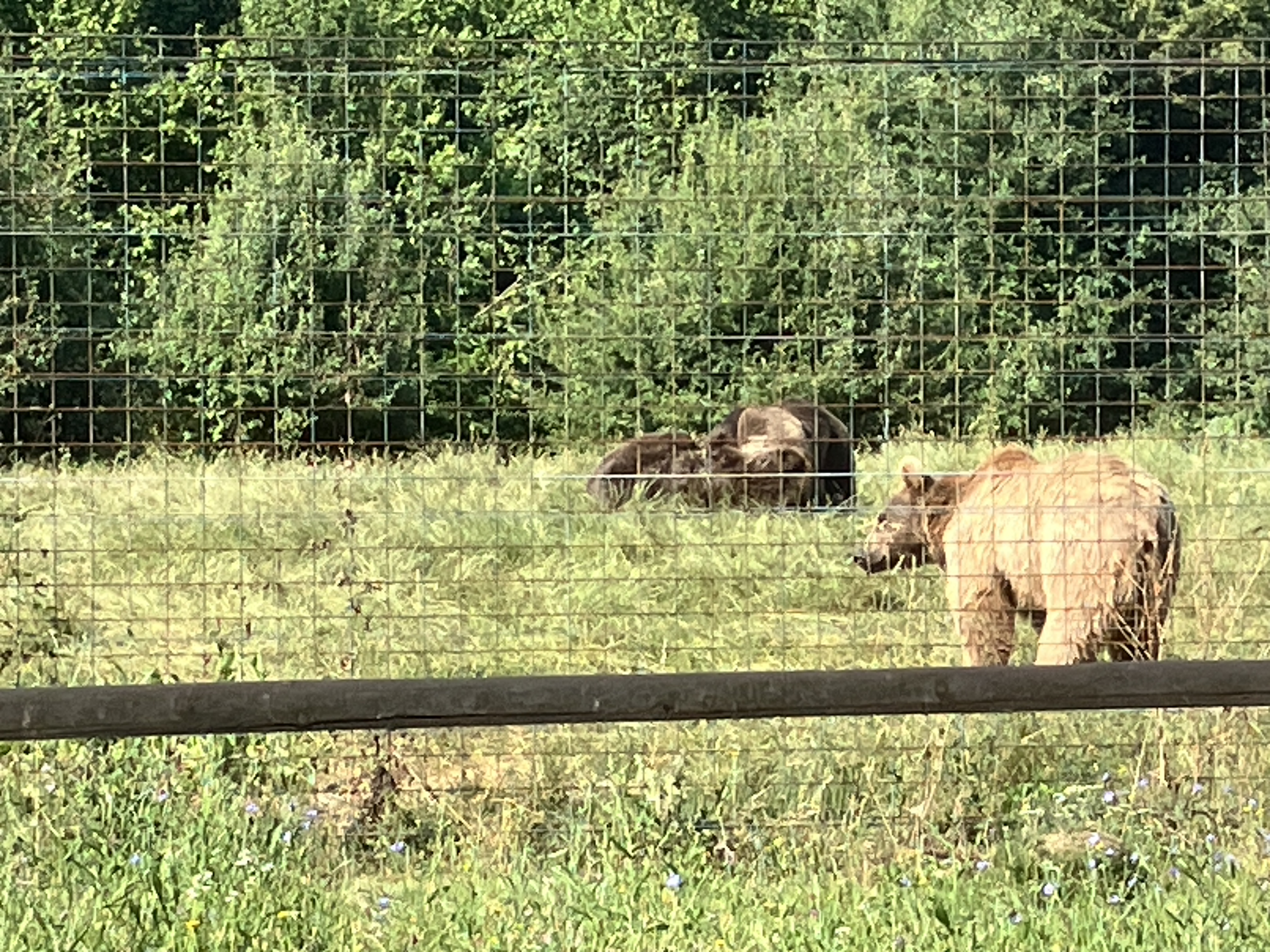


As we moved into the site there were quite a few bears out waiting to be fed and a lot of them had background stories which he recounted for us. Several of the bears were severely traumatised and that was sadly apparent. Several are at large within the sanctuary and seldom seen.
They don’t breed bears in the sanctuary and any males they acquire are neutered. They are big animals and they need a lot food but very little of their diet is meat. The omnivore nature of their diet means that a lot of their food is out of date food they get given by supermarkets. The scattering of food for the bears throughout the sanctuary means there are a lot of crows flying around scavenging on unwanted morsels.
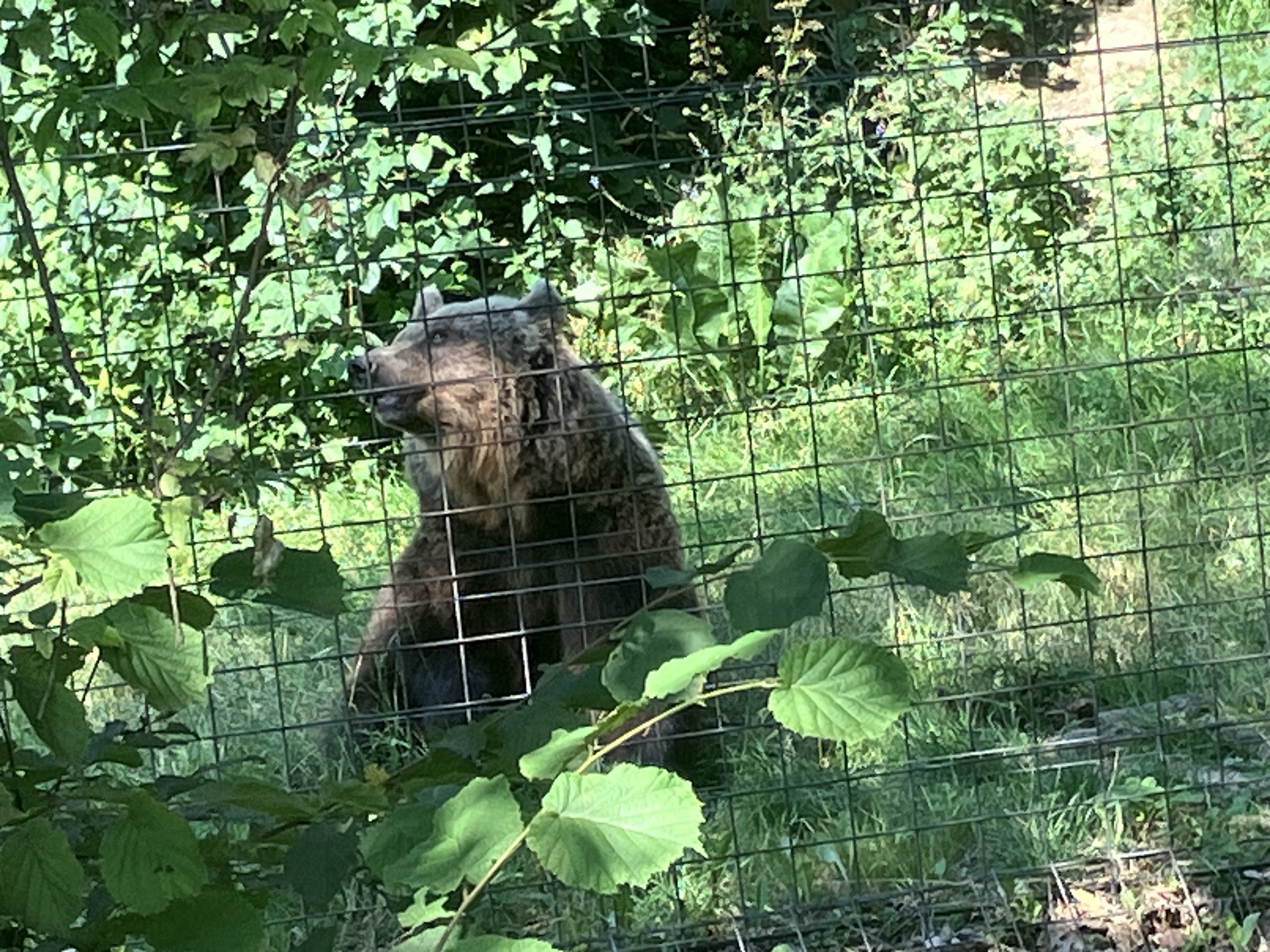
We walked up the hill to where the orphan bears were kept. They were of all sizes and very curious and impatient for their food.
They were all big and heavily built and the thought of being attacked by one out in the open didn’t bear thinking about (excuse the pun).
Wolves and other abandoned animals such as tortoises and donkeys were also kept in the sanctuary albeit in separate pens.

We drove back to the site and had lunch. After resting a while in the heat of the afternoon we cycled up the gorge to the road barrier.
We walked out across a beautiful meadow and started climbing through a lovely wood toward the escarpment. The images from this morning and the recent bear attack had sapped our confidence.
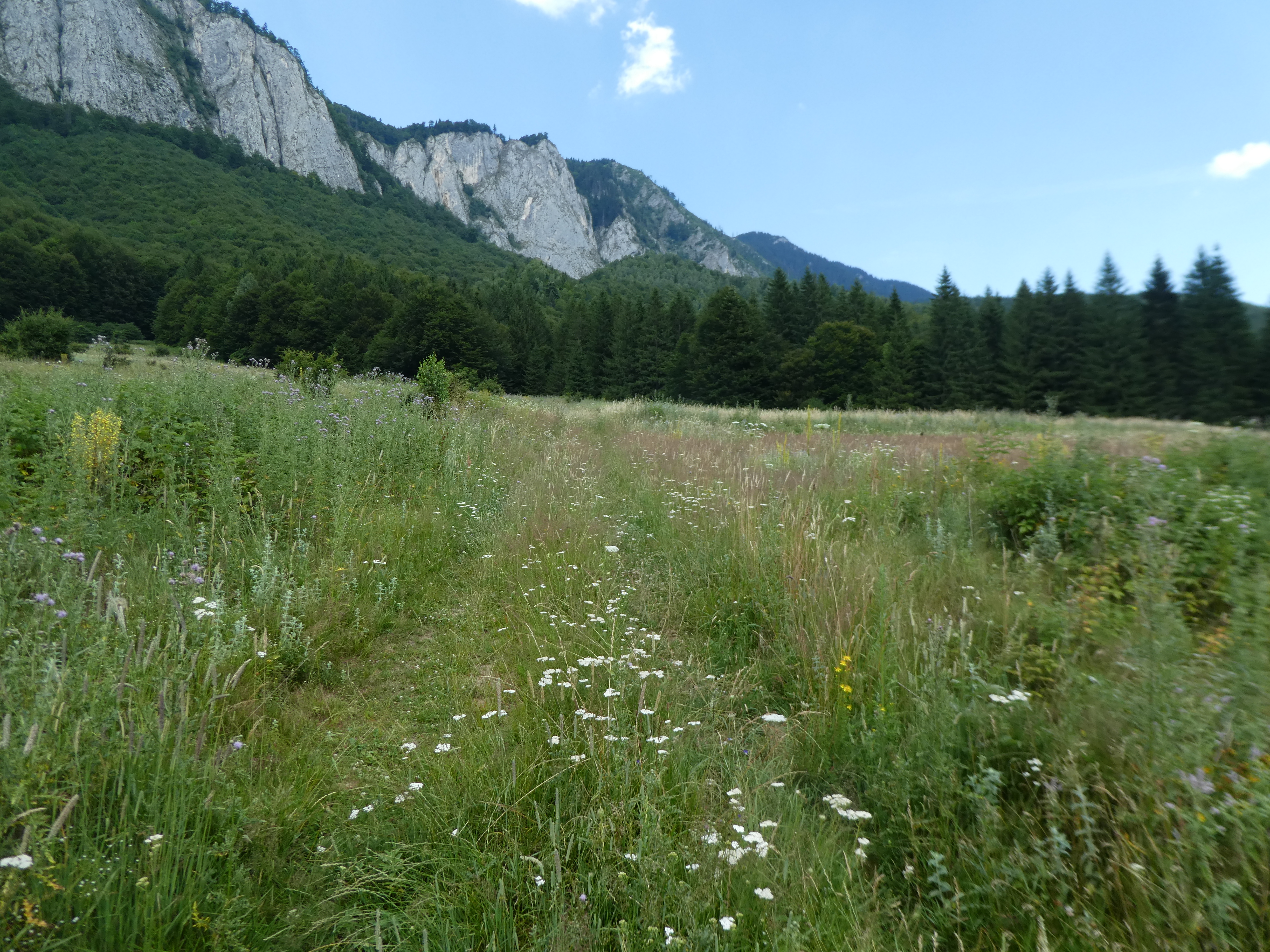
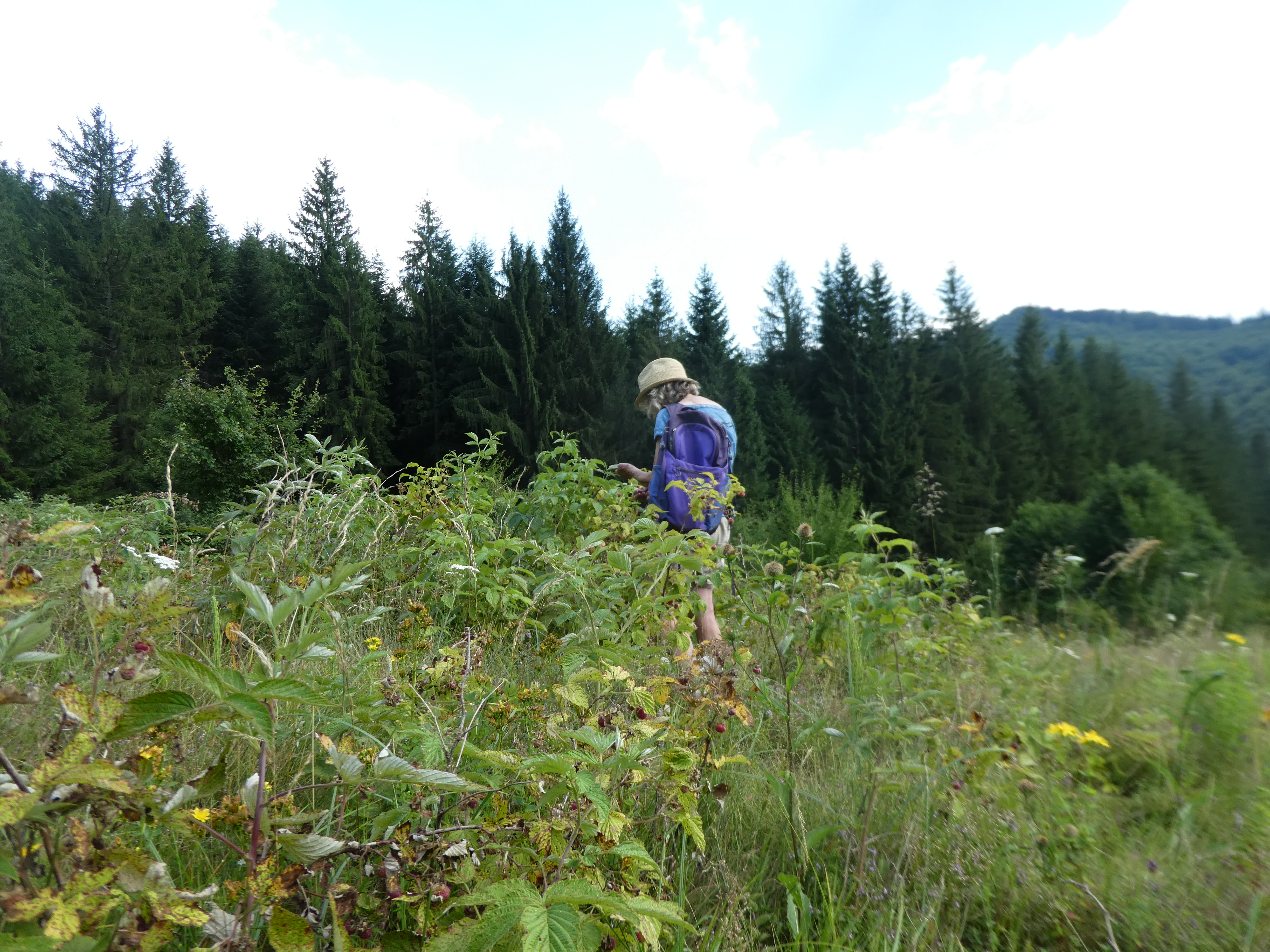
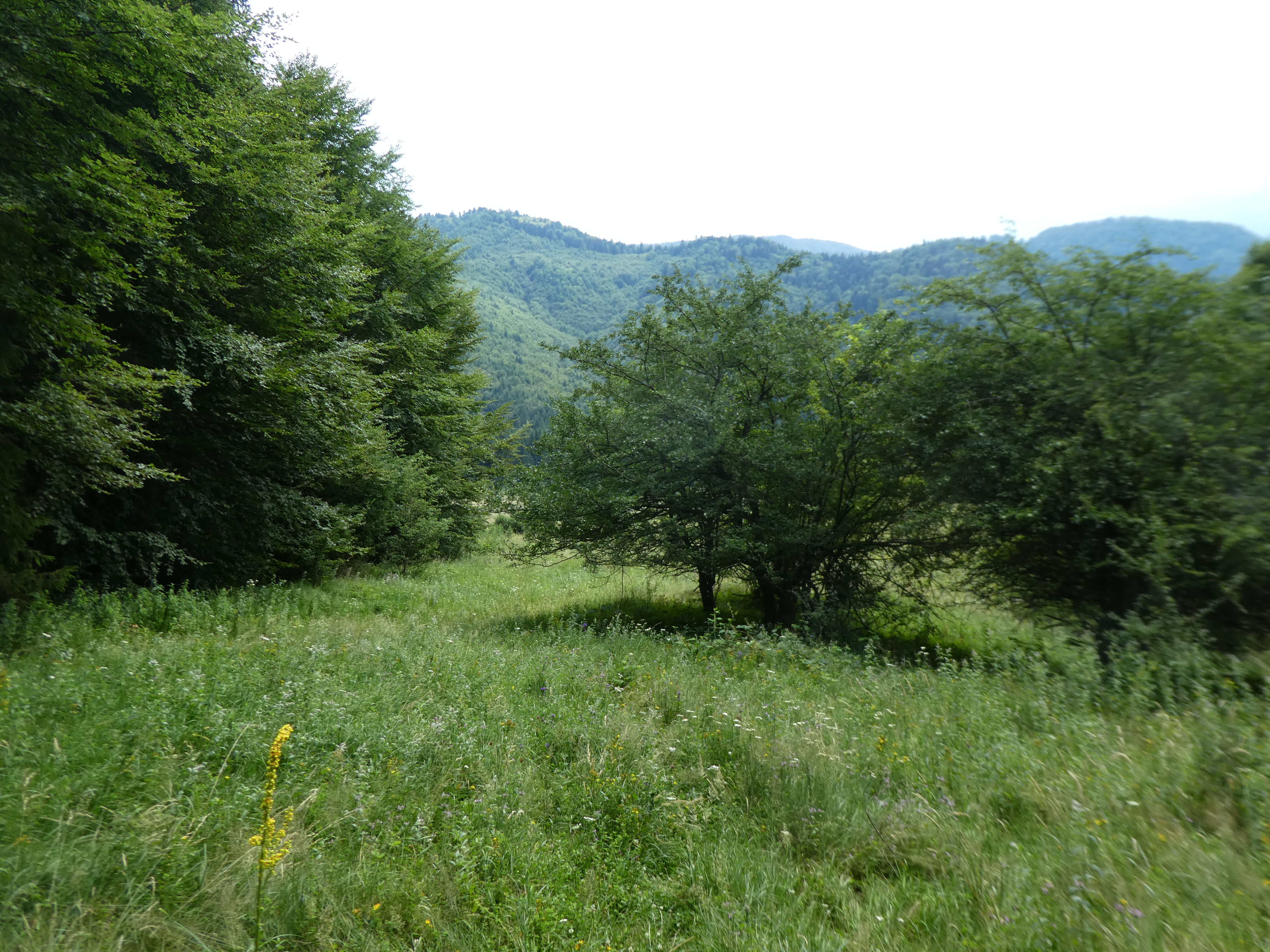
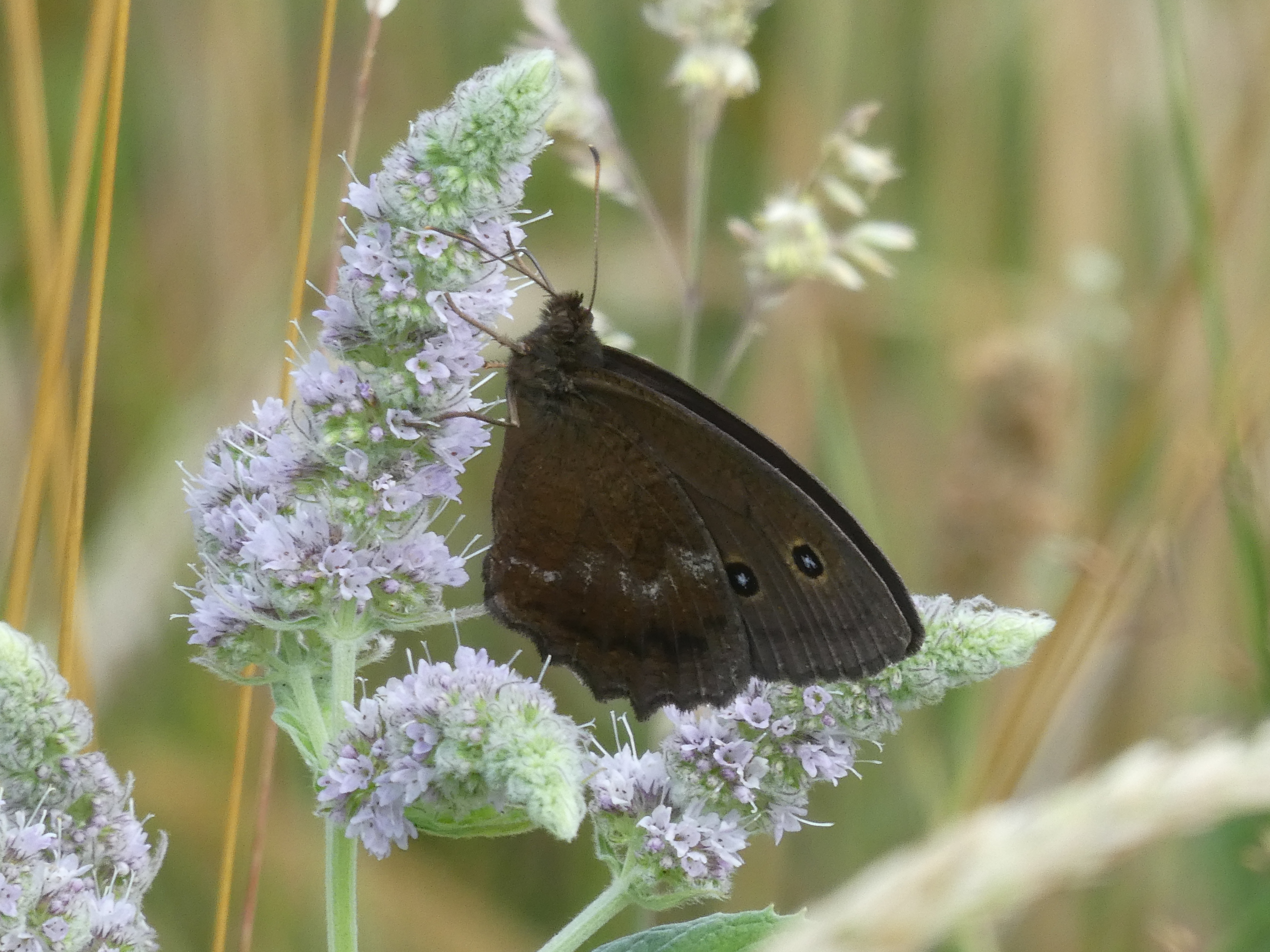


It was at this point we decided we were being silly and we were in bear country so we retraced our steps.
We cycled down the road taking a left turn up into a busier part of the forest, left our bikes and climbed a well used path up through some wonderfully mature and spacious woodland to Trei Brazi, a popular bar restaurant where we had a drink.
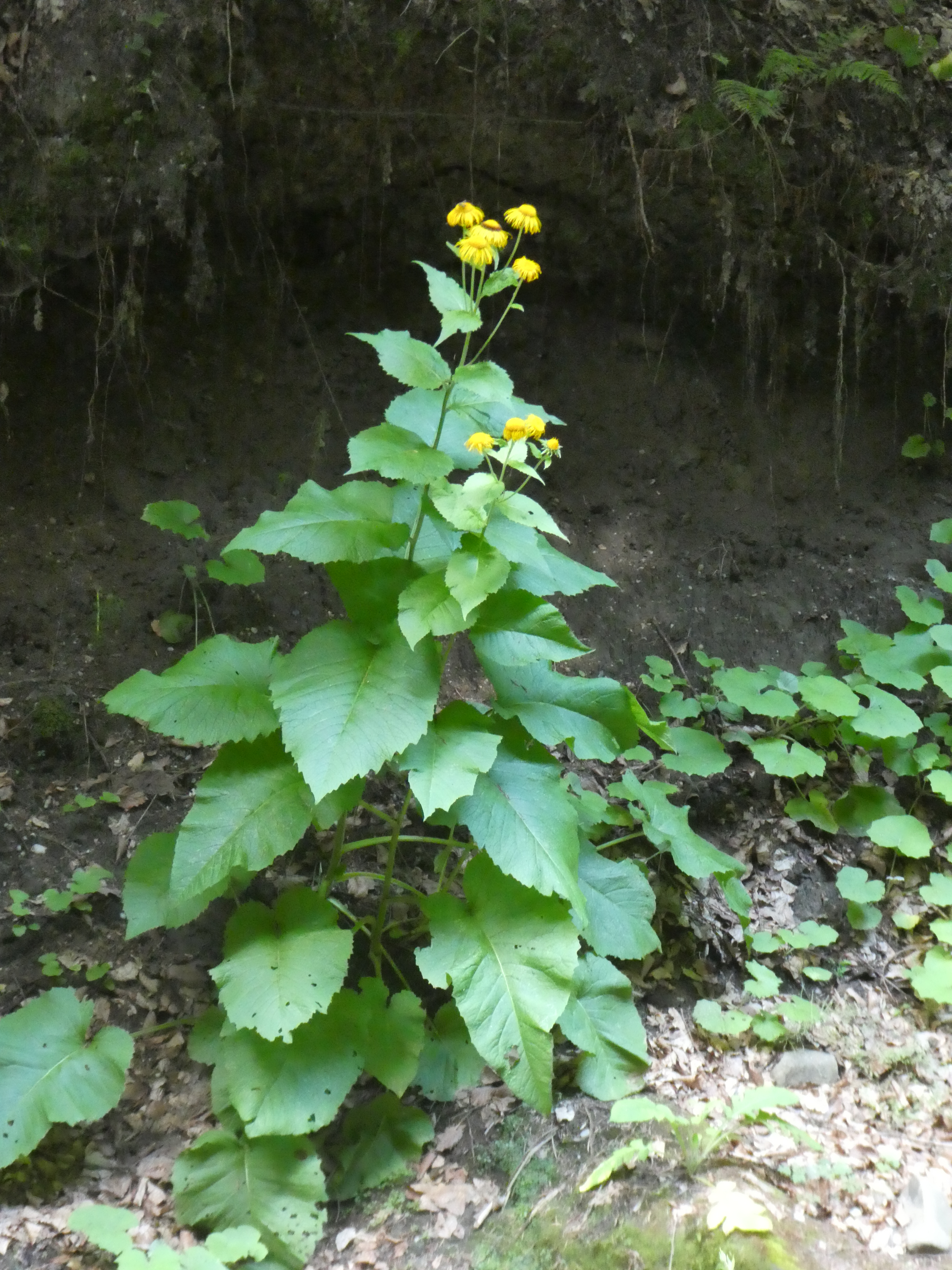


We then returned to the site where we enjoyed another colourful sunset, had a meal and watched the Euro final between England and Spain. England came second.
Monday 15th July – Sibiu and Sarmizegetusa Regia
By time we left at 9 we decided the camp site was ok!
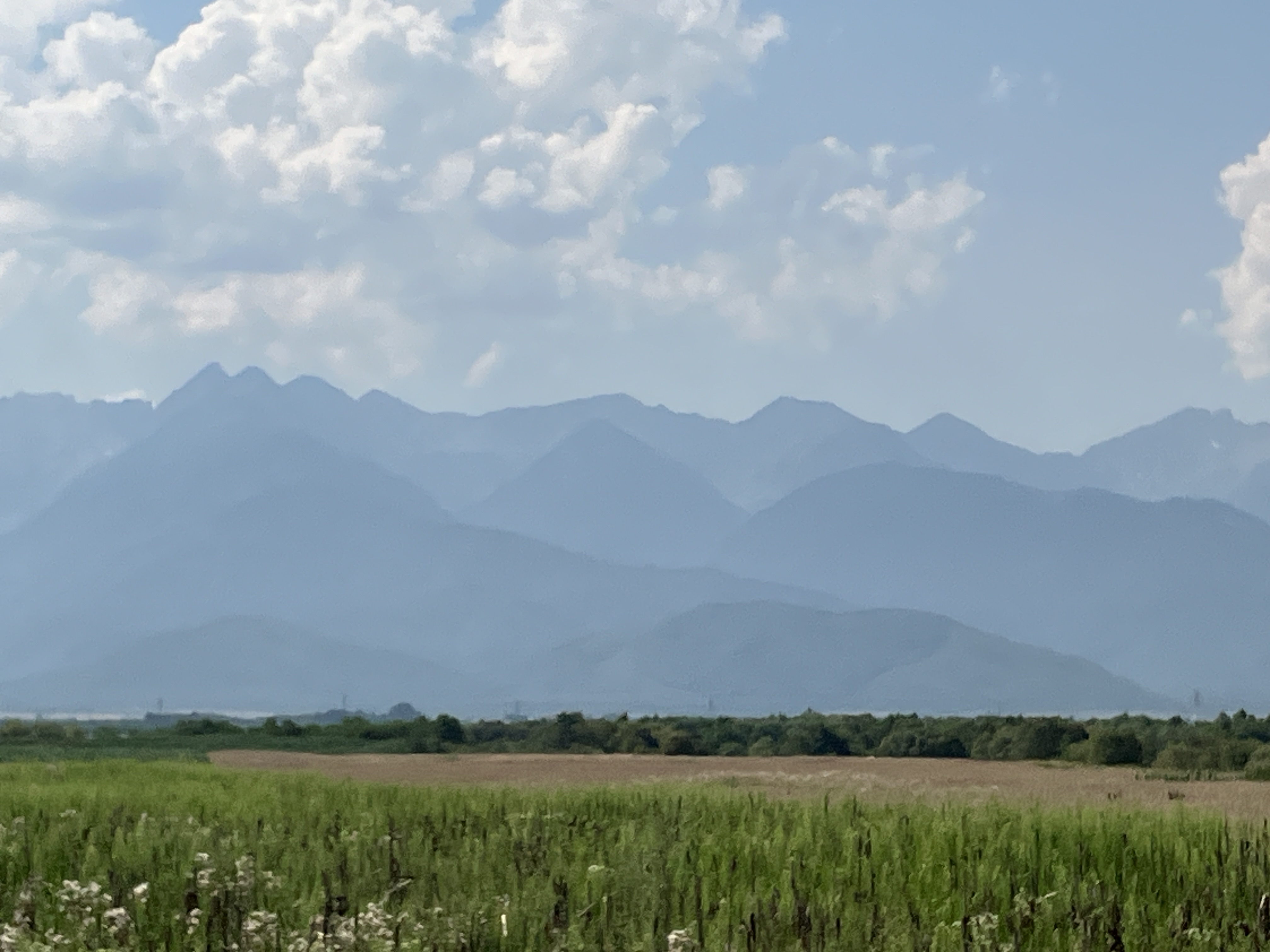
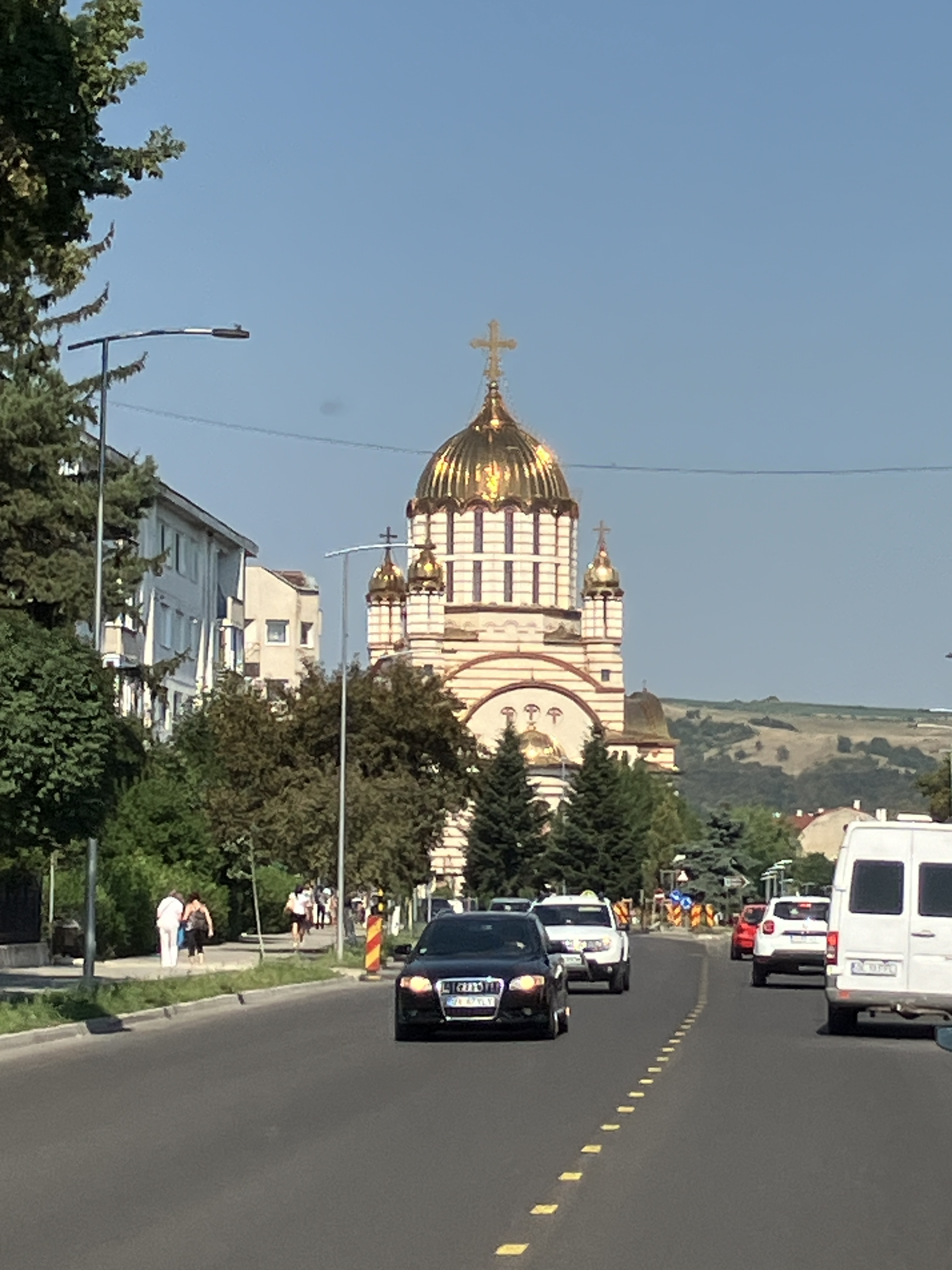
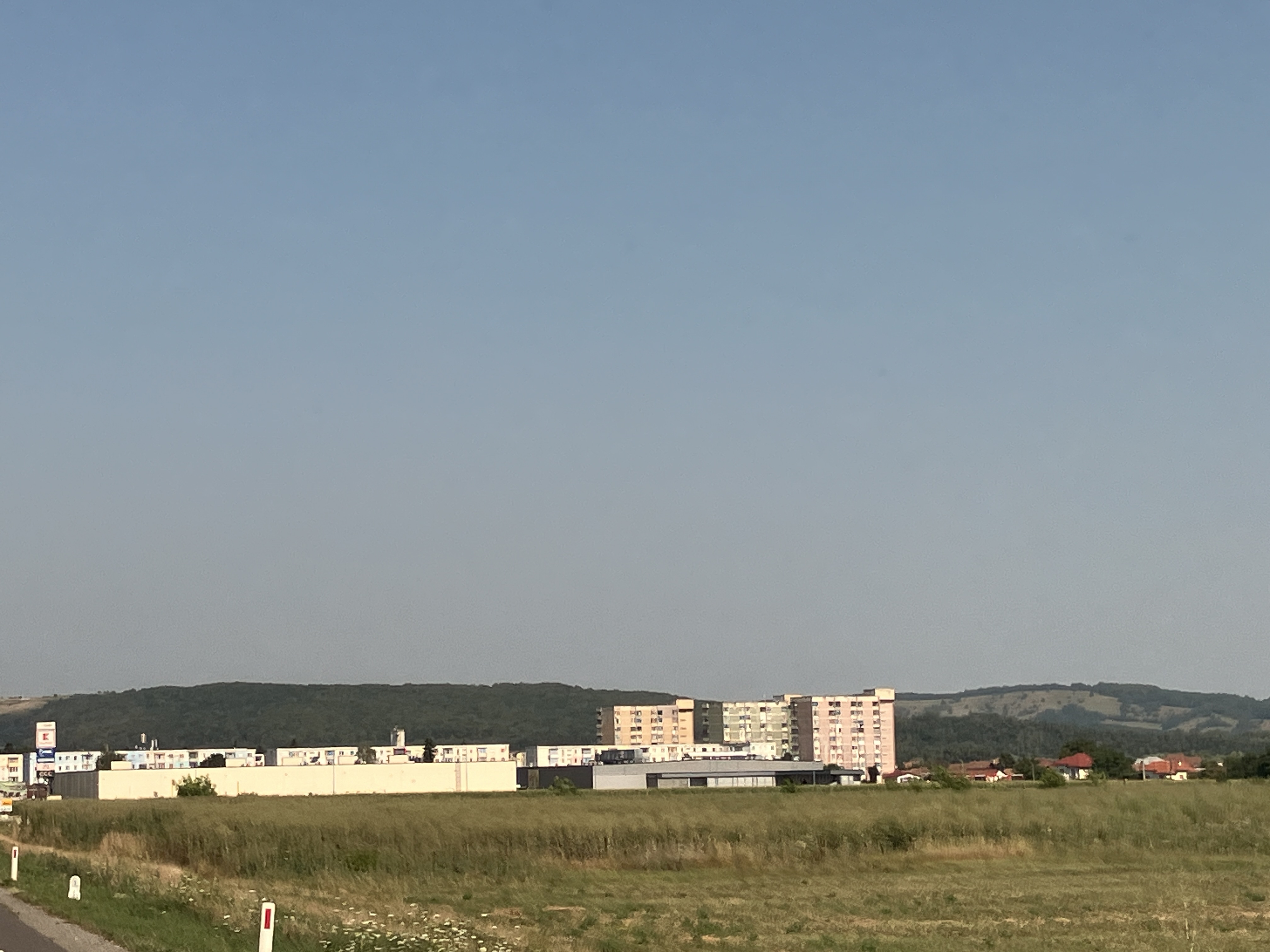
We travelled west through Codlea, Fagaras to Sibiu. As we pass through Fagaras you cannot help but notice its gold church and communist era housing blocks. The Fagaras Mountain range to the south of us looms up out of the haze and looks impressive and attractive but we don’t have the time to do all we want.
Arriving in Sibiu we park and shop at Lidl before walking into the centre. Temperatures were soaring so an iced coffee and a wander through the three main squares of the town was all we could face.
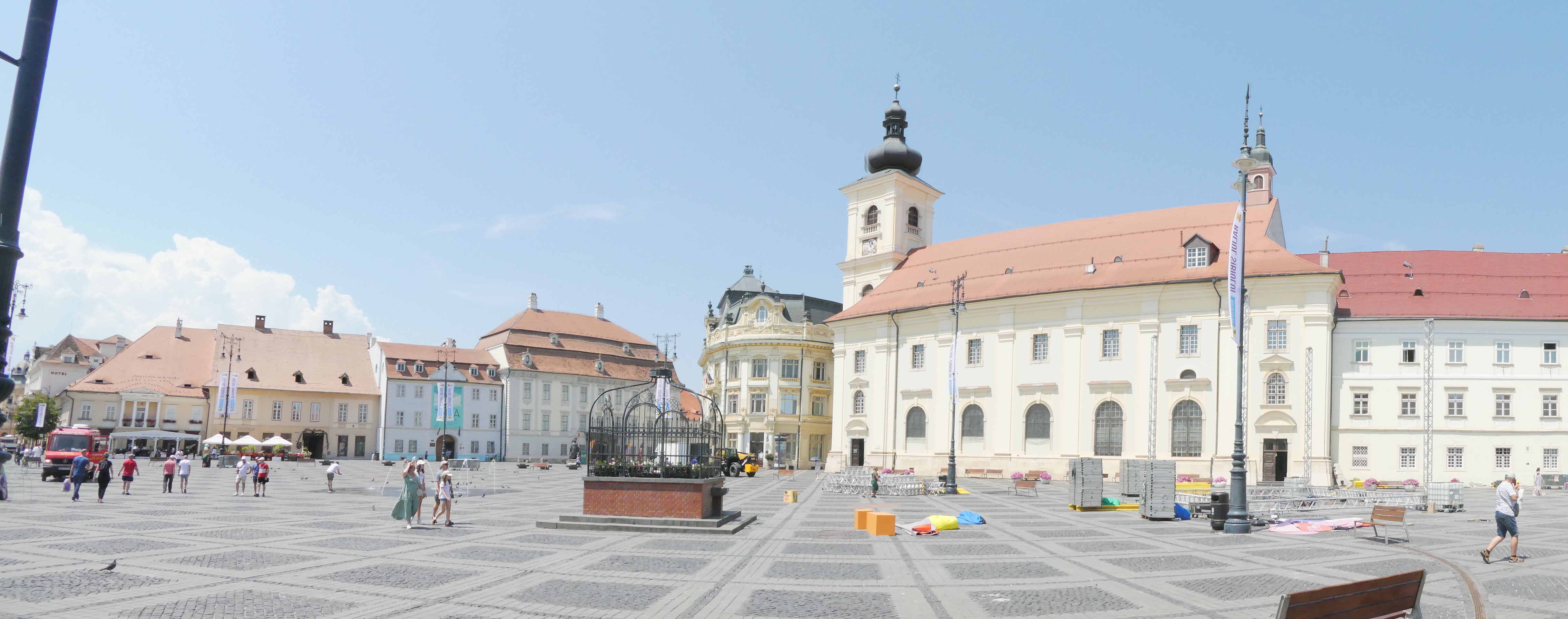

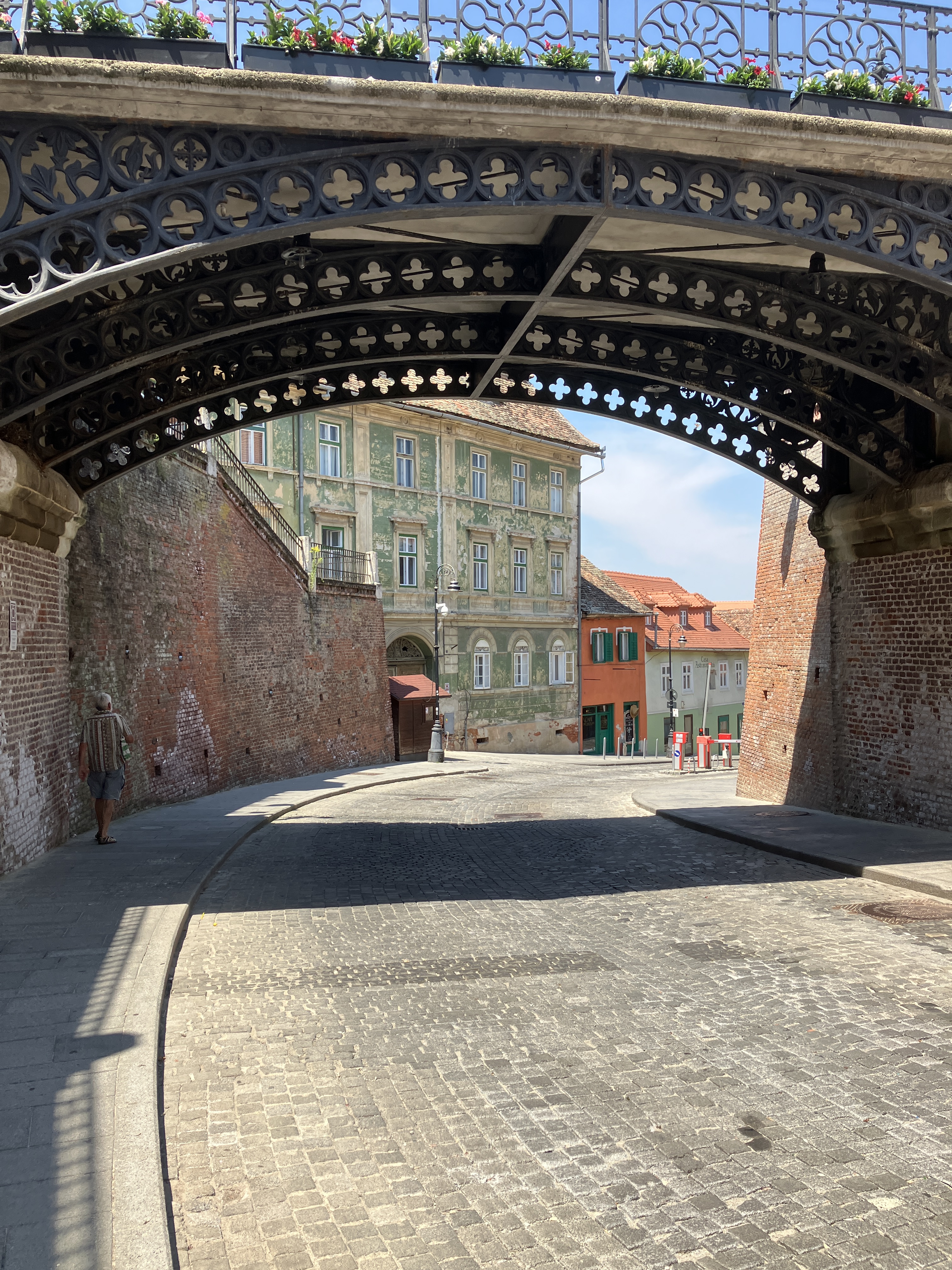

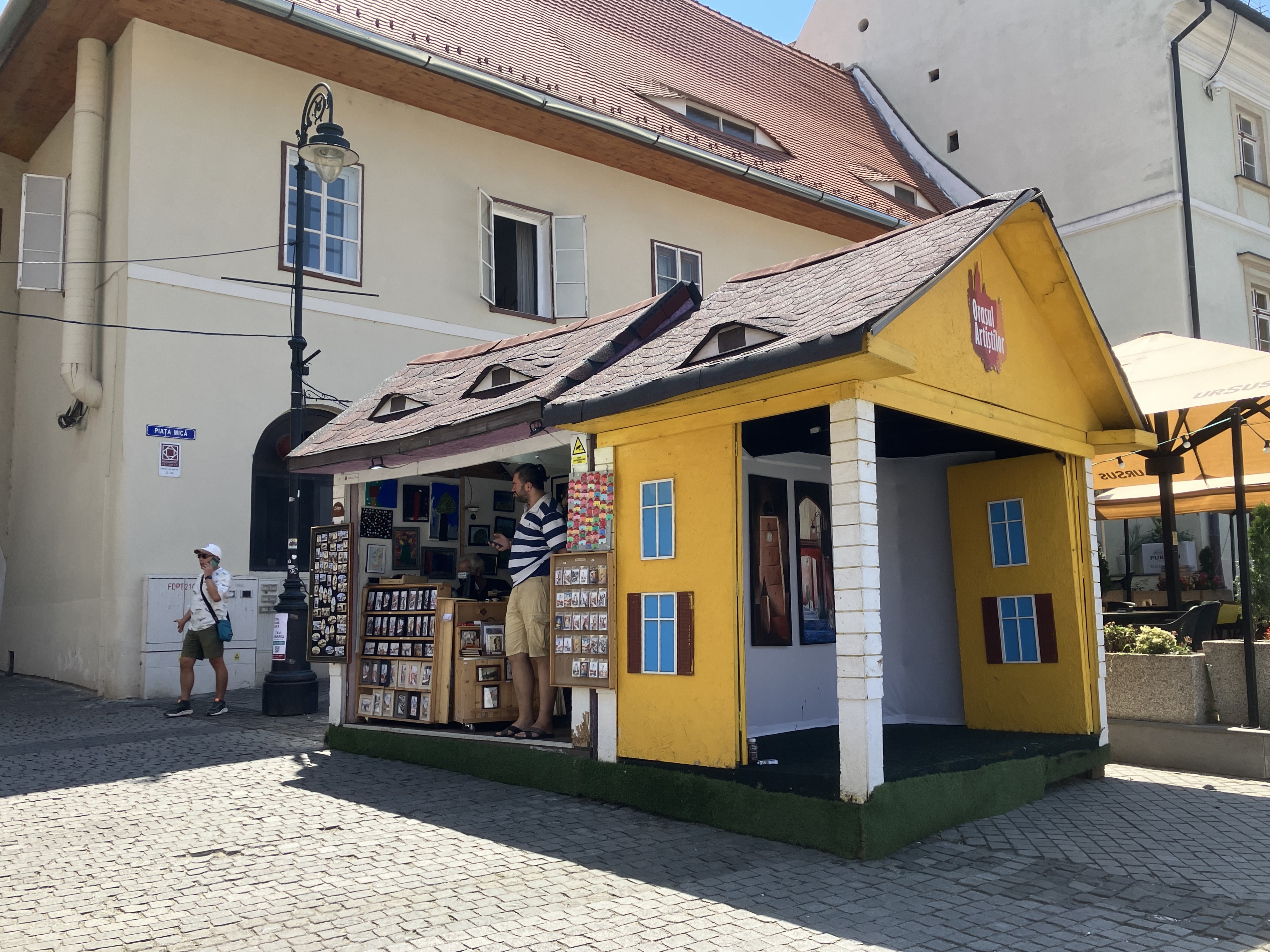
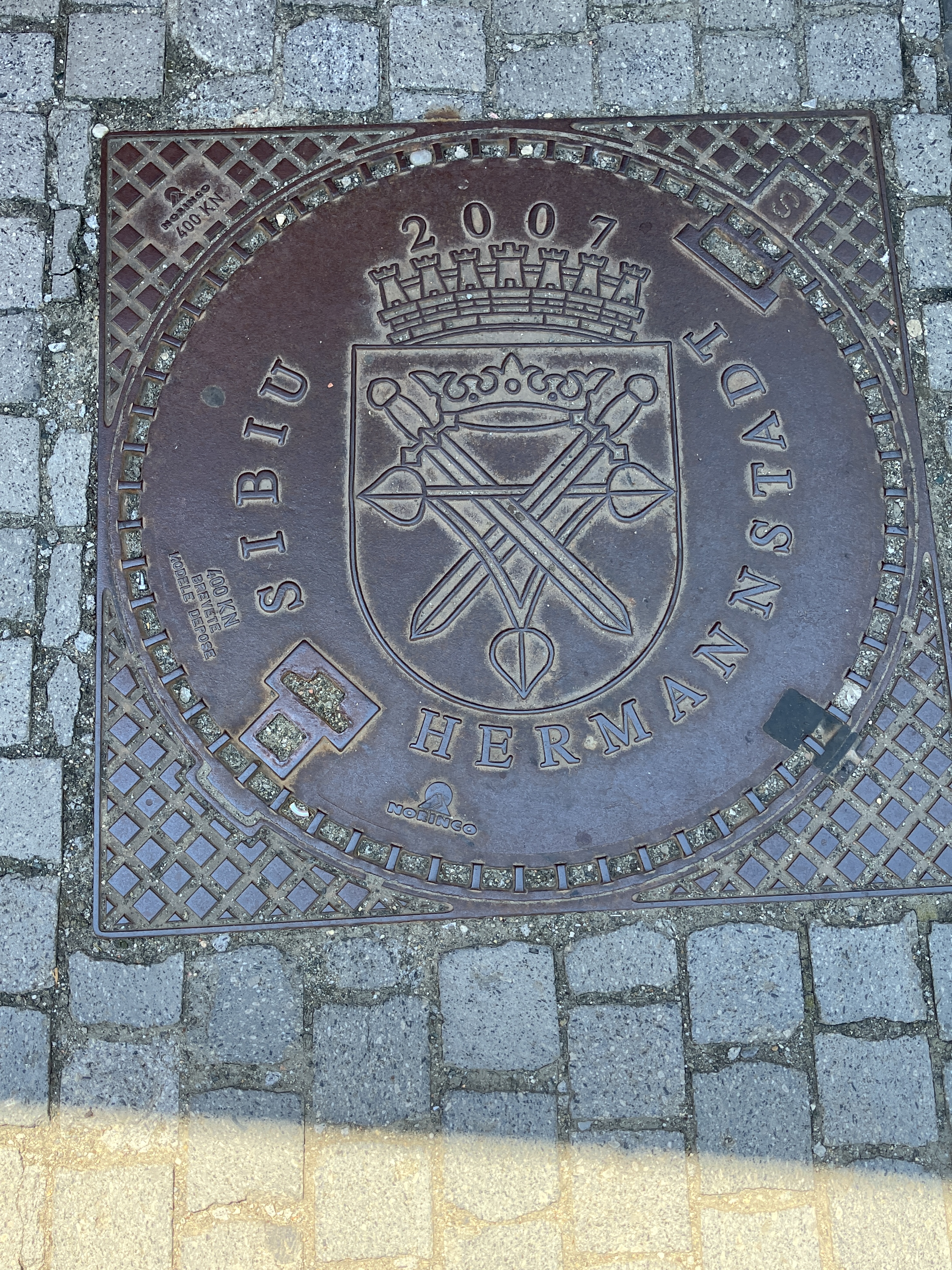

The town centre was pedestrianised and had an amazing variety of churches with towers and large baroque buildings. It felt very different to the other cities we had visited, organised in afar more western European way.
We then travelled on to Costesti in the Gladistea Moncelafu Cloclovina National park. As we went up the valley we found a campsite which looked ok so feeling good we travelled up to the ruined Dacian capital of Sarmizegetusa Regia.
It is a World Heritage site in a lovely setting in the wooded hills. This was the Dacian capital before the Romans colonised this part of Europe they destroyed many of the temples that stood here. There were interpretation boards explaining features some ancient and others reconstructed. It was all a bit confusing and wasn’t explained very well
Dacians settled from the 3rd century BC onwards at Sarmizegetusa Regia and it remained unconquered until 106 AD when Roman forces forced the Dacians to retreat north. The Dacian city was divided in to three parts two civilian areas and a middle sacred zone which contains places of worship


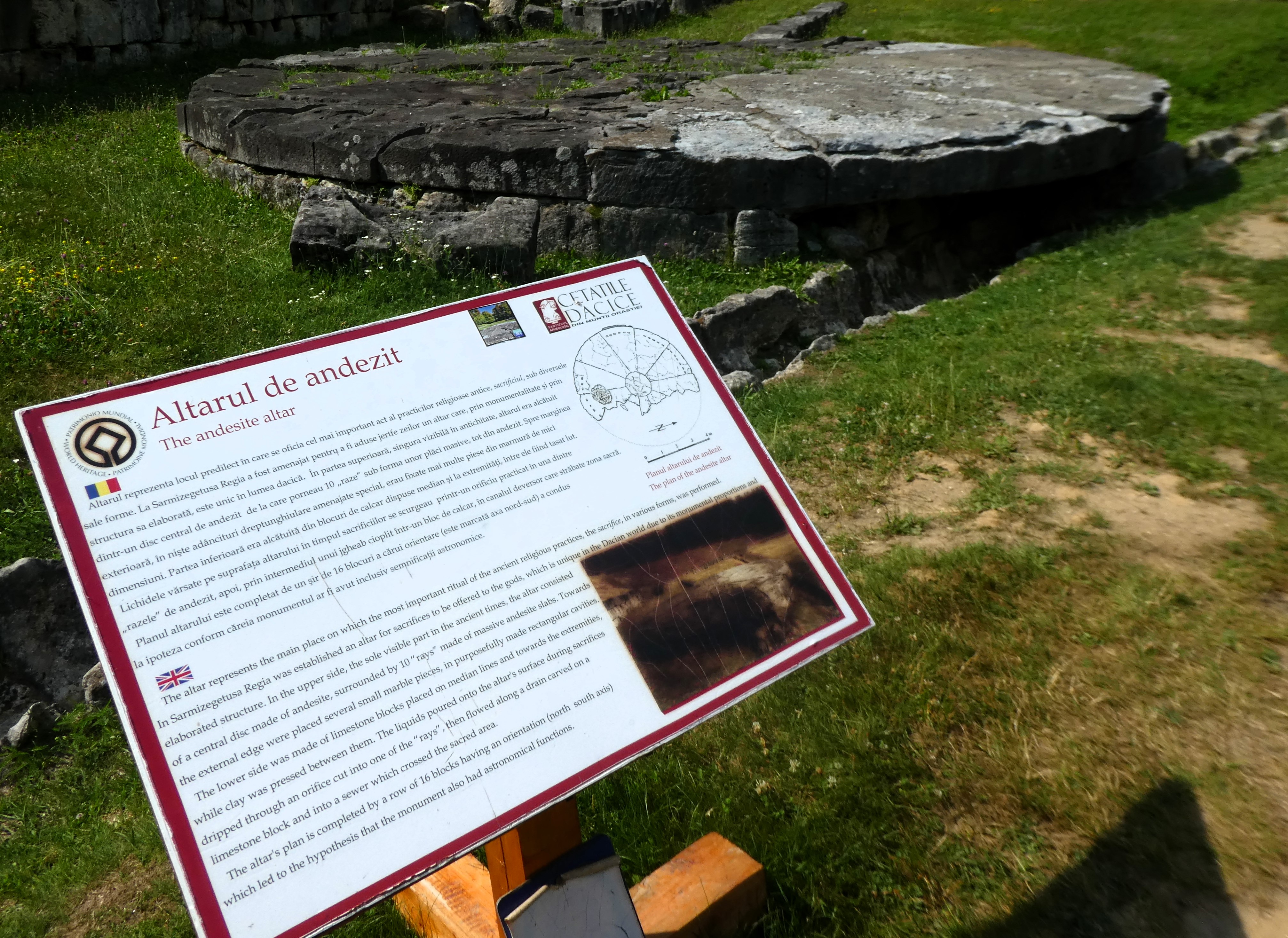


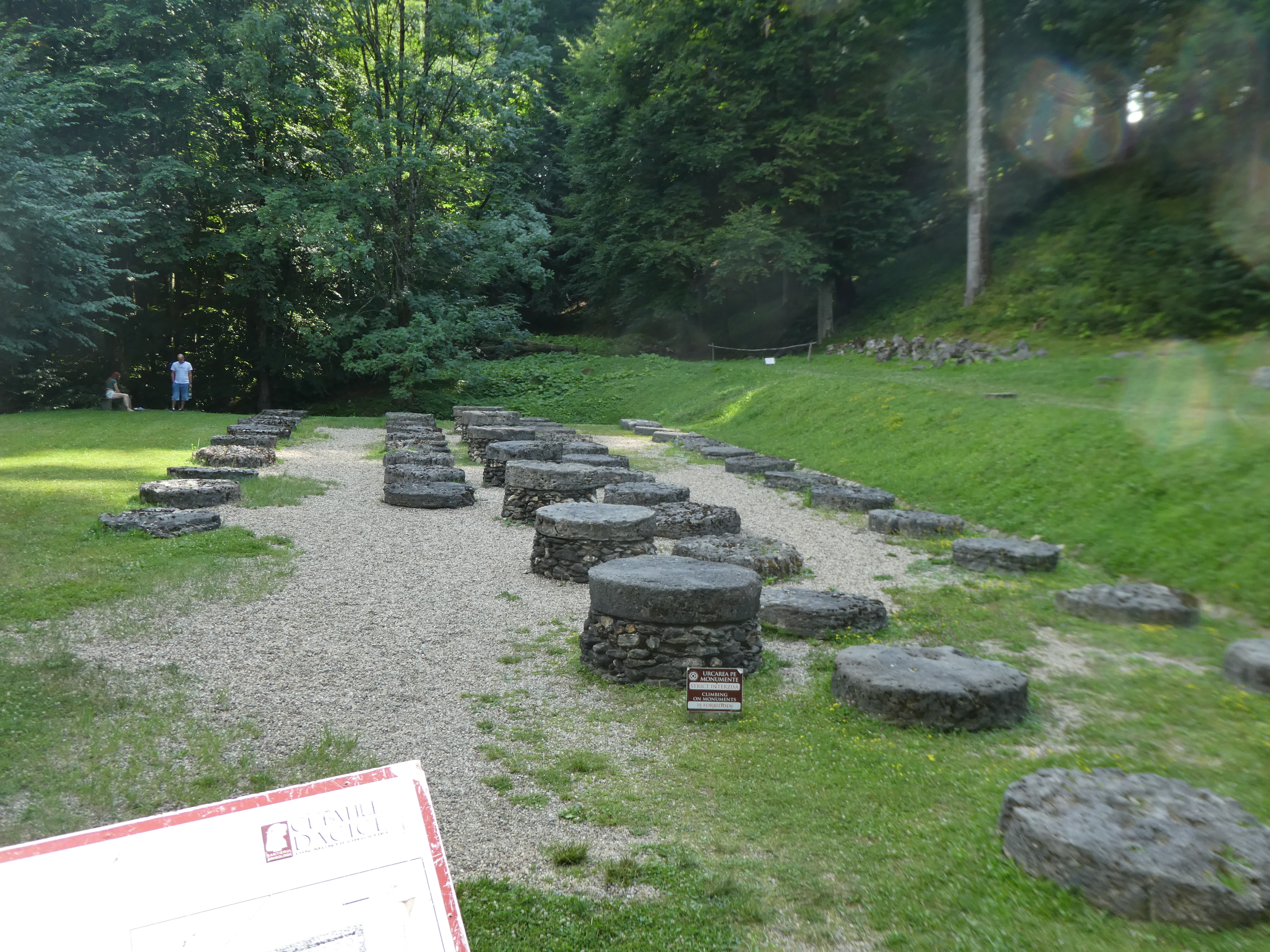

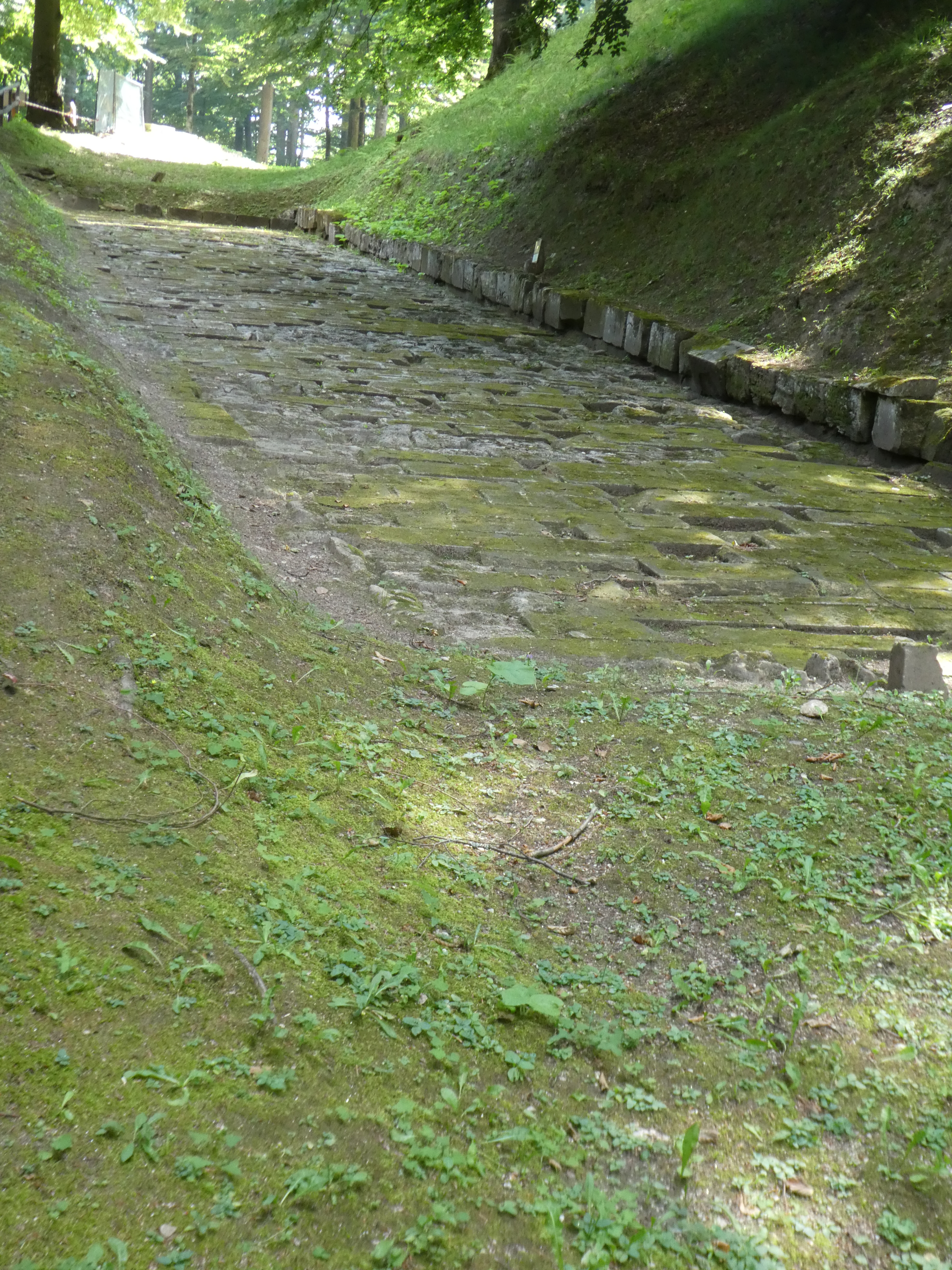
Slightly frustrating but fascinating to see temples and villas that had developed over several centuries.
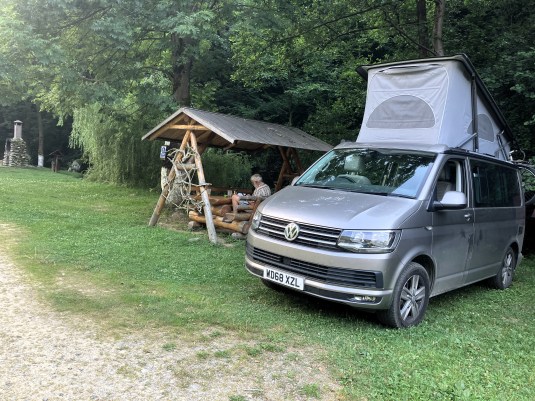
Returning to the campsite it had filled up with lots of people and food ready to party! We parked next to a roofed picnic bench, let the owner know we were there and chilled.
We later paid our camp site fees and settled down for the night. the group were chatting quietly but were not noisy. That is until three in the morning when there was a very loud dispute going on in the chalet between members of the group who had been partying earlier.
It eventually calmed down but we did wonder what carnage we would find in the morning.
Tuesday 16th July – Hunedoara to Apuseni Mountains
A surprisingly good shower and calm campsite when we get up in the morning. We travel north west to Hunedora and the amazing Corvin Castle.

As we enter Hunedoara a large phased out steel town there were amazing mansions with steel roofs and Chinese style chimney decoration. The town was actually a bit of a mess apart from the castle and bore the marks of a legacy of its heavy steel industry.
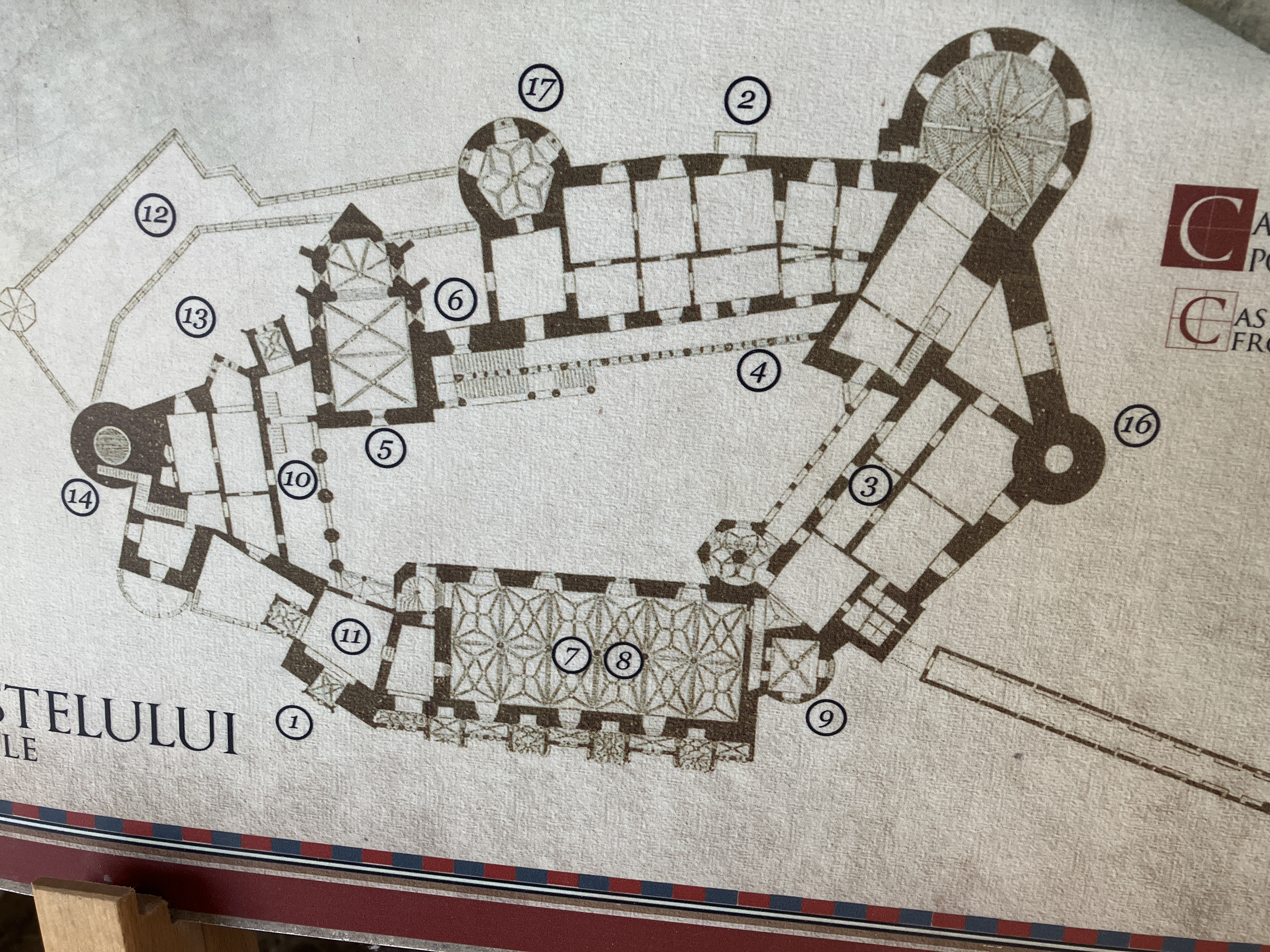
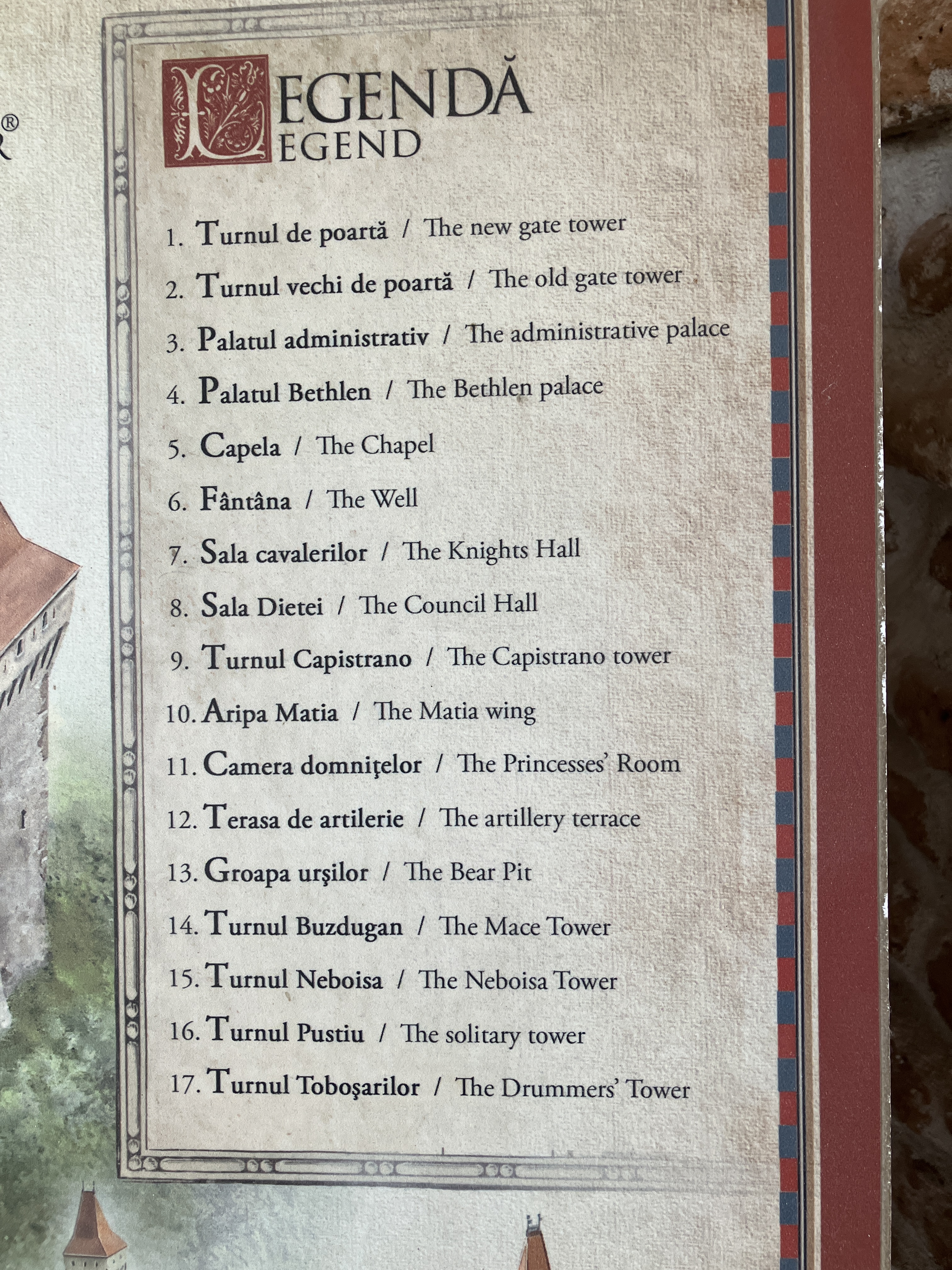


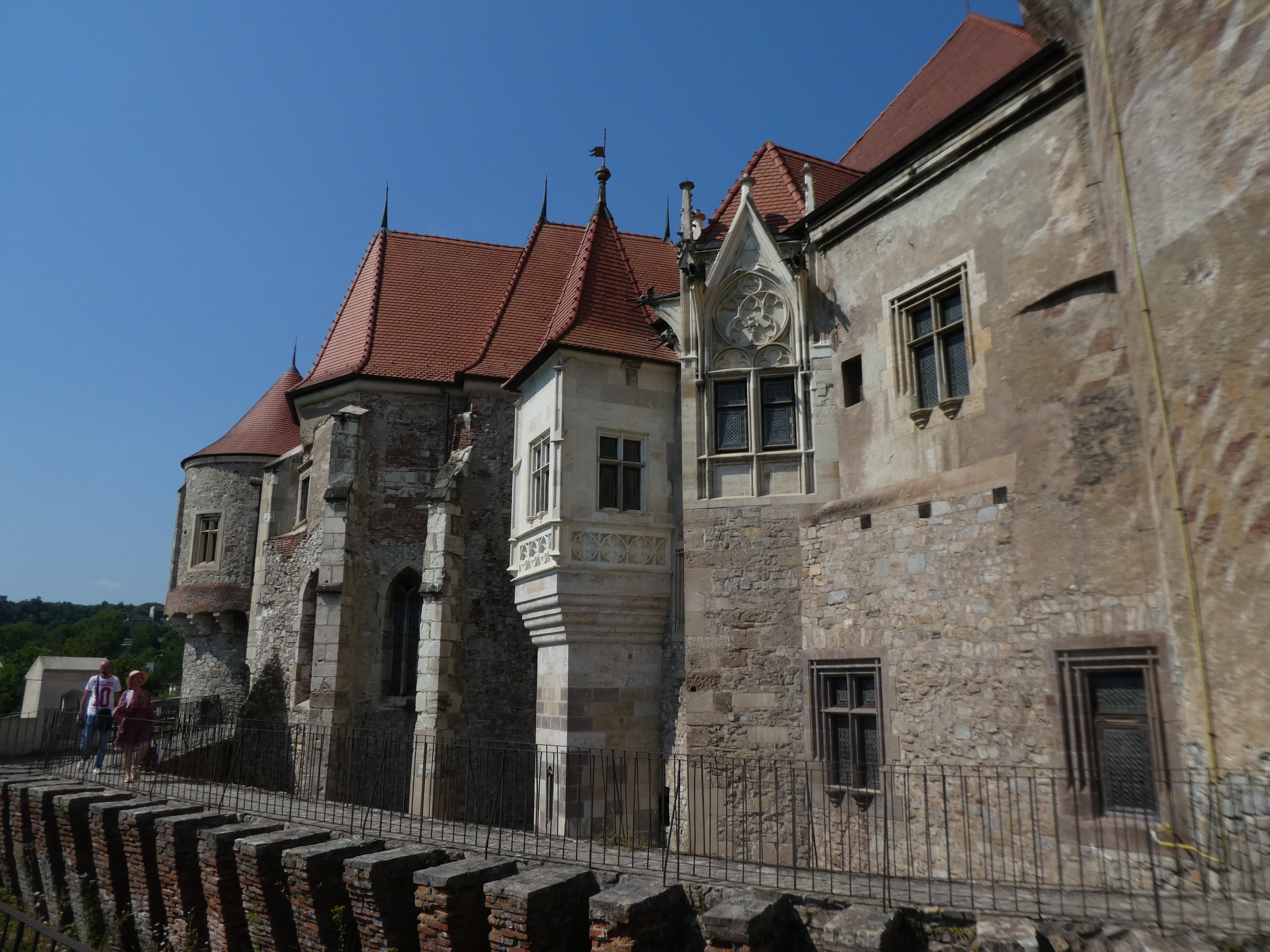
The Castle is magical with lots of fairytale round and square towers, battlements and high walls. Built in 1409 and expanded in 16th century a fire in the 19th Century damaged it but later in the century it was restored. There is a large open courtyard with palatial rooms and towers going of it.
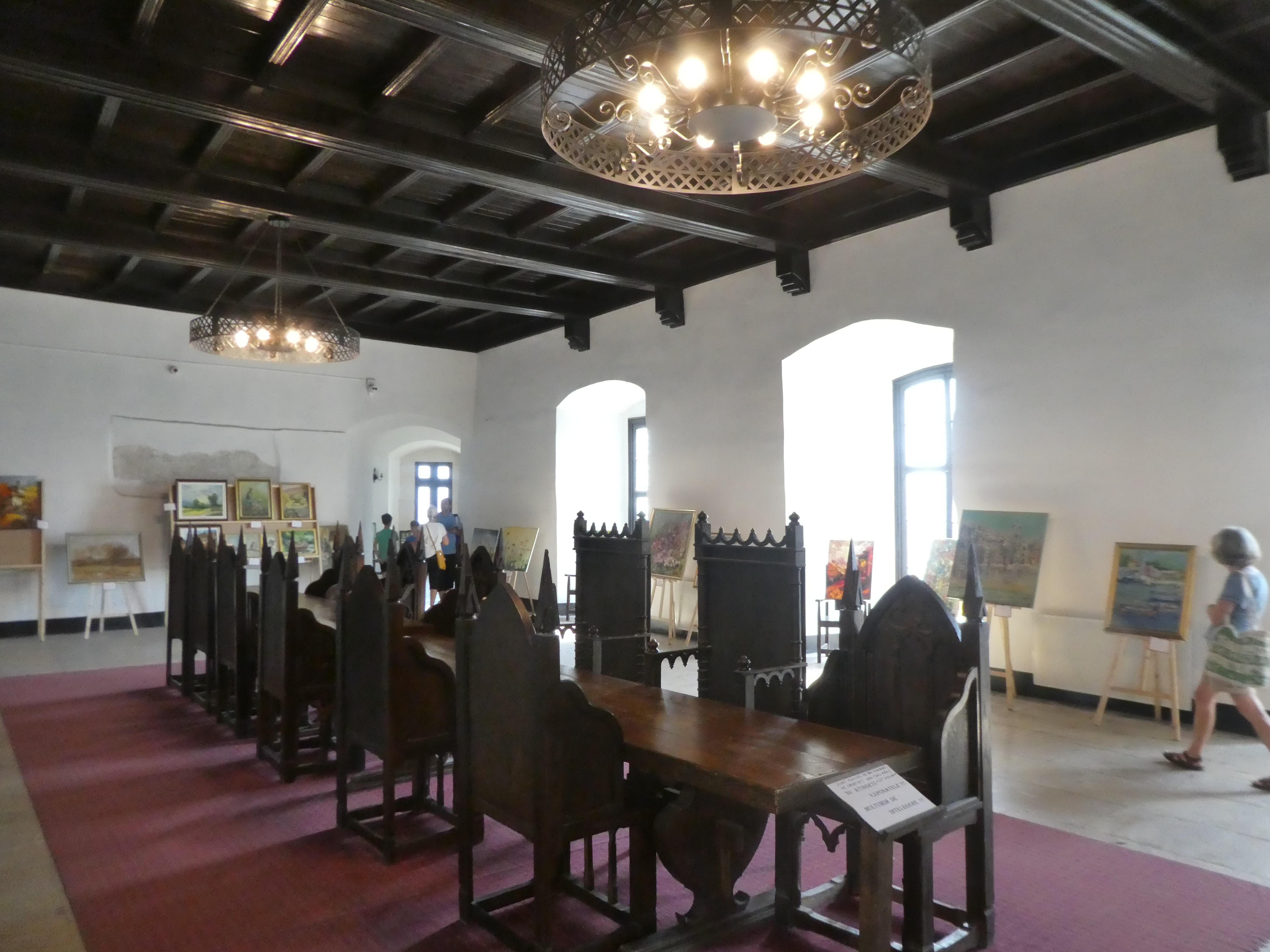
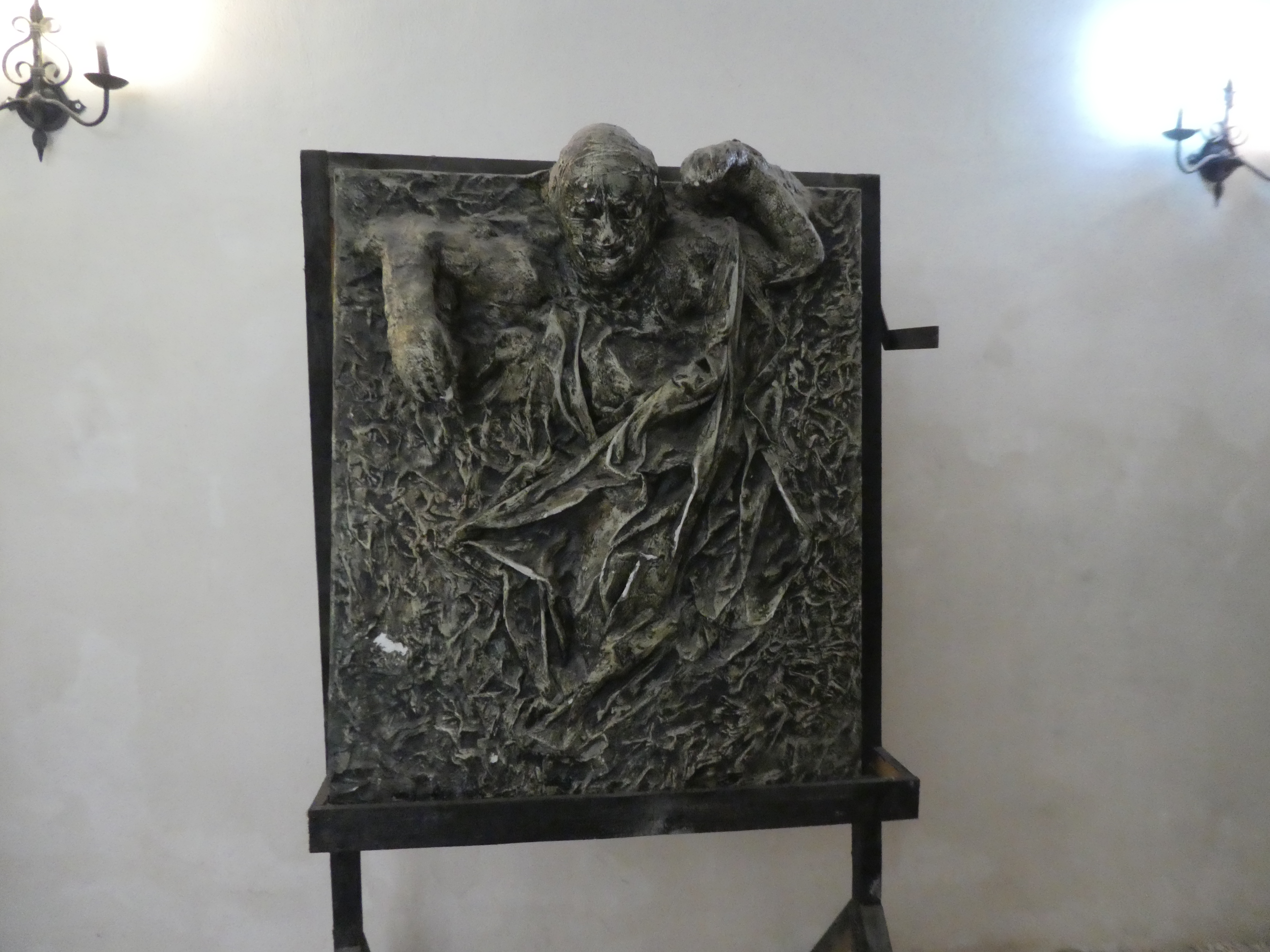


We then travelled north Deva, Brad, Adulat then over the hills at Vadu Motilor. Just over the pass we stopped at a roadside pagoda and had lunch with another dog!
On to Guarda de Sus and Camping La Danut, with an open field, friendly owner and lovely views.
Cycled for some beers in the village and visited a delightful wooden church.

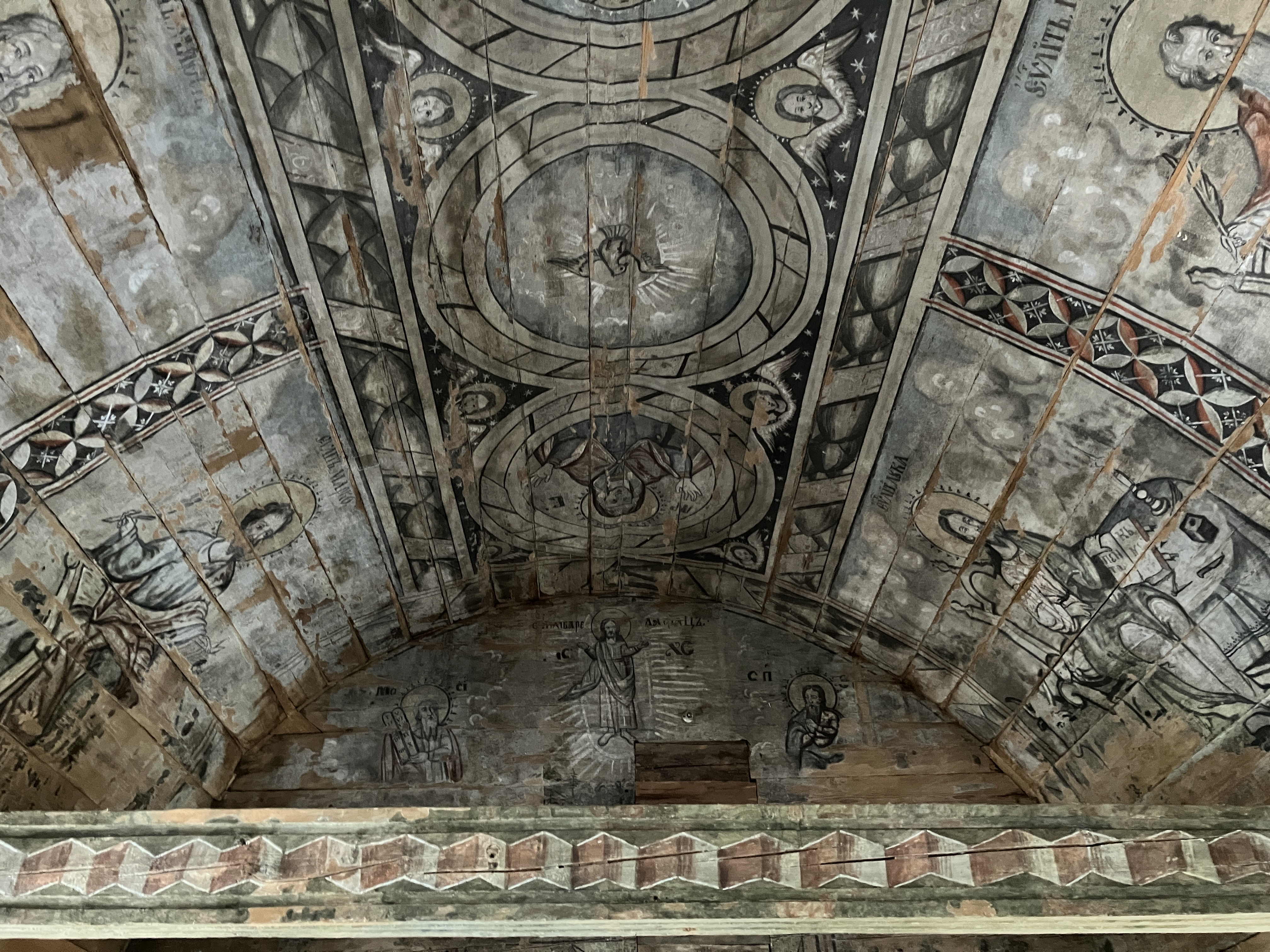

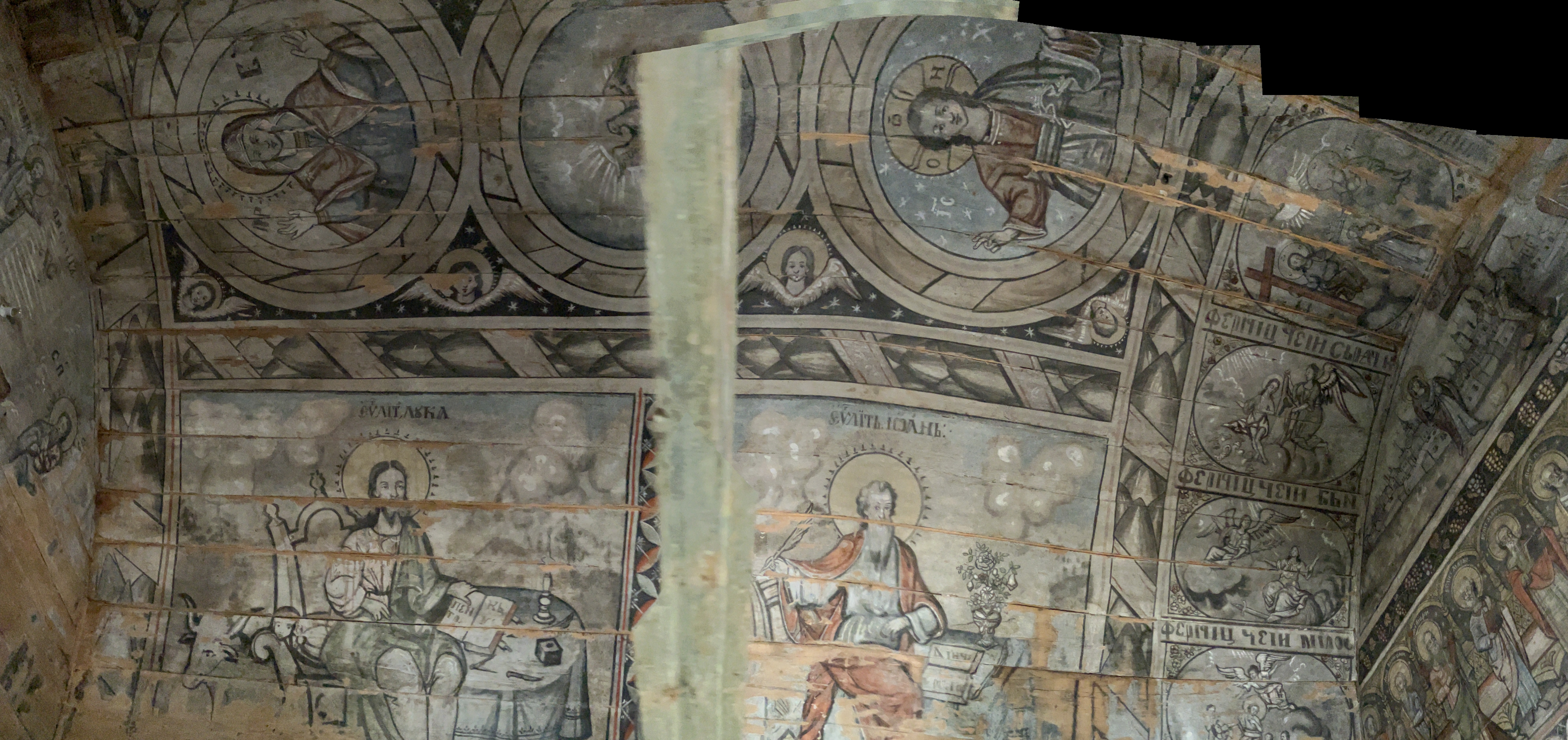


We then chilled on site and later wandered up the road to see the information board which wasn’t helpful.
Wednesday 17th July – Walking in the Apuseni
Hot and sunny then thundery
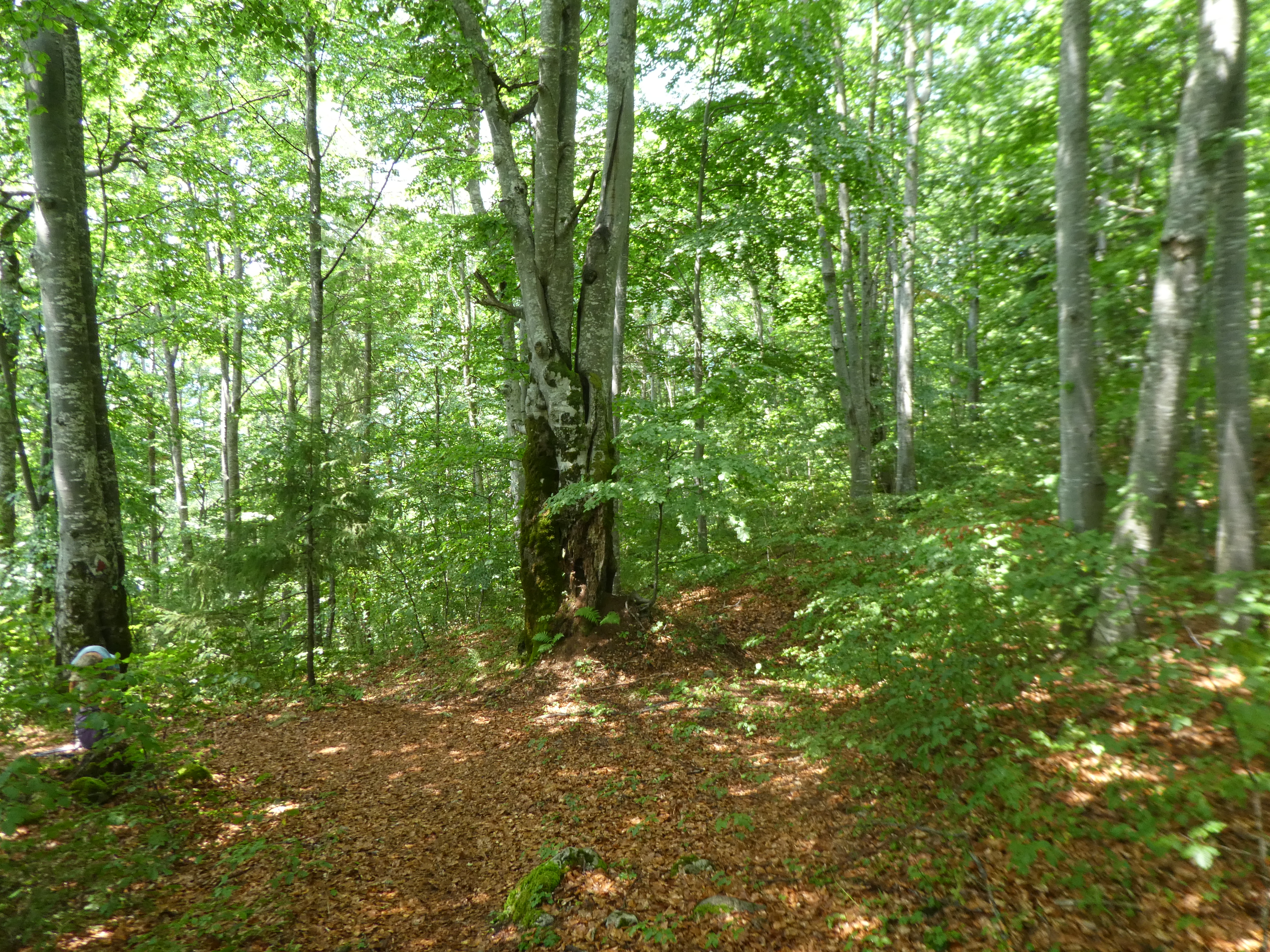
We did a wash before cycling down to the village and up a valley where we leave our bikes at the first junction by a bridge. We follow a path, that we had found on Google maps, up through woods and fields, to a road which we walk along admiring the high views we were having of the surrounding hills and of people cutting, raking and stooking the hay.
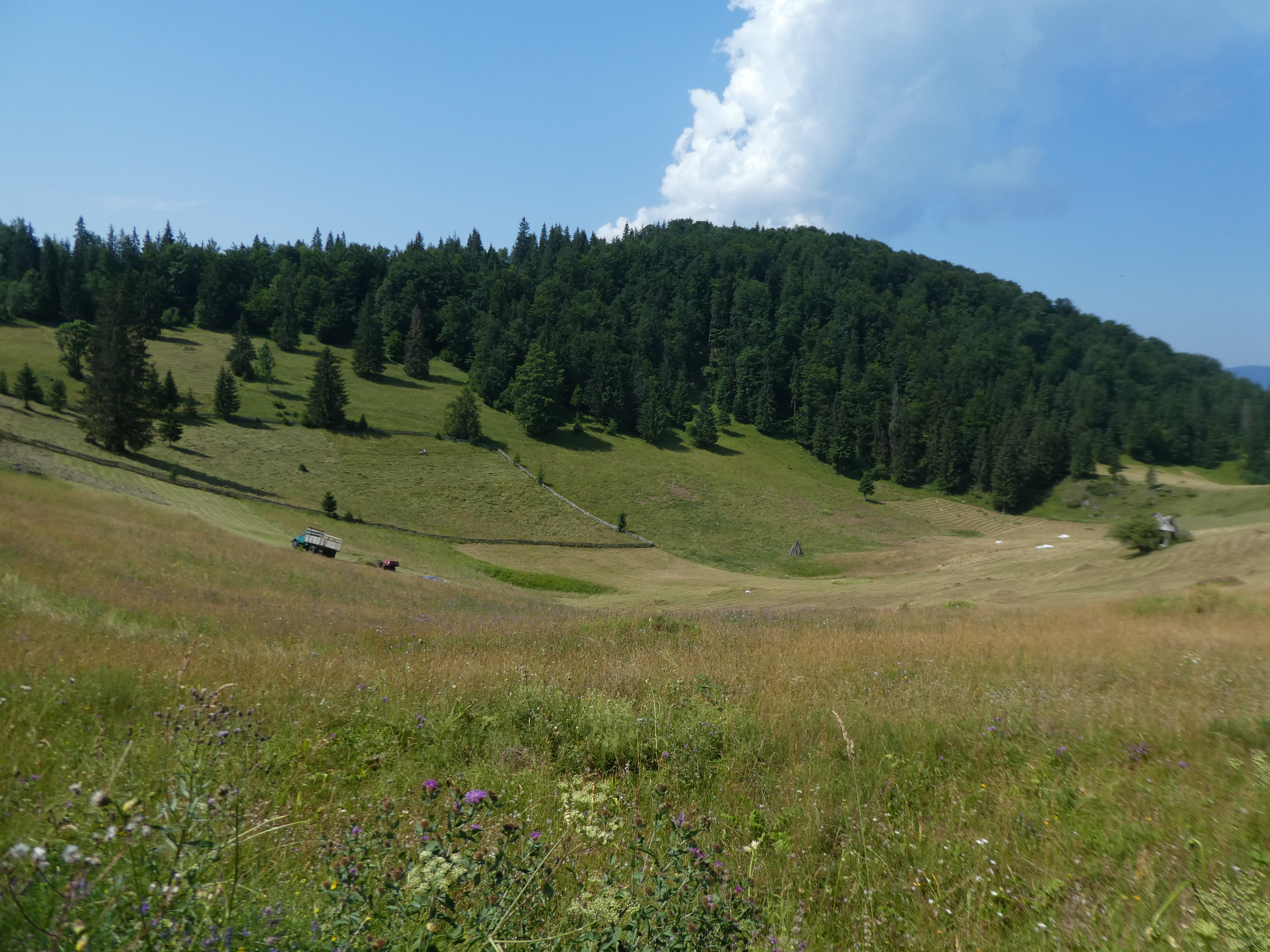

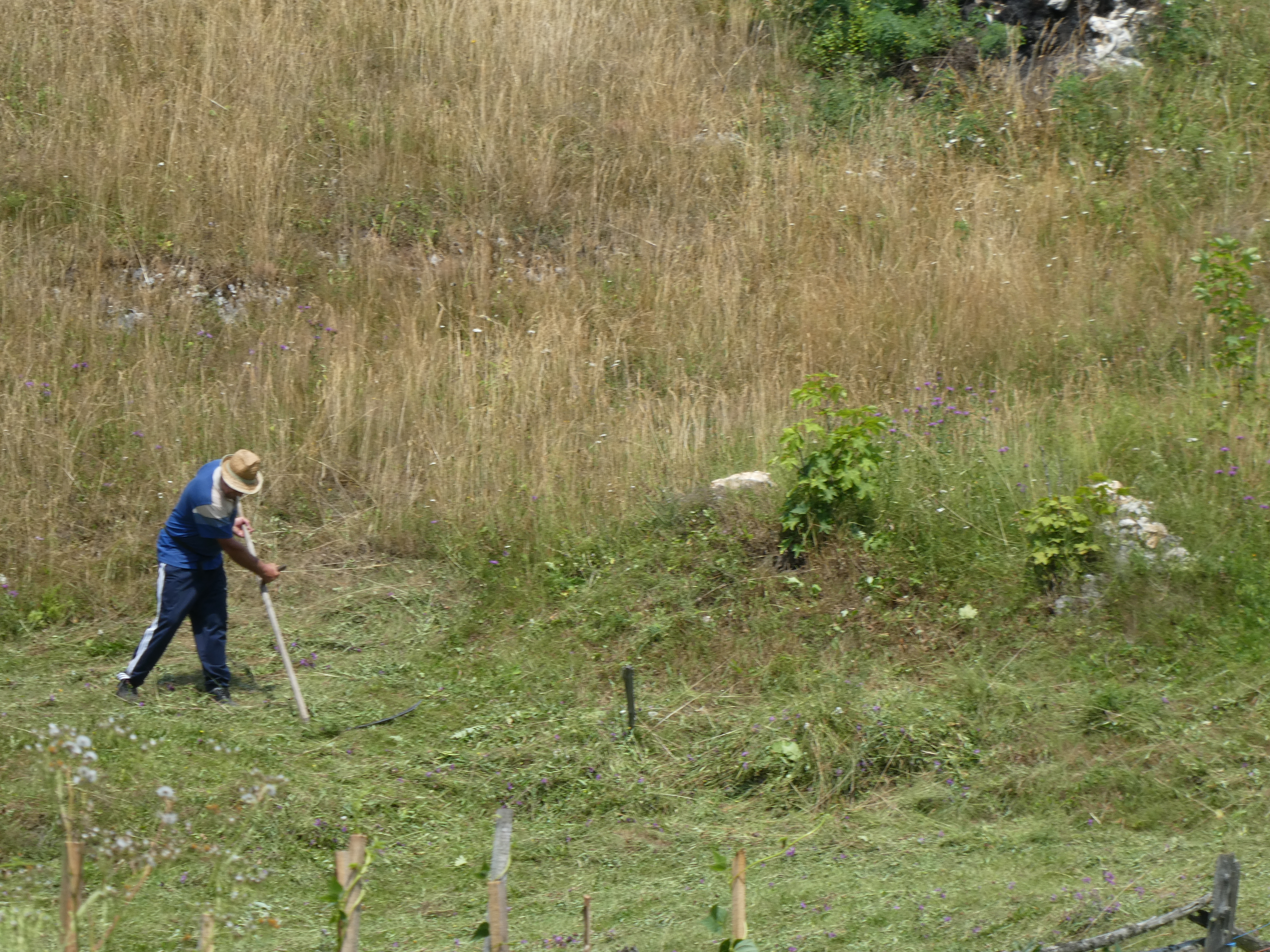

At the parking for the Pestera Ghetarul de la Scarisoara ( the ice cave ) we stop and have a basic coffee and a simple salad of raw chopped cabbage and sliced tomato whilst looking out over the hills and listening to the thunder crackle around us.
We watch some hay ricks being covered by plastic sheeting and wandered down the red triangle path through beautiful woodland.
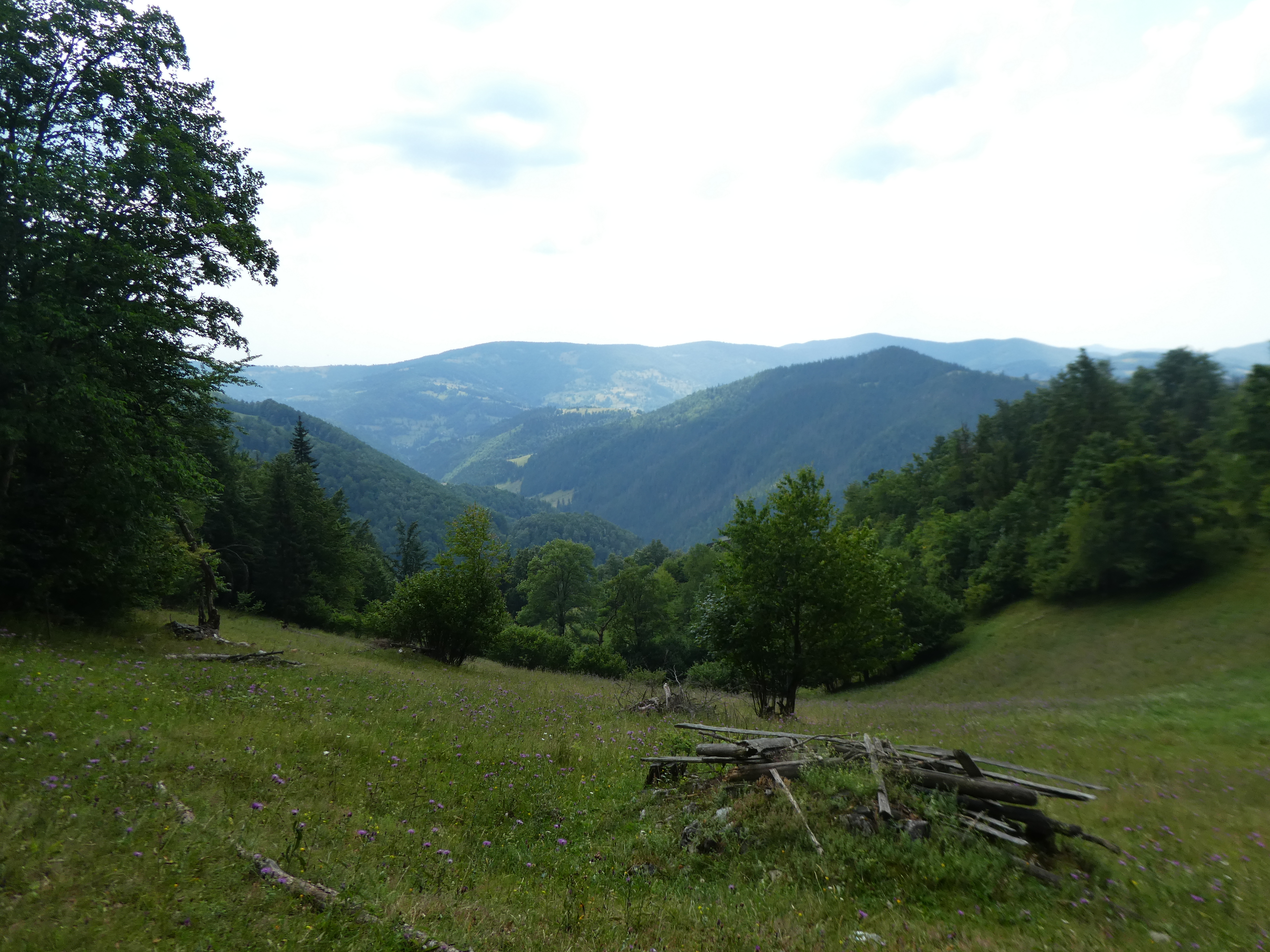
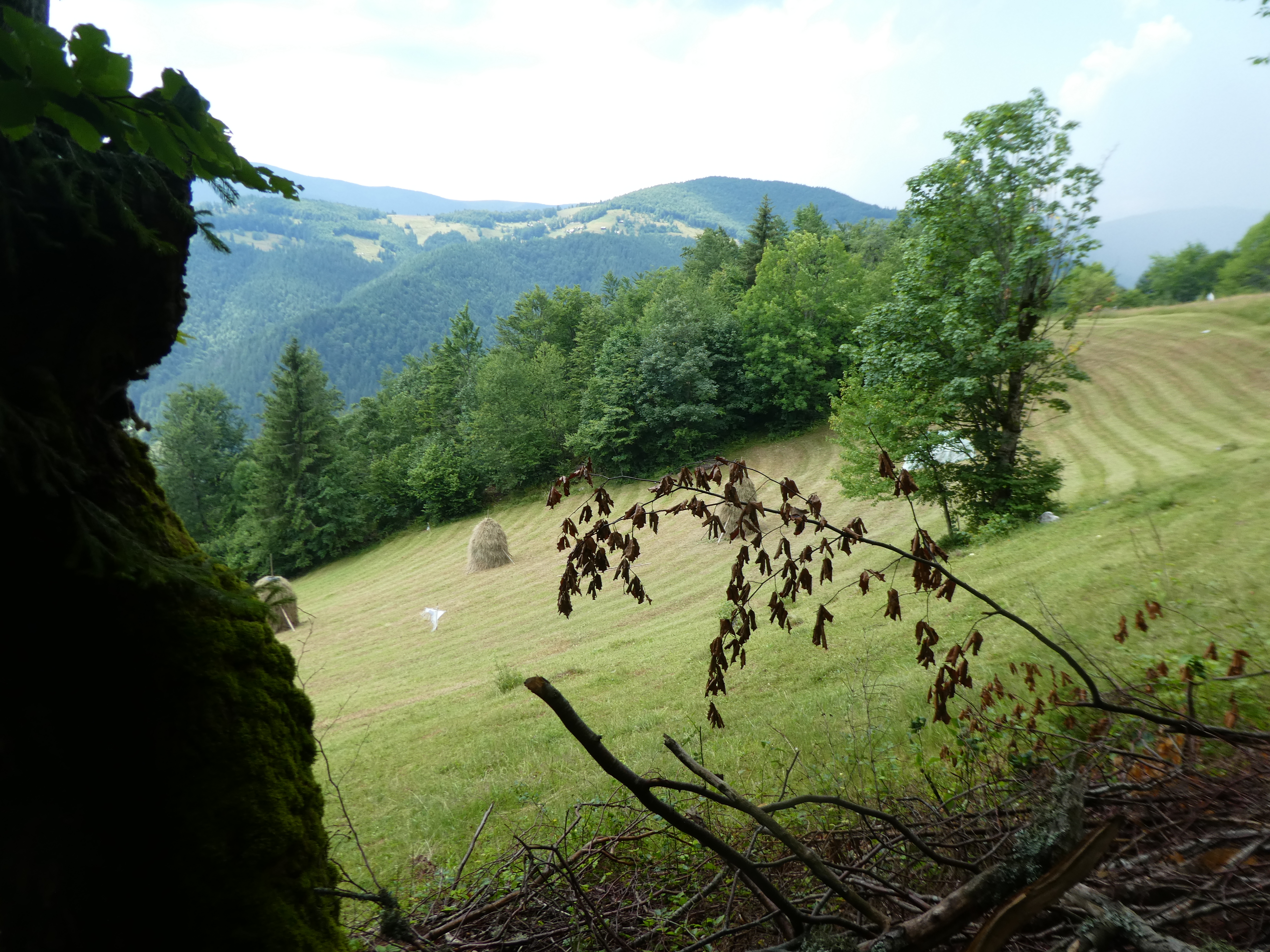
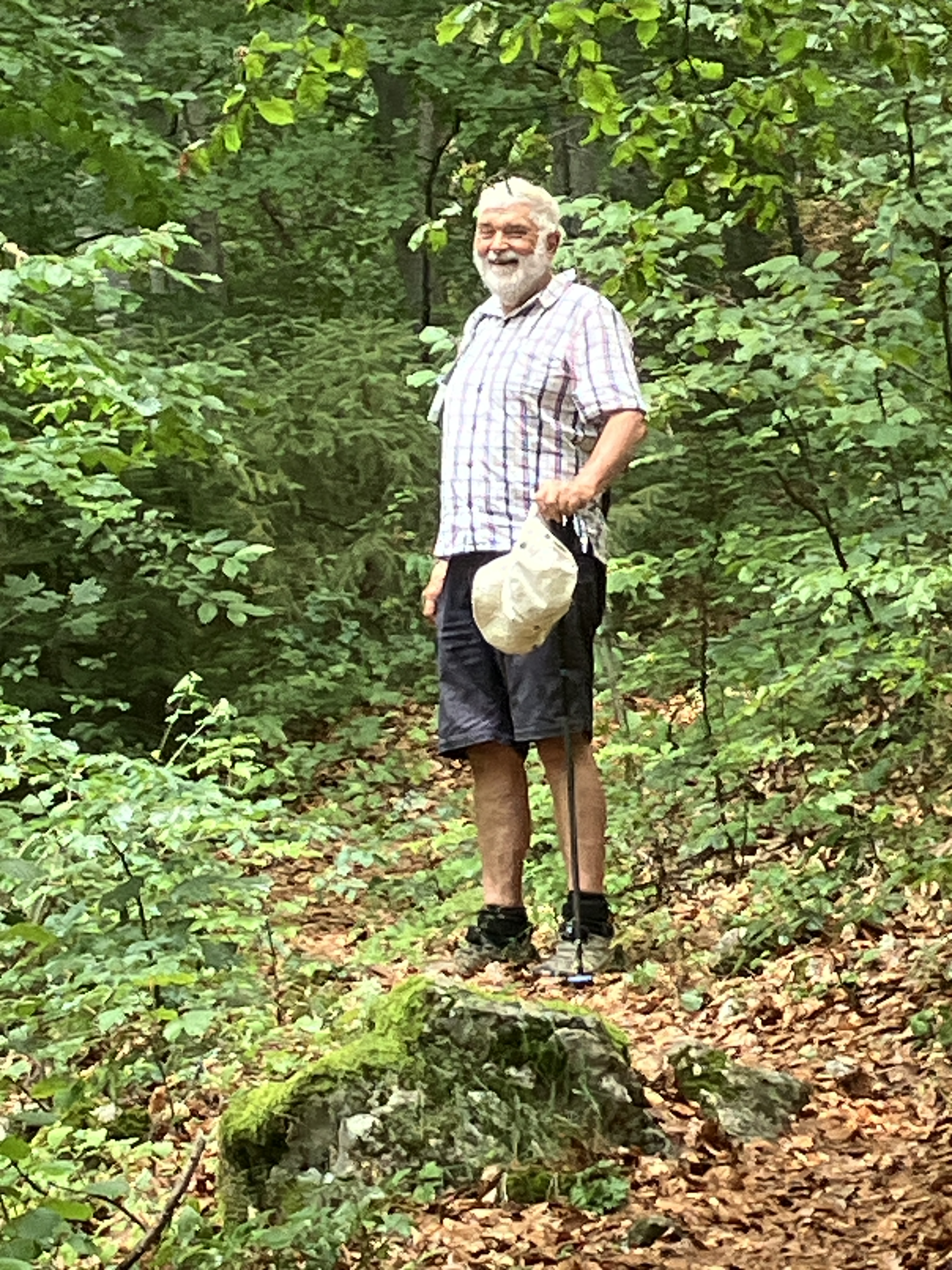
We had another snack before we came to 2 old guys who spoke French and told us where the path went around their farm buildings and continued to descend eventually to the road where two kilometres away our bikes were. Another shop and back to the campsite for a shower, chill and a monitoring of the washing as the rain spluttered for a bit. Lots more people on the site, it felt nice.
Thursday 18th July – Romania to Hungary
There were terrific thunderstorms overnight and we awoke to mists rising up the mountains.
We packed up and drove up the valley through the mountains to Alesd and joined the main road through the foothills to Oradea. Here we stopped and used up our remaining Romanian currency on fuel before heading on through Oradea and out onto an amazing new road with nothing on it to the border.
What a contrast with entering through customs to Romania. We were through in minutes! We then followed a quiet motorway all the way across the flat plain to Budapest and to Camping Pat-Sziget. This was not where we had originally tried top book into but as the Hungarian Grand Prix was on we were directed to this site by the Danube twenty five kilometres north of Budapest.
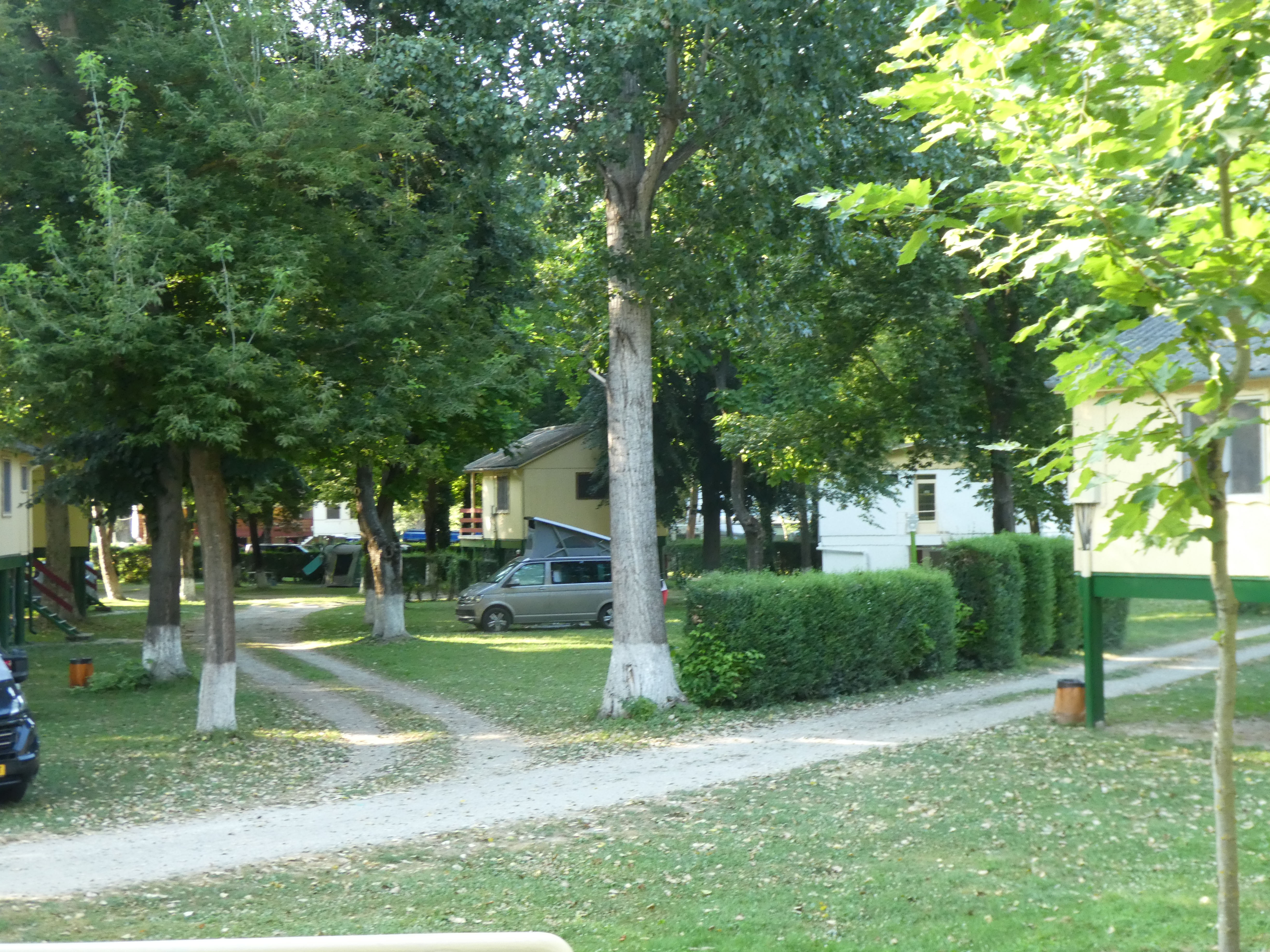

After much messing about, initially camping alongside a motorhome that had air conditioning running 24/7. we eventually we found a less busy plot and swam in the infinity pool overlooking the wide muddy Danube River.
The reason the spot we had chosen was so quiet became obvious. It was where children came on school camp and soon there they were, twenty or thirty seven or eight year olds putting up tents and running around. They did settle down quickly and we did not have a peep out of them all night.

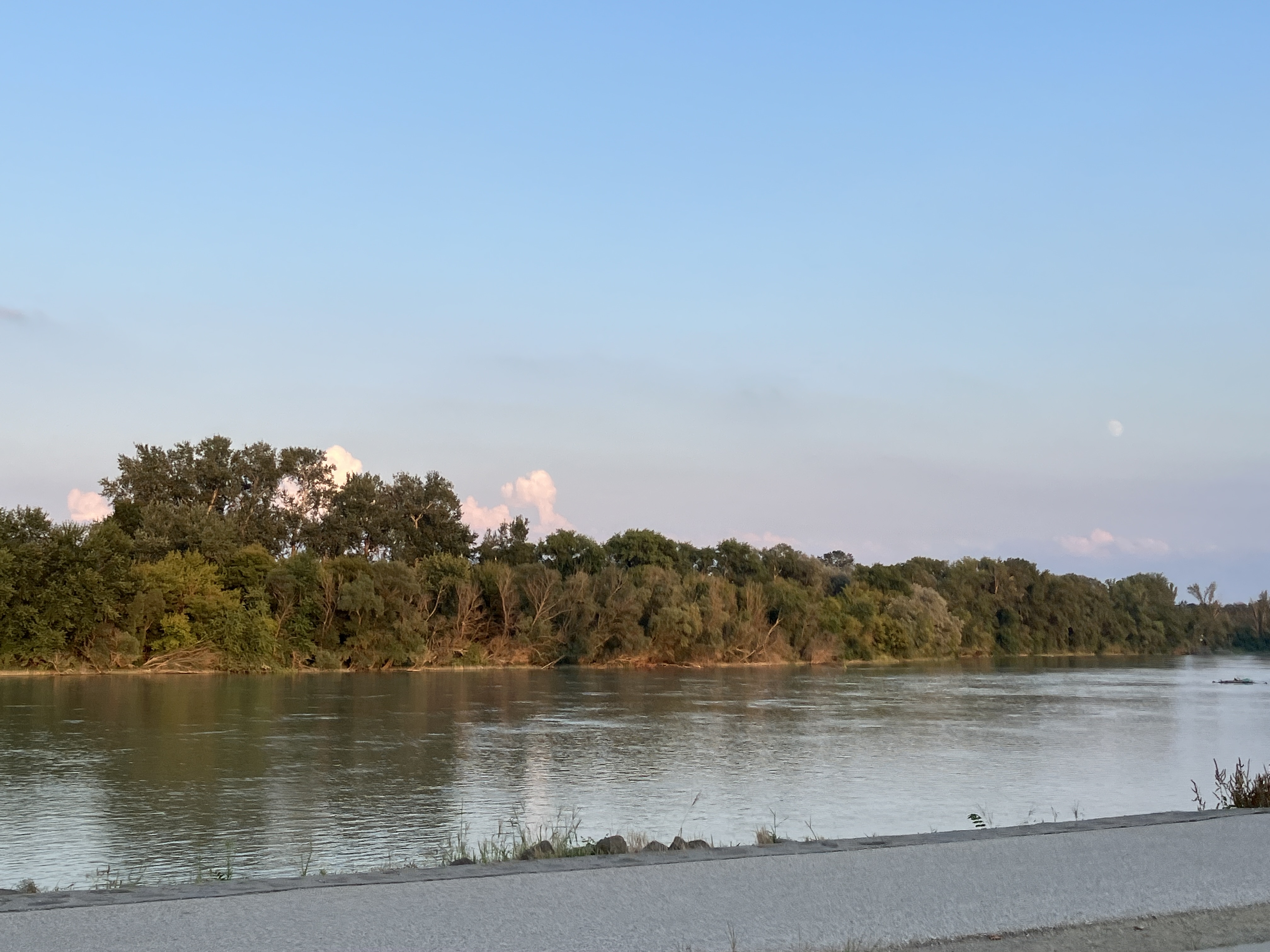


We cycled for ten minutes down a cycle track by the river into the in trendy artistic suburb of Szentendre where we had a meal at Dorothea’s which was nice, but the court yard we chose to eat in was warm, so we didn’t linger.

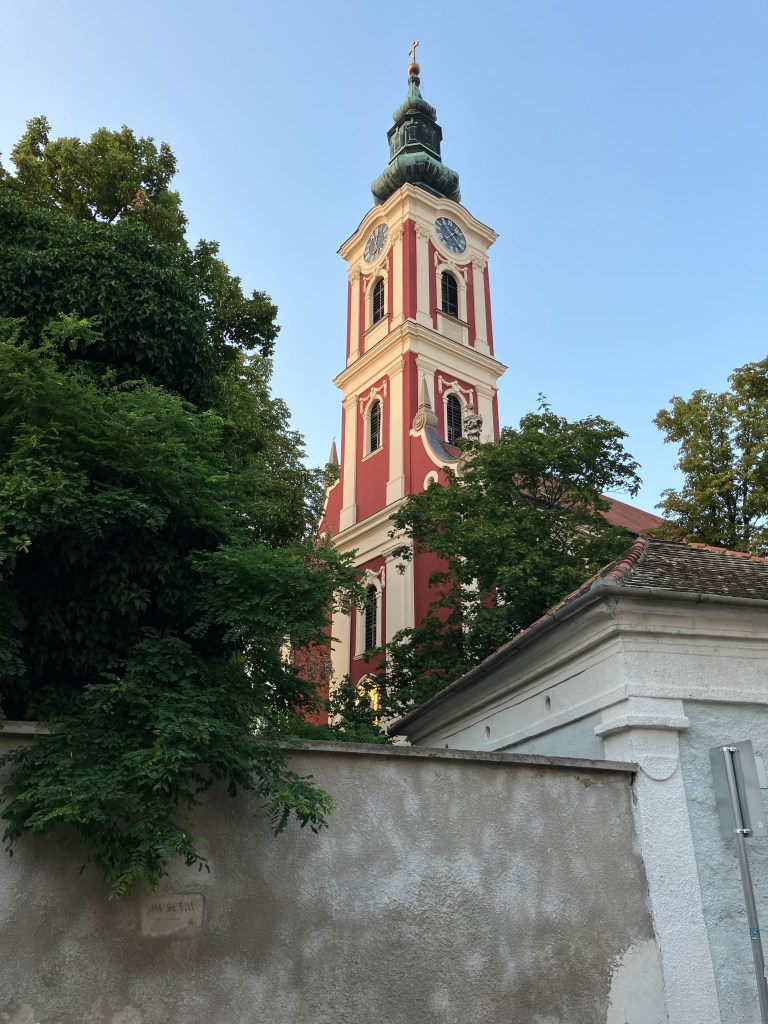
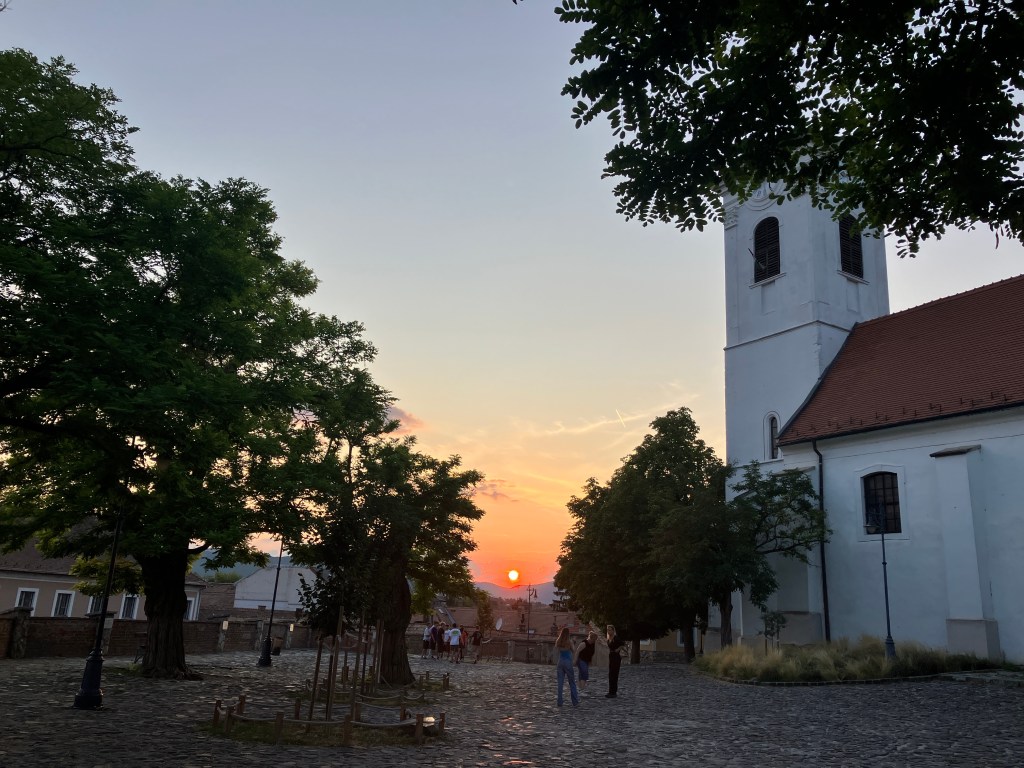
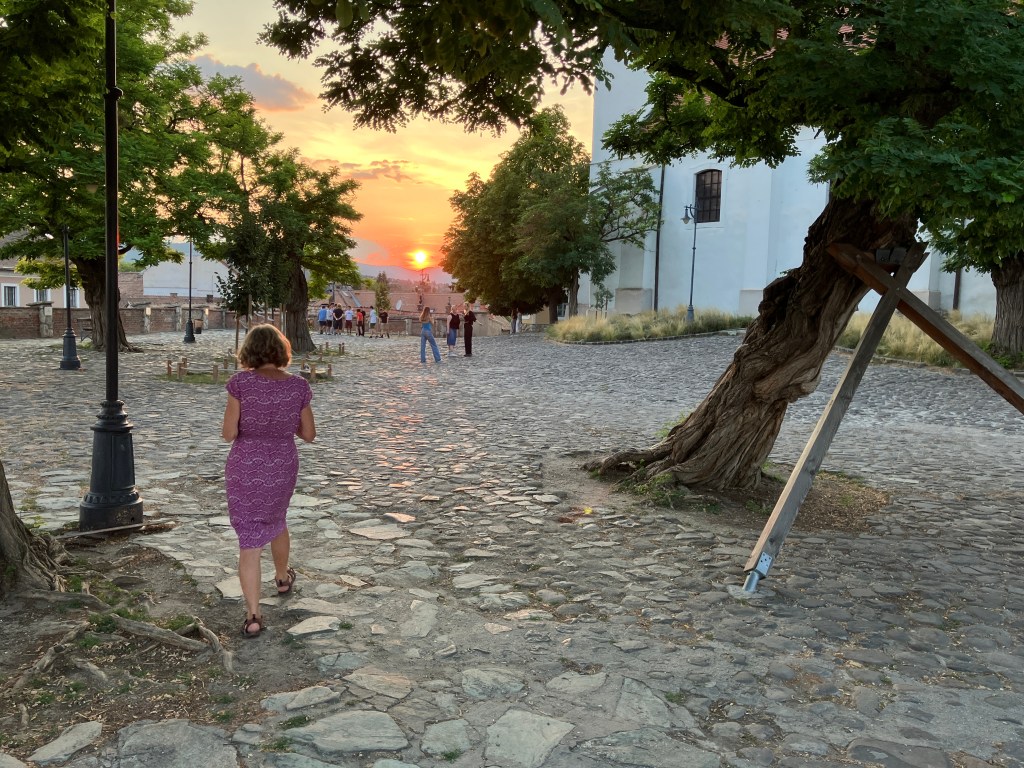
The town was buzzing with people wandering around, eating in the cafes sitting out on the street. . We bought ice creams and wandered too and found ourselves sitting beside the river then up to the church at the top of the town in the churchyard as the sun set.
Friday 19th July – Budapest
Sunny and hot
We cycled into Budapest following thr green route beisde the river which was ok until we came top the built up area where we took a wrong turn and had to go on an extremely busy road.

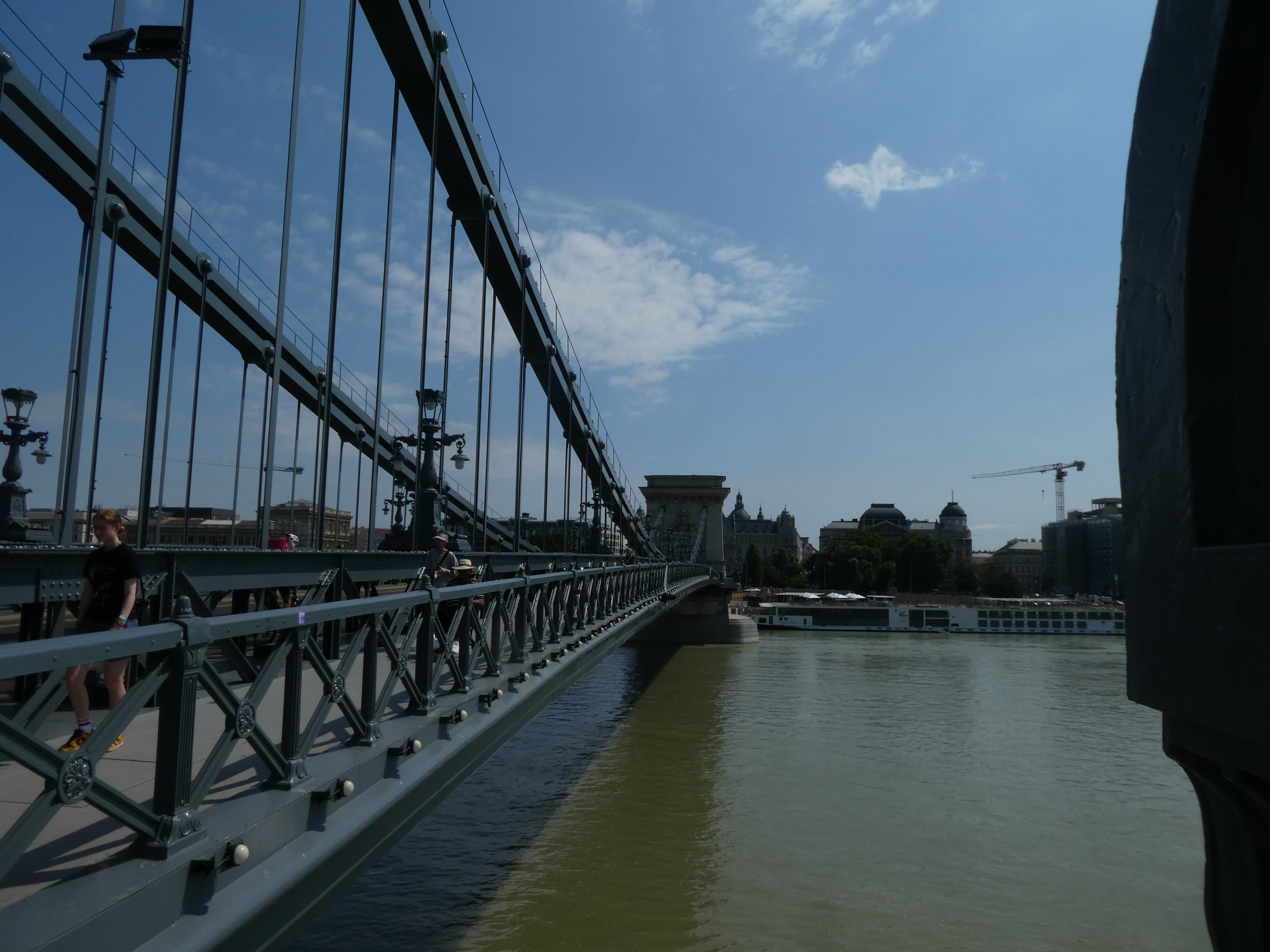
We crossed the chain bridge from Buda to Pest and left our bikes before walking towards the Jewish quarter where we changed our Slovenian money into Hungarian forints. We had time for a coffee before we met our Free Tour guide Mart. He was a teacher living in Pest and was passionate about the history of the city..
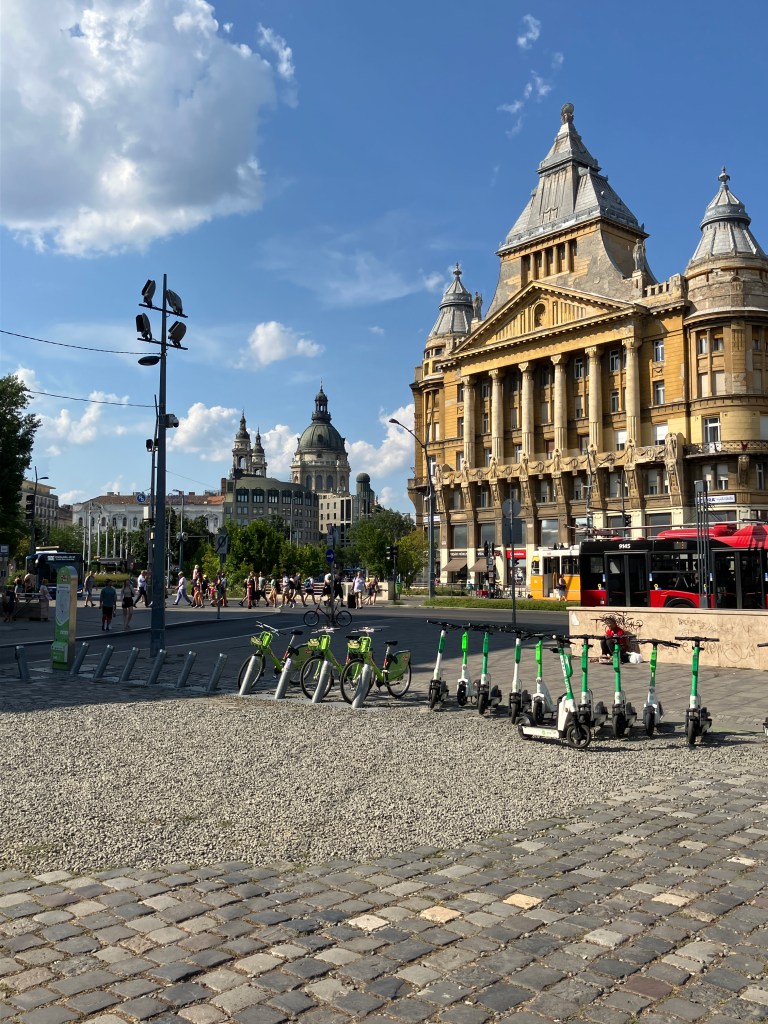
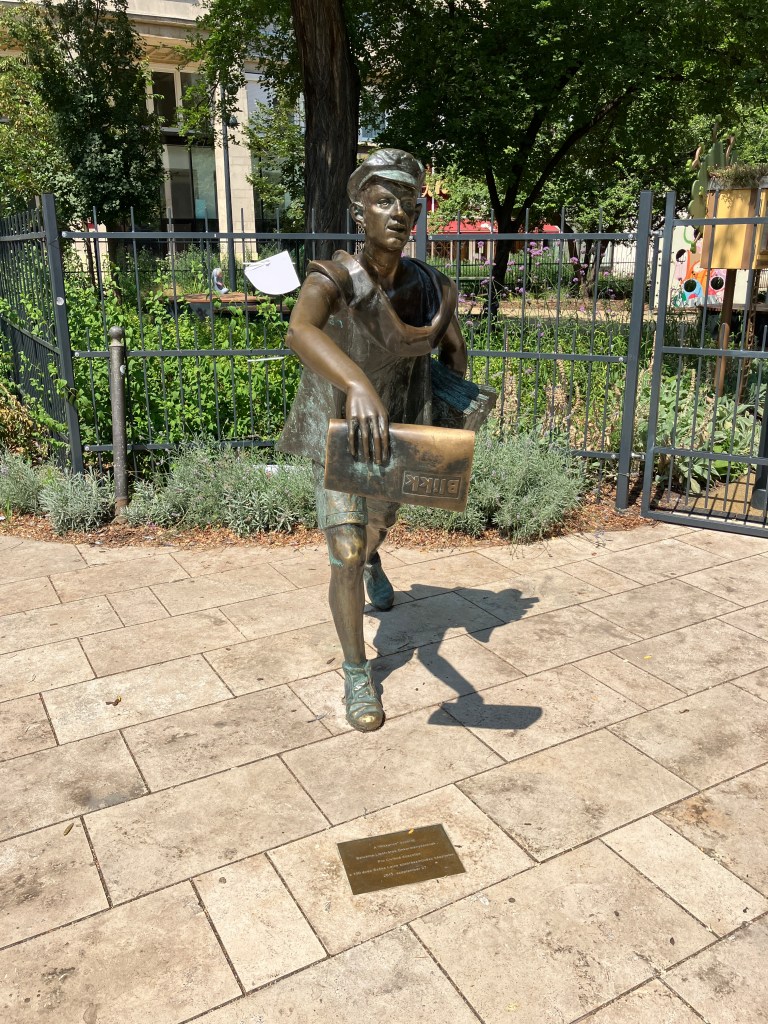
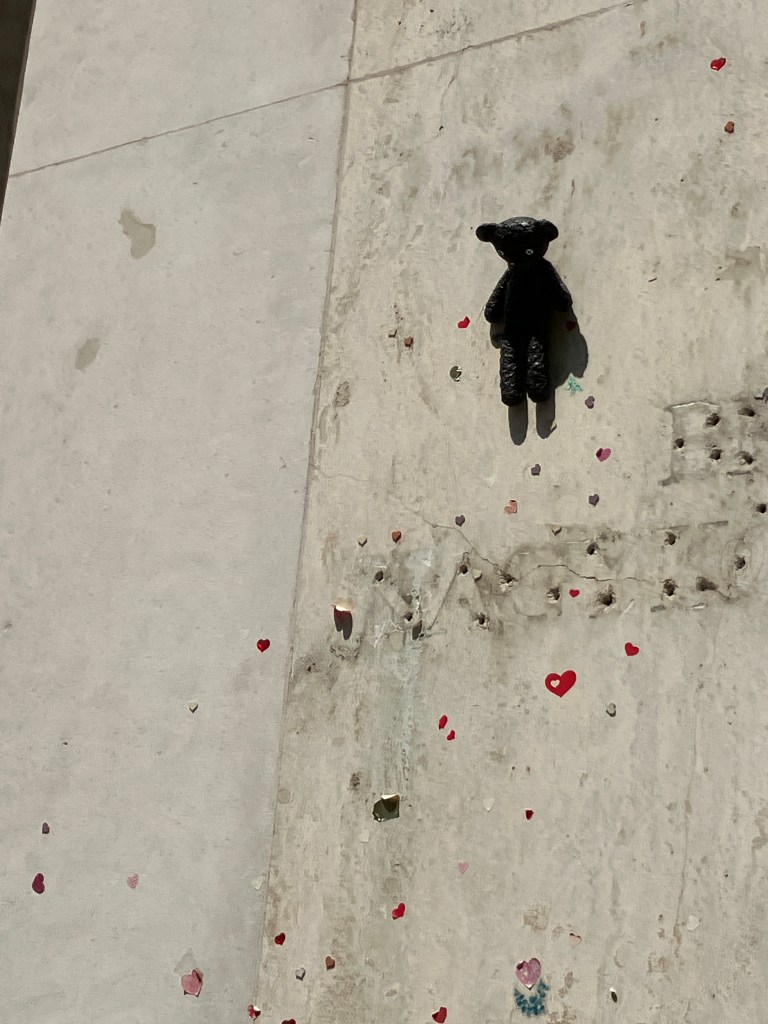
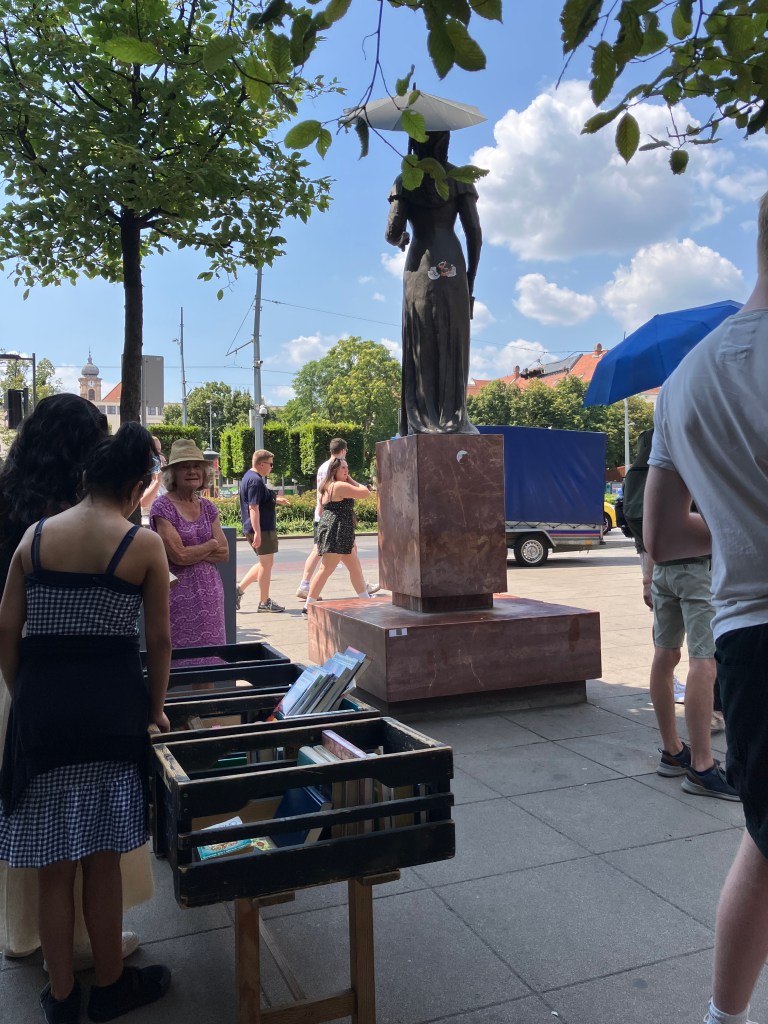
He told us a bit about the language and that it was pronounced Budapeshe not pest. The first records of the city were in 896 when seven tribes moved from the foothills of the Ural mountains ans settled here. In the 1241/42 the Mongolian invasion led by Ghengis Khan destroyed most of the Hungarian country killing over 50% of the population.
To rebuild the country after the invasion the Kings of Hungary invited migrants to repopulate the country. Germanic, Slavic and Jewish communities formed the bulk of the immigrants. There was a period of peace and prosperity until the Ottoman invasion in the 16th Century. The Ottomans occupied the country for one hundred and fifty years but made their capital elsewhere in Hungary and the peace and prosperity continued.
In 1686 the country was liberated from the Ottoman Empire by the Hapsburg empire who laid siege to the Buda Castle and destroyed of the Pest village on the other side of the river. By the end of the seventeenth century the settlements of Buda and Pest were razed to the ground and no evidence of their existence remained.
There were two cities originally which were eventually joined in 1876 for pragmatic reasons the castle in Buda, which was the original capital of Hungary, and the government in Pest. All existing architecture in the city is from the eighteenth and nineteenth centuries
The chain bridge was the first bridge and the city of Budapest continued to grow faster than anywhere else in Europe for thirty years until the Second World War when 40% of city was destroyed and the other 60% significantly damaged.
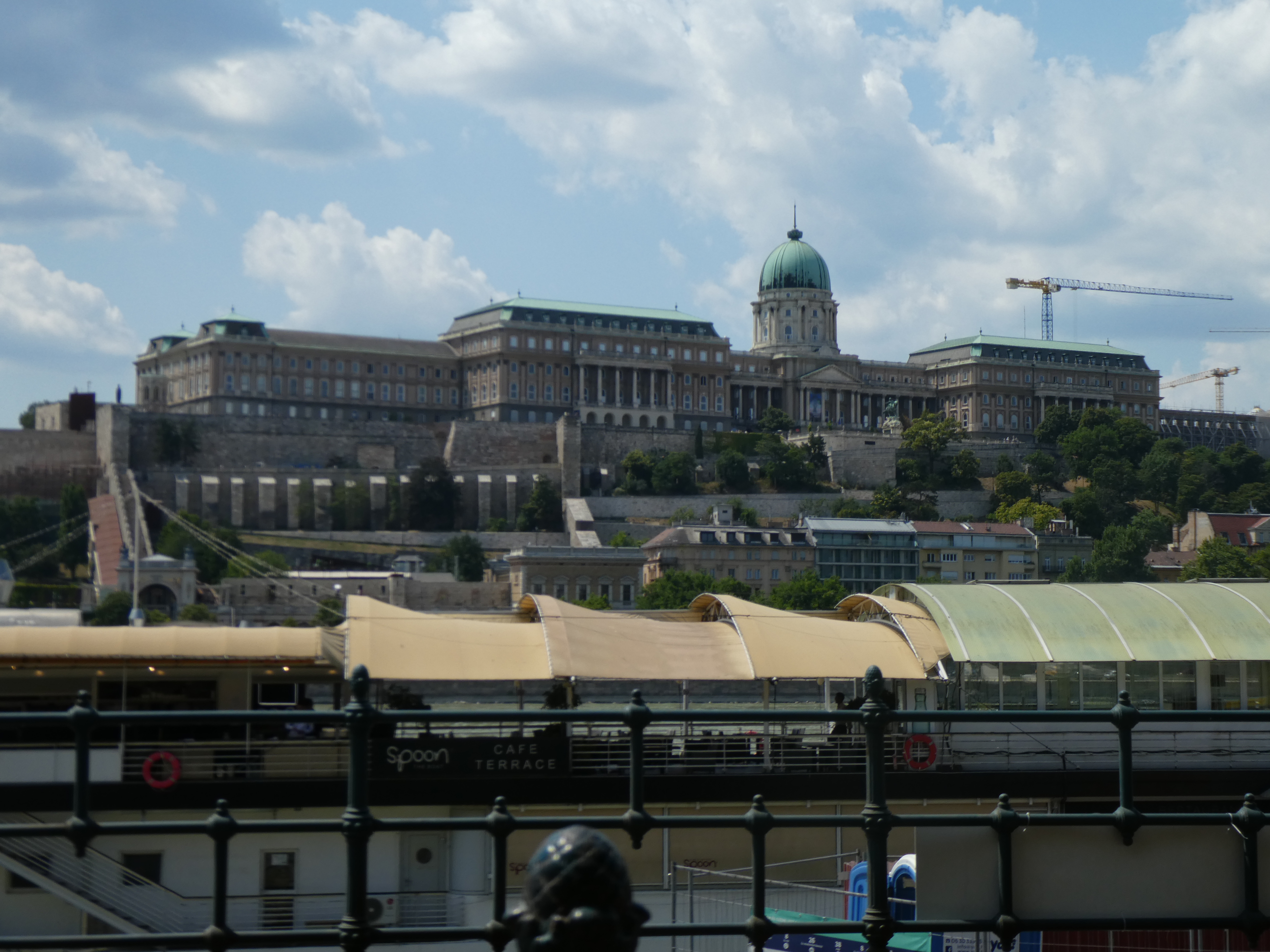
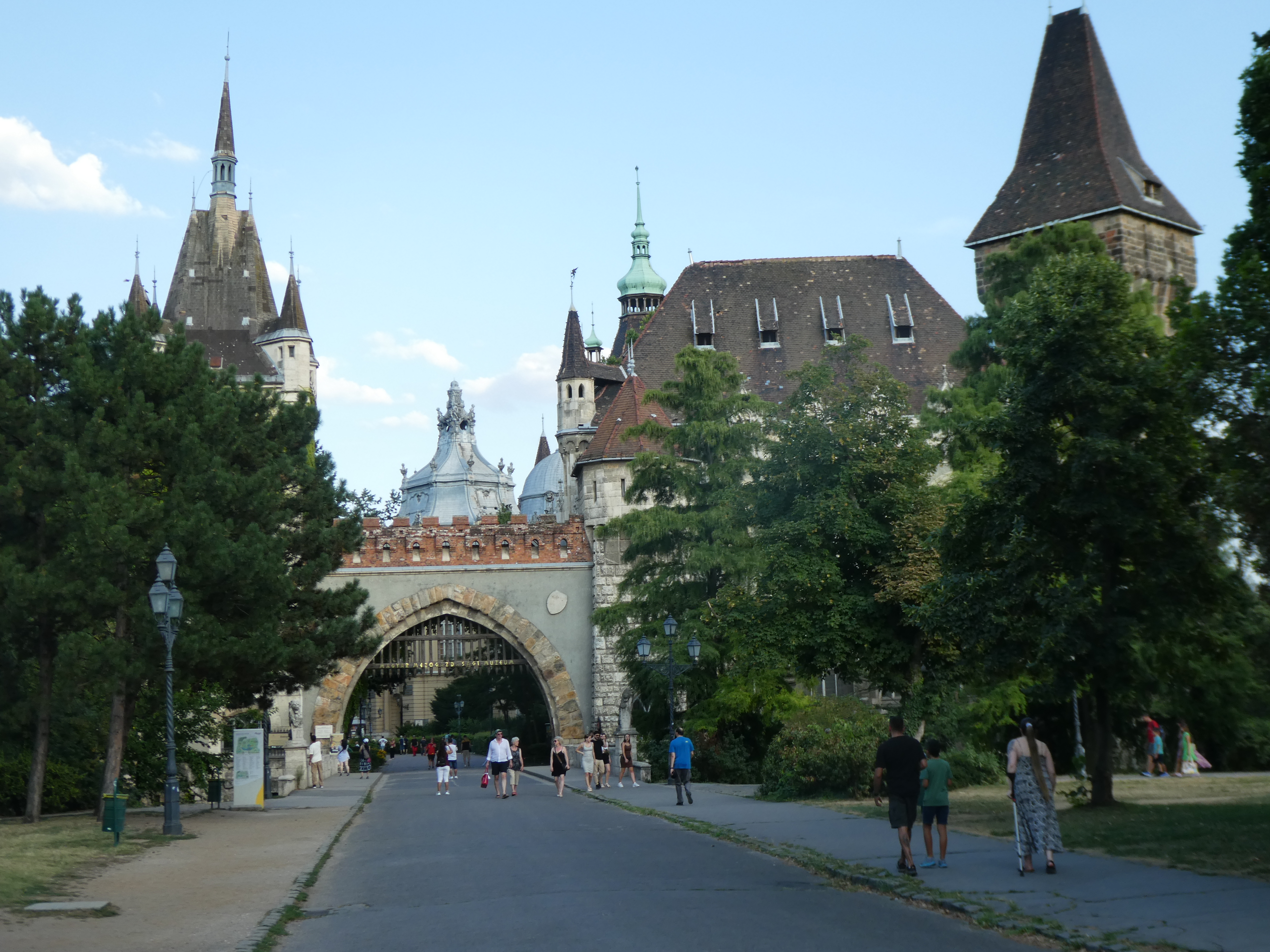


All buildings in Budapest therefore fall into one of three categories. Category one mainly Baroque and Gothic styles, built in the second part of 19th century; Category two following the destruction of the Second World War were block concrete, brutalist buildings of the sixties and seventies, architecture of the Communist era; and the Category three modern buildings of the 20th and 21st century.
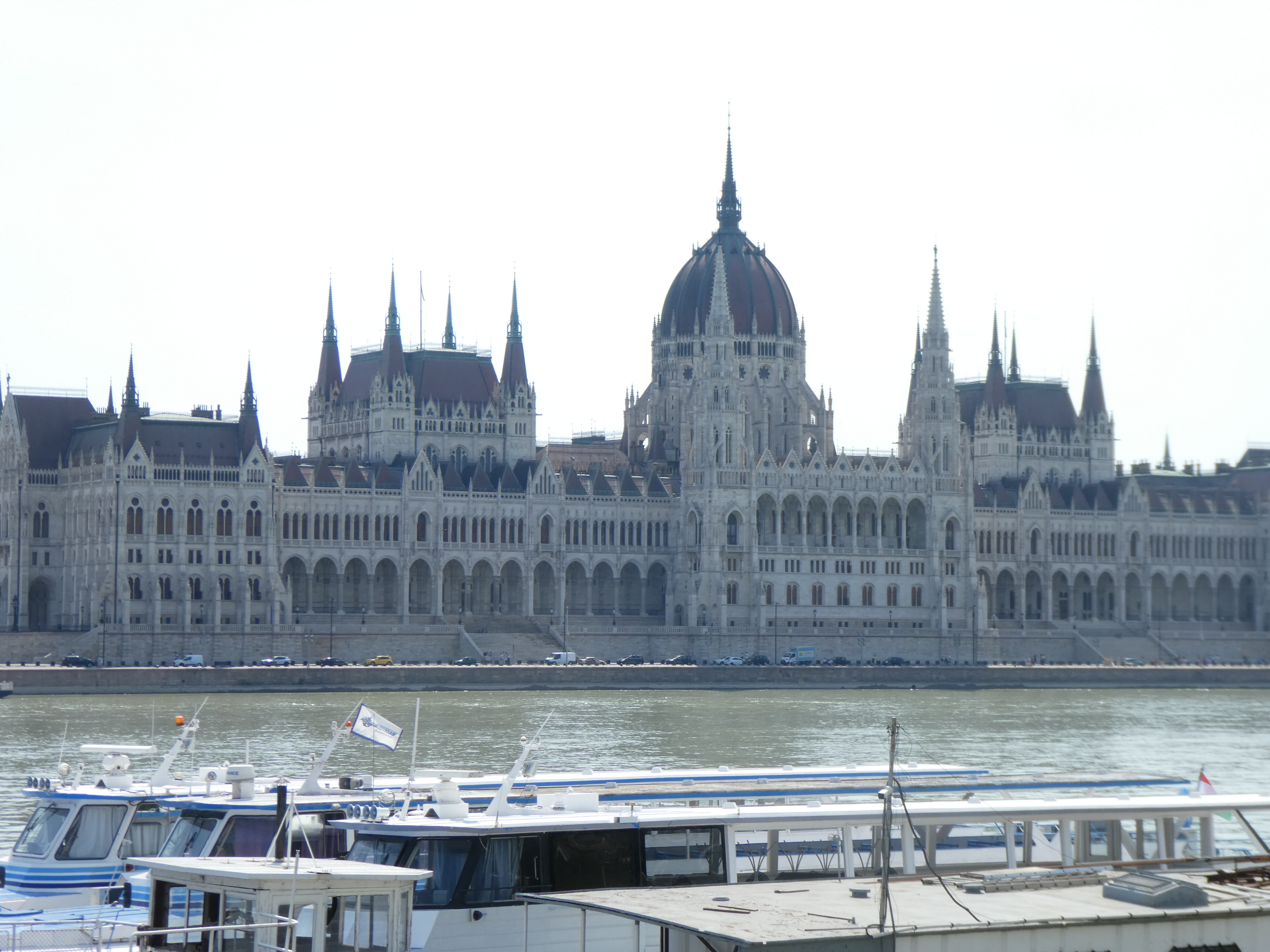
It was a good tour and when we left it at the Parliament building we went and found the installation of shoes on the quayside of the river, in memory of Jews that had been sent from Budapest to concentration camps.


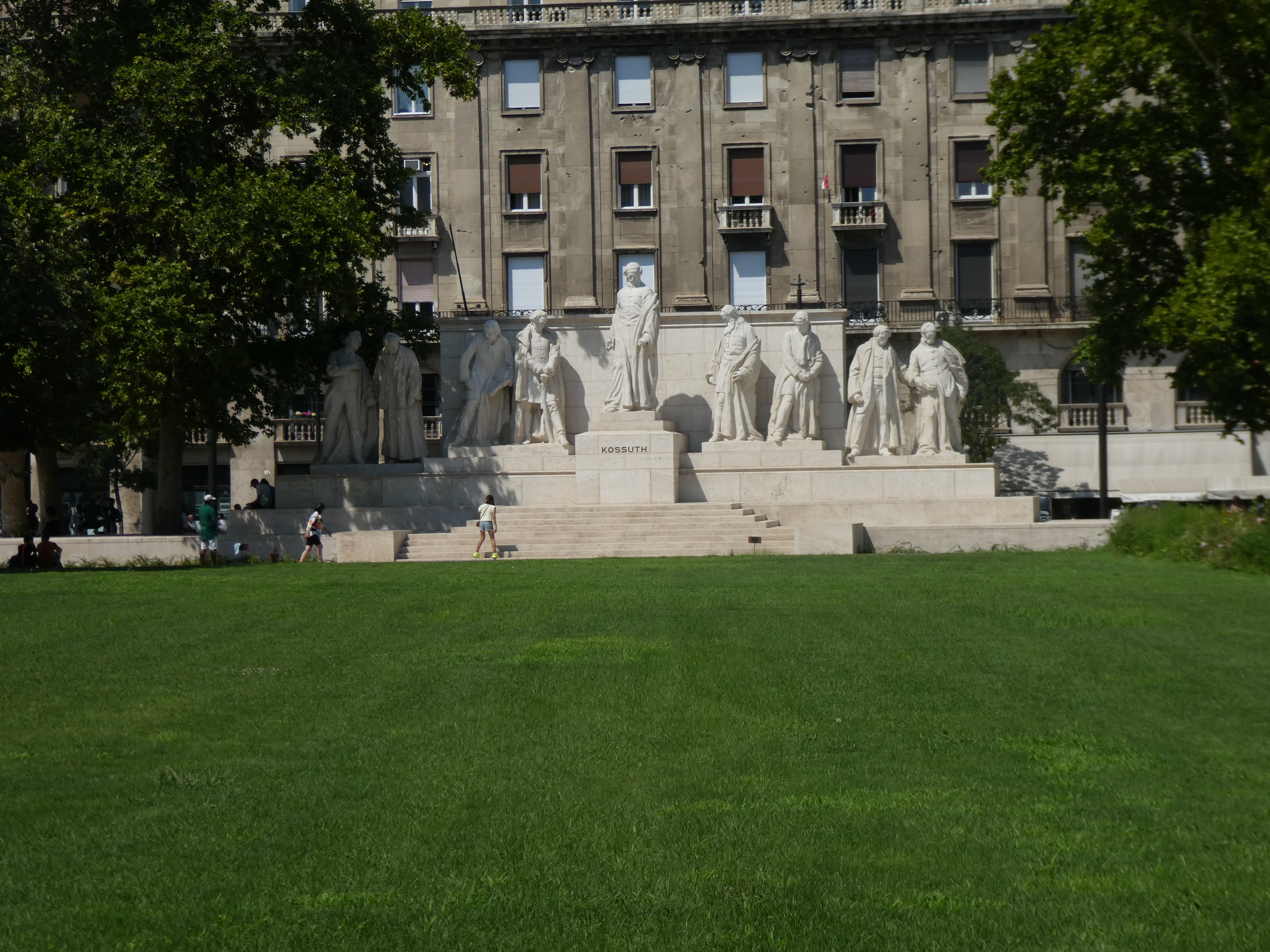
It was so hot, well into the thirties, that we tried to keep in the shade as we headed for the Jewish quarter and found a bar where we devoured a selection of dips and pitta bread, which was lovely, washed down with very cold Hungarian Rose. Feeling refreshed, we collected our bikes and started to cycle to Liberty Square to make our way to Heroes Square.
Janet soon found that her back tyre was punctured and the tyre was coming off. So we asked at the tourist office and got the name of a nearby bike shop but unfortunately its repairer had gone home. He referred us on to Bike Relax another bike repair shop where again they could not help. They knew of another cycle repair shop a kilometre away, which they phoned, and they were open to six. It was now five forty five and so with difficulty we got ourselves there and had both outer and inner tubes of both wheels replaced, amazing!


A bit shell shocked we decided to carry on with the original plan as all the charging around had only taken forty minutes but it had seemed liker hours! We cycled up to Heroes Square and the Ethnological museum where we had an ice cream before cycling the twenty kilometres back to Szentendre through the suburbs of Pest, arriving around half past eight.
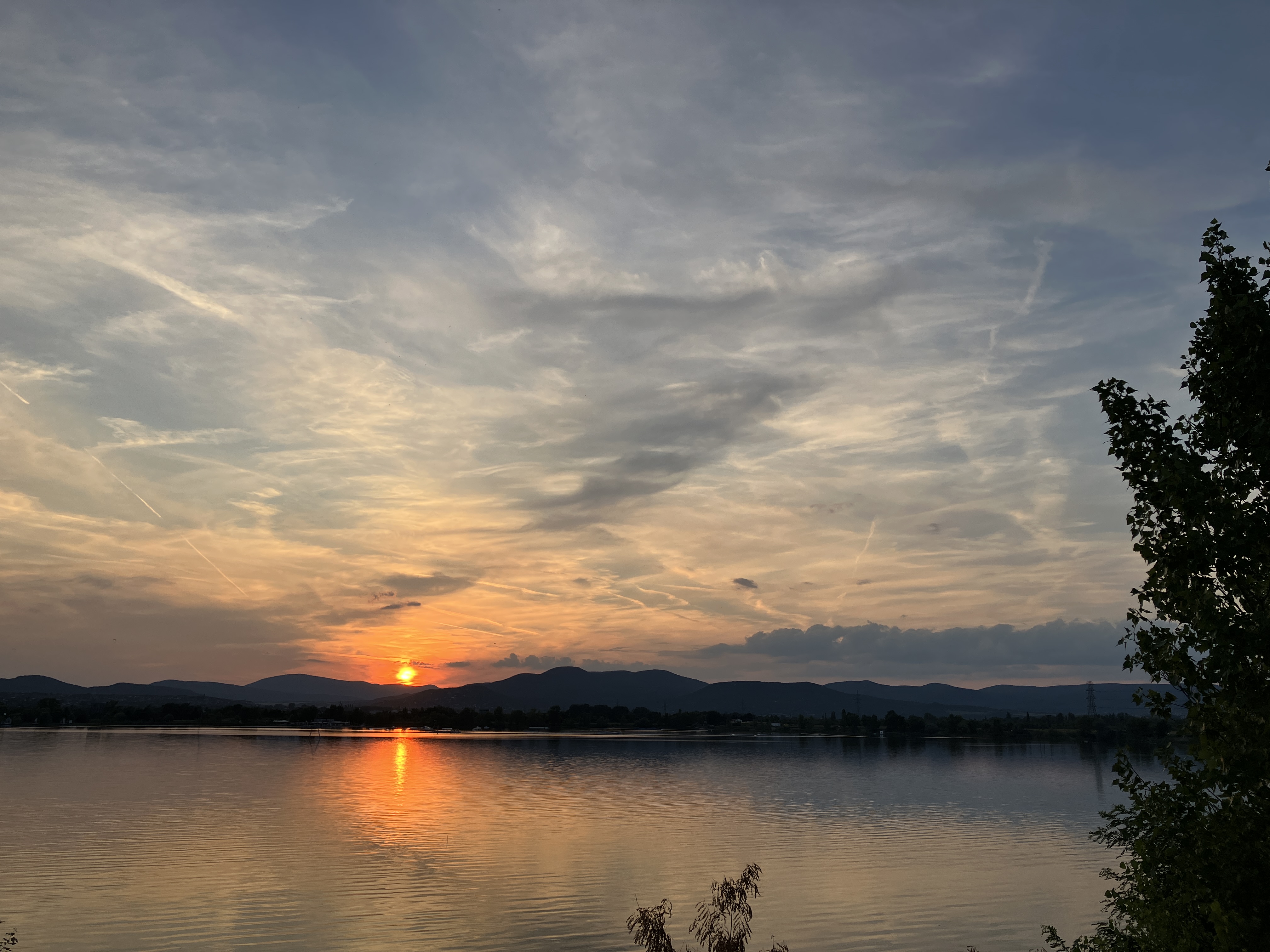

We were relieved to find that the restaurant we had spotted the night before down by the river had empty tables . We had a good meal and more wine and cycled back to the van in the dark.
We were relieved to fine nobody else had camped near us and the kids were fast asleep.
Saturday 20th July – Budapest to Winkl

We set off on a cooler morning having slept badly after eating a large meal so late the night before.
We had a sneaky dip in the infinity pool before leaving.
We shopped at the nearby Lidl and bought petrol with our remaining Forints. As we drove out through the city westwards we crossed the border with no problems before some traffic around Vienna.
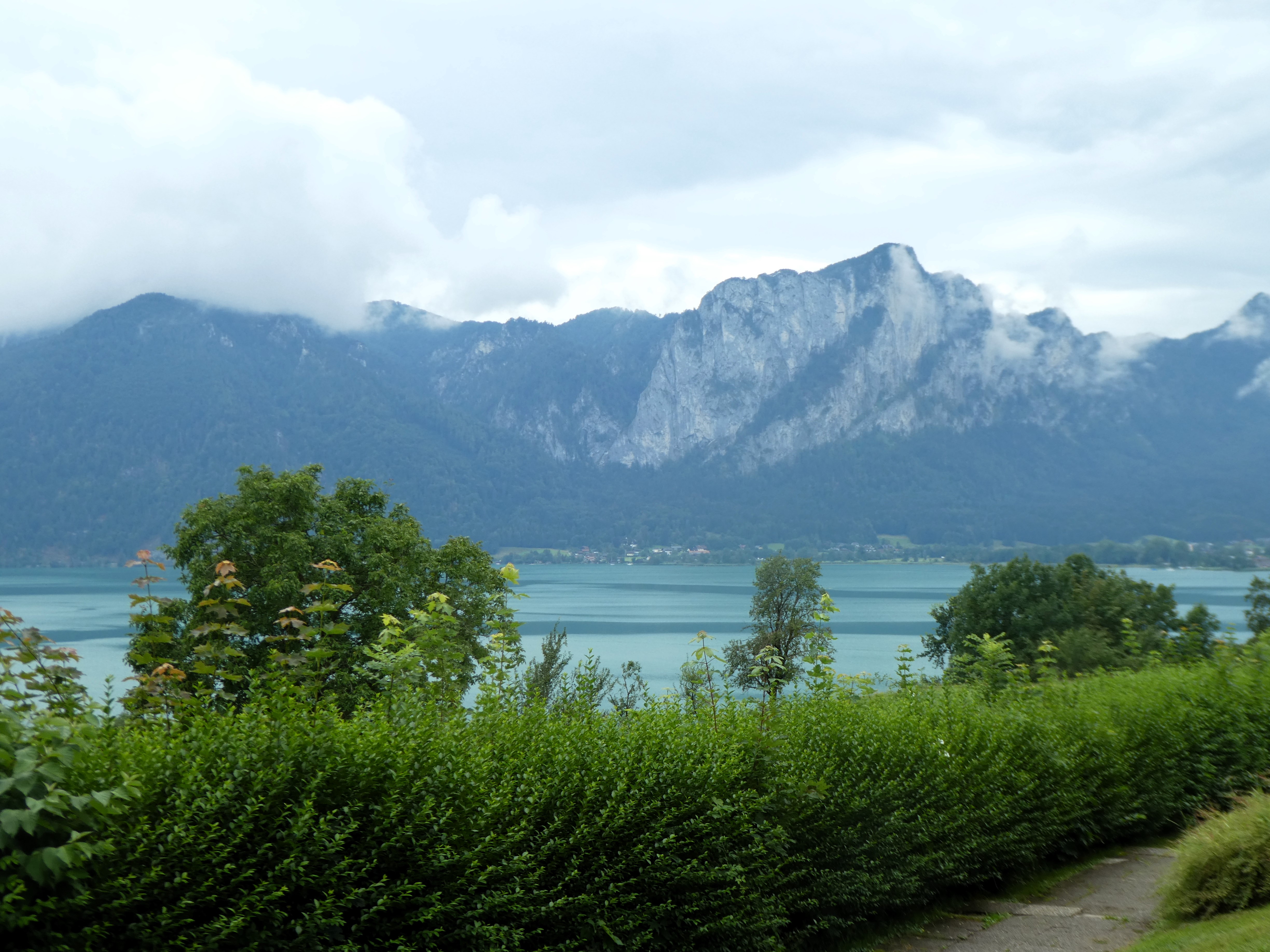
Onwards through Austria and views of the misty mountains to Piding just over the border in Germany where we looked at a crowded site in the valley before driving steeply up to Camping Platz Winkl- Landthai.
The site was busy and full and we were lucky they had one space left which was a comfort space costing €45 euro a night which we took.

Although the site was busy we had amazing views of the mountains. We walked down the valley to some local shops and then returned to a site that had full tent fields and pitches making us realise how lucky we had been.
Sunday 21st July – Winkl
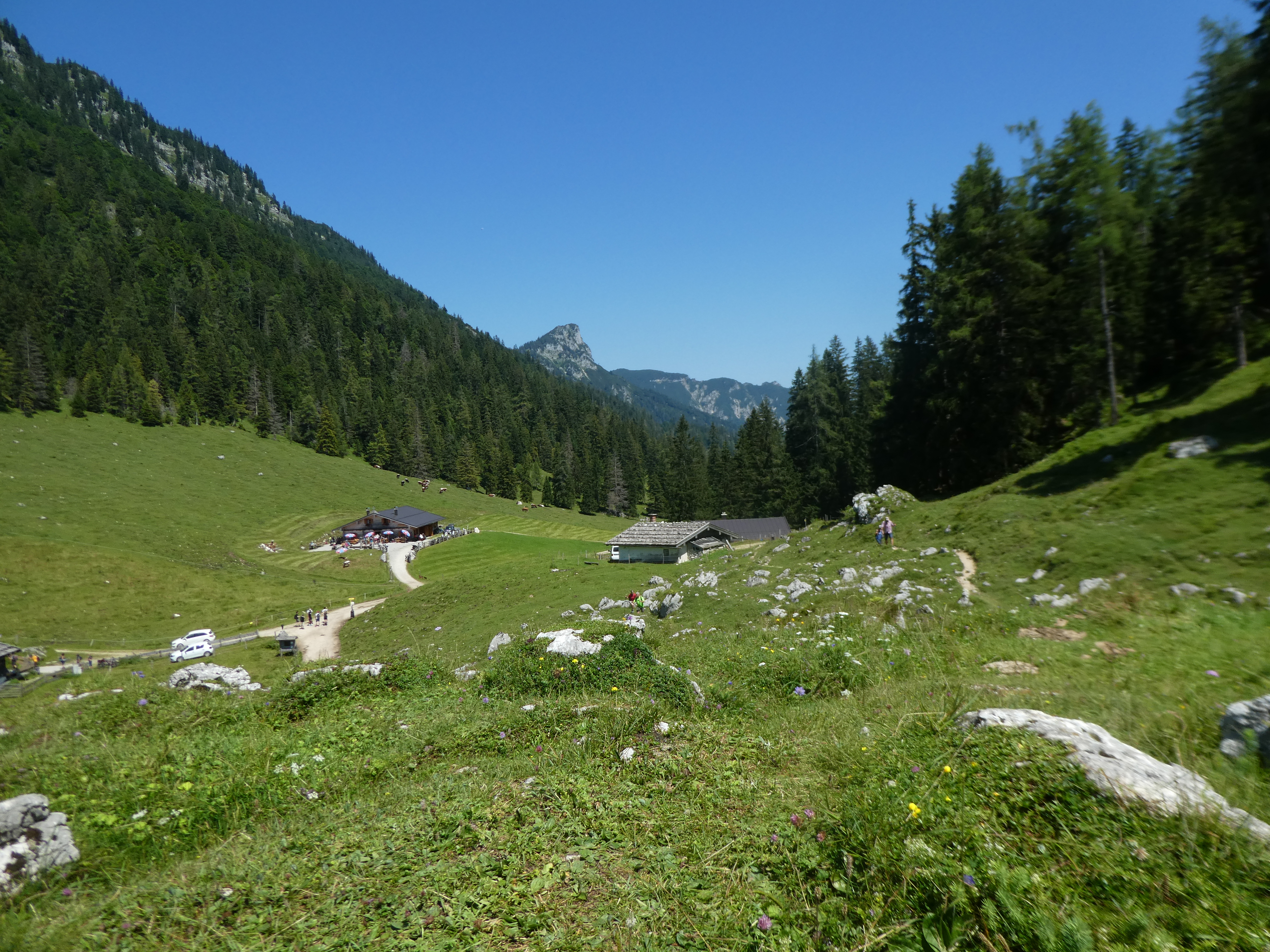
It was sunny and very hot. Graham didn’t feel quite right after a full day yesterday so we took it slowly and wandered through trees and wide tracks climbing quite steeply, passed by a fair a number of e bikes, up to the Mordaunt Alm at 1,258m.
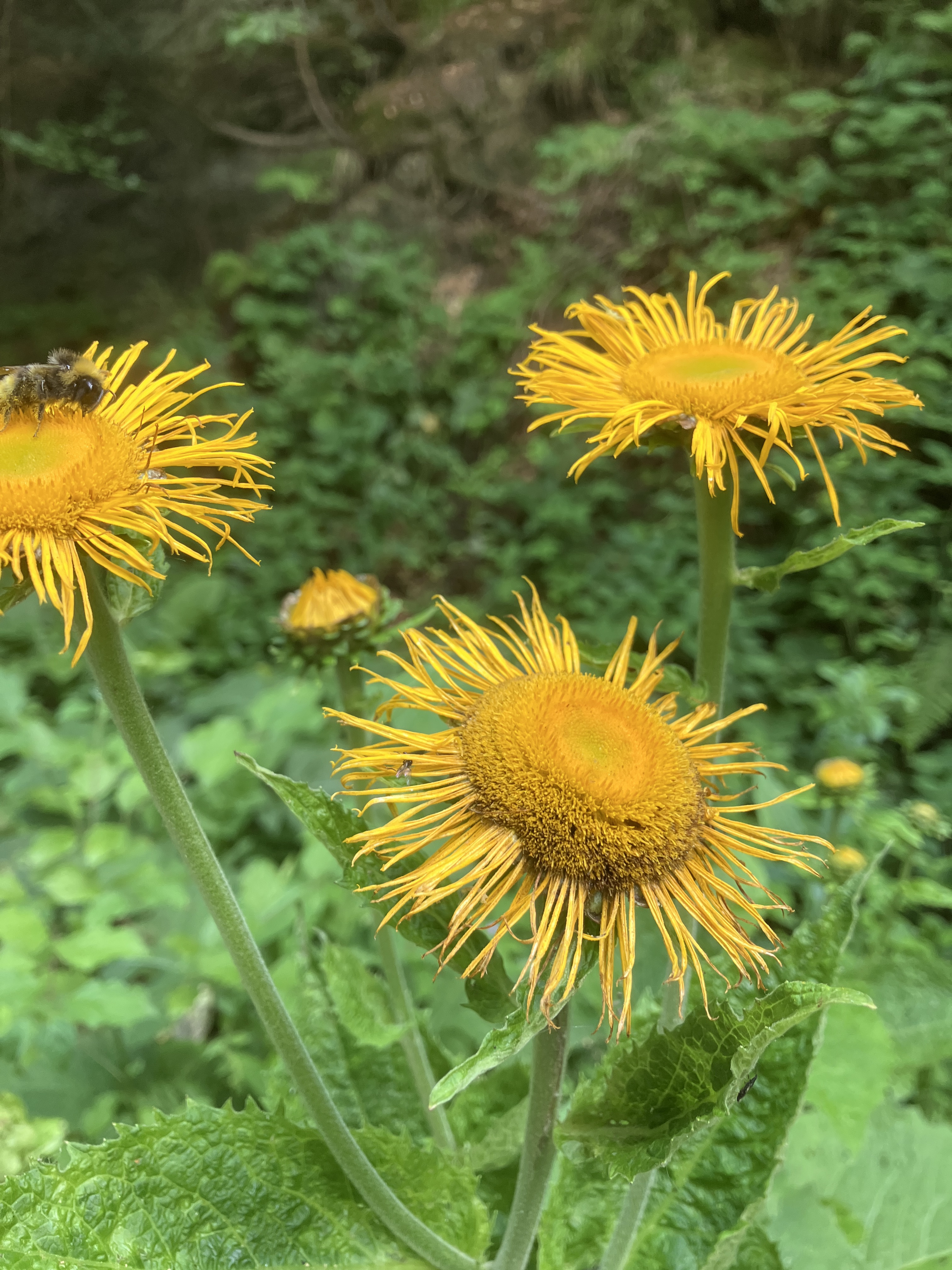

There were quite a lot of people milling around having walked up from the other side of the valley. It was very hot so we bought some home made apple juice from one of the chalets, which was nice and refreshing.
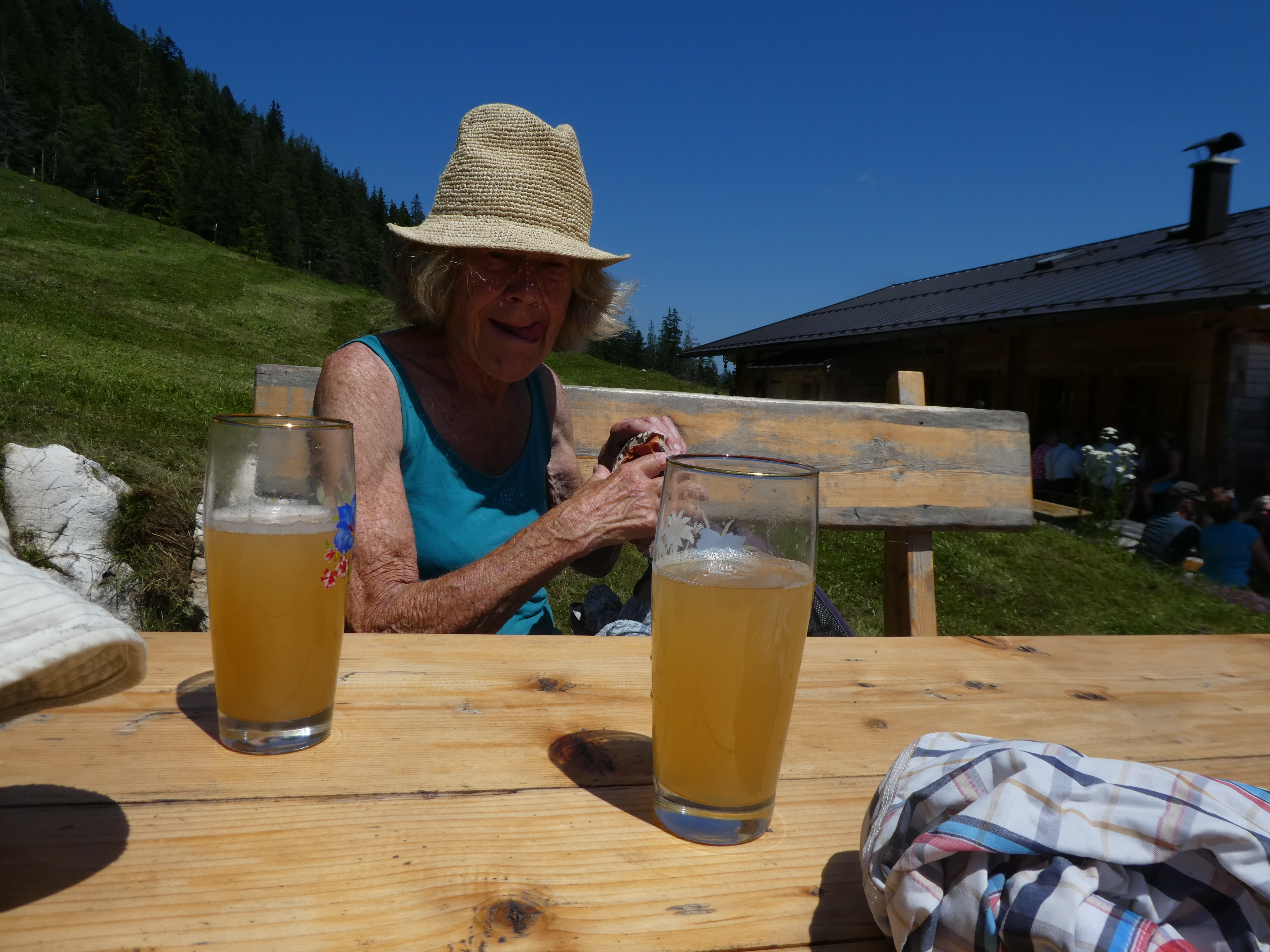
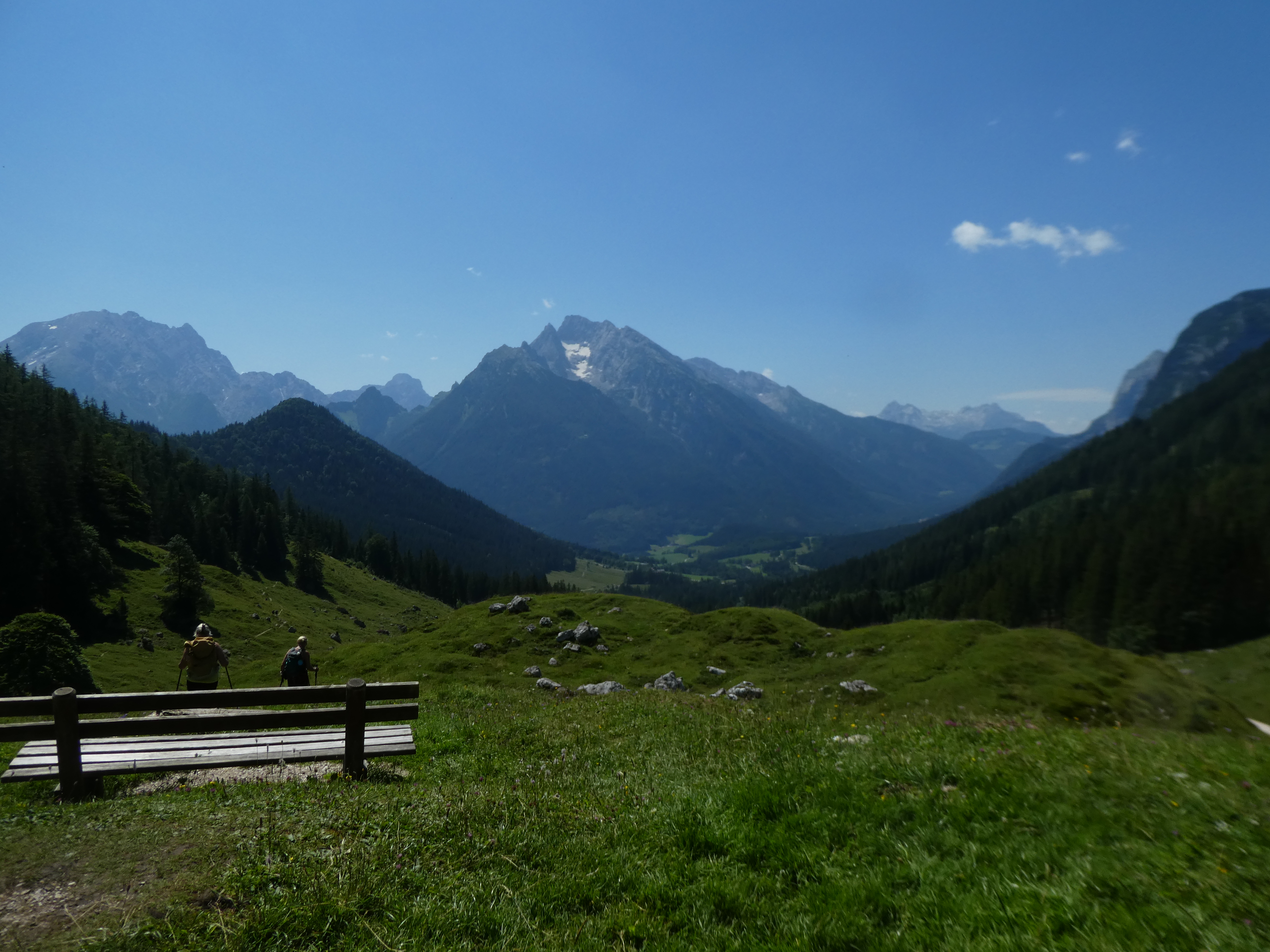
On our descent we had a text from Jenny reminding us of our 51st wedding anniversary!
At that point we were just sitting at a bench overlooking the mountains so we took a photo to celebrate.

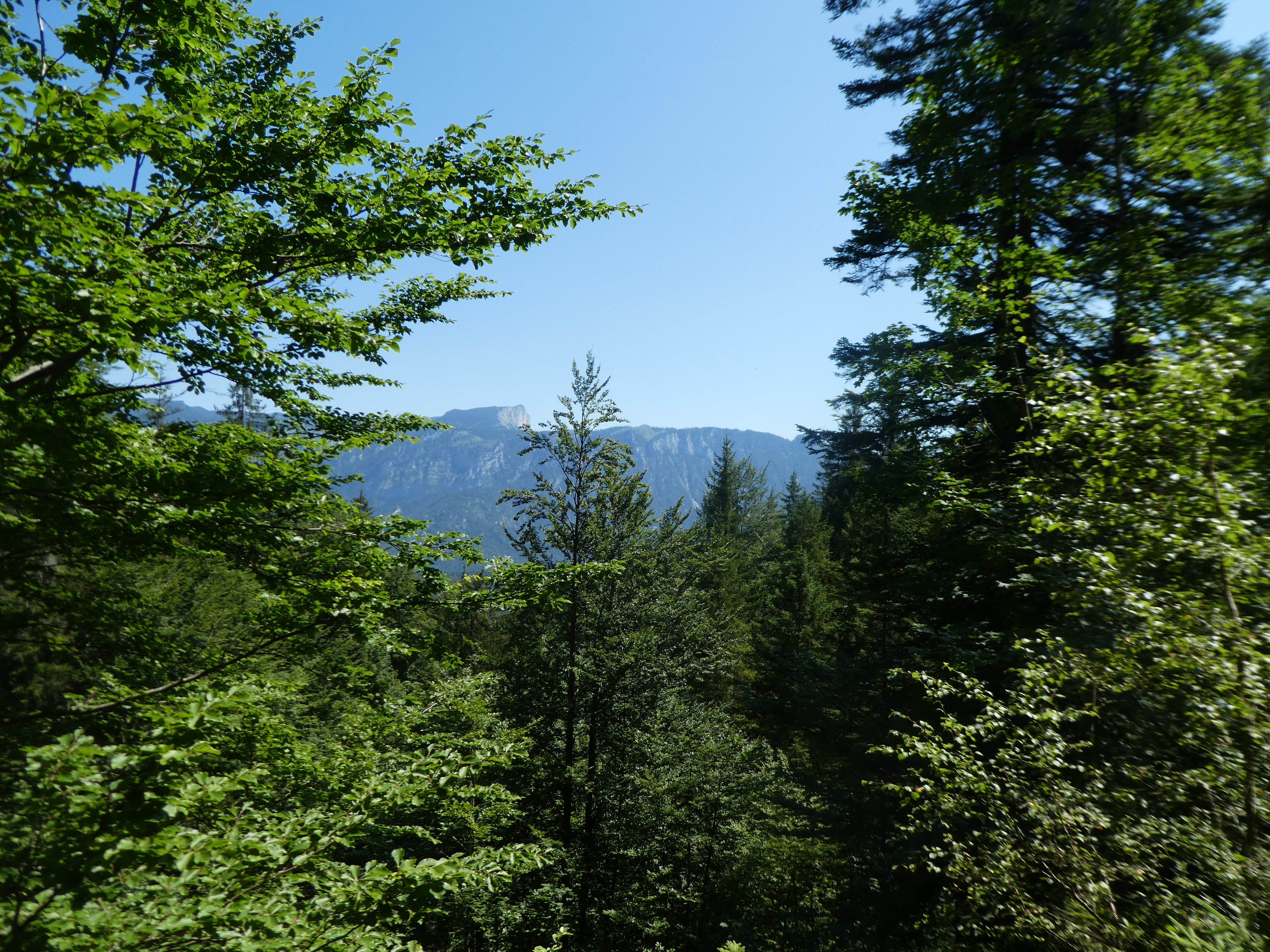
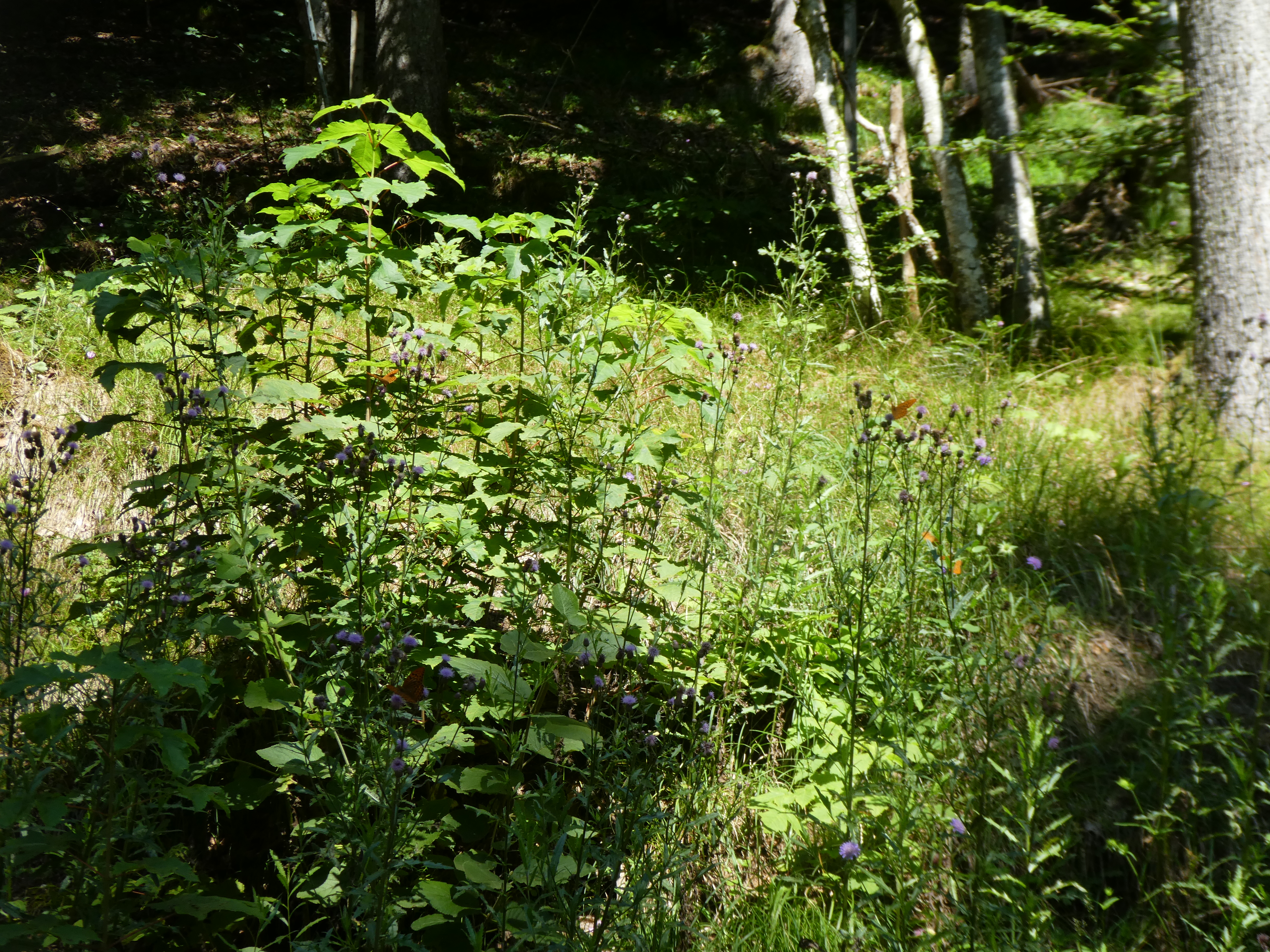
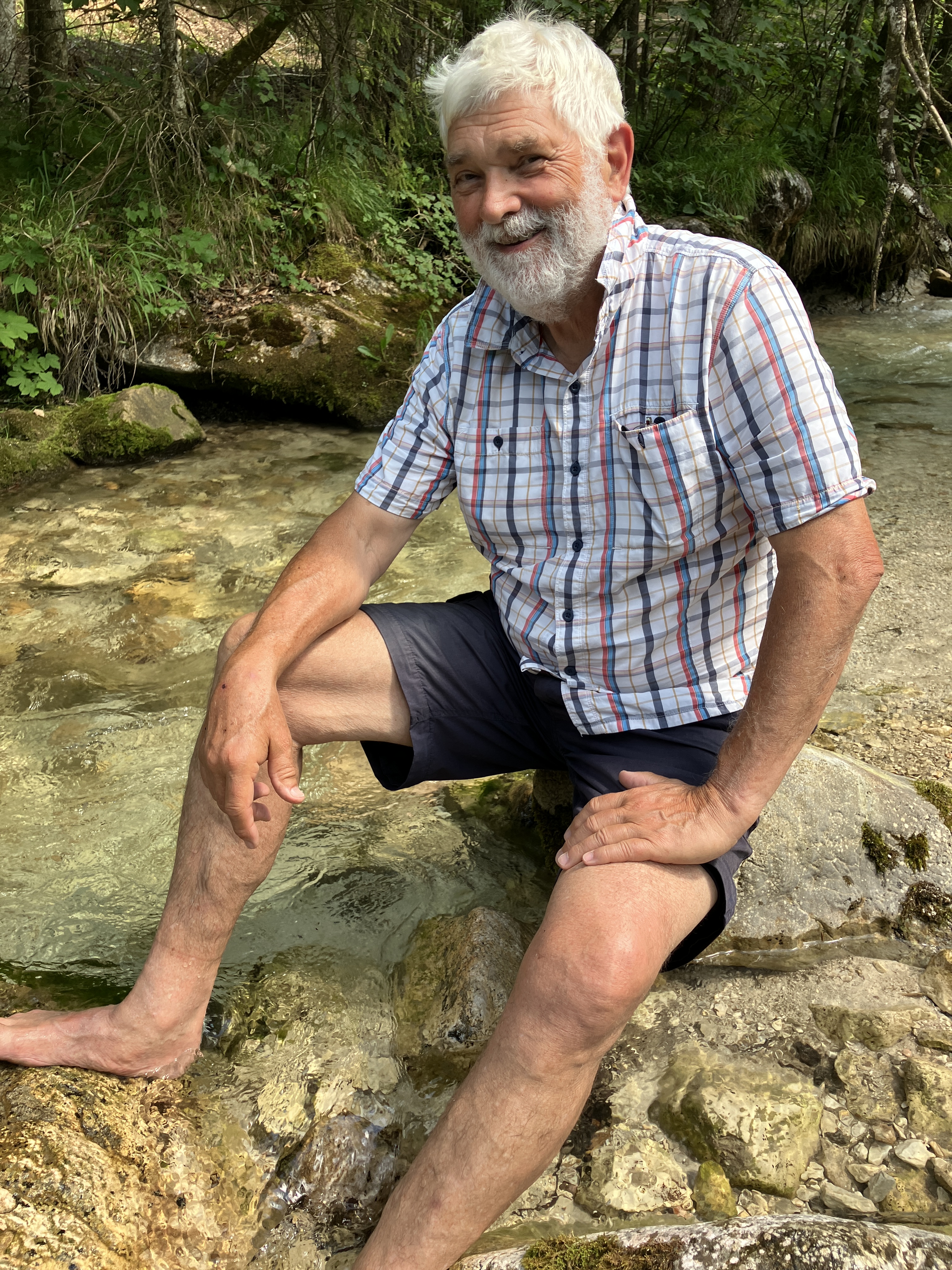
Lower down the lovely large stream widened so we spent over an hour chilling, reading our books with our feet being cooled in the stream, Lovely!
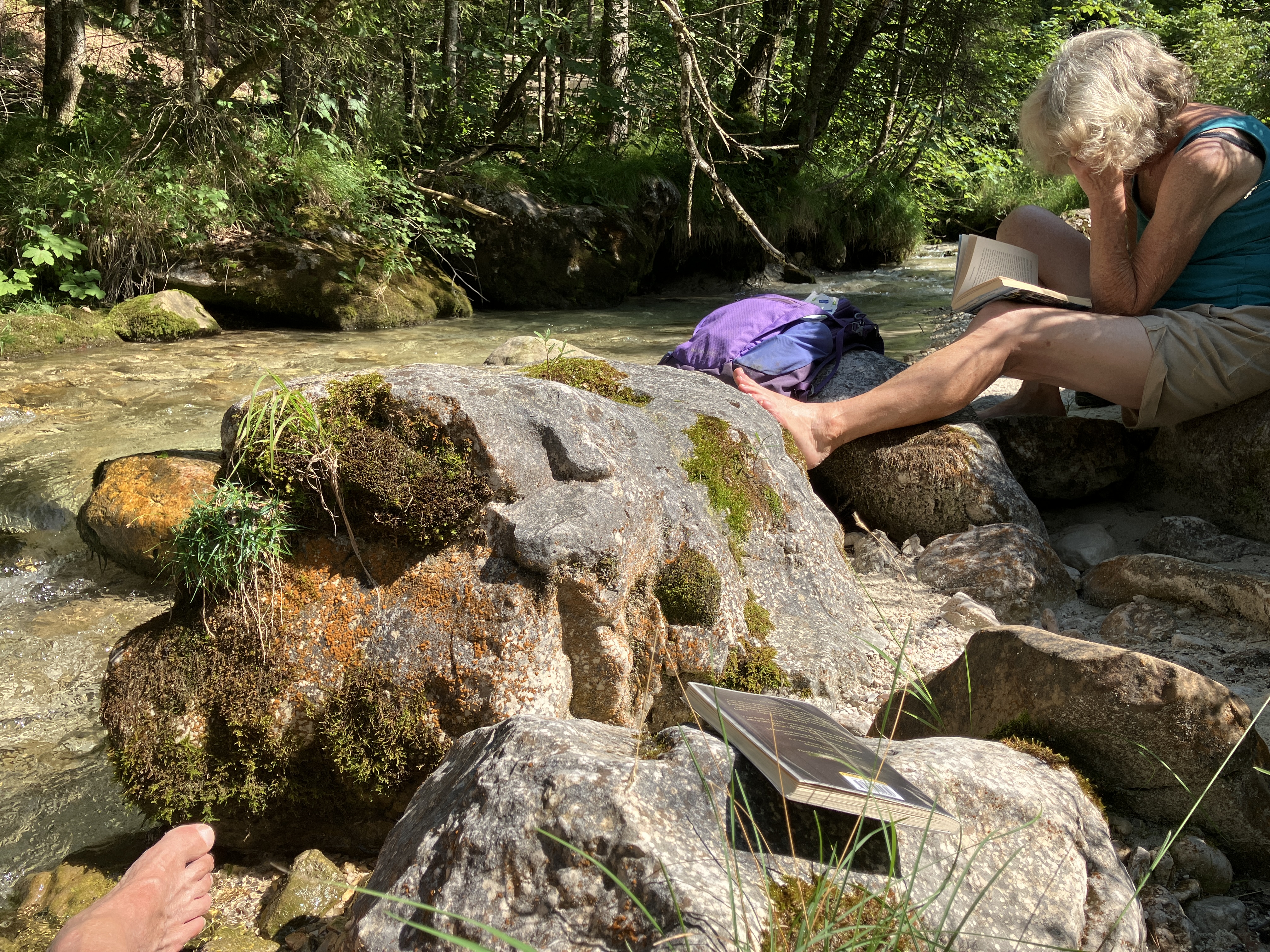
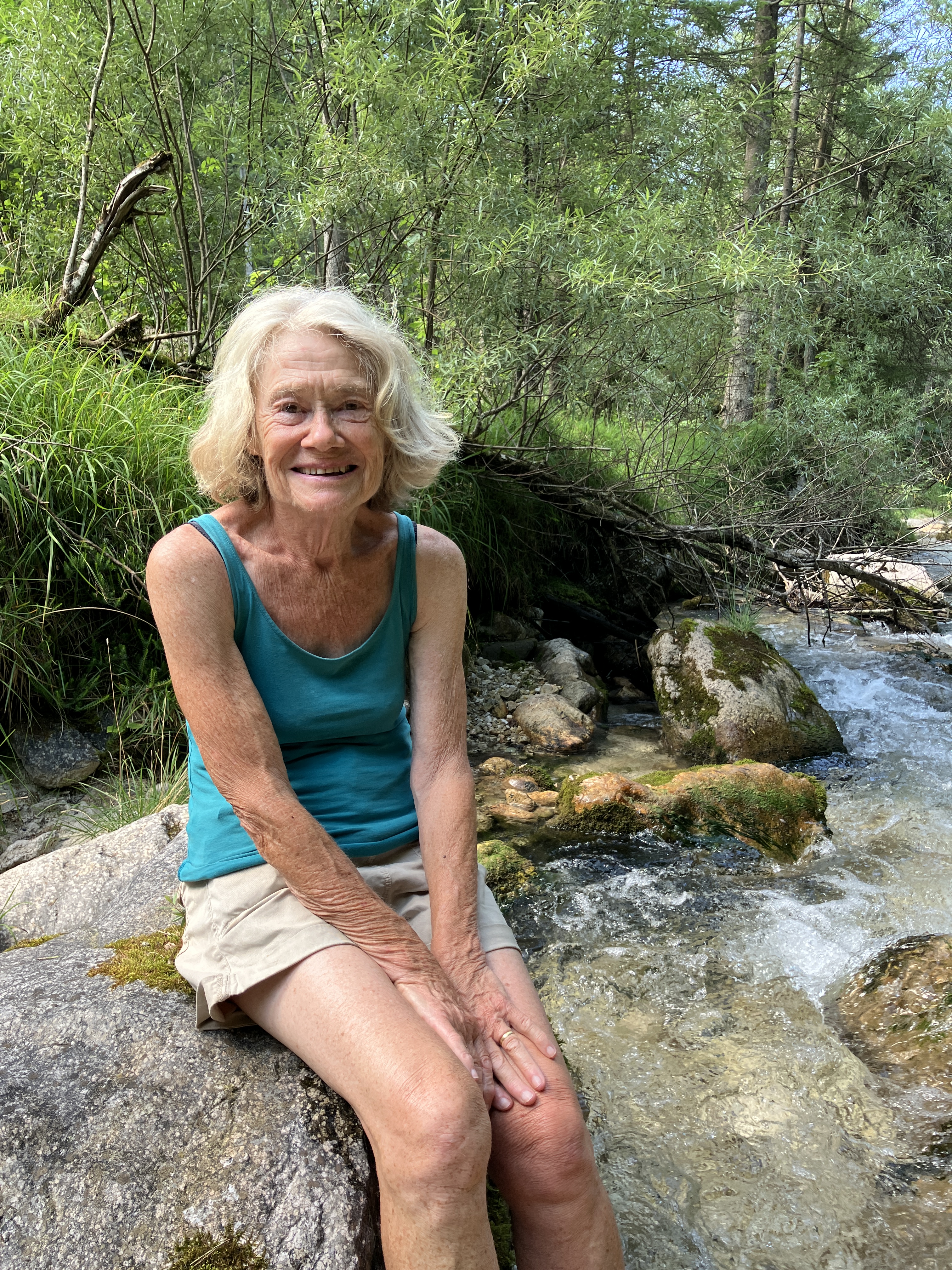
A simple tea and glass of red wine before taking down the awning. It grew darker and rumbling thunder proceeded continual rain.
Monday 22nd July – Winkl to Corny sur Moselle
We leave the site at eight just as it starts raining and drive in pouring rain around Munchen and were doing well until we reached Pfotzhm near the French border where we queue in traffic for over half an hour.
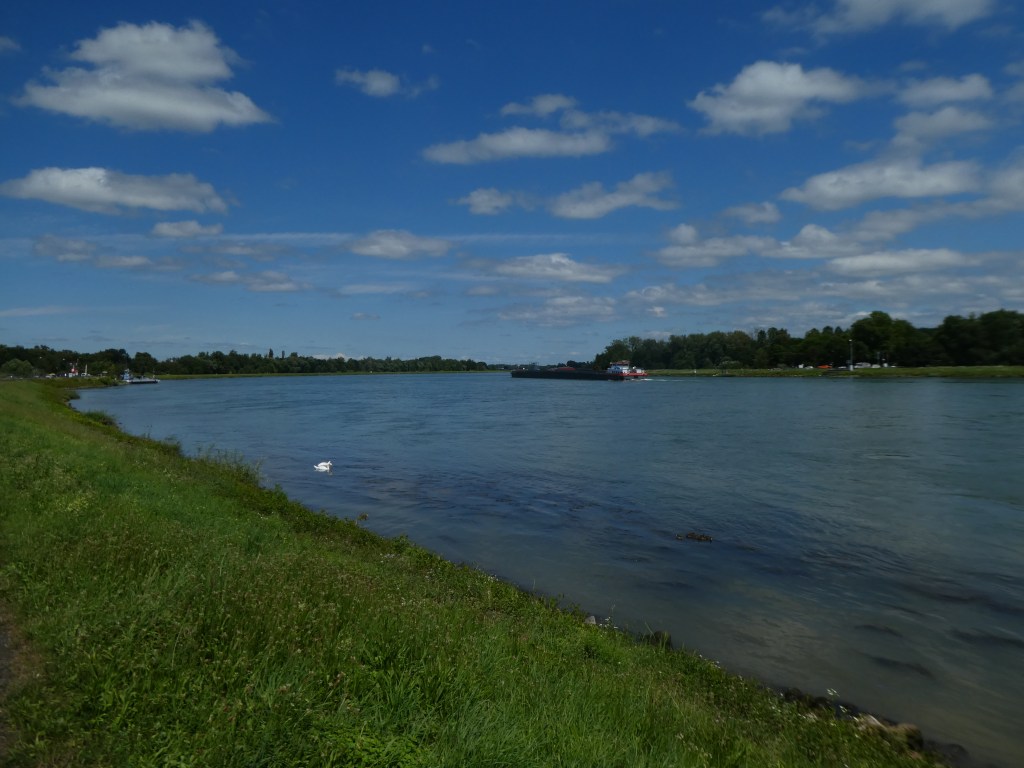
South of Baden Baden we stop for lunch just over the border beside the Rhine at Drusenheim.
It was a nice spot with a little ferry taking eight or nine cars and their passengers across the river. In the parking area by the river people were enjoying the warm afternoon.

We then drove on to the campsite at Corny on the Moselle.
A typical municipal site on the river with lots of Dutch and cyclists doing the cycle route following the Moselle river.
We wander around and had salad and chips and a bottle of wine from the campsite snack bar which was great.
We were both really tired and not at our best. So an early night was welcomed.
Tuesday 23rd July – Corny sur Moselle to Col de Tredudon
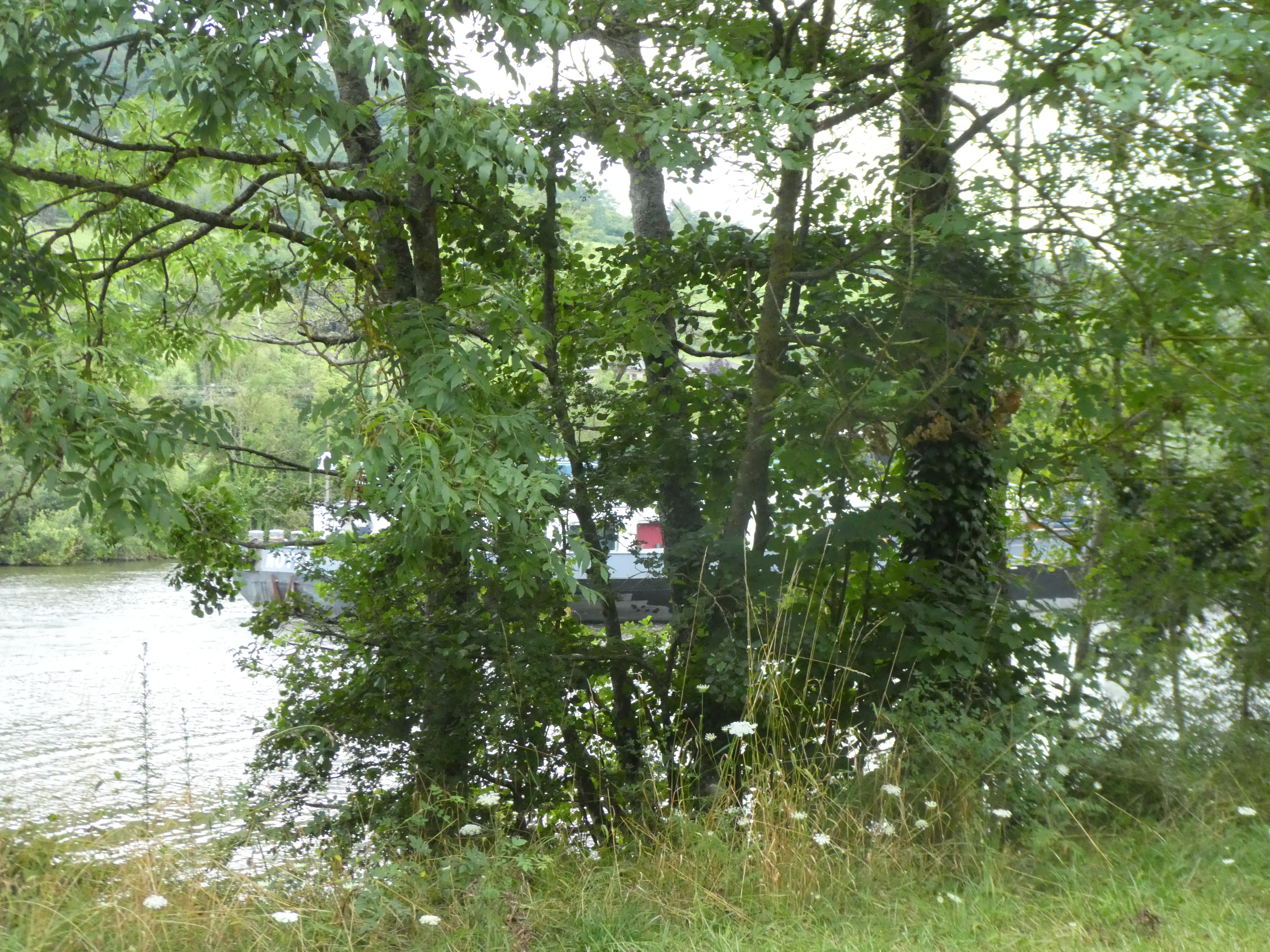


The day starts cloudy with heavy rain. As we pack up large barges come down the river past the site. We are on our way by nine and heading south and west not using the autoroutes.
It is different using N and D roads, one felt in the surroundings rather than passing through!
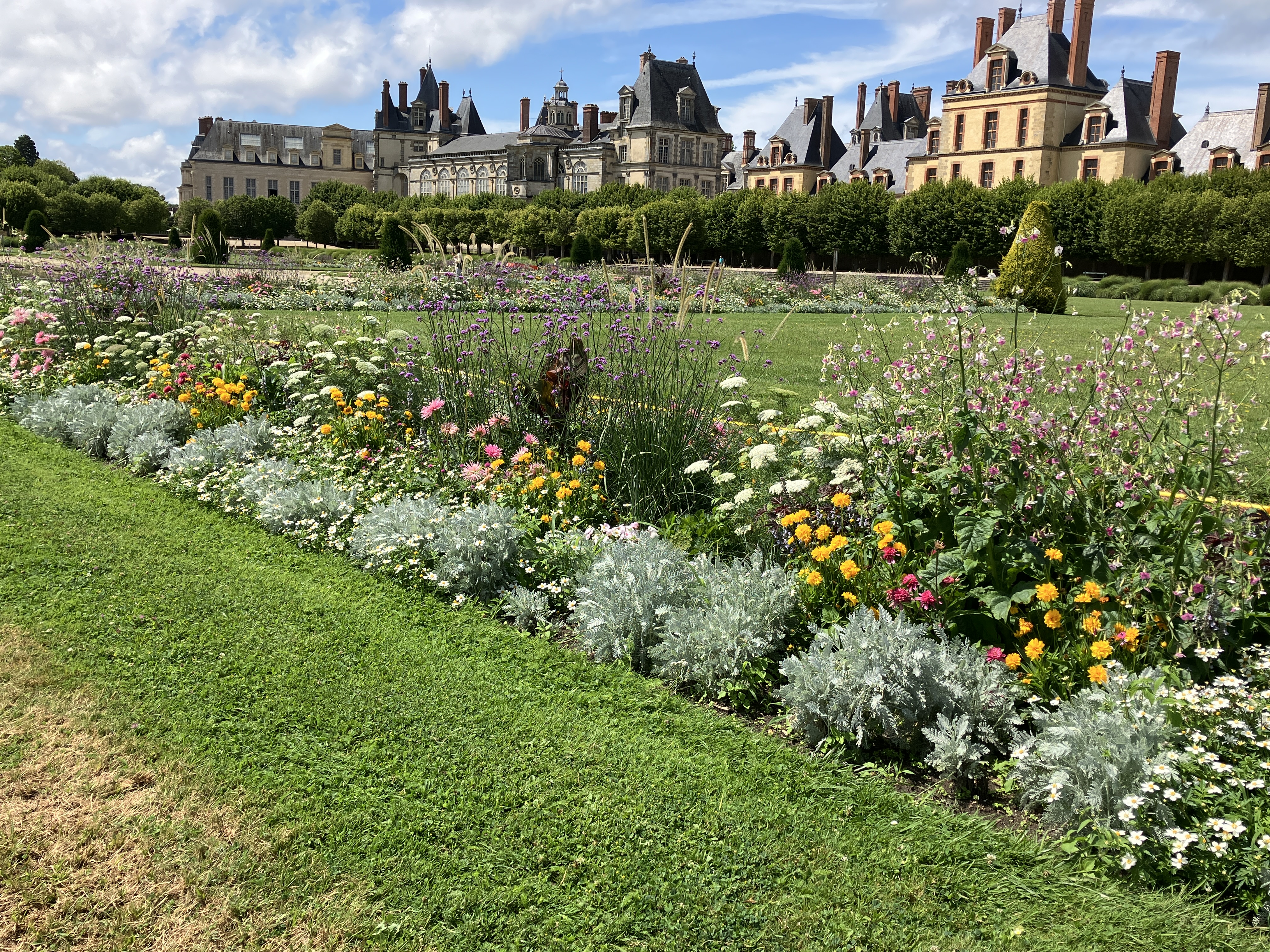
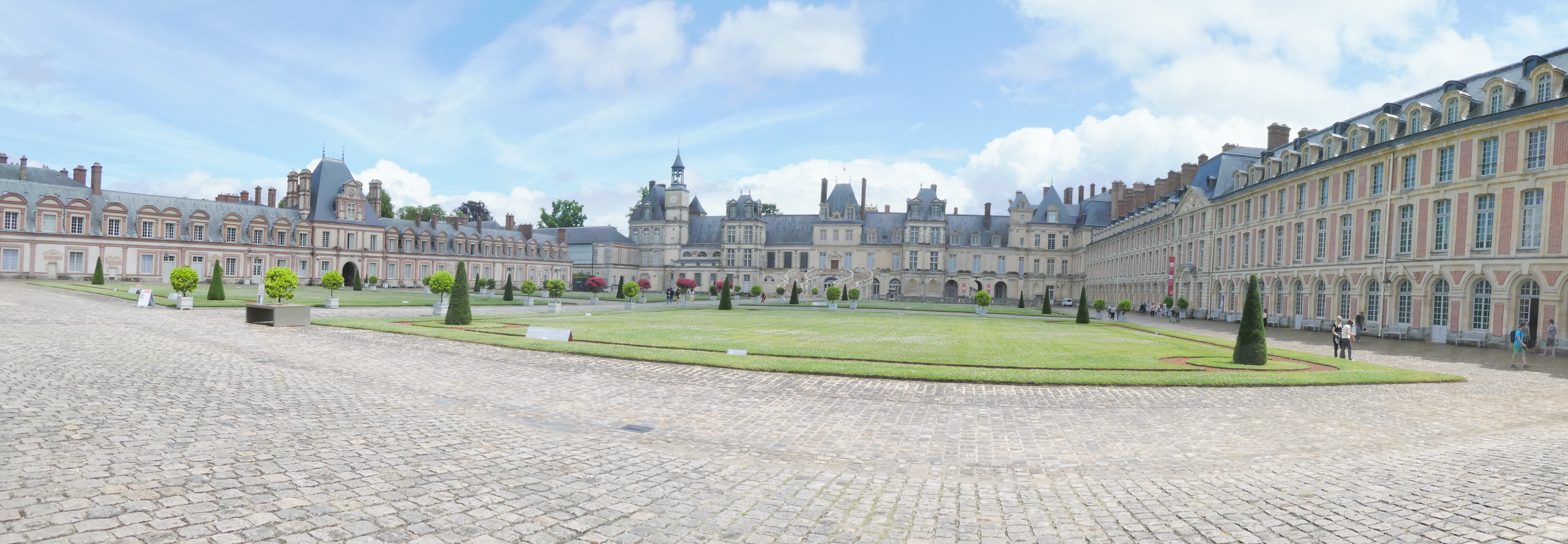
We arrived at the back entrance to Fontainebleau Chateau where there was free parking and the possibility of rough camping with direct access to the Fontainebleau gardens.
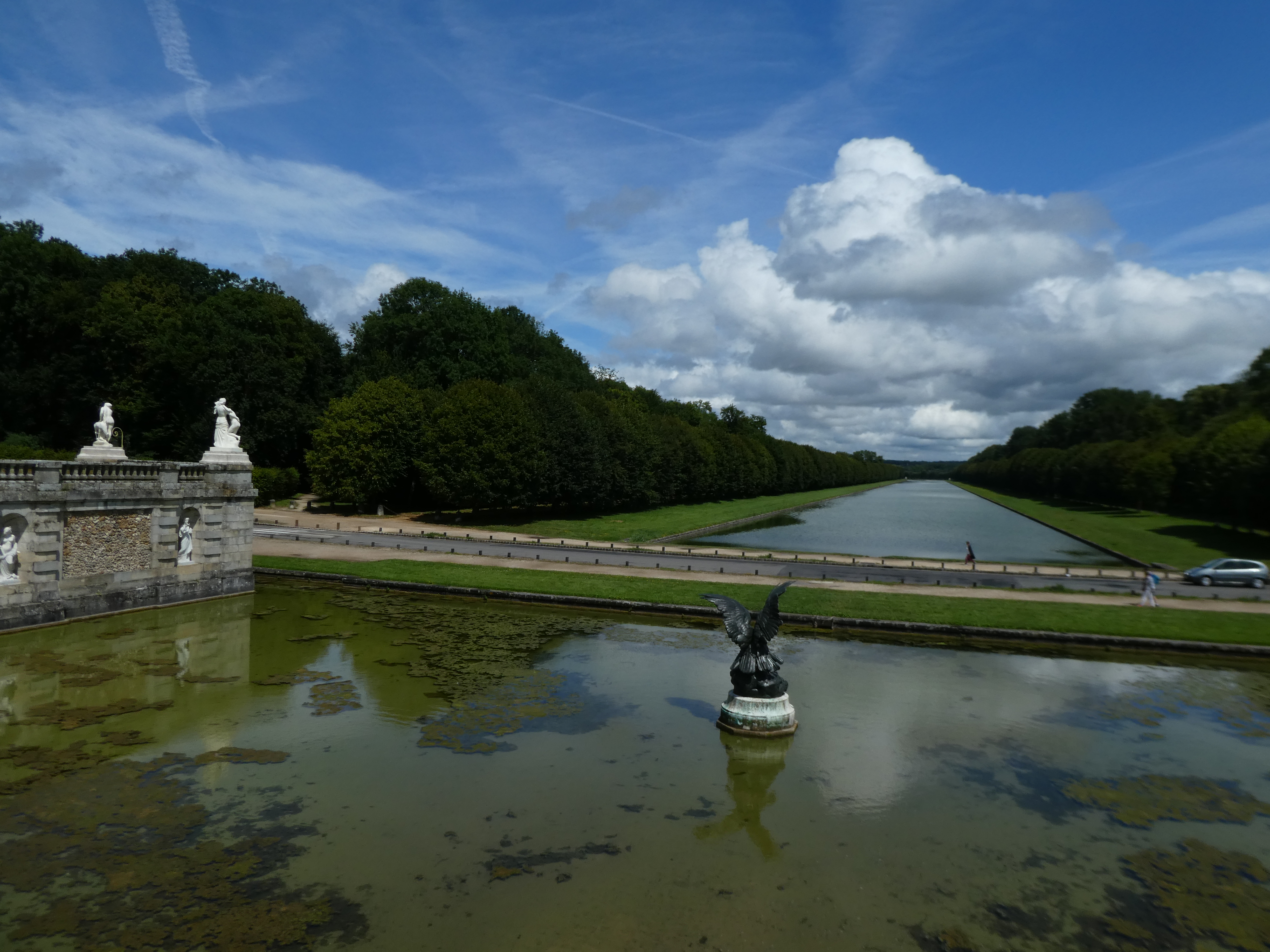
The chateau and grounds were amazing, so big. We wandered around the different gardens, the English Garden, the Diana (the hunter) Garden, the Parterre Garden and the carp pond. The plantings were quite mature but well managed, it is interesting to see.


Onwards on in some parts on busy toll roads to Bédée where we stopped and had a meal in the Hôtel Brocéliande which was good if a bit commercial with many single obviously guests eating alone.
We remembered buying croissants in Bédée after we landed at Roscoff one morning many years ago.
In the gathering gloom we make our way to the Col de Tredudon nicely familiar and our first rough camp of our trip!
Wednesday 24th July – Col De Tredudon and Home
There was only one other van on the Col so slept well until six when we drove to Roscoff and seemed to hang around a long time before boarding.
We had breakfast on board and read, sewed and relaxed. As we approached Plymouth we went on deck and chatted to a Caroline Green, an artist who had just gone through a divorce and had been away for three months on her own travelling around Italy painting. She was debating where to now settle and might end up in Totnes!
Soon off the boat, we shop at Tesco in St Austell and Janet picks up the car from Probus.
At home, the virulent garden, after a month needing some care, and a house with lots of post and messages.
We unpacked, did two washes and a bit of tying up before picking produce in the garden before bed.
 World Wide Webbs